MOTOSHARE 🚗🏍️
Rent Bikes & Cars Directly from Owners
Motoshare connects vehicle owners with people who need bikes and cars on rent. Owners earn from idle vehicles, and renters get flexible ride options.
Visit Motoshare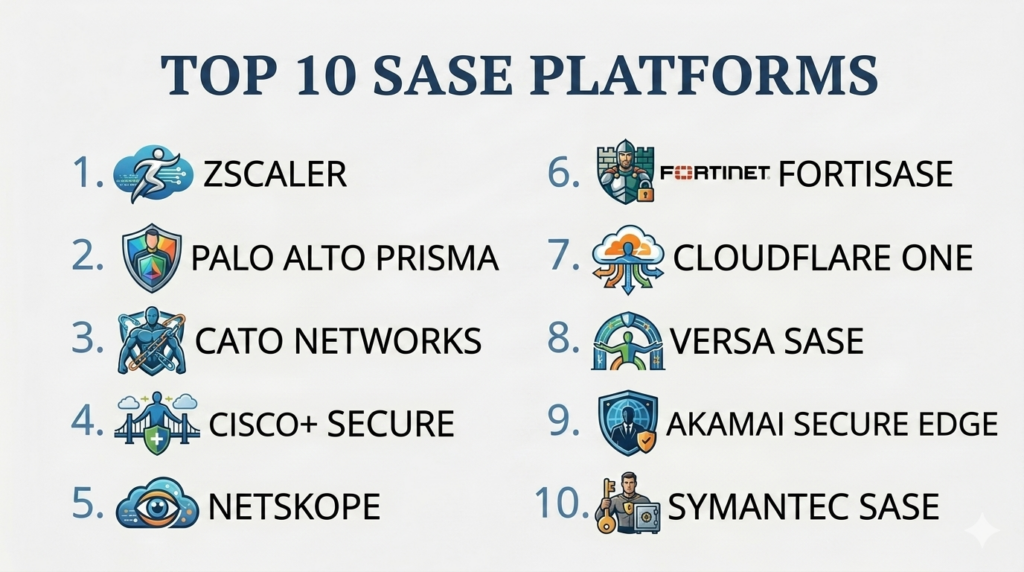
Introduction
Secure Access Service Edge (SASE) represents a fundamental architectural shift in networking and cybersecurity. It is the convergence of wide-area networking (WAN) capabilities with comprehensive cloud-native security functions. Instead of routing traffic to a centralized data center for security inspection, SASE delivers these services directly at the network edge. This model integrates several core components, including Software-Defined Wide Area Networking (SD-WAN), Secure Web Gateway (SWG), Cloud Access Security Broker (CASB), Zero Trust Network Access (ZTNA), and Firewall-as-a-Service (FWaaS) into a single, unified service.
In the current era of distributed workforces and cloud-first applications, the traditional “castle-and-moat” security perimeter is no longer viable. SASE allows organizations to apply consistent security policies regardless of where the user is located or where the application is hosted. By moving the security perimeter to the cloud, businesses can reduce latency, simplify management, and provide a seamless user experience while maintaining a robust security posture.
Real-world use cases:
- Securing the Remote Workforce: Providing safe and fast access to internal applications for employees working from home without the bottlenecks of traditional VPNs.
- Branch Office Transformation: Replacing expensive MPLS lines with secure, direct-to-cloud internet connections that maintain enterprise-grade security.
- Safe SaaS Adoption: Ensuring that data moving to and from platforms like Microsoft 365, Salesforce, and Slack is inspected for threats and data leakage.
- Global Connectivity Optimization: Leveraging a private global backbone to reduce latency for international users accessing centralized resources.
- Zero Trust Implementation: Moving away from broad network access toward identity-based, granular access controls for every user and device.
Evaluation criteria for buyers:
- Network Performance: The density of Global Points of Presence (PoPs) and the latency of the underlying backbone.
- Security Integration: How well the different security modules (CASB, ZTNA, etc.) communicate and share intelligence.
- Management Simplicity: The availability of a “single pane of glass” dashboard to manage both networking and security.
- Zero Trust Maturity: The granularity of access policies and the ability to perform continuous identity verification.
- Visibility and Analytics: The depth of real-time monitoring and historical reporting for troubleshooting and compliance.
- Deployment Flexibility: Support for agent-based, agentless, and hardware-based connectivity options.
- Data Protection: The sophistication of Data Loss Prevention (DLP) engines and sensitive data masking.
- Threat Intelligence: The quality and freshness of the global threat database used to block emerging attacks.
- Scalability: The ability to instantly add users or locations without performance degradation.
- Compliance Certifications: The presence of industry-standard audits like SOC 2, ISO 27001, and HIPAA.
Mandatory Paragraph
- Best for: Large-scale enterprises, organizations with a high percentage of remote workers, and companies undergoing a rapid digital transformation to the cloud.
- Not ideal for: Very small businesses with a single physical office, organizations with purely on-premises infrastructure, or teams without the capacity to manage a sophisticated security stack.
Key Trends in SASE Platforms
- AI-Driven Predictive Networking: Platforms are increasingly using machine learning to predict network congestion and reroute traffic before the user experiences any latency.
- Single-Vendor SASE Dominance: There is a move away from “stitching” different vendors together in favor of a single provider that offers both the networking and the security stack natively.
- AI-Powered Threat Hunting: Utilizing generative AI to analyze massive amounts of log data to identify subtle indicators of compromise that traditional rules might miss.
- Democratization of ZTNA: Zero Trust Network Access is becoming the default standard, completely replacing legacy VPN technologies for both internal and external users.
- Enhanced Digital Experience Monitoring (DEM): Integrating tools that allow IT teams to see the exact point of failure in a connection, whether it’s the user’s Wi-Fi, the ISP, or the cloud provider.
- Data-Centric Security: A shift toward protecting the data itself rather than just the network path, with automated sensitive data discovery and classification.
- Edge Computing Synergy: SASE is moving closer to the user by deploying security logic directly on edge compute nodes to minimize processing delay.
- Automated Compliance Mapping: Real-time dashboards that automatically map security configurations to specific regulatory frameworks.
How We Selected These Tools (Methodology)
To determine the top 10 SASE platforms, we applied a rigorous selection methodology designed for technical and strategic excellence:
- Convergence Quotient: We prioritized platforms that provide a truly integrated experience rather than a collection of loosely coupled products.
- Backbone Reliability: We evaluated the scale and performance of the provider’s global private network and PoP density.
- Security Breadth: The tools selected must offer a full suite of services, including ZTNA, CASB, SWG, and FWaaS.
- Market Adoption: We analyzed the preferred choices of Fortune 500 companies and high-growth technology leaders.
- Innovation Velocity: We looked for vendors who are consistently introducing AI and modern security features into their core stack.
- Operational Simplicity: A focus was placed on platforms that reduce the administrative burden through automation and intuitive UI.
Top 10 SASE Platforms
#1 — Zscaler
Short description: A cloud-native security pioneer that offers the Zscaler Zero Trust Exchange, focusing heavily on securing users, workloads, and IoT devices.
Key Features
- Zscaler Private Access (ZPA): A leading ZTNA solution that provides secure access to internal apps without a VPN.
- Zscaler Internet Access (ZIA): A cloud-native secure web gateway that protects users from internet-based threats.
- Cloud DLP: Sophisticated data loss prevention that spans across all users and cloud applications.
- Zscaler Digital Experience (ZDX): Real-time monitoring of user experience across the entire connection path.
- AI-Powered Sandbox: Advanced protection against zero-day threats by analyzing suspicious files in a cloud-isolated environment.
- Browser Isolation: Executes active web content in a remote browser to prevent local infection.
Pros
- Massive global cloud footprint with superior latency for a worldwide workforce.
- True cloud-native architecture that does not require managing hardware appliances.
Cons
- Can be complex to configure for organizations with many legacy, non-web applications.
- Premium pricing often reflects its position as a market leader.
Platforms / Deployment
- Windows / macOS / Linux / iOS / Android
- Cloud / SaaS
Security & Compliance
- SSO/SAML, MFA, RBAC.
- SOC 2, ISO 27001, FedRAMP, HIPAA.
Integrations & Ecosystem
Zscaler integrates with the broader modern security and identity stack.
- Okta / Microsoft Azure AD
- CrowdStrike / Microsoft Defender
- Splunk / IBM QRadar
- Microsoft 365 / Salesforce
Support & Community
Extensive professional services, a robust technical community (Zscaler Academy), and 24/7 global support.
#2 — Palo Alto Networks (Prisma Access)
Short description: A powerful SASE solution that brings the strength of Palo Alto’s next-generation firewalls to a globally distributed cloud environment.
Key Features
- Unified Security Management: Manage all security policies through a single, familiar Panorama console.
- Autonomous Digital Experience Management (ADEM): Provides segment-by-segment visibility into user performance.
- Cloud-Delivered Firewall: Enterprise-grade FWaaS that scales instantly based on traffic demand.
- ZTNA 2.0: Advanced Zero Trust that includes continuous security inspection and granular data protection.
- IoT Security: Automatically discovers and secures IoT devices connected to the network.
- SaaS Security: Deep visibility and control over thousands of SaaS applications to prevent shadow IT.
Pros
- Ideal for existing Palo Alto customers who want a consistent security experience across on-prem and cloud.
- Strongest threat prevention capabilities in the industry.
Cons
- Managing the platform can be complex for teams without Palo Alto experience.
- Resource-intensive deployment that may require significant planning.
Platforms / Deployment
- Windows / macOS / Linux / iOS / Android
- Cloud / Hybrid
Security & Compliance
- MFA, SSO, RBAC.
- SOC 2, ISO 27001, FedRAMP, HIPAA.
Integrations & Ecosystem
Deeply integrated with the Palo Alto Cortex and Strata ecosystems.
- ServiceNow
- Microsoft Azure / AWS / GCP
- Okta / Ping Identity
- Splunk
Support & Community
Extensive documentation (TechDocs), a huge user community (Live Community), and high-tier professional support.
#3 — Cato Networks
Short description: Recognized as the world’s first SASE platform, Cato focuses on a converge-first approach with a massive global private backbone.
Key Features
- Cato Cloud: A unified global private backbone that replaces MPLS and provides built-in security.
- Convergence by Design: Networking and security are built into the same software stack from the ground up.
- Self-Healing SD-WAN: Automatically handles line failures and optimizes traffic in real-time.
- Global Route Optimization: Dramatically reduces latency for global applications by bypassing the public internet.
- Cloud-Native Security: Includes SWG, CASB, DLP, and FWaaS as part of the core service.
- Cato Client: A lightweight agent for remote users providing ZTNA and performance optimization.
Pros
- Exceptional simplicity; often cited as the easiest SASE platform to deploy and manage.
- Superior performance for global traffic thanks to their private backbone.
Cons
- May lack some of the deepest granular security “knobs” found in specialized vendors like Palo Alto.
- Visibility into third-party ISP performance can be less detailed than dedicated DEM tools.
Platforms / Deployment
- Windows / macOS / Linux / iOS / Android
- Cloud / Hybrid / Hardware (Cato Socket)
Security & Compliance
- MFA, SSO, RBAC.
- SOC 2, ISO 27001, GDPR.
Integrations & Ecosystem
Focuses on essential integrations for identity and monitoring.
- Azure AD / Okta
- Ping Identity
- Any SIEM via API or Syslog
Support & Community
Reliable support with a focus on speed and transparency, complemented by a growing knowledge base.
#4 — Cisco+ Secure Connect
Short description: Cisco’s unified SASE offering that combines the networking power of Meraki with the security capabilities of Cisco Umbrella.
Key Features
- Unified Dashboard: A single interface to manage Meraki SD-WAN and Umbrella security.
- DNS-Layer Security: Blocks threats at the DNS level before a connection is even established.
- Secure Web Gateway: Provides deep inspection of web traffic for malware and policy violations.
- Cloud Access Security Broker: Protects sensitive data in SaaS apps and uncovers shadow IT.
- Clientless ZTNA: Provides secure access to web applications without requiring software on the user’s device.
- ThousandEyes Integration: Deep visibility into internet and cloud performance.
Pros
- Best-in-class integration for organizations already standardized on Cisco Meraki hardware.
- Broad reach with one of the most reliable global infrastructures.
Cons
- Can feel like a collection of products (Meraki + Umbrella) rather than a single codebase.
- Licensing tiers can be confusing for new customers.
Platforms / Deployment
- Windows / macOS / Linux / iOS / Android
- Cloud / Hardware (Meraki)
Security & Compliance
- Duo MFA, SSO, RBAC.
- SOC 2, ISO 27001, FedRAMP, HIPAA.
Integrations & Ecosystem
Strongest within the Cisco and Meraki ecosystems.
- AnyConnect VPN
- Cisco Secure Endpoint
- Splunk / QRadar
- Microsoft 365
Support & Community
Backed by Cisco TAC, one of the most comprehensive support organizations in the IT world.
#5 — Netskope
Short description: A data-centric SASE platform that excels in visibility and protection for cloud services and web traffic.
Key Features
- Netskope Intelligent SSE: A powerful Security Service Edge that provides ZTNA, CASB, and SWG.
- Cloud Confidence Index: A database of thousands of SaaS apps with security ratings to help manage risk.
- Advanced DLP: High-fidelity data loss prevention that can identify sensitive data in images (OCR).
- Next-Gen SWG: Inspects both web and cloud traffic, including encrypted SSL/TLS data.
- NewEdge Infrastructure: One of the world’s fastest and most interconnected private security clouds.
- Endpoint SD-WAN: Brings networking optimization directly to the user’s device.
Pros
- Superior data protection and visibility for organizations heavy on SaaS usage.
- Highly performant global network that minimizes the “security tax” on latency.
Cons
- Historically focused more on security than networking, though their SD-WAN is evolving quickly.
- The wealth of data provided can be overwhelming for smaller IT teams.
Platforms / Deployment
- Windows / macOS / Linux / iOS / Android
- Cloud / SaaS
Security & Compliance
- MFA, SSO, RBAC.
- SOC 2, ISO 27001, HIPAA, PCI DSS.
Integrations & Ecosystem
Broad integration with identity and endpoint security leaders.
- Okta / Azure AD
- CrowdStrike / SentinelOne
- ServiceNow
- Slack / Box / G Suite
Support & Community
Responsive professional support and an active user community focused on cloud security best practices.
#6 — Fortinet (FortiSASE)
Short description: A unified SASE solution that leverages Fortinet’s proprietary SPU (Security Processing Unit) technology for high-performance security.
Key Features
- FortiGuard Labs Intelligence: Real-time threat updates from one of the largest security research teams.
- Unified Agent: Use the same FortiClient agent for ZTNA, VPN, and endpoint protection.
- Secure SD-WAN: Industry-leading SD-WAN capabilities integrated directly into the SASE stack.
- Cloud-Delivered FWaaS: High-performance firewalling that leverages FortiOS.
- Sandboxing: Cloud-based detection for unknown threats and ransomware.
- ZTNA Policy Engine: Fine-grained access control based on user identity and device posture.
Pros
- Excellent price-to-performance ratio.
- Seamless experience for organizations using FortiGate firewalls in their branches.
Cons
- Cloud PoP density is growing but may not yet match Zscaler or Netskope in certain regions.
- The management interface can be complex for those unfamiliar with the Fortinet ecosystem.
Platforms / Deployment
- Windows / macOS / Linux / iOS / Android
- Cloud / Hardware (FortiGate)
Security & Compliance
- FortiToken MFA, SSO, RBAC.
- SOC 2, ISO 27001, FedRAMP.
Integrations & Ecosystem
Works best within the Fortinet Security Fabric.
- FortiAnalyzer / FortiManager
- Microsoft Azure / AWS
- Okta
- Splunk
Support & Community
Global support through FortiCare and extensive training through the Fortinet Training Institute.
#7 — Cloudflare One
Short description: A SASE platform built on Cloudflare’s massive global edge network, emphasizing speed and developer-friendly security.
Key Features
- Cloudflare Gateway: A fast secure web gateway that blocks threats at the DNS, HTTP, and IP layers.
- Cloudflare Access: A ZTNA solution that replaces VPNs with identity-based access to any application.
- Browser Isolation: Zero-trust browsing that protects users from malicious website code.
- Magic WAN: Replaces legacy WANs with Cloudflare’s global network for faster, more secure connectivity.
- Warp Client: A fast, secure agent that optimizes and protects user traffic.
- API Shield: Protects internal and external APIs from automated attacks and data leaks.
Pros
- Incredible speed and global reach; almost every user is within milliseconds of a Cloudflare PoP.
- Very strong developer and API support for automated security workflows.
Cons
- Less focus on traditional “heavy” SD-WAN hardware than vendors like Cisco or Fortinet.
- DLP features are maturing but may not yet reach the depth of Netskope.
Platforms / Deployment
- Windows / macOS / Linux / iOS / Android
- Cloud / SaaS
Security & Compliance
- MFA, SSO, RBAC.
- SOC 2, ISO 27001, PCI DSS, HIPAA.
Integrations & Ecosystem
Exceptional compatibility with modern web and identity technologies.
- GitHub / GitLab
- Okta / Azure AD / Google Workspace
- Terraform
- Datadog / Splunk
Support & Community
Extensive developer documentation, a large Discord community, and 24/7 enterprise support.
#8 — Versa SASE
Short description: A highly flexible and feature-rich SASE solution that is often favored by service providers and complex enterprise environments.
Key Features
- Versa Operating System (VOS): A unified software stack for both networking and security functions.
- Advanced SD-WAN: Sophisticated traffic steering and optimization for complex network topologies.
- Versa Concerto: A centralized orchestration platform for managing global SASE deployments.
- Secure Web Gateway: Comprehensive protection for web-based traffic and SaaS apps.
- Zero Trust Access: Identity-aware access control for both remote and on-premises users.
- Multi-Tenancy: Robust support for multiple independent departments or organizations on one platform.
Pros
- Most flexible architecture; can be deployed in the cloud, on-prem, or as a hybrid.
- Strongest networking features for organizations with complex routing requirements.
Cons
- High complexity; requires skilled engineers to implement and maintain.
- The user interface is technical and may have a steeper learning curve.
Platforms / Deployment
- Windows / macOS / Linux / iOS / Android
- Cloud / On-prem / Hardware
Security & Compliance
- MFA, SSO, RBAC.
- SOC 2, ISO 27001, HIPAA.
Integrations & Ecosystem
Integrates well with a variety of networking and security tools.
- ServiceNow
- Microsoft Azure / AWS
- Splunk
- Active Directory / LDAP
Support & Community
Professional support services and technical training programs for partners and customers.
#9 — Akamai Secure Edge
Short description: Leveraging the world’s most distributed edge platform, Akamai offers a SASE solution focused on high performance and threat prevention.
Key Features
- Enterprise Threat Protector: A DNS-based security solution that stops threats before they reach the network.
- Enterprise Application Access: A ZTNA tool that provides secure, clientless access to internal applications.
- Cloud-Delivered SWG: Protects users from malware and phishing while they browse the web.
- Proximity-Based Security: Leverages thousands of edge locations to process security logic close to the user.
- Identity Awareness: Integrates with existing identity providers to enforce granular access.
- Global Traffic Management: Intelligent routing to ensure the best possible application performance.
Pros
- Unrivaled global distribution; ideal for companies with users in extremely remote regions.
- Proven reliability from a company that powers a large portion of the internet’s traffic.
Cons
- The portfolio can feel less unified than “born-in-the-cloud” SASE providers.
- Can be expensive for smaller organizations.
Platforms / Deployment
- Windows / macOS / Linux / iOS / Android
- Cloud / Edge
Security & Compliance
- MFA, SSO, RBAC.
- SOC 2, ISO 27001, PCI DSS, FedRAMP.
Integrations & Ecosystem
Deeply integrated with the Akamai delivery and security portfolio.
- Okta / Ping Identity
- Azure AD
- SIEM connectors for major platforms
Support & Community
Elite global support and a wealth of technical resources for enterprise customers.
#10 — Symantec SASE (Broadcom)
Short description: A comprehensive security-first SASE platform that integrates Symantec’s legendary security research with a modern cloud architecture.
Key Features
- Web Isolation: Patented technology that prevents web-based threats by executing code in a remote container.
- Symantec Endpoint Security: Deep integration between SASE and the endpoint for better visibility.
- CloudSOC CASB: Industry-leading visibility and control for SaaS applications.
- Global Intelligence Network: One of the world’s largest civilian threat intelligence databases.
- ZTNA Access: Secure, identity-based access for all corporate resources.
- Advanced DLP: Protects sensitive data across web, cloud, and email channels.
Pros
- Strongest data protection and web isolation features in the market.
- Ideal for long-term Symantec customers looking to move their security to the cloud.
Cons
- Broadcom’s acquisition has led to some concerns regarding support for smaller customers.
- Networking features (SD-WAN) are often delivered through partnerships rather than native code.
Platforms / Deployment
- Windows / macOS / Linux / iOS / Android
- Cloud / Hybrid
Security & Compliance
- MFA, SSO, RBAC.
- SOC 2, ISO 27001, HIPAA.
Integrations & Ecosystem
Deeply integrated with the Broadcom/Symantec security portfolio.
- Microsoft Azure AD
- Google Workspace
- Splunk
- ServiceNow
Support & Community
Standard enterprise support with a focus on large global accounts.
Comparison Table (Top 10)
| Tool Name | Best For | Platform(s) Supported | Deployment | Standout Feature | Public Rating |
| 1. Zscaler | Remote Workforce | Windows, macOS, Linux | Cloud/SaaS | ZTNA Leadership | 4.8/5 |
| 2. Palo Alto Prisma | Enterprise Security | Windows, macOS, Linux | Hybrid | Threat Prevention | 4.7/5 |
| 3. Cato Networks | Global Performance | Windows, macOS, Linux | Hybrid | Unified Private Backbone | 4.8/5 |
| 4. Cisco+ Secure | Meraki/Cisco Users | Windows, macOS, Linux | Hybrid | DNS-Layer Security | 4.4/5 |
| 5. Netskope | Data/SaaS Protection | Windows, macOS, Linux | Cloud/SaaS | Advanced DLP/OCR | 4.7/5 |
| 6. Fortinet FortiSASE | Fortinet Ecosystem | Windows, macOS, Linux | Hybrid | Performance/Value | 4.5/5 |
| 7. Cloudflare One | Speed/Developers | Windows, macOS, Linux | Cloud/SaaS | Edge Performance | 4.8/5 |
| 8. Versa SASE | Complex Networking | Windows, macOS, Linux | Hybrid/On-prem | Networking Flexibility | 4.3/5 |
| 9. Akamai Secure Edge | Distributed Global | Windows, macOS, Linux | Edge | Distributed Edge Nodes | 4.5/5 |
| 10. Symantec SASE | Data Protection | Windows, macOS, Linux | Hybrid | Remote Web Isolation | 4.2/5 |
Evaluation & Scoring of SASE Platforms
This scoring model evaluates each platform based on its ability to deliver a converged, high-performance, and secure experience.
| Tool Name | Core (25%) | Ease (15%) | Integrations (15%) | Security (10%) | Performance (10%) | Support (10%) | Value (15%) | Weighted Total |
| 1. Zscaler | 10 | 7 | 10 | 9 | 10 | 9 | 7 | 8.85 |
| 2. Palo Alto | 9 | 5 | 10 | 10 | 9 | 9 | 6 | 8.15 |
| 3. Cato Networks | 9 | 10 | 8 | 8 | 10 | 9 | 9 | 9.15 |
| 4. Cisco+ Secure | 7 | 8 | 9 | 8 | 8 | 10 | 8 | 8.15 |
| 5. Netskope | 10 | 8 | 9 | 9 | 9 | 8 | 8 | 8.85 |
| 6. Fortinet | 8 | 7 | 8 | 9 | 8 | 9 | 10 | 8.35 |
| 7. Cloudflare One | 8 | 9 | 10 | 8 | 10 | 9 | 9 | 8.95 |
| 8. Versa SASE | 9 | 4 | 8 | 9 | 8 | 8 | 7 | 7.55 |
| 9. Akamai | 7 | 7 | 8 | 9 | 10 | 9 | 7 | 8.05 |
| 10. Symantec | 8 | 6 | 8 | 10 | 8 | 7 | 6 | 7.45 |
How to Interpret the Scores:
- Core (25%): Depth and convergence of networking and security features.
- Value (15%): The balance between feature richness and total cost of ownership.
- Weighted Total: A score above 8.5 indicates a premier, market-leading platform.
Which SASE Platform Tool Is Right for You?
Solo / Freelancer
If you are a solo professional looking to secure your personal data and browsing, Cloudflare One offers a very accessible and fast entry point. Many of their zero-trust features are available for small teams at a minimal cost.
SMB
For small to medium businesses, Cato Networks is highly recommended due to its “plug-and-play” nature and consolidated management. It provides enterprise-grade performance without the need for a large networking team.
Mid-Market
Companies with an existing investment in networking hardware should look at Fortinet or Cisco. These vendors allow you to leverage your current branch infrastructure while moving your security logic to the cloud.
Enterprise
Large, global enterprises with complex data sovereignty and security needs should evaluate Zscaler, Netskope, or Palo Alto Networks. these platforms offer the deepest security inspection and the most robust compliance features for high-risk environments.
Budget vs Premium
- Budget Choice: Fortinet FortiSASE, Cloudflare One.
- Premium Choice: Palo Alto Prisma Access, Zscaler, Symantec.
Feature Depth vs Ease of Use
- Feature Depth: Palo Alto Networks, Versa Networks, Netskope.
- Ease of Use: Cato Networks, Cloudflare One.
Integrations & Scalability
- Top Scalability: Zscaler, Akamai, Cloudflare.
- Top Integrations: Cisco, Palo Alto, Microsoft (via partnerships).
Security & Compliance Needs
Organizations with extreme data protection needs (Finance, Healthcare) should prioritize Netskope for its DLP or Symantec for its web isolation capabilities.
Frequently Asked Questions (FAQs)
1. What is the main difference between SASE and a traditional VPN?
A traditional VPN creates a “pipe” into the network, often giving the user too much access. SASE uses Zero Trust (ZTNA), which grants access only to specific applications based on identity and device posture, while also inspecting all traffic for threats in real-time.
2. Can I implement SASE without replacing my current hardware?
Yes, many SASE providers (like Zscaler and Netskope) are cloud-only and can work with your existing routers. However, to get the full benefits of SASE, integrating with a compatible SD-WAN solution is usually recommended.
3. How does SASE improve the user experience?
SASE reduces “hairpinning,” where traffic has to go to a central data center and back out. Instead, traffic goes to the nearest cloud PoP, which is often much closer to the user, resulting in faster application speeds.
4. Is SASE only for large enterprises?
While large enterprises were the early adopters, SASE is now accessible for SMBs. Many providers offer “SASE-lite” or tiered packages that allow smaller companies to secure their remote workers and cloud apps effectively.
5. What are the core components I should look for in a SASE platform?
A complete SASE platform must include SD-WAN for networking and the “Security Service Edge” (SSE) which consists of ZTNA, CASB, SWG, and Firewall-as-a-Service.
6. Does SASE help with regulatory compliance?
Yes, SASE platforms provide centralized visibility and logging, along with DLP features that help identify and protect sensitive data, making it much easier to comply with regulations like GDPR, CCPA, and HIPAA.
7. What is “Single-Vendor SASE”?
Single-Vendor SASE refers to a platform where the networking (SD-WAN) and all security functions are developed and managed by the same company, ensuring better integration and a simpler management experience.
8. Can SASE protect my IoT devices?
Yes, many SASE platforms (like Palo Alto and Fortinet) have specific modules that can discover, identify, and apply security policies to IoT devices connected to the branch office network.
9. What happens if the SASE provider’s cloud goes down?
Top-tier SASE providers have hundreds of PoPs and use redundant routing. If one PoP goes down, your traffic is automatically and instantly rerouted to the next closest location, usually without the user noticing.
10. How long does a SASE deployment typically take?
A basic deployment for remote users can be done in days or weeks. However, a full enterprise-wide rollout that includes branch office hardware and complex routing can take several months.
Conclusion
The transition to a SASE architecture is a strategic necessity for the modern, cloud-enabled enterprise. By converging networking and security into a single cloud-delivered service, organizations can finally align their security posture with the reality of a distributed, mobile workforce. While Zscaler and Netskope lead in data protection and cloud-native security, Cato Networks offers the most seamless path to convergence, and Palo Alto Networks provides the deepest threat prevention.
The right platform for your organization will depend on your existing infrastructure, your team’s technical expertise, and your specific data protection goals. We recommend starting with a pilot program focused on your most critical remote access or branch office use cases to validate performance before committing to a full-scale transformation.

Really enjoyed reading this post.
Understanding SASE architecture shows me how I will design borderless cloud network security.