MOTOSHARE 🚗🏍️
Rent Bikes & Cars Directly from Owners
Motoshare connects vehicle owners with people who need bikes and cars on rent. Owners earn from idle vehicles, and renters get flexible ride options.
Visit Motoshare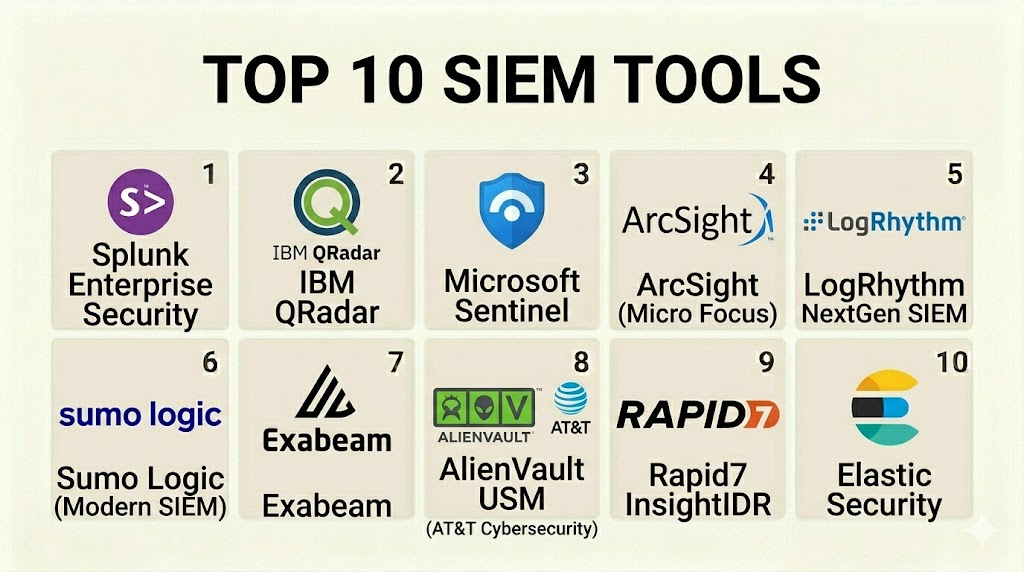
Introduction
Security Information and Event Management (SIEM) represents a specialized category of software that provides a unified view of an organization’s security posture. By combining Security Information Management (SIM)—which handles log collection and reporting—with Security Event Management (SEM)—which analyzes data in real-time—SIEM platforms allow security teams to detect, investigate, and respond to threats across their entire digital estate. These systems function by ingesting massive volumes of data from network devices, servers, domain controllers, and applications, then applying correlation rules and artificial intelligence to identify patterns indicative of a cyberattack.
In the modern cybersecurity landscape, the sheer volume of telemetry data makes manual oversight impossible. SIEM platforms act as the “brain” of the Security Operations Center (SOC), filtering out noise and elevating critical alerts that require human intervention. This capability is essential for meeting rigorous regulatory requirements and defending against sophisticated actors who use stealthy lateral movement techniques. A modern SIEM does not just store logs; it provides context, linking disparate events into a cohesive “threat story.”
Real-world use cases:
- Threat Detection: Identifying unauthorized access attempts or suspicious data exfiltration in real-time.
- Incident Response: Providing a centralized timeline of events during a forensic investigation.
- Compliance Reporting: Automatically generating reports for frameworks such as GDPR, HIPAA, and PCI DSS.
- User Behavior Monitoring: Detecting compromised credentials by identifying deviations from a user’s normal activity.
- Operational Visibility: Monitoring the health and performance of critical IT infrastructure through security logs.
Evaluation criteria for buyers:
- Ingestion Flexibility: The ability to pull data from cloud, on-premises, and hybrid sources seamlessly.
- Detection Efficacy: The sophistication of correlation rules and built-in threat intelligence.
- Search Performance: How quickly the system can query petabytes of historical data during an investigation.
- Automation (SOAR): Built-in capabilities to execute automated playbooks in response to alerts.
- User and Entity Behavior Analytics (UEBA): The quality of AI-driven anomaly detection for identifying “insider threats.”
- Deployment Model: Support for cloud-native, self-hosted, or managed service delivery.
- Data Retention Policies: Options for long-term “cold” storage vs. “hot” searchable storage.
- Ecosystem Integrations: The breadth of supported third-party security tools and APIs.
- Scalability: The framework’s ability to handle sudden spikes in log volume without dropping data.
- Total Cost of Ownership: Balancing ingestion-based pricing against the value of security insights.
Mandatory paragraph
- Best for: Large enterprise organizations, regulated financial institutions, government agencies, and managed security service providers (MSSPs) who require deep visibility and centralized compliance management.
- Not ideal for: Small businesses with no dedicated IT security staff, organizations with very low log volumes, or those looking for a simple “set it and forget it” antivirus replacement.
Key Trends in SIEM Technology for the Modern Landscape
- Convergence with XDR: SIEM platforms are increasingly merging with Extended Detection and Response (XDR) to provide deeper endpoint and cloud-native visibility.
- Cloud-Native Architectures: A shift away from resource-heavy on-premises appliances toward elastic, serverless SIEM models that scale instantly.
- AI-Driven Correlation: Moving beyond manual “if-this-then-that” rules to machine learning models that can identify novel attack techniques without prior signatures.
- Natural Language Querying: The integration of Large Language Models (LLMs) that allow analysts to search for threats using plain English instead of complex query languages.
- Security Data Lakes: Decoupling storage from compute, allowing organizations to store years of data in low-cost lakes while only “hydrating” it for analysis when needed.
- Identity-Centric Security: A heightened focus on monitoring identity providers (IdPs) as the primary perimeter of modern organizations.
- Automated Remediation: The standard inclusion of Security Orchestration, Automation, and Response (SOAR) to automatically isolate compromised hosts.
- Proactive Threat Hunting: Built-in tools that help senior analysts look for hidden indicators of compromise (IoCs) that haven’t triggered formal alerts yet.
How We Selected These Tools (Methodology)
To determine the leading SIEM solutions for this guide, we applied a rigorous evaluation methodology focused on technical maturity and operational reliability:
- Market Share & Reliability: We prioritized tools used by global leaders in the cybersecurity industry.
- Technical Breadth: We evaluated the presence of “next-gen” features such as UEBA and native SOAR.
- Performance Under Stress: Analysis of how these platforms handle high EPS (Events Per Second) without significant latency.
- Community & Threat Intelligence: We looked for platforms supported by dedicated research labs that provide frequent threat signature updates.
- Administrative Experience: Assessment of the ease of configuration, dashboarding, and alert tuning.
- Security Controls: Evaluating the platform’s own security, including encryption, access controls, and audit logging.
Top 10 SIEM Tools
#1 — Splunk Enterprise Security
Short description: A premier, data-centric SIEM platform known for its immense search power and flexibility in handling diverse data types. It is the gold standard for large-scale security operations.
Key Features
- Massive Data Ingestion: Capable of indexing nearly any machine data from any source.
- Mission Control: A unified interface that brings together SIEM, SOAR, and UEBA capabilities.
- Risk-Based Alerting: Reduces alert fatigue by prioritizing events based on risk scores.
- Advanced Visualization: Highly customizable dashboards for real-time security monitoring.
- Splunk MLTK: A machine learning toolkit for building custom security detection models.
- Federated Search: Search data across multiple environments without needing to centralize it.
Pros
- Unrivaled flexibility; can be tailored to meet the needs of any complex environment.
- Extensive library of “apps” and integrations through the Splunkbase ecosystem.
Cons
- Historically complex and expensive pricing model based on data volume.
- Requires specialized training (Splunk Power User/Admin) to manage effectively.
Platforms / Deployment
- Windows / Linux
- Cloud / Self-hosted / Hybrid
Security & Compliance
- SSO/SAML, MFA, RBAC, Encryption at rest and in transit.
- SOC 2, ISO 27001, PCI DSS, FedRAMP.
Integrations & Ecosystem
Splunk offers one of the largest integration ecosystems in the security industry.
- Palo Alto Networks / Cisco / Fortinet
- AWS / Azure / Google Cloud
- ServiceNow / Jira
- CrowdStrike / SentinelOne
Support & Community
Massive global community, extensive documentation, and “Splunk University” for formal training.
#2 — Microsoft Sentinel
Short description: A cloud-native SIEM and SOAR platform built into Azure, offering seamless integration with the Microsoft ecosystem and elastic scaling.
Key Features
- Cloud-Native Scalability: No infrastructure to manage; scales automatically with data volume.
- AI-Powered Investigation: Utilizes Microsoft’s “Fusion” machine learning to link related alerts into incidents.
- Kusto Query Language (KQL): A high-performance query language designed for big data analysis.
- ASIM (Advanced SIEM Information Model): Standardizes diverse data sources into a common schema.
- Integrated Playbooks: Native SOAR capabilities built on top of Azure Logic Apps.
- Microsoft 365 Integration: Often includes specialized data connectors for Microsoft environments.
Pros
- Rapid deployment; can be active in minutes for Azure-heavy environments.
- No upfront hardware or software licensing costs; uses a consumption-based model.
Cons
- Can become expensive if ingesting large volumes of non-Microsoft data.
- Requires proficiency in KQL for advanced threat hunting.
Platforms / Deployment
- Azure
- Cloud
Security & Compliance
- Azure Active Directory (MFA, SSO), RBAC, Customer-Managed Keys.
- HIPAA, GDPR, SOC 2, FedRAMP High.
Integrations & Ecosystem
Deeply integrated with the Azure and Microsoft 365 security stacks.
- Microsoft Defender for Endpoint/Cloud/Identity
- Office 365 / Active Directory
- AWS / Google Cloud Connectors
- Symantec / Check Point
Support & Community
Extensive support through the Azure portal and a massive library of community-contributed “workbooks” on GitHub.
#3 — IBM QRadar Log Insights
Short description: A veteran SIEM platform focused on automated correlation and deep packet inspection, designed for complex enterprise SOCs.
Key Features
- Sense Analytics Engine: Automatically prioritizes threats based on a comprehensive risk-scoring algorithm.
- QFlow: Provides deep visibility into network flows and packet data beyond standard logs.
- Unified Analyst Experience: A modern UI that streamlines investigation workflows.
- Native UEBA: Analyzes user behavior to detect compromised accounts.
- Automated Asset Discovery: Automatically identifies new devices as they appear on the network.
- Cognitive Intelligence: Integration with Watson AI for advanced threat analysis.
Pros
- Exceptional at identifying “out-of-the-box” threats with minimal manual tuning.
- Strong focus on network-level visibility compared to log-only SIEMs.
Cons
- The traditional interface can feel dated compared to newer cloud-native tools.
- Can be resource-intensive for on-premises deployments.
Platforms / Deployment
- Linux (Appliance or Software)
- Cloud / Self-hosted / Hybrid
Security & Compliance
- SSO, MFA, Granular RBAC, Audit trails.
- FIPS 140-2, SOC 2, ISO 27001.
Integrations & Ecosystem
IBM provides a wide range of connectors through the QRadar App Exchange.
- Carbon Black / Tanium
- Salesforce / Box
- Cisco ISE
- Check Point / Juniper
Support & Community
Robust enterprise support from IBM and a large network of certified deployment partners.
#4 — Google Chronicle Security Operations
Short description: A planet-scale security analytics platform that leverages Google’s infrastructure to provide massive speed and search capabilities.
Key Features
- Sub-Second Search: Search across years of data in milliseconds, regardless of volume.
- Unified Data Model (UDM): Automatically normalizes all incoming data into a consistent format.
- Curated Detections: Detections built and maintained by Google’s specialized research teams.
- Integrated SOAR: Built-in automation and orchestration based on the Siemplify acquisition.
- Contextual Enrichment: Automatically enriches alerts with threat intelligence and asset data.
- Fixed Pricing Model: Often offers pricing based on employee count rather than data volume.
Pros
- Eliminates the “log everything or save money” dilemma with predictable pricing.
- Incredible performance for threat hunting across massive historical datasets.
Cons
- Relatively newer in the market with a smaller library of legacy connectors.
- Less flexibility in creating complex manual correlation rules compared to Splunk.
Platforms / Deployment
- Google Cloud
- Cloud
Security & Compliance
- Google Cloud Identity, IAM, Data encryption at rest and in transit.
- SOC 2, ISO 27001, HIPAA.
Integrations & Ecosystem
Leverages the Google Cloud ecosystem while supporting multi-cloud sources.
- Google Workspace / GCP
- CrowdStrike / Okta
- Zscaler / Netskope
- Proofpoint
Support & Community
Growing community and technical support through Google Cloud’s professional services.
#5 — Exabeam Security Operations Platform
Short description: A pioneer in UEBA, Exabeam focuses on “behavioral” SIEM, providing a timeline-based view of security incidents.
Key Features
- Smart Timelines: Automatically stitches together related events into a chronological story of an attack.
- Behavioral Analytics: Profiles every user and device to find subtle anomalies.
- New-Scale SIEM: A cloud-native architecture designed for massive scale and speed.
- Site Collector: Lightweight software for easy data ingestion from on-premises environments.
- Outcome-Based Guidance: Provides specific recommendations for improving security coverage.
- Integrated SOAR: Pre-built playbooks for automated response.
Pros
- Exceptional for detecting lateral movement and insider threats.
- The timeline view significantly reduces the time required for incident investigation.
Cons
- Can be complex to tune for environments with highly non-standard user behaviors.
- The focus on UEBA may require secondary tools for traditional compliance log management.
Platforms / Deployment
- Linux
- Cloud / Hybrid
Security & Compliance
- MFA, SSO, RBAC.
- SOC 2 Type II, ISO 27001.
Integrations & Ecosystem
Broad support for modern security and IT tools.
- Okta / Ping Identity
- Mimecast / Barracuda
- VMware / Nutanix
- Darktrace
Support & Community
Highly rated customer support and a dedicated “Exabeam Community” for knowledge sharing.
#6 — Securonix Next-Gen SIEM
Short description: A cloud-native SIEM built on a “big data” stack (Hadoop/Kafka), specializing in behavioral analytics and threat hunting.
Key Features
- Open Data Architecture: Built on open standards to avoid vendor lock-in.
- Context-Aware Detection: Links identity, asset, and threat intelligence to every log.
- Threat Labs: Continuous updates of detection content based on real-world research.
- Cloud-Native SaaS: Managed SIEM experience with no infrastructure overhead.
- Autonomous Threat Sweeper: Automatically hunts for new IoCs across historical data.
- Zero-Trust Analytics: Specialized monitoring for zero-trust architectures.
Pros
- Very strong UEBA capabilities out of the box.
- Highly scalable architecture designed for very high EPS environments.
Cons
- The UI can have a steep learning curve for junior analysts.
- Implementation can take longer compared to more “plug-and-play” cloud SIEMs.
Platforms / Deployment
- Cloud (AWS-hosted)
- Cloud
Security & Compliance
- MFA, SSO, Data masking, RBAC.
- SOC 2, HIPAA, PCI DSS.
Integrations & Ecosystem
Comprehensive connectors for cloud and enterprise software.
- AWS / Azure / GCP
- Office 365 / Slack
- SailPoint / CyberArk
- FireEye
Support & Community
Professional services-heavy approach with strong enterprise support options.
#7 — LogRhythm SIEM
Short description: A veteran SIEM solution known for its structured workflow and strong focus on compliance and operational efficiency.
Key Features
- SmartResponse: A powerful automation framework for executing scripted responses.
- LogRhythm Axon: A modern, cloud-native SaaS version of their SIEM platform.
- AI Engine: Real-time correlation and pattern recognition.
- Data Processor: Efficiently normalizes and enriches logs at the point of ingestion.
- Precision Search: A specialized query engine for rapid forensic investigation.
- Case Management: Built-in tools for managing the lifecycle of a security incident.
Pros
- Highly organized workflow that guides analysts through the detection and response process.
- Excellent compliance automation for standard frameworks.
Cons
- The classic version can be difficult to scale compared to the newer Axon platform.
- Requires significant initial configuration for custom log sources.
Platforms / Deployment
- Windows / Linux
- Cloud / Self-hosted / Hybrid
Security & Compliance
- SSO, MFA, Encryption.
- FIPS 140-2, SOC 2.
Integrations & Ecosystem
Mature integration library for traditional and modern infrastructure.
- Cisco / Juniper
- VMware / Citrix
- AWS / Azure
- Symantec
Support & Community
Very strong community support and a well-regarded professional services team.
#8 — Fortinet FortiSIEM
Short description: A multi-tenant SIEM that combines security monitoring with performance and availability tracking (NOC + SOC).
Key Features
- Unified NOC/SOC: Monitors both security events and hardware performance in one view.
- Self-Learning Asset Inventory: Automatically maps the network and identifies device types.
- Multi-Tenancy: Designed for MSSPs to manage multiple clients from a single instance.
- Scalable Architecture: Uses a distributed controller/worker model for high performance.
- Compliance Templates: Hundreds of pre-built reports for global regulations.
- Incident Response Integration: Native hooks into the Fortinet Security Fabric.
Pros
- Ideal for organizations that want to monitor security and IT operations in a single tool.
- Strongest value proposition for organizations already using Fortinet hardware.
Cons
- Can be overly complex for teams only interested in security logs.
- UEBA features are not as deep as specialized competitors like Exabeam.
Platforms / Deployment
- Linux (Virtual or Hardware)
- Cloud / Self-hosted / Hybrid
Security & Compliance
- RBAC, MFA, Secure communication protocols.
- Not publicly stated.
Integrations & Ecosystem
Tightly integrated with Fortinet, but supports a vast range of third-party vendors.
- FortiGate / FortiAnalyzer
- Cisco / Arista
- AWS / Azure / GCP
- Microsoft AD
Support & Community
Standard Forticare support and a large network of Fortinet partners.
#9 — Rapid7 InsightIDR
Short description: A lightweight, SaaS-based SIEM focused on ease of use and rapid threat detection for mid-to-large enterprises.
Key Features
- Insight Agent: A universal agent for log collection and endpoint visibility.
- Attacker Behavior Analytics (ABA): Focuses on detecting the techniques used by modern hackers.
- Cloud-Native SaaS: No hardware to manage; rapid time-to-value.
- Deception Technology: Built-in honey-tokens and decoy files to trap attackers.
- Integrated UEBA: Automatically baselines user activity to find anomalies.
- Centralized Log Management: Easy search and long-term storage of all log data.
Pros
- One of the easiest SIEMs to deploy and maintain for smaller SOC teams.
- Includes built-in endpoint detection and deception tools, adding extra value.
Cons
- Less customizable than “heavy” SIEMs like Splunk or QRadar.
- May struggle with extremely complex, non-standard log sources.
Platforms / Deployment
- Cloud
- Cloud
Security & Compliance
- SSO, MFA, Encryption.
- SOC 2 Type II.
Integrations & Ecosystem
Focuses on modern IT and security integrations.
- Okta / Azure AD
- AWS / Office 365
- Carbon Black / CrowdStrike
- ServiceNow
Support & Community
Strong technical support and an active “Insight” community.
#10 — Sumo Logic Cloud SIEM
Short description: A purely cloud-native analytics platform that provides real-time security insights through an “insight-based” workflow.
Key Features
- Cloud-Native SaaS: Built for the cloud, with high availability and no maintenance.
- Insight-Based Workflow: Groups related signals into high-fidelity “insights” to reduce noise.
- Deep AWS Observability: Specialized monitoring for AWS environments and serverless apps.
- Elastic Scaling: Handles massive bursts in data volume without configuration changes.
- Integrated SOAR: Full orchestration capabilities for incident response.
- Log Analytics: Powerful search and dashboarding for both security and operations.
Pros
- Excellent for modern, cloud-first companies and DevOps environments.
- Simple, predictable pricing model compared to some competitors.
Cons
- Not ideal for organizations with massive on-premises data that cannot be moved to the cloud.
- Lacks some of the “deep packet” visibility of network-centric SIEMs.
Platforms / Deployment
- Cloud
- Cloud
Security & Compliance
- MFA, SSO, RBAC, Encryption.
- SOC 2, PCI DSS, HIPAA, FedRAMP.
Integrations & Ecosystem
Optimized for the cloud-native ecosystem.
- AWS / Azure / GCP
- GitHub / PagerDuty
- Docker / Kubernetes
- Akamai / Cloudflare
Support & Community
Strong support for modern developers and security engineers.
Comparison Table (Top 10)
| Tool Name | Best For | Platform(s) Supported | Deployment | Standout Feature | Public Rating |
| #1 Splunk ES | Large Enterprises | Win, Linux, Cloud | Hybrid | Search Flexibility | 4.6/5 |
| #2 Microsoft Sentinel | Azure Users | Azure | Cloud | Fusion AI Correlation | 4.5/5 |
| #3 IBM QRadar | Network Visibility | Linux, Cloud | Hybrid | Deep Packet (QFlow) | 4.4/5 |
| #4 Google Chronicle | High-Speed Search | Google Cloud | Cloud | Employee-based Pricing | 4.3/5 |
| #5 Exabeam | Insider Threats | Linux, Cloud | Hybrid | Smart Timelines | 4.5/5 |
| #6 Securonix | SaaS-first UEBA | Cloud | Cloud | Open Big Data Stack | 4.4/5 |
| #7 LogRhythm | Compliance/NOC | Win, Linux, Cloud | Hybrid | Precision Search | 4.3/5 |
| #8 FortiSIEM | NOC/SOC Hybrid | Linux, Cloud | Hybrid | Multi-Tenancy | 4.2/5 |
| #9 Rapid7 InsightIDR | Rapid Deployment | Cloud | Cloud | Deception Technology | 4.5/5 |
| #10 Sumo Logic | Cloud-Native Ops | Cloud | Cloud | Insight-Based Workflow | 4.4/5 |
Evaluation & Scoring of SIEM Tools
The scoring below is comparative, representing how each tool stacks up against modern enterprise requirements.
| Tool Name | Core (25%) | Ease (15%) | Integrations (15%) | Security (10%) | Performance (10%) | Support (10%) | Value (15%) | Weighted Total |
| #1 Splunk | 10 | 4 | 10 | 9 | 10 | 9 | 6 | 8.40 |
| #2 Sentinel | 8 | 9 | 9 | 10 | 9 | 9 | 8 | 8.60 |
| #3 QRadar | 9 | 5 | 8 | 9 | 8 | 9 | 7 | 7.80 |
| #4 Chronicle | 7 | 8 | 8 | 9 | 10 | 8 | 9 | 8.10 |
| #5 Exabeam | 9 | 7 | 8 | 8 | 9 | 8 | 7 | 7.95 |
| #6 Securonix | 9 | 6 | 9 | 8 | 9 | 8 | 7 | 7.90 |
| #7 LogRhythm | 8 | 6 | 8 | 9 | 8 | 9 | 8 | 7.75 |
| #8 FortiSIEM | 7 | 5 | 9 | 8 | 8 | 8 | 9 | 7.45 |
| #9 Rapid7 | 7 | 10 | 7 | 8 | 8 | 8 | 9 | 8.05 |
| #10 Sumo Logic | 8 | 9 | 8 | 9 | 9 | 8 | 8 | 8.40 |
Notes on Interpretation:
- Core features (25%): Reflects the depth of correlation and analytic capabilities.
- Ease of use (15%): Reflects the “Time to Value” and operational overhead.
- Value (15%): Reflects the price-to-feature ratio and predictability of costs.
Which SIEM Tool Is Right for You?
Solo / Freelancer
For a single consultant managing security for clients, #9 Rapid7 InsightIDR or the free tier of #2 Microsoft Sentinel (for small Azure environments) are the most practical. They offer low management overhead and intuitive interfaces.
SMB
Small-to-medium businesses with limited security staff should prioritize #9 Rapid7 InsightIDR or #10 Sumo Logic. These platforms are purely SaaS and provide a large amount of pre-built content, reducing the need for manual rule-writing.
Mid-Market
Growing companies with a mix of cloud and on-premises infrastructure should look toward #5 Exabeam or #7 LogRhythm. These provide the forensic depth needed for growing security teams without the massive complexity of a top-tier enterprise SIEM.
Enterprise
Large-scale organizations with a global footprint and high compliance requirements should choose #1 Splunk ES, #2 Microsoft Sentinel, or #3 IBM QRadar. These tools offer the scalability and deep integration required to secure complex, multi-cloud environments.
Budget vs Premium
- Budget Focused: Google Chronicle (Fixed employee pricing) or Microsoft Sentinel (Pay only for what you use).
- Premium Focused: Splunk Enterprise Security or IBM QRadar.
Feature Depth vs Ease of Use
- High Depth: Splunk ES, IBM QRadar, Securonix.
- High Ease of Use: Rapid7 InsightIDR, Microsoft Sentinel, Sumo Logic.
Integrations & Scalability
- Top Integrations: Splunk, Microsoft Sentinel.
- Top Scalability: Google Chronicle, Sumo Logic.
Security & Compliance Needs
Organizations in highly regulated sectors should prioritize IBM QRadar or Splunk, as they offer the most mature compliance reporting and long-term audit trail capabilities.
Frequently Asked Questions (FAQs)
1. What is the difference between a SIEM and a Log Management tool?
Log management tools are designed to collect and store data for searching and compliance. A SIEM goes much further by applying real-time correlation and analytics to that data to identify actual security threats as they occur.
2. Can a SIEM detect an attack that has never been seen before?
Modern SIEMs use UEBA (User and Entity Behavior Analytics) to detect anomalies. Even if an attack doesn’t have a known signature, the SIEM can detect that a user’s behavior is unusual, such as accessing sensitive files they have never touched before.
3. How long does it take to implement a SIEM platform?
A cloud-native SIEM like Microsoft Sentinel or Rapid7 can be active in hours. A complex, on-premises enterprise deployment like Splunk or QRadar can take weeks or even months to fully tune and integrate.
4. Is it possible to use a SIEM for performance monitoring too?
Yes, tools like FortiSIEM and Sumo Logic are designed to provide both NOC (Network Operations Center) and SOC (Security Operations Center) visibility, monitoring both security events and hardware health.
5. Why are SIEM tools so expensive?
The cost is usually driven by the volume of data ingested and the compute power required to analyze it in real-time. Organizations can manage costs by filtering out “noisy” logs that have no security value before they hit the SIEM.
6. What happens if my SIEM platform goes down?
Most enterprise SIEMs use high-availability (HA) architectures or cloud-native redundancy. Additionally, log collectors usually have “caching” capabilities to store data locally until the main platform is back online.
7. Does a SIEM replace my firewall or antivirus?
No. A SIEM is a central aggregator. It relies on the logs generated by your firewall, antivirus, and other security tools to do its job. It complements your existing security stack rather than replacing it.
8. What is the role of SOAR in a SIEM?
SOAR (Security Orchestration, Automation, and Response) allows the SIEM to take action. For example, if the SIEM detects a ransomware attack, the SOAR component can automatically disable the affected user’s account and isolate their computer.
9. Can I use a SIEM in a purely cloud-based environment?
Yes, cloud-native SIEMs like Google Chronicle, Sumo Logic, and Microsoft Sentinel are designed specifically for this. They ingest data via APIs directly from other cloud services without needing local hardware.
10. How do I reduce the number of false positives in my SIEM?
Reducing false positives requires “tuning.” This involves adjusting correlation rules to ignore known safe activities and using machine learning to help the system understand what “normal” looks like in your specific environment.
Conclusion
The selection of a Security Information and Event Management (SIEM) platform is a foundational decision for any modern security strategy. Whether you choose the massive flexibility of Splunk, the cloud-native efficiency of Microsoft Sentinel, or the behavioral depth of Exabeam, the goal is the same: converting millions of raw logs into a single, actionable security story. As threats become more automated, the ability of your SIEM to respond at machine speed using SOAR and AI will be the primary factor in your organization’s resilience.

This was a very informative post. I learned a few new things today.
A practical gap to add is log source health and parser governance. A SIEM can look fully operational while critical identity, endpoint, or cloud logs silently stop flowing or fail normalization. Monitoring ingestion quality, parser drift, and detection coverage should be treated as core SOC operations, not setup tasks.