MOTOSHARE 🚗🏍️
Rent Bikes & Cars Directly from Owners
Motoshare connects vehicle owners with people who need bikes and cars on rent. Owners earn from idle vehicles, and renters get flexible ride options.
Visit Motoshare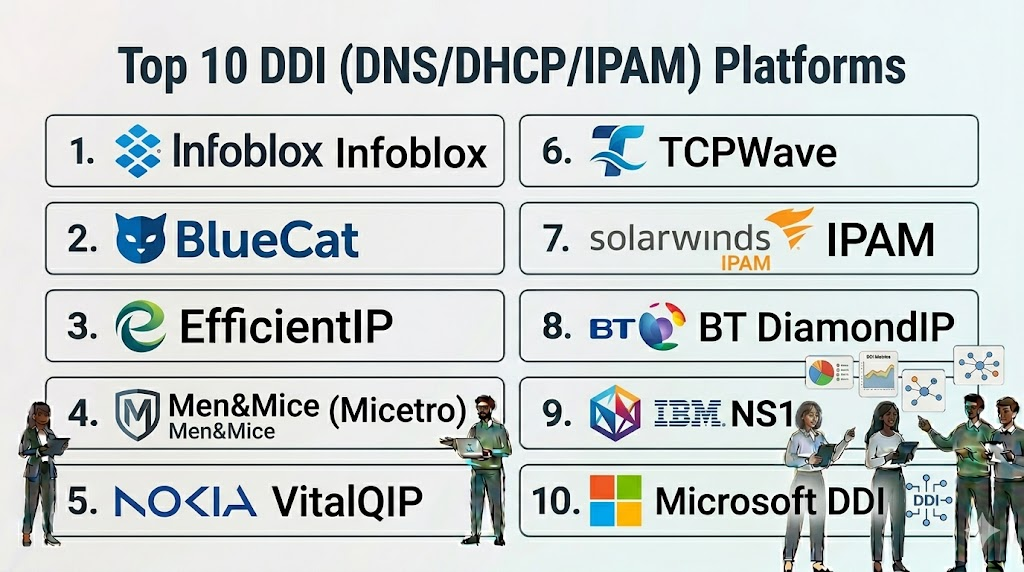
Introduction
DDI is a critical networking acronym that represents the integration of three core network services: Domain Name System (DNS), Dynamic Host Configuration Protocol (DHCP), and IP Address Management (IPAM). In plain English, DDI is the framework that manages how devices are identified on a network, how they receive their numerical addresses, and how those addresses are mapped to human-readable names. Without a functional DDI platform, modern enterprise networks would struggle to maintain connectivity, leading to manual errors, security vulnerabilities, and frequent downtime.
In the modern networking landscape, the explosion of IoT devices, hybrid cloud environments, and remote work has made centralized DDI management a necessity rather than an option. Organizations can no longer rely on disparate spreadsheets or basic built-in server tools to track thousands of IP addresses and DNS records. Modern DDI platforms provide a “single source of truth,” allowing IT administrators to automate the deployment of network resources and secure the network perimeter against DNS-based attacks.
Real-world use cases for these platforms include:
- Hybrid Cloud Visibility: Tracking IP assets across on-premises data centers and multiple public cloud providers.
- IoT Provisioning: Automatically assigning and managing thousands of addresses for smart devices in a manufacturing or healthcare setting.
- Zero Trust Architecture: Using DNS security to block access to known malicious domains at the point of request.
- Microservices Management: Handling the rapid creation and destruction of IP addresses within containerized environments like Kubernetes.
- Compliance Auditing: Maintaining a precise historical log of every device that has connected to the network for forensic or regulatory purposes.
When evaluating a DDI platform, buyers should prioritize the following criteria:
- Automation Capabilities: Support for API-driven workflows and Infrastructure as Code (IaC).
- Centralized Management: A single dashboard to manage global DNS, DHCP, and IPAM across all environments.
- Security Features: Integrated DNSSEC, threat intelligence, and protection against DDoS attacks.
- Scalability: The ability to handle high-volume query loads and massive IP address spaces without latency.
- High Availability: Robust failover mechanisms for DHCP and redundant DNS clusters.
- Interoperability: Native integrations with cloud platforms, virtualization tools, and ITSM software.
- Reporting and Analytics: Detailed insights into network usage, historical trends, and security anomalies.
- Cloud-Native Support: Ability to manage IPAM for ephemeral resources like containers and serverless functions.
Best for: Large-scale enterprises, financial institutions, healthcare providers, and organizations managing complex hybrid or multi-cloud infrastructures.
Not ideal for: Small businesses with static, local-only networks or organizations with fewer than 50 connected devices that can be managed with basic router settings.
Key Trends in DDI Platforms
- API-First Design: Modern platforms are shifting toward “headless” DDI where every function is accessible via RESTful APIs to support DevOps automation.
- DNS Security (DNSSEC/DoH): There is an increasing focus on encrypting DNS traffic via DNS over HTTPS (DoH) and ensuring record integrity via DNSSEC to prevent spoofing.
- Infrastructure as Code (IaC) Integration: DDI platforms are becoming native components of Terraform and Ansible workflows, allowing network resources to be spun up alongside compute.
- AI-Driven Anomaly Detection: Leveraging machine learning to identify “DNS tunneling” or data exfiltration attempts that traditional firewalls might miss.
- Overlay vs. Integrated Models: Organizations are choosing between “Overlay” tools that manage existing DNS/DHCP servers and “Integrated” tools that replace them with proprietary hardware or software.
- Edge DDI: Moving DNS and DHCP services closer to the end-user or IoT device to reduce latency and ensure local survival if the central link fails.
- Multi-Cloud IPAM Sync: Automated synchronization that prevents IP address overlaps when connecting different cloud VPCs.
- SaaS-Based Management: A move toward cloud-managed DDI controllers that reduce the need for maintaining complex on-premises management servers.
How We Selected These Tools (Methodology)
To identify the leading DDI platforms, we utilized a comprehensive selection framework based on the following logic:
- Market Share and Enterprise Adoption: Prioritizing tools used by global organizations to manage mission-critical infrastructure.
- Technical Breadth: Ensuring the platforms provide a truly integrated experience across all three pillars (DNS, DHCP, and IPAM).
- Security Posture: Weighting tools that offer proactive defense mechanisms against network-level threats.
- Deployment Flexibility: Selecting a mix of hardware appliance, virtual machine, and cloud-delivered solutions.
- Ecosystem Maturity: Analysis of third-party integration support with major cloud and virtualization vendors.
- Reliability Signals: Evaluation of high-availability configurations and proven performance in high-query environments.
- Automation Readiness: Considering the robustness of the platform’s API and its compatibility with modern DevOps toolchains.
Top 10 DDI (DNS/DHCP/IPAM) Platforms
1 — Infoblox
Infoblox is widely regarded as the market leader in the DDI space. Its BloxOne and NIOS platforms offer a comprehensive suite of services designed to provide carrier-grade reliability and security for enterprise networks.
Key Features
- Grid Technology: A unique distributed architecture that ensures seamless synchronization and high availability across global locations.
- BloxOne Threat Defense: Integrated security that uses DNS as a first line of defense to block malware and data exfiltration.
- Ecosystem Integration: Extensive connectors for AWS, Azure, VMware, and OpenStack for automated IPAM.
- Discovery Engine: Automatically scans the network to find and catalog “dark” IP addresses and unauthorized devices.
- Reporting and Analytics: Advanced data visualization for capacity planning and compliance auditing.
Pros
- Exceptional reliability with a proven track record in the world’s largest networks.
- Industry-leading security intelligence and threat blocking capabilities.
Cons
- High total cost of ownership compared to entry-level solutions.
- Can be complex to configure for small IT teams.
Platforms / Deployment
- Windows / macOS / Linux / Hardware Appliances
- Cloud / Self-hosted / Hybrid
Security & Compliance
- SSO/SAML, MFA, RBAC, DNSSEC, FIPS 140-2
- SOC 2, ISO 27001 compliant
Integrations & Ecosystem
Infoblox offers a massive library of APIs and pre-built integrations for the modern data center.
- Terraform / Ansible
- ServiceNow
- Kubernetes
- Cisco ISE
Support & Community
Comprehensive enterprise support with 24/7 availability, extensive technical documentation, and a global community of certified engineers.
2 — BlueCat
BlueCat focus on “Adaptive DNS,” providing a platform that bridges the gap between traditional network management and modern DevOps requirements.
Key Features
- BlueCat Integrity: A centralized management platform for complex DNS, DHCP, and IPAM data.
- Service Discovery: Automatically maps and manages DNS records for ephemeral services in cloud environments.
- BlueCat Gateway: A flexible automation engine that allows users to create custom workflows and self-service portals.
- Edge DNS: Distributed DNS resolution that provides security and performance at the network edge.
- Visibility and Control: Granular auditing of every DNS query across the entire enterprise.
Pros
- Strong focus on automation and developer-friendly workflows.
- Excellent scalability for large, distributed global footprints.
Cons
- Requires a dedicated management server (Address Manager), which adds to infrastructure overhead.
- Learning curve for the Gateway’s custom scripting environment.
Platforms / Deployment
- Linux-based Virtual Appliances / Hardware
- Cloud / Self-hosted / Hybrid
Security & Compliance
- SSO, RBAC, TLS encryption
- Not publicly stated
Integrations & Ecosystem
BlueCat excels in connecting with cloud-native stacks and virtualization layers.
- AWS / Azure / Google Cloud
- VMware vRealize
- Splunk
- Cisco
Support & Community
Robust professional services, a dedicated customer success model, and a strong presence in the enterprise networking community.
3 — EfficientIP
EfficientIP is known for its SOLIDserver suite, which emphasizes “Smart DDI” to improve business continuity and network security through unique patented technologies.
Key Features
- DNS Guardian: Patented technology that provides deep packet inspection to protect against DNS-based DDoS attacks.
- SmartArchitecture: Simplifies the management of complex DNS/DHCP clusters through automated templates.
- IPAM Sync: Real-time synchronization of IP data across multi-vendor environments, including Microsoft and BIND.
- NetChange: An automated switch port management tool that links IPAM data to physical network infrastructure.
- Cloud Observer: Provides visibility into IP resources across various public cloud providers in a single view.
Pros
- High-performance DNS engines capable of handling millions of queries per second.
- Innovative security features that go beyond simple blacklisting.
Cons
- Smaller market presence in North America compared to Infoblox or BlueCat.
- Interface can feel less modern than some cloud-native competitors.
Platforms / Deployment
- Hardware Appliances / Virtual Appliances
- Cloud / Self-hosted / Hybrid
Security & Compliance
- RBAC, DNSSEC, Stealth DNS
- Not publicly stated
Integrations & Ecosystem
EfficientIP offers robust API support for integrating with infrastructure orchestration tools.
- Ansible
- Tufin
- ServiceNow
- AWS / Azure
Support & Community
Global support footprint with localized assistance and a focus on high-touch technical engineering.
4 — Men&Mice (Micetro)
Micetro by Men&Mice is an “Overlay” DDI solution. Instead of replacing existing DNS/DHCP servers, it sits on top of them to provide a unified management layer across multi-vendor and multi-cloud environments.
Key Features
- Unified Management: Manage Microsoft DNS/DHCP, BIND, Kea, and cloud-native services from one interface.
- Role-Based Access Control: Highly granular permissions that can be applied across different underlying technologies.
- API-First Approach: A powerful JSON-RPC and REST API designed for massive automation.
- Cloud-Native IPAM: Deep visibility into Azure, AWS, and Google Cloud IP address spaces.
- Workflow Delegation: Allows non-admin users to manage specific ranges or zones safely.
Pros
- Non-disruptive deployment; no need to rip and replace existing infrastructure.
- Incredibly lightweight and fast user interface.
Cons
- As an overlay, it depends on the reliability of the underlying DNS/DHCP servers.
- Lacks the integrated hardware security features of appliance-based vendors.
Platforms / Deployment
- Windows / Linux / Virtual Machines
- Cloud / Self-hosted / Hybrid
Security & Compliance
- SSO/SAML, AD Integration, RBAC
- Not publicly stated
Integrations & Ecosystem
Micetro is the industry standard for managing heterogeneous DDI environments.
- Microsoft Active Directory
- Terraform
- Azure / AWS / GCP
- Kea DHCP
Support & Community
Exceptional technical support with direct access to engineers and a highly technical user base.
5 — Nokia VitalQIP
Nokia VitalQIP is a long-standing enterprise DDI solution known for its extreme scalability and its history in large service provider and corporate networks.
Key Features
- Centralized Policy Management: Standardizes DNS and DHCP configurations across thousands of remote sites.
- Multi-Vendor Support: Manages proprietary Nokia servers alongside BIND and Microsoft services.
- Automated IP Allocation: Highly efficient engines for managing IPv4 and IPv6 address exhaustion.
- Audit Trail: Detailed logging of all changes for strict regulatory compliance environments.
- Failover Mechanisms: Robust DHCP failover protocols to ensure constant device connectivity.
Pros
- Proven scalability in some of the world’s largest IP networks.
- Deep experience in the telecommunications and service provider sectors.
Cons
- Interface and management workflows can feel “legacy” compared to modern SaaS tools.
- Innovation cycle is slower than cloud-first DDI competitors.
Platforms / Deployment
- Solaris / Linux / Windows / Hardware
- Self-hosted / Hybrid
Security & Compliance
- RBAC, DNSSEC support
- Not publicly stated
Integrations & Ecosystem
VitalQIP focuses on core enterprise infrastructure and service provider back-office systems.
- Nokia Network Management
- Oracle
- SNMP-based monitoring
Support & Community
Enterprise-grade support through Nokia’s global logistics and technical assistance centers.
6 — TCPWave
TCPWave is a modern DDI solution that leverages a software-defined approach, focusing heavily on security, automation, and ease of deployment.
Key Features
- Anycast DNS: Provides high availability and localized performance for global DNS resolution.
- AI-Based Security: Uses machine learning to detect and mitigate DNS tunneling and unusual traffic patterns.
- REST API: A comprehensive API that covers 100% of the platform’s functionality.
- Multi-Cloud Controller: Simplifies IPAM across different cloud regions and providers.
- Patch Management: Automated, non-disruptive patching for the underlying DDI software.
Pros
- Modern, clean user interface with intuitive navigation.
- Strong emphasis on proactive security and anomaly detection.
Cons
- Smaller brand recognition in the broader enterprise market.
- Community resources are more limited compared to Infoblox or BlueCat.
Platforms / Deployment
- Virtual Appliances / Hardware / SaaS
- Cloud / Self-hosted / Hybrid
Security & Compliance
- SSO, MFA, RBAC, DNSSEC
- Not publicly stated
Integrations & Ecosystem
TCPWave offers modern integrations suitable for DevOps-centric organizations.
- Python / Java SDKs
- ServiceNow
- Terraform
- Slack (for alerts)
Support & Community
Responsive support teams and a focus on agile feature development based on customer feedback.
7 — SolarWinds IP Address Manager
SolarWinds provides an IPAM-focused solution that is often used by mid-market enterprises looking for an affordable and easy-to-deploy tool to replace spreadsheets.
Key Features
- IP Tracking: Automated scanning that provides a historical record of IP address changes and usage.
- Multi-Vendor Management: Manages Microsoft and Cisco DHCP/DNS servers from a single dashboard.
- IP Request Portal: Allows users to request IP addresses with automated or manual approval workflows.
- Alerting and Reporting: Notifies admins of IP conflicts, subnet exhaustion, or DNS record mismatches.
- Cloud DNS Monitoring: Provides visibility into Amazon Route 53 and Azure DNS zones.
Pros
- Very easy to install and get running within hours.
- Part of the broader Orion platform, offering great synergy with other SolarWinds tools.
Cons
- Lacks the high-end DNS security features found in Infoblox or EfficientIP.
- Primarily an IPAM-centric tool; DNS/DHCP management is less robust than pure-play DDI.
Platforms / Deployment
- Windows-based installation
- Cloud / Self-hosted
Security & Compliance
- RBAC, SSO (via Orion)
- Not publicly stated
Integrations & Ecosystem
SolarWinds is highly integrated with the broader Microsoft and VMware ecosystem.
- Active Directory
- VMware vCenter
- Cisco
- ServiceNow
Support & Community
Large user community (THWACK) and extensive online training resources.
8 — BT DiamondIP
BT DiamondIP is a robust DDI solution offered as either software, appliances, or a fully managed service, making it a popular choice for outsourced IT environments.
Key Features
- IP Control: A centralized management system for IPv4 and IPv6 address spaces.
- Sapphire Appliances: High-performance hardware and virtual appliances for DNS and DHCP delivery.
- Multi-Cloud IPAM: Visibility into virtual private clouds across AWS, Azure, and Oracle Cloud.
- Managed DDI: Options for BT to manage the entire infrastructure on behalf of the customer.
- DNS Firewall: Protection against malware and malicious domain access.
Pros
- Flexible deployment options, including a fully managed service model.
- Strong global support backing from BT’s telecommunications infrastructure.
Cons
- Can be expensive when opting for the fully managed service tier.
- Interface is functional but lacks the modern aesthetic of newer competitors.
Platforms / Deployment
- Hardware / Virtual / SaaS
- Cloud / Self-hosted / Hybrid / Managed
Security & Compliance
- RBAC, DNSSEC, SSO
- SOC 2 compliant
Integrations & Ecosystem
DiamondIP focuses on standard enterprise connectors for virtualization and cloud.
- VMware
- Microsoft Azure
- Amazon Web Services
Support & Community
Backed by BT’s extensive global technical support organization.
9 — IBM NS1
IBM NS1 (following the acquisition of NS1) provides a cloud-native DDI solution that is built for modern, highly dynamic application environments and global traffic management.
Key Features
- Filter Chain: A unique visual tool for creating complex traffic steering logic for global DNS.
- Pulsar: Real-time telemetry data used to steer users to the best performing endpoint.
- API-First Architecture: Designed for high-frequency updates and CI/CD pipeline integration.
- Cloud-Managed DDI: Reduces on-premises footprint with a SaaS control plane.
- Anycast Infrastructure: A global network for low-latency DNS resolution.
Pros
- Arguably the best solution for global traffic steering and edge performance.
- Built for the scale and speed of modern web applications.
Cons
- Pricing can be complex based on query volume and advanced steering features.
- Focus is more on external/application DNS than internal legacy DHCP.
Platforms / Deployment
- SaaS / Virtual Appliances
- Cloud / Hybrid
Security & Compliance
- DNSSEC, SSO, RBAC
- SOC 2 Type II compliant
Integrations & Ecosystem
NS1 is built for the modern developer and DevOps ecosystem.
- Terraform
- Datadog
- Slack
- GitHub Actions
Support & Community
Enterprise support through IBM’s global network with specialized engineering for traffic management.
10 — Microsoft DDI
Microsoft provides DDI capabilities primarily through Windows Server roles and Azure-native services. It is the default choice for many small-to-medium organizations heavily invested in the Microsoft stack.
Key Features
- Integrated Active Directory DNS: DNS records are automatically managed alongside user and computer accounts.
- Windows Server DHCP: A reliable and familiar DHCP service for Windows environments.
- Azure Private DNS: Managed DNS for virtual networks within the Azure cloud.
- IPAM Server Role: A built-in feature in Windows Server for basic IP address tracking and management.
- Azure IPAM: A cloud-native tool for managing addresses across Azure subscriptions.
Pros
- Effectively “free” if you already pay for Windows Server licenses.
- Seamless integration with Active Directory and Windows clients.
Cons
- Lacks the advanced security and automation features of dedicated DDI vendors.
- IPAM capabilities are rudimentary and often struggle with multi-vendor or non-Windows assets.
Platforms / Deployment
- Windows Server
- Cloud (Azure) / Self-hosted
Security & Compliance
- AD-based security, DNSSEC
- Compliant with standard Microsoft Enterprise certifications
Integrations & Ecosystem
The ecosystem is naturally focused on Microsoft products.
- Active Directory
- System Center
- Microsoft Azure
- PowerShell
Support & Community
Massive global support network and endless community documentation and forums.
Comparison Table (Top 10)
| Tool Name | Best For | Platform(s) Supported | Deployment | Standout Feature | Public Rating |
| Infoblox | Large Enterprises | Win/Mac/Linux/Appliance | Hybrid | Grid Synchronization | N/A |
| BlueCat | Automation & DevOps | Linux / Hardware | Hybrid | BlueCat Gateway | N/A |
| EfficientIP | High Performance & Security | Hardware / Virtual | Hybrid | DNS Guardian | N/A |
| Men&Mice (Micetro) | Multi-Vendor Overlay | Win/Linux/VM | Hybrid | Unified Overlay UI | N/A |
| Nokia VitalQIP | Service Providers | Solaris/Linux/Hardware | Self-hosted | Massive Scalability | N/A |
| TCPWave | AI-Security & UI | Virtual / Hardware / SaaS | Hybrid | AI Anomaly Detection | N/A |
| SolarWinds IPAM | Mid-Market Ease of Use | Windows | Self-hosted | Orion Ecosystem | N/A |
| BT DiamondIP | Managed Service Needs | Hardware / Virtual / SaaS | Managed/Hybrid | Managed DDI Option | N/A |
| IBM NS1 | Traffic Steering | SaaS / Virtual | Hybrid | Filter Chain Logic | N/A |
| Microsoft DDI | Microsoft-Centric Orgs | Windows Server / Azure | Self-hosted | Native AD Integration | N/A |
Evaluation & Scoring of DDI Platforms
The following scoring model evaluates these tools based on their fitness for professional enterprise environments.
| Tool Name | Core (25%) | Ease (15%) | Integrations (15%) | Security (10%) | Performance (10%) | Support (10%) | Value (15%) | Weighted Total |
| Infoblox | 10 | 6 | 10 | 10 | 10 | 9 | 6 | 8.5 |
| BlueCat | 9 | 7 | 9 | 8 | 9 | 8 | 7 | 8.1 |
| EfficientIP | 9 | 6 | 8 | 10 | 10 | 8 | 7 | 8.0 |
| Men&Mice (Micetro) | 7 | 10 | 9 | 7 | 8 | 9 | 9 | 8.3 |
| Nokia VitalQIP | 9 | 4 | 7 | 8 | 10 | 8 | 7 | 7.6 |
| TCPWave | 8 | 9 | 8 | 9 | 9 | 7 | 8 | 8.2 |
| SolarWinds IPAM | 6 | 9 | 7 | 6 | 7 | 8 | 9 | 7.3 |
| BT DiamondIP | 8 | 6 | 7 | 8 | 9 | 9 | 7 | 7.6 |
| IBM NS1 | 9 | 8 | 10 | 8 | 10 | 9 | 7 | 8.6 |
| Microsoft DDI | 5 | 9 | 6 | 6 | 7 | 10 | 10 | 7.3 |
How to interpret the scores
- Technical Powerhouses: Infoblox and EfficientIP lead in raw core capabilities and security.
- Operational Leaders: Men&Mice and IBM NS1 excel in ease of use and modern integrations.
- Value Play: Microsoft DDI scores highly in value due to its presence in existing licenses, even if its features are more limited.
Which DDI Platform Tool Is Right for You?
Solo / Freelancer
For a solo IT consultant managing small client environments, Microsoft DDI is usually sufficient. It requires no additional investment and integrates directly with the servers you are likely already managing. If you need a more visual way to track IPs for multiple clients, a standalone tool like SolarWinds IPAM is a solid choice.
SMB
Small-to-medium businesses with limited IT staff should prioritize Men&Mice (Micetro) or SolarWinds IPAM. These tools allow you to gain visibility over your existing Windows or Linux servers without the complexity of a full-scale hardware appliance migration.
Mid-Market
Companies in the mid-market range that are scaling their cloud presence should look at BlueCat or IBM NS1. BlueCat provides the automation needed for growth, while IBM NS1 is ideal if your business relies heavily on high-performing external web applications.
Enterprise
For large enterprises where network downtime results in massive revenue loss, Infoblox or EfficientIP are the standard choices. These platforms offer the “Grid” reliability and advanced DNS firewall features required to protect global networks from sophisticated attacks.
Budget vs Premium
If budget is the primary driver, Microsoft DDI is the baseline. On the premium end, Infoblox and BlueCat offer the most comprehensive features but require a significant financial commitment for licensing and hardware.
Feature Depth vs Ease of Use
EfficientIP and Houdini (in the 3D world) are technical giants with deep feature sets. For ease of use, Men&Mice (Micetro) offers the most intuitive dashboard, making complex DDI tasks simple for less experienced admins.
Integrations & Scalability
IBM NS1 and Infoblox lead the pack here. NS1 is built for the scalability of the modern web, while Infoblox is built for the scalability of the massive corporate campus and data center.
Security & Compliance Needs
Organizations in Finance, Healthcare, or Government should focus on Infoblox or EfficientIP. Their specialized DNS security modules and compliance auditing tools are specifically designed to meet the rigors of highly regulated industries.
Frequently Asked Questions (FAQs)
1. What exactly is the “D” in DDI?
The term DDI is a shorthand way of describing the integration of three core network services: DNS, DHCP, and IPAM. It is not a single protocol but rather a management category that ensures these three services work together in a synchronized way.
2. Can I use a spreadsheet instead of a DDI platform?
While many small companies start with spreadsheets for IP Address Management (IPAM), this is prone to human error and lacks real-time visibility. A DDI platform automates the tracking, preventing IP conflicts and ensuring DNS records are always accurate.
3. How does DDI help with security?
DDI platforms often include DNS security features that can block access to malicious websites. Because almost all malware needs to use DNS to “call home,” a secure DDI platform can stop an infection before it even starts.
4. What is the difference between an overlay and an integrated DDI solution?
An overlay solution like Men&Mice sits on top of your existing DNS and DHCP servers to provide a single management interface. An integrated solution replaces your existing servers with specialized appliances or software from the DDI vendor.
5. Does DDI support IPv6?
Yes, all modern DDI platforms are designed to handle both IPv4 and IPv6. As IPv4 addresses become more expensive and scarce, DDI platforms are essential for managing the much larger and more complex IPv6 address space.
6. Is DDI necessary for cloud-only environments?
Yes, because even in the cloud, you need to manage DNS zones and IP address spaces (VPCs/VNets). Modern DDI tools provide a unified view so you don’t have to jump between different cloud consoles to manage your network.
7. How does DDI integrate with DevOps?
Modern DDI platforms provide REST APIs that allow developers to automatically request an IP address or create a DNS record as part of their code deployment, rather than waiting for a network administrator to do it manually.
8. What happens if the DDI platform fails?
Top-tier DDI platforms use high-availability (HA) clusters and failover mechanisms. If one server fails, another takes over instantly so that users can still resolve domain names and devices can still get IP addresses.
9. Can DDI tools help reduce cloud costs?
Yes, by providing visibility into “orphaned” IP addresses or DNS records for cloud resources that are no longer in use. This allows you to clean up your environment and stop paying for resources you don’t need.
10. How long does it take to implement a DDI solution?
An overlay solution can often be implemented in a few days. A full “rip and replace” integrated solution for a large enterprise may take several months to plan and execute to ensure there is no interruption to network services.
Conclusion
DDI is the invisible foundation of the modern enterprise network. Whether you are a small business looking to move away from spreadsheets or a global enterprise securing millions of DNS queries, the right platform is essential for operational efficiency and security. By integrating DNS, DHCP, and IPAM, organizations can eliminate manual errors, accelerate cloud deployments, and provide a proactive defense against modern cyber threats.Your next step should be to assess the complexity of your current environment—count your subnets, evaluate your DNS security needs, and look at your automation roadmap. Shortlist 2-3 platforms that match your technical maturity and run a pilot project to see how much time and “noise” a centralized DDI solution can save your IT team.

Very insightful content. I appreciate the effort put into this article.
A key operational point is DDI data governance. In real environments, stale DNS records, orphaned IPs, and unclear ownership create more outages than the platform choice itself. Regular cleanup workflows, approval controls, and change rollback plans should be part of any DDI implementation.