MOTOSHARE 🚗🏍️
Rent Bikes & Cars Directly from Owners
Motoshare connects vehicle owners with people who need bikes and cars on rent. Owners earn from idle vehicles, and renters get flexible ride options.
Visit Motoshare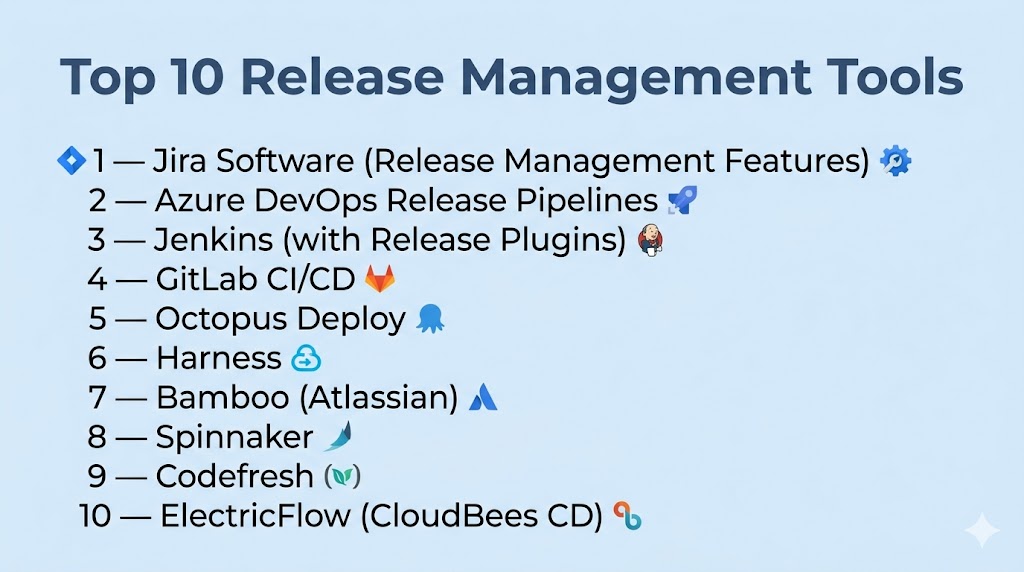
Introduction
Release Management Tools help teams plan, schedule, coordinate, and deploy software releases in a structured and controlled way. These tools bridge the gap between development, testing, and operations, ensuring that code changes move smoothly from development to production with minimal risk.
In today’s fast-paced DevOps-driven environment, frequent releases, CI/CD pipelines, and distributed teams make release management more complex than ever. Organizations now require automation, visibility, and governance across the entire release lifecycle to avoid downtime, errors, and compliance issues.
Common use cases include:
- Managing multi-environment software releases
- Coordinating CI/CD pipelines across teams
- Automating deployment workflows
- Tracking release readiness and approvals
- Ensuring compliance and audit trails
What buyers should evaluate:
- Deployment automation capabilities
- Integration with CI/CD tools
- Release orchestration and scheduling
- Environment management
- Security and compliance controls
- Scalability and performance
- Ease of use and UI clarity
- Reporting and analytics
- Role-based access controls
- Cost vs value
Best for: DevOps teams, release managers, IT operations, and engineering leaders in startups to large enterprises managing frequent or complex deployments.
Not ideal for: Very small teams or solo developers using simple deployment scripts or basic CI tools without complex release workflows.
Key Trends in Release Management Tools
- AI-driven release insights: Predictive analytics for failure detection and release risk scoring
- End-to-end automation: Fully automated pipelines from code commit to production
- GitOps adoption: Managing releases through version-controlled configurations
- Security-first pipelines: Built-in compliance checks and policy enforcement
- Multi-cloud orchestration: Managing releases across hybrid and multi-cloud environments
- Shift-left testing integration: Embedding testing earlier in release cycles
- Progressive delivery: Canary releases, blue-green deployments, feature flags
- Low-code/no-code workflows: Visual release pipeline builders for non-developers
- Observability integration: Linking releases to performance monitoring tools
- Cost optimization insights: Tracking infrastructure usage tied to releases
How We Selected These Tools (Methodology)
- Evaluated market adoption and industry recognition
- Assessed feature completeness across release lifecycle
- Reviewed performance and reliability indicators
- Considered security and compliance capabilities
- Analyzed integration ecosystems (CI/CD, cloud, DevOps tools)
- Checked scalability for enterprise use cases
- Compared ease of use and onboarding experience
- Evaluated community and support strength
- Ensured coverage across SMB to enterprise segments
Top 10 Release Management Tools
#1 — Jira Software (Release Management Features)
Short description: A widely used project management platform with built-in release tracking and planning capabilities, ideal for agile teams.
Key Features
- Release version tracking
- Sprint-based release planning
- Integration with CI/CD tools
- Issue tracking tied to releases
- Roadmaps and reporting
- Workflow automation
Pros
- Strong ecosystem and integrations
- Flexible workflows
Cons
- Not a dedicated release tool
- Can become complex at scale
Platforms / Deployment
Cloud / Self-hosted
Security & Compliance
SSO, RBAC, audit logs (others not publicly stated)
Integrations & Ecosystem
Strong integration with development and DevOps tools.
- GitHub
- Bitbucket
- Jenkins
- Slack
- APIs
Support & Community
Extensive documentation and large global community.
#2 — Azure DevOps Release Pipelines
Short description: A comprehensive DevOps suite offering robust release pipeline management for Microsoft ecosystems.
Key Features
- Multi-stage release pipelines
- Environment approvals
- Deployment automation
- Built-in CI/CD integration
- Artifact management
Pros
- Deep integration with Microsoft stack
- Scalable for enterprises
Cons
- Learning curve for beginners
- Less flexible outside Azure ecosystem
Platforms / Deployment
Cloud / Self-hosted
Security & Compliance
SSO, RBAC, encryption (others not publicly stated)
Integrations & Ecosystem
- Azure services
- GitHub
- Kubernetes
- APIs
Support & Community
Strong enterprise support and documentation.
#3 — Jenkins (with Release Plugins)
Short description: Open-source automation server widely used for CI/CD and release orchestration.
Key Features
- Pipeline automation
- Plugin-based extensibility
- Distributed builds
- Release workflow customization
Pros
- Highly customizable
- Free and open-source
Cons
- Maintenance overhead
- UI not very modern
Platforms / Deployment
Self-hosted
Security & Compliance
Varies / Not publicly stated
Integrations & Ecosystem
- Git tools
- Docker
- Kubernetes
- Extensive plugins
Support & Community
Very large open-source community.
#4 — GitLab CI/CD
Short description: Integrated DevOps platform with built-in release management capabilities.
Key Features
- End-to-end CI/CD pipelines
- Release tracking
- Environment management
- Security scanning
Pros
- All-in-one platform
- Strong automation
Cons
- Resource-intensive
- Complex for small teams
Platforms / Deployment
Cloud / Self-hosted
Security & Compliance
SSO, RBAC, compliance tools (others not publicly stated)
Integrations & Ecosystem
- Kubernetes
- Docker
- APIs
- DevOps tools
Support & Community
Strong documentation and active community.
#5 — Octopus Deploy
Short description: Specialized deployment automation and release management tool.
Key Features
- Automated deployments
- Environment management
- Release versioning
- Rollback capabilities
Pros
- Easy deployment orchestration
- Clear UI
Cons
- Pricing can be high
- Limited outside deployment scope
Platforms / Deployment
Cloud / Self-hosted
Security & Compliance
RBAC, audit logs (others not publicly stated)
Integrations & Ecosystem
- Azure
- AWS
- Kubernetes
- CI tools
Support & Community
Good documentation and enterprise support.
#6 — Harness
Short description: Modern DevOps platform focused on continuous delivery and release automation.
Key Features
- AI-driven deployment verification
- Continuous delivery pipelines
- Feature flags
- Cloud cost management
Pros
- Strong automation
- Advanced analytics
Cons
- Premium pricing
- Complex setup
Platforms / Deployment
Cloud
Security & Compliance
SSO, RBAC (others not publicly stated)
Integrations & Ecosystem
- AWS
- Kubernetes
- CI tools
- APIs
Support & Community
Enterprise-focused support.
#7 — Bamboo (Atlassian)
Short description: CI/CD and release management tool integrated with Atlassian ecosystem.
Key Features
- Build and deployment pipelines
- Release management
- Integration with Jira
- Environment configuration
Pros
- Seamless Atlassian integration
- Easy to manage builds
Cons
- Limited scalability vs competitors
- Fewer updates
Platforms / Deployment
Self-hosted
Security & Compliance
RBAC (others not publicly stated)
Integrations & Ecosystem
- Jira
- Bitbucket
- CI tools
Support & Community
Moderate community support.
#8 — Spinnaker
Short description: Open-source multi-cloud continuous delivery platform.
Key Features
- Multi-cloud deployment
- Canary releases
- Pipeline automation
- Kubernetes support
Pros
- Strong cloud-native capabilities
- Scalable
Cons
- Complex setup
- Requires expertise
Platforms / Deployment
Self-hosted
Security & Compliance
Varies / Not publicly stated
Integrations & Ecosystem
- AWS
- GCP
- Kubernetes
- APIs
Support & Community
Active open-source community.
#9 — Codefresh
Short description: Kubernetes-native CI/CD and release automation platform.
Key Features
- GitOps workflows
- Kubernetes deployments
- Pipeline automation
- Visual dashboards
Pros
- Kubernetes-focused
- Easy pipeline visualization
Cons
- Limited outside Kubernetes
- Learning curve
Platforms / Deployment
Cloud
Security & Compliance
SSO, RBAC (others not publicly stated)
Integrations & Ecosystem
- Kubernetes
- Git tools
- Docker
Support & Community
Growing community.
#10 — ElectricFlow (CloudBees CD)
Short description: Enterprise-grade release orchestration and automation platform.
Key Features
- Release orchestration
- Pipeline automation
- Compliance tracking
- Analytics
Pros
- Enterprise-ready
- Strong governance
Cons
- Expensive
- Complex setup
Platforms / Deployment
Cloud / Hybrid
Security & Compliance
SSO, RBAC, audit logs (others not publicly stated)
Integrations & Ecosystem
- Jenkins
- Kubernetes
- APIs
Support & Community
Enterprise-level support.
Comparison Table (Top 10)
| Tool Name | Best For | Platform(s) Supported | Deployment | Standout Feature | Public Rating |
|---|---|---|---|---|---|
| Jira Software | Agile teams | Web | Cloud/Self-hosted | Release tracking | N/A |
| Azure DevOps | Microsoft ecosystem | Web | Cloud/Self-hosted | Pipeline automation | N/A |
| Jenkins | DevOps engineers | Web/Linux | Self-hosted | Plugin ecosystem | N/A |
| GitLab | All-in-one DevOps | Web | Cloud/Self-hosted | Integrated CI/CD | N/A |
| Octopus Deploy | Deployment automation | Web | Cloud/Self-hosted | Easy orchestration | N/A |
| Harness | Enterprise DevOps | Web | Cloud | AI verification | N/A |
| Bamboo | Atlassian users | Web | Self-hosted | Jira integration | N/A |
| Spinnaker | Multi-cloud teams | Web | Self-hosted | Canary releases | N/A |
| Codefresh | Kubernetes teams | Web | Cloud | GitOps workflows | N/A |
| ElectricFlow | Enterprises | Web | Cloud/Hybrid | Compliance tracking | N/A |
Evaluation & Scoring of Release Management Tools
| Tool Name | Core | Ease | Integrations | Security | Performance | Support | Value | Weighted Total |
|---|---|---|---|---|---|---|---|---|
| Jira | 8 | 8 | 9 | 7 | 8 | 9 | 8 | 8.2 |
| Azure DevOps | 9 | 7 | 9 | 8 | 9 | 8 | 8 | 8.5 |
| Jenkins | 8 | 6 | 10 | 6 | 8 | 9 | 9 | 8.0 |
| GitLab | 9 | 7 | 9 | 8 | 9 | 8 | 8 | 8.5 |
| Octopus | 8 | 8 | 8 | 7 | 8 | 8 | 7 | 7.9 |
| Harness | 9 | 7 | 8 | 8 | 9 | 8 | 7 | 8.3 |
| Bamboo | 7 | 7 | 7 | 6 | 7 | 7 | 7 | 7.1 |
| Spinnaker | 8 | 6 | 8 | 7 | 9 | 7 | 8 | 7.9 |
| Codefresh | 8 | 7 | 8 | 7 | 8 | 7 | 7 | 7.7 |
| ElectricFlow | 9 | 6 | 8 | 9 | 9 | 8 | 6 | 8.1 |
How to interpret scores:
These scores are comparative, not absolute. A higher score indicates stronger overall capability across weighted criteria. Enterprises may prioritize security and performance, while startups may value ease of use and cost. Always align scores with your specific needs.
Which Release Management Tool Is Right for You?
Solo / Freelancer
Use lightweight tools like Jira (basic) or simple CI/CD pipelines.
SMB
Best options: GitLab, Octopus Deploy for balance of features and usability.
Mid-Market
Consider Azure DevOps or Harness for scalability and automation.
Enterprise
Top choices: ElectricFlow, Harness, GitLab for governance and compliance.
Budget vs Premium
- Budget: Jenkins, GitLab
- Premium: Harness, ElectricFlow
Feature Depth vs Ease of Use
- Deep features: Spinnaker, Harness
- Easy to use: Octopus Deploy
Integrations & Scalability
Choose tools with strong APIs and cloud integrations like GitLab or Azure DevOps.
Security & Compliance Needs
Enterprises should prioritize tools with audit logs, RBAC, and compliance tracking.
Frequently Asked Questions (FAQs)
What is a release management tool?
It helps manage software releases from development to production, ensuring coordination and automation.
How is it different from CI/CD tools?
CI/CD focuses on automation, while release tools manage planning, approvals, and orchestration.
Are these tools expensive?
Pricing varies widely; open-source options are free, while enterprise tools can be costly.
Do small teams need release management tools?
Not always. Simple workflows may work without them.
Can these tools integrate with cloud platforms?
Yes, most support AWS, Azure, and Kubernetes.
What are common mistakes when choosing tools?
Ignoring integration compatibility and overpaying for unused features.
How secure are these tools?
Security varies; always check for RBAC, encryption, and audit logs.
Can I switch tools later?
Yes, but migration can be complex depending on workflows.
Do these tools support automation?
Yes, automation is a core feature.
What alternatives exist?
Basic CI/CD pipelines or custom scripts.
Conclusion
Release management tools have become essential for modern software delivery, especially as teams adopt DevOps, cloud-native architectures, and continuous deployment practices. The right tool can significantly reduce deployment risks, improve collaboration, and accelerate delivery cycles. However, there is no one-size-fits-all solution—your choice should depend on team size, technical complexity, and compliance needs. Some tools excel in automation, while others focus on governance or ease of use. The best approach is to shortlist a few options, run pilot projects, and evaluate how well they integrate with your existing workflows. By testing real-world scenarios, you can confidently choose a tool that aligns with your long-term engineering and business goals.

Nice comparison of release management tools. One real-world challenge often missed is handling rollback coordination and dependency tracking during multi-service deployments, especially when releases move across hybrid or distributed environments.
A practical gap is handling database and dependency changes during releases. Even with a strong release tool, teams need rollback-tested migration plans, service dependency checks, and clear ownership for failed releases so production recovery is not improvised under pressure.