MOTOSHARE 🚗🏍️
Rent Bikes & Cars Directly from Owners
Motoshare connects vehicle owners with people who need bikes and cars on rent. Owners earn from idle vehicles, and renters get flexible ride options.
Visit Motoshare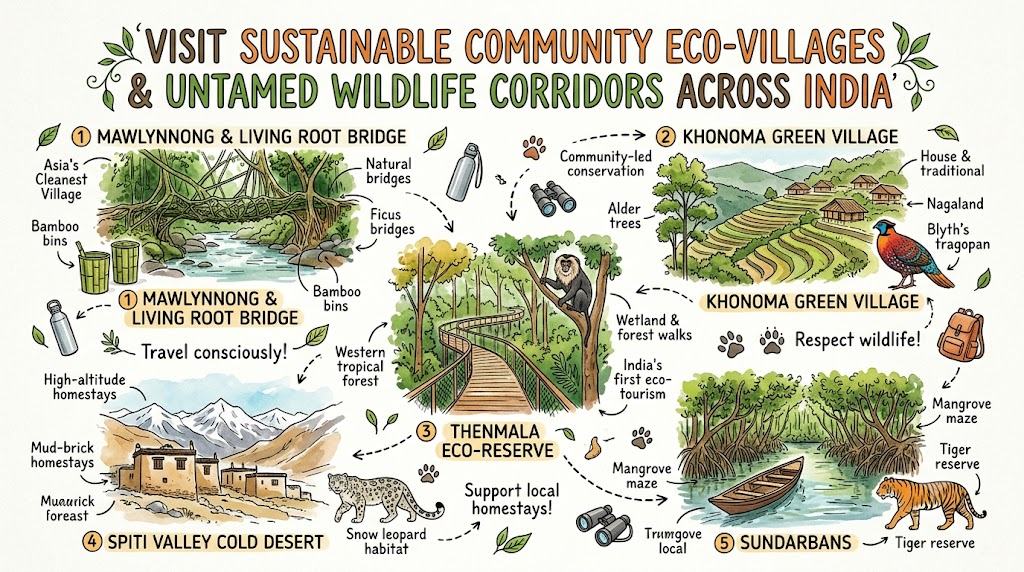
Introduction
Mainstream vacation corridors across the subcontinent frequently push travelers into a cacophony of tour buses, congested souvenir markets, and commercialized viewpoints. Finding genuine respite demands trading manicured hill-station mall roads for bio-reserves where local heritage and nature form a seamless bond.
Authentic eco-tourism in India thrives far beyond urban sprawl. It lives inside ancient subtropical canopies, high-altitude cold deserts, and indigenous sanctuaries where indigenous communities serve as forest guardians. Stepping into these sanctuaries offers a raw, sensory connection to the soil that lingering mass tourism can never replicate.
Living root bridge in Meghalaya.
Why India is a must-visit city
Viewing India through an ecological lens unlocks an astonishing geological canvas that ranges from the cloud-kissed rainforests of the Northeast to the pristine mangrove networks of the Bay of Bengal. Each bio-region maintains deep cultural ties to conservation, practiced through sacred groves, zero-waste tribal lifestyles, and community-enforced wildlife bans.
Accessible transit corridors connect these wild expanses directly with major metropolitan gateways. Modernized national expressways, well-engineered mountain railway lines, and regional electric airport links allow mindful explorers, families, and solo backpackers to transition smoothly from urban centers to remote wilderness retreats.
The national eco-tourism circuit breaks down into four primary geographic corridors: the Himalayan cold-desert belt, the biodiversity-heavy Western Ghats, the indigenous tribal reserves of the Northeast, and the southern tropical backwater reserves.
| Eco Circuit Region | Primary Ecosystem Profile | Nearest Transit Gateway | Top Biodiversity Highlight | Ideal Travel Pace |
|---|---|---|---|---|
| Northeastern Hills | Subtropical Rainforest & Sacred Groves | Guwahati / Dimapur | Living Root Bridges, Blyth’s Tragopan | 7 to 10 Days |
| Western Ghats | Tropical Evergreen & Montane Forest | Kochi / Trivandrum | Lion-tailed Macaque, Nilgiri Tahr | 5 to 7 Days |
| Trans-Himalayan Arc | High-Altitude Cold Desert | Chandigarh / Leh | Snow Leopard, Himalayan Blue Sheep | 8 to 12 Days |
| Central Wetland Belt | Mangrove Estuaries & Tidal Creeks | Kolkata | Royal Bengal Tiger, Irrawaddy Dolphin | 3 to 4 Days |
Best Places or Experiences
Mawlynnong and Riwai Living Bridges
Tucked deep into the East Khasi Hills, Mawlynnong represents a masterclass in grassroots environmental hygiene and indigenous engineering. For generations, the Khasi people have maintained a zero-plastic, community-driven cleanliness model where every child and elder participates in sweeping trails and hand-weaving bamboo waste bins called khohs.
Just a short trail walk away in neighboring Riwai, the forest floor yields to monumental living root bridges (Jingkieng Jri). Guided across torrential monsoon streams, the aerial roots of the Ficus elastica tree are woven through hollowed betel nut trunks over decades, growing stronger with every passing flood rather than decaying like concrete or timber.
- Location: East Khasi Hills District, Meghalaya; approximately 78 km south of Shillong.
- Why it is worth visiting: Witness self-sustaining bio-architecture and India’s cleanest tribal settlement running on absolute community consensus.
- Best things to do: Walk across the single-decker Riwai root bridge, ascend the sky walk bamboo tower overlooking Bangladesh plains, and share a home-cooked lunch of local red rice and wild herbs.
- Best time to visit: October through April for pleasant walks and crystal-clear streams; July to September for roaring jungle waterfalls.
- Ideal for whom: Cultural purists, eco-conscious families, and botanical enthusiasts.
- Travel tip: Wear high-traction rubber shoes because river rocks and mossy stone pathways stay slick throughout the day.
Khonoma Green Village
Perched along mist-draped terraced hills, Khonoma was once home to fierce Angami Naga warrior clans who fiercely resisted colonial expansion. In 1998, the village underwent an environmental revolution by banning commercial logging and hunting, transforming their ancestral hunting territory into the Khonoma Nature Conservation and Tragopan Sanctuary.
Today, Khonoma serves as India’s premier green village, operating on complex alder-tree crop rotations that replenish nitrogen naturally without industrial fertilizers. Stone-paved alleys wind past traditional carved clan gates (Kharu), leading to community meeting granaries where elder councils continue to safeguard community woodlots.
Khonoma Green Village terraced slopes.
- Location: Kohima District, Nagaland; approximately 20 km west of the state capital, Kohima.
- Why it is worth visiting: Experience how an indigenous hunting community laid down arms to engineer one of Asia’s most successful bird and forest conservation reserves.
- Best things to do: Trek into the Alder agroforestry plots, observe traditional Angami shawl weaving, and join an elder-led walk through historical clan fortress fortifications.
- Best time to visit: October to April for clear mountain skies and the vibrant harvest season.
- Ideal for whom: Anthropological travelers, birdwatchers, and solo hikers.
- Travel tip: Secure your Nagaland Inner Line Permit (ILP) online prior to arriving at state transport checkpoints.
Thenmala Eco-Reserve
Nestled in the lush foothills of the southern Western Ghats, Thenmala holds the distinction of being India’s first planned eco-tourism destination. The surrounding Shendurney Wildlife Sanctuary features wet evergreen and semi-evergreen forests, home to wild elephant herds, sambar deer, and rare medicinal flora that have sustained Ayurvedic healers for centuries.
The reserve balances environmental protection with controlled experiential zones, keeping heavy tourist footprints confined away from vulnerable interior breeding corridors. Visitors navigate elevated canopy walk boards suspended high above the forest floor, feeling the dense moisture of virgin tropical canopies without disturbing delicate ground fungi and reptile nests.
Canopy walkway in Thenmala Eco-Reserve.
- Location: Kollam District, Kerala; roughly 72 km from Thiruvananthapuram.
- Why it is worth visiting: India’s benchmark planned eco-sanctuary showcasing scientific forest zoning, medicinal plant education, and sustainable soft adventure.
- Best things to do: Walk the elevated canopy walkway, take a silent battery-operated boat safari on the reservoir, and visit the conserved butterfly safari park.
- Best time to visit: November through February when humidity drops and migratory forest birds arrive.
- Ideal for whom: Eco-conscious families, wellness travelers, and soft-adventure seekers.
- Travel tip: Book government-run eco-tents inside the reserve weeks ahead to avoid commercial roadside hotels outside the sanctuary boundary.
Spiti Valley High-Altitude Cold Desert
Carved by the silt-heavy Spiti River beneath jagged 6,000-meter peaks, Spiti Valley is a fragile trans-Himalayan desert that operates on delicate glacial melt cycles. Life here revolves around remote mud-brick villages like Kibber, Langza, and Komic, where ancient Tibetan Buddhist monasteries anchor human resilience amidst freezing winds and thin air.
Community homestay initiatives here actively preserve the endangered snow leopard while routing tourism revenue directly to native families. Solar cookers, dry compost toilets, and traditional mud insulation replace fuel-hungry heaters, presenting a profound model of zero-waste human survival under extreme geographical constraints.
Spiti Valley cold desert landscape.
- Location: Lahaul and Spiti District, Himachal Pradesh; roughly 420 km from Shimla and 200 km from Manali.
- Why it is worth visiting: Witness a delicate high-altitude desert sustained through solar architecture, dry compost sanitation, and snow leopard community protection.
- Best things to do: Hunt for marine fossils in Langza village, stay in a family-run mud homestay in Kibber, and experience early dawn chanting at Key Monastery.
- Best time to visit: May to September for open mountain passes; January to March for dedicated snow leopard tracking with certified village trackers.
- Ideal for whom: High-altitude trekkers, landscape photographers, and minimalist backpackers.
- Travel tip: Dedicate two full days to acclimatize in Kaza or Tabo before trekking above 4,000 meters to avoid acute mountain sickness.
Sundarbans Biosphere Reserve
Forming the world’s largest contiguous mangrove delta where the Ganges, Brahmaputra, and Meghna rivers merge into the sea, the Sundarbans is a tidal wilderness governed entirely by daily high and low waters. Tides rise and fall up to several meters each day, submerging entire mud islands and exposing dense forests of breathing mangrove roots (pneumatophores).
Eco-tourism here operates entirely off silent, human-poled or slow-diesel river catamarans that weave through narrow salt creeks. Local conservation societies run community-led lodges outside core zones, empowering honey collectors and former poachers to guide travelers through tiger, estuarine crocodile, and mangrove ecology.
- Location: South 24 Parganas, West Bengal; roughly 100 km southeast of Kolkata.
- Why it is worth visiting: The planet’s largest mangrove wilderness featuring rare tidal adaptations, Royal Bengal tigers, and zero-road delta expeditions.
- Best things to do: Cruise quiet backwater creeks on a certified silent boat, climb the Dobanki canopy watchtower, and watch the water glow with nocturnal bioluminescence.
- Best time to visit: October to March for cool delta breezes and sunbathing estuarine reptiles along the mudbanks.
- Ideal for whom: Wildlife photographers, conservationists, and adventurous wilderness enthusiasts.
- Travel tip: Plastic is strictly illegal inside the biosphere reserve; carry stainless-steel refillable water canteens.
Offbeat Exploration: Hidden Gems Tourists Miss
Tyda and Jungle Bells Sanctuary
Hidden within the mist-veiled Eastern Ghats of Andhra Pradesh, Tyda is an under-the-radar eco-initiative managed alongside local tribal trackers. Unlike crowded hill towns, this reserve emphasizes wilderness survival learning, bird tagging, and forest navigation. Travelers learn to identify animal prints, medicinal shrubs, and indigenous bee hives on guided morning walking patrols through deciduous valley forests.
Dzongu Lepcha Reserve
Bordering the Khangchendzonga Biosphere Reserve in North Sikkim, Dzongu is an exclusive enclave preserved specifically for the indigenous Lepcha people. Entering requires special tribal council authorization, ensuring mass tour buses never cross its bridges. It offers milky-blue glacial rivers, terraced cardamom groves, natural sulfur hot springs, and homes built without iron nails.
Valparai Hornbill Corridors
While nearby Munnar buckles under commercial tourist traffic, Valparai sits perched in the Anamalai Hills, surrounded by tea estates interwoven with rainforest fragments. Conservationists work alongside plantation laborers to maintain wildlife canopy bridges across roads. These aerial bridges let lion-tailed macaques and Great Indian Hornbills glide through canopies unimpeded by road traffic.
Detailed Practical Guidance for Travelers
| Destination | Standard Entry Fee | General Timings | Best Local Food Options Nearby | Recommended Nearby Attractions |
|---|---|---|---|---|
| Mawlynnong & Riwai | ₹50 per person maintenance fee; ₹40 bridge toll | Dawn to Dusk (06:00 AM – 05:30 PM) | Steamed organic sweet potato, Jadoh rice, and fresh bamboo shoot curry at village stalls | Dawki Umngot River, Krang Shuri Falls |
| Khonoma Green Village | ₹250 entry and local guide conservation fee | 07:00 AM – 04:30 PM Daily | Boiled organic pumpkin stems, smoked pork with axone, and sticky rice at local homestays | Dzukou Valley Trek trail head, Kohima War Cemetery |
| Thenmala Eco-Reserve | ₹110 eco-park zone; ₹450 for boating safari | 09:00 AM – 05:00 PM Daily | Kerala red Matta rice meals, Malabar parotta, and local vegetable stew at the forest canteen | Palaruvi Waterfalls, Shendurney Deer Park |
| Spiti Valley Homestays | Free (Protected Area Permit required for foreign nationals) | Village trails accessible all day; Monasteries 07:00 AM – 06:00 PM | Steamed seabuckthorn tea, barley Tsampa, fresh momos, and Thukpa in family kitchens | Key Gompa, Chandratal Lake, Dhankar Monastery |
| Sundarbans Reserve | ₹100 to ₹200 boat entry permit; ₹500 guide fee per boat | 07:00 AM – 04:30 PM (No river transit allowed after sunset) | Fresh coastal bhetki fish curry, mustard crab, and organic mangrove wild honey | Sajnekhali Bird Sanctuary, Sudhanyakhali Watchtower |
Logistics & On-Ground Navigation
Local Transport Options
- Railways: India’s extensive rail network connects primary metro hubs to foothill railheads like New Jalpaiguri, Dimapur, Kalka, and Kollam.
- Shared Mountain Jeeps: In hilly ecological zones like Meghalaya, Nagaland, and Spiti, shared Tata Sumos and Mahindras operate between towns. They are rugged, affordable, and run on fixed morning timetables.
- Electric Vehicles & Auto-Rickshaws: Southern hubs like Thenmala and peri-urban reserves promote battery-operated e-rickshaws for neighborhood hops to curb carbon emissions.
- Pre-Paid / Government Taxis: Avoid informal taxi touts at transport stations; always book from verified government tourism counters or cooperative driver unions.
Budget Planning
- Budget / Backpacker Tier (₹1,200 – ₹2,200 per day): Stays in verified village homestays or forest department rest houses, travel via shared jeeps or state buses, and simple meals at family-run canteens.
- Mid-Range / Comfort Tier (₹4,500 – ₹8,000 per day): Private eco-lodge cottages with solar power, chartered transfers, certified indigenous naturalists, and all conservation entry permits.
Safety and Inclusivity Tips
- For Families: Stick to structured eco-zones like Thenmala or Mawlynnong where walkways are paved, medical dispensaries are accessible, and trail grades stay gentle.
- For Couples: Rural homestays value cultural modesty; dress respectfully around village centers and ask permission before joining private family gatherings.
- General Safety: Keep emergency offline satellite maps downloaded, carry basic blister and water-purification kits, and never venture into core wildlife corridors past sunset.
Strategic Travel Planning Guardrails
Travel Planning Tips for Eco Destinations
- Book your village homestays directly with community cooperative committees weeks ahead during peak dry months.
- Carry adequate hard cash in smaller denominations (₹50, ₹100, ₹200); digital UPI networks often cut out across remote highland hills.
- Pack a certified gravity or UV water purification flask to eliminate the purchase of single-use plastic bottles.
- Respect local village curfews and dress codes by covering shoulders and knees when entering sacred groves or village clan gates.
- Hire local community guides exclusively; their indigenous tracking instincts keep you safe while financing rural conservation.
Common Mistakes to Avoid
- Dumping plastic trash: Discarding snack wrappers or non-biodegradable plastics along village nature paths damages delicate soil ecologies.
- Rushing high-altitude zones: Ascending rapidly into places like Spiti without acclimatization days invites acute mountain sickness.
- Treating tribal hamlets like theme parks: Pushing cameras into residents’ faces without asking violates basic village privacy.
- Demanding hotel luxury: Expecting air conditioning, bathtubs, and extensive multi-cuisine menus in remote conservation zones wastes scarce village resources.
- Off-roading in fragile habitats: Driving vehicles over fragile meadows or riverbeds crushes topsoil and breeding fauna.
Suggested Itinerary Blueprints
Day Quick Dash (The Meghalaya Cloud Trail)
Designed for travelers on tight schedules seeking a fast immersion into sustainable living.
- Morning: Depart Shillong early at 06:00 AM via private electric cab to beat traffic, heading south toward Mawlynnong.
- Midday: Stroll through Mawlynnong, explore the bamboo craft stalls, and walk down the ancient stone steps of Riwai to cross the Living Root Bridge.
- Afternoon: Enjoy a traditional Khasi thali before heading toward Dawki for a 45-minute silent rowboat tour along the crystalline Umngot River. Return to Shillong by dusk.
Day Deep-Dive (The Western Ghats Green Corridor)
A 48-hour circuit designed for active couples and wildlife lovers exploring Kerala’s lush southern ridge.
- Day 1: Arrive at Thenmala from Thiruvananthapuram. Check into an eco-reserve cottage, hike the elevated tree-canopy walk, and explore the forest butterfly sanctuary. Cap off the evening with a quiet boat cruise along the reservoir rim.
- Day 2: Rise early at 06:00 AM for a guided 4-hour morning nature patrol into the Shendurney evergreen buffer forest. Return for an authentic plantain-leaf lunch, visit the nearby Palaruvi cascading waterfalls, and depart toward Kollam.
Complete Weekend Travel Plan (The Naga Heritage Loop)
A 3-day cultural immersion through the heartlands of Nagaland.
- Friday: Land at Dimapur, take a scenic 2.5-hour shared cab ride to Kohima, check into an authentic Naga guesthouse, and explore the local evening bazaar.
- Saturday: Travel to Khonoma Green Village. Check into a community homestay, explore the historical stone forts with an Angami elder, and walk through the alder-tree agricultural terraces.
- Sunday: Take an early morning birdwatching hike into the Khonoma Nature Conservation and Tragopan Sanctuary. Head back to Kohima for lunch and catch your evening train from Dimapur.
Common Tourist Mistakes to Avoid
Geographic Blunders
A frequent blunder is trying to pair destinations separated by rugged mountain geography on the same day. For instance, pairing Dawki and Cherrapunji on a single afternoon sounds possible on a flat map, but winding single-lane mountain roads turn it into an exhausting 10-hour transit ordeal. Focus on one micro-valley per day.
Commercial Traps
Spending limited holiday time inside generic hill-station shopping malls or tourist plazas wastes the journey. Souvenir shops in commercial centers often sell mass-produced trinkets shipped from industrial cities. Seek out village weaver cooperatives and farmer-run stalls where every rupee directly supports local families.
Neglecting Modern/Alternative Zones
Travelers often ignore the innovative, modern green expansions popping up near protected biospheres. Many eco-corridors now feature solar cafes, zero-waste craft breweries, and volunteer-run book exchanges that serve as hubs for modern conservationists. These spots offer great spaces to trade route notes with long-term researchers.
Transport Overpayment
Unregulated private cab operators frequently quote inflated fares to travelers stepping off airport terminals. Always cross-check rates with official state tourism transport desks, look up cooperative taxi union price boards, or arrange your transport directly through your community homestay host.
Luxury Dining Bias
Bypassing local village kitchens in search of familiar continental buffets deprives you of regional culture. Family-run village homestays prepare slow-cooked wild greens, locally harvested heirloom grains, and naturally fermented delicacies that offer an authentic taste of local terroir.
Frequently Asked Questions
1. What defines an authentic eco-tourism destination in India?
An authentic eco-destination prioritizes ecosystem conservation, environmental education, and direct financial empowerment for local communities. It avoids commercial amusement attractions in favor of minimal-impact infrastructure, solar or renewable energy, composting sanitation, and strict bans on non-biodegradable plastics to protect native biodiversity.
2. Do I need special permits to visit tribal eco-villages in India?
Yes, certain regions require administrative permits. Indian nationals require an Inner Line Permit (ILP) for states like Nagaland, Mizoram, and Arunachal Pradesh. Foreign nationals must secure Protected Area Permits (PAP) or Restricted Area Permits (RAP) through official government portals before entering specific sensitive border districts.
3. How do high-altitude eco-homestays in Spiti handle sub-zero winters?
Spiti homestays use traditional, passive architectural techniques to stay warm. Walls are built with sun-dried mud bricks and insulated with straw, catching and retaining solar warmth during the day. Rooms feature heavy woolen carpets, low ceilings, and dry compost toilets that need no water pipes, preventing winter freeze damage.
4. Is drinking water safely available without buying plastic bottles?
Yes, sustainable travel destinations encourage bringing durable, reusable steel canteens. Eco-lodges, village homes, and nature sanctuaries provide clean, gravity-filtered or boiled spring water refills for a nominal fee or free of charge, significantly cutting down on single-use plastic waste across fragile natural trails.
5. How physically demanding are living root bridge treks in Meghalaya?
Trekking to single-layer bridges like Riwai involves a mild, paved 15-minute walk down gentle stone steps, making it accessible for children and older adults. However, reaching the iconic Double Decker Living Root Bridge in Nongriat requires climbing down and up over 3,500 steep, humid steps, demanding solid physical fitness.
6. What is the best season for eco-tourism across the Western Ghats?
The optimal travel window spans from October through March, when the severe monsoon downpours recede, leaving lush green canopies, vibrant streams, and comfortably cool hiking temperatures. The heavy monsoon months from June to August offer roaring waterfalls but bring leech-heavy trails and occasional road landslides.
7. How do community homestays differ from standard commercial hotels?
Homestays are owned and managed by native families rather than outside corporations. You stay in traditional rooms, eat fresh farm-to-table meals cooked over wood fires, and interact directly with hosts. This keeps tourism revenue inside the village and offers travelers genuine cultural connections.
8. Can senior citizens comfortably participate in Indian eco-tours?
Yes, senior travelers can choose destinations with mild terrain and easy access. Places like Thenmala provide paved, level canopy boardwalks and gentle reservoir boat safaris. Similarly, Mawlynnong village offers flat, paved walking alleys without steep ascents, ensuring a safe and comfortable experience.
9. What should I pack for an eco-trip to the high Himalayas?
Pack versatile thermal base layers, a windproof outer shell, a reusable water purification bottle, polarized UV sunglasses, and high-SPF mineral sunscreen. Sturdy hiking shoes with solid ankle support and a high-capacity power bank are essential, as cold mountain air drains mobile device batteries quickly.
10. How does sustainable tourism protect the endangered Bengal Tiger in the Sundarbans?
Controlled eco-tourism supports round-the-clock patrol boats and creates steady livelihood alternatives for local honey gatherers and fishermen. When native delta communities earn stable income from guiding and operating safari boats, poaching decreases and communities actively report illegal encroachments to forest authorities.
11. Is digital mobile payment widely accepted across remote eco-destinations?
While popular towns accept UPI payments via QR codes, highland valleys, deep forest reserves, and border villages suffer frequent network blackouts. Always carry adequate physical cash in small denominations to pay for local guides, village maintenance fees, seasonal roadside fruits, and rural transport.
12. What wildlife etiquette is mandatory when walking through forest reserves?
Maintain silence, wear muted earth-toned clothing like khaki, green, or brown, and keep a respectful distance from wildlife. Never feed animals, play loud music, fly consumer drones without forest permits, or leave designated walking trails, as off-trail hiking disturbs ground-nesting birds and fragile moss systems.
Conclusion
Trading the hurried, well-worn tourist corridors for India’s living eco-sanctuaries transforms travel from consumption into connection. Whether you are stepping lightly across an ancient root bridge, sharing butter tea in a high-altitude mud homestay, or listening to the calls of the Western Ghats canopy, these journeys reconnect you to the earth. Embracing this mindful path honors the land and supports the local guardians keeping these landscapes wild.
