MOTOSHARE 🚗🏍️
Rent Bikes & Cars Directly from Owners
Motoshare connects vehicle owners with people who need bikes and cars on rent. Owners earn from idle vehicles, and renters get flexible ride options.
Visit Motoshare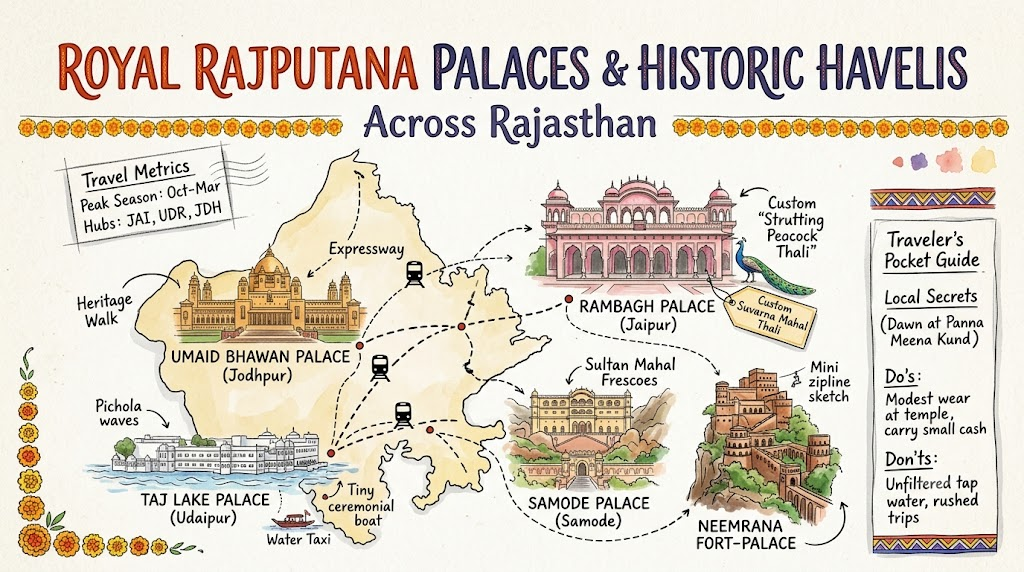
Introduction
Mainstream vacations often herd travelers into generic glass-and-steel towers and congested tourist traps where local character gets diluted into corporate neutrality. Rajasthan cuts through that monotony with unapologetic opulence, sandstone ramparts, and centuries of living aristocracy.
Checking into a converted palace or royal hunting pavilion connects you directly to living folklore, where the scent of slow-burning agarbatti and fresh marigolds fills vaulted marble corridors. This is not staged hospitality; it is an intimate encounter with imperial history, bespoke Rajput court rituals, and timeless culinary craft.
Why Rajasthan is a must-visit city
Rajasthan represents the epic heart of royal Indian heritage, where Rajput chivalry, Mughal architectural finesse, and Thar desert topography collide. Its palaces, citadels, and sprawling gardens have sustained an unbroken chain of living traditions, folk music, and legendary gastronomy through centuries of dynastic reinvention.
Modern expressways, bullet-smooth national highways, and well-connected international airports in Jaipur, Jodhpur, and Udaipur now make this royal realm accessible to solo flâneurs, romance-seeking couples, and multi-generational families alike.
The primary royal circuit threads through the pink sandstone facades of Jaipur, cuts west toward the blue-washed bastion of Jodhpur, and dips south into the placid, mirror-like lakes of Udaipur. Beyond the golden triangle lies an untouched rural hinterland of fortress-dotted ridges and private aristocratic havelis.
| Travel Metric | Details & Key Benchmarks |
|---|---|
| State Capital | Jaipur (The Pink City) |
| Primary International / Domestic Hubs | Jaipur (JAI), Udaipur (UDR), Jodhpur (JDH) |
| Peak Season | October to March (Cool winters and crisp desert nights) |
| Signature Architectural Styles | Rajputana, Indo-Saracenic, European Art Deco |
| Core Heritage Circuits | Jaipur – Jodhpur – Udaipur – Shekhawati |
Best Places or Experiences
Rambagh Palace, Jaipur
Originally laid out in 1835 as a garden retreat for the queen’s handmaiden, Rambagh Palace steadily evolved into the principal residence of Maharaja Sawai Man Singh II and Maharani Gayatri Devi. Spread across 47 acres of manicured lawns and blooming Mughal gardens, the property preserves an exquisite balance of carved marble latticework, fluted pillars, and arched corridors.
Itinerary Diary+ 1
Stepping into its courtyards feels like an unhurried leap into 20th-century aristocratic life. Peacocks strut freely past the verandahs, while heritage butler service delivers customized Rajput hospitality beneath shimmering crystal chandeliers.
- Location: Bhawani Singh Road, Jaipur Central (Approx. 11 km from Jaipur International Airport). Itinerary Diary
- Why it is worth visiting: Known as the “Jewel of Jaipur,” it stands as India’s first genuine royal residence converted into a grand heritage hotel.
- Best things to do: Savor royal High Tea on the Verandah, book dinner at the Steam restored train lounge, and spot dancing peacocks during sunrise.
- Best time to visit: October through March; afternoon between 4:00 PM and 6:30 PM for magical courtyard lighting.
- Ideal for whom: Honeymooners, milestone anniversaries, and travelers yearning for pristine palace hospitality. Itinerary Diary
- Travel tip: Book fine-dining slots at Suvarna Mahal several weeks in advance, as outside guest seating is strictly capped during peak winter months.
Taj Lake Palace, Udaipur
Floating like a gleaming white-marble mirage on the calm expanse of Lake Pichola, the Taj Lake Palace was constructed between 1743 and 1746 under Maharana Jagat Singh II as Jag Niwas. The entire four-acre island sanctuary was crafted using blocks of pure white Rajnagar marble transported across rough terrain by bullock carts.
Because the palace occupies the entire island footprint, there are no bustling city streets outside your doorstep. Guests arrive via private ceremonial water taxi, stepping onto candle-lit jetty stairs dusted with fresh rose petals while palace musicians serenade the sunset.
Taj Lake Palace on Lake Pichola.
- Location: Lake Pichola, Old City, Udaipur (Approx. 24 km from Maharana Pratap Airport).
- Why it is worth visiting: The world’s most dramatic island-bound palace hotel, featuring 360-degree panoramic vistas of the Aravalli hills and the City Palace complex.
- Best things to do: Sip vintage cocktails on the rooftop Bhairo terrace, book an open-lake Jiva Spa boat session, and explore the central lily pond courtyard.
- Best time to visit: November through February; twilight boat departures offer unforgettable sunset hues over the lake.
- Ideal for whom: Couples seeking pure romance, solo travelers seeking peaceful retreats, and luxury photography enthusiasts.
- Travel tip: Non-resident guests cannot visit casually for sightseeing; secure a confirmed table reservation if you are not staying overnight.
Umaid Bhawan Palace, Jodhpur
Perched high atop Chittar Hill, Umaid Bhawan Palace represents one of the largest private imperial residences on earth. Commissioned by Maharaja Umaid Singh in 1929 and designed by British architect Henry Lanchester, this colossal golden-yellow sandstone marvel was constructed as a relief project to employ thousands of local citizens during a crippling regional drought.
The structure seamlessly marries towering classical revival domes with sleek Western Art Deco geometric interiors created by Polish artist Stefan Norblin. Today, one wing remains the private home of the titular royal family, while the central hospitality wing delivers unrivaled desert grandeur.
Umaid Bhawan Palace Jodhpur.
- Location: Circuit House Road, Cantt Area, Jodhpur (Approx. 5 km from Jodhpur Airport).
- Why it is worth visiting: An architectural titan that seamlessly unites sweeping Indo-Deco styling with royal family lineage.
- Best things to do: Tour the private museum vintage car collection, take a heritage architectural walk beneath the 105-foot dome, and enjoy dinner at Risala overlooking Mehrangarh.
- Best time to visit: Mid-October through early March; late morning is ideal for touring the exterior grounds and museum galleries.
- Ideal for whom: Architectural purists, luxury history lovers, and large families celebrating milestone reunions. Itinerary Diary
- Travel tip: The public museum wing has distinct hours and separate gates; hotel security strictly screens visitors entering the private guest drive.
Samode Palace, Samode
Nestled inside a rugged mountain bowl at the foot of the Aravalli range, Samode Palace originated over four centuries ago as a fortified stronghold for the Rawals of Samode. Over successive centuries, noble descendants transformed the stark stone garrison into an enchanting blend of Rajput and Mughal residential luxury.
The palace is celebrated worldwide for its breathtaking Sultan Mahal, a hall lined with intricate 250-year-old miniature frescoes, gilded leaf moldings, and Belgian mirrored glass. Strolling through the tiered courtyards reveals quiet mosaic-tiled swimming pools and secluded stone balconies perched above a rustic pastoral village.
Samode Palace mountain estate.
- Location: Samode Village, Chomu Tehsil (Approx. 42 km north of Jaipur city center).
- Why it is worth visiting: Untouched architectural preservation far from urban hustle, offering the finest frescoed hand-painted palace interiors in Rajasthan.
- Best things to do: Marvel at the painted mirrors of Sultan Mahal, take a rooftop infinity dip facing the hills, and wander through the cobblestone streets of Samode village.
- Best time to visit: October to March; early morning mist over the Aravalli peaks makes morning walks magical.
- Ideal for whom: Art collectors, creative souls, and travelers who appreciate peaceful rural seclusion.
- Travel tip: The narrow road winding through Samode village can bottleneck easily; hire a skilled local driver rather than navigating an oversized SUV yourself.
Neemrana Fort-Palace, Neemrana
Carved directly into the craggy slopes of the Delhi-Jaipur highway, Neemrana Fort-Palace traces its roots back to 1464 as the stronghold of Maharaja Prithviraj Chauhan’s descendants. Once a crumbling ruin, this 14-tiered fortress was painstakingly restored in the late 20th century to become India’s pioneer architectural conservation hotel.
The property cascades across multiple levels of hanging gardens, stone bastions, and open amphitheaters. Its rambling, fortress-style layout feels like an open-air medieval labyrinth illuminated by hundreds of flickering oil lamps and brass lanterns at dusk.
- Location: Delhi-Jaipur Highway, Kotputli-Behror District (Approx. 125 km from New Delhi Airport, 150 km from Jaipur). Neemrana Hotels
- Why it is worth visiting: One of India’s oldest operational fort hotels, allowing guests to sleep in genuine medieval ramparts.
- Best things to do: Fly down India’s first aerial zip-line over the fortress walls, attend sunset Rajasthani folk dances at the open amphitheater, and explore the ancient deep stepwell nearby.
- Best time to visit: September to March; twilight hours between 5:30 PM and 7:00 PM when the entire hillside glows under yellow floodlights.
- Ideal for whom: Weekend road-trippers from Delhi or Jaipur, adventure-minded couples, and military history enthusiasts.
- Travel tip: Expect dozens of uneven stone staircases; request ground-terrace suites if traveling with elderly relatives or heavy wheeled luggage.
Offbeat Exploration: Hidden Gems Tourists Miss
The Stepwell of Neemrana (Neemrana Baori)
Tucked just a short walk past the outer gate of Neemrana Fort sits a colossal 9-story subterranean stepwell built in the 18th century. Most visitors rush past to their hotel rooms, completely missing this engineering wonder where ornate stone staircases plunge deep into the dry earth. Visiting during mid-morning lets you witness geometric sunlight patterns play against deep subterranean pillars.
Bagore Ki Haveli Evening Dharohar Ritual
While thousands gather near Lake Pichola’s crowded waterfront promenade, slip inside the courtyard of Bagore Ki Haveli at sunset. Here, local master performers stage traditional Chari and Bhavai dances where women balance seven burning brass pots atop their heads while dancing across glass shards. It is an authentic living folk tradition performed without commercial glitz.
Amer’s Panna Meena Ka Kund at Dawn
Most Jaipur tourists flock straight to Amer Fort’s main ramparts, skipping this 16th-century crisscrossed stepwell nestled in the village below. Arrive at 6:30 AM before security crowds gather to soak in the geometric symmetry of yellow stone stairs glowing in the morning sun.
Local Secret: Always hire licensed heritage guides carrying official Ministry of Tourism badges at palace entry gates; unauthorized touts often skip historic halls to funnel guests toward commission-heavy jewelry showrooms.
Detailed Practical Guidance for Travelers
| Destination | Standard Entry Fee | General Timings | Best Local Food Options Nearby | Recommended Nearby Attractions |
|---|---|---|---|---|
| Rambagh Palace (Jaipur) | Free for hotel guests; ~₹4,500+ dining cover for visitors | 24 Hours for residents; Dining 12:30 PM – 11:30 PM | Suvarna Mahal (Royal thalis), Laxmi Mishtan Bhandar (Kachoris) | Albert Hall Museum, Birla Mandir, City Palace |
| Taj Lake Palace (Udaipur) | Restricted to residents & pre-booked dinner patrons | 24 Hours; Boat transfers run continuously | Neel Kamal (Mewari cuisine), Millets of Mewar (Organic bites) | City Palace Udaipur, Jagdish Temple, Bagore Ki Haveli |
| Umaid Bhawan (Jodhpur) | ₹100 (Domestic museum), ₹300 (Foreigners); Free for guests | Museum: 9:00 AM – 5:00 PM; Hotel: 24 Hours | Risala (Lal Maas), Janta Sweet Home (Mawa kachori) | Mehrangarh Fort, Jaswant Thada, Mandore Gardens |
| Samode Palace (Samode) | Resident guests only; Special day pass ~₹2,500 | 24 Hours for resident guests | Samode Courtyard Dining, Local Dhaba dal-baati | Samode Bagh, Shekhawati Havelis, Amber Fort |
| Neemrana Fort-Palace | Day tourist pass ~₹2,000 (includes lunch buffet) | Day Visitors: 9:00 AM – 3:00 PM; Hotel: 24 Hours | Fort Amphitheater Buffet, Old Highway Dhabas (Parathas) | Neemrana Stepwell, Bala Quila Alwar, Sariska Tiger Reserve |
Logistics & On-Ground Navigation
Local Transport Options
- Intercity Private Cabs: The most dependable way to travel between Jaipur, Jodhpur, and Udaipur. Reliable chauffeured sedans cost roughly ₹3,500 to ₹4,500 per day, offering freedom to halt at roadside stepwells.
- Express Trains: The Vande Bharat and Shatabdi Express services seamlessly connect Delhi, Jaipur, and Ajmer, cutting road fatigue with spotless coaches and punctual schedules.
- Auto-Rickshaws & E-Rickshaws: Ideal for navigating the narrow alleys of the Old Pink City or Jodhpur’s blue quarter. Always agree on a fare upfront or verify the digital meter.
- Self-Drive Rentals: Practical for broad national highways, but strongly discouraged inside medieval city cores due to dense pedestrian traffic and tight turns.
Budget Planning
- Backpacking & Heritage Exploration Tier (₹2,500 – ₹4,000 / $30 – $50 per day): Stays in historic family-run havelis, dining at traditional street sweet shops and highway dhabas, taking public express trains, and paying standard monument tickets.
- Mid-Range Comfort Tier (₹8,000 – ₹16,000 / $100 – $200 per day): Boutique heritage stays with pools, full-time chauffeured air-conditioned sedans, licensed monument guides, and relaxed evening meals at palace courtyards.
- Grand Palace Luxury Tier (₹45,000 – ₹1,20,000+ / $550 – $1,500+ per day): Five-star royal suites at properties like Rambagh or Lake Palace, private butler services, bespoke spa sessions, and vintage car arrivals.
Safety and Inclusivity Tips
- For Families: Keep children hydrated in dry desert heat; prioritize hotels with enclosed garden lawns like Rambagh Palace where kids can run safely away from urban traffic.
- For Couples: Respect conservative cultural sensibilities in residential village neighborhoods; modest shoulder-and-knee coverage prevents awkward interactions during village walks.
- General Safety & Health: Drink only filtered or bottled water from sealed caps; pack oral rehydration salts and digestive tablets for adjusting to rich ghee-heavy culinary specialties.
Strategic Travel Planning Guardrails
Travel Planning Tips for Rajasthan
- Book Winter Stays Early: Secure heritage rooms at least four to five months ahead if visiting between November and February, when high-society Indian weddings fill palace properties.
- Balance Digital & Paper Currency: While high-end hotels, cafes, and museums accept UPI and cards, carry small paper currency denominations (₹100 and ₹500) for rural tolls and temple offerings.
- Pack Smart Layers: Desert climates experience sharp temperature swings; sunny 26°C winter afternoons quickly drop to chilly 8°C evenings requiring warm shawls or light woolen coats.
- Embrace Slow Travel: Allocate at least two full nights to any heritage property; arriving late and checking out early strips away the restorative magic of the estate.
- Respect Local Faith Traditions: Always take off your shoes before entering temple pavilions, cenotaphs, and domestic haveli courtyards.
Common Mistakes to Avoid
- Packing Too Many Cities Into Five Days: Trying to cram Jaipur, Jodhpur, Jaisalmer, and Udaipur into a single brief sprint results in spending your entire vacation inside a taxi.
- Overpaying For Factory Outlet Souvenirs: Avoid government-approved driver souvenir emporiums that inflate gem and textile prices with massive driver commissions.
- Drinking Unfiltered Tap Water: Even high-end boutique properties advise using purified water for brushing teeth to prevent stomach upsets.
- Skipping Rustic Roadside Dhabas: Sticking exclusively to hotel dining means missing out on wood-fired ker sangri, bajra rotis, and churned chaas served fresh at village kitchens.
- Underestimating Sun Exposure: Even when winter air feels delightfully crisp, daytime UV rays remain intense; wear broad-spectrum sunscreen and polarized sunglasses.
Suggested Itinerary Blueprints
1. Day Quick Dash (The Royal Capital Sprint)
- Target Audience: Business travelers, short weekenders, and Golden Triangle visitors with under 48 hours to spare.
- Rapid Routing Layout: Arrive early morning in Jaipur; tour the Amber Fort and City Palace by early afternoon; check into Rambagh Palace for an opulent courtyard High Tea; cap the night with dinner at Suvarna Mahal.
2. Day Deep-Dive (The Classic Two-Day Marwar Marvel)
- Day 1 (Jaipur Splendor): Explore the labyrinthine halls of Samode Palace in the morning; take an afternoon village stroll through artisan cloth-block printing clusters; dine beneath painted palace frescoes.
- Day 2 (Fortress Bastions): Drive early to Neemrana Fort-Palace; check into your terraced suite; spend the afternoon soaring across zip-lines and exploring ancient multi-tier stepwells; wrap up with sunset Rajasthani folk dances.
3. Complete Weekend Travel Plan (The Mewar & Marwar Royal Loop)
- Friday: Land in Jodhpur; transfer to Umaid Bhawan Palace; explore the museum collection and relax by the indoor art deco pool; enjoy an evening dinner facing Mehrangarh.
- Saturday: Take a picturesque morning drive south through Ranakpur’s marble Jain temples; arrive in Udaipur by mid-afternoon; board your ceremonial boat transfer to Taj Lake Palace; savor sunset drinks on Lake Pichola.
- Sunday: Wake up to panoramic water views; tour Udaipur’s City Palace and Bagore Ki Haveli; shop for miniature Mewari paintings in the old bazaars before your evening flight.
Common Tourist Mistakes to Avoid
- Geographic Blunders: Don’t schedule Mehrangarh Fort in Jodhpur and Lake Pichola in Udaipur on the exact same afternoon. Rajasthan’s scenic highways require realistic travel allowances of five to six hours between distant desert districts.
- Commercial Traps: Skip glitzy shopping centers along the modern highways. Instead, explore the fragrant old bazaars like Johari Bazaar in Jaipur or Sardar Market in Jodhpur, where generational silversmiths and leather artisans sell direct from modest workshops.
- Neglecting Modern/Alternative Zones: Don’t limit yourself to old walled fortresses. Vibrant modern neighborhoods like C-Scheme in Jaipur offer chic artisan cafes, contemporary Indian bistros, and independent fashion boutiques that showcase Rajasthan’s modern creative evolution.
- Transport Overpayment: Always negotiate private taxi hires before getting in, or rely on rideshare platforms like Uber and Ola in major cities to gauge baseline rates before hiring local auto-rickshaws.
- Luxury Dining Bias: Restricting your meals solely to white-tablecloth hotel restaurants cuts you off from authentic regional flavors. Seek out busy street-side vendors to taste hot pyaaz kachoris, fried mirchi vadas, and hand-churned saffron lassis made fresh on iron griddles.
Frequently Asked Questions
1. What makes a heritage hotel in Rajasthan distinct from a standard five-star luxury hotel?
Heritage hotels are authentic restored castles, royal palaces, hunting pavilions, and noble havelis rather than modern commercial builds. They offer original centuries-old Rajput architecture, intricate hand-painted frescoes, family lineage antiques, and historic courtyards that let you live inside authentic Indian history.
2. Which is the best heritage hotel in Rajasthan for a romantic honeymoon trip?
Taj Lake Palace in Udaipur is widely considered the ultimate romantic heritage stay. Set entirely on Lake Pichola, it offers private ceremonial boat transfers, serene marble architecture, and candlelit courtyard dining overlooking the Aravalli hills, ensuring absolute privacy and timeless romance.
3. When is the ideal season to plan a luxury heritage stay across Rajasthan?
The best window runs from October through March, when pleasant daytime temperatures range between 20°C and 28°C and desert nights turn delightfully cool. Visiting during these months allows you to comfortably enjoy outdoor courtyards, monument explorations, and garden high teas without harsh summer heat.
4. Can tourists visit luxury palace hotels like Rambagh Palace without booking a room?
Yes, non-resident visitors can experience these iconic properties by reserving tables at on-site fine dining restaurants or booking afternoon high tea. However, spontaneous walk-ins are routinely turned away at security gates to maintain resident guest privacy, so book well ahead.
5. How far in advance should I book heritage hotels during the peak winter season?
Reserve rooms at least four to six months ahead if you plan to visit between November and February. This period coincides with international peak travel and the Indian wedding season, during which entire palace estates are often bought out for private family celebrations.
6. Are palace hotels in Rajasthan suitable and safe for families with young children?
Properties with extensive gardens and expansive grounds, such as Rambagh Palace in Jaipur and Umaid Bhawan Palace in Jodhpur, welcome families warmly. However, island properties like Taj Lake Palace feature unfenced deep-water drops, making them better suited for couples and older children.
7. What dress code is expected when staying at or dining inside these royal properties?
Smart-casual attire is the baseline across public spaces, while fine-dining venues like Suvarna Mahal or Risala request formal or elegant ethnic wear. When stepping out into rural villages or visiting active temples, dress modestly with shoulders and knees covered out of cultural respect.
8. Is it easy to find authentic vegetarian and vegan cuisine at luxury heritage hotels?
Rajasthan’s culinary culture is predominantly vegetarian, meaning heritage hotels excel at plant-based dishes. Guests can savor rich lentil curries, gatte ki sabzi, ker sangri, and fresh millet breads, with palace kitchen chefs happily adapting family recipes to vegan diets.
9. What is the most convenient way to travel between palace hotels across different cities?
Hiring a chauffeured private car is the most comfortable and flexible way to explore regional circuits like Jaipur, Jodhpur, and Udaipur. For longer stretches, modern high-speed express trains like the Vande Bharat offer punctual, scenic transit between key hubs.
10. Do luxury heritage palace hotels in Rajasthan have modern conveniences like Wi-Fi and air conditioning?
Yes, these heritage properties undergo extensive, respectful restorations. You will find modern climate control, high-speed fiber internet, luxury walk-in showers, and contemporary spa facilities thoughtfully integrated behind historic sandstone arches and vintage carved woodwork.
11. How much should I budget per night for a premier palace hotel stay in Rajasthan?
Entry-level rooms at top-tier royal residences like Taj Lake Palace or Rambagh Palace generally run between ₹45,000 and ₹90,000 per night during winter, while grand presidential suites can easily exceed ₹3,00,000 per night during the festive peak.
12. Are heritage hotels accessible for travelers with limited mobility?
Older fortresses like Neemrana feature many uneven stone steps and multi-level walkways that can challenge travelers with limited mobility. In contrast, flatter estate palaces like Rambagh Palace provide ramps, modern elevators, and accessible ground-floor garden suites. Always confirm specific mobility arrangements prior to booking.
Conclusion
Choosing a heritage palace journey across Rajasthan rewards you with far more than an ordinary holiday. Long after you return home, memories linger of flute melodies echoing through carved archways at sunrise, cool marble courtyards under your feet, and warm desert hospitality passed down through generations. Living within these historic stone walls transforms travel from mere sightseeing into an unforgettable encounter with royal Indian heritage.
