MOTOSHARE 🚗🏍️
Rent Bikes & Cars Directly from Owners
Motoshare connects vehicle owners with people who need bikes and cars on rent. Owners earn from idle vehicles, and renters get flexible ride options.
Visit Motoshare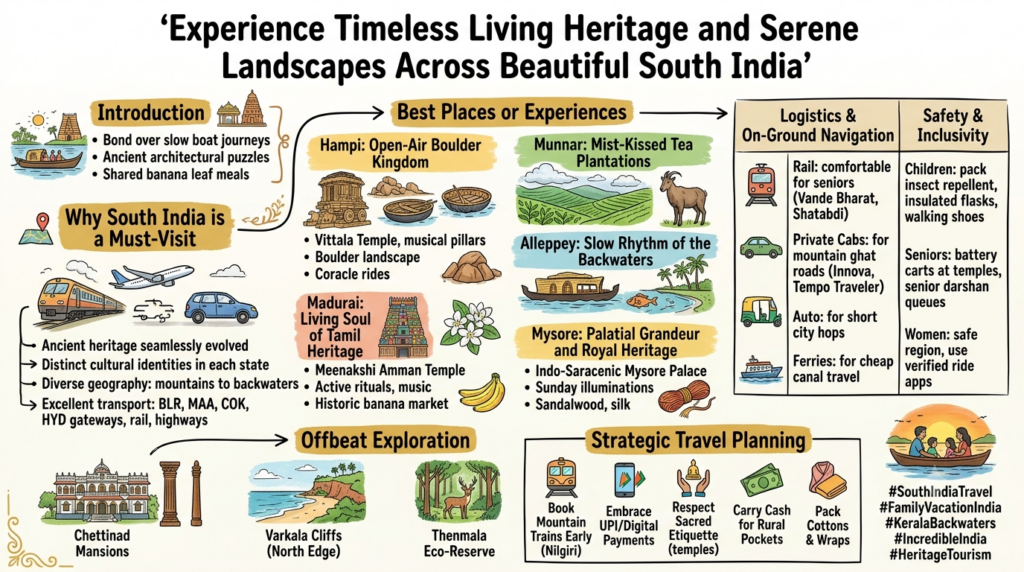
Introduction
Most family vacations quickly devolve into predictable routines of crowded souvenir strips, packed bus tours, and frantic itineraries. When traveling with children and senior family members, standard tourist traps often leave everyone drained rather than inspired.
South India shatters this cookie-cutter mold by offering an authentic tapestry of living history, serene waterways, mist-laden plantations, and deeply rooted temple traditions. Here, multi-generational travel finds its true rhythm, allowing families to bond over slow boat journeys, ancient architectural puzzles, and fragrant shared meals served on fresh banana leaves.
The iconic Stone Chariot in Hampi.
Why South India is a Must-Visit Destination
South India stands apart because its ancient civilizational heritage was never erased; it seamlessly evolved into modern daily life. From the Dravidian granite towers of Tamil Nadu to the Dutch-Portuguese maritime relics of Kerala and the royal courts of Karnataka, every state anchors a distinct cultural identity. The geography itself is remarkably diverse, shifting from the cool spine of the Western Ghats down to placid inland backwaters and sun-drenched coastal trade routes.
For families, the region offers exceptional infrastructure and unmatched ease of movement. Four premier international airports—Bengaluru, Chennai, Kochi, and Hyderabad—serve as primary gateways linked to an extensive, well-punctured rail network and smooth multi-lane highways. Whether booking spacious multi-generational tempo travelers or reserving air-conditioned express train cabins, the logistics remain reliable, clean, and accommodating for all age groups.
The classic southern travel circuit moves between hill retreats, heritage sanctuaries, and relaxing waterscapes. This natural pacing prevents travel fatigue by alternating active sightseeing days with leisurely recovery periods in nature.
| Travel Dimension | Regional Highlight | Family Traveler Advantage |
|---|---|---|
| Primary Gateways | Bengaluru (BLR), Kochi (COK), Chennai (MAA) | Direct flight connectivity and seamless cab hubs |
| Topography | Western Ghats, Coromandel Coast, Malabar Shores | Diverse weather zones within short driving distances |
| Cultural Heritage | Chola, Vijayanagara, Hoysala, and Travancore Dynasties | Living monuments and open-air interactive history |
| Cuisine Styles | Chettinad, Malabar, Udupi, and Andhra spreads | Mild to spicy adaptations, abundant vegetarian options |
| Best Travel Window | October through March | Pleasant mornings, cool hill breezes, low humidity |
Best Places or Experiences
Hampi: The Open-Air Boulder Kingdom
Hampi feels like wandering onto the set of a fantastical epic carved from golden granite. Once the thriving capital of the 14th-century Vijayanagara Empire, the landscape is punctuated by thousands of weathered monuments resting among surreal boulder hills along the Tungabhadra River. The sheer scale of the ruins sparks instant curiosity in children while offering elders quiet pavilions to marvel at medieval civil planning.
The central highlight is the Vijaya Vittala Temple, celebrated for its legendary stone chariot and pillared halls designed to resonate like musical instruments. Walking through the royal enclosures, stepwells, and ancient bazaars reveals how art, commerce, and devotion converged centuries ago.
- Location: Vijayanagara District, Karnataka; approximately 350 km from Bengaluru.
- Why it is worth visiting: A UNESCO World Heritage site showcasing the zenith of South Indian rock-cut architecture.
- Best things to do: Take an electric buggy ride around the Vittala complex, climb Hemakuta Hill for sunrise, and take a traditional round coracle boat across the Tungabhadra.
- Best time to visit: November to February; early mornings between 6:30 AM and 9:30 AM avoid the intense midday heat.
- Ideal for whom: History buffs, school-age kids, photographers, and multi-generational families.
- Travel tip: Hire an authorized ASI guide at the main gate to reveal hidden engineering marvels that lack informational signboards.
Munnar: Mist-Kissed Tea Plantations
Perched high in Kerala’s Western Ghats, Munnar envelops visitors in emerald slopes, rolling tea gardens, and crisp mountain air. Originally established as a summer retreat during the British era, the town retains an old-world hill-station charm free from aggressive urban noise. The gentle microclimate provides instant relief from tropical coastal warmth.
Driving through Munnar offers panoramic views where low-hanging clouds brush across terraced tea bushes. Visiting working estates lets families observe how fresh green leaves transform into aromatic specialty teas, turning a casual walk into an engaging sensory lesson.
Verdant tea carpets across Munnar.
- Location: Idukki District, Kerala; roughly 110 km east of Cochin International Airport.
- Why it is worth visiting: Endless rolling biodiversity corridors, high-altitude tea estates, and home to the endangered Nilgiri Tahr.
- Best things to do: Spot wild mountain goats at Eravikulam National Park, tour the century-old Lockhart Tea Factory, and enjoy a family picnic along the banks of Mattupetty Dam.
- Best time to visit: September to March for crisp greenery; mornings before 10:00 AM capture the dramatic low valley mist.
- Ideal for whom: Nature lovers, seniors seeking cool weather, and young families wanting calm walks.
- Travel tip: Pre-book your Eravikulam National Park safari tickets online well in advance to skip hours-long queues at the physical ticket counter.
Madurai: The Living Soul of Tamil Heritage
Madurai is one of the world’s oldest continuously inhabited cities, radiating outward from the monumental Meenakshi Amman Temple. The skyline is dominated by towering, technicolor gopurams encrusted with thousands of carved stucco deities, mythical beasts, and ancient heroes. The entire town breathes devotion, jasmine blossoms, and centuries of artistic continuity.
Stepping inside the temple complex reveals vast colonnaded corridors, including the famous Hall of Thousand Pillars. Children are fascinated by the intricate geometric stone carvings, while older family members appreciate the rhythmic evening rituals, temple music, and fragrant camphor flames.
Gopurams of Meenakshi Amman Temple.
- Location: Madurai District, Tamil Nadu; around 450 km southwest of Chennai.
- Why it is worth visiting: An architectural and cultural powerhouse that showcases classical Dravidian temple design in active practice.
- Best things to do: Attend the ceremonial evening procession of Lord Shiva to Meenakshi’s shrine, explore the 1,000-pillar hall museum, and wander the historic banana market.
- Best time to visit: October to March; visit between 6:00 AM and 8:30 AM or after 5:30 PM for a serene prayer atmosphere.
- Ideal for whom: Cultural travelers, spiritual seekers, elders, and architectural enthusiasts.
- Travel tip: Strict traditional dress codes apply (shoulders and knees fully covered); mobile phones must be deposited in safe lockers at the entry gate.
Alleppey: The Slow Rhythm of the Backwaters
Alleppey, or Alappuzha, replaces noisy motorways with tranquil emerald canals fringed by swaying coconut palms. Boarding a traditional kettuvallam—a converted rice barge crafted from treated wood and thatch—delivers the ultimate slow-travel reset for families. The vessel glides past village docks, water lilies, and sunbathing cormorants.
Life aboard an authentic houseboat moves at a restorative pace. Freshly caught Karimeen (pearl spot fish) and traditional vegetarian curries are prepared right on board by private chefs, allowing family members to unwind together on wide sun decks without transport stress.
Houseboat cruising the Alleppey backwaters.
- Location: Alappuzha District, Kerala; approximately 85 km south of Cochin International Airport.
- Why it is worth visiting: An intricate aquatic ecosystem and cultural lifestyle entirely dependent on water channels.
- Best things to do: Spend a night on a licensed luxury houseboat, hire a silent electric canoe for narrow village canals, and catch the sunset at Alleppey Beach pier.
- Best time to visit: September to March for dry weather and pleasant breezes.
- Ideal for whom: Multi-generational families, relaxation seekers, and bird watchers.
- Travel tip: Choose government-approved green-badge houseboats equipped with quiet eco-generators to ensure uninterrupted sleep for children and grandparents.
Mysore: Palatial Grandeur and Royal Heritage
Mysore (Mysuru) balances regal poise with the relaxed pace of a heritage capital. Built by the Wadiyar dynasty, the city is synonymous with sandalwood incense, silk weaving, and grand Indo-Saracenic royal estates. The grand Mysore Palace sits at its heart, featuring opulent carved rosewood doors, Belgian stained-glass ceilings, and silver-plated thrones.
The city is delightfully walkable and exceptionally clean, making it stress-free for families pushing strollers or accompanying seniors. On Sunday evenings, the palace exterior is illuminated by nearly 100,000 golden bulbs, creating a breathtaking visual spectacle that delights all ages.
Illumination display at Mysore Palace.
- Location: Mysuru District, Karnataka; roughly 145 km southwest of Bengaluru.
- Why it is worth visiting: One of India’s most intact royal complexes displaying flamboyant Indo-Saracenic craftsmanship.
- Best things to do: Tour the private residential wing of the palace, watch the Sunday illumination show from the outer courtyard, and climb Chamundi Hill.
- Best time to visit: October through February; schedule visits between 10:00 AM and 1:00 PM for interiors, and 7:00 PM on Sundays for illuminations.
- Ideal for whom: Multi-generational family reunions, young kids interested in royal armories, and heritage lovers.
- Travel tip: Footwear must be removed before entering the palace interior; bring thick cotton socks to walk comfortably across the polished stone floors.
Offbeat Exploration: Hidden Gems Tourists Miss
Chettinad Mansions of Kanadukathan
Tucked away in southeastern Tamil Nadu, the villages of Chettinad hold over 10,000 sprawling heritage mansions built by merchant bankers in the 19th and early 20th centuries. These palatial homes feature Italian marble, Burmese teak pillars, and handmade Athangudi patterned tiles. Visiting this quiet area lets families experience living history and savor complex, freshly ground Chettinad spice blends away from tour bus crowds.
Gandarbal Beach and the Cliffs of Varkala’s North Edge
While South Varkala stays busy with backpacker cafes, walking 2 km northward reveals quiet laterite cliffs dropping down to pristine sand. Local fishermen pull in morning shore nets while Brahminy kites circle overhead. It serves as a peaceful, safe beach retreat for children to collect shells and watch dolphins breach near the surf.
Thenmala Eco-Reserve and Canopy Walks
Located at the foothills of the Western Ghats along the Kerala-Tamil Nadu border, Thenmala is India’s first planned eco-tourism sanctuary. Families can walk elevated canopy boardwalks, visit a protected deer rehabilitation center, and take tranquil boat rides across the Shendurney reservoir. It remains largely uncrowded even during peak holiday weekends.
Detailed Practical Guidance for Travelers
| Destination | Standard Entry Fee | General Timings | Best Local Food Options Nearby | Recommended Nearby Attractions |
|---|---|---|---|---|
| Hampi (Vittala Complex) | ₹40 (Indians), ₹600 (Foreigners); Free under 15 yrs | 6:00 AM – 6:00 PM | Mango Tree Restaurant (South Indian thalis, dosas) | Virupaksha Temple, Lotus Mahal, Elephant Stables |
| Munnar (Eravikulam) | ₹200 (Indians), ₹500 (Foreigners); Child discounts apply | 7:30 AM – 4:00 PM | Rapsy Restaurant (Kerala parotta, vegetable stews) | Tea Museum, Mattupetty Dam, Kundala Lake |
| Madurai (Meenakshi Temple) | Free general entry; ₹50 for Thousand Pillar Hall | 5:00 AM – 12:30 PM, 4:00 PM – 9:30 PM | Murugan Idli Shop (steamed idlis, jigarthanda drink) | Thirumalai Nayakkar Palace, Gandhi Memorial Museum |
| Alleppey Backwaters | Houseboats: ₹8,500–₹18,000/night; Shikaras: ₹800/hr | Day cruises: 11:30 AM – 5:30 PM; Overnight check-in 12 PM | Cassia Restaurant, fresh on-board Karimeen curry | Marari Beach, Pathiramanal Bird Island |
| Mysore Palace | ₹100 (Adults), ₹50 (Children aged 10-18) | 10:00 AM – 5:30 PM; Illumination 7:00 PM Sun | Mylari Hotel (butter dosas), Dasaprakash Restaurant | Chamundi Hills, Sri Chamarajendra Zoological Gardens |
Logistics & On-Ground Navigation
Local Transport Options
- Intercity Rail: The most comfortable option for families traveling with seniors. Premium trains like the Vande Bharat and Shatabdi Express smoothly connect Bengaluru to Mysore and Chennai to Madurai with clean amenities and included meals.
- Chauffeur-Driven Private Cabs: Hiring an air-conditioned Innova or Tempo Traveler is the gold standard for hill corridors like Munnar, where winding ghat roads demand experienced mountain drivers.
- Auto-Rickshaws: Excellent for short city hops in Madurai and Mysore. Always insist on the digital meter or agree on the fare before stepping in.
- Government Ferries: In Kerala’s backwater hubs, state water transport ferries cost less than ₹20 per ticket and offer panoramic canal views alongside friendly locals.
Budget Planning
- Backpacking & Modest Tier (₹1,800 – ₹3,200 per day for two): Clean heritage homestays, South Indian vegetarian meals at local messes, public state buses, and standard train travel.
- Mid-Range Family Comfort Tier (₹6,500 – ₹14,000 per day for a family of four): 3-star to 4-star boutique plantation stays or heritage properties, private AC vehicle hire, experiential dining, and occasional curated guided tours.
Safety and Inclusivity Tips
- Families with Children: Pack child-friendly insect repellent and carry insulated water flasks. Most heritage complexes involve walking on sun-baked stones, so pack slip-on shoes with cushioned soles.
- Senior Citizens: Major temples provide battery-operated carts from perimeter gates to inner courtyards. Inquire about senior-specific express darshan queues to bypass long lines.
- Couples & Solo Women: South India is widely regarded as one of the country’s safest regions. Using verified ride-hailing apps like Ola or Uber in metropolitan zones ensures fair pricing and tracked routes.
Strategic Travel Planning Guardrails
Travel Planning Tips for South India
- Book Mountain Trains Early: Nilgiri Mountain Railway and broad-gauge holiday expresses sell out up to 120 days ahead; secure seats as soon as your dates are locked.
- Embrace UPI and Digital Payments: Almost every neighborhood vendor, roadside coconut seller, and auto driver accepts scan-and-pay UPI transactions (via Google Pay or PhonePe).
- Respect Sacred Etiquette: Temples require visitors to remove footwear outside. Wear lightweight socks to protect your feet from hot stone paving.
- Carry Cash for Rural Pockets: While digital payments are widespread, spotty cellular reception in mountain passes makes carrying ₹2,000 in physical cash a wise precaution.
- Pack Light Cottons and Warm Wraps: Coastal and lowland areas stay humid year-round, while hill retreats like Munnar turn chilly once the sun dips.
Common Mistakes to Avoid
- Attempting to Tour Two Hill Stations Simultaneously: Combining Ooty and Munnar in one short week leads to excessive driving on winding roads with little time to relax.
- Ignoring Temple Midday Closures: Traditional South Indian temples close their main sanctums between 12:30 PM and 4:00 PM; plan your visits for morning or dusk.
- Underestimating Mountain Driving Times: A 100-kilometer drive on mountain hairpin turns takes over three and a half hours; calculate realistic travel buffers.
- Defaulting Exclusively to Continental Food: Missing out on crispy dosas, coconut-infused avial, and filter coffee robs the trip of its regional culinary essence.
- Booking Houseboats Through Unverified Touts: Never rent houseboats from aggressive touts at boat jetties; inspect the boat in person or book via certified operators.
Suggested Itinerary Blueprints
1. Day Quick Dash (The Royal Heritage Sprint)
- Target Audience: Families with limited leave seeking high cultural impact with minimal driving.
- Day 1: Arrive in Bengaluru, take the morning Vande Bharat train to Mysore (2 hours). Tour Mysore Palace, visit the adjacent silk cooperative, and watch the evening palace illuminations.
- Day 2: Morning visit to the Chamundeshwari Temple atop Chamundi Hill. Explore the historic island fortress of Srirangapatna before catching an evening train back to Bengaluru.
2. Day Deep-Dive (Misty Hills to Serene Waterways)
- Day 1: Land at Kochi International Airport and drive up through cascading waterfalls to Munnar. Check into a working tea estate and spend the late afternoon enjoying nature walks.
- Day 2: Morning safari at Eravikulam National Park to spot mountain wildlife. Tour a tea factory, sample fresh tea varieties, and relax by Mattupetty Lake.
- Day 3: Descend the Western Ghats toward the Alleppey backwaters. Board an overnight private houseboat by 12:30 PM, cruising tranquil canals through sunset.
- Day 4: Enjoy a quiet breakfast on the water, disembark at 9:30 AM, and return to Kochi for historic Fort Kochi sightseeing and evening flights.
3. Complete Weekend Travel Plan (The Great Temple & Coastal Loop)
- Friday: Fly into Madurai. Spend the late afternoon touring the historic Thirumalai Nayakkar Mahal, followed by the evening prayer ceremony at Meenakshi Amman Temple.
- Saturday: Enjoy a morning breakfast of piping-hot idlis at Murugan Idli Shop. Drive 2.5 hours through rural Tamil countryside into the heritage heart of Chettinad. Tour the grand mansions of Kanadukathan and dine on an authentic multi-course banana leaf lunch.
- Sunday: Take a quiet sunrise stroll through Athangudi tile craft workshops. Drive up to Tiruchirappalli to visit the iconic Rockfort Temple before catching your evening return flight from Trichy International Airport.
Common Tourist Mistakes to Avoid
Geographic Blunders
A frequent pitfall is pairing geographically separated destinations like Hampi and Munnar within a short five-day window. Hampi sits far north on Karnataka’s arid Deccan plateau, while Munnar rests deep in the southern mountain folds of Kerala. Combining them without connecting flights wastes precious vacation days in transit. Focus instead on compact regional circuits.
Commercial Traps
Many tourists waste afternoons browsing overpriced souvenir warehouses located right outside palace and monument exits. These stores often sell mass-produced carvings and adulterated spices at inflated rates. For authentic keepsakes, visit government-run emporiums such as Cauvery Handicrafts in Karnataka or direct spice growers’ cooperatives in Idukki.
Neglecting Modern and Alternative Zones
Travelers often get so caught up checking off ancient ruins that they overlook the contemporary creative energy in southern cities. Bengaluru’s vibrant park culture and craft breweries, Kochi’s contemporary art spaces in Mattancherry, and Puducherry’s quiet residential French Quarter cafes offer wonderful breaks from packed monument schedules.
Transport Overpayment
Unregulated taxi stands at airport exits and railway stations frequently quote inflated rates to arriving families. Always use pre-paid government taxi booths, hail app-based vehicles, or arrange airport transfers directly through your accommodation to lock in fair, transparent pricing.
Luxury Dining Bias
Limiting your meals to five-star hotel buffets insulates you from the culinary soul of South India. The crispest ghee podi dosas, flakiest Malabar parottas, and freshest coastal stews are found in humble, spotless local dining rooms. Look for busy family restaurants with high turnaround to enjoy authentic, freshly cooked meals.
Frequently Asked Questions
1. What makes South India better suited for family vacations than other regions?
South India delivers a relaxing balance of modern medical infrastructure, clean highways, warm hospitality, and diverse attractions within short driving distances. The combination of peaceful hill stations, calm backwaters, and well-maintained monuments accommodates both energetic young kids and senior citizens who need a slower travel pace.
2. Which months offer the most comfortable weather for family travel?
October through March provides the most pleasant travel conditions across South India. During these months, the intense monsoon rains have passed, humidity levels drop along the coastlines, and hill stations like Munnar and Coonoor enjoy bright days with cool, crisp evenings.
3. Is South Indian food suitable for kids who cannot handle heavy spices?
Yes, South Indian cuisine is remarkably versatile and child-friendly. Mild staples like steamed idlis, ghee dosas, curd rice, coconut milk stews, and mild lentil dal are widely available at every local restaurant. Kitchens readily customize spice levels for children when asked.
4. How many days are ideal for a well-paced family holiday in South India?
A 7 to 9-day itinerary is the sweet spot for a multi-destination family vacation. This duration allows you to explore two contrasting landscapes—such as a hill station paired with coastal backwaters—without spending too much time packing bags and changing hotels every morning.
5. Are historical monuments like Hampi and Mysore Palace stroller-friendly?
Mysore Palace is generally accessible with smooth ground pathways, ramps, and spacious courtyards. In contrast, Hampi’s terrain features ancient stone courtyards, sand paths, and rocky surfaces where strollers struggle. For Hampi, lightweight baby carriers are far more practical and comfortable.
6. What are the modest dress code rules when visiting major southern temples?
Traditional Hindu temples require both men and women to dress modestly. Shoulders, upper arms, and knees must be fully covered. Some temples, such as Madurai’s Meenakshi Temple or Padmanabhaswamy in Kerala, require men to wear dhotis and women to wear sarees or salwar suits.
7. Can senior family members comfortably experience the Kerala backwaters?
The backwaters are an ideal experience for elderly travelers. Traditional houseboats feature flat boarding ramps, air-conditioned ground-level bedrooms, and comfortable shaded living decks. Seniors can soak in the natural scenery and village life without having to walk long distances or manage stairs.
8. Should we rent a self-drive car or hire a local chauffeur for hill routes?
Hiring a car with a professional local driver is strongly recommended. Mountain roads across the Western Ghats feature narrow lanes, dense fog, and frequent hairpin bends. Local chauffeurs navigate these roads comfortably, leaving your family free to enjoy the scenery without driving fatigue.
9. How reliable are medical facilities and pharmacies outside major southern cities?
South India has some of the highest healthcare standards in the country. Even intermediate towns like Munnar, Hampi (Hospet), and Alleppey have well-equipped multi-specialty hospitals, clean clinics, and 24-hour pharmacies stocked with common pediatric and geriatric medications.
10. What unique handmade souvenirs should families buy across South India?
Look for genuine sandalwood carvings and Mysore silk sarees in Karnataka, GI-tagged handmade Athangudi floor tiles in Chettinad, high-altitude orthodox black teas in Munnar, and bronze bell-metal lamps (Nilavilakku) or handloom cotton fabrics throughout Kerala.
11. Is it safe to drink local tap water, or should we carry bottled water?
Avoid drinking municipal tap water directly. Families should drink filtered RO water provided by reputable hotels or purchase sealed, ISI-certified bottled water. Carrying reusable insulated bottles allows you to refill from trusted restaurant dispensers and cut down on single-use plastic waste.
12. How do we book the Nilgiri Mountain Railway toy train for a family group?
Tickets must be reserved well in advance via the official Indian Railways IRCTC portal. Because this historic UNESCO toy train operates only a few carriages per journey, seats sell out within minutes of opening 120 days prior to departure.
Conclusion
A family trip across South India offers more than just scenic photo stops; it provides a grounding journey through living traditions, pristine nature, and warm hospitality. Whether sharing quiet moments on a sun-drenched houseboat deck, wandering among monumental stone pillars, or bonding over fresh filter coffee, these shared memories bridge generational divides. Choosing this thoughtful landscape over crowded vacation spots rewards your family with a truly enriching travel experience.
