MOTOSHARE 🚗🏍️
Rent Bikes & Cars Directly from Owners
Motoshare connects vehicle owners with people who need bikes and cars on rent. Owners earn from idle vehicles, and renters get flexible ride options.
Visit Motoshare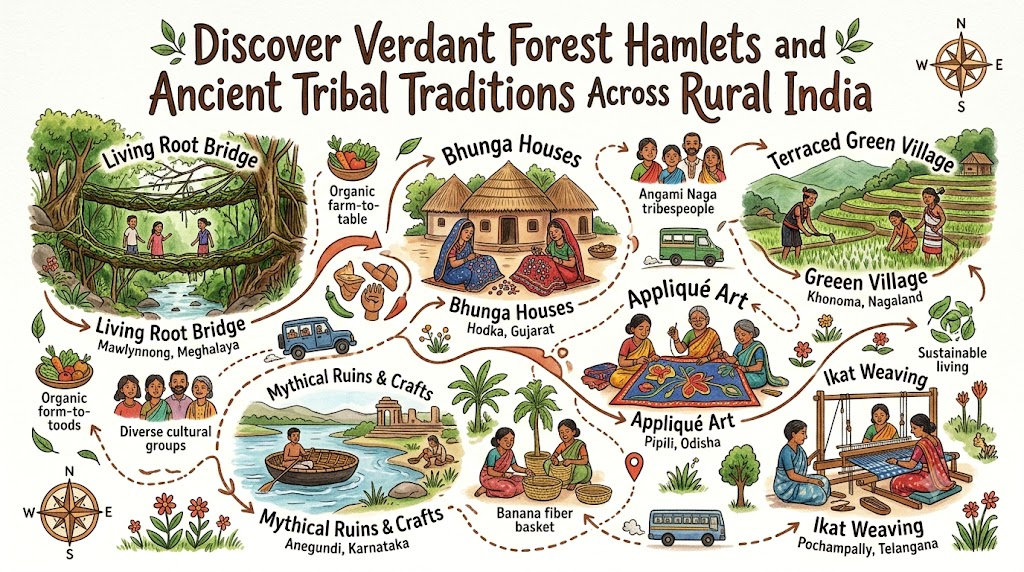
Introduction
Escape the relentless hum of bumper-to-bumper city traffic, overcrowded selfie hubs, and cookie-cutter commercial hill stations. India’s true heartbeat thrives far beyond metropolitan skylines, quietly tucked away in pastoral hamlets where age-old traditions, ancestral architecture, and unfiltered warmth still reign supreme.
Stepping into these rural settlements isn’t just about taking a holiday; it is an immersive journey into authentic living. Here, meals come freshly plucked from organic backyard farms, community elders share lore around communal woodfires, and ancient craftsmanship unfolds right in front of your eyes.
Why India’s Countryside is a must-visit city
Rural India represents one of the most culturally diverse landscapes on earth. From the mist-draped terraced hills of the Northeast to the desert hamlets of western Gujarat, every village tells an enduring story shaped by geography, indigenous wisdom, and sustainable coexistence with nature.
Reaching these secluded treasures is remarkably seamless thanks to extensive state highway networks, scenic broad-gauge rail links, and well-managed community homestays. Backpackers, slow travelers, and multi-generational families alike will find a restorative counterweight to the frantic tempo of urban living.
| Metric / Aspect | Key Fact |
|---|---|
| Top Travel Seasons | October to March (Pan-India plains/deserts); April to July (Himalayan regions) |
| Primary Accommodation Type | Community-run eco-cottages, traditional homestays, and farm stays |
| Typical Daily Budget | ₹1,200 – ₹4,500 per person depending on comfort tier |
| Signature Highlights | Bio-engineering feats, tribal arts, organic farm-to-table food, living heritage |
| Key Transport Mode | Regional state transport buses, local share-jeeps, private rural taxis |
Best Places or Experiences
Mawlynnong, Meghalaya
Perched along the southern slopes of the East Khasi Hills, Mawlynnong earned international renown as “Asia’s Cleanest Village,” yet its true magic lies in its community-led environmental stewardship. Every street is flanked by lush flowering orchards, immaculate bamboo dustbins shaped like inverted cones, and quaint wooden cottages maintained meticulously by the indigenous Khasi community.
Beyond its pristine pathways, Mawlynnong acts as a gateway to extraordinary indigenous bio-engineering. Just down the trail in neighboring Riwai, ancient rubber tree roots have been coaxed across roaring subtropical rivers over centuries to weave functional, living bridges that grow stronger with age.
Living root bridge near Mawlynnong.
- Location: East Khasi Hills District, Meghalaya; roughly 90 km south of Shillong.
- Why it is worth visiting: It exemplifies community-driven eco-preservation and traditional Khasi matrilineal culture.
- Best things to do: Climb the 85-foot Sky Walk bamboo tower for sweeping views of the Bangladesh plains, trek across the Riwai Living Root Bridge, and savor local Khasi black sesame pork or wild herb lentil curry.
- Best time to visit: October to April for crisp skies; visit in June to September if you wish to see raging waterfalls and emerald foliage.
- Ideal for whom: Nature enthusiasts, eco-conscious travelers, photographers, and slow travelers.
- Travel tip: Wear sturdy, high-grip walking shoes as stone stairs leading down to the root bridges can become extremely slick from moisture.
Hodka, Gujarat
Resting silently along the fringes of the Great Rann of Kutch, Hodka is an open-air living gallery of nomadic pastoral heritage. The hamlet is home to the Meghwal and Maldhari communities, renowned for their intricate mirror-work embroidery, leathercraft, and mud-relief interior artwork.
The village’s architectural genius shines through its traditional Bhungas—circular mud dwellings topped with conical thatched roofs. Engineered centuries ago to survive harsh desert temperature swings and severe earthquakes, these homes stay naturally cool in the midday desert sun and pleasantly warm during freezing desert nights.
Traditional Bhunga house in Hodka.
- Location: Kutch District, Gujarat; approximately 63 km north of Bhuj.
- Why it is worth visiting: Unmatched immersion into desert artisan life, vibrant textiles, and earthquake-resistant vernacular architecture.
- Best things to do: Experience authentic Lippan Kaam (mud and mirror craft) workshops, listen to Kutchi folk music under starlit desert skies, and dine on piping hot Bajra no Rotlo with hand-churned white butter.
- Best time to visit: November to February, timed perfectly with the cooler desert winter winds and full moon cycles.
- Ideal for whom: Craft connoisseurs, cultural preservationists, textile designers, and curious road-trippers.
- Travel tip: You must carry government photo identification to obtain the mandatory Rann of Kutch check-post permit at Bhirandiyara.
Khonoma, Nagaland
Tucked into the emerald folds of the Dzüko valley, Khonoma holds pride of place as India’s premier conservation-forward “Green Village.” Inhabited by the legendary Angami Naga tribe, the village transformed from a fierce hunting culture into a dedicated sanctuary for wildlife, officially banning logging and commercial hunting.
Terraced paddy fields cascade down mist-shrouded valleys, carved by hand over centuries and fed by pristine mountain water channels. Walking along Khonoma’s fortified stone gates (Kharu) and ancestral clan houses (Khels) reveals stories of indomitable resistance against colonial British troops in the nineteenth century.
Step-farming terraces of Khonoma village.
- Location: Kohima District, Nagaland; around 20 km west of Kohima city.
- Why it is worth visiting: A masterclass in tribal self-governance, biodiversity restoration, and ancient Naga heritage.
- Best things to do: Hike through the protected Khonoma Nature Conservation and Tragopan Sanctuary, explore the historical stone ramparts of the British confrontation, and sample organic mountain rice with smoked bamboo shoots.
- Best time to visit: October to April for clear valley panoramas and pleasant hiking conditions.
- Ideal for whom: Trekkers, environmentalists, cultural historians, and documentary photographers.
- Travel tip: Always hire an authorized Angami youth guide at the village entry gate; their storytelling brings the intricate clan history to life.
Pipili, Odisha
Bathed in vivid hues, Pipili is an artisanal artisan village situated along the sacred highway between Bhubaneswar and Puri. Founded originally to supply vibrant canopies, umbrellas, and ceremonial banners for the monumental Jagannath Rath Yatra, the village hums with rhythmic needlework and shearing shears.
Generations of master artisans stitch bold, geometric fabric patches depicting horses, peacocks, trees of life, and mythological deities onto heavy cotton canvases. A gentle walk down the main bazaar reveals roadside ateliers bathed in brilliant yellow, scarlet, and cobalt textiles waving in the coastal breeze.
Master applique work in Pipili.
- Location: Puri District, Odisha; roughly 20 km south of Bhubaneswar.
- Why it is worth visiting: It is the historic global epicenter of GI-tagged Pipli Appliqué textile crafts.
- Best things to do: Watch master artisans hand-stitch layered appliqué motifs, purchase authentic handcrafted temple canopies and lanterns, and sample freshly fried Chhena Gaja sweets at nearby highway sweet stalls.
- Best time to visit: November to February, or during June/July to witness frantic pre-Rath Yatra preparations.
- Ideal for whom: Art lovers, shoppers, families, and craft heritage collectors.
- Travel tip: Step off the noisy main highway into the quiet interior lanes (sahi) to buy directly from artisan families at fair prices.
Anegundi, Karnataka
Situated across the boulder-strewn Tungabhadra River from the celebrated ruins of Hampi, Anegundi is older than the Vijayanagara Empire itself. Mythologically recognized as the monkey kingdom of Kishkindha from the Ramayana, this peaceful settlement preserves a timeless, rustic pastoral cadence that contrasts starkly with modern tourist towns.
Surrounded by sprawling banana plantations, rocky granite hillocks, and quiet waterways, Anegundi has pioneered sustainable rural tourism through grassroots artisan collectives. Women-led cooperatives transform invasive water hyacinth weeds and banana plant fibers into elegant bags, mats, and biodegradable household decor.
- Location: Koppal District, Karnataka; just 5 km across the river from Hampi.
- Why it is worth visiting: Rich mythical history, pre-historic rock art sites, and pioneering sustainable village restoration initiatives.
- Best things to do: Hike up Anjanadri Hill for sweeping sunset views, take a traditional round coracle boat ride on the river, and visit rural banana-fiber handicraft studios.
- Best time to visit: October to March, when the harsh Deccan heat subsides into pleasant mornings and cool evenings.
- Ideal for whom: Backpackers, spiritual seekers, rock climbers, and cycle tourers.
- Travel tip: Rent a simple bicycle or electric scooter to explore the outlying megalithic burial grounds and cave paintings at your own pace.
Pochampally, Telangana
Tucked neatly amidst palm-fringed countryside, Pochampally is world-renowned as India’s “Silk City.” Here, almost every household possesses a rhythmic wooden loom, producing intricate Ikat handloom textiles that hold prestigious Geographical Indication (GI) protection.
The genius of Pochampally lies in its complex geometric resist-dyeing method, where warp and weft silk threads are mapped, tied, dyed, and woven with mathematical accuracy. A walk through the residential alleys yields a soothing symphony of clacking wooden pedals, spinning fly-shuttles, and vibrant bundles of mulberry silk hanging out to dry.
- Location: Yadadri Bhuvanagiri District, Telangana; approximately 45 km east of Hyderabad.
- Why it is worth visiting: Recognized globally by the UNWTO as one of the best rural tourism villages for traditional weaving preservation.
- Best things to do: Tour the Pochampally Rural Weavers’ Society, learn the tie-and-dye Ikat mathematical grid system, and shop for handwoven silk sarees directly from master weavers.
- Best time to visit: September to March to avoid the sweltering Telangana summer sun.
- Ideal for whom: Fashion historians, craft enthusiasts, day-trippers from Hyderabad, and cultural explorers.
- Travel tip: Bring adequate cash for textile purchases directly from master weavers, as mobile network connectivity for digital UPI apps can fluctuate inside older brick homes.
Offbeat Exploration: Hidden Gems Tourists Miss
The Hidden Petroglyphs of Onake Kindi near Anegundi
Few day-trippers realize that tucked behind the rocky granite ridges outside Anegundi lies Onake Kindi, an undisturbed Iron Age megalithic site. The site contains red and white prehistoric ochre rock paintings portraying human figures, cattle, and sun symbols dating back over 2,500 years.
Riwai’s Natural Underground Stream Networks
While thousands line up at Mawlynnong’s sky tower, quiet stone paths near Riwai lead down to underground limestone runoffs where cold mountain water bubbles up into natural rock tubs. Local Khasi elders carefully channel this runoff into community fish sanctuaries protected by ancient village taboos.
The Meghwal Leathercraft Compounds of Dhordo
Just beyond Hodka’s main artistic hub lies the tiny hamlet of Dhordo, where elder leatherworkers practice the art of vegetable-tanned, copper-studded harness and pouch making. Bypassing commercial highway emporiums to sit on a woven cot (charpai) here offers unhurried insight into centuries-old nomadic leather embossing.
Detailed Practical Guidance for Travelers
| Destination | Standard Entry Fee | General Timings | Best Local Food Options Nearby | Recommended Nearby Attractions |
|---|---|---|---|---|
| Mawlynnong, Meghalaya | ₹50 per car (Village Entry); ₹40 for Living Root Bridge | 7:00 AM – 5:30 PM (Sundays reserved for church services) | Steamed organic rice, Jadoh, boiled wild forest greens, local Khasi dal | Dawki Umngot River, Krang Shuri Falls, Riwai Root Bridge |
| Hodka, Gujarat | Free village entry (Rann permit: ₹100/adult) | 8:00 AM – 7:00 PM | Authentic Kathiyawadi/Kutchi thali, Bajra Rotla with garlic chutney, Chaas | White Rann of Kutch, Kalo Dungar (Black Hill), Nirona artisan village |
| Khonoma, Nagaland | ₹30 per adult (Village environmental fund fee) | 8:30 AM – 4:30 PM | Steamed red rice, smoked beef/pork with Raja Mircha, fermented bamboo shoots | Kohima War Cemetery, Dzüko Valley trek base, Kisama Heritage Village |
| Pipili, Odisha | Free public access | 9:00 AM – 8:30 PM | Dalma with hot rice, Chhena Poda, hot Rasagola at local highway stalls | Dhauli Shanti Stupa, Konark Sun Temple, Raghurajpur Heritage Craft Village |
| Anegundi, Karnataka | Free public access | Sunrise to Sunset (6:00 AM – 6:30 PM) | Jolada Rotti, tender coconut water, south Indian vegetarian banana leaf thali | Sanapur Lake, Anjanadri Hill, Pampa Sarovar, Hampi World Heritage Site |
| Pochampally, Telangana | ₹20 for Weaving Tourism Museum | 10:00 AM – 5:30 PM | Spicy Telangana chicken curry, Jowar rotis, Gongura pachadi with ghee | Bhongir Fort, Kolanupaka Jain Temple, Yadagirigutta Temple |
Logistics & On-Ground Navigation
Local Transport Options
- State Roadways Buses: Ideal for solo backpackers connecting capital cities to taluk/block junctions; remarkably cheap but require patience with sporadic departure timings.
- Shared Jeeps & Sumos: The lifeline of mountainous terrains like Nagaland and Meghalaya; fast, reliable, and scenic, departing from regional transport stands once fully seated.
- Hired Taxis & Self-Drive Rentals: The most convenient choice for families and photography buffs, allowing flexible stops along scenic countryside bypasses.
- Bicycles & Mopeds: The premier way to explore flat, expansive pastoral flatlands like Anegundi and Pochampally; daily rentals are economical and environmentally conscious.
Budget Planning
- Backpacker Tier (₹1,200 – ₹1,800 / day): Dorm bed or basic village homestay, home-cooked regional meals, local government buses or shared jeeps, and self-guided walking tours.
- Mid-Range / Comfort Tier (₹3,000 – ₹5,500 / day): Private heritage cottage/Bhunga, dedicated regional vehicle with driver, artisanal shopping budget, and local community guides.
Safety and Inclusivity Tips
- For Families: Most rural communities are deeply family-centric; homestay hosts welcome children warmly. Ensure you carry specific dietary snacks and prescribed pediatric medication, as village pharmacies stock only basic first-aid supplies.
- For Couples: Rural India leans conservative; public displays of affection are frowned upon. Respect domestic privacy, dress modestly covering shoulders and knees, and you will receive unmatched hospitality.
- General Safety: Rural crime against travelers is virtually non-existent; however, street lighting after dark is minimal. Always carry a reliable LED headlamp, keep emergency offline navigation maps downloaded, and return to your base before late evening.
Strategic Travel Planning Guardrails
Travel Planning Tips for India’s Villages
- Stock Sufficient Physical Currency: Digital payments via UPI are expanding, yet rural mobile towers face frequent power outages; carry adequate paper currency in smaller denominations (₹50, ₹100, and ₹200 notes).
- Book Homestays Directly: Reach out to village development committees, eco-tourism societies, or verified rural homestay collectives so revenue goes directly to locals.
- Align with Local Cycles: Rural India sleeps early and rises at daybreak; align your sleep schedule to experience morning village chores and serene sunrise birdsong.
- Pack Biodegradable Toiletries: Septic and graywater systems in remote villages are delicate; avoid synthetic, microplastic-laden soaps and use natural shampoos.
- Seek Permission Before Photography: Always ask courteously before pointing a camera at weavers, farmers, children, or inside private home sanctums.
Common Mistakes to Avoid
- Treating Villages Like Tourist Resorts: Do not expect 24-hour room service, immediate air-conditioning, or fast-food menus; embrace the simplicity of the slow pace.
- Bargaining Excessively with Direct Artisans: Handcrafted textiles and woodwork represent weeks of painstaking labor; pay fair, respectful wages without aggressive haggling.
- Leaving Plastic Trash Behind: Waste disposal infrastructure in rural zones is limited; carry all plastic wrappers and empty bottles back to major city centers.
- Underestimating Rural Travel Times: A 50-kilometer mountain or desert stretch can easily consume 2.5 hours; plan itineraries by travel duration rather than highway distance.
- Ignoring Local Cultural Norms: From removing footwear before entering a home compound to respecting weekly prayer days (e.g., quiet Sundays in Nagaland/Meghalaya), observe local customs closely.
Suggested Itinerary Blueprints
1. Day Quick Dash (The Telangana Handloom Loop)
- Target Audience: Hyderabad city dwellers, solo culture seekers, and time-strapped day travelers.
- Routing Layout: Depart Hyderabad at 7:30 AM via NH 65 towards Pochampally (1.5-hour drive). Spend the morning watching master weavers in their homesteads and touring the Rural Weavers Museum. Enjoy a spicy rural Telangana lunch, shop directly for silk sarees, climb the monolithic Bhongir Fort at 3:30 PM, and return to Hyderabad by sunset.
2. Day Deep-Dive (The Meghalaya Cloud & Canyon Loop)
- Target Audience: Slow travelers, landscape photographers, and trekking pairs.
- Day 1: Depart Shillong early morning; arrive at Mawlynnong by 10:30 AM. Check into a bamboo homestay, walk the stone trails, trek down to the Riwai Living Root Bridge, and enjoy a slow farm-cooked Khasi dinner under the forest canopy.
- Day 2: Rise with the birds, drive 45 minutes to Dawki for a clear coracle boat ride on the crystal-green Umngot River along the international border, stop at Krang Shuri Waterfalls for an afternoon swim, and head back toward Shillong.
3. Complete Weekend Travel Plan (The Kutch Desert & Artisan Trail)
- Target Audience: Couples, cultural road-trippers, and textile enthusiasts.
- Friday: Fly or take the train into Bhuj; pick up a local rental car and drive to Hodka village. Check into an authentic mud-built Bhunga homestay. Enjoy an evening around the bonfire listening to soulful Kutchi sufi music.
- Saturday: Spend the morning learning Rogan art in nearby Nirona village, then return to Hodka to explore leathercraft and mirror-work embroidery. Head to the White Desert (Dhordo) at 4:30 PM to watch the sunset paint the vast salt marsh in surreal pastel shades.
- Sunday: Morning climb of Kalo Dungar (Black Hill) for a panoramic view of the vast salt expanse; shop for regional spices and handloom fabrics at Bhirandiyara village market before catching your late flight or overnight train back from Bhuj.
Common Tourist Mistakes to Avoid
- Geographic Blunders: Don’t attempt to combine high-altitude Himalayan hill villages and desert circuits in a single week. India’s vast geography requires choosing one specific bio-region and savoring it deeply rather than spending half your leave stranded inside transport terminals.
- Commercial Traps: Avoid spending your travel budget at massive commercial emporiums along national bypasses. These retail outlets often sell factory-made imitations marked with inflated middleman commissions; step right into village courtyards to support living artists directly.
- Neglecting Modern/Alternative Zones: Don’t bypass the quiet fringe settlements where young indigenous entrepreneurs run organic cafes, library rooms, and eco-initiatives. Engaging with youth-led cultural spaces offers fresh perspectives on contemporary village evolution.
- Transport Overpayment: Always verify typical shared-jeep and taxi tariffs at official union desks or with your homestay host before setting off. Private taxi drivers waiting at main railway terminals frequently quote inflated rates to uninitiated travelers.
- Luxury Dining Bias: Sticking solely to upscale highway resort buffets deprives you of the country’s real culinary brilliance. Clean, unpretentious village kitchens serving clay-pot dal, firewood-baked flatbreads, and fresh garden chutneys offer infinitely superior flavor, nutrition, and digestive comfort.
Frequently Asked Questions
1. Is it safe for solo female travelers to visit rural Indian villages?
Yes, rural Indian villages are generally very safe and tight-knit, with virtually no street crime. Villagers are exceptionally protective and respectful of guests. Solo travelers should dress conservatively, arrange verified homestays through reputable community networks, and ensure they arrive at their destinations well before sunset.
2. How do I arrange reliable local transport to remote villages?
Major district headquarters have government-run bus depots and shared-jeep stands connecting nearby rural settlements. Alternatively, booking a private round-trip taxi from the nearest airport or railway junction ensures hassle-free connectivity. Your homestay host can also coordinate trusted local village cab operators directly for day excursions.
3. What kind of bathroom facilities should I expect in village homestays?
Most established rural tourism homestays provide clean, private Western-style flush toilets with running tap water. However, solar or electric water heaters can be intermittent; hosts frequently provide steaming water in traditional buckets upon request. Always verify amenities with your host beforehand if specific facilities are essential.
4. Will language barriers pose a major problem during rural travel?
Not at all. While older villagers speak regional dialects, younger residents and homestay owners usually speak basic English and Hindi. Warm smiles, courteous gestures, and offline translation apps bridge any conversational gap effortlessly. Local hosts take genuine pride in helping visitors feel completely at home.
5. How should travelers handle waste and plastic disposal in remote regions?
Rural villages do not possess municipal mechanized recycling plants. Practice strict zero-waste travel by carrying a reusable steel water bottle, water purification tablets or filters, and cloth tote bags. Always carry your plastic wrappers, toiletries, and sanitary waste back to major towns for proper disposal.
6. Can I get reliable vegetarian and vegan food in rural villages?
Absolutely. Most Indian villages across Gujarat, Odisha, Telangana, and Karnataka operate on vegetarian-dominated agricultural staples such as lentils, seasonal gourds, millet flatbreads, and wild herbs. If you are strictly vegan, politely request that hosts prepare your meals without ghee, milk curd, or freshly churned butter.
7. Are permits required for domestic and foreign tourists visiting tribal villages?
Certain border-adjacent and sensitive tribal territories require special administrative permits. Visiting parts of Nagaland requires an Inner Line Permit (ILP) for domestic visitors, while foreign nationals must register with the Foreigners Regional Registration Office (FRRO). Desert areas like the Rann of Kutch require an administrative checkpoint permit.
8. What medical precautions and vaccines should I take before rural travel?
Ensure standard routine vaccinations like Tetanus and Hepatitis are up to date. Pack a personal medical kit containing oral rehydration salts, antihistamines, broad-spectrum antibiotics, and insect repellent. Medical dispensaries in remote villages carry basic supplies, but emergency medical facilities are located in district towns.
9. How do village homestays contribute directly to the local economy?
Community homestays channel tourism expenditure directly to indigenous families, eliminating third-party commercial middlemen. Your spending supports women-run micro-enterprises, sustains ancestral handloom and handicraft traditions, encourages local organic farming, and funds village infrastructure projects like solar water pumps and community sanitation drives.
10. What is the appropriate tipping etiquette when staying at a rural homestay?
Tipping is not strictly mandated in community-run village homestays, where hosts treat you as an honored houseguest. However, leaving a discreet tip for cooks, youth guides, and housekeeping helpers is deeply appreciated. Writing a heartfelt note in their guestbook is equally valued by host families.
11. Can digital nomads find suitable remote work conditions in Indian villages?
Villages closer to major state highways have dependable 4G and 5G cellular data coverage from major telecom providers. However, high-altitude Himalayan and interior forest settlements face sporadic power cuts and variable mobile signals. For uninterrupted remote work, choose established eco-hubs equipped with dedicated solar backups and satellite broadband.
12. What are the photography ethics to follow inside historic tribal villages?
Always seek verbal permission before taking close-up portraits of village elders, women, or sacred ceremonies. Avoid offering money or sweets to children for pictures, as it encourages undesirable begging habits. If photographing sacred temple sanctums, clan alters, or cremation grounds, always clarify local taboos beforehand.
Conclusion
Stepping into the untamed tranquility of India’s rural landscapes is an experience that lingers long after you pack your bags. Away from the glare of commercial tourist trails, you discover a slower, deeply nourishing rhythm of existence anchored in community solidarity, profound respect for the earth, and timeless hospitality. Choosing this journey enriches not only your own world, but directly sustains the living heritage, artistic mastery, and sacred landscapes of the communities that make India truly extraordinary.
