MOTOSHARE 🚗🏍️
Rent Bikes & Cars Directly from Owners
Motoshare connects vehicle owners with people who need bikes and cars on rent. Owners earn from idle vehicles, and renters get flexible ride options.
Visit Motoshare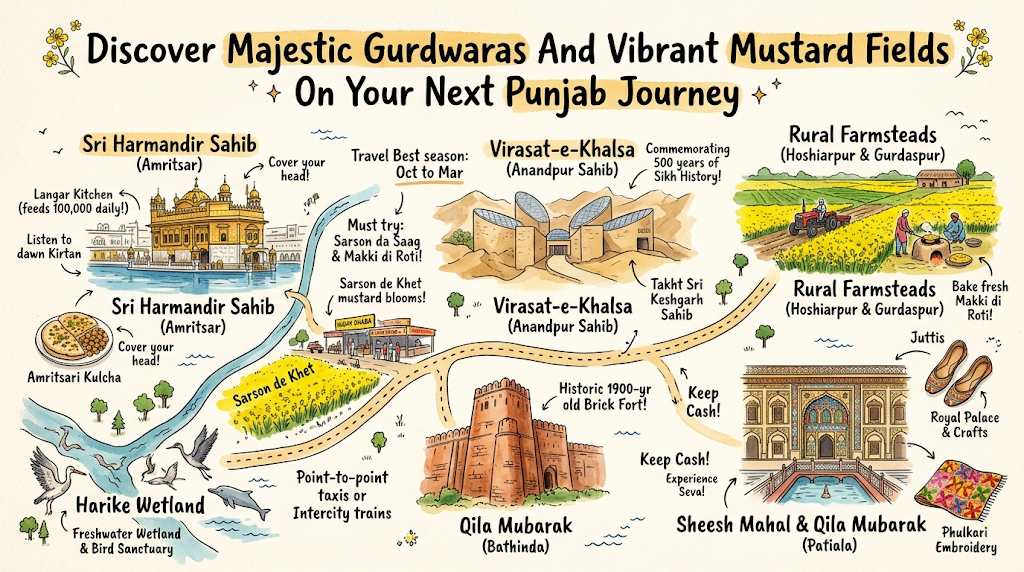
Introduction
Mainstream travel circuits often trap travelers in homogenized luxury resorts or gridlocked tourist corridors. Punjab breaks that mold completely, greeting you with the resonant echo of sacred hymns, the fragrance of slow-simmering brass vats, and an unmatched tradition of community warmth.
Here, heritage is not preserved behind sterile glass display cases. It is lived actively across sun-drenched mustard fields, centuries-old brick ramparts, and open communal kitchens that feed tens of thousands without hesitation.
Why Punjab is a must-visit city
Punjab occupies a singular geographic and civilizational crossroad that has shaped the history of the Indian subcontinent. It served as the gateway for ancient trade and military movements along the Grand Trunk Road, producing a resilient cultural identity built on selfless service (Seva), egalitarian values, and boundless celebration.
For modern travelers, the state offers exceptional infrastructure, seamlessly linking agrarian pastoral communities with historic urban centers. High-speed expressways, electrified railway networks, and world-class hospitality ensure that backpackers, heritage scholars, and multigenerational families navigate the region with ease.
The classic circuit forms a dynamic arc across the state. Travelers typically land in Amritsar, journey eastward to the Shivalik foothills in Anandpur Sahib, continue southward through the industrial heart of Ludhiana, and uncover the royal architecture of Patiala and Bathinda.
| Strategic Indicator | Fast Facts & Navigation Metrics |
|---|---|
| Primary Transit Hubs | Sri Guru Ram Dass Jee International Airport (Amritsar), Shaheed Bhagat Singh Airport (Chandigarh) |
| Ideal Exploration Window | October to March (Crisp mornings, pleasant afternoons: 10°C to 24°C) |
| Core Cultural Pillars | Sikh Spiritual Heritage, Mughal-Sikh Fort Architecture, Agrarian Harvest Traditions |
| Culinary Heritage Signature | Sarson da Saag, Makki di Roti, Amritsari Kulcha, Artisanal Tandoori Flatbreads |
| Signature Local Crafts | Phulkari Needlework, Hand-stitched Juttis, Hammered Brass and Copper Utensils |
Best Places or Experiences
Sri Harmandir Sahib (The Golden Temple)
Stepping through the marble archways of Sri Harmandir Sahib reveals an awe-inspiring sanctuary floating serenely upon the mirrored waters of the Amrit Sarovar. The sanctum sanctorum, gilded with real gold leaf by Maharaja Ranjit Singh in the early 19th century, blends Hindu and Islamic design philosophies with open portals on all four cardinal directions, symbolizing universal acceptance.
Beyond its physical splendor lies the profound heartbeat of the Guru Ramdas Langar. Serving upwards of 100,000 free meals daily, this kitchen operates as a masterclass in human dignity and collective volunteerism. Sitting cross-legged in the dining halls alongside visitors from every walk of life is an unforgettable cultural lesson.
- Location: Amritsar District; central old city, 13 km from Sri Guru Ram Dass Jee International Airport.
- Why it is worth visiting: The supreme spiritual home of Sikhism, offering unmatched architectural radiance and communal harmony.
- Best things to do: Listen to live Gurbani Kirtan at dawn, volunteer to roll chapatis in the langar kitchen, and witness the late-night Palki Sahib ceremony.
- Best time to visit: 4:00 AM for the sanctum opening (Amrit Vela) or 8:30 PM to view the golden reflections on the illuminated pool.
- Ideal for whom: Spiritual seekers, architecture admirers, solo travelers, and families.
- Travel tip: Wear clothes covering shoulders and legs, carry a cotton headscarf (cloth is also provided at the entrance), and store shoes securely at the free managed shoe counters.
Virasat-e-Khalsa
Constructed to commemorate 500 years of Sikh history and the 300th anniversary of the Khalsa panth, Virasat-e-Khalsa stands as an architectural triumph nestled into rugged sandstone cliffs. Designed by acclaimed architect Moshe Safdie, its soaring rooflines echo regional fortress battlements while channeling organic, modern lines that frame sweeping valley vistas.
Inside, experiential exhibit galleries use multimedia installations, hand-painted ceiling frescoes, dramatic lighting, and moving soundscapes to bring centuries of regional resilience to life. Walking through the soaring auto-guided chambers offers an emotional masterclass on how music, poetry, and courage preserved the cultural fabric of Punjab.
- Location: Anandpur Sahib, Rupnagar District; approximately 85 km northwest of Chandigarh.
- Why it is worth visiting: One of the most technologically advanced and architecturally striking cultural museums in Asia.
- Best things to do: Walk through the vibrant illuminated craft village installation, inspect historic battle relics, and admire the sweeping pedestrian suspension bridge.
- Best time to visit: 10:00 AM on weekdays to avoid regional school crowds; November to February offers crisp foothill breezes.
- Ideal for whom: History enthusiasts, design students, photographers, and curious families.
- Travel tip: Audio guides in multiple languages are complimentary with registration; allocate at least three full hours to cover both wings without rushing.
Qila Mubarak
Surging dramatically above the flat plains of southern Punjab, Qila Mubarak in Bathinda is one of India’s oldest continuously standing brick fortifications, dating back nearly 1,900 years to the Kushan Empire. Its towering walls, constructed of small-format baked kiln bricks, have withstood imperial sieges by the Mughals, early Delhi Sultans, and Maratha contingents.
It was within these thick fortified ramparts that Razia Sultana, the first female monarch of the Delhi Sultanate, was imprisoned following her defeat in 1240 AD. Climbing the gentle inner ramps reveals historic ramparts and the serene Gurdwara Sahib built directly inside the fort complex to honor the historic visits of Guru Gobind Singh.
- Location: Bathinda District; 225 km south of Amritsar and 230 km west of Chandigarh.
- Why it is worth visiting: An astonishing surviving example of ancient brick defensive engineering tied directly to early medieval Indian history.
- Best things to do: Trace the ancient brick masonry patterns, visit Razia Sultana’s historic viewing balcony, and pay respects at the inner sanctum Gurdwara.
- Best time to visit: Late afternoon between 3:00 PM and 5:30 PM when the setting sun highlights the earthy terracotta brick tones.
- Ideal for whom: Medieval history buffs, off-the-beaten-path explorers, and solo travelers.
- Travel tip: Wear sturdy walking footwear as the steps and courtyard gravel can be uneven across historic sections.
Sheesh Mahal & Qila Mubarak Complex
The royal seat of the Phulkian dynasty, Patiala’s architectural heritage presents a distinct blend of Rajput grace, Mughal delicacy, and European neoclassical proportion. The Sheesh Mahal, or Palace of Mirrors, was constructed during the reign of Maharaja Narinder Singh and served as a lavish salon designed for artistic and literary gatherings.
The palace walls are adorned with mirrored mosaic inlays, gilt-edged frescoes, and a world-renowned gallery of miniature Kangra-style paintings that illustrate classic poetic texts. Strolling past the palace’s ornamental suspension bridge reveals the aristocratic sophistication that flourished alongside Punjab’s pastoral traditions.
- Location: Patiala District; 65 km southwest of Chandigarh.
- Why it is worth visiting: The definitive cradle of the Patiala Gharana musical tradition, royal miniature painting, and aristocratic Punjabi style.
- Best things to do: Admire the delicate glass-inlay mirrored chambers, cross the historic suspension bridge, and explore the nearby royal courtyards of the main Qila Mubarak fort.
- Best time to visit: 10:00 AM to 1:00 PM on winter mornings for optimal natural courtyard lighting.
- Ideal for whom: Fine arts connoisseurs, textile enthusiasts, and heritage road-trippers.
- Travel tip: The surrounding old city lanes feature traditional workshops where you can observe artisans crafting authentic gold-threaded Phulkari dupattas.
Rural Farmstead Heritage at Hoshiarpur & Gurdaspur
To truly grasp the soul of Punjab, one must step off the pavement and onto fertile black loam. The rural homestays and heritage citrus orchards flanking the canal networks of Hoshiarpur and Gurdaspur offer immersive access to multi-generational farming traditions.
Waking to birdsong amid green wheat fields and sipping fresh unpasteurized milk straight from stainless steel tumblers recharges the senses. Engaging with local farmers provides honest, unfiltered insight into water tables, seasonal crop rotation, and the communal warmth of village life.
- Location: Doaba and Majha rural belts; easily reached within 1 to 2 hours of Jalandhar or Amritsar.
- Why it is worth visiting: Unfiltered access to everyday village life, slow culinary traditions, and organic agricultural hospitality.
- Best things to do: Drive a tractor through rural farm tracks, learn to harvest sugarcane by hand, and bake fresh maize flatbreads on a traditional mud chulha.
- Best time to visit: December through February when vibrant yellow mustard blooms stretch to the horizon.
- Ideal for whom: Slow travelers, culinary adventurers, eco-tourists, and families with curious children.
- Travel tip: Coordinate your stay through registered agro-tourism homestays to ensure your money directly supports farming families.
Offbeat Exploration: Hidden Gems Tourists Miss
The Anglo-Sikh War Battlefields of Ferozepur
Most travelers bypass Ferozepur, yet this border outpost witnessed intense clashes between the Sikh Empire and the British East India Company during the mid-19th century. Sites like Mudki and Ferozeshah feature stone memorials and an informative war museum documenting these pivotal military campaigns.
The French-Inspired Grandeur of Kapurthala
Known as the “Paris of Punjab,” Kapurthala was envisioned by Maharaja Jagatjit Singh, whose passion for European architecture gave rise to the breathtaking Jagatjit Palace, styled directly after the Palace of Versailles. The nearby Moorish Mosque, commissioned by the Maharaja for his Muslim subjects, remains an inspiring monument to religious pluralism.
Harike Wetland & Bird Sanctuary
Situated at the confluence of the Beas and Sutlej rivers, Harike is Northern India’s largest freshwater wetland. During mid-winter, this quiet sanctuary hosts over 40,000 migratory waterfowl from Siberia and Central Asia, along with endangered Indus river dolphins.
Detailed Practical Guidance for Travelers
| Destination | Standard Entry Fee | General Timings | Best Local Food Options Nearby | Recommended Nearby Attractions |
|---|---|---|---|---|
| Sri Harmandir Sahib | Free | Open 24 Hours Daily | Kesar Da Dhaba (Authentic Dal Makhani, Phirni) | Jallianwala Bagh, Partition Museum |
| Virasat-e-Khalsa | Free (Entry Pass Required) | 10:00 AM – 5:30 PM (Closed Mondays) | Anandpur Highway Dhabas (Paneer Parathas, Lassi) | Takht Sri Keshgarh Sahib |
| Qila Mubarak (Bathinda) | Free | 9:00 AM – 5:00 PM (All Days) | Dhaba Express & Local Civil Lines Carts | Bathinda Thermal Lake, Chetak Park |
| Sheesh Mahal (Patiala) | ₹20 per adult | 10:00 AM – 5:00 PM (Closed Mondays) | Gopal Sweets & Jaggi Sweets (Ghee Chana Bhatura) | Baradari Gardens, Qila Mubarak Patiala |
| Jagatjit Palace (Kapurthala) | Special Permission / External Viewing | 9:00 AM – 5:00 PM | Local Sadar Bazaar street stalls (Samosas, Kulfi) | Moorish Mosque, Shalimar Gardens |
Logistics & On-Ground Navigation
Local Transport Options
- Intercity Rail: The Northern Railway network links Amritsar, Jalandhar, Ludhiana, and Chandigarh with express trains such as the Shatabdi and Vande Bharat.
- Point-to-Point Taxis: Private cabs booked via verified regional agencies or app platforms provide reliable travel along smooth four-lane toll highways.
- Auto-Rickshaws & E-Rickshaws: Inside dense old city cores like Amritsar and Patiala, battery-operated e-rickshaws navigate narrow lanes where larger vehicles cannot fit.
- Self-Drive Car Rentals: Ideal for exploring rural routes in the Shivalik foothills and canal corridors; ensure your navigation app has offline maps saved.
Budget Planning
- Budget / Backpacking Tier (₹1,200 – ₹2,200 per day): Clean accommodations in gurdwara sarai guest lodges or budget hostels, wholesome community langar or roadside dhaba meals, and local bus transit.
- Mid-Range / Comfort Tier (₹4,500 – ₹8,500 per day): Polished heritage stays or boutique farm properties, dedicated chauffeured air-conditioned sedans, and fine dining at traditional Punjabi restaurants.
Safety and Inclusivity Tips
- For Families: Punjab is exceptionally welcoming to multi-generational travelers. Major gurdwaras provide accessible wheelchair ramps and golf carts for elderly visitors.
- For Couples & Women Travelers: Respectful attire covering knees and shoulders is recommended when visiting spiritual sites and rural areas. Night travel along major highways is generally secure and well-patrolled.
- General Health & Safety: Always drink bottled or certified RO-filtered water. Keep cash on hand, as rustic highway eateries may have limited mobile data reception for UPI payments.
Strategic Travel Planning Guardrails
Travel Planning Tips for Punjab
- Timing Your Trip: Plan your visit between November and February to enjoy crisp weather, blooming yellow mustard fields, and comfortable outdoor sightseeing.
- Cash Readiness: Keep ₹2,000 to ₹3,000 in smaller cash denominations (₹50, ₹100, ₹200) for rural market vendors, auto-rickshaws, and footwear stall tips.
- Modest Wardrobe: Pack full-length linen trousers, breathable tunics, and carry a compact cotton scarf or bandana for mandatory head coverings at all shrines.
- Digital Navigation: Download offline maps for rural routes, as signal reception can drop along irrigation canals and foothill terrain.
- Advance Booking: Book accommodations near Amritsar’s Heritage Street well ahead of major Sikh festivals such as Gurpurab, Diwali, and Baisakhi.
Common Mistakes to Avoid
- Rushing Through Amritsar in a Single Day: Giving Amritsar only 24 hours forces you to rush through the Golden Temple, the Partition Museum, and the border ceremony.
- Skipping the Langar Experience: Opting out of the communal langar kitchen misses one of the most heartwarming cultural experiences in the state.
- Ignoring the Countryside: Sticking solely to major cities leaves out the genuine warmth and simple beauty of village life.
- Assuming All North Indian Food is Identical: Expecting commercial restaurant curries ignores true regional cooking, which relies on fresh cow’s milk butter, mustard greens, and wood-fired tandoor flatbreads.
- Overpaying for Unmetered City Taxis: Boarding unmetered autos outside transport hubs without agreeing on a price often leads to inflated fares; check app estimates first.
Suggested Itinerary Blueprints
1. Day Quick Dash (Amritsar Heritage Sprint)
- Target Audience: Short-break travelers, business stopovers, and transit visitors.
- Routing: Begin at 6:00 AM at Sri Harmandir Sahib for morning prayers and langar breakfast. Walk through the historic Jallianwala Bagh memorial by 10:30 AM, browse the thought-provoking Partition Museum at noon, and sample hot kulchas at Katra Ahluwalia. Depart at 2:30 PM for the spirited Attari-Wagah Border flag-lowering ceremony, returning to town for dinner.
2. Day Deep-Dive (Heritage & Spiritual Heartland)
- Target Audience: Cultural enthusiasts seeking a balanced pace across spiritual, historic, and culinary sights.
- Day 1 (Spiritual Amritsar): Dedicate your morning to an unhurried visit to the Golden Temple, participate in afternoon kitchen seva, and take an evening food walk through the heritage bazaars around Town Hall.
- Day 2 (Fortresses & Villages): Drive early to Gobindgarh Fort to explore regional martial history, followed by an afternoon trip to a nearby agricultural village for fresh sugarcane juice, tractor rides, and an authentic dinner with a farming family.
3. Complete Weekend Travel Plan (Grand Royal & Spiritual Circuit)
- Target Audience: Road-trippers, culture enthusiasts, and photographers.
- Friday: Arrive in Chandigarh, drive 90 minutes to Anandpur Sahib, explore the striking galleries of Virasat-e-Khalsa, and stay overnight near the Shivalik foothills.
- Saturday: Drive across to royal Patiala, touring the ornate mirrored rooms of Sheesh Mahal and the grand courtyards of Qila Mubarak. Browse local shops in the evening for handcrafted juttis and fine Phulkari embroidery.
- Sunday: Head west toward Bathinda to marvel at the towering brick ramparts of Qila Mubarak, enjoy a countryside lunch at a canal-side dhaba, and conclude your loop in Amritsar or back in Chandigarh.
Common Tourist Mistakes to Avoid
Geographic Blunders
Attempting to visit the Anandpur Sahib shrines and the Attari-Wagah Border on the same day is an impractical routing error. They sit on opposite sides of the state, requiring nearly five hours of transit time. Group your travels into distinct clusters: the western Majha zone (Amritsar-Gurdaspur) and the eastern Malwa/Doaba zone (Anandpur Sahib-Patiala).
Commercial Traps
Spending your evenings wandering enclosed suburban shopping malls cuts you off from the energy of historic downtowns. The open bazaars surrounding the Golden Temple, such as Guru Bazaar and Katra Jaimal Singh, offer rich street life and direct access to authentic craftspeople who have practiced their trades for generations.
Neglecting Modern/Alternative Zones
While deep heritage sites form the core of the state, missing out on contemporary spaces creates an incomplete picture. Take time to explore the tree-lined avenues of modern Mohali and Chandigarh, where experimental art galleries, independent coffee shops, and live theater showcase the vibrant lifestyle of contemporary Punjabi youth.
Transport Overpayment
Arriving at busy transit junctions often exposes travelers to inflated auto-rickshaw fares. To keep costs reasonable, check rates on standard ride-hailing apps or confirm a flat rate before setting off. Across central Amritsar, clean electric shuttle buses running along the Heritage Street corridor offer an inexpensive, reliable alternative.
Luxury Dining Bias
Restricting your meals to hotel buffets misses the authentic flavors of the region. Punjab’s culinary identity thrives at family-run dhabas, roadside brass tandoors, and modest sweet shops where the food is freshly made, seasonal, and deeply rooted in tradition.
Frequently Asked Questions
1. What is the dress code for visiting Gurdwaras in Punjab?
Cover your head with a clean scarf, bandana, or turban, remove your shoes, and wash your feet in the entrance water troughs before stepping into the complex. Wear modest clothing that covers your shoulders and knees. Tobacco, alcohol, and intoxicating substances are strictly prohibited on the premises.
2. Is it safe to drive across rural Punjab at night?
State and national highways are generally safe and busy with truck and agricultural traffic. However, driving through unlit rural roads along irrigation canals late at night is best avoided due to unmarked turns, slow tractor-trolleys without reflectors, and limited breakdown assistance.
3. What is the best month to experience the blooming mustard fields?
The best time to see the yellow mustard fields is between late December and early February. This period also brings crisp morning fog and sunny afternoons, making it the ideal season for outdoor village walks and countryside photography.
4. How much time should I dedicate to the Attari-Wagah border ceremony?
Plan for about four to five hours. The drive from central Amritsar takes roughly an hour each way. Arrive at the border stadium by 3:30 PM to clear security and secure good seats before the ceremonial drill begins at sunset.
5. Are photography and videography allowed inside the Golden Temple?
Photography is permitted along the outer marble walkway (Parikrama) surrounding the sacred water pool. However, cameras, filming, and mobile phones are strictly forbidden inside the sanctum sanctorum to maintain the sanctity and focus of ongoing prayers.
6. Can international visitors freely eat at the Golden Temple Langar?
Yes, the langar welcomes all visitors regardless of nationality, religion, caste, or background. You simply join the seating line, take a steel dining plate and spoon, and sit cross-legged on the floor runners. Volunteers serve hot, fresh meals with genuine care.
7. Where can I buy authentic, hand-stitched Phulkari embroidery in Punjab?
The most authentic Phulkari textiles are found in the heritage bazaars of Patiala, particularly Top Khana Bazaar and Dharampura Bazaar. In Amritsar, Katra Jaimal Singh offers a wide selection of hand-embroidered dupattas and jackets directly from regional artisans.
8. What makes Amritsari Kulcha different from regular naan or paratha?
Amritsari Kulcha is crafted using multi-layered, butter-laminated dough stuffed with spiced potatoes, cauliflower, or paneer. It is baked against the clay walls of an intense wood-fired tandoor, crushed by hand while sizzling hot to release the flaky layers, and served with tangy chickpea curry and tamarind chutney.
9. Is tap water safe to drink across small towns in Punjab?
Drinking unfiltered tap water is not advisable. Opt for bottled water from reputable brands or consume water purified through commercial Reverse Osmosis systems at verified gurdwaras, reputable hotels, and established restaurants to avoid seasonal waterborne stomach bugs.
10. How accessible is public transit for senior travelers?
The main rail stations in Amritsar, Ludhiana, and Chandigarh offer porter services, escalators, and battery carts for seniors. Major cultural monuments and gurdwaras provide loaner wheelchairs and gentle ramps, though exploring the narrow, crowded old city bazaars usually requires hiring private e-rickshaws.
11. What unique festivals offer the richest cultural immersion in Punjab?
Hola Mohalla at Anandpur Sahib in March offers thrilling displays of traditional martial arts, horse riding, and poetry. Additionally, Lohri in January brings harvest celebrations with neighborhood bonfires, while Baisakhi in April fills rural villages with spirited folk music and traditional dances.
12. Do I need special permits to visit the historic battlefields near the international border?
Standard historical sites such as the Ferozepur war memorials and the Sadqi border post are open to all visitors with standard government photo identification. However, designated military defense tracts running along the border fence remain restricted and off-limits to civilian travelers.
Conclusion
Traveling through Punjab leaves an enduring impression on the spirit. Beyond its sunlit mustard fields, soaring defensive fortresses, and shining golden sanctums, the true reward of this journey lies in its everyday generosity. Sitting shoulder-to-shoulder with strangers on hand-woven mats, sharing warm bread, and being welcomed with genuine hospitality transforms this trip from a simple holiday into a deeply meaningful cultural experience.
