MOTOSHARE 🚗🏍️
Rent Bikes & Cars Directly from Owners
Motoshare connects vehicle owners with people who need bikes and cars on rent. Owners earn from idle vehicles, and renters get flexible ride options.
Visit Motoshare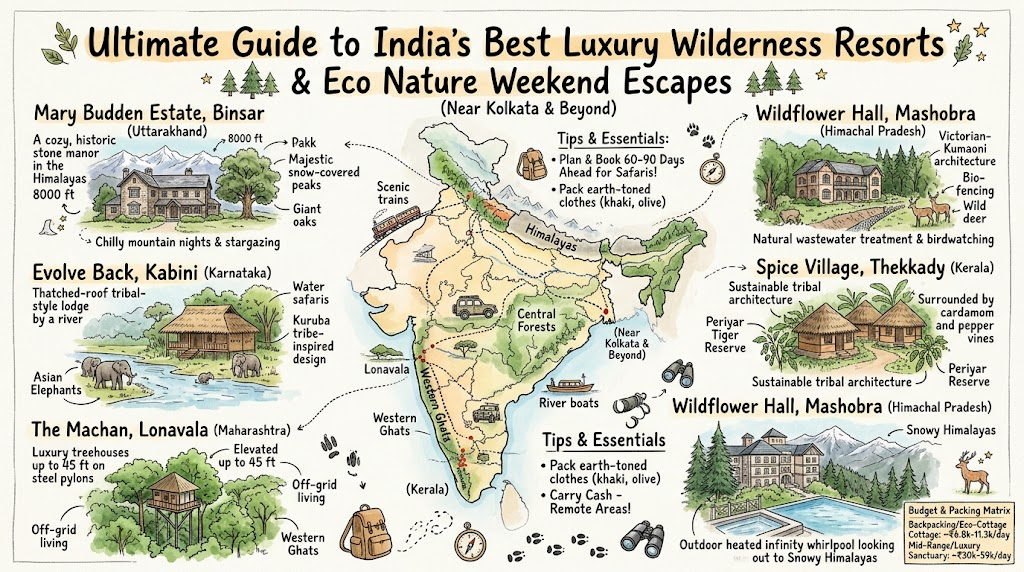
Introduction
Mainstream weekend getaways have increasingly surrendered to crowded promenades, generic buffet lines, and endless concrete corridors that mimic the very urban stress you set out to leave behind. A genuine escape into the wild demands far more than just a pool with a view; it calls for untamed mornings where hornbills break the dawn and dense canopy rustles under an ocean breeze or crisp mountain air. Across India’s most pristine bio-reserves, hidden valleys, and river basins, luxury has been quietly redefined through conscious architecture, ecological stewardship, and profound stillness.
Choosing an immersive wilderness sanctuary allows travelers to reconnect directly with raw topography and native forest heritage without sacrificing refined comfort. Whether nestled in a canopy treehouse perched above the Western Ghats or tucked within an ancestral mountain estate in the Himalayas, these retreats anchor you in the living cadence of the land.
Kabini wilderness escape in Karnataka.
Why Wilderness India is a must-visit destination
India’s ecological diversity spans glacial mountain ridges, evergreen rain forests, dramatic canyon riverways, and coastal backwaters, creating one of the world’s most multifaceted bio-terrains. The country’s premier wilderness sanctuaries have moved far past simple hospitality by integrating vernacular construction, solar-powered independence, and direct conservation partnerships with local tribal communities. Seamless transit connectivity—spanning world-class national expressways, rapid domestic regional air corridors, and scenic rail networks—ensures that even remote biodiversity hotspots are accessible for a restorative 48-to-72-hour break.
The nationwide nature circuit caters naturally to distinct traveler archetypes, from solitude-seeking solo creatives and restorative couples to multi-generational families seeking educational wildlife corridors. Major travel arteries allow seamless movement from tech hubs like Bengaluru, Mumbai, and Delhi directly into protected forest buffers within a single half-day drive.
| Parameter | Regional Snapshot |
|---|---|
| Primary Geographic Zones | Western Ghats, Kumaon Himalayas, Nilgiri Biosphere, Central Indian Sal Forests |
| Peak Wildlife & Outdoor Window | October to April (Pleasant weather, high forest activity, prime migration) |
| Monsoon Escapes Window | June to September (Lush canopy bursts, cascading falls in Maharashtra & Kerala) |
| Typical High-Speed Access | 3 to 5 hours by expressway or direct turboprop link from Tier-1 metros |
| Primary Eco-Architecture Styles | Tribal Kuruba huts, Kumaoni stone-and-timber masonry, elevated timber machans |
Best Places or Experiences
Evolve Back, Kabini (Karnataka)
Perched delicately along the fringes of the Nagarhole National Park, this sprawling sanctuary draws visual and spiritual inspiration from the indigenous Kuruba tribal settlements. Sweeping grasslands yield to the expansive banks of the Kabini Reservoir, where wild Asian elephant herds congregate in dusk gatherings right outside private living pavilions.
The property blends raw tribal architecture—featuring thatched roofs, earthy tones, and local granite stone—with private plunge pools, jacuzzis, and zero-single-use-plastic commitments. It offers an intimate window into one of Asia’s most densely populated tiger, leopard, and pachyderm habitats without disrupting sensitive migratory corridors.
- Location: Bairambad Village, H.D. Kote Taluk, Mysuru District, Karnataka; approximately 220 km southwest of Bengaluru.
- Why it is worth visiting: Unmatched vantage points over the Kabini riverbed combined with world-class forest department naturalists for tracking apex predators.
- Best things to do: Board an evening twilight coracle ride across the Kabini, join an interpretive interpretive naturalist walk through tribal buffer lanes, and embark on a water safari to witness swimming herds of elephants.
- Best time to visit: October to May for premier big-cat sightings; November to February for crisp, mist-clad mornings.
- Ideal for whom: Wildlife photographers, discerning couples, and luxury eco-conscious families.
- Travel tip: Book your forest jeep safaris at least 45 to 60 days in advance, as forest department seat quotas are strictly capped.
The Machan, Jantar Mantar (Lonavala, Maharashtra)
Elevated canopy living at The Machan.
Rising up to 45 feet above the forest floor within an internationally recognized biodiversity hotspot, this architectural marvel consists entirely of off-grid luxury treehouses. The resort’s structures are engineered to sit above the canopy on steel pylons, ensuring that not a single native tree was felled during construction.
The retreat generates substantial operational energy on-site via solar and wind arrays, immersing guests directly in the misty heights of the Western Ghats. From private outdoor showers beneath teak foliage to star-viewing platforms suspended over deep valley drops, the estate presents an intimate union of luxury engineering and ecological preservation.
- Location: Private forest tract, Atvan, Lonavala-Khandala region, Maharashtra; roughly 95 km from Pune and 105 km from Mumbai.
- Why it is worth visiting: Elevated architectural canopy living combined with total off-grid isolation and 100% renewable power generation.
- Best things to do: Trek along private 4 km marked forest trails, soak in a cedar-lined brass bathtub on your open-air forest deck, and join dusk nocturnal insect and frog identification walks.
- Best time to visit: July to September for romantic monsoons and cascading streams; November to February for cool outdoor stargazing.
- Ideal for whom: Couples celebrating anniversaries, architectural enthusiasts, and digital-detox solo travelers.
- Travel tip: Mobile network signal is deliberately restricted inside the treehouses; download any necessary offline media and maps prior to crossing the final checkpost.
Mary Budden Estate, Binsar (Uttarakhand)
Heritage wilderness lodge in Binsar.
Tucked deep within the remote ridges of the Binsar Wildlife Sanctuary at an elevation of 8,000 feet, Mary Budden Estate is an exquisitely restored 19th-century colonial stone manor. Surrounded by virgin stands of ancient Himalayan oak, rhododendron, and towering cedar trees, it feels completely removed from the modern world.
The interior showcases handcrafted wooden ceilings, crackling cast-iron fireplaces, hand-woven woolens, and carefully curated antique mountain literature. The estate runs exclusively on rainwater harvesting and solar energy, serving sublime Himalayan farm-to-table cuisine prepared with mountain herbs grown directly in adjacent terrace plots.
- Location: Binsar Wildlife Sanctuary, Almora District, Uttarakhand; approximately 380 km northeast of New Delhi (accessible via Kathgodam railhead).
- Why it is worth visiting: Rare colonial heritage situated inside a fully protected wildlife sanctuary offering uninterrupted vistas of the majestic Nanda Devi and Trishul mountain massifs.
- Best things to do: Savor a multi-course alfresco lunch prepared under the canopy of whispering pines, embark on guided high-altitude Himalayan birding walks, and stargaze under zero-light-pollution night skies.
- Best time to visit: March to April for vibrant rhododendron blooms; October to December for crystalline Himalayan panoramic clarity.
- Ideal for whom: Solo writers, artists, wellness travelers, and mountain connoisseurs.
- Travel tip: Entry permits into the Binsar sanctuary gate close strictly at sunset; ensure your mountain driver departs Kathgodam no later than midday.
Wildflower Hall, Mashobra (Himachal Pradesh)
Wildflower Hall amid cedar pines.
Perched high on a quiet forested spur 8,250 feet above sea level, Wildflower Hall once served as the private residence of Lord Kitchener. Today, it stands as a pinnacle of mountain luxury, framed by 22 acres of protected virgin cedar and pine woods that overlook jagged snow-covered Himalayan ridges.
The estate balances old-world imperial elegance with top-tier restorative spa retreats, sporting an iconic heated outdoor infinity whirlpool that seems to spill directly into the pine-clad valleys below. Hand-knotted rugs, polished teak floors, and crackling log fireplaces create a cozy cocoon against the mountain chill.
- Location: Chharabra, Mashobra, near Shimla, Himachal Pradesh; situated 13 km past Shimla and roughly 130 km from Chandigarh.
- Why it is worth visiting: Unmatched five-star mountain hospitality paired with pristine, crowd-free private forest walking trails and high-altitude infinity pools.
- Best things to do: Soak in the open-air heated whirlpool while snowflakes fall, take an electric mountain bike tour through the Mashobra sanctuary trail, and book a customized cedar-resin signature spa ritual.
- Best time to visit: December to February for sweeping snowfall landscapes; April to June for cool mountain breezes escaping northern plains heat.
- Ideal for whom: Discerning couples, luxury family retreats, and wellness-focused travelers.
- Travel tip: Skip the congested central Shimla mall road detour altogether by taking the scenic Himalayan bypass route via Dhalli.
Aahana The Corbett Wilderness, Jim Corbett (Uttarakhand)
Bordering the dense sal canopies of Corbett’s Bijrani zone, Aahana is an ecologically conscientious resort built with Victorian-meets-Kumaoni architecture. The resort shares a direct natural boundary with the forest, separated only by a bio-fencing ditch that frequently allows guests to observe wild deer, barking deer, and varied bird species from their verandas.
The property has earned widespread acclaim for its revolutionary wastewater management, using an extensive Root Zone Treatment System with specific wetland plants that treat effluent naturally without harsh chemicals. More than 4,000 hand-planted native trees dot the property, attracting over 200 species of migratory and resident birds.
- Location: Village Sawaldeh, Ramnagar, Nainital District, Uttarakhand; 260 km east of New Delhi.
- Why it is worth visiting: An eco-retreat operating on zero-waste principles with direct frontage on wild elephant and tiger migratory corridors.
- Best things to do: Take an expert-led dawn birding walk along the resort’s private riverine walking path, ride a vintage horse-drawn buggy across organic orchard tracts, and enjoy a traditional Kumaoni village dining feast.
- Best time to visit: November to March for pleasant daytime safari temperatures; April to June for optimal predator sightings near dry riverbeds.
- Ideal for whom: Multi-generational families, birdwatching clubs, and environmental enthusiasts.
- Travel tip: The Ramnagar railhead is only 15 minutes away; taking the overnight Ranikhet Express from Delhi is far less exhausting than driving through highway bottlenecks.
Spice Village, Thekkady (Kerala)
Set in the cardamom-draped hills of the Cardamom Hills adjacent to Periyar Tiger Reserve, Spice Village is a reimagined tribal settlement of the native Mannan tribe. The cottages are roofed with indigenous elephant grass harvested sustainably by tribal elders, keeping room interiors naturally cool without the hum of conventional air conditioning.
Paved roads and manicured landscaping are deliberately shunned here in favor of aromatic botanical pathways bordered by clove, cinnamon, black pepper, and lemon grass. A working organic farm powers the kitchen, celebrating seasonal spice-route cooking techniques handed down over centuries.
- Location: Thekkady, Idukki District, Kerala; approximately 140 km from Madurai Airport and 160 km from Kochi Airport.
- Why it is worth visiting: Authentic tribal vernacular architecture built entirely with sustainable, zero-waste local materials in a functional spice garden.
- Best things to do: Learn the art of regional spice identification with the resident horticulturist, join a ranger-led bamboo rafting trek on Periyar Lake, and participate in daily Kerala cooking masterclasses.
- Best time to visit: September to March for breezy tropical weather; June to August for rejuvenating monsoon wellness therapies.
- Ideal for whom: Cultural purists, eco-conscious couples, and slow-travel advocates.
- Travel tip: Opt for walking or bicycling within Kumily town; narrow village lanes make large SUV travel tedious and slow.
Offbeat Exploration: Hidden Gems Tourists Miss
The Hidden Coracle Crossings of Kabini River Villages
While most tourists confine their river exploration to official resort motorboats, a modest trail past Mastigudi village reveals small, traditional hand-woven bamboo coracles operated by native fishermen. Gliding silently through river reeds at dawn reveals roosting colonies of grey herons, darters, and otters playing near the sandbars before boat engine noise begins.
The Hermit Trails of Binsar’s Shiva Cave Shrines
Tucked below the ridge path connecting Mary Budden Estate to the ancient Bineshwar Mahadev Temple lies an unmarked foot trail through giant lichen-covered oaks. This path leads to hidden, centuries-old natural rock alcoves where local forest hermits still practice early morning meditation alongside cold mountain springs.
The Secret Pepper Terraces of Vandanmedu
Just a short detour from standard Thekkady itineraries lies Vandanmedu, home to some of the world’s oldest and largest cardamom auction houses. Bypassing the roadside souvenir stalls allows you to visit small family-owned hillside estates where pepper vines climb sixty feet up silver oak trunks, offering raw, unadulterated spice tastings straight off the vine.
Detailed Practical Guidance for Travelers
| Destination | Standard Entry Fee | General Timings | Best Local Food Options Nearby | Recommended Nearby Attractions |
|---|---|---|---|---|
| Evolve Back, Kabini | Resort residents free; Safari: ₹2,500 – ₹5,000/person | Resort: 24 Hours; Safaris: 6:00 AM – 9:00 AM & 3:00 PM – 6:00 PM | Authentic Kuruba-style steamed ragi mudde with country chicken broth | Nagarhole National Park, Balle Elephant Camp, Iruppu Falls |
| The Machan, Lonavala | Resort residents free; Day tours restricted | Check-in: 2:00 PM; Check-out: 11:00 AM | Hot pitala bhakri, thecha, and fresh corn pakodas at rural roadside shacks | Korigad Fort trek, Pawna Lake, Karla & Bhaja Buddhist Caves |
| Mary Budden, Binsar | Sanctuary Permit: ₹150 (Indian), ₹600 (Foreigner) + Vehicle ₹250 | Sanctuary Gates: Sunrise to Sunset strictly enforced | Kumaoni thali featuring bhatt ki churkani, aloo ke gutke, and bhang chutney | Zero Point Binsar, Jageshwar Dham temple cluster, Kasar Devi |
| Wildflower Hall, Mashobra | Resort residents free; Day visitors by dining reservation | All Day for guests; Best nature walks: 7:00 AM – 10:00 AM | Himachali Siddu stuffed with poppy seeds, walnuts, and local ghee | Craignano Nature Park, Shaily Peak, Naldehra 9-hole Golf Course |
| Aahana, Jim Corbett | Safari Permits: ₹1,200 – ₹4,500 depending on zone/vehicle | Safari: 6:00 AM – 9:30 AM & 2:30 PM – 6:00 PM | Local Kumaoni chainsoo dal, pahadi saag, and fresh river trout | Corbett Museum at Kaladhungi, Garjiya Devi Temple, Sitabani Forest |
| Spice Village, Thekkady | Forest Entry: ₹45 (Indian), ₹500 (Foreigner); Rafting: ₹2,500+ | Periyar Gate: 6:00 AM – 5:30 PM; Village: Open 24 Hours | Traditional sadhya on banana leaf, appam with vegetable stew, pepper duck | Periyar Lake boating, Chellarkovil viewpoint, Mangala Devi Temple |
Logistics & On-Ground Navigation
Local Transport Options
- Self-Drive SUVs & Rentals: Best suited for Western Ghats (Mumbai/Pune to Lonavala) and northern circuits (Delhi to Corbett), offering the freedom to navigate winding hill tracks at your own pace.
- Pre-Booked Outstation Cabs: Ideal for high-altitude Himalayan ascents (Kathgodam to Binsar, or Chandigarh to Mashobra), where mountain hairpins require experienced local hill drivers.
- Scenic Hill Rail & Regional Trains: The Kalka-Shimla Toy Train or the Kathgodam Shatabdi Express cut driving fatigue significantly, leaving only a short cab ride up to the forest gates.
- Local Auto-Rickshaws & Jeeps: Readily available around gateway towns like Ramnagar, Kumily, and Madikeri for short transit runs, though rates must be agreed upon before departure.
Budget Planning
BUDGET & PACKING MATRIX (Per Day / Per Couple)

[Backpacking / Eco-Cottage Tier]
Lodging: ₹3,500 – ₹5,500  (Forest Homestays, Eco-camps)
Food:    ₹800 – ₹1,500    (Village dhabas, local set meals)
Transit: ₹1,000 – ₹1,800  (Buses, shared 4x4 jeeps, local autos)
Safaris: ₹1,500 – ₹2,500  (Shared canter/zone permits)
-------------------------------------------------------
Total:   ~₹6,800 – ₹11,300 per day

[Mid-Range / Luxury Sanctuary Tier]
Lodging: ₹18,000 – ₹38,000 (Private treehouses, boutique estates)
Food:    ₹3,500 – ₹6,000   (Farm-to-table estate multi-course dining)
Transit: ₹3,500 – ₹6,000   (Dedicated private SUV rental with driver)
Safaris: ₹5,000 – ₹9,000   (Private 4x4 forest jeeps with naturalist)
-------------------------------------------------------
Total:   ~₹30,000 – ₹59,000 per day
Safety and Inclusivity Tips
- For Families: Verify resort medical amenities in advance; high-altitude mountain properties and deep-forest sanctuaries often sit 60 to 90 minutes away from major multi-specialty hospitals.
- For Couples: Request treehouses or stone cottages situated furthest away from common central dining lounges to ensure total privacy and quiet forest surroundings.
- General Outdoor Safety: Never cross marked sanctuary boundaries on foot without a registered tribal tracker or forest department guide; wild elephants and sloth bears can hide silently even within dense scrub.
Strategic Travel Planning Guardrails
Travel Planning Tips for Nature Escapes
- Book Forest Safaris Months Ahead: Wildlife departments in Karnataka, Uttarakhand, and Madhya Pradesh open safari permits 60 to 90 days in advance; spots sell out quickly.
- Carry Sufficient Physical Cash: ATMs in remote forest outposts (Binsar, Kabini villages, remote Idukki) frequently experience network outages or run out of cash over long weekends.
- Pack Layered Earth-Toned Clothing: Opt for khaki, olive green, taupe, and beige clothing to blend in on trails; brightly colored clothing alerts wildlife and disrupts birding.
- Confirm Mountain Winter Heating: If heading into the Himalayas between November and February, verify whether your heritage estate provides radiator systems, underfloor heating, or electric blankets.
- Carry Biodegradable Toiletries: Eco-resorts use natural reed-bed greywater recycling systems; harsh chemical shampoos and toxic sunscreens contaminate local waterways.
Common Mistakes to Avoid
- Arriving After Mountain Sunset: Avoid driving through wildlife sanctuary corridors after dusk; forest checkpoints lock their gates strictly by 6:00 PM for conservation reasons.
- Over-Scheduling Your Days: Do not pack three tourist spots into a single afternoon; the true luxury of an eco-resort lies in slow mornings and unhurried observation.
- Relying Exclusively on Digital Payments: Never assume that digital UPI or card swipe machines will function in rain-drenched valleys or deep forest valleys.
- Ignoring Local Seasonal Windows: Visiting the Western Ghats expecting sunny outdoor hikes in July will leave you trapped indoors during torrential monsoons.
- Feeding Sanctuary Wildlife: Hand-feeding macaques or deer along forest perimeter fences disrupts natural foraging habits and attracts dangerous wild predators to the property boundary.
Suggested Itinerary Blueprints
1. Day Quick Dash (The Western Ghats Canopy Reset)
- Target Audience: Fast-paced urban professionals from Mumbai or Pune needing an urgent 24-hour nature decompression.
- Morning: Early morning expressway departure; reach your private treehouse canopy in Lonavala by 10:30 AM before highway traffic builds up.
- Afternoon: Savor an organic Maharashtra village lunch, followed by a shaded canopy walk through private nature reserves.
- Evening: Sunset tea on an elevated wooden deck, stargazing, and an early morning yoga session before checking out at midday.
2. Day Deep-Dive (The Kumaon Forest & Mountain Immersion)
- Day 1: Arrive at Kathgodam via early morning train; scenic mountain drive past Almora into Binsar Sanctuary. Check in, settle before a wood-burning hearth, and enjoy a slow dusk nature walk along the sanctuary crest.
- Day 2: Rise before dawn for sunrise over the Nanda Devi mountain range from Zero Point. Return for a farm-to-table orchard breakfast, followed by a guided afternoon trek to historic temple clusters before a quiet fireside dinner.
3. Complete Weekend Travel Plan (The Southern Wilderness Loop: Kabini & Wayanad)
- Friday: Drive from Bengaluru via the Mysuru Expressway; arrive at Kabini by 1:30 PM. Embark on a late afternoon boat safari tracking elephant herds along the reservoir bank; end with a tribal cultural performance.
- Saturday: 6:00 AM 4×4 jeep safari into Nagarhole core zone tracking big cats. Spend the midday lounging by a private infinity pool; enjoy a dusk village walk along farming hamlets.
- Sunday: Wake to a gentle dawn coracle paddle. Savor a leisurely breakfast of fresh ragi dosas and filter coffee, check out by 11:30 AM, and return unhurried to Bengaluru by evening.
Common Tourist Mistakes to Avoid
- Geographic Blunders: Trying to combine geographically distant wildlife reserves like Nagarhole and Bandipur on the same afternoon. While they appear close on maps, winding forest buffer detours make cross-transit exhausting and unproductive.
- Commercial Traps: Spending precious weekend hours browsing commercial tourist bazaars in congested hill station centers instead of relaxing in the tranquil forest reserves you paid to experience.
- Neglecting Modern/Alternative Zones: Overlooking the quiet artistic hamlets, boutique roasteries, and permaculture demonstration farms tucked just outside the main national park boundaries.
- Transport Overpayment: Agreeing to unmetered airport or railhead taxis without checking standard state pre-paid taxi counters or consulting your resort concierge for verified regional drivers.
- Luxury Dining Bias: Eating every meal exclusively within formal hotel dining rooms, which deprives you of the authentic local food cooked with cold-pressed oils and wild spices at village family dhabas.
Frequently Asked Questions
1. What makes a nature resort truly eco-friendly rather than just greenwashed?
A genuine eco-resort features verified sustainable infrastructure: on-site solar or renewable energy generation, chemical-free root-zone wastewater filtration, organic local food sourcing, zero single-use plastics, and substantial employment of local tribal trackers and forest naturalists.
2. How far in advance should I reserve weekend forest safari permits?
You should reserve your forest safari slots at least 60 to 90 days ahead. Government-regulated parks like Nagarhole, Corbett, and Ranthambore enforce strict daily vehicle caps to protect animals, causing weekend jeep permits to sell out fast.
3. Are these remote wilderness properties safe for solo female travelers?
Yes, reputable luxury nature resorts offer exceptional safety with secured private perimeters, verified staff, and organized excursions led by licensed naturalists. Pre-booking your pickup directly through the resort ensures safe transit from nearby transit hubs.
4. Can children and senior citizens comfortably manage high-canopy treehouses?
Most elevated treehouses require climbing spiral stairs or traversing suspension bridges that may challenge travelers with limited mobility. However, premier properties balance their offerings by providing ground-level luxury heritage cottages equipped with gentle paved paths.
5. What is the difference between a core zone and a buffer zone safari?
Core zones are fully protected, strictly managed forest habitats where human activity is restricted to designated safari routes. Buffer zones surround core areas, allowing sustainable local communities to live alongside wildlife while offering rich safari and night-drive possibilities.
6. Will my smartphone have stable high-speed cellular coverage at these resorts?
High-speed cellular coverage is generally spotty within protected sanctuaries like Binsar or Kabini. However, high-end properties usually provide reliable Wi-Fi inside central clubhouses and living pavilions, allowing you to stay connected while keeping room verandas peaceful.
7. How should I pack differently for a mountain retreat versus a jungle safari?
Mountain retreats require layered fleece jackets, thermal base layers, and sturdy mountain walking shoes for cold evenings. Jungle safaris demand lightweight, breathable cotton clothing in neutral tones like olive, khaki, and brown, paired with wide-brim hats, polarized sunglasses, and non-scented sunscreen.
8. Is self-driving advisable for first-time visitors to Himalayan wilderness estates?
Self-driving into the high Himalayas is only recommended if you have proven experience with narrow mountain hairpins and unpaved forest tracks. For hassle-free travel, take a train to railheads like Kathgodam or Kalka and hire an experienced local mountain taxi driver.
9. Are meals typically included in wilderness and nature resort bookings?
Most remote nature sanctuaries operate on Modified American Plan (breakfast and dinner included) or American Plan (all meals included). Because these estates are situated deep inside forests far from outside restaurants, all-inclusive meal packages are the most convenient choice.
10. What medical precautions are recommended when traveling to deep forest reserves?
Pack personal prescription medications for the entire trip, along with broad-spectrum insect repellent, antihistamines, rehydration salts, and basic motion-sickness remedies. It is also wise to inform your resort of any severe food allergies before arriving at the property.
11. Is it safe to wander outside the resort boundary after dusk?
No, you should never walk past the fenced boundaries of a wildlife resort after dark. Forest buffers are active hunting and grazing grounds for wild elephants, leopards, sloth bears, and venomous snakes, making unguided night walks dangerous.
12. Can luxury nature resorts accommodate vegan or specific dietary preferences?
Yes, premier nature retreats emphasize attentive culinary hospitality and easily cater to vegan, gluten-free, or Jain diets. Because remote kitchens order ingredients based on reservations, it helps to state your dietary needs a few days before arrival.
Conclusion
Stepping away from the noisy rush of urban life and into a secluded forest sanctuary does more than just rest a tired body—it recalibrates how you experience time. Listening to mountain winds sweep through ancient pines, watching elephants forage peacefully along riverbanks, and waking to pure morning birdsong offers a deep, lasting restoration that conventional vacations cannot match. By choosing accommodations that value ecological preservation and cultural heritage over hollow commercial trends, you become an active partner in protecting the wilderness. The forest holds a quiet, restorative stillness; you only need to slow down, listen closely, and let nature welcome you home.
