MOTOSHARE 🚗🏍️
Rent Bikes & Cars Directly from Owners
Motoshare connects vehicle owners with people who need bikes and cars on rent. Owners earn from idle vehicles, and renters get flexible ride options.
Visit Motoshare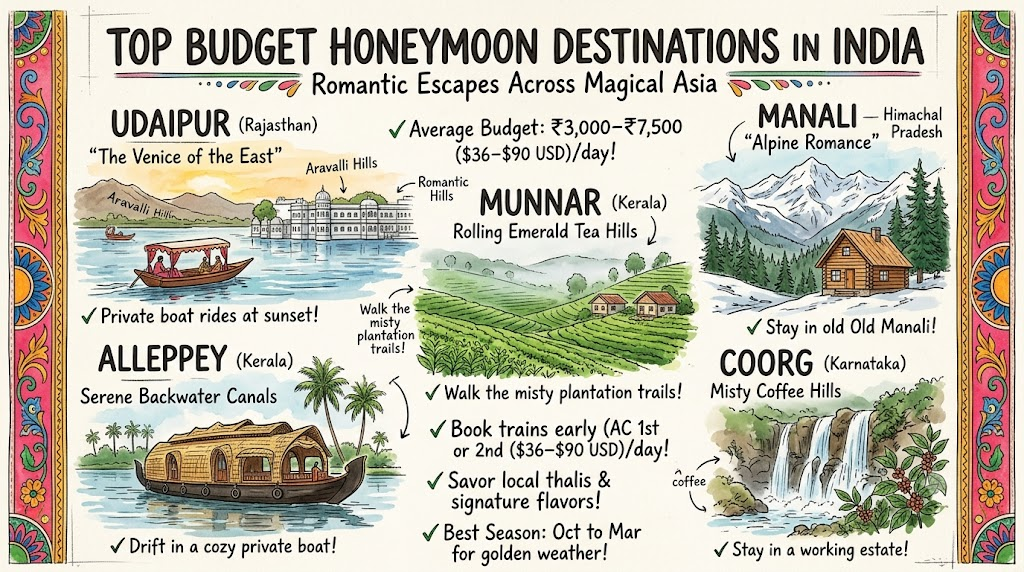
Introduction
Escaping the commercialized, cookie-cutter honeymoon circuits of Southeast Asia or overcrowded European capitals does not require draining your life savings. Most newlyweds find themselves funneled into package tours where authenticity is traded for manufactured luxury and tourist crowds.
India rewrites this narrative completely by delivering unmatched romantic landscapes steeped in royal heritage, misty alpine peaks, and tranquil palm-fringed lagoons. Here, couples can dine in centuries-old palace courtyards, drift down secluded backwaters, and wake up to emerald tea gardens at a fraction of the cost found in traditional resort islands.
It is a subcontinent that rewards slow, intentional travel. Couples seeking intimate connection will find deep cultural grounding, warm local hospitality, and enchanting memories that far outshine standard luxury getaways.
Why India is a must-visit destination
India anchors South Asia with an astounding diversity of landscapes, microclimates, and living traditions that make it one of the world’s most compelling travel destinations. For couples embarking on their first journey together, the country provides the grandeur of imperial empires alongside serene natural retreats. Seamless modern domestic flight networks, an expansive railway grid, and widespread English proficiency make venturing between states both accessible and stress-free.
The ultimate honeymoon circuit spans three distinct romantic terrains: the regal desert lakes of the North, the tranquil hill stations and backwaters of the South, and the towering pine forests of the Himalayan belt. Travelers can effortlessly transition from historic heritage homestays to high-altitude mountain cabins while maintaining complete control over their daily expenditure.
| Travel Dimension | Regional Highlights & Key Facts |
|---|---|
| Primary Geographic Zones | Western Desert & Lakes, Southern Western Ghats, Northern Himalayas |
| Best Travel Season | October to March (Pleasant across North and South), April to June (Himalayan summer) |
| Average Daily Budget (Per Couple) | ₹3,000 – ₹7,500 ($36 – $90 USD) for comfortable private rooms, food, and transit |
| Connectivity Hubs | New Delhi (DEL), Mumbai (BOM), Bengaluru (BLR), Kochi (COK) |
| Culinary Signatures | Mewari Dal Baati Churma, Malabar Coconut Seafood Curry, Pahadi Siddu |
| Visa Policy | Convenient electronic visa (e-Visa) accessible for over 160 nationalities |
Best Places or Experiences
Udaipur: The Venice of the East
Rising dramatically from the serene waters of Lake Pichola, Udaipur is Rajasthan’s crown jewel and an undisputed capital of regal romance. Built in 1559 by Maharana Udai Singh II, the city is defined by whitewashed mansions, marble arches, and towering lakefront palaces that glow amber during dusk. The vibrant Old City wraps around the lake basin, offering cobbled alleyways filled with miniature paintings, antique bazaars, and scenic rooftop terraces.
Lake Pichola waterfront in Udaipur.
Beyond its fairy-tale skyline, Udaipur allows honeymooners to immerse themselves in aristocratic elegance without exorbitant five-star price tags. Independent heritage Havelis converted into boutique family-run hotels allow you to wake up to panoramic waterfront views, while traditional wooden boats gently carve across reflections of the Aravalli hills.
- Location: Southern Rajasthan, approximately 400 km southwest of Jaipur and 660 km from New Delhi.
- Why it is worth visiting: Unmatched royal architecture and romantic waterfront dining nestled right against historic lakeside ghats.
- Best things to do: Take a tranquil sunset boat ride across Lake Pichola, witness the cultural folk dance performance at Bagore Ki Haveli, and explore the sprawling courtyards of the City Palace complex.
- Best time to visit: October to March for cool, golden-sunshine afternoons and crisp evening breezes.
- Ideal for whom: Couples who cherish architecture, heritage hospitality, and candlelit lakeside dining.
- Travel tip: Book a heritage haveli on the Hanuman Ghat side of the lake for identical palace views at a third of the waterfront rate.
Munnar: Rolling Emerald Tea Plantations
Perched 1,600 meters above sea level in Kerala’s Western Ghats, Munnar unfolds as a tapestry of manicured tea gardens veiled in morning mist. Originally founded as a summer resort for British colonial administrators, this tranquil hill haven remains dominated by expansive rolling estates, cascading waterfalls, and crisp, spice-scented mountain air.
Verdant tea valleys of Munnar.
Walking hand-in-hand along the quiet winding plantation trails allows couples to escape everyday noise into absolute silence. The cool microclimate nurtures exotic flora, cardamom groves, and rare wildlife like the Nilgiri Tahr, offering a peaceful sanctuary centered around nature and relaxation.
- Location: Idukki District, Kerala; approximately 110 km east of Cochin International Airport.
- Why it is worth visiting: Endless undulating green valleys, cool highland climate, and serene estate cottages tucked into forest canopy.
- Best things to do: Hike through the private trails of the Lockhart Tea Estate, picnic by the scenic Mattupetty Dam, and catch panoramic cloud inversions at Top Station.
- Best time to visit: September to March for clear skies and blooming hills; July to August for dramatic monsoon greenery.
- Ideal for whom: Nature lovers, couples seeking peace, and photography enthusiasts.
- Travel tip: Skip the crowded town center and reserve a homestay located in Old Munnar or near Chinnakanal for secluded valley views.
Alleppey: Serene Backwater Canals
Alappuzha, affectionately known as Alleppey, is a quiet maritime realm interwoven with palm-fringed canals, vast lagoons, and emerald paddy fields. The region’s traditional Kettuvallams—historic rice barges constructed entirely from jackwood planks and coir ropes without a single iron nail—have been refitted into floating luxury bedrooms.
Cruising the Alleppey backwater canals.
Drifting along these backwaters provides an intimate look into Kerala’s rural rhythms, where kingfishers dart above lilies and villagers steer traditional canoes along water highways. As the sun dips below the coconut groves, houseboats anchor in calm lagoons where private chefs prepare fresh coastal feasts right before your eyes.
- Location: Alappuzha District, Kerala; approximately 75 km south of Kochi.
- Why it is worth visiting: The peerless, slow-paced luxury of sleeping aboard a private traditional wooden boat drifting on serene water networks.
- Best things to do: Cruise through narrow village canals on a quiet private canoe, savor fresh Karimeen Pollichathu (pearl spot fish in banana leaf), and watch the sunset from Marari Beach.
- Best time to visit: November to February for gentle, humidity-free breezes and cool evenings.
- Ideal for whom: Honeymooners looking for slow travel, culinary authenticity, and waterside seclusion.
- Travel tip: Hire a private day-canoe for village backwaters and stay overnight in a fixed canalside homestay to save significantly compared to expensive 24-hour boat hires.
Manali: Alpine Romance in the Himalayas
Nestled in the Beas River Valley of Himachal Pradesh, Manali is flanked by towering cedar forests and jagged, snow-dusted Himalayan peaks. While New Manali buzzes with bustling markets, the historic village of Old Manali retains an authentic bohemian charm characterized by traditional stone-and-timber kath-kuni cottages and quaint riverside cafes.
Snow-draped alpine peaks in Manali.
Couples can divide their time between thrilling mountain excursions and cozy moments by traditional wood-fired stoves with mugs of spiced apple cider. The dramatic crossing of nearby valleys offers jaw-dropping alpine panoramas, wild pine trails, and peaceful natural sulfur hot springs tucked away in quiet mountain clearings.
- Location: Kullu District, Himachal Pradesh; roughly 530 km north of New Delhi.
- Why it is worth visiting: Majestic snow-capped Himalayan peaks, peaceful pine woodlands, and charming village cafe culture.
- Best things to do: Wander through Old Manali’s wooden alleys, dip into the thermal natural springs of Vashisht, and drive through the engineering marvel of the Atal Tunnel into Lahaul Valley.
- Best time to visit: October to February for fresh winter snowfall; March to June for pleasant weather, wildflowers, and apple blossoms.
- Ideal for whom: Adventure-loving couples, hikers, and snow seekers.
- Travel tip: Choose to stay in the higher hamlets of Old Manali or Naggar to bypass highway transit bottlenecks and commercial hubbub.
Coorg: Misty Coffee Hills of the Western Ghats
Kodagu, widely celebrated as Coorg, is a highland paradise draped in deep evergreen forests, sprawling Arabica coffee plantations, and aromatic spice groves. The air here carries the refreshing scent of ripening pepper and blooming orange blossoms, setting an enchanting atmosphere for romantic hill strolls.
Steeped in the proud martial and agrarian culture of the Kodava people, Coorg’s hospitality is deeply personal and warm. Couples can stay in family-managed colonial plantation bungalows, wake up to freshly roasted estate coffee, and spend afternoons watching mountain waterfalls cascade through untamed rainforests.
- Location: Southwestern Karnataka; approximately 240 km southwest of Bengaluru and 120 km from Mysuru.
- Why it is worth visiting: Private, mist-covered coffee plantation estates offering absolute solitude and distinct indigenous culinary traditions.
- Best things to do: Take an aromatic guided coffee tasting and estate walk, bathe in the mist of Abbey Falls, and watch sunset colors wrap around Raja’s Seat.
- Best time to visit: October to March for cool plantation walks; July to September if you love dramatic monsoon downpours.
- Ideal for whom: Couples looking for tranquil forest seclusion, nature walks, and aromatic culinary journeys.
- Travel tip: Select a homestay located deep within a working estate in Madikeri or Virajpet rather than a hotel along the main highway.
Offbeat Exploration: Hidden Gems Tourists Miss
Gandikota: The Secret Grand Canyon of India
Carved through the Erramala Hills by the Penna River in Andhra Pradesh, Gandikota remains one of the country’s best-kept geological secrets. Massive red sandstone boulders drop sheerly into a winding river gorge, flanked by the 12th-century stone walls of Gandikota Fort. Couples can camp under star-studded night skies on the canyon rim and enjoy sunrise panoramas without the crowds found at standard tourist viewpoints.
Varkala: Dramatic Clifftop Ocean Vistas
Unlike the bustling commercial beaches further north, Varkala in southern Kerala is crowned by dramatic red laterite cliffs that overlook the Arabian Sea. A pedestrian pathway runs along the cliff edge, lined with independent yoga studios, candlelit seafood shacks, and bamboo cottages. Couples can descend steep wooden steps down to golden beaches, watch dolphins leaping in the surf, and enjoy a remarkably tranquil beach escape.
Chettinad: Whispering Palaces of Tamil Nadu
Hidden within Tamil Nadu’s rural plains lies Chettinad, a region famous for thousands of sprawling, ornate heritage mansions built by 19th-century merchant families. These lavish homes boast Italian marble, Burmese teak pillars, and handmade Athangudi patterned floor tiles. Honeymooners can cycle through quiet village streets, stay in restored heritage properties, and savor world-famous Chettinad cuisine seasoned with freshly ground spices.
Detailed Practical Guidance for Travelers
| Destination | Standard Entry Fee | General Timings | Best Local Food Options Nearby | Recommended Nearby Attractions |
|---|---|---|---|---|
| Udaipur (City Palace & Pichola) | ₹300 (Palace Grounds), ₹400 (Boat Ride) | 9:30 AM – 5:30 PM (Daily) | Traditional Dal Baati Churma at Krishna Dal Bati; lakeside snacks at Jagat Niwas | Jag Mandir Palace, Saheliyon-ki-Bari, Sajjangarh Monsoon Palace |
| Munnar (Tea Gardens & Estates) | ₹125 – ₹250 (Tea Museum & Viewpoints) | 9:00 AM – 5:00 PM (Closed Mondays) | Malabar Parotta with vegetable stew at Rapsy Restaurant; fresh plantation tea | Eravikulam National Park, Mattupetty Dam, Kundala Lake |
| Alleppey (Backwater Canals) | ₹400 – ₹800/hr (Shikara), ₹40 (Govt Ferry) | 6:00 AM – 6:30 PM (Boats operate daylight) | Fresh pearl spot fish and steamed appams at Brothers Hotel | Marari Beach, Pathiramanal Bird Island, Alappuzha Lighthouse |
| Manali (Old Manali & Vashisht) | Free (Village access), ₹50 (Monastery) | Open 24/7 (Temples close 8:00 PM) | Wood-fired pizza and trout at Cafe 1947; hot Siddu at local street kiosks | Solang Valley, Atal Tunnel, Jogini Waterfalls |
| Coorg (Coffee Estates & Falls) | ₹15 – ₹50 (Waterfalls & Raja’s Seat) | 8:00 AM – 6:00 PM (Daily) | Kodava pork curry (Pandi Curry) and Akki Roti at Coorg Cuisine | Dubare Elephant Camp, Talakaveri, Abbey Falls |
Logistics & On-Ground Navigation
Local Transport Options
Navigating India is straightforward once you know which transit option fits your route:
- Express Railways: The Indian Railways network connects every major tourist hub. Book 1st AC or 2nd AC sleeper carriages in advance for clean, reliable, and scenic cross-country travel.
- Auto-Rickshaws & E-Rickshaws: Ideal for short city hops. Always request the driver to switch on the digital fare meter or settle on a firm price prior to stepping in.
- Ride-Hailing Apps: Services like Uber and Ola operate reliably across major cities, providing transparent, pre-fixed fares that bypass manual negotiation.
- Private Chauffeur Car Rentals: Hiring an air-conditioned car with a seasoned local driver is the gold standard for regional road circuits like Rajasthan or Kerala. Daily rates typically run between ₹2,000 and ₹3,200 ($24 – $38 USD), which covers fuel, tolls, and driver allowances.
Budget Planning
India remains an exceptionally cost-effective destination that allows newlyweds to travel comfortably without inflating their budget:
- Budget / Backpacking Tier (₹2,500 – ₹4,000 / $30 – $48 USD per day for two): Private double rooms in clean heritage homestays or boutique guesthouses, public state buses and sleeper trains, and vibrant dining at local thali joints and street-food stalls.
- Mid-Range / Comfort Tier (₹5,500 – ₹10,000 / $66 – $120 USD per day for two): Private boutique heritage hotels, air-conditioned taxis, private sunset boat charters, fine-dining restaurants, and entry passes to all historical monuments.
Safety and Inclusivity Tips
- For Couples: Public displays of affection (PDA) like prolonged kissing are frowned upon culturally in conservative towns and temple premises. Holding hands and walking arm-in-arm is completely fine and customary.
- For Families & Women: Register for regional SIM cards (Airtel or Jio) directly at international airport terminals upon landing to ensure constant high-speed GPS access. Keep emergency helplines (112) handy.
- General Health & Safety: Drink exclusively bottled, filtered, or boiled water. Dine at food stalls and restaurants that maintain steady local crowds, guaranteeing fresh ingredients and high turnover.
Strategic Travel Planning Guardrails
Travel Planning Tips for India
- Reserve Train Tickets Early: Long-distance express trains open reservations 120 days ahead; premium AC compartments on scenic routes sell out weeks in advance.
- Embrace Digital UPI Payments: While foreign credit cards work in larger establishments, having small Indian Rupee cash notes (₹100, ₹200, ₹500) is essential for local markets, autos, and tea stalls.
- Dress Modestly at Sacred Sites: Always bring a lightweight scarf or shawl to cover your shoulders and knees when visiting temples, mosques, and rural heritage compounds.
- Carry Slip-On Footwear: Most temples, shrines, and domestic homestays require leaving shoes outside; slip-on loafers or sandals will save substantial time.
- Pack Regional Layers: Temperatures fluctuate sharply between hot desert afternoons and cool desert nights, or when climbing from humid coastal plains up into alpine mountain elevations.
Common Mistakes to Avoid
- Packing Too Many Cities in One Week: Attempting to cover four states in seven days results in exhaustion and missed connections; limit your itinerary to two neighboring destinations.
- Drinking Unfiltered Tap Water: Never consume untreated municipal tap water or unsealed roadside water pouches; opt for sealed reverse-osmosis bottled water.
- Falling for Unsolicited Tour “Guides”: Politely decline individuals waiting outside train stations claiming your hotel is closed or burned down; book guides directly through official state tourism desks.
- Ignoring Domestic Flights: Avoid 18-hour bus journeys across states when budget domestic flights can bridge distances in 90 minutes for under ₹3,500 ($42 USD).
- Skipping Regional Cuisine: Don’t stick strictly to generic international menus; local regional breakfasts and traditional thalis are cleaner, fresher, and far more delicious.
Suggested Itinerary Blueprints
1. Day Quick Dash (The Royal Rajasthan Express)
- Target Audience: Couples with limited vacation time wanting majestic architecture and romantic lakeside evenings.
- Routing: Arrive in Udaipur via morning flight. Spend the morning touring the City Palace courtyards, followed by lunch at a rooftop restaurant overlooking Jag Niwas. Dedicate the golden hour to a private boat cruise around Lake Pichola, capped off with an evening Kathak dance showcase at Bagore Ki Haveli and a candlelit dinner on Hanuman Ghat.
2. Day Deep-Dive (The Emerald Kerala Odyssey)
- Target Audience: Newlyweds seeking a relaxed balance between rolling highland estates and tranquil backwaters.
- Day 1 (Munnar): Land in Kochi and embark on a scenic private drive up to Munnar through rubber and spice plantations. Explore the misty tea gardens of Lockhart Estate, sip freshly plucked tea, and unwind in a quiet forest homestay surrounded by valley birdsong.
- Day 2 (Alleppey): Drive down to Alleppey by midday. Board an intimate private backwater houseboat or motor launch for an afternoon drifting along the palm-shaded canals of Kuttanad, watching the sunset over the lagoon with a traditional Keralite dinner.
3. Complete Weekend Travel Plan (The Northern Alpine Loop)
- Target Audience: Couples craving fresh mountain air, pine woodlands, and cozy alpine cafe culture.
- Friday: Land at Kullu-Manali Airport (Bhuntar) or arrive via overnight executive bus from New Delhi. Check into a boutique cedar cottage in Old Manali, stroll through the vibrant village bazaars, and unwind by the Beas River.
- Saturday: Take an early morning scenic drive across the Solang Valley and through the engineering wonder of the Atal Tunnel to explore the alpine borders of Lahaul Valley. Return in the late afternoon for a relaxing soak in the natural hot springs of Vashisht.
- Sunday: Hike the forest trail to the cascading Jogini Waterfalls, enjoy an outdoor lunch at a riverside trout cafe in Naggar, and browse handmade woolen shawls before your evening departure.
Common Tourist Mistakes to Avoid
- Geographic Blunders: India is continental in scale. Trying to combine Goa’s coastline, Jaipur’s forts, and Kerala’s backwaters within a five-day window will leave you spending your entire honeymoon in airport security lines and train berths. Pick one defined geographic pocket and explore it deeply.
- Commercial Traps: Do not spend precious romantic afternoons wandering through sterilized shopping malls or government-run tourist emporiums where taxi drivers receive hefty commissions. Head instead to local artisan quarters, spice markets, and evening bazaars where craftspeople sell their goods directly.
- Neglecting Modern/Alternative Zones: Many visitors make the mistake of staying confined to chaotic old city quarters. Venture out into leafy residential neighborhoods, modern independent art cafes, and contemporary cultural spaces where India’s creative youth culture thrives.
- Transport Overpayment: Stepping blindly into unmetered auto-rickshaws outside transit hubs often results in heavily inflated tourist prices. Always cross-check estimated rates on app platforms like Uber or Ola before negotiating with local drivers.
- Luxury Dining Bias: Sticking exclusively to five-star hotel buffets strips away the culinary soul of your journey. Small local eateries that specialize in single regional dishes—such as hot dosas, fresh tandoor rotis, and steaming pots of chai—serve the most authentic, hygienic, and flavorful food in the country.
Frequently Asked Questions
1. Is India safe for couples and first-time honeymooners?
Yes, India is generally safe and welcoming for couples and international visitors. Tourist destinations like Udaipur, Munnar, and Alleppey are accustomed to travelers and boast low violent crime rates. Practicing standard travel common sense, such as avoiding deserted lanes late at night, keeping emergency contacts accessible, and booking registered accommodations, ensures a seamless and secure honeymoon trip.
2. What is the ideal duration for a honeymoon in India?
The ideal timeframe ranges between 7 to 10 days to comfortably experience one or two complementary destinations without physical fatigue. A week allows you to explore either the romantic desert palaces of Rajasthan or the serene backwaters and tea hills of Kerala at an unhurried, intimate pace.
3. What is the expected daily budget for a couple traveling comfortably?
A comfortable mid-range budget ranges from ₹5,500 to ₹10,000 ($66 to $120 USD) per day for a couple. This daily allocation easily covers boutique heritage hotel rooms, all three meals at quality sit-down restaurants, private air-conditioned car rentals for local transit, and monument entrance tickets.
4. How should couples handle transportation between distant cities?
For travel spanning more than 400 kilometers, booking budget domestic flights on carriers such as IndiGo or Air India saves precious time. For shorter distances, book premium 1st AC or 2nd AC sleeper train compartments or hire a private vehicle with an experienced chauffeur for scenic flexibility.
5. Which destination is best for a honeymoon: Kerala or Rajasthan?
The decision depends entirely on your personal travel style. Choose Rajasthan if you dream of regal palaces, candlelit lake dinners, desert sunsets, and royal heritage. Opt for Kerala if you prefer tranquil tropical nature, misty mountain plantations, soothing Ayurvedic massages, and lazy afternoon backwater cruises.
6. Can foreign tourists easily make payments using mobile apps in India?
While India primarily runs on its Unified Payments Interface (UPI) system, international cards are accepted at all major hotels and upscale restaurants. It is wise to carry cash in small denominations (₹100 to ₹500 notes) for rickshaws, street food stalls, and entry to smaller historical temples.
7. When is the best time of year to plan an Indian honeymoon?
The prime window across most of the subcontinent is from October to March, when the weather remains dry, clear, and comfortably cool. If you are traveling between April and June, head toward higher Himalayan hill stations like Manali or Shimla to enjoy mild alpine summers.
8. What should couples wear when visiting heritage monuments and temples?
Comfortable, modest, and breathable cotton clothing is recommended throughout the country. When entering temples, mosques, or historic sites, ensure your shoulders and knees are covered. Carrying a lightweight scarf allows you to easily cover your head or shoulders wherever religious customs require.
9. Is an advance permit required to visit backwaters or hill stations?
Standard honeymoon destinations including Kerala, Rajasthan, Himachal Pradesh, and Karnataka do not require special entry permits for foreign or domestic tourists. Certain remote border zones in Ladakh, Sikkim, or the Northeast require an Inner Line Permit (ILP) or Protected Area Permit (PAP).
10. What are the best authentic souvenirs to buy during the trip?
Look for genuine local specialties: pure Pashmina and Kullu woolen shawls in Himachal Pradesh, miniature paintings and blue pottery in Rajasthan, organic spices and plantation tea in Kerala, and freshly roasted Arabica coffee beans and wild honey in Coorg.
11. Is street food safe for honeymooners to consume?
Yes, provided you choose street food stalls that are crowded with local families and prepare items fresh to order on high heat. Avoid pre-cut raw fruits, salads washed in tap water, and unpasteurized drinks. Stick to piping hot fried delicacies, freshly roasted flatbreads, and boiled chai.
12. How much does a private houseboat in Alleppey typically cost?
A private one-bedroom deluxe houseboat in Alleppey typically costs between ₹7,500 and ₹15,000 ($90 to $180 USD) per night. This package includes a dedicated crew, private cruise time through village backwaters, and three freshly cooked Keralite meals prepared on board.
Conclusion
Choosing India for your honeymoon means trading ordinary resort isolation for an intoxicating journey woven with living culture, royal grandeur, and soulful natural beauty. Whether you find yourselves watching the crimson sunset illuminate the marble domes of Lake Pichola, inhaling the cool mountain mist across rolling tea gardens, or drifting in quiet awe through palm-sheltered lagoons, this timeless land offers couples an unforgettable adventure. It provides a rare, magical beginning to marriage where every sunrise unveils an authentic, deeply romantic memory that lasts a lifetime.
