MOTOSHARE 🚗🏍️
Rent Bikes & Cars Directly from Owners
Motoshare connects vehicle owners with people who need bikes and cars on rent. Owners earn from idle vehicles, and renters get flexible ride options.
Visit Motoshare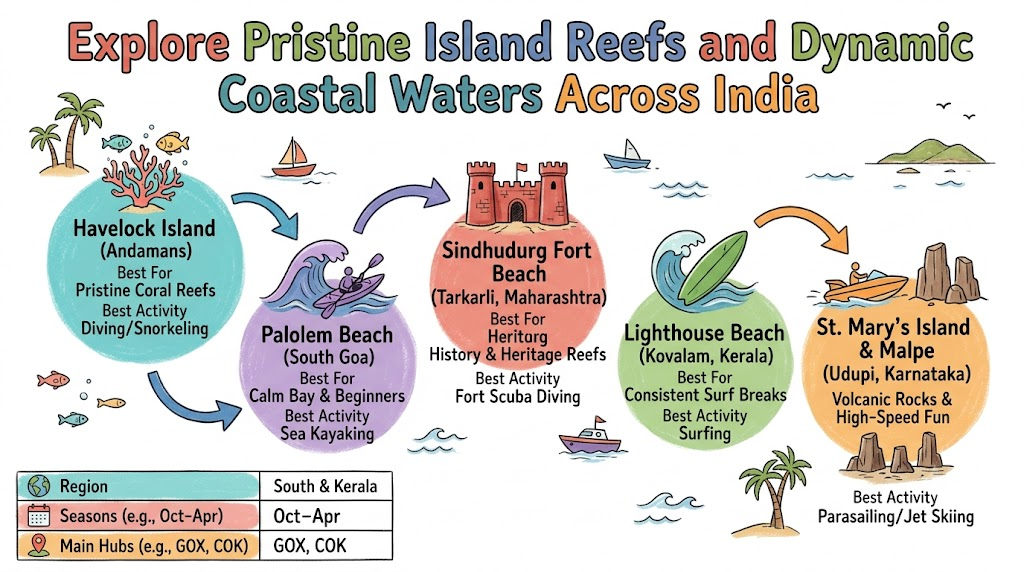
Introduction
Most coastal itineraries funnel travelers into packed commercial strips where roaring diesel jet skis spoil the shoreline. India’s 7,500-kilometer coastline holds far richer aquatic frontiers, where volcanic reefs, Arabian Sea breaks, and sheltered lagoons meet living maritime heritage.
From ancient trading outposts to secluded island shores, these waters invite genuine connection with indigenous seafaring communities, storied shipwrecks, and untamed marine ecosystems. Traveling here means moving past tourist traps to discover dynamic swells, pristine corals, and coastal traditions that have endured for centuries.
Why India is a must-visit city
India’s coastal belt represents an extraordinary maritime crossroads where the Arabian Sea, the Indian Ocean, and the Bay of Bengal converge. Historically shaped by the spice trade, Portuguese settlements, and Chola naval expeditions, each coastal stretch features distinct topography, from the basalt cliffs of the Konkan to the submerged coral atolls of the Andaman Sea.
Getting to these coastal regions is seamless across different traveler styles. Major gateway international hubs connect via extensive expressways, scenic coastal railways like the Konkan Railway, and domestic flight hops into island airstrips. Accommodations range from heritage Portuguese villas and rustic beach shacks to world-class PADI-certified dive resorts.
The national water sports circuit splits into three core corridors: the Western Arabian Sea Belt (Maharashtra, Goa, Karnataka, and Kerala) famed for surf breaks and scuba; the Bay of Bengal & Coromandel Coast (Tamil Nadu and Puducherry) renowned for catamaran sailing and windsurfing; and the Island Territories (Andamans and Lakshadweep), offering crystal-clear coral diving.
| Coastal Region | Primary Sea Basin | Signature Water Sports | Peak Operating Season | Nearest Major Transit Hub |
|---|---|---|---|---|
| Andaman Islands | Andaman Sea / Bay of Bengal | Scuba Diving, Sea Walking, Snorkeling | October to May | Veer Savarkar Airport, Port Blair |
| South Goa | Arabian Sea | Sea Kayaking, Windsurfing, Wakeboarding | October to April | Dabolim / Mopa (GOX) Airport |
| Sindhudurg (Maharashtra) | Arabian Sea | Scuba Diving, Snorkeling, Jet Skiing | October to March | Chipi Airport / Goa Dabolim |
| Malabar Coast (Kerala) | Arabian Sea | Surfing, Stand-up Paddleboarding | September to April | Trivandrum International Airport |
| Udupi Coast (Karnataka) | Arabian Sea | Kite Surfing, Kayaking, Speed Boating | October to April | Mangalore International Airport |
Best Places or Experiences
Radhanagar & Elephant Beach, Havelock Island
Radhanagar Beach and its neighboring reef enclave, Elephant Beach, form the crown jewel of Ritchie’s Archipelago. Fringed by ancient padauk rainforests and blinding white shell-sand, the sea here shifts from translucent jade to deep cobalt within a few short paces. Beneath the surface lies an intricate marine biosphere shaped by deep ocean trenches that sustain vibrant staghorn corals and schools of pelagic fish.
The waters of Havelock offer world-class underwater visibility that often exceeds 25 meters during the dry winter months. Decades of conservation have kept these shallow reefs thriving, creating one of South Asia’s most pristine environments for first-time divers and experienced technical explorers alike.
Radhanagar Beach shoreline Havelock Island.
- Location: Swaraj Dweep (Havelock), South Andaman District; roughly 54 km northeast of the capital hub, Port Blair (accessible by high-speed catamaran).
- Why it is worth visiting: Unmatched underwater visibility and strictly protected coral reefs teaming with sea turtles and dugongs.
- Best things to do: Guided boat dive at Dixon’s Pinnacle, reef sea walking at Elephant Beach, and glass-bottom kayaking along the coastline.
- Best time to visit: November to mid-April; dive departures are calmest between 6:30 AM and 10:30 AM.
- Ideal for whom: Certified scuba divers, adventurous couples, and nature photographers.
- Travel tip: Book government or private catamaran ferry transfers at least two weeks ahead to avoid getting stranded in Port Blair.
Palolem Beach, Canacona
Palolem rests in the far south of Goa inside a natural, crescent-shaped amphitheater guarded by high headlands at both ends. Its calm, shallow bay is naturally shielded from rough open-ocean chop, creating safe conditions for paddle-powered water exploration. The shoreline is shaded by towering coconut groves, with colorful wooden shacks that sit right along the intertidal zone.
The northern headland shelters an inland estuary that weaves through lush mangrove forests, where freshwater streams merge into the saltwater bay. Paddling out onto these waters offers a peaceful look into local river life, where traditional gill-net fishermen work side-by-side with migrating kingfishers and white-bellied sea eagles.
Sea kayaks resting on Palolem Beach.
- Location: Canacona Taluka, South Goa; approximately 60 km south of Dabolim International Airport.
- Why it is worth visiting: Extremely placid water conditions make it India’s safest natural bay for self-guided open-water sports.
- Best things to do: Kayak out to Monkey Island at low tide, try sunrise stand-up paddleboarding, and join a responsible dolphin-spotting trip.
- Best time to visit: November to March; mornings between 6:00 AM and 9:00 AM offer glass-smooth water.
- Ideal for whom: Solo backpackers, active couples, and beginner kayakers.
- Travel tip: Rent high-grade sit-on-top sea kayaks from local operators on the northern shore rather than standard plastic river models.
Tarkarli & Sindhudurg Fort Beach, Malvan
Tarkarli marks the meeting point of the Karli River and the Arabian Sea along Maharashtra’s rugged Konkan coast. Its coastline is defined by pristine quartz-sand beaches and historic coastal fortifications, centered around the 17th-century Sindhudurg naval fort built by Ch Shivaji Maharaj. The seabed around the fort’s submerged foundations features a rare underwater ecosystem of coral shelves and granite drop-offs.
Because commercial tourism here remains low-key, the seabed ecosystem has stayed healthy and intact. Diving through the submerged rocky alleys around the fort walls gives you an exciting mix of marine life and underwater Maratha maritime history.
Scuba diving near Tarkarli reef.
- Location: Sindhudurg District, Konkan Region; around 35 km from the new Sindhudurg Airport (Chipi) and 140 km north of Goa.
- Why it is worth visiting: Coastal fortress scuba diving with authentic, uncommercialized Malvani hospitality.
- Best things to do: Scuba dive the outer walls of Sindhudurg Fort, parasail over Malvan Bay, and ride banana boats across the Karli Estuary.
- Best time to visit: October to February; water clarity is highest during morning hours before afternoon sea breezes pick up.
- Ideal for whom: Budget travelers, history enthusiasts, and beginner scuba students.
- Travel tip: Choose MTDC-certified or PADI-affiliated dive centers in Malvan rather than unauthorized roadside operators.
Lighthouse Beach, Kovalam
Lighthouse Beach forms the southern curve of Kovalam’s three-part crescent bay, framed by a steep promontory topped with a red-and-white banded stone lighthouse. The beach faces open ocean swells that roll over shallow offshore sandbars, creating reliable beach breaks for board riders. Lush palm-covered headlands keep the strong offshore winds down, providing clean, consistent sets.
The area is also home to a close-knit local surf community. Over the last two decades, traditional fishing families here have turned their deep understanding of the coastal breaks into pioneering surf schools, creating an authentic, welcoming surf culture.
Lighthouse Beach coastline Kovalam Kerala.
- Location: Thiruvananthapuram District, Kerala; just 16 km south of Trivandrum Central Railway Station and International Airport.
- Why it is worth visiting: Consistent year-round surf breaks with certified indigenous surf schools and warm sea temperatures.
- Best things to do: Take beginner board-riding lessons with local instructors, climb the 140-foot lighthouse for coastal views, and surf sunset reef breaks.
- Best time to visit: September to March for gentle waves; May to June for advanced, high-swell surfing.
- Ideal for whom: Surfers, coastal road-trippers, and active solo travelers.
- Travel tip: Red flags mark strong rip currents near the southern rocky outcrop; always stay within the designated surf zones.
Malpe Beach & St. Mary’s Island, Udupi
Malpe Beach is an active fishing port and water sports center along Karnataka’s Tulunadu coastline. Just four miles out to sea sits St. Mary’s Island, a geological wonder of hexagonal basaltic rock columns formed by ancient volcanic activity when India broke away from Madagascar. The waters around Malpe provide a wide open playground for high-speed personal watercraft and wind-driven sports.
The contrast between the industrial fishing docks and pristine offshore islands makes Malpe special. You can spend the morning riding jet skis and parasailing over the open bay, then catch a small ferry across to walk among prehistoric volcanic rock pillars surrounded by turquoise seas.
- Location: Udupi District, Coastal Karnataka; approximately 60 km north of Mangalore International Airport.
- Why it is worth visiting: A rare chance to experience world-class water sports right next to a designated National Geological Monument.
- Best things to do: Speedboat out to St. Mary’s Island, parasail high above Malpe beach, and jet ski across open coastal flats.
- Best time to visit: October to March; target late afternoons between 3:30 PM and 6:00 PM to avoid the midday sun.
- Ideal for whom: Families, geology buffs, and weekend adventure travelers.
- Travel tip: St. Mary’s Island is a strict zero-plastic zone; security officers will search and confiscate disposable plastic bottles at the jetty.
Offbeat Exploration: Hidden Gems Tourists Miss
Kodi Bengre Delta Point, Karnataka
Tucked away 9 kilometers north of Malpe lies Kodi Bengre, where the Suvarna River empties into the Arabian Sea. This quiet, palm-fringed sand spit features the Shaka Surf Club, an organic surf school founded by local pioneers. The sandbars here produce gentle, predictable waves that are ideal for learning to surf without having to dodge crowds.
Bhogwe Beach, Maharashtra
While tourists crowd into central Malvan, Bhogwe Beach stays remarkably secluded on the southern side of the Karli River mouth. Backed by quiet forested hills and empty silver sands, it offers great sea kayaking along undisturbed mangrove paths where you can regularly spot pods of Indian Ocean humpback dolphins.
Kalapathar Reef Secret Drift, Andamans
Most visitors visit Kalapathar Beach just to take quick photos of the driftwood before leaving. If you head 400 meters south of the main entry point during low tide, you will find sheltered natural reef channels where you can snorkel right off the shore, watching schools of parrotfish swim through underwater rock formations away from boat crowds.
Detailed Practical Guidance for Travelers
| Destination | Standard Entry Fee | General Timings | Best Local Food Options Nearby | Recommended Nearby Attractions |
|---|---|---|---|---|
| Havelock Island (Elephant Beach) | Free beach entry; Boat transfers ₹1,050, Guided Dives ₹3,500 – ₹5,500 | 6:00 AM – 4:00 PM (Reef closes early) | Fresh grilled red snapper at roadside seafood huts | Radhanagar Beach Sunset Point, Neil Island Ferry |
| Palolem Beach | Free public access; Kayak rental ₹300 – ₹500/hr | Open 24/7; Sports operate 7:00 AM – 6:00 PM | Goan fish curry thali at Dropadi Restaurant | Agonda Beach, Cabo de Rama Fort ruins |
| Tarkarli & Sindhudurg | Free; Fort entry ₹50; Scuba diving packages ₹1,200 – ₹2,500 | 7:00 AM – 5:30 PM | Malvani surmai fry and kombdi vade at Chaitanya | Rock Garden Malvan, Devbagh Sangam point |
| Lighthouse Beach (Kovalam) | Free; Lighthouse entry ₹20; Surf board rental ₹600/hr | 6:00 AM – 7:00 PM | Kerala appam with fish moilee at coastal shacks | Hawah Beach, Vizhinjam Marine Aquarium |
| Malpe & St. Mary’s Island | Beach free; Island ferry ₹400; Jet ski rides ₹500 | Island ferry: 9:00 AM – 5:00 PM | Mangalorean ghee roast prawns at Thimmappa Fish Hotel | Udupi Sri Krishna Temple, Kaup Lighthouse Beach |
Logistics & On-Ground Navigation
Local Transport Options
- Two-Wheeler Rentals: Geared motorcycles and scooters are available across Goa, Kovalam, and Udupi for ₹350 to ₹600 per day. Always take detailed photos of existing scratches before driving off.
- Auto-Rickshaws & Tuk-Tuks: The primary way to get around in Malvan and Udupi. Always settle on the fare before hopping in, or insist on running the meter in major municipal zones.
- Inter-Island Catamarans: In the Andamans, travel between Port Blair, Havelock, and Neil Island relies on private catamarans or slower state ferries.
- Self-Drive Cars: Available in Goa and Kerala; ideal for families carrying sports equipment like wetsuits, boards, and dry bags.
Budget Planning
- Budget / Backpacker Tier: Expect to spend ₹1,800 – ₹2,600 per day. This covers a bed in a beach hostel dorm, local transport by scooter, meals at regional coastal mess halls, and one entry-level water activity like kayaking or board rental.
- Mid-Range / Comfort Tier: Expect to spend ₹5,500 – ₹9,000 per day. This includes an air-conditioned beach cottage, private taxi hires, fresh seafood dining at sit-down shacks, and certified adventures like PADI boat dives or personalized surf coaching.
Safety and Inclusivity Tips
- Families: Choose sheltered bays like Palolem or Malpe where shallow waters and certified lifeguards offer safe conditions for young swimmers.
- Couples: Head to South Goa and the Andaman Islands for quiet, uncrowded beaches with respectful, relaxed atmospheres.
- General Ocean Safety: Never head out for open-water sports after consuming alcohol. Watch out for seasonal monsoon undertows and red flags placed by coastal lifeguards.
Strategic Travel Planning Guardrails
Travel Planning Tips for Coastal India
- Match Seasons Carefully: Plan your trip strictly between October and April; monsoon swells shut down marine sports almost everywhere from late May through August.
- Carry Backup Cash: Card machines and digital UPI payments often drop out in remote beach pockets like Havelock, Malvan, and Bhogwe.
- Verify Operator Accreditations: Always check that dive shops are PADI or SSI certified, and ensure boat captains carry valid commercial tourist life vests.
- Dress Respectfully Off the Sand: Bikinis and board shorts are fine right on the beach, but throw on a shirt or sarong when walking through nearby fishing villages.
- Pack Comprehensive Sun Protection: Bring reef-safe zinc sunscreen, long-sleeve UV rash guards, and polarized sunglasses to protect against intense water glare.
Common Mistakes to Avoid
- Rushing Island Ferries: Don’t book flights home out of Port Blair on the same morning you take an inter-island ferry from Havelock; bad weather can delay sailings.
- Buying Into Unlicensed Scuba Drives: Avoid roadside operators in Goa or Malvan offering cheap “scuba” trips that are just quick 5-minute dips with a mouthpiece.
- Ignoring Sun Exposure: Spending midday hours on open water without a rash guard can lead to severe sunburns that ruin the rest of your trip.
- Skipping Regional Seafood Specialties: Don’t default to generic continental menus when you can enjoy authentic coastal thalis made fresh by local fishing families.
- Tossing Plastic Trash on Beaches: Keep plastic waste off coastal trails and island reefs; discard all bottles and wrappers in town disposal points.
Suggested Itinerary Blueprints
1-Day Quick Dash: Malvan Marine Sprint
Ideal for active road-trippers short on time.
- Morning (07:00 – 11:30): Arrive early at Malvan Docks; take the boat transfer to Sindhudurg Fort for a 45-minute reef scuba session.
- Midday (12:00 – 14:30): Head into Malvan town for a traditional surmai thali at an authentic coastal eatery; take a short break during peak heat.
- Afternoon (15:00 – 18:30): Drive to Tarkarli Beach for high-speed parasailing, ending the day with a quiet sunset walk along Devbagh spit.
2-Day Deep-Dive: South Goa Aquatic Trail
Designed for adventure seekers looking for a balanced weekend on the water.
- Day 1: Check into Palolem Beach. Spend the morning sea kayaking across to Monkey Island. Have lunch at an open-air beachfront shack, and spend the afternoon taking stand-up paddleboarding lessons. Finish with fresh grilled seafood at sunset.
- Day 2: Ride a scooter 15 minutes north to Agonda Beach for a morning surf lesson on its beach breaks. In the afternoon, head further north to explore the clifftop ruins of Cabo de Rama Fort and watch the sunset over the Arabian Sea.
Complete Weekend Travel Plan: Udupi & Malpe Coastal Loop
A full three-day loop covering geological wonders, surfing, and cultural highlights.
- Friday: Arrive in Mangalore, drive north to Malpe Beach, check into your seaside stay, and spend the late afternoon jet skiing and parasailing across the main beach.
- Saturday: Take the 09:00 AM government ferry to St. Mary’s Island to explore its basaltic columns. Head back by midday for a coastal lunch, then spend the afternoon taking beginner surf lessons at Kodi Bengre Delta Point.
- Sunday: Start your morning visiting the historic Udupi Sri Krishna Temple complex. Head down to Kaup Beach to climb the 1901 stone lighthouse, and wrap up with an authentic banana-leaf meal before departing.
Common Tourist Mistakes to Avoid
- Geographic Blunders: Don’t try to visit North Goa’s party beaches and South Goa’s calm kayaking bays on the same day; regional traffic will eat up three to four hours of your day.
- Commercial Traps: Skip overcrowded, souvenir-heavy commercial strips like Baga or Calangute in favor of cleaner, quieter waters further south.
- Neglecting Modern/Alternative Zones: Don’t overlook the creative cafes, yoga schools, and boutique eco-stays set back inside the quiet palm groves just behind the main beach roads.
- Transport Overpayment: Always check prevailing prepaid counter rates at transit hubs before hiring private taxis, or use local bus routes for cheap travel between coastal towns.
- Luxury Dining Bias: Eating only in five-star hotel dining rooms cuts you off from the best coastal cooking, which is found in family-run mess halls serving fresh morning catches.
Frequently Asked Questions
1. Is scuba diving in India safe for non-swimmers?
Yes, non-swimmers can safely participate in Discover Scuba Diving programs where a certified PADI or SSI instructor directly controls your buoyancy and stays with you underwater. Destructive currents are avoided, and dives are restricted to shallow depths between 6 and 10 meters across sheltered reef zones.
2. Which coast in India is better for water sports, the East or the West?
The West Coast along the Arabian Sea is generally superior for most water sports because of its gentler continental shelf, predictable wave intervals, and established safety infrastructure. The East Coast features heavier shore-breaks and deeper drop-offs, with the notable exception of the sheltered Andaman Islands.
3. What permits are required for water sports in the Andaman Islands?
Indian nationals require no special permits for general tourism across Swaraj Dweep (Havelock) or Shaheed Dweep (Neil). Foreign passport holders receive an automatic entry clearance on arrival at Port Blair airport, but restricted tribal reserve zones remain strictly off-limits to all civilian maritime traffic.
4. How does the monsoon affect Indian water sports activities?
The southwest monsoon brings heavy sea swells, strong rip currents, and low water clarity between late May and September, shutting down all commercial water sports. Government safety regulations strictly suspend coastal small-craft boating and diving activities across all open marine jurisdictions during this stormy period.
5. What should I pack specifically for water sports trips in India?
Pack high-UPF rash guards, reef-safe sunscreen, a waterproof dry bag, polarized sunglasses with retaining straps, and hard-sole water shoes for rocky entries. Bring personal silicone snorkel gear if you want to avoid using generic rental masks provided by crowded beach stands.
6. Can I learn professional surfing on the Indian mainland?
Yes, the International Surfing Association recognizes multiple certified surf schools across Kovalam, Mulki, and Mahabalipuram. These centers offer structured three-day to seven-day beginner-to-intermediate courses along gentle sandbar breaks with fully certified local instructors.
7. Are life jackets mandatory for commercial water sports activities in India?
Yes, maritime safety regulations require all licensed commercial operators to supply functional, properly strapped life vests for every water sport. Never board a banana boat, kayak, or personal watercraft without checking that your life jacket is securely fastened.
8. What is the average cost of scuba diving at Havelock Island?
A single-tank Discover Scuba Dive for beginners in Havelock costs between ₹3,500 and ₹5,500, which includes full equipment rental, basic boat transit, and personal instructor supervision. Two-tank boat dives for certified divers generally run from ₹6,000 to ₹8,500.
9. Are card payments accepted at rural Indian beach destinations?
While digital UPI payments are widespread on the mainland, beach areas often suffer from sudden cellular tower outages. Always carry enough backup cash for boat rides, local shack meals, and equipment rentals in places like Malvan or the Andamans.
10. What marine wildlife can I see while snorkeling in India?
Depending on where you dive, you can spot hawksbill sea turtles, clownfish, blacktip reef sharks, giant clams, stingrays, and Indian Ocean humpback dolphins. The Andaman reefs also occasionally host rare dugongs feeding on shallow underwater seagrass beds.
11. Is it safe for solo female travelers to participate in water sports in India?
Yes, provided you choose reputable, established surf clubs and PADI dive centers with verified customer reviews. Look for professional centers that have female staff members and offer private changing facilities and locked lockers for personal gear.
12. When is the best time for sea kayaking in South Goa?
The best window runs from November through February during early morning hours, typically between 6:30 AM and 9:00 AM. During this time, the bay remains calm and glassy before midday thermal winds create chop across the open water.
Conclusion
Trading crowded tourist strips for India’s active marine coast connects you directly with the living rhythm of the sea. Out on these waters—paddling past sea eagles in a South Goan bay, drifting along Andaman coral drop-offs, or catching your first wave over a Malabar sandbar—travel becomes an active, grounding adventure. India’s shores reward those who wake up early, trust the expertise of local seafarers, and step into the water with curiosity and respect.
