MOTOSHARE 🚗🏍️
Rent Bikes & Cars Directly from Owners
Motoshare connects vehicle owners with people who need bikes and cars on rent. Owners earn from idle vehicles, and renters get flexible ride options.
Visit Motoshare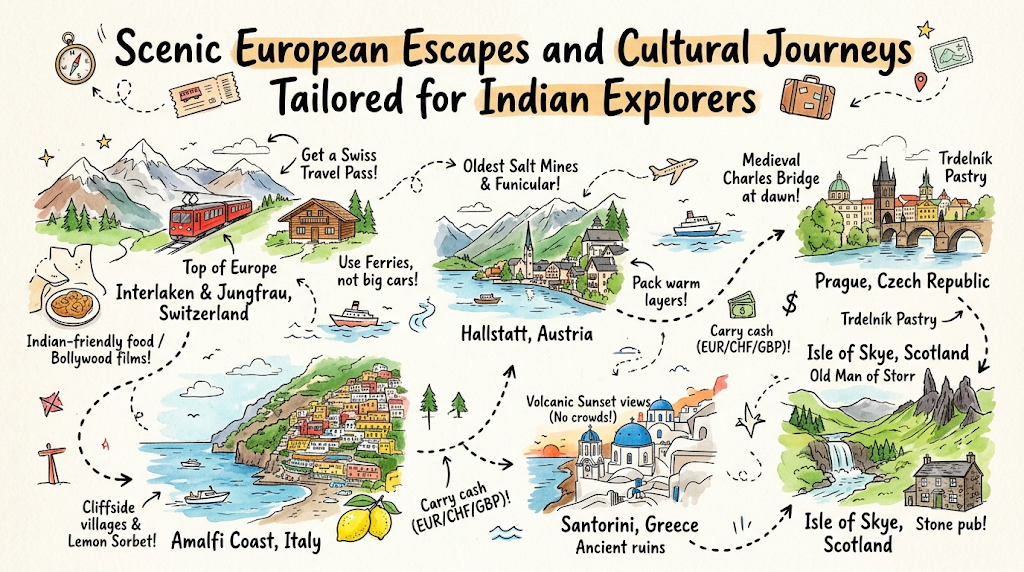
Introduction
Skip the rushed ten-day bus tours that herd travelers from one crowded souvenir plaza to the next without letting you breathe the local air. True European exploration begins when you step off the conveyor belt of predictable tourist traps and immerse yourself in living history, cobblestone neighborhoods, and unhurried regional hospitality.
For Indian travelers, Europe offers an extraordinary tapestry of ancient civilizations, dramatic alpine landscapes, and warm family-run traditions that mirror our own deep appreciation for heritage and community. Whether sipping freshly brewed espresso in a quiet Italian piazza or watching snowmelt cascade through the Scottish Highlands, slowing down reveals the authentic soul of the continent.
Why Europe is a Must-Visit Destination
Europe packs dozens of distinct languages, architectural eras, and culinary philosophies into a remarkably compact geographical footprint. Within a few hours on a high-speed train, you can transition from medieval Gothic spires in Central Europe to sun-drenched Mediterranean fishing villages.
The continent’s infrastructure makes independent exploration effortless for every Indian traveler archetype—from multi-generational families seeking comfort to solo backpackers chasing adventure. Seamless Schengen visa connectivity, punctual Eurail networks, reliable regional buses, and widespread vegetarian and Indian-friendly dining options eliminate the friction of cross-border travel.
Our curated circuit connects six iconic yet deeply authentic European regions across Switzerland, Italy, Austria, Greece, the Czech Republic, and Scotland, balancing alpine grandeur, coastal charm, and timeless storytelling.
| Region / Country | Primary Vibe | Ideal Duration | Currency | Best Transport Mode |
|---|---|---|---|---|
| Interlaken & Jungfrau (Switzerland) | Alpine adventure & glacial railways | 3–4 Days | Swiss Franc (CHF) | Scenic cogwheel trains & lake ferries |
| Amalfi Coast (Italy) | Dramatic cliffs, citrus groves & coastal villages | 3 Days | Euro (EUR) | SITA coastal buses & seasonal ferries |
| Hallstatt & Salzkammergut (Austria) | Storybook lakeside heritage & salt mines | 2 Days | Euro (EUR) | ÖBB regional trains & lake boats |
| Santorini (Greece) | Volcanic calderas & Cycladic sunsets | 2–3 Days | Euro (EUR) | Local KTEL buses & ATV/car rentals |
| Prague (Czech Republic) | Gothic castles, cobblestones & river bridges | 3 Days | Czech Koruna (CZK) | Trams, metro & walking |
| Isle of Skye (Scotland, UK) | Rugged misty Highlands & ancient folklore | 3 Days | British Pound (GBP) | Rental car or small-group Highland tours |
Best Places and Experiences
Interlaken and the Jungfrau Region, Switzerland
Nestled between the turquoise waters of Lake Thun and Lake Brienz, Interlaken serves as the gateway to the towering Bernese Oberland peaks of Eiger, Mönch, and Jungfrau. The engineering marvel of the Jungfraubahn cogwheel railway tunnels directly through solid rock to reach Jungfraujoch at 3,454 meters, earning its title as the Top of Europe.
Cogwheel train ascending toward Jungfraujoch.
Beyond the snowfields, wooden chalet villages like Lauterbrunnen and Grindelwald sit beneath 72 thundering waterfalls, offering a serene connection to Swiss alpine pastoral life. Indian travelers also feel an immediate cultural warmth here, thanks to decades of Bollywood cinema history and dedicated Indian hospitality options in town.
- Location: Bernese Highlands, central Switzerland; approximately 120 km (2 hours by train) south of Zurich.
- Why it is worth visiting: Offers year-round access to Europe’s longest glacier (Aletsch Glacier) alongside dramatic valley waterfalls and thrilling mountain-top walkways.
- Best things to do: Ride the Eiger Express gondola from Grindelwald, walk through the Ice Palace inside the glacier, and take an evening paddle steamer cruise on Lake Brienz.
- Best time to visit: May to September for lush green hiking trails and clear mountain panoramas; December to February for pristine winter snowscapes.
- Ideal for whom: Multi-generational families, honeymooners, nature photographers, and adventure seekers.
- Travel tip: Purchase a Swiss Travel Pass or Jungfrau Travel Pass in advance, and check live mountain webcams at 7:00 AM before buying expensive summit tickets so you don’t ride into thick cloud cover.
The Amalfi Coast, Italy
Carved precariously into sheer limestone cliffs overlooking the Tyrrhenian Sea, Italy’s Amalfi Coast is a vertical mosaic of pastel houses, terraced lemon groves, and medieval maritime history. Once a powerful maritime republic rivaling Venice and Genoa, the town of Amalfi still preserves its ninth-century cathedral and ancient handmade paper mills.
Cliffside village of Positano along the Amalfi Coast.
Walking the narrow stepped alleys of Positano and Ravello immerses you in the slow rhythm of southern Italian life. The air carries the scent of blooming Sfusato Amalfitano lemons and freshly baked Neapolitan pastries, rewarding travelers who linger well past the midday cruise-ship crowds.
- Location: Campania region, southern Italy; roughly 60 km (1.5 to 2 hours) south of Naples.
- Why it is worth visiting: Combines UNESCO-listed Mediterranean coastal drama with centuries-old ceramic artistry, cliffside gardens, and authentic southern Italian culinary traditions.
- Best things to do: Hike the panoramic Path of the Gods (Sentiero degli Dei) from Bomerano to Nocelle, tour the cliffside infinity gardens of Villa Cimbrone in Ravello, and sample artisanal lemon sorbet in Amalfi town.
- Best time to visit: April to early June and September to October for warm swimming weather without peak summer gridlock.
- Ideal for whom: Couples, culinary enthusiasts, slow travelers, and landscape photographers.
- Travel tip: Never rent a large car to drive the narrow, winding SS163 coastal highway; use the Travelmar ferries between coastal towns to skip traffic jams and enjoy postcard views from the water.
Hallstatt and the Salzkammergut Lake District, Austria
Tucked between the glassy surface of Hallstätter See and the steep forested slopes of the Dachstein Alps, Hallstatt looks like an illustration lifted straight from a nineteenth-century fairytale. Beyond its pastel lakeside houses, this tiny village sits atop the world’s oldest salt mine, where prehistoric Celtic miners extracted “white gold” over 7,000 years ago.
Hallstatt village nestled beside Hallstätter See
Arriving via the small wooden ferry from the Hallstatt train station across the lake creates an unforgettable first impression as the church spire rises from the morning mist. Exploring the quiet upper alleys reveals flower-draped balconies, traditional timber architecture, and deep alpine tranquility.
- Location: Salzkammergut region, Upper Austria; approximately 75 km (1 hour 15 minutes) southeast of Salzburg.
- Why it is worth visiting: Home to 7,000 years of continuous salt-mining heritage, stunning alpine lake reflections, and dramatic high-altitude viewing platforms.
- Best things to do: Ride the funicular up to the Hallstatt Skywalk (Welterbeblick) for aerial lake views, tour the underground wooden slides of Salzwelten Salt Mine, and rent an electric swan boat on the lake.
- Best time to visit: May, June, September, or October; arrive before 9:00 AM or stay overnight to experience the village in peaceful solitude.
- Ideal for whom: Couples, history buffs, solo travelers, and cultural explorers.
- Travel tip: Respect local residential boundaries—many lakeside houses are private homes, so keep voices low in residential lanes and avoid flying drones, which are strictly banned across the village.
Santorini, Greece
Born from one of the largest volcanic eruptions in recorded human history around 1600 BCE, Santorini curves around a flooded sea caldera in the southern Aegean Sea. Whitewashed Cycladic cave houses and cobalt-blue church domes cling to multicolored volcanic cliffs of red, black, and ochre ash.
Golden hour over the Santorini volcanic caldera.
While most visitors rush solely to Oia’s castle ruins, the island’s true cultural depth lies in its ancient Minoan excavations at Akrotiri, cliffside footpaths linking Fira to Imerovigli, and volcanic vineyards where vines are woven into ground-hugging baskets to shield grapes from fierce Aegean winds.
- Location: Cyclades archipelago, southern Aegean Sea, Greece; 235 km (45 minutes by flight or 5 hours by high-speed ferry) southeast of Athens.
- Why it is worth visiting: Unmatched volcanic caldera geography, preserved Bronze Age ruins, and iconic sunset architecture.
- Best things to do: Walk the 10 km caldera rim trail from Fira to Oia at sunrise, explore the covered archaeological city of Akrotiri, and relax on the volcanic pebbles of Kamari Beach.
- Best time to visit: Late April to early June or September to mid-October for pleasant breezes and lower accommodation rates.
- Ideal for whom: Honeymooners, architecture lovers, history enthusiasts, and luxury travelers.
- Travel tip: Skip the crowds jammed onto Oia Castle at sunset; book a dinner table on a terrace in Imerovigli (the “Balcony to the Aegean”) for an unobstructed panoramic sunset view.
Prague, Czech Republic
Spared from major destruction during the twentieth century, Prague stands as a living museum of Romanesque, Gothic, Renaissance, and Baroque architecture spanning both banks of the Vltava River. Crossing the fourteenth-century Charles Bridge at dawn—flanked by thirty weathered Baroque statues while street lamps still glow—feels like stepping back six hundred years.
Charles Bridge and Old Town Bridge Tower in Prague.
Above the river rises Prague Castle, the largest coherent castle complex in the world, housing the soaring St. Vitus Cathedral and the colorful artisan cottages of Golden Lane. Down in Old Town Square, crowds gather hourly to watch the medieval Astronomical Clock perform its mechanical procession of the Apostles.
- Location: Bohemia region, central Czech Republic; roughly 280 km (3.5 hours by train) northwest of Vienna.
- Why it is worth visiting: Exceptional architectural preservation, walkable medieval districts, vibrant classical music culture, and far better value than Western European capitals.
- Best things to do: Cross Charles Bridge at 6:30 AM before crowds arrive, explore the Strahov Monastery Library, and enjoy an evening classical concert inside a Baroque church.
- Best time to visit: April to May and September to October for crisp walking weather and golden autumn foliage along the Vltava.
- Ideal for whom: Budget-conscious travelers, architecture lovers, solo explorers, and families.
- Travel tip: Never exchange currency at street-side booths advertising “0% Commission” near tourist squares—withdraw Czech Koruna (CZK) directly from official bank ATMs (like Česká spořitelna) and always decline “Dynamic Currency Conversion” so your card charges in local currency.
Isle of Skye, Scotland
Connected to the northwest Scottish mainland by a dramatic arched bridge, the Isle of Skye is a wild, wind-sculpted landscape of jagged basalt pinnacles, sea lochs, and emerald glens. Ancient Gaelic clan history and Celtic mythology echo through every mist-shrouded valley, from the volcanic ridge of the Quiraing to the towering pinnacle of the Old Man of Storr.
Crystal waterfalls at the Fairy Pools on the Isle of Skye.
At the foot of the Black Cuillin Mountains, crystal-clear glacial streams tumble through a series of turquoise rock cascades known as the Fairy Pools. Evenings in the harbor town of Portree bring cozy stone pubs, traditional fiddle sessions, and warm Highland hospitality.
- Location: Inner Hebrides, Scottish Highlands, UK; approximately 380 km (5.5 hours by car) northwest of Edinburgh.
- Why it is worth visiting: Dramatic geological formations, raw Highland wilderness, rich clan heritage, and world-class scenic drives.
- Best things to do: Hike to the Old Man of Storr at morning light, walk alongside the Fairy Pools in Glenbrittle, and visit Dunvegan Castle, the oldest continuously inhabited castle in Scotland.
- Best time to visit: May, June, and September for long daylight hours (up to 17 hours in June) and fewer biting midges than July–August.
- Ideal for whom: Road-trippers, hikers, nature lovers, and solitude seekers.
- Travel tip: Pack waterproof outer layers and sturdy ankle-support hiking boots even in summer—Skye regularly experiences four seasons in a single afternoon, and grass trails remain boggy year-round.
Offbeat Exploration: Hidden Gems Tourists Miss
Giessbach Falls and Grandhotel Giessbach, Switzerland
While thousands crowd the base of Staubbach Falls in Lauterbrunnen, take a quiet wooden boat across Lake Brienz to the Giessbach stop and ride Europe’s oldest funicular railway up to Giessbach Falls. A well-maintained footpath leads directly behind the thundering curtain of water, giving you a dramatic view of the turquoise lake framed through cascading spray.
Atrani Village, Amalfi Coast
Located just a five-minute walk around a rocky headland from busy Amalfi town, Atrani is Italy’s smallest municipality by area and remains delightfully untouched by mass tourism. Sit in its tiny central Piazza Umberto I beneath arched viaducts where local elders play cards and neighborhood bakeries serve warm Pastarelle pastries at half the price of Positano.
The Coral Beach (An Corran) at Claigan, Isle of Skye
North of Dunvegan Castle lies a hidden coastal walk leading to Claigan Coral Beach, where bleached, sun-baked fragments of red coralline algae create a glowing white shoreline beside bright turquoise Hebridean waters. On clear days, you can spot seals basking on the skerries and look across to the distant peaks of the Outer Hebrides.
Detailed Practical Guidance for Travelers
| Destination | Standard Entry Fee | General Timings | Best Local Food Options Nearby | Recommended Nearby Attractions |
|---|---|---|---|---|
| Jungfraujoch (Switzerland) | ~CHF 210–240 return (50% off with Swiss Travel Pass) | 08:00 AM – 06:00 PM (seasonal train schedules) | Rösti (crispy potato fritters), Swiss cheese fondue & Bollywood Restaurant at summit | Lauterbrunnen Valley, Mürren, Harder Kulm |
| Villa Cimbrone, Ravello (Amalfi) | €10 per adult | 09:00 AM – Sunset | Scialatielli ai frutti di mare, Sfogliatella Santa Rosa & lemon pasta | Villa Rufolo, Duomo di Amalfi, Atrani |
| Salzwelten Salt Mine (Hallstatt) | €40 (includes return funicular & guided tour) | 09:30 AM – 04:30 PM (April–November) | Käsespätzle (Austrian cheese noodles), freshly grilled lake trout & apple strudel | Dachstein Five Fingers, Gosausee Lake, Obertraun |
| Akrotiri Archaeological Site (Santorini) | €12 per adult (€6 reduced winter rate) | 08:00 AM – 08:00 PM (Summer); 08:30 AM – 03:30 PM (Winter) | Tomatokeftedes (Santorini tomato fritters), Fava yellow split-pea puree & baklava | Red Beach, Lighthouse of Akrotiri, Pyrgos Village |
| Prague Castle Circuit (Czech Republic) | CZK 450 (~€18) for main interiors | 06:00 AM – 10:00 PM (grounds); 09:00 AM – 05:00 PM (interiors) | Svíčková (creamy vegetable sauce with dumplings), Bramboráky potato pancakes & Trdelník | Malá Strana, Petřín Lookout Tower, Lennon Wall |
| Fairy Pools, Isle of Skye (Scotland) | Free entry (£6 parking fee for cars) | Open 24 hours (daylight hours recommended) | Cullen Skink (smoked haddock soup), vegetarian haggis with neeps & tatties, Scottish shortbread | Talisker Distillery, Neist Point Lighthouse, Sligachan Old Bridge |
Logistics & On-Ground Navigation
Local Transport Options
- High-Speed & Regional Railways: Switzerland, Austria, Italy, and the Czech Republic operate dense, punctual rail networks. Book point-to-point tickets 60–90 days ahead via Trenitalia, ÖBB, or České dráhy for Saver fares, or use a Eurail Global Pass for multi-country flexibility.
- Urban Trams, Metros & Local Buses: Cities like Prague rely on integrated tap-and-go contactless ticket systems across trams and metros. On the Amalfi Coast and Santorini, SITA and KTEL buses connect coastal villages affordably, though cash or exact change is often required on board.
- Ferries & Lake Steamers: Seasonal ferries along the Amalfi Coast and historic paddle steamers on Swiss and Austrian lakes double as scenic sightseeing cruises while bypassing road congestion.
- Car Rentals: Essential only for rural regions like the Isle of Skye, where public buses run infrequently. Indian driving licenses printed in English are valid in the UK and most Schengen nations for short tourist stays, though carrying an International Driving Permit (IDP) is strongly recommended.
Budget Planning
- Budget / Backpacking Tier (€85–€120 / ₹7,800–₹11,000 per day): Stay in centrally located hostels or family-run guesthouses, shop at local supermarkets (Coop, Migros, Billa, Tesco) for breakfast and picnic lunches, utilize city transit passes, and focus on free walking tours and scenic hikes.
- Mid-Range / Comfort Tier (€200–€320 / ₹18,500–₹29,500 per day): Stay in 3-to-4-star boutique hotels or lakeside B&Bs, enjoy sit-down regional dinners, combine Swiss Travel Pass / Eurail convenience with paid mountain excursions, and book skip-the-line attraction tickets.
Budget Secret for Indian Travelers: In Switzerland and Austria, supermarket chains like Coop Restaurant and Migros Restaurant offer hot, freshly cooked vegetarian pasta, potato rösti, and salad bars at roughly 40% less than sit-down tourist restaurants—with zero tipping pressure.
Safety and Inclusivity Tips
- For Families: European cities are remarkably stroller- and child-friendly, with dedicated family carriages on Swiss and Austrian trains featuring built-in playgrounds. Always carry a lightweight daypack with snacks and refillable water bottles, as tap water across all six destinations is clean, cold, and safe to drink.
- For Couples: Evening strolls in Prague, Amalfi, and Santorini are very safe, though cobbled inclines and unlit coastal paths require sturdy flat footwear and a phone flashlight after dark.
- General Safety: Violent crime is extremely low, but organized pickpocketing occurs in crowded transit hubs (Naples Centrale, Prague trams, and busy viewpoints). Keep passports and backup cards in an RFID-blocking neck pouch or zippered inner jacket pocket, and carry a photocopy of your passport and Schengen visa page separately.
Strategic Travel Planning Guardrails
Travel Planning Tips for Europe
- Apply for Visas Early: Submit your Schengen visa application (and separate UK Standard Visitor Visa if including Scotland) 3 to 4 months prior to departure, ensuring your hotel bookings and internal rail tickets align seamlessly.
- Master Cash vs. Digital Payments: Carry a zero-forex-markup multi-currency card (loaded in EUR, CHF, and GBP) for tap-to-pay transactions, while keeping €100–€150 in small bills and €1/€2 coins for rural buses, village bakeries, and public restrooms.
- Respect Dining Etiquette: In Italy, ordering a cappuccino after 11:00 AM is frowned upon (stick to espresso after meals), and bread placed on your table often carries a small per-person cover charge (coperto).
- Pack for Microclimates: Layering is non-negotiable—even in June, a sunny valley in Interlaken at 24°C can drop below 0°C at Jungfraujoch within 45 minutes.
- Download Offline Maps & Transit Apps: Install SBB Mobile (Switzerland), ÖBB Scotty (Austria), Trenitalia (Italy), PID Lítačka (Prague), and offline Google Maps regions before departing India.
Common Mistakes to Avoid
- Overstuffing Your Itinerary: Attempting to cover five countries in seven days leaves you staring at highway guardrails instead of experiencing local culture.
- Ignoring Luggage Weight Limits on Regional Trains: Overhead racks on European trains accommodate medium suitcases easily, but hauling oversized 30 kg trunks up historic station staircases and cobbled hills will exhaust you quickly.
- Skipping Vegetarian Regional Specialties: Don’t rely exclusively on Indian restaurants; ask for local meatless classics like Italian Cacio e Pepe, Greek Spanakopita, or Czech Smažený sýr (fried cheese).
- Assuming Sunday Shopping Hours: Across Austria, Switzerland, and parts of Italy, supermarkets and retail shops close completely on Sundays—stock up on snacks and essentials on Saturday afternoon.
- Leaving Mountain Excursions for the Last Day: Always schedule high-altitude peaks like Jungfraujoch on your first or second day in the region so you have a weather buffer if clouds roll in.
Suggested Itinerary Blueprints
- 1-Day Quick Dash (Prague Historical Heartbeat): Ideal for fast-paced urban explorers. Start at 6:30 AM on Charles Bridge, climb up to Prague Castle and St. Vitus Cathedral by 9:00 AM, lunch on hearty dumplings in Malá Strana, cross to Old Town Square for the 3:00 PM Astronomical Clock chime, and finish with a sunset walk along the Vltava Riverbank.
- 2-Day Deep-Dive (Salzkammergut Alpine Escape): Day 1: Arrive in Hallstatt by morning ferry, explore the historic market square and Bone House, ride the funicular to the Skywalk, and tour the Salzwelten Salt Mine. Day 2: Take the short train and bus to Obertraun, ride the cable car up Dachstein Krippenstein to walk out onto the Five Fingers viewing platform suspended 400 meters above the valley, and unwind beside Gosausee Lake.
- Complete 3-Day Weekend Travel Plan (Bernese Oberland Loop): Friday: Base yourself in Interlaken, take the funicular up Harder Kulm for golden-hour views over both lakes, and dine in the historic Unterseen quarter. Saturday: Catch the early train to Grindelwald, ride the Eiger Express to Jungfraujoch, and descend via Kleine Scheidegg and Lauterbrunnen to walk past Staubbach Falls. Sunday: Take a morning boat cruise across Lake Brienz to Giessbach Falls, followed by an afternoon promenade in the car-free cliff village of Mürren.
Common Tourist Mistakes to Avoid
- Geographic Blunders: Trying to visit the Isle of Skye as a day trip from Edinburgh or combining Santorini and Amalfi in a hurried four-day window wastes entire days in airport transfers and ferry terminals.
- Commercial Traps: Spending precious afternoon hours inside generic designer outlet malls outside Milan or Prague deprives you of authentic artisan workshops selling handmade Vietri ceramics in Amalfi or Bohemian crystal in Prague.
- Neglecting Modern and Alternative Zones: Stepping beyond Prague’s medieval core into neighborhoods like Vinohrady or Holešovice reveals indie specialty coffee roasters, leafy parks, and contemporary Czech art galleries free of tourist crowds.
- Transport Overpayment: Never accept unmetered taxi rides outside Naples Centrale or Prague Main Station; use official ride-hailing apps like Bolt (in Prague) or pre-booked fixed-rate hotel transfers.
- Luxury Dining Bias: Eating exclusively inside hotel dining rooms means missing street-level culinary treasures—like a paper cone of freshly fried calamari in Amalfi, warm trdelník pastry in Prague, or fresh gyros wrapped in warm pita in Fira.
Frequently Asked Questions
1. How many months in advance should Indian travelers apply for a Schengen visa?
You can submit your Schengen visa application up to six months before your intended travel date, and applying at least 90 to 120 days early is ideal during peak summer months. Appointments at VFS Global centers in major Indian cities fill rapidly between March and June, so securing slots early prevents last-minute stress.
2. Is it easy to find pure vegetarian and Jain food across these European destinations?
Yes, vegetarian dining is widely accessible across all six regions, especially in Switzerland, Italy, and Greece, where fresh vegetables, cheeses, lentils, and pasta anchor traditional menus. Major hubs like Interlaken, Prague, and Rome also feature dedicated Indian restaurants offering Jain-friendly preparations upon request, while carrying ready-to-eat packets helps in remote Scottish glens.
3. Which country should I apply to if my itinerary covers multiple Schengen nations?
Under Schengen regulations, you must apply through the embassy or consulate of the country where you will spend the maximum number of nights. If your stay is split equally between two countries (for example, three nights in Switzerland and three nights in Italy), apply to the country you will enter first.
4. Does a Schengen visa cover the Isle of Skye in Scotland?
No, the United Kingdom is not part of the Schengen Area, so visiting the Isle of Skye requires a separate UK Standard Visitor Visa. Apply for your UK visa alongside your Schengen paperwork, as UK processing typically takes three to six weeks and allows multiple entries over six months.
5. Is the Swiss Travel Pass worth buying for a 3-to-4-day Interlaken trip?
If you plan to take scenic trains, lake boats on Thun and Brienz, and mountain excursions like Jungfraujoch or Schilthorn, the Swiss Travel Pass offers tremendous convenience and value. It covers unlimited travel on public trains, buses, and boats while granting a 25% to 50% discount on high-altitude mountain railways and free entry to over 500 museums.
6. How much cash should I carry versus relying on forex cards in Europe?
Aim for an 80:20 split favoring a zero-markup multi-currency forex card or international credit card paired with €150–€200 in cash. Contactless tap-to-pay works almost everywhere from Alpine mountain cafes to Scottish pubs, while cash remains essential for Amalfi coastal buses, small village bakeries, and coin-operated public restrooms.
7. Are European hotel rooms equipped with electric kettles and bidets for Indian travelers?
Unlike Asian hotels, standard 3-star European hotels rarely provide in-room electric kettles, though most 4-star properties include coffee and tea facilities. Always pack a compact dual-voltage travel kettle if you enjoy morning masala chai, and note that bidets are standard in Italian bathrooms but uncommon in Switzerland, Austria, and Scotland.
8. What is the single best month to visit Europe for pleasant weather and thinner crowds?
May and September are widely regarded as the golden shoulder months across Europe. Temperatures hover comfortably between 16°C and 24°C, alpine hiking trails are open, Mediterranean waters remain warm for swimming, and accommodation rates drop significantly compared to the July–August school holiday rush.
9. Can I drive on the Amalfi Coast or the Isle of Skye with an Indian driving license?
Yes, a valid Indian driving license printed in English is legally accepted for short-term tourist rentals in both Italy and the United Kingdom, though carrying an International Driving Permit (IDP) is strongly advised by rental agencies. Remember that the UK drives on the left like India, whereas mainland Europe drives on the right.
10. How safe is tap water across Switzerland, Italy, Austria, Greece, Prague, and Scotland?
Tap water across all six destinations meets strict European drinking-water standards and is completely safe, clean, and delicious to drink. In Switzerland, Austria, and Rome, ornate public street fountains flowing continuously with mountain spring water are specifically designed for refilling reusable bottles free of charge.
11. What kind of power adapter do I need for European sockets?
Mainland Europe (Switzerland, Italy, Austria, Greece, and the Czech Republic) uses Type C and Type J/L two-pin or three-pin round plugs operating at 230V, whereas Scotland uses the UK Type G three-pin rectangular plug. Pack a high-quality universal travel adapter with built-in USB-C ports to charge all devices effortlessly.
12. How do I avoid high international roaming charges while traveling across multiple countries?
Purchase a pan-European travel eSIM (such as Airalo, Holafly, or Vodafone Travel) before departing India, ensuring the plan explicitly includes both EU countries and Switzerland/UK (as Switzerland and the UK are sometimes excluded from basic EU-only bundles). Activating an eSIM gives you instant high-speed 5G data upon landing for navigation and digital tickets.
Conclusion
Choosing depth over haste transforms a European holiday from a checklist of snapshots into a deeply personal story that stays with you long after your flight touches back down in India. When you allow yourself to linger beside an alpine lake at dawn, share conversation over handmade pasta in a quiet coastal piazza, or trace ancient footsteps across misty Highland glens, Europe reveals a warmth and timelessness that no rushed tour bus can ever capture.
