MOTOSHARE 🚗🏍️
Rent Bikes & Cars Directly from Owners
Motoshare connects vehicle owners with people who need bikes and cars on rent. Owners earn from idle vehicles, and renters get flexible ride options.
Visit Motoshare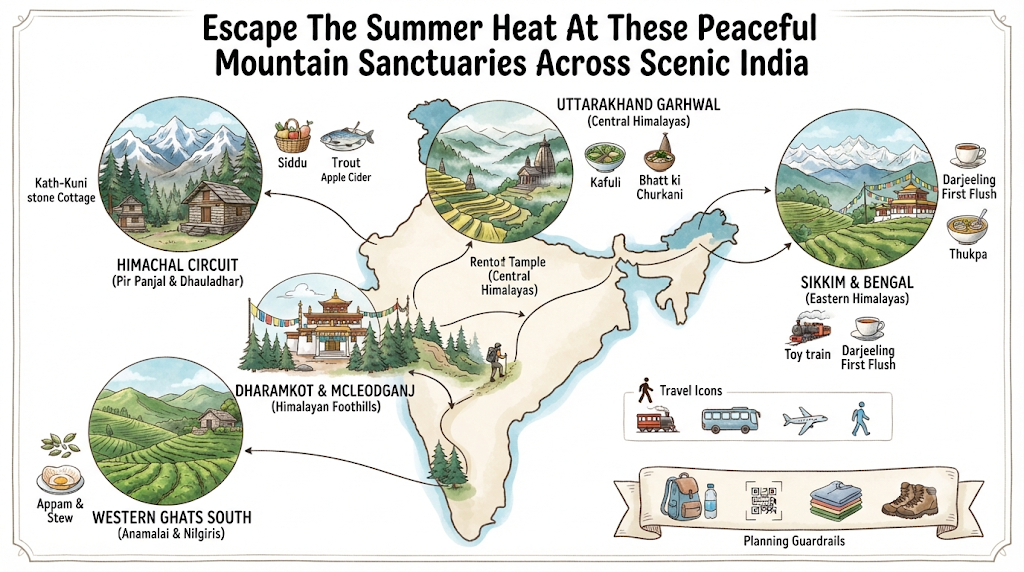
Introduction
When the plains bake under relentless heatwaves, escaping to higher elevations is not merely a holiday choice—it is a renewal of body and spirit. While overcrowded tourist hubs like crowded Mall Roads and horn-blaring bazaars often offer little respite, India’s mountain ranges conceal deeply rooted sanctuaries where time moves slowly.
From the ancient deodar groves of the western Himalayas to the fragrant mist-blanketed emerald slopes of the Western Ghats, real altitude retreats offer quiet connection. Here, heritage stone cottages, sacred forest trails, and vibrant indigenous traditions replace concrete congestion, offering an authentic refuge from the sweltering lowlands.
Why India’s Mountain Havens Are Must-Visit Destinations
India’s mountainous terrain holds profound geographic diversity, spanning the grand heights of the Himalayas to the rolling, prehistoric Nilgiris. These hill stations were sculpted by diverse histories—from indigenous tribal settlements and royal pilgrimage routes to former British colonial summer sanctuaries.
Today, world-class expressways, high-altitude narrow-gauge railways, and regional mountain airports make these heights remarkably accessible. Whether you are an adventurous solo backpacker, a family seeking crisp weather, or a couple desiring secluded luxury, these destinations balance rustic seclusion with premium mountain hospitality.
| Region / Circuit | Primary Mountain Range | Average Summer Temp | Gateway Airport / Railhead | Signature Local Specialty |
|---|---|---|---|---|
| Himachal Circuit | Pir Panjal & Dhauladhar | 12°C – 24°C | Chandigarh / Pathankot | Siddu, Trout, Apple Cider |
| Uttarakhand Garhwal | Central Himalayas | 10°C – 22°C | Dehradun / Haridwar | Kafuli, Bhatt ki Churkani |
| Sikkim & Bengal | Eastern Himalayas | 11°C – 20°C | Bagdogra / New Jalpaiguri | Darjeeling First Flush, Thukpa |
| Western Ghats South | Anamalai & Nilgiris | 15°C – 25°C | Kochi / Coimbatore | Malabar Spices, Appam & Stew |
Best Places or Experiences
Munnar Tea Highlands
Munnar unfolds across undulating valleys carpeted in tea gardens, perched at the confluence of three mountain streams in Kerala’s Western Ghats. Originally established as a summer retreat for British planters, the region retains its colonial-era stone bungalows and unhurried rhythm.
Vast estates roll under blankets of morning fog, where local women harvest fine leaves with rhythmic precision. Walking through these estates offers a soothing communion with nature, accompanied by the fresh scent of crushed cardamoms and eucalyptus wafting across crisp mountain air.
Emerald tea estates of Munnar.
- Location: Idukki District, Kerala; approximately 130 km east of Kochi International Airport.
- Why it is worth visiting: Home to some of the highest-elevation commercial tea estates in the world, framed by the towering peak of Anamudi.
- Best things to do: Hike through Lockhart Gap, explore vintage machinery at the Tea Museum, and spot the endangered Nilgiri Tahr along the cliffs of Eravikulam National Park.
- Best time to visit: March to June for warm days and cool evenings; early morning at 6:30 AM is ideal for photography before mists burn off.
- Ideal for whom: Couples, nature enthusiasts, landscape photographers, and wellness seekers.
- Travel tip: Book your Eravikulam National Park safari slot online at least three weeks early to bypass the two-hour vehicle queuing lines.
Old Manali & Solang Ridge
Set high within the Beas River Valley, Old Manali stands in striking contrast to the busy town below. Characterized by traditional Kath-Kuni wood-and-stone architecture, apple orchards, and artistic cafes, it maintains a grounded Himachali heritage.
Beyond the village, ancient cedar forests lead up to Solang Valley and the alpine approaches of the Rohtang Pass. Crisp glacial breezes flow down from snow-clad ridges, creating a serene environment filled with woodsmoke, prayer wheels, and mountain water.
- Location: Kullu District, Himachal Pradesh; 270 km north of Chandigarh.
- Why it is worth visiting: An alpine blend of Himachali rural traditions, vibrant arts, and immediate access to high-altitude wilderness.
- Best things to do: Walk through the sacred deodars to Hadimba Temple, sample steamed siddu at local homes, and embark on day hikes to Jogini Waterfall.
- Best time to visit: April to late June for pleasant mountain weather; afternoon golden hour brings out vivid textures on old slate roofs.
- Ideal for whom: Solo backpackers, trekking enthusiasts, artists, and active families.
- Travel tip: Base yourself strictly in Old Manali or nearby Vashisht to avoid the notorious midday traffic jams across the main town bridge.
Darjeeling Himalayan Heritage
Perched upon a jagged ridge overlooking Mount Kanchenjunga—the world’s third-highest peak—Darjeeling combines Eastern Himalayan beauty with deep cultural heritage. Its tea bushes cling to dizzying slopes below snowbound summits that glow rose-gold at dawn.
The town hums with the whistle of the narrow-gauge steam railway, the chiming bells of Buddhist monasteries, and the energetic murmur of the local market. Tibetan, Nepali, and Lepcha traditions weave together seamlessly here, visible in colorful flags fluttering from pine branches and hot momos served by street vendors.
Kanchenjunga above Darjeeling tea slopes.
- Location: Darjeeling District, West Bengal; 70 km north of Siliguri and New Jalpaiguri.
- Why it is worth visiting: Legendary views of Mount Kanchenjunga paired with rare UNESCO World Heritage narrow-gauge mountain railroading.
- Best things to do: Catch dawn over Tiger Hill, tour tea-tasting sessions at Happy Valley Estate, and observe Tibetan Buddhist chanting at Ghum Monastery.
- Best time to visit: April to mid-June for clear mountain horizons; sunrise between 4:45 AM and 5:30 AM offers peak visibility.
- Ideal for whom: Tea aficionados, cultural historians, families, and railway enthusiasts.
- Travel tip: To avoid the chaotic lines at Tiger Hill, ask your driver to take you to Batasia Loop’s upper observation deck for dawn viewing instead.
Dharamkot & McLeodganj
Perched above the Kangra Valley against the sheer granite walls of the Dhauladhar Range, this enclave serves as the center of the Tibetan diaspora in India. Prayer flags crisscross overhead, while monks in crimson robes walk alongside travelers on stone paths.
Up the slope lies Dharamkot, a quiet village set among oak and rhododendron forests that has long served as a haven for yoga, meditation, and quiet reflection. The contrast between soaring alpine walls and quiet monastery courtyards creates a grounding sanctuary.
- Location: Kangra District, Himachal Pradesh; 90 km from Pathankot Railway Station.
- Why it is worth visiting: The official residence of His Holiness the Dalai Lama, surrounded by dramatic alpine hiking trails.
- Best things to do: Circumambulate the Tsuglagkhang Complex along the Kora trail, hike the Triund ridge trail, and learn thangka painting.
- Best time to visit: April to June for sunny trail conditions and cool evenings; early mornings are best for quiet monastic prayers.
- Ideal for whom: Spiritual seekers, trekkers, wellness enthusiasts, and cultural explorers.
- Travel tip: Hire a local mountain guide for the Triund trek and begin walking by 7:00 AM to avoid the midday sun and peak ridge crowds.
Coonoor Tea Terraces
Coonoor is the quieter, more contemplative sister to Ooty in Tamil Nadu’s Nilgiri Hills. Ringed by cloud forests and eucalyptus groves, it sits comfortably above the heat of the plains without the commercial crowding found in larger resort centers.
Winding mountain roads lead past century-old private tea bungalows, fruit orchards, and deep ravines carved by cascading streams. The air carries scents of ripe wild berries, fresh tea, and damp moss, inviting visitors to slow down and wander without an itinerary.
- Location: Nilgiris District, Tamil Nadu; 70 km north of Coimbatore Airport.
- Why it is worth visiting: Unspoiled, serene tea plantations and vantage points over deep canyons without the bustle of neighboring resort towns.
- Best things to do: Ride the Nilgiri Mountain Railway toy train, walk the tea-plucking tracks around Singara Estate, and take in views at Dolphin’s Nose.
- Best time to visit: March through June for mild days and cool evenings; late afternoon brings dramatic mist rolling through the canyons.
- Ideal for whom: Literary travelers, couples seeking solitude, slow travelers, and birdwatchers.
- Travel tip: Stay in Upper Coonoor to enjoy peaceful estate walking paths directly from your door while avoiding central road traffic.
Offbeat Exploration: Hidden Gems Tourists Miss
Landour’s Quiet Ridge Walks
Tucked barely five kilometers above bustling Mussoorie, Landour exists in another century entirely. Sheltered under tall deodar, pine, and scarlet rhododendron trees, its quiet paths—such as the Upper Chukkar—are closed to commercial traffic.
Wander past historic stone churches, browse literary works at the local community hub, and take in unobstructed views of the Greater Himalayan peaks without the blare of vehicular horns.
Gushaini in the Tirthan Valley
Located at the gate of the UNESCO-inscribed Great Himalayan National Park, this serene riverside hamlet is a paradise for conscious travelers.
Here, clear glacial waters hold wild trout, wooden houses are adorned with hand-carved balconies, and apple blossoms scent the crisp air. It offers pure, uncommercialized wilderness where you can hike through alpine oak meadows without encountering another soul.
Kurseong’s Mist-Shrouded Orchid Paths
Nestled halfway between Siliguri and Darjeeling, Kurseong is known as the “Land of the White Orchids.” Most tourists rush past it on their way up, missing its serene colonial-era schools, hillside monasteries, and quiet tea estate walking trails. The estate trails around Makaibari offer deep peace, guided tea tastings, and homestays with local plucking families.
Detailed Practical Guidance for Travelers
| Destination | Standard Entry Fee | General Timings | Best Local Food Options Nearby | Recommended Nearby Attractions |
|---|---|---|---|---|
| Munnar (Eravikulam) | INR 200 (Indian), INR 500 (Foreign) | 7:30 AM – 4:00 PM | Rapsy Restaurant (Kerala Parotta, Beef Fry) | Mattupetty Dam, Top Station |
| Old Manali (Hadimba) | Free (INR 50 for museum) | 8:00 AM – 6:00 PM | Cafe 1947, Dylan’s Toasted & Roasted | Jogini Falls, Vashisht Hot Springs |
| Darjeeling (Toy Train) | INR 1,000 – 1,500 (Steam Joyride) | 9:00 AM – 4:30 PM | Keventers (English Breakfast), Glenary’s | Batasia Loop, Happy Valley Estate |
| McLeodganj (Tsuglagkhang) | Free entry | 5:00 AM – 7:00 PM | Tibet Kitchen (Thukpa, Tingmo, Momos) | Bhagsunag Waterfall, Dharamkot |
| Coonoor (Sim’s Park) | INR 30 per person | 9:00 AM – 6:00 PM | Hopskotch, Cafe Diem (French artisan bakes) | Dolphin’s Nose, Lamb’s Rock |
Logistics & On-Ground Navigation
Local Transport Options
- State Roadways & Private Volvos: Reliable overnight luxury buses connect major transit hubs like Delhi to Manali/Dharamshala, or Bengaluru/Chennai to Ooty/Coonoor.
- Prepaid Taxis & Union Cabs: Most hill stations operate strict local taxi unions. Always book your point-to-point tours through official Union taxi booths at fixed, published rates to avoid sudden fare increases.
- Self-Drive Scooters: Renting 110cc automatic scooters (INR 500–800 per day) is convenient for navigating narrow town lanes in places like McLeodganj or Munnar, provided you have prior mountain riding experience.
- Heritage Mountain Rail: Iconic narrow-gauge routes in Darjeeling, Kalka-Shimla, and the Nilgiris provide scenic transport; book tickets months ahead via the national railway portal.
Budget Planning
Mountain logistics carry unique premiums. Always carry extra physical cash, as higher elevations frequently suffer power or cellular disruptions that disable card readers and digital payment terminals.
- Budget / Backpacking Tier (INR 1,800 – 2,800 / day): Includes a bed in a boutique hostel or family-run homestay, meals at local dhabas, state bus transit, and shared union jeeps.
- Mid-Range / Comfort Tier (INR 5,500 – 9,500 / day): Covers a private heritage cottage or boutique mountain resort, dining at independent cafes, a dedicated private taxi for day tours, and guided estate tastings.
Safety and Inclusivity Tips
- Families: Mountain roads wind considerably; pack motion-sickness medication, hydrate frequently, and pace your uphill walking to help children acclimate to thin air.
- Couples: Respect local customs in traditional mountain villages. Stay within well-lit paths after dark, and opt for registered boutique homestays with verified guest reviews.
- General Safety: Mountain weather turns rapidly. Always carry a packable windbreaker and waterproof shell, even if morning skies begin completely clear.
Strategic Travel Planning Guardrails
Travel Planning Tips for Mountain Journeys
- Book high-season stays early: Mountain accommodations fill fast between April and June; reserve heritage properties 60 to 90 days out.
- Keep cash handy: Keep at least INR 4,000 to 5,000 in crisp currency notes; high-altitude ATMs often run out of cash during long weekends.
- Layer your wardrobe: Days can hit 24°C under the alpine sun, while nighttime temperatures often drop to 8°C.
- Carry a refillable thermal flask: Most mountain cafes provide filtered water refills, keeping single-use plastic bottles out of fragile ecosystems.
- Respect sacred local traditions: Remove shoes before entering monastery courtyards, walk clockwise around stupas, and ask permission before photographing local residents.
Common Mistakes to Avoid
- Packing your itinerary with too many distant towns across short weekend trips.
- Assuming digital payments work everywhere without a cash safety net.
- Driving rented vehicles on steep mountain hairpin turns without prior hill-driving experience.
- Relying exclusively on lightweight summer clothing without packing warm evening layers.
- Skipping regionally prepared dishes in favor of generic hotel buffets.
Suggested Itinerary Blueprints
1. Day Quick Dash (The Nilgiri Ridge Express)
Target Audience: Travelers with limited time seeking quick altitude relief.
- Morning: Board the morning Nilgiri Mountain Railway toy train from Mettupalayam or Coonoor to Ooty.
- Afternoon: Tour the quiet slopes of Upper Coonoor, visit Sim’s Park, and enjoy tea tastings at a nearby private estate.
- Evening: Watch the sunset from Dolphin’s Nose before descending to Coimbatore for your onward transit.
2. Day Deep-Dive (The Beas Valley Heritage Circuit)
Target Audience: Cultural explorers seeking active walks, food, and architecture.
- Day 1: Start early in Old Manali. Walk the ancient trails up to the wood-and-stone Hadimba Temple, spend midday exploring art cafes, and hike to Jogini Waterfalls by late afternoon.
- Day 2: Drive to Naggar Castle to admire rare western Himalayan architecture and the Nicholas Roerich Art Gallery. Sample fresh river trout and siddu at a village dhaba before returning.
3. Complete Weekend Travel Plan (The Kangra Valley Loop)
Target Audience: Weekend travelers desiring monastic peace and alpine vistas.
- Friday: Arrive in McLeodganj via overnight bus or Dharamshala Airport; check into a quiet hillside stay in Dharamkot. Enjoy an evening meal of hot momos and herbal tea.
- Saturday: Walk the Kora meditation circuit around the Tsuglagkhang Complex at sunrise. Spend the afternoon hiking through pine woods to the village of Naddi for views of the Dhauladhar Range.
- Sunday: Visit the Norbulingka Institute to watch traditional Tibetan artists craft metal statues and thangkas, then transfer to Pathankot or Gaggal for departure.
Common Tourist Mistakes to Avoid
- Geographic Blunders: Many travelers try to combine Manali and Shimla, or Darjeeling and Gangtok, across a single short weekend. Mountain travel times take twice as long as flat highway driving; attempting too much leads to spending your entire trip trapped in a taxi.
- Commercial Traps: Do not spend your mountain getaway walking through crowded shopping streets lined with modern chain stores selling plastic goods. Venture out to local weekly farmer haats, organic cooperatives, and traditional craft centers instead.
- Neglecting Modern/Alternative Zones: In towns like Manali or McLeodganj, skipping older quarters like Dharamkot or Upper Vashisht means missing out on the best independent roasteries, live folk performances, and quiet reading spaces.
- Transport Overpayment: Always verify fixed Union cab rates at the official government or union stand before accepting private quotes from hawkers at bus stands.
- Luxury Dining Bias: Eating only at fine-dining hotel buffets deprives you of tasting iconic local delicacies—such as fresh fermented steamed breads, spiced mountain lentils, and freshly plucked organic teas.
Frequently Asked Questions
1. Which hill station in India offers the coolest summer weather?
Higher-altitude towns in the Pir Panjal and Great Himalayan ranges, such as Gulmarg, Manali, and Leh, offer temperatures ranging between 10°C and 20°C throughout peak summer. Eastern Himalayan stations like Darjeeling also maintain cool, comfortable days rarely exceeding 19°C.
2. Are mountain toy trains running regularly during the summer months?
Yes, the iconic UNESCO toy trains in Darjeeling, Kalka-Shimla, and the Nilgiris run daily through the summer season. However, because seats are limited and demand peaks between April and June, booking your tickets 60 to 90 days ahead on the official railway website is strongly recommended.
3. Do I need special permits to visit hill destinations in India?
Most mainstream hill stations in Himachal Pradesh, Uttarakhand, and South India require no entry permits. However, border areas and sensitive ecological zones—such as parts of Ladakh, North Sikkim, and the Rohtang Pass highway—mandate Inner Line Permits or green vehicle passes that must be arranged ahead of time.
4. How can travelers prevent altitude sickness when visiting mountain resorts?
Ascend gradually whenever possible, drink plenty of water, and avoid strenuous hill climbs during your first 24 hours at elevations exceeding 2,500 meters. Keeping your body hydrated, avoiding heavy alcoholic drinks on arrival day, and carrying electrolyte sachets helps your system acclimate smoothly.
5. Which hill resort is best suited for families traveling with young children?
Coonoor in the Nilgiris and Nainital in Uttarakhand are especially convenient for families. Both offer gentle walking paths, well-connected road access, accessible pediatric medical clinics, and a broad range of family cottages, all without demanding strenuous high-altitude trekking.
6. What clothes should I pack for a summer trip to the hills?
Pack light, breathable cotton layers for daytime sunny walks, complemented by a fleece pullover, a packable windbreaker, and a warm evening jacket. Temperatures drop quickly once the sun sets, and sudden mountain showers can bring rapid cold snaps.
7. Is it safe to drive a private car to northern hill stations?
Driving on mountain roads requires confidence, defensive driving skills, and experience with sharp hairpin turns and steep climbs. If you have not navigated steep ascents before, hiring an experienced local driver or taking a certified Volvo coach is far safer and less stressful.
8. What local dishes should I try in Himachal Pradesh?
Look out for siddu, a steamed wheat bread stuffed with spiced poppy seeds or walnuts, traditionally served with pure ghee. You should also try Chha Gosht, Madra (chickpeas slow-cooked in yogurt and whole spices), and freshly caught Himalayan river trout.
9. Can I find high-speed internet connectivity in smaller mountain villages?
Major telecom networks provide reliable 4G and 5G signals across popular centers like Manali, Darjeeling, and Dharamshala. However, in more secluded valleys like Tirthan or remote hamlets, cellular signals can drop, making it wise to confirm private fiber-optic Wi-Fi speeds with your host beforehand.
10. How do taxi unions operate across Indian hill stations?
Most hill stations rely on local taxi unions that set fixed, regulated rates for standard sightseeing circuits and intercity drops. Outside private taxis are often barred from local sightseeing routes, so plan to hire local union vehicles from official town stands.
11. What is the most effective way to support local mountain communities while visiting?
Choose family-run homestays, purchase handmade woolens directly from weavers at village cooperatives, hire licensed native guides for nature hikes, and dine at small, independent family eateries rather than imported fast-food franchises.
12. When does the summer holiday season transition into the mountain monsoon?
The pleasant summer dry period generally concludes by late June or early July, when the southwest monsoon reaches the hills. Monsoon rains bring lush greenery but also introduce risks of landslides and road closures, making early April through mid-June the ideal summer window.
Conclusion
Escaping to India’s high-altitude sanctuaries is far more than a simple strategy to beat the seasonal heat. It is an opportunity to slow down to the peaceful pace of mountain life, breathe crisp forest air, and experience warm mountain hospitality. By stepping away from noisy commercial strips and choosing quiet walking trails, historic tea bungalows, and local family kitchens, you discover a deeply grounding journey that stays with you long after you descend back to the plains.
