MOTOSHARE 🚗🏍️
Rent Bikes & Cars Directly from Owners
Motoshare connects vehicle owners with people who need bikes and cars on rent. Owners earn from idle vehicles, and renters get flexible ride options.
Visit Motoshare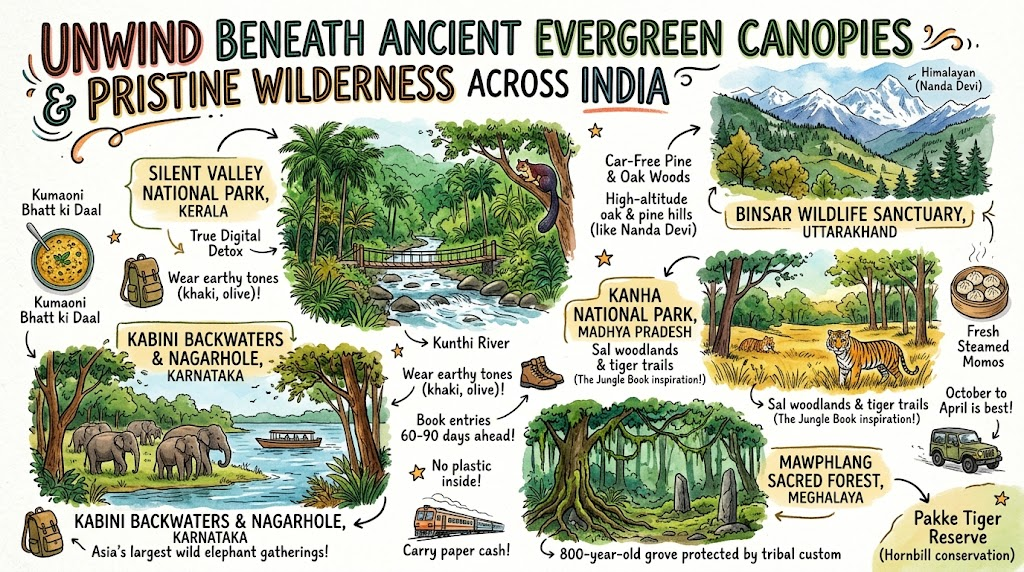
Introduction
Mainstream Indian holidays are too often defined by blaring hill station traffic, overbooked beach promenades, and endless crowds competing for the same sunset selfie. True restoration demands stepping outside these commercial circuits and surrendering to the primordial hum of ancient wildernesses.
India’s dense woodlands offer a visceral antidote to urban burnout. Beneath ancient canopies of teak, deodar, and sal, travel shifts from sightseeing consumption into quiet communion with indigenous communities, sacred groves, and untouched biodiversity.
Why India’s Forest Sanctuaries are a must-visit destination
India contains four global biodiversity hotspots spanning the Western Ghats, the Eastern Himalayas, the Indo-Burma region, and the Nicobar Islands. These ancient ecological systems represent thousands of years of tribal land stewardship, sacred folklore, and rare wildlife refuges. For modern travelers, this vast geographic tapestry is made accessible by comprehensive railway corridors, well-maintained national highways, and low-impact sustainable eco-lodges.
Whether navigating the misty evergreen canopies of the south or the sun-dappled sal clearings of the central plateau, India’s wilderness routes cater to slow-traveling backpackers, mindful families, and solo seekers alike. The travel circuit links regional heritage hubs directly to tranquil forest fringes, creating natural pauses between bustling city arrivals and deep woodland silence.
| Key Metric | Details & Regional Data |
|---|---|
| Total Forest Cover | Approximately 24.6% of India’s total land area |
| Forest Types | Tropical wet evergreen, alpine scrub, central deciduous sal, mangrove forests |
| Primary Access Gateways | Kochi (South), Jabalpur/Nagpur (Central), Dehradun (North), Guwahati (Northeast) |
| Optimal Travel Season | October through April (post-monsoon vibrancy through dry winter) |
| Signature Encounters | Bengal tigers, Asian elephants, sacred tribal groves, endemic bird species |
Top Forest Retreats for Unwinding
Silent Valley National Park canopy.
Silent Valley National Park, Kerala
Cradled in the southern slopes of the Nilgiri Hills, Silent Valley is one of the last undisturbed tracts of South Western Ghats montane rain forests. Named for the curious absence of chirping cicadas, this untamed sanctuary features ancient evergreen canopies that drop down into the crystal rapids of the Kunthi River.
Visiting here feels like stepping onto a living evolutionary relic. Because commercial access is tightly restricted to conserve the endangered lion-tailed macaque, the reserve provides rare isolation, untouched nature trails, and unbroken canopy birdsong.
- Location: Palakkad District, Kerala; approximately 75 km from Palakkad town and 135 km from Coimbatore Airport.
- Why it is worth visiting: It preserves an ancient, untouched rainforest ecosystem where mass tourism is forbidden and pure silence reigns.
- Best things to do: Take the guided eco-trek to the Kunthi River hanging bridge, climb the Sairandhri watchtower for panoramic rainforest vistas, and spot endemic Malabar giant squirrels.
- Best time to visit: December to April for clear trekking paths; visit post-monsoon in November for full cascading streams.
- Ideal for whom: Solo naturalists, botanists, and eco-conscious travelers seeking true digital detox.
- Travel tip: Book entry permits well in advance through the Kerala Forest Department portal; plastic is strictly confiscated at the check post.
Kabini Backwaters and Nagarhole, Karnataka
Once the private hunting grounds of the Maharajas of Mysore, the Kabini river basin now hosts one of Asia’s largest concentrations of wild Asian elephants and stealthy apex predators. As the river shrinks during dry periods, open grassy shores emerge, flanked by deep teak and rosewood canopies.
The atmospheric magic of Kabini lies in the water-forest boundary. Drifting down the misty reservoir at dawn on a silent boat safari reveals herds drinking at the edges while ospreys dive from skeletal drowned trees.
- Location: Kodagu and Mysuru border, Karnataka; roughly 80 km from Mysuru and 220 km from Bengaluru.
- Why it is worth visiting: Unmatched wildlife viewing across open riverbanks framed by deep southern deciduous woods.
- Best things to do: Take a silent electric boat safari along the river edge, join a coracle boat morning ride, and embark on open-top jeep drives for black panther tracks.
- Best time to visit: October to February for comfortable weather; March to May for dramatic riverbank wildlife gatherings.
- Ideal for whom: Wildlife photographers, luxury nature seekers, and couples craving calm riverfront seclusion.
- Travel tip: Book government-run boat safaris from Jungle Lodges & Resorts early to secure prime dawn slots.
Kanha National Park sal forest.
Kanha National Park, Madhya Pradesh
Rudyard Kipling drew inspiration for The Jungle Book from Kanha’s sprawling horseshoe valley, blanketed in stately sal forests and open meadows. The forest floor glows golden during morning transitions, while bamboo thickets provide sheltered hideaways for wildlife.
Beyond its world-class tiger conservation, Kanha’s gentle plateau landscapes create a profound mental stillness. Staying in earthen lodges fringing the buffer zones lets travelers listen to spotted deer alarm calls and rustling leaves under unbroken starlit skies.
- Location: Mandla and Balaghat districts, Madhya Pradesh; approximately 160 km from Jabalpur.
- Why it is worth visiting: Sprawling sal woodlands, expansive open meadows, and the revived population of hard-ground barasingha deer.
- Best things to do: Experience a sunrise safari through the Kanha or Mukki zone, take a village walk among indigenous Baiga settlements, and unwind around evening campfires listening to jungle acoustics.
- Best time to visit: November to March for pleasant daytime temperatures and mist-shrouded morning drives.
- Ideal for whom: Families, heritage enthusiasts, and travelers desiring deep forest grounding.
- Travel tip: Book the Mukki or Kisli zones if you want quieter gate entries away from the busier Khatia entrance.
Binsar Wildlife Sanctuary, Uttarakhand
Perched along the Jhandi Dhar hills in the Kumaon Himalayas, Binsar is a high-altitude sanctuary wrapped in thick oak, pine, and scarlet rhododendron woods. Unlike crowded commercial hill stations, private vehicles are barred from the core, leaving the forest paths blissfully car-free.
From clear forest vantage points, the canopy suddenly drops away to unveil a 300-kilometer panorama of snow-crowned Himalayan peaks, including Nanda Devi, Trishul, and Kedarnath. Crisp Himalayan mountain breezes and quiet footpaths make it an exceptional space for mountain relaxation.
- Location: Almora District, Uttarakhand; roughly 30 km from Almora and 120 km from Kathgodam railway hub.
- Why it is worth visiting: Car-free high-altitude oak woodlands paired with panoramic Himalayan mountain vistas.
- Best things to do: Trek quietly to Zero Point for early morning mountain views, go birding for over 200 resident species, and read beneath towering chir pines.
- Best time to visit: October to November for crystal-clear mountain views; March to April to see bright red rhododendron blooms.
- Ideal for whom: Writers, trekkers, and peace seekers wanting alpine forest seclusion.
- Travel tip: Pack a sturdy headlamp and thermal layers; most eco-resorts inside the sanctuary operate off-grid solar power that turns off by night.
Mawphlang Sacred Forest trails.
Mawphlang Sacred Forest, Meghalaya
Tucked inside the rolling East Khasi Hills, the ancient grove of Mawphlang (Law Kyntang) has been preserved by tribal religious custom for over eight centuries. Khasi folklore strictly dictates that nothing may be removed from the woods—not a single leaf, twig, or stone—keeping the grove preserved in its primordial ecological state.
Walking beneath its canopy reveals an emerald labyrinth of moss-draped branches, rare medicinal orchids, centuries-old ferns, and sacrificial monoliths. The quiet reverence shown by local tribal caretakers creates a deeply spiritual, timeless atmosphere.
- Location: East Khasi Hills, Meghalaya; roughly 25 km from Shillong.
- Why it is worth visiting: A living museum of indigenous conservation, ancient botanical treasures, and preserved Khasi religious rites.
- Best things to do: Walk with an indigenous Khasi guide to learn about traditional medicinal herbs, inspect sacred stone coronation circles, and hike the nearby David Scott trail.
- Best time to visit: September to April for dry footpaths and cool mountain weather.
- Ideal for whom: Cultural travelers, anthropology buffs, and mindful walkers.
- Travel tip: Strictly honor local customs: do not pick leaves, break twigs, or leave trash behind inside the grove boundary.
Offbeat Exploration: Hidden Gems Tourists Miss
Sitabani Forest Reserve, Uttarakhand
While crowds jam Jim Corbett’s core safari gates, the contiguous Sitabani landscape remains an overlooked, tranquil paradise. Dotted with ancient temples and open seasonal streams, this buffer forest permits serene guided foot safaris that are strictly barred within standard tiger reserve zones.
Gingee Sacred Foothill Groves, Tamil Nadu
Hidden beneath the historic battlements of Gingee, pockets of dry-evergreen hill forests harbor ancient medicinal plants and hermit caves. These undisturbed thorn woodlands offer silent walking circuits completely missed by conventional tour buses.
Pakke Tiger Reserve Hornbill Havens, Arunachal Pradesh
Far from mainstream Northeast travel circuits, the subtropical woods of Pakke host communal hornbill conservation led by the indigenous Nyishi tribe. Staying in village homestays near the forest border lets you fall asleep to the rushing Bhareli River and heavy wingbeats across the canopy.
Detailed Practical Guidance for Travelers
| Destination | Standard Entry Fee | General Timings | Best Local Food Options Nearby | Recommended Nearby Attractions |
|---|---|---|---|---|
| Silent Valley, Kerala | ₹350–₹500 per person (includes shared forest department jeep) | 08:00 AM – 01:00 PM (safari departure window) | Steamed puttu and spicy kadala curry at Mukkali village canteens | Attappadi Tribal Reserve, Bhavani River bends |
| Kabini, Karnataka | ₹400–₹1,500 (varies by safari type and vehicle choice) | 06:00 AM – 09:30 AM & 03:00 PM – 06:00 PM | Traditional bisi bele bath and fresh coconut water at rural eateries | Taraka Dam backwaters, Iruppu Falls |
| Kanha, Madhya Pradesh | ₹1,500–₹2,500 per vehicle (plus guide charges) | 06:00 AM – 11:00 AM & 03:00 PM – 06:00 PM (closed Wednesday afternoons) | Wood-fired poha, dal bafla, and sweet jalebi along Mocha village stalls | Bamni Dadar sunset point, Baiga cultural hamlets |
| Binsar, Uttarakhand | ₹150 per person (₹250 vehicle entry fee) | Sunrise to Sunset (approx. 06:00 AM – 06:00 PM) | Kumaoni bhatt ki daal, singodi sweets, and hemp seed chutney | Kasar Devi temple ridge, Jageshwar temple complex |
| Mawphlang, Meghalaya | ₹50 entry (₹300–₹500 for an official Khasi guide) | 09:00 AM – 04:30 PM daily | Steamed pork momos, ja stem (turmeric rice), and hot ginger tea | David Scott trail, Mawlyngbna natural springs |
Logistics & On-Ground Navigation
Local Transport Options
- Railways: India’s rail network is the most atmospheric and reliable way to approach remote woodland bases. Broad-gauge trains connect major metros to regional railheads like Kathgodam (for Binsar), Jabalpur (for Kanha), and Palakkad (for Silent Valley).
- Private Taxis & Rentals: Self-driving inside forest zones is discouraged due to patchy network coverage and narrow forest tracks. Hire experienced local drivers at railway hubs who know mountain hairpins and wildlife crossing speeds.
- Regional Buses: State road transport corporations (such as KSRTC in the south and UTC in Uttarakhand) run affordable buses linking regional hubs to base towns like Almora, Mukkali, and Mandla.
Budget Planning
- Backpacker / Slow-Travel Tier (₹1,500 – ₹2,800 per day): Stays in community-run forest rest houses or village homestays (₹800 – ₹1,500/night), simple local canteens (₹400/day), and shared jeeps or public transport.
- Comfort / Mid-Range Tier (₹5,500 – ₹12,000 per day): Eco-resorts with solar heating and farm-to-table meals (₹4,000 – ₹9,000/night), dedicated private vehicle with driver (₹2,500/day), and exclusive guided forest safaris.
Safety and Inclusivity Tips
- For Families: Keep children closely supervised around forest boundaries. Stay inside fenced lodge perimeters after dusk, and confirm on-site medical first-aid readiness with your stay.
- For Couples: Choose eco-certified stays that favor low decibel levels and candle-lit dining over noisy event lawns.
- General Woodland Safety: Always wear neutral-toned clothing (khaki, olive, brown) to avoid agitating wild animals. Never carry open snacks or perfumed cosmetics while walking along forest edges.
Strategic Travel Planning Guardrails
Travel Planning Tips for Forest Sanctuaries
- Book your government permits and jeep entries 60 to 90 days ahead, as reserves enforce strict daily vehicle caps to preserve fragile ecosystems.
- Carry ample paper cash in small denominations (₹100 and ₹500 notes); cellular networks and digital UPI terminals frequently drop out in forest gorges.
- Pack high-ankle canvas or leather shoes alongside quick-drying leech socks if you are visiting post-monsoon rainforests.
- Pack broad-spectrum eco-safe bug repellent that avoids synthetic chemicals harmful to forest waterways.
- Verify entry gate locations with your lodge before arrival, as entering through the wrong gate can mean a costly 60-kilometer detour on forest roads.
Common Mistakes to Avoid
- Assuming constant cellular connectivity: Download your offline regional maps and print hard copies of booking confirmations before entering forest corridors.
- Wearing synthetic bright clothing: Bright neon apparel startles woodland fauna and flags you as an inexperienced visitor.
- Using night-time spotlights: Pointing powerful personal flashlights into woodland trees disrupts nocturnal hunting cycles and can attract hornets or larger animals.
- Leaving disposable plastic behind: Many Indian sanctuaries run strict zero-plastic mandates; always bring a reusable insulated metal bottle.
- Demanding hotel amenities inside wilderness reserves: Demanding microwave buffets or blaring audio speakers disrupts the very quiet you traveled to find.
Suggested Itinerary Blueprints
1. Day Quick Dash (The Kumaon Pine Trail)
Designed for time-pressed mountain lovers departing from Delhi. Board the dawn Kathgodam Shatabdi express train, take a pre-booked taxi up past Almora into Binsar by afternoon, walk the quiet sunset pine trail around your retreat, and wake early for dawn views at Zero Point before descending.
2. Day Deep-Dive (The Kanha Woodland Immersion)
- Day 1: Arrive from Jabalpur into Kanha’s Mukki corridor around noon. Spend the afternoon taking an orientation walk through the buffer forest edge with a resident naturalist, followed by an open-air dinner under the stars.
- Day 2: Take an early 5:30 AM morning drive across the sal forest heartland. Rest through the afternoon heat on a lodge verandah, and finish with a sunset walk through an indigenous Baiga hamlet.
3. Complete Weekend Travel Plan (The Nilgiri Rainforest Loop)
- Friday: Land at Coimbatore Airport, drive through scenic palm groves into the Mukkali basecamp, and settle into a riverside eco-cottage alongside the Bhavani River.
- Saturday: Spend the full morning exploring Silent Valley National Park, trekking through the rain canopy to the Kunthi River bridge, and relaxing with a warm traditional Kerala Ayurvedic massage in the evening.
- Sunday: Enjoy an early morning birdwalk around the buffer plantation trails before taking a smooth afternoon drive back to Coimbatore for return flights.
Common Tourist Mistakes to Avoid
- Geographic Blunders: Trying to combine geographically distant wildlife parks (like combining Kabini and Bandipur on a single Saturday) leaves you stuck on dusty highways during peak safari hours. Stick to one wilderness zone per weekend.
- Commercial Traps: Spending your evenings browsing souvenir shops in overcrowded hill bazaars instead of resting quietly beneath the forest canopy defeats the whole purpose of a woodland retreat.
- Neglecting Modern/Alternative Zones: Overlooking community-managed buffer-zone farms, small tea gardens, and indigenous cooperative cafes means missing out on memorable interactions with local forest residents.
- Transport Overpayment: Always book forest transfers through your lodge or cross-check rates against official union taxi desks at regional stations to avoid arbitrary surcharges.
- Luxury Dining Bias: Sticking only to multi-cuisine resort buffets causes you to miss regional delicacies like spicy roadside Kumaoni pahadi dal or freshly pounded bamboo-shoot curries.
Local Insight: The most memorable forest moments never happen during high-speed vehicle chases after big cats. They reveal themselves when you sit completely still on a wooden porch, letting your eyes adjust until the canopy comes alive around you.
Frequently Asked Questions
1. What are the best forest retreats in India for complete relaxation?
Top destinations include Silent Valley National Park in Kerala, Binsar Wildlife Sanctuary in Uttarakhand, Kabini along Karnataka’s backwaters, and Kanha National Park in Madhya Pradesh. Each sanctuary provides quiet natural surroundings far removed from noisy tourist corridors, prioritizing untouched landscapes, clean mountain or woodland air, and secluded eco-lodges designed for mental restoration.
2. What is the best season to plan a quiet forest vacation in India?
The ideal window runs from October through April. During these post-monsoon and winter months, woodland paths dry out, regional temperatures stay refreshingly cool, and wildlife congregates near clear streams. Avoid the peak summer months of May and June if you dislike dry heat, and skip monsoon months in flood-prone regions.
3. Do I need special permits to visit Indian forest reserves?
Yes, most core forest reserves and national parks mandate entry permits issued by state forest departments. Buffer zones and certain wildlife sanctuaries allow spot entries at forest check posts, but popular safari circuits require reserving your vehicle and guide slots 30 to 90 days in advance online.
4. Are these remote forest retreats safe for solo women travelers?
Indian forest retreats are generally very safe for solo travelers when you book established eco-resorts, government forest rest houses, or vetted homestays. Always arrange station pickups through your host rather than hailing late-night street cabs, and avoid exploring unmarked forest trails alone after dusk.
5. How reliable is mobile connectivity in deep forest retreats?
Cellular reception is generally weak or entirely absent in deeper valleys and protected core zones. Major carriers like Jio and Airtel offer intermittent connectivity in peripheral buffer villages, but you should expect long stretches without signal and inform friends or family before checking in.
6. What clothes should I pack for a forest retreat?
Pack sturdy, breathable cotton or linen clothing in earthy tones such as olive, khaki, brown, and muted green. Bright colors disturb birds and mammals. Bring sturdy walking shoes, thick socks, a fleece layer for cold forest nights, and a compact waterproof windbreaker.
7. Can I explore forest core zones on foot?
Walking inside protected tiger reserves and national park core zones is strictly prohibited by law for traveler safety. However, sanctuaries like Binsar, sacred groves like Mawphlang, and designated eco-trails in Silent Valley allow peaceful guided walking on pre-approved forest paths accompanied by certified local forest guides.
8. What makes sacred groves like Mawphlang different from regular forests?
Sacred groves are communally preserved patches of ancient forest protected by indigenous cultural taboos rather than commercial timber management. In Mawphlang, centuries of undisturbed growth have left rare medicinal flora, thick moss blankets, and sacred stone monoliths intact, preserving rare biodiversity found nowhere else in the surrounding region.
9. Are forest lodges suitable for family vacations with young kids?
Yes, but choosing the right retreat is essential. Look for properties with fenced perimeters, open lawns, and on-site naturalists who conduct gentle daytime nature walks. Avoid ultra-remote off-grid camps if your children require constant climate control, specialized menus, or immediate access to emergency pediatric facilities.
10. How can I practice responsible eco-tourism during my stay?
Practice strict Leave No Trace principles: carry your reusable water bottles, avoid single-use plastic wrappers, stay on marked foot trails, and honor lodge quiet hours. Always support local economies directly by purchasing forest products and hiring indigenous community guides for your walking tours.
11. What unique regional food should I look for near forest retreats?
Look for seasonal forest produce and regional recipes made by nearby communities. Enjoy slow-cooked dal bafla in central India, steaming hot bhatt ki daal in the Kumaon hills, fiery pepper chicken in the Western Ghats, and wild herb stews paired with fermented rice in the Northeast.
12. Is a forest retreat a good option for travelers on a tight budget?
Yes, staying in government forest rest houses, village homestays, or youth hostels near buffer towns keeps costs reasonable. Utilizing public bus transport and eating fresh home-style meals at village canteens allows budget travelers to experience forest sanctuaries comfortably on ₹1,500 to ₹2,500 per day.
Conclusion
Trading the hectic pace of crowded destinations for the ancient quiet of India’s forest retreats restores a sense of inner balance that standard holidays rarely provide. Beneath towering canopies, your attention naturally returns to the simple cadence of wilderness life—the slow drift of morning mist, the scent of damp earth, and the undisturbed rustle of wind through high branches. Returning from these ancient woods, you carry back far more than vacation photos: you carry back a quiet, grounded perspective rooted in the wild heart of the Indian subcontinent.
