MOTOSHARE 🚗🏍️
Rent Bikes & Cars Directly from Owners
Motoshare connects vehicle owners with people who need bikes and cars on rent. Owners earn from idle vehicles, and renters get flexible ride options.
Visit Motoshare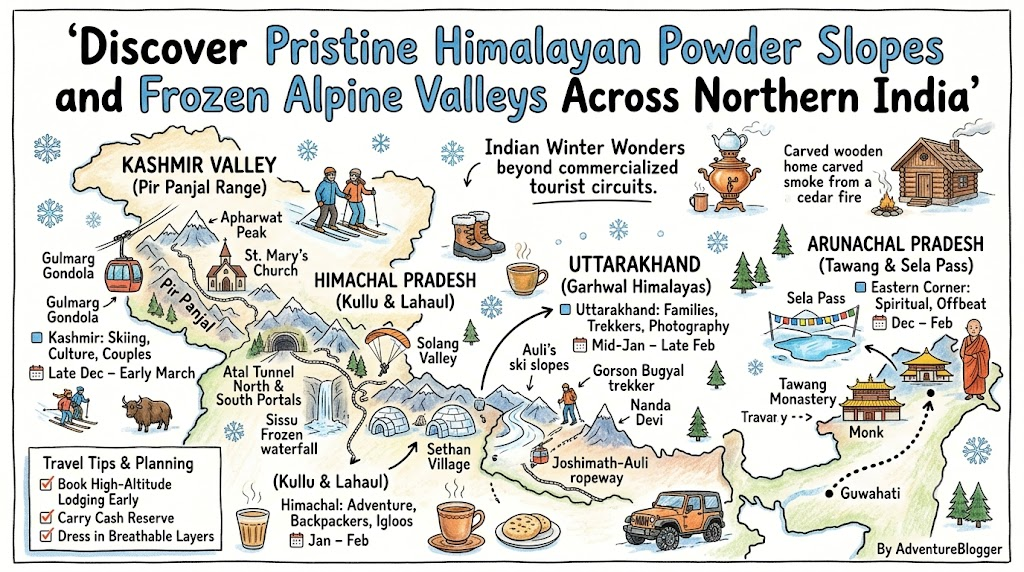
Introduction
When winter sweeps across the Indian subcontinent, most holidaymakers rush toward tropical shorelines or crowded urban hill retreats. Yet, the real soul of an Indian winter lives far above the plains, tucked away in alpine hamlets where silence is broken only by the crunch of fresh powder beneath your boots.
Choosing a true Himalayan winter wonderland means stepping away from commercialized tourist circuits and embracing living mountain traditions. Here, fragrant cedar fires crackle in carved wooden homes, copper samovars simmer with cardamom-infused drinks, and endless glacial valleys offer genuine, untamed wilderness.
Winter snowfall in Gulmarg, Kashmir.
Why Northern India is a must-visit city
The high-altitude northern arc of India offers a dramatic geographic spectacle found nowhere else on earth. The collision of ancient trade pathways, trans-Himalayan valleys, and towering peaks creates an awe-inspiring theater of snow, hospitality, and living history.
Modern infrastructure—such as all-weather Himalayan tunnels, expanded mountain airports, and high-altitude express highways—now allows travelers of every style to access deep powder valleys safely. Whether you are an adrenaline seeker chasing untracked backcountry runs, a remote worker seeking an alpine escape, or a family sharing your child’s first snowball fight, this travel corridor delivers exceptional mountain infrastructure.
The core snowy circuit runs across three primary northern gateways: the Kashmir Valley, the Kullu-Lahaul artery of Himachal Pradesh, and the Garhwal belt of Uttarakhand.
| Region / Valley | Primary Hub | Altitude Range | Peak Snow Window | Ideal Traveler Archetype |
|---|---|---|---|---|
| Pir Panjal Range (Kashmir) | Srinagar | 2,650 m – 4,200 m | Late December – Early March | Skiers, Couples, Culture Seekers |
| Kullu & Lahaul (Himachal) | Manali | 2,050 m – 3,200 m | January – February | Adventure Enthusiasts, Backpackers, Road Trippers |
| Garhwal Himalayas (Uttarakhand) | Joshimath | 2,500 m – 3,050 m | Mid-January – Late February | Winter Trekkers, Families, Alpine Photographers |
Best Places or Experiences
Gulmarg Gondola and Apharwat Peak
Gulmarg transforms into a pristine white amphitheater during the deep winter months of Chillai Kalan. Fringed by towering pines burdened with fresh snow, the landscape rises into the rugged Apharwat ridge, home to one of the highest operating cable cars in the world.
Riding the two-stage ropeway lifts you above swirling cloud banks into raw alpine terrain. Phase 2 drops skiers and explorers onto deep powder bowls facing distant trans-Himalayan ranges. Down in the meadow, heritage wooden cottages and colonial-era stone churches lend the valley a timeless winter atmosphere.
- Location: Baramulla District, Jammu & Kashmir; approximately 51 km west of Srinagar.
- Why it is worth visiting: It offers Asia’s premier lift-accessible deep powder skiing and dramatic panoramic vistas of Nanga Parbat.
- Best things to do: Ride Phase 2 of the Gondola to 3,980 meters; take a guided backcountry powder ski run; visit the historic St. Mary’s Church blanketed in snow.
- Best time to visit: January to mid-February for peak snow depth; book the morning 09:00 AM ropeway slot for the clearest summit skies.
- Ideal for whom: Powder skiers, snowboarding enthusiasts, couples, and landscape photographers.
- Travel tip: Book Gondola tickets online weeks ahead; slots sell out instantly and private vehicles without snow chains are halted at Tangmarg.
Auli Ski Slopes and Gorson Bugyal
Perched high above the Alaknanda river gorge, Auli provides an uninterrupted front-row seat to India’s second-highest peak, the sacred Nanda Devi. What serves as lush grazing meadows during monsoon converts into sweeping ski slopes during the winter freeze.
The journey begins from the pilgrimage base of Joshimath via a scenic ropeway ride soaring over dense oak and deodar canopies. Walking across the frozen rim of Auli’s artificial lake as evening light turns the surrounding peaks into burning gold remains one of the greatest natural spectacles in the Garhwal Himalayas.
High altitude ski terrain in Auli.
- Location: Chamoli District, Uttarakhand; roughly 290 km northeast of Dehradun / Rishikesh.
- Why it is worth visiting: It offers an intimate panorama of the Nanda Devi sanctuary alongside well-maintained ski slopes.
- Best things to do: Learn beginner skiing with certified alpine instructors; trek to the snow-covered alpine meadow of Gorson Bugyal; photograph sunset over Hathi Parbat.
- Best time to visit: Mid-January to late February when natural snow forms a thick, stable base.
- Ideal for whom: Outdoor adventure lovers, beginner winter athletes, and trekking groups.
- Travel tip: Winter road access past Joshimath can shut after fresh snowfall; rely on the Joshimath-Auli cable car or hired local 4×4 gypsies.
Solang Valley and the Atal Tunnel Gateway
Solang Valley serves as Himachal’s action-packed winter epicenter, flanked by towering cliffs and cedar forests. The recent construction of the engineering marvel that is the Atal Tunnel has permanently altered winter travel here, unlocking access to the snowbound landscapes of Sissu in Lahaul.
Driving through the 9.02 km tunnel transports travelers from misty cedar hills straight into the stark, glacial valley of the Chandra River. Cascading waterfalls freeze solid into dramatic blue ice pillars, creating an otherworldly, high-altitude playground.
Fresh winter snowfall near Solang Valley.
- Location: Kullu District, Himachal Pradesh; situated 14 km north of Manali town.
- Why it is worth visiting: Direct access to dramatic snow fields and frozen waterfalls through an effortless alpine highway drive.
- Best things to do: Cross into Sissu to view frozen glacial ice walls; experience winter paragliding over Solang’s snow bowl; sip butter tea in an authentic roadside mud dhaba.
- Best time to visit: Late December through February for heavy snow deposits.
- Ideal for whom: First-time snow seekers, road trippers, and family holidaymakers.
- Travel tip: Start before 07:30 AM to bypass the massive traffic bottlenecks that pile up at the Dhundi security checkpoint.
Tawang and Sela Pass
Perched in the eastern corner of the Indian Himalayas, Tawang offers a snow journey steeped in ancient Tibetan Buddhist spirituality. The road requires traversing the formidable Sela Pass, which sits wrapped in prayer flags and sheets of thick blue ice throughout midwinter.
The crowning jewel of the town is the 400-year-old Tawang Monastery, glowing white against snowdrifts with its golden roofs reflecting the thin winter sun. Far from tourist corridors, winter here offers crisp silence broken only by the rhythmic chants of red-robed monks and temple horns echoing through the valley.
- Location: Tawang District, Arunachal Pradesh; roughly 440 km north of Guwahati.
- Why it is worth visiting: Ancient Mahayana monastic heritage matched with dramatic frozen high-altitude mountain passes.
- Best things to do: Attend morning prayers inside the monumental Galden Namgey Lhatse; walk along the frozen perimeter of Sela Lake; explore the sacred rock-hewn Urgelling Gompa.
- Best time to visit: December to February for crisp, cloudless blue skies and snow-covered passes.
- Ideal for whom: Offbeat travelers, cultural purists, and intrepid long-distance road travelers.
- Travel tip: Indian citizens require an Inner Line Permit (ILP); keep physical copies ready at Bhalukpong and Sela checkpoints.
Sethan Village and Hampta Foothills
Located just an hour above the busy markets of Manali, the tiny hamlet of Sethan is an exclusive cultural enclave inhabited by the traditional Khampa community. Unlike the commercial frenzy below, Sethan restricts vehicular access, preserving a tranquil alpine sanctuary.
During peak winter, the terraced apple orchards vanish under deep snow. Rustic handcrafted igloos dot the landscape, inviting travelers to experience sub-zero nights insulated by natural packed ice, warmed inside by hot stone-baked stews and wood stoves.
- Location: Kullu Valley, Himachal Pradesh; roughly 12 km past Prini village above Manali.
- Why it is worth visiting: Authentic Khampa tribal heritage, commercial-free powder meadows, and handmade seasonal igloo stays.
- Best things to do: Spend a night sleeping in a thermal-lined snow igloo; hike snowshoe trails toward the base of Hampta Pass; stargaze through crystal-clear winter skies.
- Best time to visit: Mid-January to late February when igloo structural integrity is at its peak.
- Ideal for whom: Creative thinkers, slow travelers, couples, and alternative adventurers.
- Travel tip: The steep climb up the 42 switchbacks requires an experienced local 4×4 driver; normal city cars easily slide off the road.
Offbeat Exploration: Hidden Gems Tourists Miss
Drung Frozen Waterfall (Tangmarg, Kashmir)
Tucked away in a narrow forested ravine near Tangmarg, this cascading mountain stream freezes into a massive wall of blue ice during January. The surrounding pine cliffs hang with giant icicles, creating a natural ice cathedral that feels worlds away from the busy ski slopes nearby.
Chopta and Deoriatal Winter Ridge (Uttarakhand)
Often termed the mini-Switzerland of India, Chopta in winter is a deserted cedar ridge. A crisp, powdery trek leads up to Tungnath—the highest Shiva temple in the world—offering silent 360-degree views of Chaukhamba reflecting pink dawn light.
Spiti Valley’s Frozen Winter Whiteout (Himachal Pradesh)
For the truly daring, the winter journey into Spiti via Shimla and Kinnaur reveals a frozen desert lost to time. The Spiti River becomes a frozen ribbon of turquoise ice, Key Monastery looks like a fortress in an ice age, and elusive snow leopards descend toward local villages.
Detailed Practical Guidance for Travelers
| Destination | Standard Entry Fee | General Timings | Best Local Food Options Nearby | Recommended Nearby Attractions |
|---|---|---|---|---|
| Gulmarg Gondola | ₹740 (Phase 1), ₹950 (Phase 2) | 09:00 AM – 04:30 PM (Subject to weather) | Kashmiri Kahwa & Gushtaba at Nedous Dining Hall | Strawberry Valley, St. Mary’s Church |
| Auli Ski Resort | Free; Ropeway ₹1,000 round-trip | 08:30 AM – 04:30 PM (Ropeway schedule) | Garhwali Thali (Mandua Roti & Chainsoo) at GMVN | Gorson Bugyal, Joshimath Shankaracharya Math |
| Solang Valley & Sissu | Free; Adventure gear priced per ride | 08:00 AM – 05:00 PM (Checkpoint rules apply) | Steamed Thukpa and Siddu with Ghee at Sissu Dhabas | Atal Tunnel South Portal, Vashisht Hot Springs |
| Tawang Monastery | Free; Photography permits may apply | 07:00 AM – 06:00 PM | Tibetan Butter Tea, Momos, and Zan at Dragon Restaurant | Urgelling Monastery, Sela Pass Lake |
| Sethan Village | Environmental permit ₹100 per vehicle | Open access; Day visits 09:00 AM – 04:00 PM | Himachali Siddu & Local Apple Wine with Host Families | Hampta Valley Trail, Prini Village Orchards |
Logistics & On-Ground Navigation
Local Transport Options
- Mountain Rail & Transfers: Use regional rail links like Jammu Tawi, Rishikesh/Haridwar, or Kalka to reach base points before climbing via pre-booked private taxis.
- Specialized 4×4 Gypsy Cabs: Essential for snowbound sections such as Tangmarg-to-Gulmarg, Joshimath-to-Auli, or Prini-to-Sethan. Always verify that tire chains are mounted properly.
- Shared Sumos & Maxx Jeeps: The lifeline of local mountain residents. Inexpensive and dependable for traveling across high passes like Sela Pass or the Kinnaur-Spiti corridor.
- Pre-paid Airport Cabs: Available at Srinagar and Kullu-Bhuntar airports. Insist on booking directly through official government counters to avoid informal price inflation.
Budget Planning
- Backpacker / Slow Traveler Tier: Expect to spend ₹1,800 to ₹3,200 per day. This covers authentic homestay bunk rooms, travel via shared mountain jeeps, local dhaba meals, and shared trail guides.
- Mid-Range / Comfort Explorer Tier: Plan for ₹6,500 to ₹12,500 per day. This provides boutique wooden alpine chalets with active radiator heating, private 4×4 cabs for transfers, specialized ski rentals, and gourmet regional dining.
Safety and Inclusivity Tips
- For Families: Keep children in windproof snow overalls and waterproof gumboots. Avoid taking children under five above 3,500 meters without dedicated acclimatization stops.
- For Couples & Solo Travelers: Mountain communities in Himachal, Kashmir, and Arunachal are exceptionally welcoming. Always confirm evening taxi arrangements before venturing out into isolated viewpoints past sunset.
- General Mountain Safety: Black ice on shaded road corners is invisible. Never drive personal two-wheel-drive sedans over frozen switchbacks; always defer to seasoned mountain drivers.
Strategic Travel Planning Guardrails
Travel Planning Tips for Winter Trips
- Book High-Altitude Lodging Early: Insulated, central-heated rooms in destinations like Gulmarg and Auli sell out months before the first snowfall.
- Carry Physical Cash Reserve: Frequent snowstorms and freezing temperatures regularly take down mountaintop cell towers and freeze ATM cash dispensers.
- Dress in Breathable Layers: Never rely on a single heavy overcoat. Combine a thermal base layer with fleece insulation and an outer waterproof windbreaker.
- Protect Device Batteries: Extreme sub-zero air quickly drains phone and camera batteries; store power banks inside interior jacket pockets close to your body warmth.
- Build Buffer Days: Mountain snowfall can close key passes like Jawahar Tunnel or Sela Pass for 24 to 48 hours without warning.
Common Mistakes to Avoid
- Renting Flimsy Boots at Roadside Hubs: Cheap synthetic boots rented by aggressive touts easily leak slush, creating high risk for frostnip. Invest in quality waterproof shoes.
- Rushing High-Altitude Climbs: Ascending directly from plains to elevations above 3,000 meters causes acute mountain sickness; plan a 24-hour acclimatization rest.
- Assuming City Sedans Can Handle Snow: Driving a non-chained front-wheel-drive city car on snow-covered switchbacks endangers everyone on the road.
- Skipping Local Culinary Warmers: Avoid generic continental fare. Sip hot Kashmiri Kahwa, salty Tibetan Butter Tea, or spiced Pahadi Kadha to naturally retain body heat.
- Leaving Litter in Pristine Snowfields: Snow hides trash until the spring thaw, polluting delicate alpine water runoffs. Pack out every single scrap of plastic you bring.
Suggested Itinerary Blueprints
1. Day Quick Dash (The Pir Panjal Express)
- Target Audience: Short-break travelers, weekend fliers, and couples seeking immediate snow.
- Routing: Fly into Srinagar on an early morning flight, connect immediately via private 4×4 cab straight to Tangmarg, chain up, and ascend to Gulmarg by midday. Spend afternoon walking through the pine trails around the frozen golf course. On Day 2, take the morning Phase 1 and 2 Gondola ride, lunch with hot kehwa, and descend for an evening departure from Srinagar airport.
2. Day Deep-Dive (The Beas to Chandra Valley Circuit)
- Target Audience: Adventure groups and road-trip enthusiasts.
- Day 1: Arrive in Manali, explore Old Manali’s wooden alleyways, and drive up to Sethan village for an evening spent around a traditional wood stove.
- Day 2: Depart early through Solang, cross the Atal Tunnel into Sissu, witness the frozen Chandra River ice formations, and return to Manali for an authentic trout dinner.
3. Complete Weekend Travel Plan (The Garhwal Snow Trail)
- Target Audience: Dedicated snow lovers and alpine photographers.
- Friday: Take the morning train to Haridwar/Rishikesh, followed by a scenic drive tracing the Ganges and Alaknanda rivers up to Joshimath.
- Saturday: Board the panoramic Joshimath ropeway up into Auli; spend the day taking introductory ski lessons on the powder slopes and hiking the rim of the lake.
- Sunday: Wake up early to catch the alpine sunrise illuminating Nanda Devi, descend via cable car to Joshimath, and head down the valley for return rail connections.
Common Tourist Mistakes to Avoid
- Geographic Blunders: Attempting to combine Manali and Shimla on a short three-day winter weekend. Mountain highways in winter double expected drive times due to ice and narrow cleared lanes.
- Commercial Traps: Spending your entire trip wandering the congested concrete shops of Mall Road while skipping peaceful villages like Naggar, Burwa, or Tangmarg.
- Neglecting Modern/Alternative Zones: Forgetting to explore newer artistic enclaves, independent roasteries, and quiet riverside wood chalets built on village outskirts.
- Transport Overpayment: Agreeing to private taxi rides without negotiating rates against the official local union rate charts posted visibly at regional taxi stands.
- Luxury Dining Bias: Eating only inside your resort dining room while ignoring authentic corner dhabas serving piping-hot local lentils, sourdough bread, and fresh stews.
Frequently Asked Questions
1. Which Indian destination receives the most reliable early winter snowfall?
Gulmarg in Jammu & Kashmir consistently records reliable early snowfall, often receiving substantial snow by mid-to-late December along its higher ridges.
2. Is it safe to drive personal vehicles to snow destinations during heavy winter?
It is unsafe unless you are driving a four-wheel-drive vehicle equipped with metal snow chains and have extensive prior experience handling frozen black ice.
3. What permits are required to visit snowy destinations in North-Eastern India?
Indian travelers visiting Tawang require an Inner Line Permit (ILP), whereas foreign nationals must obtain a Protected Area Permit (PAP) through authorized channels.
4. Can complete beginners learn to ski during a short vacation?
Yes, both Auli and Gulmarg host certified government institutes and private instructors offering short two-day basic ski and snowboard orientation sessions.
5. How cold does it realistically get in these Himalayan destinations?
Temperatures typically range between 2°C down to -12°C during peak January nights, occasionally dropping lower during severe Himalayan blizzards.
6. What is the single best clothing strategy to stay comfortable in snow?
Follow the three-layer system: a synthetic thermal base layer, a fleece or down mid-layer, and a seam-sealed waterproof, wind-resistant outer jacket.
7. Are mountain roads kept open during active snowstorms?
Major defense and tourism corridors are cleared quickly by the Border Roads Organisation (BRO), though heavy storms may temporarily pause traffic for several hours.
8. Do mobile network connections function properly during sub-zero conditions?
Postpaid connections on major carriers like Jio and Airtel work best in mountain towns, but severe snowstorms can cause temporary battery drain at remote cell towers.
9. Can elderly family members comfortably enjoy high-altitude snow destinations?
Yes, provided the destination has heated hotel infrastructure and travelers acclimatize properly before using high-altitude cable cars like the Gulmarg Gondola.
10. What local food is best for maintaining warmth during winter travel?
Locally prepared brews such as Kashmiri Kahwa, Ladakhi butter tea, fresh ginger-honey-lemon infusions, and carbohydrate-rich steamed breads provide sustained warmth.
11. Is medical assistance readily accessible in these remote snowy regions?
Primary health centers operate in major hubs like Gulmarg, Tangmarg, Manali, and Joshimath, fully equipped with emergency oxygen tanks and high-altitude medication.
12. When does winter snow start melting across the northern ranges?
Snow begins to recede in early March across lower valleys, though deep powder remains intact above 3,000 meters well into mid-April.
Conclusion
Trading the comfortable warmth of a standard vacation for the raw, quiet splendor of an Indian Himalayan winter shifts your perspective entirely. Up here, amidst soaring snowdrifts, ancient cedar forests, and the unhurried warmth of mountain hospitality, you discover a slower rhythm of life that lingers with you long after the snow melts from your boots.

Extreme thermal drops degrade remote IoT weather station telemetry across high-altitude slopes. Infrastructure engineers should implement durable local buffers with exponential backoff retries; otherwise, transient uplink dropouts permanently corrupt safety telemetry feeds feeding avalanche forecasting models.