MOTOSHARE 🚗🏍️
Rent Bikes & Cars Directly from Owners
Motoshare connects vehicle owners with people who need bikes and cars on rent. Owners earn from idle vehicles, and renters get flexible ride options.
Visit Motoshare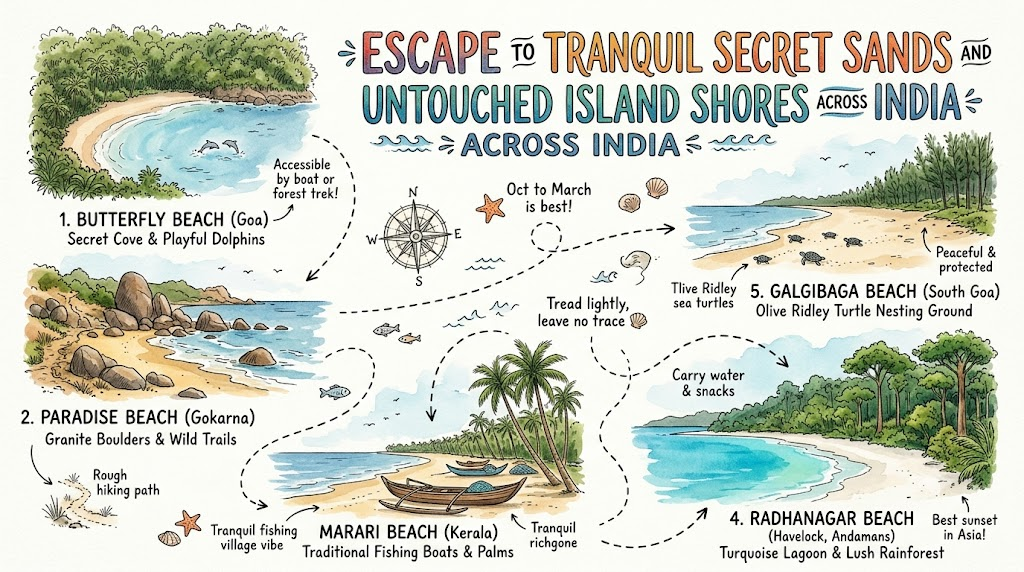
Introduction
Mainstream Indian coastal holidays often conjures up images of thumping bass lines, congested beach shacks, jet ski exhaust, and endless throngs of sightseers. Yet along the country’s sprawling 7,500-kilometer coastline lies an entirely different reality shaped by ancient maritime history, dense tropical forests, and sacred fishing traditions.
Stepping onto these secret shores reveals golden sands flanked by emerald cliffs and sleepy fishing villages that move to centuries-old tidal rhythms. Here, solitude is not an elusive luxury but an everyday state of being, inviting travelers into deep cultural roots and meditative coastal stillness.
Why India Coastal Sanctuary Circuit is a must-visit city
India’s peninsular perimeter has served as a crossroads of civilizations for millennia, welcoming Phoenician traders, spice merchants, and seafaring pilgrims along the Arabian Sea and the Bay of Bengal. This vast geographical diversity creates micro-climates ranging from dramatic laterite headlands in Karnataka to coral-fringed lagoons in the Andaman archipelago. Modern connectivity through scenic coastal highways, regional rail junctions, and expanded domestic air links now allows travelers to reach tranquil coastal towns without sacrificing safety or comfort.
The quiet coastal circuit connects five distinct geographic zones: the rugged Konkan Coast, the secluded backwater-fringed beaches of Kerala, the wild southern fringe of Goa, the isolated cliffs of coastal Karnataka, and the outer Bay of Bengal islands. Each stop offers distinct regional flavors, architectural touches, and village hospitality far removed from hyper-commercialized tourist hubs.
| Metric / Aspect | Circuit Snapshot |
|---|---|
| Total Coastal Span | Over 7,516 kilometers across nine littoral states and island territories |
| Primary Transit Gateways | Dabolim/MOPA (Goa), Mangaluru (IXE), Cochin (COK), Port Blair (IXZ) |
| Climate Profile | Tropical maritime; warm winters, lush monsoons, and balmy dry seasons |
| Peak Tranquility Window | October through March |
| Key Cultural Traditions | Malvani coastal folklore, Kathakali heritage, and sacred temple sea rituals |
| Accommodations Style | Eco-resorts, family-run homestays, fisherman cottages, and heritage bungalows |
Best Places or Experiences
Butterfly Beach, South Goa
Butterfly Beach is a secluded crescent amphitheater carved into dense semi-evergreen cliffs at the southern edge of Palolem. Enclosed by sheer rock faces, this untouched cove remains inaccessible to motorized road vehicles, preserving an idyllic marine sanctuary untouched by nightlife strips.
During low tide, the golden sands widen beneath forested slopes where myriad endemic butterfly species flutter around hilltop blossoms. Pods of Indo-Pacific humpback dolphins regularly breach right off the shoreline, offering one of the most serene wildlife encounters in Western India.
Butterfly Beach cove in South Goa.
- Location: Canacona Taluk, South Goa; approximately 68 kilometers south of Dabolim Airport.
- Why it is worth visiting: Pristine isolation, dense surrounding rainforest, and near-guaranteed shore-side dolphin spotting.
- Best things to do: Kayak from neighboring Palolem shores, hike through the Leopard Valley forest trail, and spot dolphins at dawn.
- Best time to visit: November to February; early morning between 6:30 AM and 9:00 AM for glass-flat waters.
- Ideal for whom: Couples, solitude seekers, landscape photographers, and ocean kayakers.
- Travel tip: There are no food stalls or shacks; carry your own hydration and pack out every trace of trash.
Paradise Beach, Gokarna
Paradise Beach, historically known as Full Moon Beach, sits tucked beyond the rugged granite ridges of Uttara Kannada. Flanked by untamed coastal jungle and smooth boulders, roughly 70 percent of this pocket haven consists of natural rock formations meeting white sand.
Because road access terminates miles away, reaching Paradise requires a scenic cliff trek from Half Moon Beach or an open-water boat ride. The beach retains a pure, bohemian simplicity where travelers disconnect entirely beneath coconut palms and lull to sleep by crashing breakers.
Rugged shoreline at Paradise Beach Gokarna.
- Location: Gokarna, Uttara Kannada District, Karnataka; approximately 145 kilometers south of Dabolim Airport.
- Why it is worth visiting: Absolute absence of commercial motors, rugged granite landscapes, and a genuine off-grid coastal atmosphere.
- Best things to do: Scramble along the famous Gokarna cliff trail, boulder along the weathered headlands, and swim in calm winter swells.
- Best time to visit: October to March; late afternoon for panoramic golden sunsets over the Arabian Sea.
- Ideal for whom: Backpackers, wilderness trekkers, wild campers, and solo travelers. HappyEasyGo
- Travel tip: High tides can submerge shoreline walking paths; check tidal charts before crossing over the rocky promontories.
Marari Beach, Kerala
Marari Beach takes its name from the quiet fishing hamlet of Mararikulam, nestled along Kerala’s tranquil Malabar coast. Unlike the cliffside tourist hubs further south, Marari is an expansive swath of pale gold sand lined with endless groves of whispering coconut palms.
Life here moves at a soothing, traditional pace. Traditional wooden vallams (fishing canoes) line the sands at sunrise as village fishermen bring home their daily ocean haul, leaving the remainder of the day utterly quiet.
Pristine sands and palms at Marari.
- Location: Alappuzha District, Kerala; roughly 74 kilometers south of Cochin International Airport.
- Why it is worth visiting: An uncommercialized coastal village lifestyle paired with world-class Ayurvedic wellness sanctuaries.
- Best things to do: Watch fishermen haul traditional shore seines at sunrise, indulge in restorative Abhyanga therapies, and cycle through coir-making villages.
- Best time to visit: December to March for lower humidity and clear offshore breezes.
- Ideal for whom: Wellness travelers, couples, families, and slow-travel advocates.
- Travel tip: Respect local village customs by avoiding provocative beachwear when walking past residential fishing clusters.
Radhanagar Beach, Havelock Island (Swaraj Dweep)
Consistently ranked among Asia’s most stunning shorelines, Radhanagar Beach (Beach No. 7) unfurls along the western edge of Swaraj Dweep in the Andaman Sea. Here, powdery white sand meets luminous turquoise water, framed by towering ancient rainforests filled with padauk and mahua trees.
Despite its global acclaim, the sheer scale of Radhanagar ensures that a short walk away from the main access point yields total, uninterrupted solitude. The slope of the seabed is exceptionally gentle, creating crystal-clear waters perfect for peaceful swimming.
Radhanagar Beach on Havelock Island.
- Location: Havelock Island (Swaraj Dweep), Andaman & Nicobar Islands; 70 kilometers by ferry from Port Blair.
- Why it is worth visiting: Pristine coral-island sand, bath-warm turquoise shallows, and an untouched primeval rainforest canopy.
- Best things to do: Wade in calm sea shallows, stroll toward Neil’s Cove lagoon, and watch blazing orange sunsets melt into the horizon.
- Best time to visit: November through April; early mornings (7:00 AM) feature mirror-like calm and virtually zero visitors.
- Ideal for whom: Nature lovers, honeymooners, swimmers, and eco-conscious travelers.
- Travel tip: Swimming beyond Neil’s Cove is strictly monitored; obey forest lifeguard markers regarding tidal rip currents.
Galgibaga Beach, South Goa
Galgibaga Beach rests along Goa’s southernmost frontier, where the Galgibag River flows into the Arabian Sea. Known locally as Turtle Beach, it serves as a legally protected nesting sanctuary for endangered Olive Ridley sea turtles.
Because conservation laws strictly prohibit permanent concrete shacks and amplified music, Galgibaga remains completely free of Goa’s tourist crowds. Pine trees rustle in sea breezes along miles of clean golden sand, offering uninterrupted serenity.
- Location: Canacona, South Goa; 86 kilometers south of Dabolim Airport.
- Why it is worth visiting: Strict ecological protections make this one of the cleanest, quietest coastlines in mainland India.
- Best things to do: Observe Olive Ridley conservation enclosures, explore the river estuary, and sample freshly harvested oysters at rustic local village shacks.
- Best time to visit: December to February for cool evenings and potential turtle-nesting activity.
- Ideal for whom: Conservationists, writers, quiet romantics, and birdwatchers.
- Travel tip: Bright artificial lights, night flashes, and driving on the sand are strictly penalized by the forest department.
Offbeat Exploration: Hidden Gems Tourists Miss
Ottinene Secret Cliff Beach, Byndoor
Perched on the northern fringes of Udupi district, Ottinene Beach offers a stunning vantage point where the Byndoor River cuts through red laterite cliffs before meeting the Arabian Sea. Visitors can wind down through thick, elevated coastal woods to find a wild, driftwood-strewn shore that rarely sees more than five people at any given hour.
The Better India
Kizhunna-Ezhara Twin Coves, Kannur
Tucked inside northern Kerala’s handloom belt, the connected bays of Kizhunna and Ezhara offer shallow lagoons protected by black metamorphic rocks. The waters remain glass-calm throughout the winter season, making them ideal for wild sea bathing, while nearby village shrines frequently stage nighttime Theyyam fire rituals.
Tarkarli Karli Estuary Spit, Maharashtra
While mainstream vacationers gather near central scuba staging points, the southern spit of Tarkarli narrows into a quiet finger of white sand between the turquoise Arabian Sea and the tranquil Karli River. This estuary ecosystem hosts migratory seagulls, mudskippers, and traditional Malvani wooden boats drying their hemp nets beneath palm groves.
Detailed Practical Guidance for Travelers
| Destination | Standard Entry Fee | General Timings | Best Local Food Options Nearby | Recommended Nearby Attractions |
|---|---|---|---|---|
| Butterfly Beach | Free (Boat transfer: ₹1,000–₹1,500 per boat) | Open daily (6:00 AM – 6:00 PM; strictly daylight access) | Coastal Goan Fish Thali at Palolem village lanes | Cabo de Rama Fort ruins, Cotigao Wildlife Sanctuary |
| Paradise Beach | Free (Boat transfer: ₹300–₹500 per person) | 24 Hours (Overnight wild camping restricted) | Fresh banana flower curry and South Indian meals at Kudle clifftops | Mahabaleshwar Temple, Om Beach rocky lookout |
| Marari Beach | Free access | Open 24 Hours (Best daylight: 5:30 AM – 7:00 PM) | Karimeen Pollichathu (pearl spot fish in banana leaf) at local toddy shops | Alleppey Backwater Canals, Arthunkal St. Andrew’s Basilica |
| Radhanagar Beach | Free access (Eco-pass may apply) | 6:00 AM – 5:30 PM (Ocean swimming prohibited after sunset) | Steamed coconut crab and Andaman-style fish curries at Swaraj Dweep bazaar | Elephant Beach reef, Kalapathar Beach coral shoreline |
| Galgibaga Beach | Free access | 6:00 AM – 7:00 PM (No night access during turtle nesting) | Freshly shucked baked oysters and fish recheado at Surya’s Shack | Talpona Beach Estuary, Sadashivgad Fort border |
Logistics & On-Ground Navigation
Local Transport Options
- Two-Wheeler Rentals: Renting gearless scooters (Honda Activa) or lightweight motorbikes (₹350 to ₹600 per day) is the most practical way to navigate narrow village lanes and coastal cliff tracks in Goa and Karnataka.
- Auto-Rickshaws & Tuk-Tuks: Ideal for short 3- to 10-kilometer hops between rail stations and coastal homestays; always agree on fixed fares beforehand or request the official meter rate in Kerala.
- Passenger Ferries & Speedboats: Essential for crossing backwaters, accessing roadless coves like Butterfly Beach, or hopping between Andaman islands.
- Chauffeured Outstation Cabs: The most reliable choice for multi-district coastal hops (e.g., Cochin to Marari or Dabolim to Canacona), generally priced between ₹14 and ₹18 per kilometer.
Budget Planning
- Backpacker & Solo Explorer: ₹1,200 – ₹2,200 per day. Covers rustic thatch-roof beach huts or hostel dorms (₹600–₹1,000), local seafood thalis and market meals (₹400–₹600), shared transport, and scooter rentals.
- Mid-Range & Comfort Seeker: ₹4,500 – ₹8,500 per day. Covers private air-conditioned heritage beach cottages or eco-resorts (₹3,000–₹6,000), sit-down coastal dining with fresh catches (₹1,200–₹1,800), and private chauffeured transfers.
Safety and Inclusivity Tips
- For Families: Beaches like Marari and Radhanagar offer shallow gradients with minimal rip currents, making them ideal for kids. Always monitor children near rocky headlands.
- For Couples & Solo Female Travelers: South Goa, Marari, and Havelock maintain safe, hospitable environments with low crime rates. Avoid unlit jungle paths after 8:00 PM and hire registered boatmen for secluded cove transfers.
- General Ocean Safety: The Arabian Sea features strong undertows, particularly near river estuaries and cliff edges. Avoid swimming during monsoon months (June through September) when heavy surfs make swimming hazardous.
Strategic Travel Planning Guardrails
Travel Planning Tips for Hidden Indian Beaches
- Book Coastal Trains Months in Advance: Secure tickets on the Konkan Railway early to experience scenic viaduct views across the Western Ghats.
- Carry Paper Cash: Remote coastal hamlets, local fishermen, and forest ferry operators frequently encounter dead cellular zones where digital payments fail.
- Pack Specialized Footwear: Sturdy, quick-drying hiking sandals with rubber grip are essential for traversing slick laterite rocks and thorny cliff trails.
- Respect Marine Conservation: Never touch turtle hatchlings, collect wild coral fragments, or step on shallow living reef flats.
- Carry Eco-Friendly Toiletries: Use biodegradable sunscreens and insect repellents to avoid washing damaging chemicals into sensitive tidal rock pools.
Common Mistakes to Avoid
- Assuming Goa Has Only Loud Beaches: Visiting North Goa’s commercial strips and assuming the whole coastline is noisy ignores South Goa’s quiet preserves.
- Underestimating Coastal Sun Exposure: Tropical coastal humidity masks solar intensity; skipping hydration and reef-safe sunscreen often leads to severe sun fatigue.
- Ignoring Tide Cycles When Trekking: Getting trapped on rocky sea ledges during sudden high tides is hazardous; always confirm tidal schedules with locals.
- Skipping Regional Thalis for Continental Food: Ordering frozen continental café dishes instead of freshly landed local seafood deprives you of authentic regional cuisine.
- Planning Tight Travel Connections: Ferry crossings and winding coastal routes take longer than GPS indicates; leave ample buffer time between hops.
Suggested Itinerary Blueprints
1-Day Quick Dash (The South Goa Seclusion Arc)
- Target: Time-pressed travelers seeking immediate coastal peace.
- Route: Charter a sunrise boat from Palolem straight to Butterfly Beach for dolphin watching. By 11:30 AM, head south to the shaded river mouth of Talpona, and finish your afternoon under the tranquil pine forests of Galgibaga Beach with freshly shucked oysters.
2-Day Deep-Dive (The Uttara Kannada Coastal Trail)
- Target: Active travelers, photographers, and coastal hikers.
- Day 1: Arrive in Gokarna; explore the historic stone sanctums of Mahabaleshwar Temple, followed by a mid-day trek from Kudle to Half Moon Beach. Camp or lodge near Om Beach to watch the sunset. HappyEasyGo
- Day 2: Take an early morning boat ride or cliff scramble to spend the day resting at roadless Paradise Beach. In the late afternoon, drive south toward Byndoor to catch sunset from the cliffs of Ottinene.
Complete Weekend Travel Plan (The Central Kerala Serenity Loop)
- Target: Couples and wellness enthusiasts wanting pure rejuvenation.
- Friday: Land at Cochin International Airport; take a private transfer down through scenic coastal roads to Marari Beach. Check into an eco-homestay and enjoy sunset tea along the sand.
- Saturday: Rise at 6:00 AM to watch the Mararikulam fishermen pull their giant shore nets. Dedicate the afternoon to an Ayurvedic herbal massage, followed by a backwater canoe drift through the quiet waterways of Kattoor.
- Sunday: Enjoy an early morning cycle tour through coastal coir villages, savor a traditional lunch served on banana leaves, and return relaxed to Cochin for your evening flight.
Common Tourist Mistakes to Avoid
- Geographic Blunders: Trying to explore North Goa’s nightlife and South Goa’s quiet nature sanctuaries in the same afternoon involves over three hours of stressful transit across busy national highways.
- Commercial Traps: Spending vacation hours at crowded coastal flea markets full of mass-produced souvenirs rather than supporting coastal village weavers, potters, and coir cooperatives.
- Neglecting Modern/Alternative Zones: Skipping the thoughtfully designed, solar-powered farmstays and sustainable artisan bakeries situated slightly inland from the shoreline.
- Transport Overpayment: Accepting the first quoted price from airport taxi touts without checking pre-paid counters or official state-run cab apps like GoaMiles.
- Luxury Dining Bias: Sticking only to high-end resort buffets and missing out on family-run coastal eateries that serve fresh daily catch simmered in rich coconut curries.
Frequently Asked Questions
1. Which hidden beach in India is best for dolphin watching?
Butterfly Beach in South Goa is widely considered the finest natural sanctuary for dolphin spotting. The protected cove features calm mornings where pods of Indo-Pacific humpback dolphins forage close to the cliffs. Taking a dawn kayak or hired boat out from Palolem offers quiet, unobtrusive viewing opportunities without noisy tour boat engines.
2. Are quiet hidden beaches in India safe for solo female travelers?
Yes, destinations such as South Goa, Marari in Kerala, and Swaraj Dweep in the Andamans are exceptionally safe and welcoming for solo female travelers. Local communities are protective of their peaceful environment. For peace of mind, arrange authorized transfers, avoid poorly lit trails late at night, and stay at certified homestays.
3. Do I need special permits to visit the hidden beaches in Andaman?
Indian nationals do not require an Inland Travel Permit to visit popular islands like Havelock or Neil Island. Foreign nationals receive a complimentary entry stamp upon arrival at Port Blair airport. However, restricted tribal zones and reserved forest headlands remain off-limits to all visitors, and protected conservation rules are strictly enforced.
4. What is the most scenic way to travel between quiet coastal spots?
The Konkan Railway provides one of the most scenic coastal train journeys in Asia, spanning hundreds of bridges, tunnels, and river inlets across Maharashtra, Goa, and Karnataka. Alternatively, renting a scooter lets you explore hidden backroads and village lanes at your own pace.
5. Can you swim safely at all secluded Indian beaches?
Swimming safety varies considerably by shoreline and season. While Radhanagar and Marari offer gentle gradients and calm waters in winter, beaches like Paradise feature rocky headlands and stronger currents. Always ask local fishermen about rip currents before wading out, and avoid swimming during monsoon swells.
6. What should I pack for trekking to cliffside hidden beaches?
Pack sturdy amphibious trail sandals, reef-safe sunscreen, a reusable water bottle, an LED headlamp for dusk walks, and a compact dry bag. Because secluded coves rarely have commercial beach shacks, bring along your own fresh fruit, electrolyte packets, and a light trash bag to carry out waste.
7. How do I reach Paradise Beach in Gokarna without a long trek?
If the rugged cliff trek from Half Moon Beach feels too demanding, hire an authorized fiberglass motorboat directly from Om Beach or Kudle Beach. Local boatmen operate weather-permitting shuttles that drop passengers right onto the sands of Paradise Beach in roughly fifteen minutes.
8. Are digital payments widely accepted around offbeat Indian beach villages?
While UPI mobile payments are standard across roadside tea stalls in mainland India, coastal dead zones frequently disrupt mobile data. Remote locations, island ferries, and fishermen-run boats operate almost exclusively on cash. Always carry enough paper currency for transport, snacks, and entry fees.
9. When is the best time of year to see Olive Ridley turtles?
Olive Ridley sea turtles typically nest on protected beaches like Galgibaga in South Goa and along the Odisha coastline between December and March. Hatching usually occurs roughly 50 days later. Conservation hatcheries are strictly monitored by state forestry personnel to prevent tourist disturbance.
10. What local dishes should I try along the Konkan and Malabar coasts?
Don’t miss a traditional Malvani Surmai Thali with Kokum Kadi, authentic Goan fish curry infused with triphala, and Kerala’s Karimeen Pollichathu steamed inside a banana leaf. Pair these dishes with fresh appams, unpolished red rice, and local coconut-toddy-fermented breads.
11. Is camping permitted on secluded Indian beaches?
Unregulated wild camping on beaches is largely restricted across India to prevent littering and protect sensitive marine wildlife like nesting turtles. Travelers who wish to camp under the stars should book permitted eco-campsites, glamping retreats, or homestays with designated beach-facing gardens.
12. Which secluded beach destination offers the best Ayurvedic wellness treatments?
Marari Beach in Kerala is the premier coastal hub for authentic Ayurvedic treatments. Backed by certified vaidyas (traditional doctors) and rich herbal heritage, local wellness retreats offer personalized detox therapies, herbal oil massages, and beachfront yoga sessions accompanied by fresh farm-to-table cuisine.
Conclusion
Leaving crowded tourist hubs behind to explore India’s hidden coastal edges offers far more than a simple vacation. Sitting quietly on a secret shore as dusk settles over the water, you feel a deep connection to the ancient rhythm of the tides and the coastal communities that have thrived alongside them for centuries. In an increasingly noisy world, these quiet coastlines provide rare, revitalizing sanctuaries where travelers can pause, breathe deeply, and rediscover the true soul of mindful exploration.
