MOTOSHARE 🚗🏍️
Rent Bikes & Cars Directly from Owners
Motoshare connects vehicle owners with people who need bikes and cars on rent. Owners earn from idle vehicles, and renters get flexible ride options.
Visit Motoshare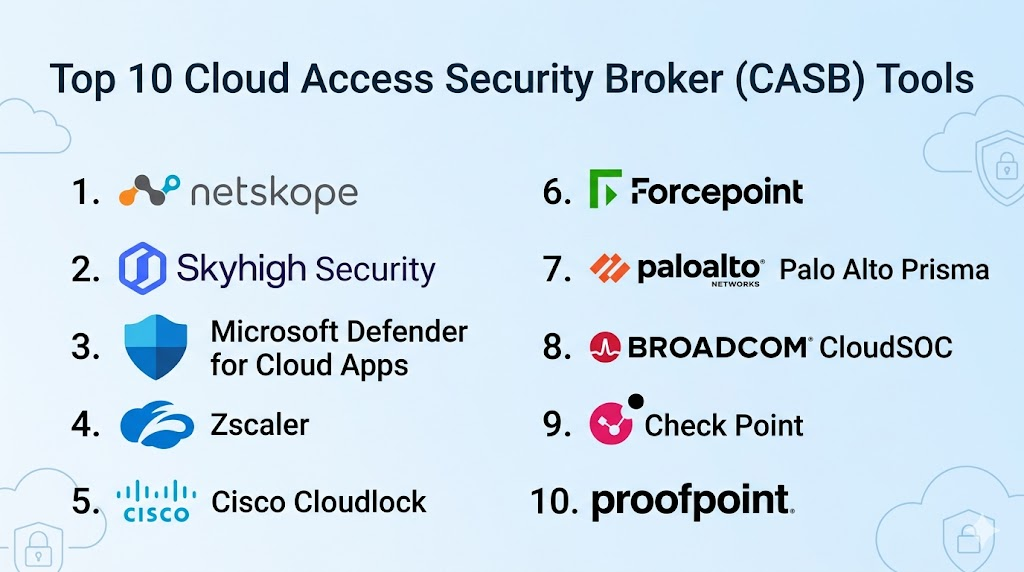
Introduction
A Cloud Access Security Broker (CASB) is a specialized security policy enforcement point placed between cloud service consumers and cloud service providers. It acts as a gatekeeper, allowing organizations to extend their security reach beyond their own local infrastructure into the cloud. As businesses transition from on-premises servers to Software-as-a-Service (SaaS), Platform-as-a-Service (PaaS), and Infrastructure-as-a-Service (IaaS), CASB solutions ensure that enterprise security policies are applied consistently, regardless of where the data lives or which device is accessing it.
In a modern corporate environment, the traditional network perimeter has effectively vanished. Employees access sensitive data from home networks, coffee shops, and mobile devices, often using applications that IT departments have not officially sanctioned—a phenomenon known as “Shadow IT.” CASB platforms solve this by providing four primary pillars of security: visibility into all cloud usage, compliance with global data regulations, data security through encryption and loss prevention, and threat protection against malware or compromised accounts.
Real-world use cases:
- Shadow IT Discovery: Identifying and blocking unauthorized cloud applications used by employees.
- Data Loss Prevention (DLP): Preventing the upload of sensitive files (like credit card numbers or source code) to public cloud storage.
- Access Control: Restricting access to corporate cloud accounts based on the user’s location or device health.
- Threat Detection: Identifying anomalous behavior, such as a user downloading an unusually high volume of data in a short period.
- Compliance Auditing: Automatically generating reports to prove that data handled in the cloud meets regulatory standards.
Evaluation criteria for buyers:
- Deployment Modes: Support for API-based scanning, forward proxy, and reverse proxy.
- DLP Sophistication: The depth of content inspection and the ability to recognize sensitive data types.
- App Coverage: The total number of cloud applications the broker can identify and control.
- Integration with SASE: How well the tool fits into a broader Secure Access Service Edge architecture.
- User Experience: Whether the security inspection introduces noticeable latency for the end-user.
- Threat Intelligence: The quality and frequency of updates regarding new cloud-based malware and phishing threats.
- Granular Controls: The ability to set specific policies (e.g., “Allow viewing but block downloading”).
- Identity Integration: Compatibility with existing Single Sign-On (SSO) and Identity Providers.
- Reporting and Analytics: The clarity and actionability of the administrative dashboard.
- Administrative Ease: How much manual tuning is required to keep the system running effectively.
Mandatory paragraph
- Best for: Large enterprises with highly distributed workforces, regulated industries (finance, healthcare), and organizations heavily reliant on multi-cloud environments.
- Not ideal for: Small businesses with no sensitive data and very limited cloud footprints, or organizations that strictly use only one managed cloud application with built-in security.
Key Trends in Cloud Access Security Broker Software
- Consolidation into SASE: The standalone CASB market is rapidly merging with Secure Web Gateways (SWG) and Zero Trust Network Access (ZTNA) into unified SASE platforms.
- API-First Security: There is a significant shift toward API-based CASB deployments, which offer better visibility into data-at-rest without the performance hits of traditional proxies.
- AI-Driven Anomaly Detection: Machine learning is now being used to identify “impossible travel” scenarios and account takeovers by analyzing subtle user behavioral patterns.
- DLP Convergence: Data Loss Prevention is becoming a unified service that works identically across email, cloud apps, and local endpoints.
- Agentless Real-time Control: New browser-based technologies are allowing for real-time security controls without requiring the installation of bulky agents on employee devices.
- Multi-Cloud Governance: Security brokers are expanding their reach into IaaS platforms like AWS and Azure to manage misconfigurations and identity permissions.
- Enhanced Encryption: Support for “Bring Your Own Key” (BYOK) models allows enterprises to retain full control over their data encryption even when stored in third-party clouds.
- Focus on Collaboration Security: Specific features are being developed to monitor and secure chat-based platforms where data is shared in informal, fast-moving threads.
How We Selected These Tools (Methodology)
To select the top 10 CASB platforms, we applied a weighted evaluation logic designed to find the most resilient and future-proof solutions. The selection was based on the following:
- Market Adoption: We prioritized platforms used by global organizations that require high-scale security.
- Feature Completeness: The tools must cover all four CASB pillars: visibility, compliance, data security, and threat protection.
- Performance Signals: We looked for solutions that provide real-time protection with minimal impact on application speed.
- Security Posture: Evaluation of the vendor’s own internal security standards and update frequency.
- Interoperability: How well the tools connect with existing identity, endpoint, and network security stacks.
- Customer Feedback: Analyzing real-world reliability and the quality of customer support.
Top 10 Cloud Access Security Broker Tools
#1 — Netskope Security Cloud
Short description: A high-performance CASB that is part of a broader SASE platform, known for its deep visibility into web and cloud traffic.
Key Features
- Netskope Private Cloud: A global network infrastructure that ensures security processing happens as close to the user as possible.
- Advanced DLP: Uses machine learning and exact data matching to find sensitive information across thousands of cloud apps.
- Cloud Confidence Index (CCI): A database of thousands of cloud apps rated on their security posture to help IT teams make better blocking decisions.
- API and Proxy Support: Offers a “One-Cloud” architecture that supports all deployment modes simultaneously.
- Zero Trust Integration: Naturally extends security to private applications without the need for a traditional VPN.
- Threat Protection: Real-time scanning for cloud-borne malware and sophisticated phishing attempts.
Pros
- Exceptional granularity in policy creation (e.g., block specific “Share” actions in a specific app).
- High-speed performance with very low latency.
Cons
- The management console can be overwhelming for beginners due to the depth of options.
- Initial setup and policy tuning require a significant time investment.
Platforms / Deployment
- Web / Windows / macOS / Linux / iOS / Android
- Cloud / Hybrid
Security & Compliance
- SSO/SAML, MFA, RBAC, Encryption at rest.
- SOC 2, ISO 27001, HIPAA, GDPR.
Integrations & Ecosystem
Netskope integrates with a wide variety of endpoint and identity providers to form a cohesive security fabric.
- Okta / Microsoft Entra ID
- CrowdStrike / SentinelOne
- ServiceNow
- Splunk
Support & Community
Offers 24/7 technical support with professional services for large-scale deployments. Strong community forums and technical documentation.
#2 — Skyhigh Security (formerly McAfee)
Short description: A pioneer in the CASB space that offers comprehensive protection for data-at-rest and data-in-motion across all cloud environments.
Key Features
- Unified DLP Engine: Allows policies created for the cloud to be applied to the web and email as well.
- Shadow IT Discovery: Provides a comprehensive view of all unsanctioned cloud usage with risk-based scoring.
- Cloud Registry: One of the world’s largest databases of cloud service provider security audits.
- Autonomous Threat Protection: Uses AI to identify and remediate compromised cloud accounts automatically.
- Encryption Support: Advanced field-level encryption and tokenization for sensitive data before it leaves the network.
- IaaS Configuration: Extends CASB features to monitor security settings in AWS, Azure, and GCP.
Pros
- Very strong data-centric approach with a long history of DLP excellence.
- Unified dashboard for web, cloud, and private application security.
Cons
- Recent branding shifts and acquisitions have led to some confusion in the product roadmap.
- Some legacy components can feel less modern than cloud-native competitors.
Platforms / Deployment
- Web / Windows / macOS / Linux / iOS / Android
- Cloud / Hybrid
Security & Compliance
- MFA, SSO, RBAC.
- SOC 2, HIPAA, FedRAMP.
Integrations & Ecosystem
Part of a broad security ecosystem with deep roots in enterprise environments.
- Microsoft ecosystem
- Trellix (formerly McAfee Enterprise)
- Standard SIEM providers
- Leading IDPs
Support & Community
Global support infrastructure with dedicated account managers for large enterprise clients.
#3 — Microsoft Defender for Cloud Apps
Short description: A native CASB solution that offers seamless integration with the Microsoft 365 environment, providing deep visibility into Microsoft and third-party apps.
Key Features
- Conditional Access App Control: Real-time monitoring and control of user sessions based on Microsoft Entra ID policies.
- Native M365 Integration: Provides the best-in-class security for Teams, SharePoint, and Outlook.
- Automatic Threat Detection: Identifies anomalous activities like mass downloads or ransomware activity.
- Shadow IT Discovery: Uses logs from Microsoft Defender for Endpoint to find unsanctioned apps without a network proxy.
- Data Governance: Automatically labels and protects sensitive files based on sensitivity labels.
- API Connectors: Extensive list of ready-to-use connectors for major SaaS apps like Salesforce and Dropbox.
Pros
- Incredible value and ease of deployment for organizations already using Microsoft 365 E5.
- Seamless synergy between identity, endpoint, and cloud security.
Cons
- Capabilities can be limited when managing non-Microsoft or niche third-party applications.
- Strictly tied to the Microsoft ecosystem; less ideal for organizations avoiding Microsoft.
Platforms / Deployment
- Web / Windows / macOS / iOS / Android
- Cloud
Security & Compliance
- MFA, SSO, RBAC, Conditional Access.
- SOC 2, ISO 27001, HIPAA, FedRAMP High.
Integrations & Ecosystem
Designed to be the center of the Microsoft security universe while supporting standard connectors.
- Microsoft Entra ID (Identity)
- Microsoft Defender for Endpoint
- Microsoft Purview (Data Protection)
- Sentinel
Support & Community
Supported by Microsoft’s global enterprise support network and a massive worldwide community of administrators.
#4 — Zscaler Cloud CASB
Short description: A major component of the Zscaler Zero Trust Exchange, focusing on securing data in transit to sanctioned and unsanctioned apps.
Key Features
- Direct-to-Cloud Architecture: Eliminates the need for backhauling traffic, improving user experience.
- Multi-Mode CASB: Supports both out-of-band API and inline proxy-based security.
- Advanced Malware Protection: Scans all files uploaded to or downloaded from the cloud in real-time.
- DLP as a Service: Provides exact data match and fingerprinting across all web and cloud traffic.
- SaaS Security Posture Management (SSPM): Monitors the settings of SaaS apps to ensure they aren’t left wide open.
- User Risk Scoring: Adjusts access levels dynamically based on the risk level of the user account.
Pros
- High-speed global network ensures almost zero performance degradation.
- Simplified management through a single unified SASE console.
Cons
- Pricing is generally high and follows an enterprise-only model.
- API-based scanning for data-at-rest can be slower than proxy-based enforcement.
Platforms / Deployment
- Web / Windows / macOS / Linux / iOS / Android
- Cloud
Security & Compliance
- MFA, SSO, RBAC, SSL Inspection.
- SOC 2, FedRAMP, HIPAA, ISO 27001.
Integrations & Ecosystem
Integrates with the Zscaler Zero Trust platform and major cloud providers.
- AWS / Azure / GCP
- Okta / Microsoft Entra ID
- CrowdStrike
- Splunk
Support & Community
Comprehensive 24/7 support with an active user community and extensive training through Zscaler Academy.
#5 — Cisco Cloudlock
Short description: An API-first CASB that focuses on securing users, data, and applications without the need for network proxies or agents.
Key Features
- API-Native Security: Fast and non-intrusive deployment that doesn’t affect network performance.
- App Firewall: Discovers and controls third-party apps that have been connected to corporate cloud environments.
- Data Loss Prevention: Sophisticated scanning for sensitive data within cloud-based storage and collaboration tools.
- User Behavior Analytics: Detects anomalous activities that may indicate a compromised account.
- Cross-Platform Visibility: Provides a single pane of glass for Google Workspace, M365, Salesforce, and Slack.
- Community-Driven Intelligence: Uses data from millions of users to identify emerging cloud threats.
Pros
- Extremely lightweight and easy to deploy compared to proxy-based solutions.
- Excellent visibility into the “app-to-app” connections that occur in modern SaaS.
Cons
- Lacks the real-time blocking capabilities of a forward proxy for unmanaged applications.
- The interface is functional but can feel dated compared to newer SASE platforms.
Platforms / Deployment
- Web
- Cloud
Security & Compliance
- MFA, SSO, RBAC.
- SOC 2, ISO 27001, HIPAA.
Integrations & Ecosystem
Integrates deeply with the Cisco security portfolio and major SaaS vendors.
- Cisco Duo (Identity)
- Cisco Umbrella (SWG)
- Google Workspace / M365
- Salesforce / Box
Support & Community
Backed by Cisco’s extensive support infrastructure and global technical assistance centers.
#6 — Forcepoint (formerly Bitglass)
Short description: A feature-rich CASB known for its “SmartEdge” technology that provides real-time security on the device itself.
Key Features
- SmartEdge CASB: Executes proxy-based security on the local endpoint, reducing the need for heavy cloud backhauling.
- Agentless Proxy: Provides real-time protection for unmanaged (BYOD) devices without requiring an app installation.
- Data Masking: Dynamically masks sensitive data within cloud applications based on the user’s risk level.
- Field-Level Encryption: Encrypts specific data fields within a SaaS application before they reach the provider.
- Device Profiling: Checks the security posture of a device before allowing access to sensitive cloud data.
- Shadow IT Visibility: Comprehensive discovery and risk assessment for all unsanctioned cloud apps.
Pros
- Superior performance for BYOD scenarios where you cannot install software on the user’s phone or laptop.
- Strong focus on data privacy through advanced masking and encryption.
Cons
- The management interface can be complex to navigate for new administrators.
- Integration with legacy non-cloud security tools is less seamless than with Cisco or Broadcom.
Platforms / Deployment
- Web / Windows / macOS / iOS / Android
- Cloud / Hybrid
Security & Compliance
- MFA, SSO, RBAC, Device Attestation.
- SOC 2, ISO 27001, HIPAA.
Integrations & Ecosystem
Works well with various IDPs and endpoint security tools through standard protocols.
- Okta / Microsoft Entra ID
- ServiceNow
- Major SIEM platforms
- Endpoint security vendors
Support & Community
Provides professional support and training through Forcepoint University and an global technical support team.
#7 — Palo Alto Networks Prisma SaaS
Short description: A high-end CASB integrated into the Prisma SASE environment, designed to provide consistent security for SaaS apps and public clouds.
Key Features
- Native SASE Integration: Works alongside Prisma Access and Prisma SD-WAN for a unified security fabric.
- API-Based Visibility: Scans all content in sanctioned SaaS apps to find malware and sensitive data.
- Advanced Threat Prevention: Uses Palo Alto’s WildFire service to identify zero-day threats in the cloud.
- Misconfiguration Detection: Checks the settings of SaaS and IaaS environments for security holes.
- Enterprise DLP: Provides a single set of DLP policies that work across the cloud, network, and branch offices.
- Shadow IT Monitoring: Automated discovery of unmanaged cloud applications through firewall and endpoint logs.
Pros
- Industry-leading threat prevention capabilities powered by global intelligence.
- Perfect for organizations that already use Palo Alto firewalls or Prisma SASE.
Cons
- One of the more expensive options on the market.
- The complexity of the Palo Alto ecosystem can require a high level of expertise to manage.
Platforms / Deployment
- Web / Windows / macOS / Linux / iOS / Android
- Cloud / Hybrid
Security & Compliance
- MFA, SSO, RBAC, WildFire threat analysis.
- SOC 2, ISO 27001, FedRAMP, HIPAA.
Integrations & Ecosystem
Integrates across the Palo Alto Networks ecosystem and major cloud providers.
- Prisma Access
- Cortex XDR
- AWS / Azure / GCP
- Leading IDPs
Support & Community
Offers high-level enterprise support and an extensive community known as the “LIVEcommunity.”
#8 — Broadcom (Symantec CloudSOC)
Short description: An enterprise-grade CASB with deep threat intelligence and a strong focus on content analysis and data loss prevention.
Key Features
- Content IQ: A highly sophisticated engine for classifying and protecting sensitive data in the cloud.
- Global Intelligence Network: Leverages data from one of the world’s largest civilian threat collections.
- Gateway and API Modes: Flexible deployment options to secure both data-at-rest and data-in-motion.
- Shadow IT Analysis: Comprehensive scoring of thousands of apps based on security and business risks.
- Integration with Symantec DLP: Allows existing on-prem DLP policies to be extended to the cloud seamlessly.
- User Behavior Analytics: Identifies high-risk users and compromised accounts through behavioral baseline modeling.
Pros
- Deeply mature DLP technology that is trusted by the world’s largest banks and government agencies.
- Broad visibility into a massive catalog of cloud applications.
Cons
- Support and product innovation have been criticized by some users following the Broadcom acquisition.
- The management consoles can feel fragmented across different Symantec products.
Platforms / Deployment
- Web / Windows / macOS / Linux / iOS / Android
- Cloud / Hybrid
Security & Compliance
- MFA, SSO, RBAC, Data Tokenization.
- SOC 2, ISO 27001, HIPAA, FedRAMP.
Integrations & Ecosystem
Designed to be the centerpiece of the Symantec security suite.
- Symantec Endpoint Protection
- Symantec Data Loss Prevention
- Major IDP vendors
- Standard SIEMs
Support & Community
Standard enterprise support through Broadcom’s portal, with dedicated support tiers for large customers.
#9 — Check Point CloudGuard
Short description: A CASB focused on “prevention-first” security, protecting SaaS applications from malware, phishing, and account takeover.
Key Features
- Advanced Malware Protection: Uses sandboxing and threat extraction to stop files before they reach the cloud.
- ID-Guard: Specialized technology for preventing account takeovers and credential theft.
- Zero-Day Phishing Protection: Scans and blocks malicious links within SaaS email and collaboration tools.
- DLP and Compliance: Automated tools to ensure that cloud data remains compliant with local regulations.
- Configuration Monitoring: Finds and fixes security gaps in SaaS application settings.
- Consolidated Management: Part of the Infinity architecture, offering a single view for cloud and network security.
Pros
- Very strong focus on active threat prevention rather than just detection.
- Easy to manage for teams already familiar with the Check Point security suite.
Cons
- Cloud visibility and Shadow IT discovery are not as deep as those of Netskope or Zscaler.
- Integration with non-Check Point network security tools can be challenging.
Platforms / Deployment
- Web / Windows / macOS / iOS / Android
- Cloud
Security & Compliance
- MFA, SSO, RBAC, Threat Emulation.
- SOC 2, ISO 27001, HIPAA.
Integrations & Ecosystem
Integrates with Check Point’s Infinity architecture and major SaaS providers.
- M365 / Google Workspace
- Salesforce / Slack
- Cortex
- Azure / AWS
Support & Community
Provided by Check Point’s global technical support team and an active user forum.
#10 — Proofpoint Cloud App Security Broker
Short description: A “people-centric” CASB that focuses on protecting very attacked persons (VAPs) and securing the data they handle in the cloud.
Key Features
- People-Centric Risk: Correlates CASB data with email threat data to identify the most targeted individuals in an organization.
- Shadow IT Discovery: Visibility into unsanctioned cloud apps with automated risk assessments.
- DLP and Encryption: Protects sensitive data across sanctioned apps and web traffic.
- Compromised Account Detection: Identifies suspicious logins and anomalous activities in real-time.
- Native Integration with Proofpoint Email: Unified security for the two biggest threat vectors: email and cloud.
- Adaptive Access Controls: Changes user permissions based on their current threat level and device risk.
Pros
- Unique approach that focuses on the human element of security.
- Incredible synergy for organizations that already use Proofpoint for email security.
Cons
- Not as strong in IaaS security compared to Palo Alto or Zscaler.
- Lacks some of the network-level features found in full SASE platforms.
Platforms / Deployment
- Web / Windows / macOS / iOS / Android
- Cloud
Security & Compliance
- MFA, SSO, RBAC, Information Protection.
- SOC 2, ISO 27001, HIPAA.
Integrations & Ecosystem
Highly focused on the Proofpoint and Microsoft ecosystems.
- Proofpoint Email Security
- Microsoft 365
- Okta / Entra ID
- SIEM integrations
Support & Community
Standard enterprise support and training through the Proofpoint customer success program.
Comparison Table (Top 10)
| Tool Name | Best For | Platform(s) Supported | Deployment | Standout Feature | Public Rating |
| #1 — Netskope | High-Performance SASE | Web, Win, Mac, iOS, Android | Cloud/Hybrid | Cloud Confidence Index | 4.8/5 |
| #2 — Skyhigh | Data-Centric DLP | Web, Win, Mac, iOS, Android | Cloud/Hybrid | Field-Level Encryption | 4.6/5 |
| #3 — Microsoft Defender | Microsoft Ecosystem | Web, Win, Mac, iOS, Android | Cloud | Native M365 Integration | 4.7/5 |
| #4 — Zscaler | Global Zero Trust | Web, Win, Mac, iOS, Android | Cloud | Direct-to-Cloud Architecture | 4.7/5 |
| #5 — Cisco Cloudlock | API-First Deployment | Web | Cloud | Lightweight API Scanners | 4.4/5 |
| #6 — Forcepoint | BYOD & Unmanaged Devices | Web, Win, Mac, iOS, Android | Cloud/Hybrid | SmartEdge Device Proxy | 4.5/5 |
| #7 — Palo Alto Prisma | Enterprise Threat Prev | Web, Win, Mac, iOS, Android | Cloud/Hybrid | WildFire Malware Analysis | 4.7/5 |
| #8 — Broadcom CloudSOC | Legacy DLP Integration | Web, Win, Mac, iOS, Android | Cloud/Hybrid | Content IQ Engine | 4.3/5 |
| #9 — Check Point | Prevention-First Security | Web, Win, Mac, iOS, Android | Cloud | Zero-Day Phishing Blocking | 4.4/5 |
| #10 — Proofpoint | People-Centric Security | Web, Win, Mac, iOS, Android | Cloud | VAP (Attacked Person) Risk | 4.5/5 |
Evaluation & Scoring of Cloud Access Security Broker Tools
This scoring model assesses how each tool performs across the critical business and security dimensions required for modern cloud governance.
| Tool Name | Core (25%) | Ease (15%) | Integrations (15%) | Security (10%) | Performance (10%) | Support (10%) | Value (15%) | Weighted Total |
| #1 — Netskope | 10 | 6 | 9 | 9 | 10 | 9 | 8 | 8.85 |
| #2 — Skyhigh | 9 | 7 | 8 | 10 | 8 | 8 | 8 | 8.30 |
| #3 — Microsoft Defender | 8 | 10 | 10 | 9 | 9 | 9 | 10 | 9.15 |
| #4 — Zscaler | 9 | 8 | 9 | 9 | 10 | 9 | 8 | 8.85 |
| #5 — Cisco Cloudlock | 7 | 9 | 8 | 8 | 10 | 8 | 8 | 8.15 |
| #6 — Forcepoint | 8 | 7 | 8 | 9 | 9 | 8 | 8 | 8.00 |
| #7 — Palo Alto Prisma | 10 | 5 | 9 | 10 | 8 | 9 | 7 | 8.40 |
| #8 — Broadcom CloudSOC | 9 | 6 | 8 | 9 | 8 | 7 | 7 | 7.75 |
| #9 — Check Point | 8 | 8 | 8 | 10 | 8 | 8 | 8 | 8.20 |
| #10 — Proofpoint | 8 | 8 | 9 | 9 | 8 | 9 | 8 | 8.35 |
How to Interpret the Scores:
- Core (25%): The primary CASB capabilities (Shadow IT discovery, DLP, Threat Protection).
- Ease (15%): How quickly an organization can deploy and manage the system.
- Integrations (15%): The ability to connect with third-party security stacks.
- Weighted Total: A final score from 0-10 that balances these factors. Note that a high score in “Ease” (like Microsoft) may outweigh a technical depth score for many organizations.
Which Cloud Access Security Broker Tool Is Right for You?
Solo / Freelancer
For an individual or a very small team, Cisco Cloudlock or Microsoft Defender for Cloud Apps (if already using M365) are the most appropriate. They require very little network configuration and offer immediate visibility into the most common SaaS platforms.
SMB
Small and mid-sized businesses should prioritize Microsoft Defender for Cloud Apps due to its low cost of entry and native integration. If not on the Microsoft stack, Proofpoint offers an excellent people-centric approach that protects users where they are most vulnerable.
Mid-Market
For growing organizations that need high-end DLP but don’t have a massive security operations team, Netskope or Forcepoint provide the best balance of technical power and automated enforcement.
Enterprise
Large-scale global enterprises should evaluate Netskope, Zscaler, or Palo Alto Networks. These tools are built to handle massive volumes of traffic and provide the complex regulatory compliance features required in global financial and healthcare sectors.
Budget vs Premium
- Budget: Microsoft Defender for Cloud Apps (bundled with E5), Cisco Cloudlock.
- Premium: Netskope, Zscaler, Palo Alto Networks Prisma SaaS.
Feature Depth vs Ease of Use
- Deep Feature Depth: Netskope, Skyhigh Security, Broadcom CloudSOC.
- High Ease of Use: Microsoft Defender, Cisco Cloudlock.
Integrations & Scalability
- Best Integrations: Microsoft Defender, Netskope.
- Best Scalability: Zscaler, Netskope, Palo Alto Networks.
Security & Compliance Needs
Organizations with extreme regulatory needs should look toward Skyhigh Security or Broadcom, as their DLP engines and encryption features are highly mature and audited for the most stringent standards.
Frequently Asked Questions (FAQs)
- What is the difference between a CASB and a Firewall?
A traditional firewall secures the network perimeter, while a CASB specifically secures the interactions between users and cloud-based applications, regardless of the user’s location.
- Does a CASB slow down my internet speed?
API-based CASBs have no impact on speed. Proxy-based CASBs can introduce a small amount of latency, but modern global providers like Netskope and Zscaler minimize this to imperceptible levels.
- Is it possible to secure personal devices (BYOD) with a CASB?
Yes, many CASBs offer “reverse proxy” or “agentless” modes that can secure sessions on personal phones or laptops without requiring any software installation.
- Can a CASB block a user from sharing a file in Slack or Teams?
Yes, CASBs with real-time controls can inspect chat messages and file uploads, blocking them instantly if they contain sensitive data like social security numbers.
- How does a CASB discover “Shadow IT”?
It analyzes network logs from firewalls, proxies, or endpoint agents to identify traffic heading to thousands of known cloud service providers that are not officially managed by the company.
- What is the “Four Pillars” of CASB?
The four pillars are Visibility (who is using what), Compliance (data regulation), Data Security (encryption/DLP), and Threat Protection (malware/compromised accounts).
- Does a CASB replace an Identity Provider (IDP) like Okta?
No, it works with the IDP. The IDP handles the initial login, while the CASB monitors the user’s activity and handles data security after they have logged into the cloud app.
- Can a CASB protect data that is already stored in the cloud (data-at-rest)?
Yes, using API connectors, a CASB can scan all existing files in a cloud drive to find and secure sensitive data that was uploaded before the CASB was installed.
- Is a CASB a part of SASE?
Yes, Secure Access Service Edge (SASE) is a broader architecture that includes CASB, Secure Web Gateways, ZTNA, and SD-WAN in a single cloud-delivered service.
- Is it difficult to set up a CASB?
API-based deployments can be set up in minutes, while full proxy-based deployments for thousands of users can take weeks to tune and configure properly.
Conclusion
Cloud Access Security Brokers have become the essential connective tissue for modern enterprise security. As organizations continue to decentralize and move their critical data to third-party clouds, the ability to maintain visibility and control is paramount. Whether you choose the massive scale of Netskope, the native convenience of Microsoft, or the technical depth of Palo Alto Networks, a CASB provides the peace of mind that your data remains secure, compliant, and visible.
The “best” solution is always the one that aligns with your existing technology stack and the specific risks your organization faces. We recommend starting with a Shadow IT discovery phase to understand your current cloud footprint before committing to a long-term CASB partner.

Nicely explained and well structured.
One of the key operational points with CASB adoption is policy drift over time. As SaaS usage, user roles, and data-sharing patterns change, CASB rules need regular review or they can create false positives, user friction, and blind spots. Treating CASB policies like living security controls, not one-time configurations, makes a big difference in production.