MOTOSHARE 🚗🏍️
Rent Bikes & Cars Directly from Owners
Motoshare connects vehicle owners with people who need bikes and cars on rent. Owners earn from idle vehicles, and renters get flexible ride options.
Visit Motoshare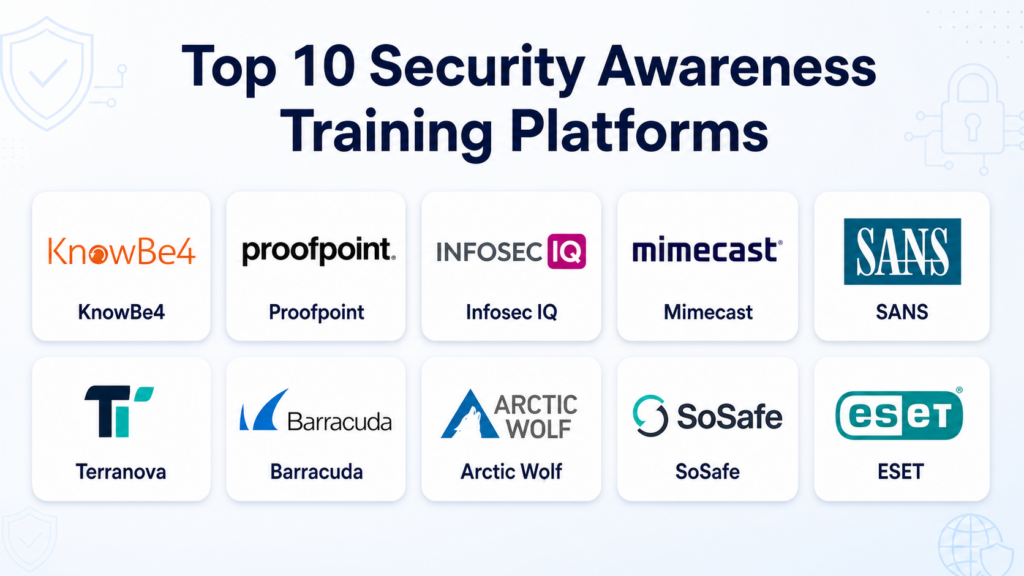
Introduction
Security awareness training platforms are educational ecosystems designed to strengthen an organization’s human perimeter against cyber threats. While firewalls and antivirus software protect the technical infrastructure, these platforms focus on the “human firewall” by educating employees on how to identify and avoid social engineering attacks. They utilize a mix of interactive modules, simulated phishing tests, and gamified learning to change user behavior and foster a culture of security throughout the enterprise.
In the modern digital workplace, technical defenses alone are insufficient. Attackers frequently bypass hardware security by targeting individuals through sophisticated email scams, SMS-based phishing, and voice manipulation. A comprehensive training platform ensures that every staff member—from the entry-level clerk to the chief executive—understands their role in protecting company data. By quantifying user risk and tracking progress over time, these tools provide leadership with a clear view of the organization’s vulnerability to human-centric attacks.
Real-world use cases:
- Phishing Simulations: Sending controlled “test” emails to employees to see who clicks, providing instant “teachable moments” for those who do.
- Compliance Training: Delivering mandated modules for regulatory frameworks like HIPAA, GDPR, or PCI DSS.
- New Hire Onboarding: Ensuring every new employee starts their tenure with a baseline understanding of password hygiene and data handling.
- Targeted Remediation: Assigning extra training specifically to individuals or departments that have high failure rates in simulations.
- Executive Protection: Tailoring high-level “Whaling” simulations for senior leadership who are frequently targeted by high-value scams.
Evaluation criteria for buyers:
- Content Library Quality: The diversity, production value, and “boredom-factor” of the training videos and modules.
- Phishing Simulation Depth: The variety of templates and the ability to mimic current, real-world attack vectors.
- Automation Capabilities: Features that allow the platform to run year-round campaigns without constant manual intervention.
- Reporting and Analytics: The ability to drill down into risk scores by department, location, or individual user.
- Multi-Language Support: Availability of content in various languages for global teams.
- Integration with Security Stack: The ability to pull data from email gateways or SIEMs to trigger training based on real-world behavior.
- Gamification Features: Use of leaderboards, badges, and competitions to keep employees engaged.
- Customization Options: The ability to brand content and create company-specific simulation templates.
- Ease of Administration: A streamlined dashboard for managing users and tracking completion rates.
- Customer Support: Availability of managed services or dedicated account managers to help build effective programs.
Mandatory Paragraph
- Best for: Organizations of all sizes that handle sensitive customer data, financial information, or intellectual property and are looking to reduce the risk of data breaches caused by human error.
- Not ideal for: Purely air-gapped environments with no internet-connected employees, or extremely small teams where informal, face-to-face security briefings are sufficient.
Key Trends in Security Awareness Training Platforms
- Adaptive Learning Paths: Platforms are using AI to analyze an individual’s previous performance and deliver content that focuses specifically on their weakest areas.
- Micro-learning Modules: A shift away from 60-minute “death-by-PowerPoint” sessions toward 2–5 minute interactive clips that fit easily into the workday.
- AI-Generated Phishing: Using Large Language Models to create hyper-realistic phishing simulations that mimic the style of actual contemporary attackers.
- Behavior-Based Triggers: Training that is assigned automatically when a user takes a risky action, such as plugging in an unauthorized USB or visiting a flagged site.
- Security Culture Surveys: Moving beyond “click rates” to measure the actual sentiment and psychological readiness of the workforce.
- Personalized Risk Scoring: Assigning every employee a “credit score” for security, helping security teams prioritize high-risk groups for intervention.
- Mobile-First Training: Optimized apps that allow remote and field workers to complete their security modules on any device.
- Phish-to-Alert Workflows: Training employees to use “Report” buttons, which feeds directly into the SOC (Security Operations Center) for faster incident response.
How We Selected These Tools (Methodology)
To determine the top 10 platforms, we analyzed the market based on a combination of technical innovation and user engagement metrics. The methodology included:
- Content Freshness: We prioritized vendors who update their libraries weekly to reflect current news and attack trends.
- Simulation Realism: Evaluating the ability of the phishing simulators to bypass standard filters and challenge the user effectively.
- Scalability: The ease with which the platform can handle thousands of users across multiple global regions.
- Administrative Efficiency: We favored platforms that offer “set-and-forget” automation for busy IT managers.
- Review Sentiment: Analyzing professional feedback from cybersecurity forums and peer-review sites.
- Regulatory Alignment: Checking for pre-built curriculum paths that satisfy major global compliance audits.
Top 10 Security Awareness Training Platforms
1 — KnowBe4
Short description: The largest global provider of security awareness training, known for its massive content library and sophisticated phishing simulator.
Key Features
- ModStore: A vast library of thousands of training modules, posters, and newsletters.
- AISC (AI-Driven Social Engineering): Uses AI to select the best phishing template for each specific user based on their history.
- Kevin Mitnick Security Awareness Training: Specialized content based on the techniques of the world’s most famous social engineer.
- PhishER: A specialized tool for identifying and prioritizing user-reported emails.
- Compliance Plus: Add-on modules for various legal and regulatory requirements.
- Virtual Risk Officer: Advanced analytics to calculate the risk score for every user and group.
Pros
- Largest and most diverse content library in the industry.
- Excellent automation features for managing year-long campaigns.
Cons
- The vast number of options can be overwhelming for smaller IT teams.
- Pricing can be higher than mid-market competitors.
Platforms / Deployment
- Web-based
- SaaS
Security & Compliance
- SSO, MFA, RBAC.
- SOC 2 Type II, ISO 27001, HIPAA, GDPR.
Integrations & Ecosystem
Integrates with nearly every major identity provider and security tool.
- Microsoft Azure AD / Okta
- Slack / Microsoft Teams
- Major SIEM and SOAR platforms
Support & Community
Industry-leading support and a massive community of users who share custom phishing templates.
2 — Proofpoint Security Awareness
Short description: Built on a foundation of threat intelligence, this platform leverages Proofpoint’s insight into real-world email attacks to inform its training.
Key Features
- Threat Sim: Phishing simulations based on the actual lures seen by Proofpoint’s global sensors.
- Very Attacked People (VAP) Reports: Identifies which employees are being targeted by real-world attackers.
- Closed-Loop Email Analysis: Links training directly to the reporting of suspicious emails.
- Micro-learning Content: Short, digestible videos designed for high retention.
- Managed Services: Options for Proofpoint experts to run your entire program for you.
- Customizable Content: Ability to tailor training to match company-specific policies.
Pros
- Exceptional integration between real-world threat data and training content.
- Strong focus on identifying the most targeted individuals in an organization.
Cons
- Works best when integrated into the broader Proofpoint ecosystem.
- Some users find the administrative interface less intuitive than rivals.
Platforms / Deployment
- Web-based
- SaaS
Security & Compliance
- SSO, RBAC, Encryption.
- SOC 2, ISO 27001.
Integrations & Ecosystem
Strongest when paired with Proofpoint’s Email Protection suite.
- Proofpoint TAP (Targeted Attack Protection)
- Microsoft 365
- Okta / Azure AD
Support & Community
High-end professional support and a mature customer success program.
3 — Infosec IQ
Short description: A flexible platform known for its “Choose Your Own Adventure” style training and highly customizable phishing simulations.
Key Features
- AwareEd: A library of hundreds of training modules categorized by topic and difficulty.
- PhishSim: Advanced simulator with thousands of templates mimicking real-world brands.
- Personalized Learning: Delivers content based on a user’s role and historical performance.
- Interactive Assessments: Gamified quizzes to test knowledge retention.
- Campaign Auto-Pilot: Automatically moves users through the curriculum based on progress.
- Compliance Mapping: Directly links modules to specific regulatory requirements.
Pros
- High production value and engaging, diverse content styles.
- Very competitive pricing for mid-market and smaller enterprises.
Cons
- Some reporting features are less granular than enterprise-tier competitors.
- The library is large but not as vast as KnowBe4’s.
Platforms / Deployment
- Web-based
- SaaS
Security & Compliance
- SSO, MFA.
- SOC 2, GDPR.
Integrations & Ecosystem
Broad support for standard enterprise infrastructure.
- Microsoft Office 365
- Google Workspace
- Active Directory / Azure AD
Support & Community
Strong reputation for customer onboarding and responsive technical support.
4 — Mimecast Awareness Training
Short description: Known for its humorous, high-production video content (“CyberGraph”), Mimecast focuses on maximum engagement to change behavior.
Key Features
- Engagement-First Video: Utilizes comedy and professional actors to make training memorable.
- SafeScore: A proprietary risk-scoring algorithm for every employee.
- Phish Feed: Real-time phishing lures converted into training templates.
- Browser-Based Simulations: Tests users’ reactions to malicious web pages in real-time.
- Targeted Remediation: Automatically assigns extra modules to “repeat offenders.”
- Dashboards for Leadership: High-level views of organizational risk trends.
Pros
- Some of the highest user engagement rates due to the quality of the videos.
- Short modules (2–3 minutes) minimize impact on employee productivity.
Cons
- The humorous style may not suit every corporate culture.
- Limited content library compared to generalist awareness platforms.
Platforms / Deployment
- Web-based
- SaaS
Security & Compliance
- MFA, SSO.
- SOC 2, ISO 27001.
Integrations & Ecosystem
Deeply integrated with Mimecast’s email security solutions.
- Mimecast Email Security
- Microsoft 365 / Google Workspace
- Azure AD
Support & Community
Excellent technical support and a strong network of security partners.
5 — SANS Security Awareness
Short description: Backed by the world’s leading cybersecurity training institute, SANS provides academically rigorous and technically accurate content.
Key Features
- MGT433 Content: Professional-grade training developed by SANS instructors.
- Global Awareness: Content available in over 30 languages.
- End-User Training: Comprehensive coverage of everything from mobile security to remote work.
- Developer Training: Specialized modules for secure coding practices.
- Phishing Simulations: Managed phishing services for technical and non-technical staff.
- Benchmarks: Ability to compare your team’s performance against global industry standards.
Pros
- The most technically accurate and well-researched content available.
- Highly respected brand in the cybersecurity professional community.
Cons
- Content can be drier and more academic than gamified competitors.
- Pricing is positioned at the premium end of the market.
Platforms / Deployment
- Web-based
- SaaS / SCORM (for internal LMS)
Security & Compliance
- Enterprise-grade security controls.
- NIST / ISO / HIPAA / GDPR alignment.
Integrations & Ecosystem
Standard SCORM/AICC support for integration into corporate Learning Management Systems.
- LMS (Cornerstone, SAP, etc.)
- Azure AD
- Okta
Support & Community
Access to the massive SANS institute knowledge base and professional community.
6 — Terranova Security (by Fortra)
Short description: A highly flexible platform known for its “Cyber Games” and strong pedagogical approach to learning.
Key Features
- Cyber Games: Gamified modules designed to increase retention through competition.
- Role-Based Training: Custom curricula for IT, Finance, HR, and Executives.
- Simulation 2.0: Highly realistic phishing and social engineering simulations.
- Awareness Five-Step Framework: A guided methodology for building a security culture.
- Multilingual Support: One of the strongest providers for diverse global teams.
- Risk Dashboard: Real-time visibility into the “Security Awareness Index.”
Pros
- Excellent pedagogical structure that focuses on long-term behavioral change.
- High-quality, gamified content that users actually enjoy.
Cons
- The management console can be less intuitive than cloud-native startups.
- Initial setup can require more planning due to the depth of the framework.
Platforms / Deployment
- Web-based
- SaaS
Security & Compliance
- SSO, RBAC.
- SOC 2, ISO 27001.
Integrations & Ecosystem
Part of the Fortra security ecosystem.
- Microsoft 365
- Active Directory
- Microsoft Teams
Support & Community
Known for providing a high-touch customer success experience during the pilot phase.
7 — Barracuda Security Awareness
Short description: Integrated into Barracuda’s broader email security stack, this platform focuses on simplicity and ease of deployment.
Key Features
- Managed Phishing: Over 100 templates based on real-world attacks detected by Barracuda.
- PhishLine: Advanced simulation capabilities for email, SMS, and voice (vishing).
- Instant Reporting: Immediate feedback to users who fail a simulation.
- Content Library: A solid mix of videos, quizzes, and posters.
- Risk Scoring: Analytics to identify which users are the most likely to click on a real link.
- Multi-Tenant Management: Ideal for MSPs managing multiple clients from one screen.
Pros
- Very easy to deploy for existing Barracuda WAF or Email Security customers.
- Excellent price point for small and medium businesses.
Cons
- Content library is not as deep as specialized awareness-only platforms.
- Reporting is functional but lacks the high-level forensic detail of enterprise rivals.
Platforms / Deployment
- Web-based
- SaaS
Security & Compliance
- Standard enterprise security.
- SOC 2.
Integrations & Ecosystem
Strongest within the Barracuda and Microsoft Azure ecosystem.
- Microsoft 365
- Barracuda Email Protection
- Azure AD
Support & Community
Reliable technical support and a strong presence in the mid-market security space.
8 — Arctic Wolf Managed Security Awareness
Short description: A unique managed service where Arctic Wolf experts take over the burden of running the training program for the customer.
Key Features
- Managed Service: A dedicated concierge security team manages the campaigns.
- Short Weekly Content: “Current” videos that address fresh threats seen in the wild.
- Gamified Experience: Uses a leaderboard system to drive engagement.
- Phishing Simulations: Full management of phishing lures and analysis.
- Automated Enrollment: Syncs with your HR system to keep the user list updated.
- Concierge Support: Direct access to security experts for program tuning.
Pros
- Perfect for IT teams that are overworked and want an “expert-led” program.
- Content is always current and reflects threats occurring now.
Cons
- Less control over the specific content if you prefer to build your own.
- Requires an Arctic Wolf subscription, which is a broader security investment.
Platforms / Deployment
- Web-based
- Managed Service (SaaS)
Security & Compliance
- Full enterprise governance.
- SOC 2.
Integrations & Ecosystem
Part of the Arctic Wolf Security Operations Cloud.
- Arctic Wolf Managed Detection and Response (MDR)
- Okta / Azure AD
- Microsoft 365
Support & Community
Concierge-level support is a core part of the product offering.
9 — SoSafe
Short description: A European-based leader focusing on psychological behavior change and data privacy.
Key Features
- Behavioral Science Engine: Content designed by psychologists to change long-term habits.
- Interactive Storytelling: Uses narrative-driven modules to keep users engaged.
- Deep Privacy Focus: Built specifically to comply with the strictest European privacy laws.
- Phishing Simulator: Over 1,000 templates with localized lures.
- Bot-Based Onboarding: Uses a chatbot to guide users through their training.
- Risk Reporting: Clean, high-level dashboards for executive teams.
Pros
- One of the best options for organizations with strict GDPR and privacy requirements.
- Content feels modern, clean, and less “corporate” than traditional platforms.
Cons
- Library size is smaller than some of the established American giants.
- Brand recognition is currently stronger in Europe than in North America.
Platforms / Deployment
- Web-based
- SaaS
Security & Compliance
- SSO, MFA.
- GDPR (Privacy-first design), SOC 2.
Integrations & Ecosystem
Growing list of integrations with modern SaaS tools.
- Microsoft Teams / Slack
- Azure AD / Okta
- Google Workspace
Support & Community
Highly rated for customer success and European-based support.
10 — ESET Cybersecurity Awareness
Short description: A cost-effective, straightforward training platform that focuses on the essentials for small to medium enterprises.
Key Features
- Interactive Modules: Simple, engaging videos covering the core pillars of security.
- Gamified Quizzes: Tests knowledge in an interactive format.
- Certificate of Completion: Provides users with a tangible result of their training.
- Phishing Simulator: Included templates for testing user vigilance.
- Admin Dashboard: Basic tracking of completion status and quiz scores.
- Resource Library: Downloadable posters and checklists for the office.
Pros
- Extremely affordable and easy to launch.
- Ideal for organizations that need to check a “compliance box” quickly.
Cons
- Lacks the advanced AI and automation of the larger platforms.
- Content library is relatively small.
Platforms / Deployment
- Web-based
- SaaS
Security & Compliance
- Standard protocols.
- SOC 2.
Integrations & Ecosystem
Works best as a standalone or with the ESET endpoint protection suite.
- ESET PROTECT
- Microsoft 365
- Azure AD
Support & Community
Solid global support network via ESET’s local partners.
Comparison Table (Top 10)
| Platform Name | Best For | Platform(s) Supported | Deployment | Standout Feature | Public Rating |
| 1 — KnowBe4 | Content Variety | Web, SaaS | SaaS | ModStore Library | 4.8/5 |
| 2 — Proofpoint | Targeted Attack Data | Web, SaaS | SaaS | VAP Reporting | 4.7/5 |
| 3 — Infosec IQ | Engaging Content | Web, SaaS | SaaS | Experience-Based Paths | 4.6/5 |
| 4 — Mimecast | High Video Engagement | Web, SaaS | SaaS | CyberGraph Comedy | 4.5/5 |
| 5 — SANS | Technical Accuracy | Web, LMS | SaaS/SCORM | Instructor-Led Content | 4.8/5 |
| 6 — Terranova | Global Global Teams | Web, SaaS | SaaS | Pedagogical Framework | 4.6/5 |
| 7 — Barracuda | Mid-Market Value | Web, SaaS | SaaS | Managed Phishing | 4.3/5 |
| 8 — Arctic Wolf | Managed Program | Web, Service | Managed | Concierge Expert Team | 4.7/5 |
| 9 — SoSafe | Privacy & Psychology | Web, SaaS | SaaS | Behavioral Science focus | 4.7/5 |
| 10 — ESET | Simple Essentials | Web, SaaS | SaaS | Cost-Effectiveness | 4.2/5 |
Evaluation & Scoring of Security Awareness Training Platforms
This table provides a weighted score based on the critical requirements for a modern awareness program.
| Platform Name | Core (25%) | Ease (15%) | Integrations (15%) | Security (10%) | Performance (10%) | Support (10%) | Value (15%) | Weighted Total |
| 1 — KnowBe4 | 10 | 8 | 10 | 9 | 10 | 9 | 8 | 9.10 |
| 2 — Proofpoint | 9 | 7 | 10 | 10 | 9 | 9 | 7 | 8.55 |
| 3 — Infosec IQ | 8 | 9 | 9 | 9 | 8 | 9 | 9 | 8.55 |
| 4 — Mimecast | 8 | 9 | 9 | 9 | 8 | 8 | 8 | 8.35 |
| 5 — SANS | 10 | 5 | 8 | 10 | 9 | 9 | 7 | 8.15 |
| 6 — Terranova | 8 | 8 | 9 | 9 | 8 | 9 | 8 | 8.35 |
| 7 — Barracuda | 7 | 9 | 8 | 8 | 7 | 8 | 9 | 7.80 |
| 8 — Arctic Wolf | 8 | 10 | 8 | 9 | 8 | 10 | 7 | 8.45 |
| 9 — SoSafe | 9 | 8 | 9 | 10 | 8 | 9 | 7 | 8.60 |
| 10 — ESET | 6 | 10 | 7 | 8 | 7 | 8 | 10 | 7.60 |
Scoring Interpretation:
- Core (25%): Depth of training library and simulation realism.
- Ease (15%): Effort required for the IT team to run the program.
- Weighted Total: A score of 8.5 or higher indicates a market-leading platform that offers high value across all criteria.
Which Security Awareness Training Platform Tool Is Right for You?
Solo / Freelancer
If you are an individual consultant, you likely do not need a full platform. Instead, look for free resources from ESET or the KnowBe4 blog to keep your own skills sharp.
SMB
Small and Medium Businesses should prioritize Barracuda or ESET. These platforms provide the necessary “human firewall” protection and compliance checkmarks without requiring a massive budget or a full-time security administrator.
Mid-Market
For companies with 100–1,000 employees, Infosec IQ or SoSafe are excellent choices. They offer a more modern, engaging user experience that can help build a positive security culture rather than just a mandatory checklist.
Enterprise
Large-scale organizations with thousands of users should choose KnowBe4 for the sheer volume of content, or Proofpoint if they want to link their training directly to their existing threat intelligence stack. These platforms handle global deployments and complex reporting with ease.
Budget vs Premium
- Budget: ESET Cybersecurity Awareness, Barracuda.
- Premium: KnowBe4, SANS Security Awareness, Proofpoint.
Feature Depth vs Ease of Use
- Highest Depth: KnowBe4, SANS.
- Easiest to Use: Arctic Wolf (Managed), ESET.
Integrations & Scalability
- Best Integrations: KnowBe4, Proofpoint.
- Best Scalability: KnowBe4, Terranova.
Security & Compliance Needs
Organizations with strict European privacy needs should prioritize SoSafe, while those requiring academically rigorous technical training should look at SANS.
Frequently Asked Questions (FAQs)
1. How often should security awareness training be conducted?
Most experts recommend a “continuous” approach rather than a single annual session. This typically involves a short micro-learning module every month and at least one phishing simulation per quarter to keep security top-of-mind.
2. Can phishing simulations get my company blacklisted by email providers?
No, these platforms use specific “white-listing” techniques and headers to ensure their test emails are delivered to your employees but are not flagged as actual spam by global internet filters.
3. Do these platforms support languages other than English?
Yes, most enterprise-tier platforms (like KnowBe4, SANS, and Terranova) support between 30 and 40 different languages for both their training modules and their phishing lure templates.
4. What happens if an employee fails a phishing test?
The goal is education, not punishment. Most platforms provide an “instant teachable moment”—a non-punitive landing page that explains what the user missed and assigns a short remedial video to help them improve.
5. Are these platforms useful for compliance audits like SOC 2?
Yes, they are essential. Most compliance frameworks require proof of security training for all staff. These platforms provide the logs and completion certificates needed to satisfy auditors.
6. Can I create my own phishing templates?
Yes, almost all platforms allow you to copy real suspicious emails your company has received and turn them into safe, internal simulation tests to see how your team would handle a specific, real-world lure.
7. How long are the training modules?
While older styles were 30–60 minutes, the modern trend is “micro-learning,” where modules are between 2 and 5 minutes long to ensure higher retention and less disruption to the workday.
8. Does this training cover mobile and remote work security?
Yes, modern libraries include specific content on securing home Wi-Fi, using VPNs, protecting mobile devices from “smishing” (SMS phishing), and maintaining security in public spaces.
9. Can I integrate the platform with my HR system?
Yes, most platforms use SCIM or Active Directory integrations to automatically add new hires and remove departing employees, ensuring the training list is always accurate.
10. Is gamification effective for security training?
Studies show that gamification—using leaderboards and badges—significantly increases completion rates and knowledge retention by making a traditionally “dry” subject more competitive and engaging for employees.
Conclusion
Building a “human firewall” is a continuous process of education and testing. While KnowBe4 remains the dominant force in the market due to its sheer scale, specialized providers like Mimecast and SoSafe are proving that high-quality, engaging content is the key to actual behavioral change. For organizations that are short on time, the managed service model of Arctic Wolf offers a powerful way to outsource the administrative burden while maintaining a high security posture. Ultimately, the best platform is the one that your employees will actually use and enjoy.

Interesting read, I hadn’t considered that angle.
Seeing how these security programs work teaches me how to build human-centric safety habits.