MOTOSHARE 🚗🏍️
Rent Bikes & Cars Directly from Owners
Motoshare connects vehicle owners with people who need bikes and cars on rent. Owners earn from idle vehicles, and renters get flexible ride options.
Visit Motoshare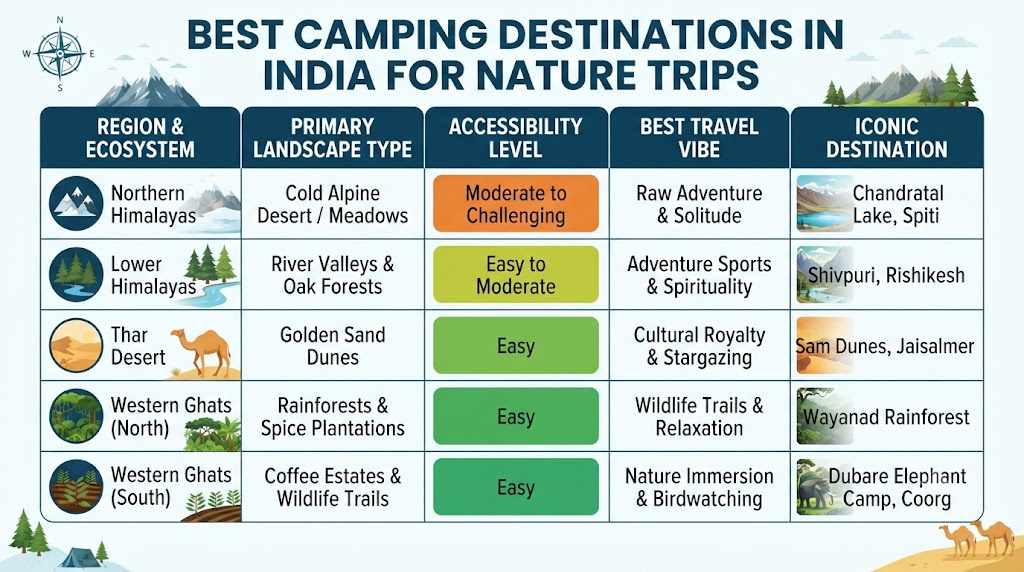
Introduction
When your routine feels like a loop of endless screen time and concrete walls, the generic vacation of crowded hill-station malls and noisy tourist buses just won’t cut it. True rejuvenation doesn’t happen in hotel lobbies; it happens when you step off the grid entirely.
Camping in India offers an escape from commercialized tourism, grounding you in places where ancient local traditions and raw landscapes dictate the pace of your day. It’s about breathing in pine-scented mountain air, sleeping under star-studded skies, and discovering the diverse cultural soul of the region.
Why India is a Must-Visit for Nature Camping
India’s geographic layout is like a masterclass in visual variety. From the snow-capped trans-Himalayan deserts to the tropical canopies of the Western Ghats, the sub-continent serves up completely different ecosystems within just a few hours of travel. The country’s expanding infrastructure—such as the all-weather mountain highways, reliable local rail networks, and a community-driven eco-hospitality culture—makes raw nature highly accessible to solo backpackers, couples, and families alike.
The primary travel circuits for wilderness camping generally split into the high-altitude northern loop (Ladakh and Himachal Pradesh), the spiritual-adventure corridor along the lower Himalayas (Uttarakhand), the vast desert trails of the west (Rajasthan), and the lush rainforest eco-zones of the south (Kerala and Karnataka).
| Region | Primary Landscape Type | Accessibility Level | Best Travel Vibe |
| Northern Himalayas | Cold Alpine Desert / Meadows | Moderate to Challenging | Raw Adventure & Solitude |
| Lower Himalayas | River Valleys & Oak Forests | Easy to Moderate | Adventure Sports & Spirituality |
| Thar Desert | Golden Sand Dunes | Easy | Cultural Royalty & Stargazing |
| Western Ghats | Coffee Plantations & Rainforests | Easy | Wildlife Trails & Pure Relaxation |
Best Places or Experiences
1. Shivpuri Beach Camping, Rishikesh
Rishikesh is widely celebrated as the adventure capital of India, but its true magic reveals itself when you move slightly upstream to the white-sand riverbeds of Shivpuri. Here, the holy Ganges flows through deep emerald gorges, offering a stunning backdrop where rugged mountains meet pristine waters.
Waking up early to the sound of flowing water and a soft river breeze provides a deep sense of calm that no luxury hotel can match. As evening falls, the white sands glow under the moonlight, and the crackle of beachside bonfires sets a perfect rhythm for swapping stories with fellow travelers.
- Location: Tehri Garhwal district, approximately 16 kilometers upstream from Rishikesh city and 45 kilometers from Dehradun.
- Why it is worth visiting: It is the ultimate mix of high-adrenaline white-water rafting, beachside community living, and peaceful mountain spirituality.
- Best things to do: Experience a thrilling 16-kilometer river rafting session down the Ganges, try cliff jumping at the famous rapids, and join an outdoor sunrise yoga session right on the sand.
- Best time to visit: October to May is perfect for camping, though you should avoid the monsoon months (July to August) when riverbeds flood and rafting closes.
- Ideal for whom: Adventure enthusiasts, college friend groups, and corporate teams looking for a lively outdoor escape.
- Travel tip: > Warning: Pitching personal random tents directly on the river line is strictly illegal due to environmental regulations; always book through a licensed eco-camp operator who maintains proper waste management.
2. Chandratal Lake Camp, Spiti Valley
Sitting at a breathtaking altitude of 4,300 meters, Chandratal Lake—aptly named the “Moon Lake” due to its crescent shape—is a mesmerizing body of water tucked deep within the high-altitude cold desert of Spiti. The water magically changes colors throughout the day, shifting from deep turquoise to shimmering emerald and reflective sapphire under the intense mountain sun.
Camping here puts you face-to-face with the magnificent, barren peaks of the scree-covered mountains. The nights are crisp, incredibly silent, and offer a spectacular view of the Milky Way galaxy that will leave any stargazer completely awestruck.
- Location: Lahaul and Spiti district, roughly 120 kilometers from Kaza and accessible via the rugged road over the Kunzum Pass.
- Why it is worth visiting: It provides a true, raw wilderness experience next to one of the highest and most visually spectacular alpine lakes in the world.
- Best things to do: Take the mandatory 3-kilometer morning walk around the lake’s perimeter, photograph the perfect mountain reflections, and enjoy long-exposure astrophotography at night.
- Best time to visit: Late June to September is the only viable window when the mountain passes are clear of heavy winter snow.
- Ideal for whom: Seasoned backpackers, photography buffs, and travelers seeking complete isolation from the modern world.
- Travel tip: To prevent severe acute mountain sickness (AMS), ensure you spend at least two full nights adjusting to the altitude in Manali or Kaza before attempting to sleep at Chandratal.
3. Sam Sand Dunes, Jaisalmer
If your idea of a perfect nature trip involves endless horizons of silky sand rather than rocky mountains, the Thar Desert near Jaisalmer is an absolute dream. The Sam Sand Dunes offer massive, sweeping waves of golden earth that shift constantly with the desert wind.
As the sun sets over the horizon, the entire landscape is painted in brilliant shades of crimson and gold. Camping here lets you experience traditional luxury inside beautifully stitched desert tents, bringing a touch of old-world charm right into the wild dunes.
- Location: Jaisalmer district, situated about 42 kilometers west of the golden sandstone fortress city of Jaisalmer.
- Why it is worth visiting: It offers an incredible blend of vast desert peace, thrilling dune exploration, and rich Rajasthani cultural heritage.
- Best things to do: Take a slow camel ride during sunset, ride across the dunes on an exciting 4×4 jeep safari, and enjoy watching traditional Kalbeliya folk dances around a warm bonfire.
- Best time to visit: October to March provides comfortable days and cool, crisp nights that make desert living highly enjoyable.
- Ideal for whom: Couples looking for a romantic setting, families with children, and cultural travelers.
- Travel tip: Bring heavy woolens or a windproof jacket because the desert temperature drops rapidly after dark, turning a warm afternoon into a chilly night.
4. Wayanad Rainforest Camps, Kerala
Tucked away inside the Western Ghats, Wayanad offers a lush, green contrast to the rocky terrains of northern India. The cloud-covered rainforests here are filled with massive trees, winding wild vines, and the refreshing aroma of nearby cardamom and black pepper plantations.
Camping deep within these woods gives you a front-row seat to an incredible variety of wildlife. You will wake up to a chorus of exotic birds, watch thick morning fog lift off the valley floor, and sleep soundly to the calming sounds of the tropical forest.
- Location: Wayanad district, approximately 85 kilometers from the coastal city of Kozhikode and its domestic airport.
- Why it is worth visiting: It is an amazing eco-friendly escape that places you directly inside an ancient, biodiverse rainforest corridor.
- Best things to do: Take a guided jungle walk to spot endemic birds, hike up to the historic Edakkal Caves to see ancient rock carvings, and swim in hidden forest streams.
- Best time to visit: October to May offers beautiful weather, though visiting right after the monsoon in September rewards you with incredibly vibrant green landscapes.
- Ideal for whom: Nature lovers, couples seeking a quiet retreat, and wildlife photography fans.
- Travel tip: Keep a bottle of saltwater or carry small packets of table salt in your daypack to quickly remove forest leeches that often attach to shoes during damp trail walks.
5. Dubare Elephant Camp, Coorg
Located along the banks of the Kaveri River in Karnataka, Coorg is often called the “Scotland of India” because of its misty hills and sprawling coffee estates. The Dubare region takes this natural beauty a step further by combining riverside forest camps with an historic elephant sanctuary.
The camp sits under a dense canopy of teak and rosewood trees, keeping the area cool and shaded throughout the day. Staying here lets you unplug completely, swap city noise for the gentle sounds of a flowing river, and learn about wildlife conservation firsthand.
- Location: Kodagu (Coorg) district, located roughly 30 kilometers from Madikeri and 100 kilometers from Mysuru rail station.
- Why it is worth visiting: It gives you a unique chance to stay right along the river while watching elephants interact in their natural habitat.
- Best things to do: Help the naturalists wash and groom elephants in the shallow river waters, enjoy birdwatching along the banks, and try coracle boating (traditional round boats).
- Best time to visit: September to March provides excellent weather for outdoor exploring and spotting local wildlife.
- Ideal for whom: Families traveling with kids, wildlife lovers, and anyone looking for a slow, relaxing vacation.
- Travel tip: Avoid visiting during peak monsoon weeks in July and August, as the Kaveri River can swell quickly, which temporarily cancels boating activities and elephant bathing sessions.
Offbeat Exploration: Hidden Gems Tourists Miss
Giu Village, Spiti Border
Most travelers skip this tiny settlement on the way to Kaza, but it houses a naturally preserved 500-year-old mummy of a Buddhist monk named Sangha Tenzin. The mummy, found sitting upright inside a glass chamber, has remained intact without any chemical preservation. The village itself is incredibly peaceful, surrounded by sharp clay cliffs and old stone homes.
Chopta Bugyals, Uttarakhand
While the masses head straight to the crowded hotels of Mussoorie, the high-altitude alpine meadows (called Bugyals) of Chopta offer pristine, untouched green slopes. Camping here gives you a clear, unobstructed view of the majestic Trishul and Nanda Devi mountain peaks without any commercial noise.
Detailed Practical Guidance for Travelers
| Destination | Standard Entry Fee | General Timings | Best Local Food Options Nearby | Recommended Nearby Attractions |
| Shivpuri, Rishikesh | None (Activities vary from ₹1,200-₹2,500) | Open 24 Hours | Garhwali Chainsoo (lentils), Aloo ke Gutke | Vashishta Gufa, Neer Garh Waterfall |
| Chandratal Lake, Spiti | None (Camping stays average ₹1,800/night) | Sunrise to Sunset | Hot Thukpa, Butter Tea, Steamed Momos | Kunzum Pass, Key Monastery |
| Sam Dunes, Jaisalmer | None (Safari packages average ₹1,500) | 4:00 PM – 11:00 PM | Ker Sangri, Bajra Roti, Lal Maas | Kuldhara Abandoned Ghost Village |
| Wayanad Forest Area | ₹50 per person for forest entry trail | 9:00 AM – 5:00 PM | Malabar Parotta, Bamboo Rice Payasam | Banasura Sagar Dam, Chembra Peak |
| Dubare Camp, Coorg | ₹100 for boat crossing and entry | 9:00 AM – 4:30 PM | Pandi Curry (spiced pork), Kadambuttu | Chiklihole Reservoir, Nisargadhama |
Logistics & On-Ground Navigation
Local Transport Options
- Railways: The Indian Railways network connects major base hubs beautifully. For northern camps, Haridwar and Rishikesh stations serve Uttarakhand, while Mysuru and Kozhikode handle the southern circuits.
- Auto-Rickshaws & E-Rickshaws: These are perfect for quick, budget-friendly rides around base towns like Jaisalmer or Rishikesh. Always fix the price before stepping in, or cross-check using online map distances.
- Car Rentals & Self-Drive: Renting an SUV is highly recommended for rugged mountain regions like Spiti Valley or the steep hills of Wayanad. Ensure your driver has verified experience on mountain roads before heading out.
Budget Planning
- Backpacking Tier (₹1,200 – ₹2,000 per day): Includes staying in shared alpine tents or basic homestays, eating at local dhabas (roadside eateries), and using public state buses for transit.
- Mid-Range Comfort Tier (₹3,500 – ₹6,500 per day): Includes booking comfortable Swiss glamping tents with attached bathrooms, taking private taxis, and enjoying guided safaris and local estate tours.
Safety and Inclusivity Tips
- For Families: Stick to well-established glamping sites in Coorg or Jaisalmer that feature running water, power backups, and clear fencing to ensure kids stay safe.
- For Couples: Choose eco-camps that prioritize privacy, offer private bonfire spaces, and are located well away from rowdy, large group campsites.
- General Safety: Always pack a dependable power bank, carry basic water purification tablets, and let your family know your detailed itinerary before entering areas with weak cellular signals.
Strategic Travel Planning Guardrails
Travel Planning Tips
- Always book your mountain and desert camps at least two months in advance if you plan to visit during peak holiday weeks.
- Keep plenty of cash handy because digital UPI payments can fail often in remote valleys with weak internet connections.
- Dress respectfully when visiting local mountain shrines or rural desert villages to honor local customs.
- Pack a versatile headlamp and a basic first-aid kit filled with personal medications, motion-sickness pills, and insect sprays.
- Give yourself a flexible extra day in your travel plan to account for unexpected mountain landslides or heavy rain delays.
Common Mistakes to Avoid
- Trying to cram too many distant viewpoints into a single day, which leaves you exhausted and short on time.
- Packing light summer clothes for high-altitude spots, forgetting how freezing mountain nights can get.
- Assuming public buses run frequently in deep forest or desert areas without checking schedules first.
- Skipping simple regional dishes at small dhabas to stick to familiar, generic city foods.
- Booking suspiciously cheap, unregistered tents online that lack proper security measures or clean drinking water.
Suggested Itinerary Blueprints
1. 3-Day Quick Dash (The Adventure Rapid)
- Target Audience: Working professionals seeking a high-energy weekend refresh.
- Route Layout: Delhi to Rishikesh/Shivpuri. Drive down Friday night, tackle a major 16-kilometer river rafting run on Saturday, enjoy a beachside bonfire that evening, and take a peaceful sunrise forest walk on Sunday before heading back home.
2. 5-Day Deep-Dive (The Southern Green Escape)
- Day 1 & 2: Arrive in Kozhikode, drive up to the Wayanad rainforest camps, explore the ancient Edakkal Caves, and spend the evening enjoying camp cooking deep in the woods.
- Day 3, 4 & 5: Travel across the state border into Coorg, check in near the Dubare region, spend a morning volunteering at the elephant camp, tour a local coffee estate, and finish with a peaceful coracle boat ride down the Kaveri River.
3. Complete Weekend Travel Plan (The Royal Sand Loop)
- Friday: Arrive in the golden city of Jaisalmer by rail or air, explore the majestic living fort, and enjoy a traditional lunch in the old quarter.
- Saturday: Head out to the Sam Sand Dunes by mid-afternoon, jump on a 4×4 jeep safari across the sand peaks, and sleep out under the stars in a classic desert camp.
- Sunday: Visit the historic, quiet ruins of Kuldhara ghost village in the morning morning light before catching your evening train back home.
Common Tourist Mistakes to Avoid
- Geographic Blunders: Don’t try to visit a mountain peak and a distant river valley on the same morning. High-altitude mountain roads look short on map apps but can take hours to navigate due to sharp hairpin turns and steep climbs.
- Commercial Traps: Avoid spending your evenings in noisy city markets or modern shopping plazas when you have chosen a nature trip. The soul of these regions thrives out in the quiet spaces, away from the neon signs.
- Neglecting Modern/Alternative Zones: Don’t miss out on the smaller, artistic cafes or quiet eco-farms popping up around the edges of camping hubs. These spaces often host local musicians and serve incredible organic meals.
- Transport Overpayment: Never accept a flat rental price from unmetered taxis right outside airport or railway gates. Use official pre-paid transit counters or check standard local rates with your camp host beforehand to avoid price gouging.
- Luxury Dining Bias: Sticking only to upscale buffet restaurants inside major resorts will cause you to miss out on the real flavors of the region. The true culinary heart of India lives in local kitchens that serve authentic dishes like freshly made Bajra Roti or spiced Kumaoni lentils.
Frequently Asked Questions
1. Is personal wild camping legal anywhere in India without a permit?
No, pitch-anywhere wild camping is generally restricted across India to safeguard delicate environments and ensure traveler safety. You must obtain official permits from the local Forest Department or Gram Panchayat (village council), which is why booking through an approved eco-camp operator is often the easiest route.
2. How do I manage mobile network connectivity while camping in Spiti Valley?
Cellular coverage is highly limited in the high-altitude pockets of Spiti. Standard prepaid cards from other states usually do not work, so you will want to pick up a local BSNL or Jio postpaid connection in Shimla or Manali, though you should still expect to be fully offline once you head out toward Chandratal Lake.
3. What should I do if I experience altitude sickness at a mountain camp?
If you start feeling dizzy, get a severe headache, or feel nauseous, stop climbing immediately. Rest quietly, drink plenty of water, and use a portable oxygen canister if you have one. If your symptoms don’t improve within an hour, the most effective step is to travel down to a lower altitude right away.
4. Are modern luxury glamping options available in the Thar Desert?
Yes, the Sam Sand Dunes feature several excellent luxury glamping setups. These beautifully designed Swiss-style tents include comfortable king-size beds, private attached bathrooms with hot water running, and beautiful outdoor verandas that let you experience the desert without roughing it.
5. How do campsites safely manage wild animal encounters in Wayanad?
Approved forest camps use smart preventative measures like deep trenches, solar-powered fences, and around-the-clock security watches. It is important to always follow camp rules, avoid keeping open food inside your sleeping tents, and never walk out past the camp boundary markers after dark.
6. Can I safely consume water straight from fresh mountain streams?
Even if a stream looks crystal clear, it can still carry microscopic bacteria from wildlife upstream. Always filter your water using a dependable travel purification bottle, use chlorine tablets, or stick to the boiled drinking water provided by your camp kitchen.
7. What is a traditional coracle boat ride like in southern India?
A coracle is a light, circular boat woven from bamboo and waterproofed with resin. A skilled local rower guides you gently down calm stretches of the river, often giving the boat a playful, gentle spin in the flat water to create a memorable and fun experience.
8. Are single women travelers safe at these Indian campsites?
Yes, camping is highly safe if you stick to reputable, well-reviewed operators. Look for campgrounds that emphasize eco-tourism, feature a welcoming family environment, and have verified reviews from solo female travelers on reliable travel forums.
9. Do I need to pack specific footwear for a rainforest camping trip?
Yes, lightweight, high-traction hiking shoes with solid rubber grips are essential. Rainforest paths can be slippery and damp, so wearing waterproof or quick-drying shoes will help prevent slips and keep your feet comfortable on the trail.
10. What kind of regional food should I expect at an Uttarakhand camp?
You will enjoy simple, highly nutritious local meals made from regional grains and pulses. Expect comforting dishes like Chainsoo (a smoky black gram lentil dish), Aloo ke Gutke (spiced pan-fried potatoes), and warm Mandua (finger millet) rotis served with fresh ghee.
11. Is digital UPI payment widely accepted at high-altitude mountain camps?
Do not rely on digital wallets or UPI apps once you leave major base towns. Remote valleys experience regular power cuts and dropped internet signals, so it is best to carry enough physical cash to cover your fuel, tips, and local meals comfortably.
12. What environmental practices should I follow to ensure responsible camping?
Always follow a strict leave-no-trace policy. Pack out all your plastic wrappers, bottles, and non-biodegradable waste back to base cities, use eco-friendly soaps, and avoid playing loud music that can disturb the local wildlife.
Conclusion
Choosing a camping trip over a standard hotel vacation is an investment in your well-being. When you step away from commercial tourist tracks and sleep under the open sky, you trade superficial sightseeing for deep, unforgettable moments. Whether you are watching the morning sun illuminate the peaks of the Himalayas or sitting by a fire on the golden dunes of Rajasthan, you return home with a renewed spirit, a clear mind, and a meaningful connection to the land.

One practical addition would be a Leave No Trace checklist covering waste carry-back, water-source protection, quiet hours, and wildlife-safe food storage. These habits matter greatly where growing visitor numbers can damage fragile campsites.