MOTOSHARE 🚗🏍️
Rent Bikes & Cars Directly from Owners
Motoshare connects vehicle owners with people who need bikes and cars on rent. Owners earn from idle vehicles, and renters get flexible ride options.
Visit Motoshare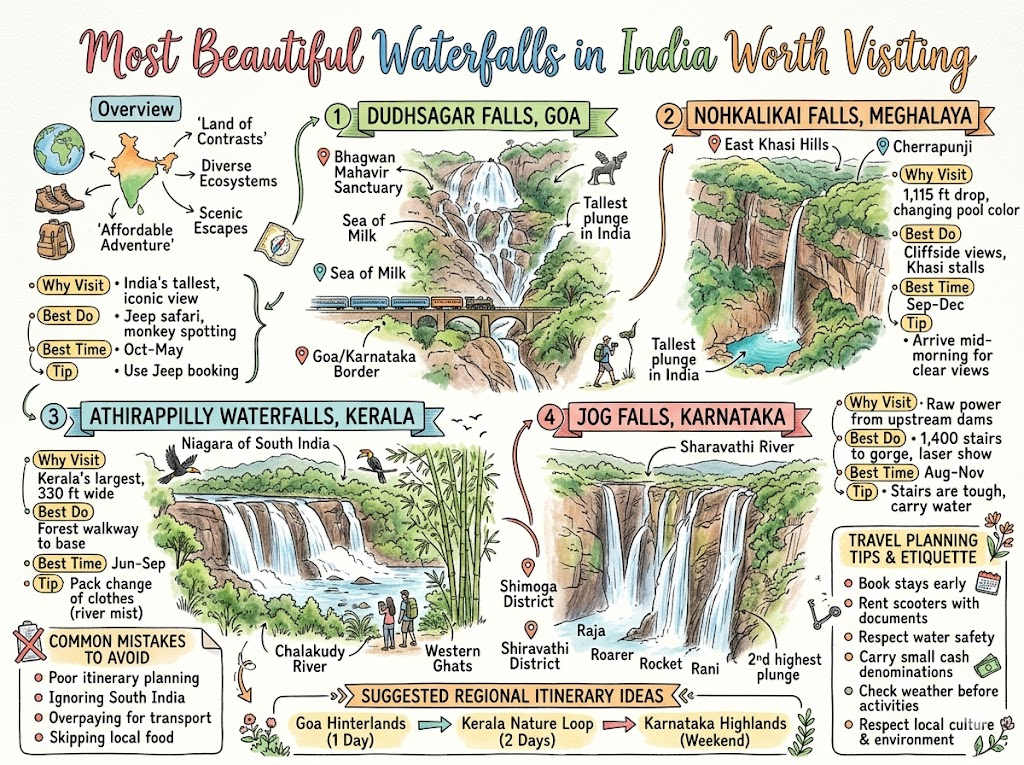
Introduction
When you picture a vacation in India, your mind might instantly drift to the sun-soaked golden sand of tropical coastlines, the buzzing energy of metropolitan nightlife, or historic fortresses rising out of desert sands. But there is an entirely different side to this vibrant country—one carved out by ancient rivers, dense rainforests, and dramatic mountain ranges.
India is a land of profound natural contrasts. Beyond its bustling cities, it offers deep cultural roots, incredible local cuisine, thrilling outdoor adventures, and serene natural escapes. For travelers looking to step off the concrete pavement and immerse themselves in raw nature, India’s majestic river networks create some of the most breathtaking spectacles on Earth. Chasing the most beautiful waterfalls in India worth visiting is one of the best ways to experience this wild, untouched beauty firsthand.
Why India is a Must-Visit Destination
India is a bucket-list destination because it refuses to be just one thing. It functions less like a single country and more like a vibrant continent packed with diverse ecosystems. You can hike through high-altitude Himalayan cold deserts in the morning, explore historical heritage palaces by afternoon, and relax near pristine rivers by evening.
For the modern traveler, an India travel guide reveals a network of experiences that are practical, affordable, and incredibly rewarding. Whether you are a solo backpacker looking for affordable hostels, a couple searching for romantic mist-covered hill stations, or a family wanting safe, organized nature trails, India delivers. The infrastructure connects major airports directly to lush green hinterlands, making India trip planning smoother than ever before.
Guide to India’s Best Waterfall Regions
Before diving into specific locations, it helps to understand how India’s geography shapes these spectacular water features so you can plan your India itinerary perfectly.
Best Places to Visit
The most dramatic waterfalls are concentrated in three main zones: the Western Ghats (stretching through Karnataka, Goa, and Kerala), the Northeast Hills (primarily Meghalaya, the wettest place on Earth), and the Himalayan Belt (including Himachal Pradesh and Uttarakhand).
Things to Do
Waterfall hopping in India isn’t just about standing at a viewpoint. Depending on the spot, you can embark on intense jungle treks, ride traditional circular coracle boats on the river foam, swim in safe natural plunge pools, or photograph rare wildlife in surrounding national parks.
Budget Planning
Nature exploration in India is incredibly wallet-friendly. Most major waterfalls are located within state parks or community reserves. Entry fees are nominal, usually ranging from 20 INR to 100 INR ($0.25 to $1.25 USD) per person, making it easy to keep costs low.
Best Places or Experiences
Here is a curated selection of the absolute finest waterfalls across the country, showcasing the distinct flavors of both North India travel guide treasures and South India travel guide staples.
1. Dudhsagar Falls, Goa
This massive, four-tiered waterfall looks exactly like its name implies—a cascading “Sea of Milk.” It plunges down a sheer mountain face right on the border of Goa and Karnataka, surrounded by the protected wildlife of the Bhagwan Mahavir Sanctuary.
Location
Sanguem Taluka, South Goa, India.
- Why it is worth visiting: It is one of India’s tallest waterfalls (1,017 feet) and features a historic railway bridge slicing directly across the middle of the cascade, creating an iconic, cinematic visual.
- Best things to do: Take an authorized 4×4 jungle jeep safari through the bumpy forest tracks of the national park, spot wild monkeys in the canopy, and enjoy the misty spray from the safe viewing base.
- Best time to visit: October to May (post-monsoon provides great flow with safe forest access; peak monsoon trails often close due to high water levels).
- Ideal for whom: Adventure seekers, friend groups, solo travelers, and couples looking for a thrilling day trip away from Goa’s beaches.
- Travel tip: Do not attempt to walk along the active railway tracks to reach the falls. Use only the forest department’s authorized jeep booking counter at Colem.
2. Nohkalikai Falls, Meghalaya
As the tallest plunge waterfall in India, Nohkalikai drops a staggering 1,115 feet from a lush, forested plateau directly into a striking, emerald-green rock pool below. It is the crown jewel of northeastern India’s green landscapes.
Location
East Khasi Hills District, near Sohra (Cherrapunji), Meghalaya.
- Why it is worth visiting: The sheer vertical drop is mesmerizing. Because it is fed by the intense rains of Cherrapunji, the pool at the bottom changes contrast colors based on the season, shifting from brilliant turquoise to deep jade green.
- Best things to do: Walk along the secure cliffside viewing platforms, buy local organic cinnamon and wild honey from Khasi villagers at the stalls, and take the advanced stairs trail if you are an experienced trekker.
- Best time to visit: September to December when the heavy monsoon cloud cover clears up, revealing panoramic views of the entire valley landscape.
- Ideal for whom: Landscape photographers, families looking for clean viewing points, and backpackers exploring hidden places in India.
- Travel tip: Heavy mountain mist can roll in within minutes, completely blocking the view. Arrive around mid-morning when the sun is high for the clearest visibility.
3. Athirappilly Waterfalls, Kerala
Frequently called the “Niagara of South India,” Athirappilly is a wide, roaring cascade on the Chalakudy River. Surrounded by the hyper-biodiverse rain forests of the Western Ghats, this spot has served as the back-drop for numerous big-budget epic Indian films.
Location
Thrissur District, Kerala, India.
- Why it is worth visiting: It is the largest waterfall in Kerala, spanning over 330 feet in width. The combination of dense bamboo forests, soaring hornbill birds, and the absolute power of the river makes it unforgettable.
- Best things to do: Take the beautifully paved, family-friendly forest walkway down to the absolute base of the falls to feel the roaring wind and spray, or book a guided ecotourism jungle safari nearby.
- Best time to visit: June to September (the peak rainy season brings out its wildest, most dramatic avatar).
- Ideal for whom: Families with young children, elderly travelers, honeymooning couples, and wildlife enthusiasts.
- Travel tip: Pack a complete change of clothes in a waterproof bag. Even if you don’t swim, standing near the lower pathway will get you completely soaked in river mist.
4. Jog Falls, Karnataka
Formed by the pristine Sharavathi River, Jog Falls drops 829 feet down a jagged rock cliff. Instead of a single stream, the river splits into four distinct, historic cascades affectionately named Raja, Roarer, Rocket, and Rani.
Location
Shimoga District, Karnataka, India.
- Why it is worth visiting: It is the second-highest plunge waterfall in the country and offers an incredibly raw display of power when the upstream dams release seasonal water.
- Best things to do: Climb down the well-maintained steps (around 1,400 stairs) into the deep canyon gorge to look directly up at the massive drop, or view the evening laser light show from the main tourist complex.
- Best time to visit: August to November when the flow is immense and the valley turns into a vibrant, glowing green paradise.
- Ideal for whom: Trekkers with good knee stamina, road-trippers from Bangalore, and weekend travelers.
- Travel tip: The climb back up the 1,400 stairs can be tough under the humid sun. Take small breaks, carry an insulated bottle of water, and avoid the midday heat.
Travel Planning Tips for India
To make your journey smooth and sustainable, keep these practical India vacation tips in mind:
- Book stays early during peak season: Popular hill towns near waterfalls (like Munnar, Ooty, or Cherrapunji) have limited boutique homestays. Secure your rooms 2 to 3 months early if visiting during monsoon or winter peaks.
- Rent scooters only with proper documents: Renting a moped is a great way to explore waterfall backroads. Always ensure you have a valid International Driving Permit (IDP) along with your domestic license, and never ride without a helmet.
- Respect water safety rules: Indian river currents can be incredibly deceptive, with hidden underwater rocks and sudden drop-offs. Only swim in designated zones marked safe by local lifeguards or tourism signs.
- Carry cash for local markets: While digital payments (UPI) are widely used in cities, remote jungle checkpoints, rural parking lots, and roadside fruit stalls often accept cash only. Keep small denominations handy.
- Check weather reports before water activities: Flash floods can occur instantly in mountain streams during heavy downpours. Always check local regional weather alerts before booking river treks or boat rides.
- Respect local culture and environment: Many water sources in India are considered sacred by local indigenous communities. Avoid littering, take your plastic bottles back with you, and never wash clothes or leave trash in pristine natural pools.
Common Mistakes to Avoid
- Poor itinerary planning: Trying to cover North and South India in a single week will leave you exhausted at airports. Pick one region and explore its depths thoroughly.
- Ignoring South India: Many international travelers focus exclusively on northern heritage circuits. By doing so, they miss out on the incredible rainforests, ancient spice routes, and jaw-dropping river networks of the southern states.
- Overpaying for transport rentals: Always settle on taxi or auto-rickshaw fares before stepping inside, or better yet, use verified ride-hailing apps or official government tourist transport desks.
- Skipping local food: Don’t stick to boring hotel buffets. Try regional staples near the attractions—like hot Akki Rotti (rice flatbread) in Karnataka, or steaming plates of momos in the misty hills of Meghalaya.
Suggested India Itinerary Angle
Here is how you can easily fit India’s spectacular natural water features into your next India itinerary layout.
1-Day Regional Escape (Goa Hinterlands)
- Morning: Skip the beach crowds and catch an early 7:00 AM jeep safari from Colem straight into the Mollem forest to witness Dudhsagar Falls at sunrise.
- Afternoon: Enjoy a traditional Goan spice plantation buffet lunch nearby, sampling fresh fish curry and local tracking fruits.
- Evening: Return to the coast just in time to watch the sunset over the Arabian Sea.
2-Day Nature Loop (The Kerala Circuit)
- Day 1: Arrive in Kochi, drive up through the winding forest roads to Athirappilly. Spend the afternoon exploring the base trail and check into an eco-lodge overlooking the river canyon.
- Day 2: Visit the nearby sister cascades of Vazhachal and Charpa. Head to the elephant training camp at Kodanad before returning to the city.
Weekend Travel Plan (The Karnataka Highlands)
- Friday Night: Catch an overnight luxury sleeper bus or train from Bangalore heading towards Shimoga.
- Saturday: Spend the morning exploring the grand vistas of Jog Falls. In the afternoon, take an offbeat drive to the nearby historic Ikkeri temple.
- Sunday: Hike through the mist of the nearby evergreen forests, grab an authentic local South Indian breakfast, and head back to the city hub by evening.
FAQs
1. Which is the highest waterfall in India?
Kunchikal Falls in Karnataka holds the official title of the highest tiered waterfall in India, cascading down boulders from a height of 1,493 feet. For a single vertical drop, Nohkalikai Falls in Meghalaya is the tallest plunge waterfall in the country.
2. Is it safe to swim at the bottom of these waterfalls?
Only in designated areas. Waterfalls like Dudhsagar have controlled pools where swimming is allowed with mandatory life jackets during safe months. Always check local warning signs and avoid swimming during heavy monsoons due to dangerous undercurrents.
3. How do I get around remote areas to visit hidden places in India?
The most reliable way is hiring a private taxi for the day or renting a scooter if you prefer flexibility. For tight budgets, state-run public transport buses connect major regional towns to nearby villages quite effectively.
4. What should I pack for a waterfall trek in India?
Pack sturdy shoes with excellent wet-grip rubber soles, a quick-dry towel, a premium waterproof dry-bag for your electronics, non-toxic mosquito repellent, and a lightweight poncho or raincoat.
5. Are these tourist destinations family-friendly?
Yes! Major sites like Athirappilly and Nohkalikai have flat, paved viewing platforms, clean bathrooms, and snack stalls close to the entrance, making them exceptionally comfortable for seniors and young children.
6. Do I need an entry permit to visit waterfalls in Northeast India?
Some states in the Northeast require an Inner Line Permit (ILP) or a Protected Area Permit for foreign and domestic tourists. However, Meghalaya (where Nohkalikai is located) is open to all without special permits, though you should carry standard government ID.
7. Can we visit these waterfalls during the peak winter months?
Absolutely. While they won’t have the roaring, terrifying volume of the monsoon months, they become crystal clear, serene, and offer much better weather for hiking, birdwatching, and picnics.
8. Are there good vegetarian food options near these remote spots?
Yes, vegetarian food is incredibly common and easily accessible across India. Even at remote roadside stalls, you will easily find freshly cooked vegetarian dishes, hot tea (chai), and tender coconut water.
9. What is a coracle boat ride, and where can I try one?
A coracle is a traditional, lightweight, bowl-shaped circular boat made of woven bamboo. You can experience thrilling coracle rides right on the river foam at places like Hogenakkal Falls on the border of Tamil Nadu and Karnataka.
10. How can I avoid heavy crowds during my trip planning?
Aim to reach the popular waterfall entrances early in the morning by 8:00 AM, right when the gates open. Alternatively, plan your travel on weekdays rather than weekends to avoid local holiday crowds.
Conclusion
Exploring the most beautiful waterfalls in India worth visiting gives you a profound appreciation for the raw, natural wealth this magnificent country protects. By stepping away from the standard tourist traps and heading deep into the green hills, you will create unforgettable memories while supporting local communities.
For comprehensive resources on making smarter travel choices, mapping out hidden paths, and simplifying your next big vacation, let holidaylandmark.com be your anchor. For additional deep dives into regional routes, you can also consult Indiaorbit.com as an excellent travel guide to plan your next adventure across India smoothly and sustainably. Pack your bags, respect the environment, and let the journey begin!

Waterfall trips are best enjoyed slowly, so adding small buffer time for weather changes, slippery trails, and local detours can make the experience safer and more memorable.