MOTOSHARE 🚗🏍️
Rent Bikes & Cars Directly from Owners
Motoshare connects vehicle owners with people who need bikes and cars on rent. Owners earn from idle vehicles, and renters get flexible ride options.
Visit Motoshare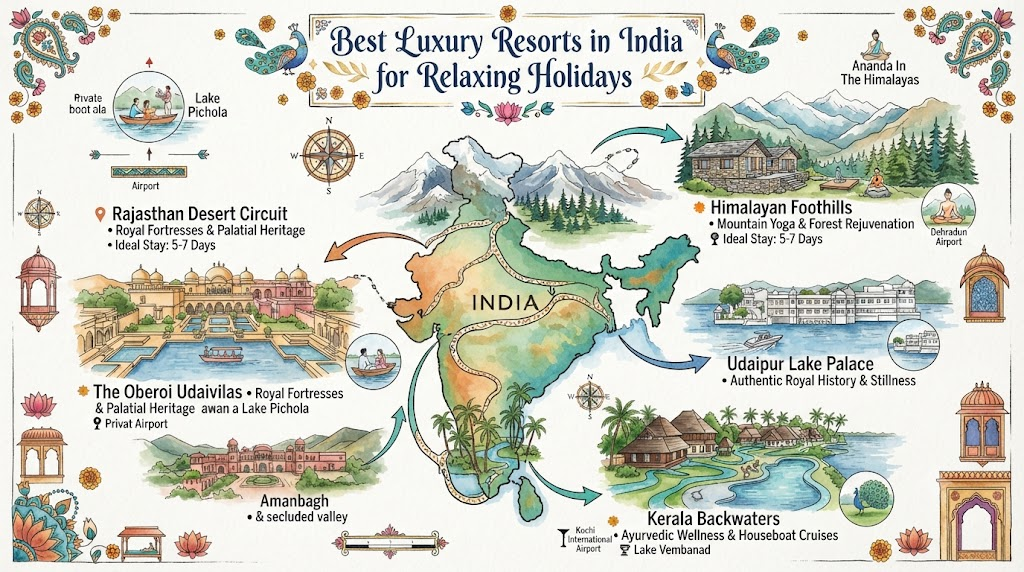
Introduction
Mainstream travel itineraries often channel vacationers into packed cities or overcrowded sightseeing loops where traffic and noise shatter any promise of peace. True restoration requires a complete departure from the ordinary, pulling away toward hidden sanctuaries that embrace the slower rhythms of traditional life. India possesses an incredible portfolio of secluded luxury enclaves that prioritize ancestral heritage, authentic cultural integration, and total mental clarity over uniform modern packaging. These properties do not just offer a place to rest your head; they invite you to enter a living chronicle of royal courts, timeless coastal villages, and sacred wilderness preserves. By escaping to these meticulously curated spaces, you swap generic sightseeing for immersive local connections that linger in your memory long after you return home.
Why India is a must-visit city
The vast subcontinent of India provides an unparalleled geographic canvas for experiential travel, showcasing a dramatic transition from the snow-covered peaks of the north to the tropical backwater networks of the south. This diverse terrain allows for distinct luxury circuits that appeal to history enthusiasts, wellness seekers, and wildlife adventurers alike. The country’s infrastructure makes reaching these legendary enclaves remarkably straightforward, with a deeply integrated network of high-speed regional highways, dedicated tourist trains, and modern airport terminals. Whether you are charting a path through the deserts of Rajasthan or navigating the winding river paths of Kerala, the local hospitality sector pairs world-class comforts with a cultural philosophy that treats every guest as a visiting deity.
The primary luxury travel circuits easily connect historical fortresses, tranquil lakeside palaces, and peaceful forest sanctuaries. Travelers can easily combine short regional flights with private luxury vehicle rentals to move between these distinctly unique topographies without unnecessary hassle.
| Region | Primary Gateway | Signature Experience | Ideal Stay Duration |
|---|---|---|---|
| Rajasthan Desert Circuit | Jaipur Airport | Royal Fortresses & Palatial Heritage | 5-7 Days |
| Kerala Backwaters | Kochi International Airport | Ayurvedic Wellness & Houseboat Cruises | 4-6 Days |
| Himalayan Foothills | Dehradun Airport | Mountain Yoga & Forest Rejuvenation | 3-5 Days |
Best Places or Experiences
The Oberoi Udaivilas, Udaipur.
Taj Lake Palace, Udaipur. Source:
Amanbagh, Rajasthan.
Kumarakom Lake Resort, Kerala.
The Oberoi Udaivilas, Udaipur
The Oberoi Udaivilas reflects the grand scale of traditional Mewari architecture, sprawling across thirty acres of meticulously manicured royal hunting grounds on the banks of Lake Pichola. The property features a complex network of interconnecting domes, corridors lined with hand-painted frescoes, and sunlit inner courtyards. Stone fountains splash softly along the paths, while semi-private swimming pools hug the edges of the guest suites, allowing travelers to step directly into the cool water from their private stone terraces.
The resort balances its physical grandeur with an exceptionally quiet environment, offering clear views across the water toward the towering City Palace complex. Wild peacocks roam the lawns freely, and the entire property is oriented to capture the soft golden hour light as the sun dips below the Aravalli hills. This focus on stillness and architectural preservation makes it a benchmark for restorative luxury travel.
- Location: Udaipur district, Rajasthan; roughly 4 kilometers from the main city center and 27 kilometers from Maharana Pratap Airport.
- Why it is worth visiting: The resort provides a flawless contemporary recreation of a classic Rajput palace, offering unparalleled lakeside views and private boat arrivals.
- Best things to do: Take a private twilight cruise on a traditional wooden Shikara boat, book a customized marigold-infused spa therapy session, and join an early morning sketching class with a local master miniature artist in the interior courtyard.
- Best time to visit: October to March when the winter breeze keeps daytime temperatures pleasant for outdoor dining.
- Ideal for whom: Couples looking for a quiet romantic escape and architecture enthusiasts studying historical Rajasthani design.
- Travel tip: Book a premier lake-view room to enjoy direct access to the continuous semi-private pool that wraps around the palace wing.
Taj Lake Palace, Udaipur
Rising like a white marble mirage directly out of the deep waters of Lake Pichola, the Taj Lake Palace is an authentic 18th-century summer palace built for the royal family. The structure rests on a natural four-acre rock foundation, creating the illusion that the entire building floats effortlessly on the water’s surface. Every room features delicate wooden carvings, stained-glass windows, and custom silk draperies that showcase the peak of historical Indian craftsmanship.
The isolation of the island setting ensures an escape from the city’s busy streets, leaving guests with nothing but the gentle sounds of lapping waves and distant temple bells. Courtyards filled with blooming frangipani trees and lily ponds anchor the center of the palace, providing cool spaces to read or unwind. The legendary butler service treats every guest with the traditional hospitality patterns once reserved exclusively for the Mewar rulers.
- Location: Lake Pichola, Udaipur, Rajasthan; accessible via a short 5-minute private speedboat ride from the City Palace jetty.
- Why it is worth visiting: It is one of the few fully operational island palaces in the world, preserving centuries of genuine royal history within its marble walls.
- Best things to do: Attend a cultural evening dance performance at the open-air Jhankar courtyard, join a guided heritage walk with the resident royal historian, and enjoy a therapeutic massage on the specialized Jiva Spa boat.
- Best time to visit: November to February for crisp, clear evenings that are perfect for rooftop dining over the illuminated lake.
- Ideal for whom: History buffs wishing to live inside a genuine piece of heritage and couples celebrating significant milestones.
- Travel tip: Arrive exactly at sunset to experience the traditional welcome shower of rose petals as you step off the boat onto the main deck.
Amanbagh, Rajasthan
Tucked away in a quiet valley within the ancient Aravalli mountain range, Amanbagh serves as a secluded sanctuary carved entirely out of local pink sandstone and pale green marble. The property honors the structural elegance of the Mughal empire, featuring high ceilings, dramatic domed roofs, and deep verandas that look out onto old mango groves. The surrounding landscape remains largely untouched, offering a stark, beautiful contrast to the busy cities of the Golden Triangle.
The focus here is entirely on slow living and personal rejuvenation, away from the standard tourist paths. Guests can walk through the quiet gardens, swim in the massive jade-green central pool, or listen to the soft morning bird calls echoing off the valley walls. The resort feels completely self-contained, offering a rare sense of absolute privacy and connection with the natural world.
- Location: Alwar District, Rajasthan; roughly 90 kilometers northeast of Jaipur and a 2-hour drive from the state capital.
- Why it is worth visiting: The resort provides a deeply private escape into rural Rajasthan, balancing stark mountain wilderness with majestic Mughal-style architecture.
- Best things to do: Take a guided sunrise camel trek through the neighboring local villages, dine inside the atmospheric ruins of a nearby abandoned fort, and practice meditation under a mature banyan tree with the resident yogi.
- Best time to visit: September to April when the desert air cools down significantly, making village explorations highly comfortable.
- Ideal for whom: Wellness seekers looking for a deep mental reset and travelers wanting to experience authentic rural Indian village life.
- Travel tip: Take the short 20-minute afternoon trip to the historical Bhangarh Fort ruins nearby to photograph the complex when the crowds thin out.
Kumarakom Lake Resort, Kerala
Kumarakom Lake Resort sits comfortably along the banks of Lake Vembanad, showcasing a beautiful collection of authentic 16th-century ancestral villas that were carefully taken down and rebuilt piece by piece. The property features traditional Keralan wood architecture, sloping tiled roofs, and open-air bathrooms that look out into private courtyard gardens. Winding canals and a massive meandering swimming pool snake through the resort grounds, connecting the villas to the main lakefront.
The atmosphere is defined by the gentle rustle of coconut palms and the slow movement of traditional houseboats drifting along the horizon. Guests can spend their days watching local fishermen work, listening to the morning bird calls from the nearby sanctuary, or sitting quietly on their private wooden porches. The focus on traditional Ayurvedic wellness practices ensures a deeply restorative physical and mental experience.
- Location: Kottayam District, Kerala; approximately 75 kilometers from Kochi International Airport, easily reachable by road.
- Why it is worth visiting: The resort preserves genuine heritage Keralan homesteads while offering an authentic look into the peaceful life of the southern backwaters.
- Best things to do: Board a private luxury houseboat for a traditional lunch cruise, learn the ancient art of pottery making from a local artisan, and undergo a multi-day personalized Ayurvedic oil therapy program.
- Best time to visit: October to March for lower humidity levels, though the June to September monsoon season is ideal for traditional oil therapies.
- Ideal for whom: Families seeking a peaceful waterfront retreat and wellness travelers focusing on holistic natural healing.
- Travel tip: Book a meandering pool villa to enjoy direct access to the 250-meter swimming pool that flows right past your private back door.
Offbeat Exploration: Hidden Gems Tourists Miss
The Haunted Ruins of Bhangarh Fort
Located just a short drive from Amanbagh, this 17th-century archaeological site sits at the base of the Aravalli hills and is legally protected by the government, which bans entry after dark. The sprawling complex contains well-preserved stone marketplaces, ancient temples with detailed carvings, and the ruins of the royal palace. Walking through the empty stone gates early in the morning allows you to enjoy the site in absolute silence, completely free from typical tourist crowds.
The Kumarakom Bird Sanctuary Village Pathways
While most travelers view the lake from large boats, the narrow dirt paths looping around the edges of the nearby bird sanctuary provide a much more intimate look at rural life. Walking or cycling these trails early in the morning lets you spot migratory herons and kingfishers up close while watching local villagers harvest toddy from coconut trees. It is a quiet, sensory experience that shows you the true, unhurried pace of the backwaters.
Detailed Practical Guidance for Travelers
| Destination | Standard Entry Fee | General Timings | Best Local Food Options Nearby | Recommended Nearby Attractions |
|---|---|---|---|---|
| Udaipur Palace Zone | INR 400 | 09:30 AM – 05:30 PM | Traditional Mewari Ker Sangri, Laal Maas | Jagdish Temple, Saheliyon-ki-Bari |
| Alwar Valley Zone | Free (Public Area) | Open 24 Hours | Baked Kalakand, Bajra Roti with Ghee | Bhangarh Ruins, Ajabgarh Fort |
| Kumarakom Waterfront | Free (Resort Area) | Open 24 Hours | Karimeen Pollichathu, Appam with Stew | Pathiramanal Island, Bird Sanctuary |
Logistics & On-Ground Navigation
Local Transport Options
- Private Car Rentals: Hiring a dedicated vehicle with a professional driver remains the safest and most efficient way to travel between luxury resorts and regional airports.
- Prepaid Airport Taxis: Available at all major arrival hubs, offering a fixed-price transport option that cuts out any need for price haggling at the curb.
- Auto-Rickshaws: These three-wheeled vehicles are perfect for navigating short distances or tight village streets where larger cars cannot easily fit.
- Traditional Boats: Private speedboats and wooden shikhara boats handle all water transport across Lake Pichola and the Keralan backwaters.
Budget Planning
- Backpacking/Budget Tier: Expect to spend roughly INR 2,500 to INR 4,000 per day per person, which covers simple local guesthouses, regional street food, and public buses or auto-rickshaws.
- Mid-Range/Comfort Tier: Plan for around INR 8,000 to INR 15,000 per day, covering mid-tier heritage boutique stays, sit-down local restaurants, and private air-conditioned car rentals.
Safety and Inclusivity Tips
- Families: Stick to private car rentals for your daily travel needs to maintain a comfortable pace for young children and older relatives.
- Couples: Book private evening boat rides or secluded dining experiences well ahead of time to secure the quietest spots away from larger tour groups.
- General Safety: Drink only sealed, bottled water throughout your trip and dress conservatively when visiting local temples or rural villages.
Strategic Travel Planning Guardrails
Travel Planning Tips for India
- Reserve your luxury resort suites at least four to six months early if you plan to travel during the busy winter peak season.
- Keep a small amount of cash in small bills on hand, as rural vendors and auto-rickshaw drivers rarely accept international credit cards.
- Download a reliable digital payment app that links to international travel cards, which is now widely accepted across most urban businesses.
- Remove your shoes and cover your shoulders before entering any village temple or sacred monument.
- Carry high-quality sun protection and bug spray, especially when planning evening boat trips along the southern backwaters.
Common Mistakes to Avoid
- Do not try to jam both Rajasthan and Kerala into a short four-day travel itinerary, as the travel distances between them will exhaust you.
- Avoid booking cheap, unregulated street tours at airport arrival gates; stick to the transport desks managed directly by your resort.
- Do not pack heavy, delicate winter clothes for southern India, where the weather stays tropical and humid all year long.
- Avoid eating raw salads or unpeeled fruits from roadside stalls; stick to hot, freshly cooked items to protect your stomach.
- Do not skip the authentic regional dishes on your resort’s menu in favor of familiar international comfort foods.
Suggested Itinerary Blueprints
1. 3-Day Quick Dash (The Regal Lake Escape)
Designed for time-pressed travelers seeking a rapid immersion into royal history. Fly directly into Udaipur, check into your lakeside palace resort, and spend your days touring the massive City Palace complex paired with private sunset boat cruises across Lake Pichola.
2. 5-Day Deep-Dive (Desert Splendor to Mountain Peace)
An ideal balance between royal architecture and deep wilderness relaxation. Spend your first two days exploring the pink palaces and markets of Jaipur, then transfer by private car to a secluded valley resort in Alwar for three days of village trekking, ruins exploration, and daily yoga.
3. Complete Weekend Travel Plan (The Southern Waterways Loop)
A perfect Friday-to-Sunday escape into the tropical backwaters.
- Friday: Arrive at Kochi Airport, take a private car to your Kumarakom lakeside resort, and enjoy a traditional Keralan dinner by the water.
- Saturday: Start with an early morning bird sanctuary walk, followed by an afternoon of personalized Ayurvedic oil therapies and a lakeside cultural dance performance.
- Sunday: Take a leisurely late-morning luxury houseboat cruise across Lake Vembanad before heading back to the airport for your evening flight home.
Common Tourist Mistakes to Avoid
- Geographic Blunders: Trying to explore the desert fortresses of Rajasthan and the tropical backwaters of Kerala on consecutive days is a recipe for exhaustion. Focus on one distinct geographic zone per week to ensure you actually have time to relax and unwind.
- Commercial Traps: Spending your limited vacation time wandering through modern, crowded shopping malls strips away the magic of your trip. Seek out traditional artisan workshops and quiet village markets where authentic heritage crafts are still made by hand.
- Neglecting Alternative Zones: Many travelers visit the major fort complexes but completely overlook the quiet, artistic residential neighborhoods and locally owned garden cafes nearby. These lesser-known areas often offer the most peaceful, authentic glimpses into modern local life.
- Transport Overpayment: Accepting unmetered rides from street-side drivers often leads to paying inflated prices. Always request that your driver use the official meter, or cross-reference the price using a ride-sharing app before stepping into the vehicle.
- Luxury Dining Bias: Relying entirely on international hotel buffets means missing out on the true culinary heart of the region. Trying clean, freshly prepared local specialties from historic multi-generational kitchens connects you directly with the soul of the culture.
Frequently Asked Questions
- What is the best way to travel between the luxury resorts in Rajasthan?
The most reliable and comfortable option is to hire a private air-conditioned car with a professional driver through your resort concierge, ensuring smooth travel across regional highways.
- Are Ayurvedic wellness treatments included in the standard room rates in Kerala?
Most luxury resorts offer specialized wellness packages that include treatments, but individual ala carte spa therapies usually carry an additional fee.
- What is the appropriate dress code when visiting rural villages near the resorts?
Travelers should dress modestly by keeping their shoulders and knees completely covered, and avoid wearing overly tight or revealing clothing out of respect for local customs.
- Do I need to carry physical cash if I have a working international credit card?
Yes, you should always keep an emergency supply of physical rupees on hand, as small-town vendors, auto-rickshaw drivers, and rural historical monuments rarely take cards.
- Is it safe to drink the tap water provided inside five-star luxury resorts?
While luxury properties use high-quality filtration systems, it is always safest to stick to sealed, branded bottled water for drinking and brushing your teeth.
- Can the resorts arrange private tours to attractions that are closed to the public?
Resort concierges can often organize exclusive early morning or late evening access to specific historical landmarks and private artisan workshops.
- How far in advance should I book my stay for a winter holiday?
You should secure your resort bookings at least four to six months ahead of time, as the winter months represent the peak travel season across India.
- What is the standard tipping etiquette for hospitality staff at luxury properties?
Many luxury resorts utilize a central staff tip box at the front desk, but tipping your personal palace butler or private driver directly is always appreciated.
- Are these secluded luxury properties suitable for travelers with limited mobility?
Most modern luxury resorts offer accessible ground-floor villas and golf cart transport, though historic step-wells and old fortresses often feature uneven stone steps.
- What options are available for travelers with strict dietary restrictions?
The culinary teams at these high-end resorts excel at customization and can easily accommodate vegan, gluten-free, or specific allergen restrictions with advance notice.
- Do I need a special permit to visit rural areas near the borders?
Standard tourist destinations do not require extra permits, but specific remote wilderness preserves or military border zones require official government documentation.
- Is the monsoon season a good time to visit India for a relaxing holiday?
The monsoon months are spectacular for traditional southern Ayurvedic treatments due to the cool, humid air, but heavy rains can disrupt outdoor sightseeing in northern desert regions.
Conclusion
Choosing a thoughtful, slower-paced journey through India’s premier luxury enclaves delivers a profound mental and physical reset that a standard checklist holiday simply cannot match. By stepping off the crowded tourist tracks and into carefully preserved heritage sanctuaries, you allow the true spirit of the region to unfold at its own natural pace. You return home not just with photographs of famous stone walls, but with a deep, lasting connection to the land, its people, and its timeless traditions
