MOTOSHARE 🚗🏍️
Rent Bikes & Cars Directly from Owners
Motoshare connects vehicle owners with people who need bikes and cars on rent. Owners earn from idle vehicles, and renters get flexible ride options.
Visit Motoshare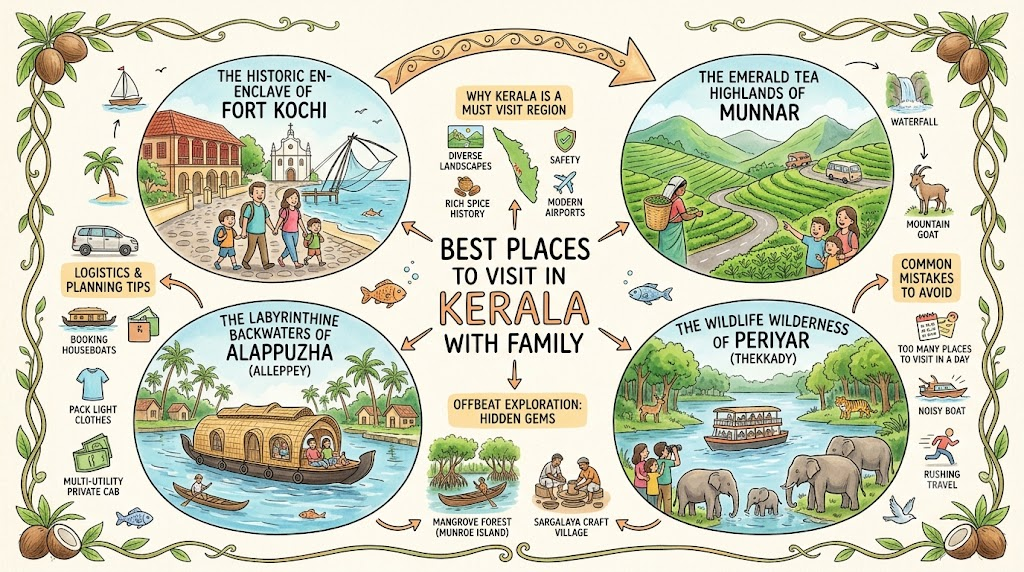
Introduction
Modern family vacations have unfortunately morphed into a predictable routine of navigating overcrowded amusement parks, queuing up at sterile mall complexes, and staring at screens in generic high-rise resorts. If you are tired of these artificial tourist bubbles and crave an escape that offers authentic bonding, it is time to pivot your compass toward South India. Kerala, affectionately known as “God’s Own Country,” offers a profound alternative where multi-generational families can disconnect from the digital hum and plug back into the rhythm of nature.
Here, the air smells of crushed cardamom and damp earth rather than exhaust fumes, and the evening soundtrack is composed of temple drums and lapping waves instead of city traffic. This coastal strip values deep-rooted traditions, ecological mindfulness, and genuine hospitality, making it the perfect setting for a meaningful family trip. Whether you are traveling with toddlers who marvel at wild elephants or grandparents seeking the serene embrace of Ayurvedic heritage, Kerala weaves a collective memory that sticks with your family long after the suitcases are unpacked.
Why Kerala is a Must Visit Region
At a macro-level, Kerala functions as a masterclass in geographical diversity crammed into a beautifully narrow, easily navigable strip of land. Flanked by the crashing Arabian Sea on the west and the mist-shrouded Western Ghats on the east, the state allows families to transition from sun-drenched coastal ports to emerald tea plantations in a matter of a few hours. Historically, this land was the crown jewel of the global spice route, attracting Phoenician, Roman, Chinese, and European seafaring merchants whose cultural footprints still linger in local architecture, culinary arts, and daily life. For families, this translates into an incredibly rich living textbook where kids can touch centuries-old colonial walls and observe ancient maritime fishing techniques still in active use.
Logistically, Kerala boasts some of the highest human development indices in India, which manifests practically as a safe, exceptionally clean, and highly accessible ecosystem for domestic and international travelers alike. An extensive network of well-maintained national and state highways cleanly links the coastal plain to the high hills, while a reliable railway spine runs the entire length of the state from north to south.
With three primary international airports strategically positioned in Kochi (Central), Thiruvananthapuram (South), and Kozhikode (North), your family can easily avoid exhausting overland transits. The local hospitality sector is exceptionally mature, offering an array of family-oriented stays ranging from interactive organic farm homestays to high-end heritage properties that are fully equipped to cater to the mobility needs of seniors and the dietary preferences of young children.
The classic family travel circuit smoothly traces a path from the historical ports of central Kerala, dips down into the labyrinthine emerald backwater networks, climbs up into the cool, spice-scented mountain stations of the Western Ghats, and settles along the gentle, coconut-fringed southern beaches.
| Regional Attribute | Key Practical Detail for Families |
|---|---|
| Primary Gateways | Cochin International Airport (COK), Trivandrum International Airport (TRV) |
| Peak Travel Window | October to March (Cool, dry, and ideal for outdoor exploration) |
| Core Terrain Types | Coastal Plains, Labyrinthine Backwaters, High-Altitude Tea Highlands |
| Signature Culinary Style | Coconut-infused gravies, Karimeen Pollichathu, steamed Idiyappam |
| Transport Infrastructure | Excellent private cab networks, clean rail corridors, local passenger ferries |
Best Places or Experiences
The iconic Alappuzha Backwaters.
Historic Chinese Fishing Nets at Fort Kochi.
Breathtaking Tea Estates of Munnar.
The Historic Enclave of Fort Kochi
Fort Kochi is a captivating seaside neighborhood where time seems to slow down to a gentle crawl. Walking through its sun-dappled lanes feels like wandering through an open-air museum, where 500-year-old Portuguese churches, grand Dutch manors, and a historic Jewish synagogue sit side by side along the waterfront. This area is the perfect, low-stress introduction to Kerala for families, offering walkable streets lined with cozy cafes and vibrant street art that will keep teenage children engaged.
The real magic happens down by the shoreline as the afternoon heat starts to fade. Your family can watch local fishermen operate the iconic, cantilevered Chinese Fishing Nets, massive wooden structures that look like elegant, giant spiders dipping gracefully into the Arabian Sea. Children can join the fishermen to help haul in the heavy ropes, turning a history lesson into a fun, hands-on memory.
- Location: Ernakulam District; located roughly 220 kilometers north of the state capital, Thiruvananthapuram.
- Why it is worth visiting: It represents a beautifully preserved crossroads of global empires, showcasing an architectural blend found nowhere else in India.
- Best things to do: Walk through the historic Paradesi Synagogue, watch a vibrant evening Kathakali dance performance at a local theater, and buy fresh catch right off the boats to have it cooked at a nearby shoreline shack.
- Best time to visit: Late afternoon between 4:00 PM and 7:00 PM to avoid the midday sun and capture the fishing nets against a spectacular sunset.
- Ideal for whom: History buffs, cultural explorers, and families traveling with curious teenagers.
- Travel tip: The streets are narrow and best explored on foot or via auto-rickshaws; keep small children close as sidewalks can be uneven.
The Emerald Tea Highlands of Munnar
Perched high up in the Western Ghats, Munnar is a breathtaking hill station wrapped in endless carpets of manicured green tea plantations. The crisp mountain air and cool breezes provide a welcome, refreshing break from the humid coastal plains. For generations, families have gathered here to watch the morning mist lift over the peaks, revealing deep valleys and plunging waterfalls.
Munnar offers an ideal mix of relaxing sightseeing and light outdoor adventure for active families. You can spend your days wandering through spice plantations filled with fresh vanilla and green cardamom, or head to the scenic Mattupetty Dam, where children can enjoy a fun speed-boat ride across a tranquil lake surrounded by pine forests.
- Location: Idukki District; situated approximately 280 kilometers north-of-east from Thiruvananthapuram.
- Why it is worth visiting: It is South India’s premier tea-growing region, famous for its dramatic landscapes and refreshing, cool climate.
- Best things to do: Take a guided tour through the interactive Tata Tea Museum, listen to your voice echo across the water at Echo Point, and look for rare mountain goats at Eravikulam National Park.
- Best time to visit: Between 10:00 AM and 2:00 PM for clear, panoramic mountain views before the afternoon mist rolls in.
- Ideal for whom: Nature lovers, photography enthusiasts, and multi-generational families looking for a cool escape.
- Travel tip: The winding mountain roads can easily cause motion sickness; pack appropriate medication for the drive up and book a vehicle with an experienced local driver.
The Labyrinthine Backwaters of Alappuzha (Alleppey)
Often called the “Venice of the East,” Alappuzha is a vast, magical network of glassy canals, mirror-like lakes, and hidden lagoons that run parallel to the Arabian Sea coast. Floating along these waterways on a traditional Kettuvallam (a giant, thatched-roof houseboat made without a single nail) is the quintessential Kerala experience. It offers a peaceful pace where your family can sit back on the deck and watch local life unfold along the banks.
As your boat glides past tiny island villages, you will see children paddling to school in wooden canoes, women washing bright clothes at the water’s edge, and local farmers guiding ducks through flooded rice paddies. The absolute peace of drifting off to sleep to the gentle lap of water against the hull is something your family will never forget.
- Location: Alappuzha District; positioned roughly 150 kilometers north of Thiruvananthapuram.
- Why it is worth visiting: It is a unique, world-renowned ecosystem that gives you an intimate look at a fascinating water-based way of life.
- Best things to do: Spend a night on a private luxury houseboat, explore the narrow canals on a smaller, open-air shikhara boat, and enjoy a traditional lunch served on a banana leaf.
- Best time to visit: Board your boat at 12:00 PM to enjoy a freshly cooked lunch as you cruise through the afternoon heat.
- Ideal for whom: Couples looking to unwind, stressed parents, and grandparents who want a relaxing way to take in the views.
- Travel tip: Ensure your houseboat has a valid license from the Department of Tourism and features a fully enclosed, air-conditioned dining area to keep mosquitoes out during the evening.
The Wildlife Wilderness of Periyar (Thekkady)
Set high in the cool mountains, Periyar National Park is a lush wildlife sanctuary centered around a large, scenic lake. Unlike parks where you search for animals from bumpy jeeps, Periyar lets your family spot wildlife from the safety and comfort of a multi-level passenger boat. This makes it a fantastic, low-stress wildlife experience for families traveling with young kids or elderly grandparents.
As the boat glides quietly across the water, everyone can keep an eye out for herds of wild elephants coming down to drink at the lake’s edge. You might also spot swimming wild boars, playful otters, and a wide variety of colorful tropical birds nesting in the skeletal trees that rise from the water.
- Location: Idukki District; situated 260 kilometers north-east of Thiruvananthapuram.
- Why it is worth visiting: It is one of India’s most stable and well-managed biodiversity hotspots, offering a peaceful way to see majestic animals in their natural habitat.
- Best things to do: Take a morning wildlife boat cruise on Periyar Lake, walk through an aromatic family-run spice garden, and watch an exciting Kalaripayattu martial arts martial show.
- Best time to visit: The 6:30 AM boat safari is the absolute best time for spotting wildlife and enjoying the peaceful morning light.
- Ideal for whom: Budding young scientists, animal lovers, and active outdoor families.
- Travel tip: Book your online boat tickets weeks in advance through the official forest department portal, as slots sell out quickly every day.
The Gentle Cliffs and Coastline of Varkala
Varkala is a unique coastal town where tall, dramatic red laterite cliffs plunge straight down into the soft sands of the Arabian Sea. It offers a much quieter, more family-friendly alternative to the crowded beach resorts found elsewhere. A paved walking path runs along the edge of the cliff, lined with open-air seafood restaurants, local juice bars, and shops selling colorful linen clothing.
The waters here are relatively calm and shallow, making it a wonderful spot for children to splash around under the watchful eye of local lifeguards. Parents can relax on rent-free sunbeds, sip fresh coconut water, and watch local fishermen launch their traditional wooden outriggers into the surf.
- Location: Thiruvananthapuram District; located just 45 kilometers north of the capital city.
- Why it is worth visiting: It is the only place in southern Kerala where unique geomorphological cliffs stand right beside the ocean, offering spectacular sunset views.
- Best things to do: Spend a relaxing morning swimming at Papanasam Beach, enjoy fresh wood-fired pizza on the cliffside, and visit the historic, 2,000-year-old Janardhana Swamy Temple.
- Best time to visit: From 4:30 PM to 6:30 PM for a refreshing swim followed by a beautiful sunset walk along the cliff path.
- Ideal for whom: Beach lovers, families looking for a relaxed pace, and foodies who enjoy fresh seafood.
- Travel tip: The steps leading down from the high cliff to the beach are steep and can get slippery; take your time and watch your step if you are traveling with elderly relatives or toddlers.
Offbeat Exploration: Hidden Gems Tourists Miss
The Mangrove Ecosystem of Munroe Island
Tucked away inside the quiet waters of Ashtamudi Lake, Munroe Island is a hidden paradise of narrow, mangrove-lined canals that large tour boats cannot reach. Families can rent a small, hand-paddled wooden canoe to glide silently under low-hanging green canopies and winding mangrove roots. It is an incredibly peaceful experience where you can see a slower side of Kerala life, watch locals harvest freshwater prawns, and spot rare kingfishers darting across the water.
The Artisanal Craft Village of Sargalaya
Located in northern Kerala, Sargalaya is an award-winning craft village dedicated to preserving the state’s traditional art forms. Instead of just buying generic souvenirs, your family can walk through open workshops and watch master artisans weave intricate mats from river grass, carve delicate sculptures from coconut shells, and shape clay pots on spinning wheels. Children can even sit down at a wheel and try making their own pottery under the gentle guidance of an expert craftsman.
Detailed Practical Guidance for Travelers
The following logistical summary details costs, timings, and culinary recommendations for the main destinations covered in this guide:
| Destination | Standard Entry Fee | General Timings | Best Local Food Options Nearby | Recommended Nearby Attractions |
|---|---|---|---|---|
| Fort Kochi | Free (Synagogue costs ₹5 per person) | Open 24 hours (Synagogue closes at 5:00 PM) | Fresh ginger tea and fish molee at Kashi Art Cafe | Santa Cruz Basilica, Mattancherry Palace |
| Munnar | ₹55 per person at Eravikulam | 7:30 AM to 4:00 PM (Eravikulam National Park) | Traditional vegetarian sadhya at Saravana Bhavan | Mattupetty Dam, Top Station view point |
| Alappuzha | Houseboat rentals start around ₹8,000 per night | Boarding at 12:00 PM; check-out at 9:00 AM | Spicy toddy-shop style Karimeen Fry on the boat | Alappuzha Lighthouse, Marari Beach |
| Thekkady | ₹45 per adult for sanctuary entry | 6:00 AM to 4:00 PM for park entries | Bamboo-shot chicken and appam at Our Place | Elephant Junction, Mudra Cultural Centre |
| Varkala | Free access to public beach spaces | Open 24 hours (Lifeguards active until 6:30 PM) | Grilled butter-garlic prawns at Darjeeling Cafe | Anjengo Fort, Kapil Lake backwaters |
Logistics & On-Ground Navigation
Local Transport Options
- Pre-Booked Private Cabs: This is by far the most comfortable, stress-free option for families. Hiring an air-conditioned multi-utility vehicle (like an Ertiga or Innova) with a professional, English-speaking driver handles all your navigation and luggage needs smoothly across the entire trip.
- The Coastal Railway Spine: For longer distances between major hubs (like traveling from Thiruvananthapuram up to Kochi), booking seats in an air-conditioned chair car is clean, highly affordable, and a fun way for kids to see the countryside.
- Auto-Richshaws: Ideal for quick, short trips within towns like Fort Kochi or Alappuzha. Always ask the driver to turn on the electronic fare meter before you start, or agree on a fixed price before getting in.
Budget Planning
- The Budget Family Tier: Expect to spend around ₹3,500 to ₹5,500 per day for a family of three. This covers staying in clean, family-run guesthouses, eating delicious meals at local family restaurants, using local trains or buses, and visiting public beaches and parks.
- The Mid-Range Comfort Tier: Expect to spend around ₹9,000 to ₹14,000 per day for a family of three. This includes staying in comfortable 3-star boutique resorts or heritage homestays with swimming pools, traveling in a private air-conditioned cab, booking a private houseboat stay, and enjoying meals at nicer, sit-down restaurants.
Safety and Inclusivity Tips
- For Families: The local culture is deeply respectful of family units. Most restaurants will gladly customize dishes to be less spicy for children, and hotels are usually very accommodating with early check-ins or extra bedding requests.
- For Senior Citizens: When visiting hilly areas like Munnar or Periyar, always inform your resort ahead of time if anyone has mobility concerns so they can assign you a ground-floor room without stairs.
- General Safety: Kerala is widely considered one of the safest regions in India for travelers. However, always exercise standard caution, keep an eye on weather warnings during the monsoon season, and avoid swimming at beaches after dark when currents can change quickly.
Strategic Travel Planning Guardrails
Travel Planning Tips for Kerala
- Book Your Houseboat Directly: Avoid booking through aggressive street brokers at the docks. Always book your houseboat directly through a reputable, verified operator or ask your resort to arrange a trusted option for you.
- Keep Cash Handy in Small Towns: While digital payment apps (like UPI) and credit cards are widely accepted in cities and major resorts, always carry some cash for small purchases like tender coconut water, auto-rickshaw rides, and entry tickets at smaller rural sites.
- Dress Appropriately for Sacred Spaces: When visiting traditional temples, ensure everyone’s shoulders and knees are covered. Note that some traditional temples require men to remove their shirts and wear a traditional fabric wrap (dhoti) to enter.
- Pack Light, Breathable clothing: Stick to loose cotton or linen clothes to stay comfortable in the coastal humidity. Don’t forget to pack a light sweater or fleece jacket for the cooler evening temperatures up in the mountains.
- Stay Hydrated Safely: Only drink bottled mineral water from sealed bottles, or use the filtered water stations provided by reputable hotels to keep your family healthy and hydrated.
Common Mistakes to Avoid
- Rushing Your Travel Schedule: Trying to pack the beaches, backwaters, and mountains into a short 3-day trip will leave your family exhausted from hours spent on winding roads. Give each destination at least two nights to truly enjoy the experience.
- Skipping the Local Homestays: Staying only in large, sterile international hotel chains means missing out on the warm hospitality, local stories, and incredible home-cooked food you can find at a traditional Keralite homestay.
- Assuming All Houseboats Are the Same: Cheaper, unverified houseboats often skip maintenance, run noisy old diesel engines, or skimp on air conditioning. It is always worth paying a bit more for a certified, well-reviewed boat.
- Avoiding the Local Street Food: Don’t be afraid to try fresh, hot snacks like banana fritters (Pazham Pori) or crispy lentil donuts (Vada) from busy local stalls; because they are cooked fresh throughout the day, they are usually safe and absolutely delicious.
- Forgetting Reliable Mosquito Protection: The lush greenery and tropical waterways mean mosquitoes come out at dusk. Always pack high-quality mosquito repellent sprays and creams, especially when staying near the water or in the forest.
Suggested Itinerary Blueprints
1. 3-Day Quick Dash (The Classic Gateway Loop)
This fast-paced itinerary is designed for families with limited time who want to experience Kerala’s essential highlights without feeling overly rushed.
- Day 1: Arrive at Cochin International Airport, check into a charming heritage hotel in Fort Kochi, and spend the afternoon exploring the historic streets and watching the sunset behind the Chinese Fishing Nets.
- Day 2: Take a smooth morning drive down to Alappuzha, board your private luxury houseboat at noon, and spend the rest of the day and night relaxing as you cruise past beautiful backwater villages.
- Day 3: Enjoy a quiet breakfast on the water, check out from the boat at 9:00 AM, head back to Cochin for some souvenir shopping, and catch your evening flight home.
2. 5-Day Deep-Dive (Hills and Houseboats Circuit)
Perfect for active families who want to experience both the misty green mountains and the peaceful tropical waterways at a comfortable pace.
- Day 1 & Day 2: Arrive in Cochin and drive straight up into the cool hills of Munnar. Spend these two days exploring expansive tea plantations, visiting the interactive Tea Museum, and enjoying short, scenic nature walks.
- Day 3 & Day 4: Head south down the mountains to the wildlife haven of Thekkady. Take a peaceful morning boat safari across Periyar Lake to look for wild elephants, and spend your afternoon touring a local spice farm.
- Day 5: Travel down to Alappuzha for a relaxing overnight stay on a traditional houseboat, taking in the serene backwater views before heading home the next morning.
3. Complete Weekend Travel Plan (The Southern Coast and Canals)
A wonderful, relaxed weekend getaway centered around the historic capital city and the beautiful southern coastline.
- Friday: Land at Trivandrum Airport, check into a cliffside resort in Varkala, and spend your evening unwinding on the soft sands of Papanasam Beach.
- Saturday: Take a short drive over to the hidden gem of Munroe Island for a quiet morning canoe ride through mangrove tunnels, then head back to Varkala for a fresh seafood dinner on the cliff path.
- Sunday: Visit the magnificent, 2000-year-old Janardhana Swamy Temple in the morning, browse the local shops for traditional spices and souvenirs, and head back to the airport for your flight out.
Common Tourist Mistakes to Avoid
- Geographic Blunders: Don’t make the mistake of trying to visit the mountain tea gardens of Munnar and the coastal beaches of Varkala on the same day. The mountain roads are winding and slow; trying to cross too much terrain in one day means spending your entire vacation stuck inside a car.
- Commercial Traps: Avoid spending your limited travel time inside the modern, air-conditioned shopping malls of downtown Ernakulam. They look just like malls anywhere else in the world; instead, head out to the vibrant spice markets of Mattancherry to experience the real local culture.
- Neglecting Modern/Alternative Zones: Don’t skip the creative, artistic side of the towns. Neighborhoods like Fort Kochi are home to beautiful contemporary art cafes, independent galleries, and independent boutiques that showcase a fresh, modern side of Kerala’s culture.
- Transport Overpayment: Never accept arbitrary flat rates from taxi or auto-rickshaw drivers waiting right outside tourist spots. Always use official, prepaid transport counters at airports and train stations, or cross-check prices on ride-sharing apps to make sure you are paying a fair local rate.
- Luxury Dining Bias: Eating only inside your luxury resort’s westernized dining room means missing out on the real soul of Kerala’s cuisine. Step outside to clean, busy local restaurants to try authentic, incredibly flavorful dishes like fluffy rice pancakes (Appam) with rich vegetable stew.
Frequently Asked Questions
1. Is Kerala a safe destination for families traveling with toddlers and senior citizens?
Yes, Kerala is consistently ranked as one of the safest and most comfortable states in India for family travel. The exceptionally high local literacy rates mean you will find a welcoming, respectful environment wherever you go. Most premium hotels, houseboats, and major tourist sites are single-level or feature accessible ramps, making them very easy to navigate for grandparents and young children alike.
2. How do we ensure the houseboat we book in Alleppey is safe and family-friendly?
Always make sure to book your boat through a licensed operator certified by the Kerala Department of Tourism. Verified boats are required to carry proper safety gear, including life jackets for all ages and functional fire extinguishers. Additionally, look for modern houseboats that offer fully enclosed, air-conditioned living and dining areas to keep your family comfortable and safe from mosquitoes in the evening.
3. What is the best way to handle spicy Kerala food when traveling with young kids?
While traditional Kerala food uses delicious local spices, most family-friendly restaurants are incredibly accommodating and will gladly prepare dishes with minimal spice for children upon request. Simple, mild dishes like fluffy Appam served with sweet coconut milk, steamed Idli, or a mild vegetable stew are nutritious, gentle options that young kids usually love.
4. Are there any specific dress codes we need to follow when visiting temples in Kerala?
Yes, traditional temples in Kerala maintain strict dress codes to respect the sacred space. Visitors are required to cover their shoulders and knees completely, meaning no shorts, short skirts, or sleeveless tops are allowed. Be aware that some historic temples require men to remove their shirts and wear a traditional woven wrap (dhoti) around their waist to enter the inner grounds.
5. How long should our family spend in Kerala to see the main highlights comfortably?
To truly enjoy the variety of landscapes without exhausting your family, we highly recommend a stay of 7 to 9 days. This gives you enough time to spend two relaxed nights each in major destinations like Fort Kochi, the mountains of Munnar, the forests of Thekkady, and the peaceful backwaters of Alappuzha without spending all your time driving.
6. Is it safe to swim in the ocean at beaches like Varkala or Kovalam?
While the main sandy beaches are beautiful and great for splashing around, the Arabian Sea can have strong undertows and sudden undercurrents. Always stay within the clearly marked safe swimming zones patrolled by local lifeguards. Avoid entering the water entirely after dark or during the rough monsoon season when waves can become unpredictable.
7. Do we need to worry about malaria or tropical diseases when traveling through Kerala?
Major tourist destinations in Kerala are not considered high-risk areas for malaria. However, because of the lush greenery and waterways, mosquitoes can be active around dusk. We recommend packing high-quality insect repellent containing DEET, choosing air-conditioned rooms or houseboats with protective window screens, and wearing long sleeves during evening walks.
8. Can we easily book a single private vehicle to take us across our entire Kerala itinerary?
Yes, booking a private air-conditioned cab (like a Toyota Innova) with a dedicated driver for your entire trip is the most popular and comfortable option for families. Your resort can easily arrange this with a trusted local transport company, ensuring you have a professional driver who knows the mountain routes and can help point out interesting spots along the way.
9. What should we pack for a trip that covers both the hot beaches and the cool mountains?
You will want to pack a mix of clothing to stay comfortable across different elevations. Bring light, breathable cotton or linen clothes for the warm, humid coastal towns and beaches. Don’t forget to pack a cozy sweater, light jacket, and comfortable walking shoes for the noticeably cooler evening temperatures up in hill stations like Munnar and Thekkady.
10. Are credit cards and digital mobile wallets widely accepted across Kerala?
Major credit cards, debit cards, and popular Indian mobile payment apps (like UPI) are widely accepted at almost all hotels, nice restaurants, and larger shops. However, it is always a good idea to carry a small amount of cash in your pocket for minor everyday expenses like buying fresh tender coconuts, paying for auto-rickshaw rides, or purchasing entry tickets at smaller rural sites.
11. What unique, authentic souvenirs can our family bring home from Kerala?
Kerala is famous for its high-quality, fragrant spices, so look for fresh green cardamom, black peppercorns, and vanilla beans from certified plantation shops. Other wonderful, authentic items to bring home include hand-carved ornaments made from aromatic sandalwood or coconut shells, and beautiful, traditional off-white handloom cotton clothing woven with elegant gold borders.
12. When is the absolute best time of year to plan a family vacation to Kerala?
The ideal window to visit is during the winter season between October and March, when the weather across the state is pleasantly cool, dry, and perfect for outdoor exploring. If your family enjoys lush, green landscapes and relaxing indoor wellness experiences, visiting during the rainy monsoon months of June to September offers a uniquely beautiful, quieter perspective of the region.
Conclusion
Choosing a family journey through Kerala over a standard, predictable resort vacation is a gift of genuine connection that your family will treasure for years to come. As you drift down the quiet, emerald backwaters together, watch the morning mist rise over endless tea hills, and share fresh, coconut-infused meals, the fast pace of modern life naturally fades away. The true beauty of Kerala lies not just in its stunning tropical landscapes, but in the slow, meaningful moments it creates—reminding us that the best travel experiences are the ones that bring us closer to nature, to rich cultures, and most importantly, to each other.

A useful addition would be a family-paced itinerary showing realistic travel times, rest stops, child-friendly meals, and senior-accessible stays. This would help families avoid exhausting schedules while balancing sightseeing, comfort, and unexpected delays.