MOTOSHARE 🚗🏍️
Rent Bikes & Cars Directly from Owners
Motoshare connects vehicle owners with people who need bikes and cars on rent. Owners earn from idle vehicles, and renters get flexible ride options.
Visit Motoshare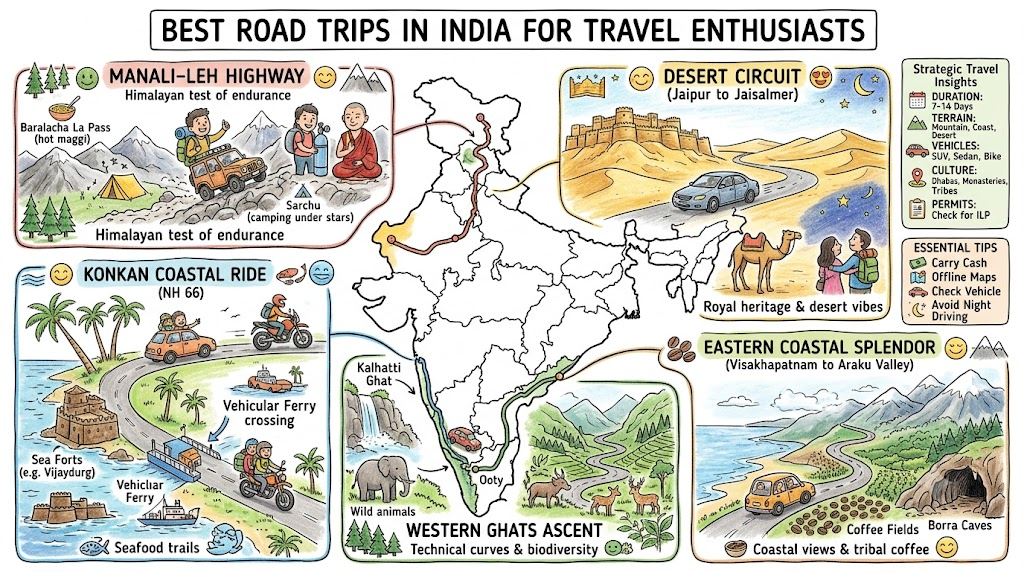
Introduction
Think of the typical vacation today, and your mind likely conjures images of overcrowded airport terminals, rigid tour bus schedules, and mainstream viewing decks packed shoulder-to-shoulder with selfie sticks. It is an experience engineered for convenience but entirely stripped of spontaneity.
True travel enthusiasts understand that India’s real magic cannot be packaged into a standard weekend flight itinerary. To touch the deep roots of this subcontinent, to feel its ancient authenticity and dramatic cultural shifts, you have to hit the tarmac. A road trip across India is a sensory awakening where dialects transform every fifty kilometers, landscapes morph from sub-zero mountain passes to humid coastal shorelines, and roadside dhabas (local eateries) serve culinary heritage perfected over generations.
Best Road Trips in India
India’s geographic and cultural tapestry is tailor-made for vehicular exploration, offering a macro-level view of a civilization built along ancient trade routes. Driving here provides an intimate connection with the land that no domestic flight can match.
The subcontinent’s infrastructure has undergone a massive modernization push, linking once-isolated mountain terrains, coastal villages, and desert outposts via world-class national expressways and well-engineered state highways. This high-level network ensures incredible accessibility for all traveler archetypes. Whether you are a solo backpacker on an adventure motorcycle, a couple seeking a romantic caravan escape, or a family charting a multi-day SUV expedition, the open road offers an unfiltered front-row seat to the country’s diverse topography.
The legendary Manali-Le Leh Highway circuit.
| Core Feature | Strategic Travel Insights & Regional Metrics |
|---|---|
| Total Recommended Duration | 7 to 14 Days (Depending on the specific regional circuit selected) |
| Primary Highway Networks | NH 3 (Manali-Leh), NH 66 (Mumbai-Goa), NH 216 (Visakhapatnam-Araku) |
| Terrain Diversity | High-altitude cold deserts, tropical coastal belts, forested ghats, and salt marshes |
| Best Vehicle Types | 4×4 SUVs for Himalayan routes; Sedans/Cruisers for coastal expressways |
| Permit Requirements | Inner Line Permit (ILP) required for specific border regions like Ladakh and Northeast India |
| Top Cultural Experiences | Roadside culinary trails, ancient monastery visits, and remote tribal interactions |
Best Places or Experiences
The Manali to Leh Highway Expedition
The journey from Manali to Leh is widely considered the holy grail of overland travel in Asia, cutting across the formidable Himalayan and Karakoram ranges. This route tracks historic trade paths, climbing through surreal, barren mountainscapes that feel more like the surface of the moon than earth.
As your vehicle scales dizzying mountain passes, the lush green pine forests of Himachal Pradesh melt away into the stark, wind-sculpted rock formations of Ladakh. Along the way, you will navigate treacherous water crossings, high-altitude plains, and hairpin curves that test your machine and your resolve, ending in a high-desert valley punctuated by whitewashed Buddhist stupas.
- Location: Connects Manali, Himachal Pradesh to Leh, Ladakh; spanning a distance of 428 kilometers across five high-altitude passes.
- Why it is worth visiting: It is an unmatched test of human endurance and vehicular capability, offering raw, panoramic views of the Trans-Himalayas and ancient Tibetan Buddhist culture.
- Best things to do: Stop for hot maggi at the wind-whipped Baralacha La Pass, drive across the perfectly flat and surreal More Plains, and camp under a hyper-clear Milky Way sky at Sarchu.
- Best time to visit: June to September, when the Border Roads Organisation (BRO) clears the winter snow and opens the highway to civilian traffic.
- Ideal for whom: Adventure junkies, experienced motorcyclists, and seasoned road-trippers looking for a true wilderness challenge.
- Travel tip: > Critical Safety Warning: Acute Mountain Sickness (AMS) is highly common here; carry portable oxygen cylinders and spend at least 48 hours acclimatizing in Manali or Keylong before climbing past 14,000 feet.
The Konkan Coastal Ride: Mumbai to Goa via NH 66
Swapping mountain chill for sea breezes, the Mumbai-to-Goa run along the Konkan Coast is a masterclass in laid-back, tropical exploration. The highway winds past sleepy coastal villages, dense mango orchards, and emerald paddy fields, occasionally reveals stunning vistas of the Arabian Sea.
What makes this journey unforgettable is the slow-paced, regional charm of the Konkan belt. Rather than rushing down the newly constructed expressways, taking the traditional state highways allows you to cross gentle rivers on vehicle ferries, explore crumbling sea forts, and dine at rustic family-run joints serving fresh, fiery seafood.
Cruising through the scenic Western Ghats.
- Location: Starts from Mumbai, Maharashtra, and stretches 590 kilometers southward to Panaji, Goa via the Western Ghats.
- Why it is worth visiting: It combines the thrill of driving through dense, forested mountain ghats with pristine, uncommercialized beach towns that mainstream tourists completely miss.
- Best things to do: Take a vehicular ferry ride across the Jaigad Creek, explore the black laterite ruins of Vijaydurg Fort, and watch the sunset from the pristine shores of Guhagar Beach.
- Best time to visit: October to February, when the post-monsoon greenery is at its peak and the coastal humidity drops to a comfortable level.
- Ideal for whom: Couples looking for a romantic coastal drive, seafood lovers, and friend groups seeking an iconic beach holiday alternative.
- Travel tip: Skip the faster, interior NH 48 highway for at least a portion of your trip and follow the MSRDC Coastal Highway for the best ocean views and ferry experiences.
The Desert Circuit: Jaipur to Jaisalmer
Driving through the heart of Rajasthan feels like steering a time machine through India’s royal past. The highway from the bustling state capital of Jaipur to the remote desert citadel of Jaisalmer transitions beautifully from chaotic urban centers to vast, golden stretches of the Thar Desert.
The roads here are flat, wide, and remarkably well-maintained, allowing you to cruise comfortably past rural communities where locals still wear vibrant turbans and traditional attire. As you approach the western border, the landscape flattens into an endless sea of rolling sand dunes, culminating in the sight of a massive golden sandstone fort rising from the desert floor.
- Location: Crosses the state of Rajasthan from Jaipur via Jodhpur to Jaisalmer, covering a total distance of 560 kilometers.
- Why it is worth visiting: It provides an immersive look into India’s architectural grandeur, royal heritage, and the distinct, resilient culture of the desert tribes.
- Best things to do: Stop over to tour the towering Mehrangarh Fort in Jodhpur, enjoy an authentic stargazing session in the middle of the Sam Sand Dunes, and explore the abandoned, haunted village of Kuldhara.
- Best time to visit: November to March, when the desert daytime temperatures are pleasant and nights are crisp and cool.
- Ideal for whom: Culture enthusiasts, history buffs, photography lovers, and families seeking comfortable road conditions.
- Travel tip: Watch out for wandering livestock, especially camels and chinkaras (Indian gazelles), which frequently cross the desert highways during dusk.
The Western Ghats Ascent: Bangalore to Ooty
The drive from the tech hub of Bangalore to the colonial-era hill station of Ooty is a favorite for southern road-trippers, famous for its dramatic elevation changes. The real magic begins once you cross the Karnataka state border and enter the protected reserve forests of the Nilgiri Biosphere.
Your vehicle climbs through a series of steep, tight switchbacks cut into the mountainside, surrounded by ancient deciduous forests. Keep your windows down to trade the city’s exhaust for the crisp smell of wild eucalyptus, damp earth, and expansive tea plantations that carpet the hillsides in deep green.
- Location: Routes from Bangalore, Karnataka through Mysore and Bandipur to Ooty, Tamil Nadu; covering roughly 270 kilometers.
- Why it is worth visiting: Features the legendary 36 Hairpin Bends of the Kalhatti Ghat, offering a thrilling drive alongside incredible biodiversity and wildlife sightings.
- Best things to do: Spot wild elephants and deer during the early morning drive through Bandipur National Park, stop for fresh tea tasting at the Pykara Waterfalls, and catch the view from Doddabetta Peak.
- Best time to visit: October to May, though a drive during the light monsoon months of July and August offers spectacular mist-shrouded mountain views.
- Ideal for whom: Driving purists who love technical mountain curves, nature enthusiasts, and weekend road-trippers.
- Travel tip: > Entry Restriction: The forest stretch through Bandipur is closed to civilian traffic from 9:00 PM to 6:00 AM daily to protect wildlife; plan your departure time accordingly to avoid getting stranded at the forest check post.
The Eastern Coastal Splendor: Visakhapatnam to Araku Valley
Often overlooked by international travelers, the road trip from the port city of Visakhapatnam to the elevated Araku Valley is one of the most scenic drives in Eastern India. The road quickly transitions from the crashing surf of the Bay of Bengal to the serene, mist-covered peaks of the Eastern Ghats.
The route passes through dense tribal belts, coffee plantations, and deep valleys. The air grows noticeably cooler with every hundred meters of elevation gained, making it a refreshing escape that showcases a completely different, slow-paced side of Andhra Pradesh.
- Location: Starts from coastal Visakhapatnam and climbs into the Araku hill region, spanning a comfortable 115 kilometers.
- Why it is worth visiting: It is a fantastic, short mountain driving experience that combines coastal views, ancient caves, and organic, tribal-grown coffee estates.
- Best things to do: Walk through the massive stalactite formations of the Borra Caves, sample unique local Bamboo Chicken prepared by tribal vendors, and watch the morning fog roll over the Galikonda Viewpoint.
- Best time to visit: September to March, when the valleys are exceptionally green and the local waterfalls are flowing at full capacity.
- Ideal for whom: Families looking for a relaxed weekend trip, slow-travel enthusiasts, and culinary explorers.
- Travel tip: Leave Visakhapatnam around 5:00 AM to catch the sunrise over the ocean before heading inland to tackle the mountain fog when traffic is light.
Offbeat Exploration: Hidden Gems Tourists Miss
The Ghost Town of Dhanushkodi
Located at the southernmost tip of Rameswaram island in Tamil Nadu, the drive to Dhanushkodi is a surreal experience. You cruise along a narrow strip of asphalt with the rough, deep blue waters of the Indian Ocean on your left and the calm, turquoise waters of the Bay of Bengal on your right. The road ends at a deserted town destroyed by a 1964 cyclone, where the ruins of a church and railway station stand frozen in time against the shifting sands.
The Village of Rather: Himalayan Solitude
While most travelers on the Leh highway rush through to reach the main town, taking a small detour into the Suru Valley leads you to untouched hamlets like Rather. This area features ancient rock-cut Buddha statues carved directly into the cliffsides, dating back to the 7th century. It is a quiet sanctuary of green barley fields set against massive, towering glaciers where you can experience traditional Ladakhi hospitality without the tourist crowds.
Detailed Practical Guidance for Travelers
| Destination | Standard Entry Fee | General Timings | Best Local Food Options Nearby | Recommended Nearby Attractions |
|---|---|---|---|---|
| Baralacha La Pass | Free (Green Tax applies at Manali exit: ₹100-₹500) | Open 24 hours (Daylight driving highly recommended) | Hot Thukpa, butter tea, and instant noodles at roadside tents | Suraj Tal Lake, Deepak Tal Lake |
| Vijaydurg Fort | ₹25 per person for domestic tourists | 9:00 AM – 6:00 PM | Authentic Malvani fish thali, Kombdi Vade, and fresh Solkadhi | Devgad Beach, Kunkeshwar Temple |
| Sam Sand Dunes | Free (Camel/Jeep safaris cost ₹500–₹2,000) | Open 24 hours (Sunset/Sunrise are peak hours) | Traditional Ker Sangri, Bajra Roti, and Lal Maas | Kuldhara Abandoned Village |
| Bandipur National Park | Free to drive through (Forest safari costs ₹300) | Highway open 6:00 AM – 9:00 PM | Traditional South Indian breakfast tiffin, filter coffee | Mudumalai Tiger Reserve, Himavad Gopalaswamy Betta |
| Borra Caves | ₹110 for Adults, ₹90 for Children | 10:00 AM – 5:00 PM | Locally sourced tribal Bamboo Chicken, organic Araku coffee | Katiki Waterfalls, Ananthagiri Coffee Plantations |
Logistics & On-Ground Navigation
Local Transport Options
- Self-Drive Car Rentals: Readily available in major hub cities like Mumbai, Bangalore, and Jaipur. Opt for unlimited kilometer plans from reputable platforms and ensure the vehicle carries a valid All India Tourist Permit (AITP).
- Adventure Motorcycle Rentals: If you are tackling the Himalayan or coastal loops, hubs like Manali and Siliguri offer specialized rentals of Royal Enfield Himalayans or cruisers, typically ranging from ₹1,200 to ₹2,500 per day.
- Private Chauffeured Cabs: Ideal for families who want to enjoy the route without the stress of navigating challenging Indian traffic patterns or mountain switchbacks.
Budget Planning
- Backpacker / Solo Tier (₹1,500 – ₹3,000 per day): Sticking to homestays or hostel dorms, eating meals at local roadside dhabas, choosing fuel-efficient hatchbacks or motorcycles, and prioritizing free natural attractions.
- Mid-Range / Comfort Tier (₹5,000 – ₹12,000 per day): Staying in boutique heritage hotels, eco-resorts, or trusted business hotels, renting comfortable SUVs or mid-size sedans, dining at established regional restaurants, and hiring local guides for historical monuments.
Safety and Inclusivity Tips
- For Families: Always carry a well-stocked medical kit with motion sickness medication, especially for mountain routes. Plan your restroom stops around modern fuel stations or highway food courts rather than isolated village roads.
- For Couples: Respect regional social norms in rural areas. While urban hubs and beach resorts are highly progressive, conservative dressing is recommended when stopping in small interior villages or religious monuments.
- General Safety: Never drive past dusk on unfamiliar mountain highways or remote desert routes. Poor lighting, unexpected potholes, and wandering livestock make night driving a major hazard across rural India.
Strategic Travel Planning Guardrails
Travel Planning Tips for Road Trips
- Digital vs. Cash Economy: While digital UPI payments are accepted almost everywhere in India, carry a minimum of ₹5,000 in physical cash when heading into deep mountain valleys or rural desert tracks where cellular networks fail.
- Pre-Book Seasonal Passes: Popular routes like the Manali-Leh highway require specific ecosystem permits (like the Rohtang Pass Permit or Ladakh Inner Line Permits). Secure these online at least a week in advance.
- Download Offline Maps: Cellular coverage can drop unexpectedly along deep gorges or vast desert plains. Download entire regional maps offline on Google Maps before leaving your starting hotel.
- Vehicle Inspection Checks: Before embarking, verify your vehicle’s tire tread depth, brake pad wear, oil levels, and ensure your spare tire is fully inflated and functional.
Common Mistakes to Avoid
- Over-packing your daily itinerary: Expect average highway speeds in India to be significantly lower than in Western countries due to diverse traffic, animal crossings, and changing road conditions. Plan for distance in time, not kilometers.
- Relying solely on fuel station GPS tags: Some remote fuel pumps marked on digital maps may be dry or out of service. As a rule of thumb, top up your tank whenever it drops to the half-way mark.
- Skipping regional roadside cuisine: Avoid the temptation of familiar fast-food chains on the highway. The tiny, unassuming dhabas frequently serve the freshest, most authentic regional dishes made with local ingredients.
- Overpaying at unmonitored checkpoints: Always ask for an official receipt for any state entry taxes, green taxes, or wildlife sanctuary fees collected along the road.
Suggested Itinerary Blueprints
1. 1-Day Quick Dash (The Araku Coffee Route)
- Target Audience: Busy professionals and weekend travelers seeking a rapid, scenic escape from the coast.
- Routing Layout: Depart Visakhapatnam at 5:30 AM, drive up the scenic Srungavarapukota ghat road, spend the midday exploring the Borra Caves, enjoy lunch in Araku Valley, visit the tribal museums, and return down the mountain pass by sunset.
2. 2-Day Deep-Dive (The Nilgiri Ascendancy)
- Day 1: Depart Bangalore at 6:00 AM, drive through the scenic old Mysore highway, stop for a traditional lunch in Mysore city, enter the Bandipur Forest during the permitted afternoon hours, and check into a jungle lodge by evening.
- Day 2: Tackle the thrilling 36 Hairpin Bends of Kalhatti Ghat early in the morning to avoid oncoming tourist buses, spend the afternoon exploring Ooty’s high-altitude tea gardens, and return via the smoother, wider Gudalur route.
3. Complete Weekend Travel Plan (The Konkan Explorer)
- Friday: Leave Mumbai at 5:00 AM via the NH 66 highway, drive past the scenic Sahyadri mountain foothills, and check into a beachside homestay in the quiet town of Guhagar by late afternoon.
- Saturday: Take the coastal ferry to Jaigad, drive along the cliffside roads overlooking the ocean, visit the historic Ratnagiri palaces, and reach the pristine sands of Malvan for a fresh seafood dinner.
- Sunday: Spend the morning exploring the historic ocean fortress of Sindhudurg before driving back toward Mumbai or continuing down into North Goa.
Common Tourist Mistakes to Avoid
Geographic Blunders
Attempting to map out a route that combines entirely different geographic zones—like attempting to see a high-mountain pass and an isolated forest reserve on the same day—is a recipe for exhaustion. Distances on Indian maps can look deceptively short, but mountain roads or single-lane state highways require significant focus and time to navigate safely.
Commercial Traps
Many road-trippers make the mistake of driving past gorgeous, historic villages just to spend their evening at a crowded, brightly lit mall or a generic highway food plaza. The true charm of an Indian road trip lies in pulling over at an old village square, chatting with a local artisan, and absorbing the authentic, slower rhythm of rural life.
Neglecting Alternative Zones
When visiting popular hill stations or coastal towns, travelers often cluster around the noisy, congested center spots. Always look to explore the quieter edges—the sleepy residential tracks, the hidden artist communities, or the peaceful organic cafe expansions that typically sit a few kilometers outside the main tourist hubs.
Transport Overpayment
When renting vehicles locally or using local transit options like auto-rickshaws during your road trip stops, avoid accepting the first flat rate offered by drivers near major tourist monuments. Cross-reference rates with app-based ride services or ask a local shopkeeper for the standard local fare to avoid inflated tourist pricing.
Luxury Dining Bias
Limiting your dining experiences solely to upscale, air-conditioned hotel restaurants means missing out on the true culinary heart of the region. The unpretentious street-side vendors, beach shacks, and family-run dhabas often serve dishes with deep regional flavors that are far more vibrant than any standardized hotel menu.
Frequently Asked Questions
1. Do I need an international driving permit to rent and drive a car for road trips in India?
If you are an international traveler, you can use a valid foreign driving license if it is printed in English. However, to stay fully compliant with local regulations and rental insurance policies, it is highly recommended to carry an International Driving Permit (IDP) alongside your original domestic license.
2. Which is the safest time of day to navigate high-altitude mountain passes in India?
The safest window is always between 6:00 AM and 2:00 PM. In the high mountains, afternoon sun melts glacial ice, which causes streams running across the roads to widen and become dangerous by late afternoon. Early morning driving also offers the best visibility before mountain fog rolls in.
3. Are there reliable electric vehicle (EV) charging networks along major Indian highways?
Yes, EV charging infrastructure is growing rapidly along major golden quadrilateral routes and popular expressways like Mumbai-Pune, Bangalore-Mysore, and Delhi-Jaipur. However, if you are planning to head deep into remote circuits like the Manali-Leh highway or the Thar Desert, internal combustion engines remain the more practical and reliable option for now.
4. What should I do if my vehicle breaks down in a remote area with no mobile network?
Stay with your vehicle and wait for local drivers or commercial trucks to pass by. Indian highway truck drivers are incredibly knowledgeable about vehicle mechanics and are famously helpful to stranded tourists. It is also good practice to carry a basic tow strap and a physical list of emergency roadside assistance numbers provided by your rental agency.
5. How do I manage toll payments across different states during an Indian road trip?
India uses a unified, mandatory electronic toll collection system called FASTag. Nearly all rental vehicles come with a pre-activated FASTag sticker on the windshield. Ensure your rental provider has linked a funded digital wallet to it so you can zip through automated toll lanes without needing to wait in long cash rows.
6. Is it safe for solo female travelers to go on long-distance road trips in India?
Yes, many solo female travelers explore India by road safely. The key lies in strategic planning: avoid driving after dark, pre-book stays at reputable homestays or boutique hotels, keep your phone charged, and stick to well-frequented national highways during long transit days.
7. Can I easily find unleaded petrol and high-speed diesel across all rural highway networks?
Standard petrol and diesel are widely available across India’s vast network of public fuel stations. However, special high-octane fuels required for high-performance luxury sports cars or imported motorcycles can be difficult to find outside tier-1 capital cities.
8. What are the general photography rules around sensitive border highways like Ladakh?
You are free to photograph the incredible natural landscapes. However, you must absolutely avoid taking pictures or drone footage of military convoys, army check posts, border ammunition dumps, or strategic bridges. Doing so can lead to immediate equipment confiscation and questioning by local authorities.
9. Are fast-food chains and clean restrooms common along Indian state highways?
Major National Highways feature modern, clean food plazas with Western fast-food options and clean restrooms. State highways and rural interior roads, however, rely more on traditional dhabas. For clean restrooms in rural stretches, your best bet is to stop at a large, modern fuel station.
10. How do local police checkpoints handle out-of-state registered rental vehicles?
As long as your rental car has a valid All India Tourist Permit, current commercial vehicle insurance, and an updated pollution certificate (PUC), crossing state lines is a smooth process. Keep physical copies of these documents in your glove box to show at state border check posts.
11. What is the standard tipping etiquette at roadside highway dhabas and local eateries?
Tipping is not strictly mandatory at small, informal roadside dhabas, but leaving a small token of ₹20 to ₹50 is always appreciated by the local staff. At mid-range highway restaurants, a tip of 5% to 10% of the total bill is standard practice if a service charge has not already been added.
12. How should I prepare my vehicle for the intense summer heat during a desert road trip?
Ensure your engine coolant levels are topped up, verify your vehicle’s battery health, and test your air conditioning system before setting out. Also, check your tire pressure when the tires are cold; high desert tarmac temperatures cause air to expand, which can risk tire blowouts if your tires are over-inflated.
Conclusion
Choosing a road trip across India over a conventional fly-and-stay vacation is a choice to fully embrace the journey. The reward is found in the unexpected moments: the rich aroma of spice farms floating through an open car window, the shared smiles over a cup of hot roadside chai, and the thrill of watching a spectacular landscape unfold right before your eyes. When you step out of the driver’s seat at the end of a grand circuit, you return home with more than just pictures—you return with a piece of the country’s living soul forever woven into your own story.

Great collection of road trip ideas! India offers incredible diversity, and every route has its own unique charm. A well-planned itinerary along with comfortable and reliable transportation can make these journeys even more memorable. This article is sure to inspire many travelers looking for their next adventure.
To know more: https://www.sreeannamtravels.in/services.html
A practical addition would be a driver-fatigue plan covering maximum daily hours, backup drivers, night-driving limits, and scheduled rest stops. Roadside assistance coverage and vehicle-recovery contacts are equally important on especially remote routes.