MOTOSHARE 🚗🏍️
Rent Bikes & Cars Directly from Owners
Motoshare connects vehicle owners with people who need bikes and cars on rent. Owners earn from idle vehicles, and renters get flexible ride options.
Visit Motoshare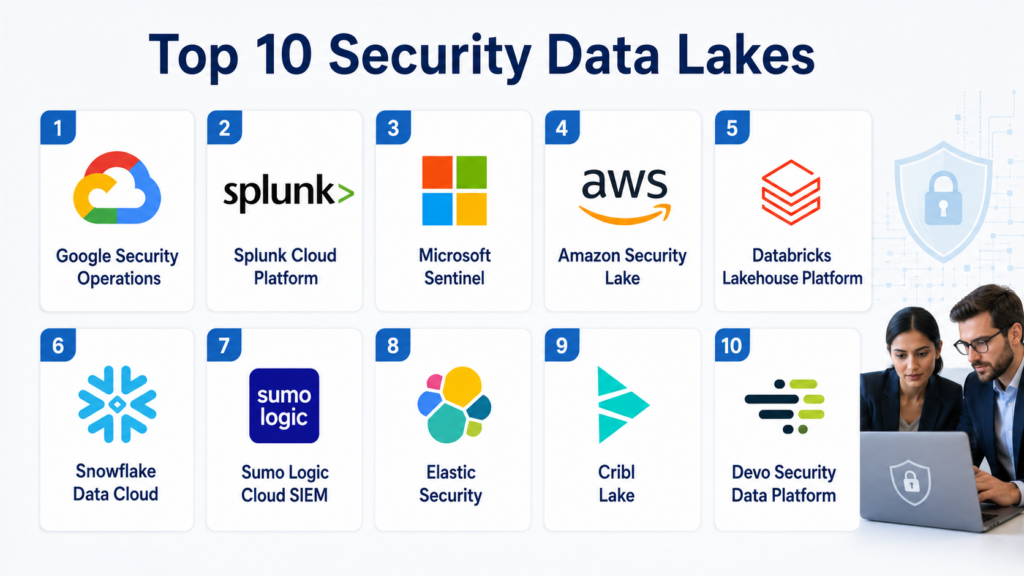
Introduction
Security Data Lakes are centralized platforms that collect, store, normalize, search, and analyze large volumes of security data from endpoints, cloud platforms, identity systems, networks, applications, SaaS tools, and infrastructure. In simple terms, they give security teams one scalable place to keep security logs and telemetry so analysts can investigate threats, hunt suspicious activity, build detections, and support compliance reporting without being limited by traditional SIEM storage models.Security Data Lakes matter because modern organizations generate massive amounts of telemetry from cloud, hybrid work, DevOps pipelines, SaaS systems, identity providers, containers, and security tools. Traditional log storage can become expensive, fragmented, or difficult to search at scale. A security data lake helps teams retain more data, enrich it with context, run faster investigations, and support threat hunting, detection engineering, AI-driven analytics, and incident response.
Real-world use cases include:
- Threat hunting: Search historical telemetry to find suspicious behavior, attacker movement, and hidden compromise.
- Incident investigation: Reconstruct timelines across endpoint, identity, network, and cloud events.
- SIEM cost optimization: Store high-volume data in a scalable lake while sending priority alerts to SIEM workflows.
- Compliance and audit support: Retain security logs for regulatory review, internal audit, and investigation evidence.
- Detection engineering: Test new detections against historical data and improve alert accuracy.
What buyers should evaluate:
- Data ingestion flexibility
- Storage scalability and retention
- Search and query performance
- Schema normalization
- Threat intelligence enrichment
- Integration with SIEM, SOAR, EDR, XDR, cloud, and identity tools
- Access controls and audit logs
- Cost predictability
- Analytics and detection capabilities
- Support for open formats and APIs
Best for: Security Data Lakes are best for SOC teams, threat hunters, detection engineers, incident responders, cloud security teams, security architects, compliance teams, and enterprises managing large volumes of security telemetry. They are especially useful for organizations that need long retention, flexible analytics, cloud-scale search, and better control over security data costs.
Not ideal for: Very small teams with limited logs and no dedicated security analysts may not need a dedicated security data lake. A basic SIEM, MDR service, or built-in cloud security dashboard may be enough. Security data lakes also may not be ideal when an organization lacks data engineering skills, clear log retention policies, or defined security analytics use cases.
Key Trends in Security Data Lakes
- SIEM and data lake convergence: Many organizations are combining SIEM detection workflows with security data lake storage to reduce cost and improve scale.
- Open data formats are gaining importance: Buyers increasingly prefer platforms that support open schemas, APIs, and flexible data export to avoid vendor lock-in.
- AI-driven security analytics: Security data lakes are becoming the foundation for AI-assisted investigations, anomaly detection, automated summaries, and detection recommendations.
- Cloud-native storage is becoming standard: Teams want scalable storage that can handle high-volume logs from cloud, endpoint, identity, network, and SaaS environments.
- Long-term retention is a core requirement: Organizations want to retain months or years of security telemetry for investigations, compliance, and threat hunting.
- Detection engineering is becoming data-driven: Security teams use historical data in data lakes to test, tune, and validate detection rules before production rollout.
- Identity and cloud telemetry are now critical: Modern security data lakes must handle sign-in events, entitlement changes, API calls, workload logs, and SaaS activity.
- Cost governance is becoming a buying priority: Teams need tiered storage, compression, data routing, and usage controls to avoid uncontrolled log storage costs.
- Data normalization is still a major challenge: Buyers want platforms that reduce the manual work of parsing, mapping, and enriching logs from different sources.
- Security operations are becoming more collaborative: Data lakes increasingly support SOC, cloud security, compliance, fraud, IT operations, and data engineering teams.
How We Selected These Tools
- We prioritized platforms recognized for security analytics, security data storage, SIEM-scale telemetry, threat hunting, and log investigation.
- We considered tools that can support high-volume data ingestion and long-term security data retention.
- We evaluated search, query, analytics, and detection capabilities.
- We considered integration with SIEM, SOAR, XDR, EDR, cloud platforms, identity providers, and threat intelligence sources.
- We included a balanced mix of cloud-native, enterprise SIEM, open data, and security analytics platforms.
- We evaluated suitability for SOC analysts, detection engineers, data engineers, and compliance teams.
- We avoided guessed public ratings and used N/A where ratings are uncertain.
- We used “Not publicly stated” where exact compliance details are unclear.
- We considered cost control, scalability, retention, and operational usability.
- We selected tools based on practical buyer fit rather than a single universal winner.
Top 10 Security Data Lakes
1- Google Security Operations
Short description:
Google Security Operations is a cloud-scale security analytics platform designed to help organizations ingest, store, search, and analyze large volumes of security telemetry. It is useful for SOC teams that need high-speed investigation, long-term data access, threat intelligence enrichment, and scalable threat hunting. The platform is especially relevant for organizations dealing with large log volumes and complex hybrid or cloud environments. It supports security analytics workflows where speed, scale, and contextual investigation are important.
Key Features
- High-scale security telemetry ingestion
- Fast search across large data volumes
- Threat intelligence enrichment
- Timeline-based investigation workflows
- Detection engineering support
- Entity and event correlation
- Security analytics dashboards
Pros
- Strong fit for large security data volumes
- Useful for threat hunting and long-term investigation
- Good threat intelligence context for analysts
Cons
- Requires data onboarding and security operations maturity
- Pricing and architecture need careful planning
- Best suited for teams with clear analytics use cases
Platforms / Deployment
Web
Cloud
Security & Compliance
Supports enterprise access controls, audit capabilities, data security controls, and security analytics workflows. Specific compliance details should be verified during procurement.
Integrations & Ecosystem
Google Security Operations integrates with cloud, endpoint, identity, network, and security tools. It is designed to support broad telemetry analysis and detection workflows.
- Google Cloud
- Endpoint security tools
- Identity providers
- Network security logs
- Threat intelligence sources
- SIEM and SOAR workflows
Support & Community
Google provides documentation, support plans, partner services, and security guidance. The platform is best suited for teams with mature SOC workflows and large-scale security data needs.
2- Splunk Cloud Platform
Short description:
Splunk Cloud Platform is a widely used data analytics platform for collecting, indexing, searching, and analyzing machine data, including security logs. It is often used as the foundation for SIEM, threat hunting, compliance reporting, and security operations. Splunk is highly flexible and can ingest data from many sources, making it suitable for complex enterprise environments. It is especially strong for teams that need custom search, dashboards, and detection engineering capabilities.
Key Features
- High-volume log ingestion
- Flexible search and query language
- Security analytics and dashboards
- Data normalization and field extraction
- Integration with Splunk Enterprise Security
- Alerting and detection workflows
- Long-term log analysis support
Pros
- Very flexible for custom security analytics
- Strong ecosystem and integration marketplace
- Good fit for mature SOC and detection engineering teams
Cons
- Can require skilled administrators and analysts
- Data volume management is important for cost control
- Complex deployments may require careful architecture
Platforms / Deployment
Web
Cloud / Self-hosted / Hybrid options may vary
Security & Compliance
Supports role-based access, audit logs, encryption options, and enterprise administrative controls. Specific compliance details depend on deployment model and subscription.
Integrations & Ecosystem
Splunk integrates with a wide range of security, IT, cloud, application, and infrastructure systems. It is commonly used as a central data layer for enterprise security analytics.
- SIEM and SOAR tools
- EDR and XDR platforms
- Cloud providers
- Identity systems
- Network devices
- Threat intelligence feeds
Support & Community
Splunk provides documentation, training, support plans, professional services, and a large practitioner community. It is strongest when supported by skilled search, data, and SOC teams.
3- Microsoft Sentinel
Short description:
Microsoft Sentinel is a cloud-native SIEM and security analytics platform that can function as a security data lake for Microsoft-centric and hybrid environments. It collects data from Microsoft services, cloud platforms, identity providers, endpoints, and third-party systems. Sentinel is well suited for teams that need scalable log analytics, detection rules, threat hunting, automation, and investigation workflows. It is especially useful for organizations using Microsoft Defender, Entra ID, Microsoft 365, and Azure.
Key Features
- Cloud-native SIEM and analytics
- Scalable log ingestion and retention
- Built-in hunting queries
- Detection rules and analytics templates
- Integration with Microsoft Defender XDR
- Automation through security workflows
- Dashboards and investigation workbooks
Pros
- Strong fit for Microsoft security ecosystems
- Good hunting and detection capabilities
- Flexible integrations with cloud and third-party tools
Cons
- Best value comes in Microsoft-heavy environments
- Query and cost management require planning
- Advanced use cases may require KQL expertise
Platforms / Deployment
Web
Cloud
Security & Compliance
Supports SSO, role-based access, audit logs, encryption, identity controls, and Microsoft cloud security administration. Specific compliance coverage depends on tenant configuration and Microsoft service terms.
Integrations & Ecosystem
Microsoft Sentinel integrates deeply with Microsoft services and also supports third-party security data sources. It works well as part of a broader Microsoft security operations architecture.
- Microsoft Defender XDR
- Microsoft Entra ID
- Microsoft 365
- Azure services
- Third-party security tools
- SOAR and automation workflows
Support & Community
Microsoft provides documentation, training, partner support, community queries, and enterprise support options. Teams with Microsoft security expertise can gain strong operational value from Sentinel.
4- Amazon Security Lake
Short description:
Amazon Security Lake is a cloud-native security data lake service designed to centralize security data from AWS environments, SaaS sources, on-premises systems, and third-party tools. It uses open data formats to help teams store, normalize, and analyze security telemetry at scale. Amazon Security Lake is especially useful for AWS-heavy organizations that want centralized security data storage and analysis. It can support threat hunting, incident investigation, and integration with analytics tools.
Key Features
- Centralized security data lake for AWS and external sources
- Open Cybersecurity Schema Framework support
- Security data normalization
- Scalable cloud storage
- Integration with analytics and security tools
- Data access controls
- Support for security investigation workflows
Pros
- Strong fit for AWS-centric environments
- Open schema support improves interoperability
- Useful for scalable storage and downstream analytics
Cons
- Best suited for teams with AWS expertise
- Requires analytics tools for full investigation workflows
- Multi-cloud environments may need additional integration work
Platforms / Deployment
Web
Cloud
Security & Compliance
Supports AWS access controls, encryption, audit logging, and data security capabilities. Specific compliance requirements depend on AWS configuration, region, and service usage.
Integrations & Ecosystem
Amazon Security Lake integrates with AWS security services, partner tools, and analytics platforms. It is most valuable when paired with AWS-native security and data workflows.
- AWS CloudTrail
- Amazon GuardDuty
- AWS Security Hub
- Amazon Athena
- Partner security tools
- Data analytics workflows
Support & Community
AWS provides documentation, support plans, partner resources, and implementation guidance. The platform is best suited for organizations with cloud security and AWS data engineering skills.
5- Databricks Lakehouse Platform
Short description:
Databricks Lakehouse Platform is a data and AI platform that can be used to build security data lakes for analytics, detection engineering, threat hunting, and compliance reporting. It is not only a security product, but many organizations use it to store and analyze high-volume security telemetry alongside business and infrastructure data. Databricks is valuable for security teams that need advanced analytics, machine learning, and open data architecture. It is best suited for organizations with data engineering maturity.
Key Features
- Scalable data lakehouse architecture
- Support for structured and unstructured data
- Machine learning and analytics workflows
- Open data format support
- Notebook-based investigation and analysis
- Data governance capabilities
- Integration with cloud storage and analytics tools
Pros
- Strong for advanced security analytics and AI use cases
- Flexible for custom data engineering workflows
- Useful when security data must be combined with business context
Cons
- Not a turnkey SIEM or SOC platform
- Requires data engineering and analytics expertise
- Security workflows must often be designed by the organization
Platforms / Deployment
Web
Cloud
Security & Compliance
Supports access controls, data governance, encryption options, audit capabilities, and workspace administration. Specific compliance details should be verified based on cloud provider and service configuration.
Integrations & Ecosystem
Databricks integrates with cloud storage, data pipelines, analytics tools, notebooks, machine learning workflows, and security data sources. It is best for organizations building custom security analytics programs.
- AWS, Azure, and Google Cloud storage
- Data pipeline tools
- SIEM exports
- Endpoint and network logs
- Threat intelligence data
- BI and reporting tools
Support & Community
Databricks provides documentation, support plans, training, partner resources, and a strong data engineering community. Security teams should work closely with data engineering teams for best outcomes.
6- Snowflake Data Cloud
Short description:
Snowflake Data Cloud is a cloud data platform that can support security data lake and security analytics use cases. Organizations use Snowflake to store, query, share, and analyze large volumes of security and operational data. It is especially useful when security teams want to combine logs with business, identity, asset, and risk data. Snowflake is a strong fit for organizations that already use it as a central enterprise data platform.
Key Features
- Scalable cloud data storage
- SQL-based analytics
- Secure data sharing
- Data governance capabilities
- Support for structured and semi-structured data
- Integration with data pipelines and BI tools
- Workload separation for performance control
Pros
- Strong fit for enterprise data analytics teams
- Useful for combining security and business context
- Flexible SQL-based investigation and reporting
Cons
- Not a dedicated security operations platform by itself
- Requires data pipeline and security analytics design
- Detection and response workflows need external tools
Platforms / Deployment
Web
Cloud
Security & Compliance
Supports role-based access, encryption, audit capabilities, governance controls, and secure data management. Specific compliance details should be verified based on edition, cloud provider, and configuration.
Integrations & Ecosystem
Snowflake integrates with cloud platforms, data pipelines, BI tools, security data sources, and analytics workflows. It is best when security analytics are part of a broader enterprise data strategy.
- Cloud storage platforms
- ETL and data pipeline tools
- BI and dashboard platforms
- SIEM exports
- Identity and asset data
- Threat intelligence datasets
Support & Community
Snowflake provides documentation, customer support, training, partner services, and a large data community. Security use cases require strong collaboration between SOC, data, and governance teams.
7- Sumo Logic Cloud SIEM
Short description:
Sumo Logic Cloud SIEM is a cloud-native security analytics and log management platform that supports threat detection, investigation, and security data analysis. It helps teams ingest data from cloud, endpoint, identity, application, and infrastructure sources. Sumo Logic is useful for organizations that want cloud-based log analytics with security operations capabilities. It is particularly relevant for cloud-first teams that need scalable security monitoring without managing infrastructure.
Key Features
- Cloud-native log analytics
- Security event correlation
- Threat detection and investigation
- Dashboards and reporting
- Cloud and infrastructure telemetry support
- Integration with security tools
- Data search and analytics
Pros
- Strong fit for cloud-first security teams
- Easier operational model than self-managed logging stacks
- Useful for security monitoring and analytics
Cons
- Advanced customization may require technical expertise
- Data volume and retention costs need planning
- May not replace specialized data lakes in very large environments
Platforms / Deployment
Web
Cloud
Security & Compliance
Supports role-based access, audit capabilities, encryption, and cloud security controls. Specific compliance details should be verified during vendor review.
Integrations & Ecosystem
Sumo Logic integrates with cloud platforms, applications, infrastructure logs, identity sources, and security tools. It is commonly used for security and observability analytics.
- AWS, Azure, and Google Cloud
- Endpoint tools
- Identity systems
- Application logs
- Infrastructure monitoring
- SIEM and response workflows
Support & Community
Sumo Logic provides documentation, support plans, training, and customer success resources. It is practical for teams that want cloud log analytics with security capabilities.
8- Elastic Security
Short description:
Elastic Security combines search, SIEM, endpoint security, and security analytics on top of the Elastic Stack. It is often used as a flexible security data lake for log collection, search, detection, and investigation. Elastic is especially useful for technical teams that want open, customizable, and searchable security telemetry. It supports cloud, endpoint, network, identity, and application data when properly configured.
Key Features
- Search-driven security analytics
- SIEM and detection rules
- Endpoint security capabilities
- Timeline investigations
- Flexible data ingestion
- Open ecosystem and extensibility
- Dashboards and visualizations
Pros
- Strong search and customization capabilities
- Flexible deployment options
- Good fit for technical SOC and data teams
Cons
- Requires careful data pipeline and tuning work
- Advanced use cases need skilled administrators
- Cost and performance depend on architecture
Platforms / Deployment
Web / Windows / macOS / Linux
Cloud / Self-hosted / Hybrid
Security & Compliance
Supports role-based access, audit logging, encryption options, endpoint controls, and security analytics workflows. Specific compliance details depend on deployment and subscription.
Integrations & Ecosystem
Elastic integrates with logs, endpoint telemetry, cloud data, threat intelligence, observability sources, and custom pipelines. It is strong where flexibility and search matter.
- Cloud platforms
- Endpoint telemetry
- Network logs
- Identity systems
- Application logs
- Threat intelligence feeds
Support & Community
Elastic has strong documentation, community resources, support plans, and professional services. It is best suited for teams comfortable with search, pipelines, and custom analytics.
9- Cribl Lake
Short description:
Cribl Lake is designed to store, route, manage, and make observability and security data available for analytics. It is especially useful for organizations that need control over high-volume telemetry, data routing, retention, and downstream tool costs. Cribl Lake can support security data lake strategies by helping teams collect and store logs while sending selected data to SIEM or analytics tools. It is valuable for teams focused on data pipeline control and cost optimization.
Key Features
- Security and observability data storage
- Data routing and management
- High-volume telemetry handling
- Integration with analytics tools
- Retention and replay support
- Data pipeline optimization
- Open access to stored data
Pros
- Strong fit for controlling data flow and cost
- Useful for SIEM optimization strategies
- Helps manage high-volume telemetry environments
Cons
- Not a full SIEM or threat detection platform by itself
- Requires planning around analytics and downstream tools
- Best suited for teams with data pipeline maturity
Platforms / Deployment
Web
Cloud / Hybrid options may vary
Security & Compliance
Supports access controls, secure data handling, and telemetry governance capabilities. Specific security and compliance details should be verified directly.
Integrations & Ecosystem
Cribl integrates with sources and destinations across security, observability, cloud, SIEM, and analytics ecosystems. It is often used to route data intelligently to the right storage or analysis destination.
- SIEM platforms
- Cloud storage
- Observability tools
- Security analytics tools
- Log sources
- Data pipeline workflows
Support & Community
Cribl provides documentation, training, customer support, and community resources. It is best suited for teams focused on telemetry engineering and security data architecture.
10- Devo Security Data Platform
Short description:
Devo Security Data Platform provides cloud-native security analytics, data ingestion, search, and investigation capabilities for SOC teams. It is designed to help organizations analyze large volumes of security data and support threat detection, hunting, and response workflows. Devo is especially relevant for teams that need fast security analytics and centralized data visibility. It can support SIEM-like workflows and broader security data lake requirements.
Key Features
- Cloud-native security data analytics
- High-volume data ingestion
- Threat detection and investigation
- Fast search and dashboards
- Security operations workflows
- Data enrichment and correlation
- Reporting and analytics
Pros
- Strong cloud-native security analytics focus
- Useful for SOC teams handling large data volumes
- Supports detection and investigation workflows
Cons
- May require migration planning from legacy SIEM environments
- Advanced use cases depend on data onboarding quality
- Buyers should validate integration depth for their stack
Platforms / Deployment
Web
Cloud
Security & Compliance
Supports access controls, audit capabilities, data security, and enterprise security analytics workflows. Specific certifications and compliance details should be verified during procurement.
Integrations & Ecosystem
Devo integrates with security tools, cloud platforms, network logs, endpoint sources, identity data, and SOC workflows. It is designed to centralize and analyze high-volume security telemetry.
- Endpoint security tools
- Cloud platforms
- Network logs
- Identity systems
- Threat intelligence sources
- SOAR and ticketing workflows
Support & Community
Devo provides documentation, customer support, onboarding assistance, and enterprise services. It is most useful for SOC teams modernizing security analytics and investigation workflows.
Comparison Table
| Tool Name | Best For | Platform Supported | Deployment | Standout Feature | Public Rating |
|---|---|---|---|---|---|
| Google Security Operations | Large-scale security analytics | Web | Cloud | High-speed security telemetry search | N/A |
| Splunk Cloud Platform | Enterprise log analytics and SIEM workflows | Web | Cloud / Self-hosted / Hybrid varies | Flexible security search and dashboards | N/A |
| Microsoft Sentinel | Microsoft-centric security operations | Web | Cloud | Cloud-native SIEM and hunting queries | N/A |
| Amazon Security Lake | AWS-centric security data lake | Web | Cloud | Open schema-based security data lake | N/A |
| Databricks Lakehouse Platform | Custom AI and analytics-driven security data lakes | Web | Cloud | Advanced analytics and machine learning | N/A |
| Snowflake Data Cloud | Enterprise data platform security analytics | Web | Cloud | SQL-based scalable security analytics | N/A |
| Sumo Logic Cloud SIEM | Cloud-first log analytics and SIEM | Web | Cloud | Cloud-native security monitoring | N/A |
| Elastic Security | Flexible search-driven security analytics | Web, Windows, macOS, Linux | Cloud / Self-hosted / Hybrid | Open and customizable security search | N/A |
| Cribl Lake | Telemetry routing, retention, and SIEM cost control | Web | Cloud / Hybrid varies | Security data routing and replay | N/A |
| Devo Security Data Platform | Cloud-native SOC analytics | Web | Cloud | Fast high-volume security analytics | N/A |
Evaluation & Scoring of Security Data Lakes
| Tool Name | Core 25% | Ease 15% | Integrations 15% | Security 10% | Performance 10% | Support 10% | Value 15% | Weighted Total 0–10 |
|---|---|---|---|---|---|---|---|---|
| Google Security Operations | 9 | 7 | 9 | 9 | 9 | 8 | 7 | 8.35 |
| Splunk Cloud Platform | 9 | 7 | 10 | 9 | 8 | 9 | 7 | 8.45 |
| Microsoft Sentinel | 9 | 8 | 9 | 9 | 8 | 8 | 8 | 8.55 |
| Amazon Security Lake | 8 | 7 | 8 | 9 | 8 | 8 | 8 | 8.00 |
| Databricks Lakehouse Platform | 8 | 6 | 9 | 8 | 9 | 8 | 8 | 8.00 |
| Snowflake Data Cloud | 8 | 8 | 9 | 9 | 9 | 8 | 8 | 8.40 |
| Sumo Logic Cloud SIEM | 8 | 8 | 8 | 8 | 8 | 8 | 8 | 8.00 |
| Elastic Security | 8 | 7 | 9 | 8 | 8 | 8 | 8 | 8.00 |
| Cribl Lake | 8 | 7 | 9 | 8 | 8 | 8 | 9 | 8.15 |
| Devo Security Data Platform | 8 | 8 | 8 | 8 | 9 | 8 | 8 | 8.15 |
These scores are comparative and should be interpreted as practical guidance rather than fixed rankings. A high score means the platform performs well across the selected criteria, but the right choice depends on your architecture, data volume, analyst skills, and cost model. Microsoft Sentinel may be best for Microsoft-heavy teams, Amazon Security Lake for AWS-centric environments, Splunk for flexible enterprise search, and Cribl Lake for telemetry cost control. Databricks and Snowflake are better suited when security analytics must align with broader enterprise data strategy.
Which Security Data Lakes Tool Is Right for You?
Solo / Freelancer
Solo security consultants usually do not need a dedicated enterprise security data lake unless they manage multiple client environments. For small investigations, lightweight log storage, endpoint telemetry, cloud-native dashboards, or open-source analytics may be enough. If advanced analysis is required, Elastic Security or cloud-native log analytics can be practical starting points. The key is to avoid overbuilding a data lake before clear hunting, reporting, or retention needs exist.
SMB
SMBs should focus on simplicity, predictable cost, and immediate visibility. Microsoft Sentinel can be a good option for Microsoft-centric organizations, while Sumo Logic or Elastic Security may suit teams that need cloud-based log analytics. SMBs should avoid overly complex data lake architectures unless they have internal data engineering skills. A managed SIEM or MDR service may be better if the team lacks analysts.
Mid-Market
Mid-market organizations often need a balance of log retention, threat hunting, compliance reporting, and SIEM cost optimization. Microsoft Sentinel, Sumo Logic, Elastic Security, Devo, Cribl Lake, and Amazon Security Lake are strong options depending on the cloud environment. Teams should prioritize integrations with identity, endpoint, cloud, and ticketing tools. They should also define data retention tiers and high-value telemetry before ingesting everything.
Enterprise
Enterprises need scalable, governed, and flexible security data lake architectures. Splunk, Google Security Operations, Microsoft Sentinel, Snowflake, Databricks, Amazon Security Lake, Cribl Lake, and Devo can all be relevant depending on architecture. Large teams should evaluate ingestion scale, query speed, access governance, retention policies, data residency, open formats, and integration with SOC workflows. Enterprises may use more than one platform for hot analytics, long-term retention, and advanced AI use cases.
Budget vs Premium
Budget-conscious teams should avoid sending every log to expensive hot storage. Cribl Lake, Amazon Security Lake, Elastic Security, and cloud-native storage strategies can help control cost. Premium buyers may prefer Splunk, Google Security Operations, Snowflake, Databricks, or Microsoft Sentinel depending on performance, analytics, and ecosystem needs. The best cost strategy is usually tiered: keep high-value data searchable, archive lower-value data, and route alerts to the right tools.
Feature Depth vs Ease of Use
Splunk and Elastic offer strong flexibility but require skilled teams. Microsoft Sentinel and Sumo Logic can be easier for cloud-first security operations. Snowflake and Databricks are powerful for data-driven teams but require custom security analytics design. Amazon Security Lake is useful for AWS-based teams that want open schema storage. Buyers should decide whether they need a turnkey SOC platform or a flexible analytics foundation.
Integrations & Scalability
Security data lakes must integrate with endpoint tools, identity providers, cloud services, network devices, SaaS applications, threat intelligence feeds, SIEM platforms, and SOAR tools. Scalability should be tested with real ingestion volume, query patterns, retention needs, and user access models. A platform may look strong in a demo but struggle if parsing, normalization, or cost controls are weak. Buyers should validate integration depth during a pilot.
Security & Compliance Needs
Security data lakes store highly sensitive information, including authentication logs, endpoint activity, cloud events, network telemetry, and incident data. Buyers should verify encryption, audit logs, RBAC, data retention, data residency, masking, export controls, and administrator permissions. Compliance teams should also confirm whether the platform supports audit evidence, retention policies, legal hold, and reporting requirements. Strong governance is as important as storage scale.
Frequently Asked Questions
1. What is a Security Data Lake?
A Security Data Lake is a centralized storage and analytics environment for security logs, alerts, telemetry, and investigation data. It collects data from endpoints, cloud platforms, identity systems, networks, applications, SaaS tools, and security products. The purpose is to make large volumes of security data searchable and useful for threat hunting, incident response, detection engineering, and compliance. Unlike a basic log repository, a strong security data lake supports enrichment, normalization, access control, and analytics. It gives security teams a scalable foundation for modern SOC operations.
2. How is a Security Data Lake different from a SIEM?
A SIEM is mainly used for real-time monitoring, alerting, correlation, and security operations workflows. A Security Data Lake focuses more on scalable storage, flexible analytics, long-term retention, and large-scale search. Many organizations use both together: the SIEM handles prioritized detections and alerts, while the data lake stores broader telemetry for hunting and investigation. Some modern platforms combine both capabilities. The best architecture depends on data volume, retention requirements, cost, and analyst workflows.
3. Why do organizations need Security Data Lakes?
Organizations need Security Data Lakes because security telemetry is growing rapidly across cloud, SaaS, endpoint, identity, network, and application systems. Traditional SIEM storage can become expensive or limited when every log must be retained and searched. A data lake allows teams to keep more data for longer periods and analyze it when needed. This helps with breach investigations, compliance audits, threat hunting, and detection improvement. It also gives teams more control over data routing and retention costs.
4. What data should be stored in a Security Data Lake?
Important data includes authentication logs, endpoint events, DNS logs, firewall logs, proxy logs, cloud activity logs, SaaS audit logs, EDR telemetry, vulnerability data, threat intelligence, asset inventory, and application logs. Identity and cloud telemetry are especially important because many modern attacks involve stolen credentials or cloud API abuse. Teams should prioritize high-value data sources first instead of ingesting everything without a plan. Data should be tagged, normalized, and enriched where possible. This improves investigation speed and detection quality.
5. How do Security Data Lakes help with threat hunting?
Security Data Lakes help threat hunters search historical telemetry across many systems to find suspicious behavior. Hunters can look for unusual login patterns, suspicious command execution, lateral movement, privilege escalation, data exfiltration, or cloud misuse. Long retention allows analysts to investigate attacker dwell time and earlier stages of compromise. Query flexibility helps teams test hypotheses and build new detections. A good data lake makes it easier to connect events across users, devices, applications, and cloud resources.
6. Are Security Data Lakes expensive?
Security Data Lakes can be expensive if organizations ingest too much data without retention planning, compression, filtering, or tiered storage. Costs often depend on ingestion volume, storage duration, query frequency, compute usage, and data egress. However, a well-designed data lake can reduce overall SIEM costs by moving lower-priority telemetry into cheaper storage. Buyers should model cost using real data volumes and expected search patterns. Cost governance should be part of the architecture from the beginning.
7. What skills are needed to manage a Security Data Lake?
Managing a Security Data Lake usually requires a mix of SOC, data engineering, cloud engineering, and security architecture skills. Teams need to understand log sources, schemas, pipelines, access controls, query languages, and retention policies. Detection engineers and threat hunters need to know how to search and interpret the data. Data engineers may be needed for normalization, enrichment, and pipeline reliability. Smaller teams may prefer managed platforms that reduce operational complexity.
8. Can a Security Data Lake replace a SIEM?
A Security Data Lake can reduce SIEM storage pressure, but it does not always replace a SIEM. SIEM tools provide alerting, correlation, dashboards, incident workflows, and SOC operations features. A data lake provides scalable storage and flexible analytics. Some modern platforms combine both, but many organizations still use a SIEM for real-time alerting and a data lake for long-term storage and hunting. Replacing a SIEM requires careful evaluation of detection, response, workflow, and compliance requirements.
9. What are common implementation mistakes?
A common mistake is ingesting every possible log source without defining use cases, retention needs, or cost controls. Another mistake is storing raw logs without normalization, which makes investigation difficult. Some teams fail to define access controls and allow too many users to query sensitive security data. Others build a data lake but do not connect it to detection, SIEM, or response workflows. A successful implementation starts with priority data sources, clear ownership, governance, and measurable outcomes.
10. How should teams evaluate Security Data Lake vendors?
Teams should evaluate ingestion flexibility, search speed, data retention, open format support, schema normalization, security controls, integration depth, cost predictability, and analyst usability. They should test real data sources during a pilot instead of relying only on demos. Query performance should be tested using realistic investigation scenarios. Buyers should also validate RBAC, audit logs, encryption, data residency, and export controls. The best vendor should fit both technical architecture and security team workflows.
Conclusion
Security Data Lakes are becoming a core foundation for modern security operations because they help teams store, search, and analyze massive volumes of security telemetry across cloud, identity, endpoint, network, SaaS, and application systems. The best platform depends on the organization’s environment, data volume, analyst skill set, and cost strategy. Microsoft Sentinel is strong for Microsoft-centric security teams, Amazon Security Lake fits AWS-heavy environments, Splunk and Google Security Operations support large-scale security analytics, Elastic offers flexible search, and Snowflake or Databricks work well when security analytics must align with broader enterprise data strategy. Cribl Lake is valuable for routing, replay, and cost control, while Devo and Sumo Logic support cloud-native SOC analytics. The next step is to shortlist tools based on your primary cloud, SIEM strategy, retention needs, and threat hunting goals, then run a pilot with real log sources, realistic queries, cost modeling, and security governance checks before scaling the platform across the organization.

Leveraging comprehensive unified massive scale telemetry storage aggregation architecture software optimizes corporate digital threat investigation logistics, ensuring accelerated enterprise log analysis tracking and seamless incident forensics workflows.
A strong security data lake also needs clear ownership for parser changes and schema drift, because broken or inconsistent log fields can quietly weaken detections long before storage or search becomes a problem.