MOTOSHARE 🚗🏍️
Rent Bikes & Cars Directly from Owners
Motoshare connects vehicle owners with people who need bikes and cars on rent. Owners earn from idle vehicles, and renters get flexible ride options.
Visit Motoshare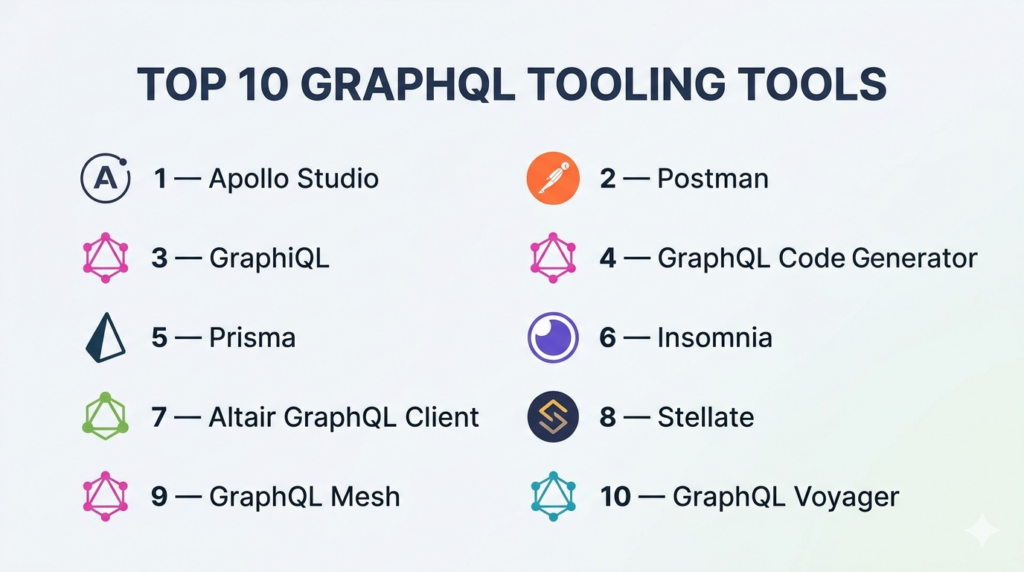
Introduction
GraphQL tooling includes the platforms, libraries, IDEs, gateways, testing utilities, and observability products that help teams build, manage, and scale GraphQL APIs. GraphQL itself defines how clients request data, but tooling is what makes it practical in real production environments.
As more businesses adopt multi-platform apps, composable architectures, and faster release cycles, GraphQL tooling has become increasingly valuable. Teams need schema governance, reliable performance, secure access controls, and developer-friendly workflows.
Common real-world use cases include:
- Building APIs for web and mobile apps
- Combining multiple services into one unified graph
- Auto-generating frontend types and SDKs
- Monitoring resolver performance and query costs
- Testing schema changes before deployment
When evaluating GraphQL tools, buyers should compare:
- Schema management
- Performance optimization
- Security controls
- Federation support
- Developer experience
- Integrations
- Hosting flexibility
- Observability
- Pricing model
- Community adoption
Best for: Developers, platform teams, SaaS companies, enterprises, and startups building modern APIs or multi-client applications.
Not ideal for: Very small projects with simple CRUD APIs where REST may be easier and faster to maintain.
Key Trends in GraphQL Tooling and Beyond
- AI-assisted schema generation and query writing are becoming common.
- Federation is replacing monolithic API layers in larger organizations.
- Stronger governance tools help manage schema changes safely.
- Edge caching is improving GraphQL performance globally.
- Security scanning for query abuse and permission issues is growing.
- Code generation is now standard for type-safe frontend apps.
- Better observability provides field-level metrics and tracing.
- Hybrid deployment models support cloud and self-hosted environments.
- API lifecycle platforms are merging REST and GraphQL workflows.
- Pricing is shifting toward usage-based and developer-seat models.
How We Selected These Tools (Methodology)
We selected these tools using practical evaluation criteria:
- Strong market awareness and industry adoption
- Mature feature sets for real production workloads
- Reliable performance and scalability reputation
- Security and enterprise readiness signals
- Active product development
- Integration ecosystem quality
- Fit across startup, mid-market, and enterprise needs
- Strong documentation and onboarding experience
- Healthy community or commercial support
- Balance between innovation and usability
Top 10 GraphQL Tooling Tools
#1 — Apollo Studio
Short description: A leading GraphQL platform for schema management, federation, observability, and production operations. Popular with scaling teams and enterprises.
Key Features
- GraphQL federation support
- Schema registry
- Usage analytics
- Query performance monitoring
- Contract testing
- Governance workflows
- Team collaboration tools
Pros
- Excellent enterprise feature depth
- Strong ecosystem adoption
- Great observability tools
Cons
- Advanced features can be costly
- Learning curve for new users
- Best value appears at scale
Platforms / Deployment
Web / Cloud
Security & Compliance
SSO/SAML, RBAC, audit controls, encryption. Additional certifications vary by plan.
Integrations & Ecosystem
Works with many modern stacks and deployment pipelines.
- CI/CD tools
- Kubernetes
- Node.js frameworks
- Monitoring tools
- Frontend clients
Support & Community
Excellent documentation, strong enterprise support, massive community presence.
#2 — Postman
Short description: Popular API collaboration platform with strong GraphQL testing and exploration support.
Key Features
- GraphQL queries
- Schema exploration
- Automated testing
- Collections
- Team workspaces
- Environment variables
- API documentation
Pros
- Familiar for many teams
- Supports REST and GraphQL together
- Great for testing workflows
Cons
- Not GraphQL-first
- Can become complex in large teams
- Premium features require paid plans
Platforms / Deployment
Web / Windows / macOS / Linux
Security & Compliance
SSO/SAML, RBAC, encryption. Additional compliance varies.
Integrations & Ecosystem
Broad ecosystem across development tools.
- CI/CD
- Git platforms
- API gateways
- Monitoring tools
- Mock servers
Support & Community
Excellent tutorials and strong global user community.
#3 — GraphiQL
Short description: Lightweight open-source IDE for writing and testing GraphQL queries.
Key Features
- Query editor
- Auto-complete
- Documentation explorer
- Variables support
- Plugin architecture
- Schema browsing
- Lightweight UI
Pros
- Free and open source
- Fast and simple
- Great developer experience
Cons
- Limited enterprise workflows
- Basic collaboration features
- Requires setup in some environments
Platforms / Deployment
Web / Self-hosted
Security & Compliance
Depends on implementation.
Integrations & Ecosystem
Works with most GraphQL servers.
- Apollo Server
- Express apps
- Custom APIs
- Local development setups
Support & Community
Very strong open-source recognition and broad usage.
#4 — GraphQL Code Generator
Short description: Developer tool that automatically generates strongly typed code from schemas and operations.
Key Features
- TypeScript generation
- React hooks generation
- Resolver types
- SDK generation
- Plugin system
- Multi-framework support
- CI automation support
Pros
- Huge productivity boost
- Reduces runtime errors
- Excellent for frontend teams
Cons
- Setup can take time
- Best for typed stacks
- Requires schema discipline
Platforms / Deployment
Web / CLI / Self-hosted
Security & Compliance
Depends on local implementation.
Integrations & Ecosystem
Strong developer ecosystem.
- React
- Vue
- Angular
- Next.js
- Apollo Client
Support & Community
Large open-source adoption and active ecosystem.
#5 — Prisma
Short description: ORM and backend developer platform often used with GraphQL APIs.
Key Features
- Type-safe database client
- Schema modeling
- Migrations
- Query builder
- Great TypeScript support
- Fast development workflows
- Backend productivity tools
Pros
- Excellent developer speed
- Clean schema workflows
- Strong TypeScript experience
Cons
- Not GraphQL-only
- Large workloads may need tuning
- Advanced cases need expertise
Platforms / Deployment
Web / Cloud / Self-hosted
Security & Compliance
Encryption and access controls vary by environment.
Integrations & Ecosystem
Strong backend integrations.
- PostgreSQL
- MySQL
- MongoDB
- Node.js
- Serverless platforms
Support & Community
Excellent docs and strong community support.
#6 — Insomnia
Short description: API client with GraphQL support for developers who want a clean desktop experience.
Key Features
- GraphQL requests
- Collections
- Environment variables
- Testing
- Plugin system
- Local-first workflows
- Team sync options
Pros
- Great desktop UX
- Easy to organize requests
- Useful plugin ecosystem
Cons
- Smaller ecosystem than Postman
- Some advanced features paid
- Less enterprise depth
Platforms / Deployment
Windows / macOS / Linux
Security & Compliance
Varies by plan.
Integrations & Ecosystem
- Git sync
- CI tools
- API testing flows
- Developer plugins
Support & Community
Good docs and loyal developer community.
#7 — Altair GraphQL Client
Short description: Dedicated GraphQL client for exploring schemas and debugging queries.
Key Features
- Query editor
- Schema introspection
- Headers management
- Variables support
- History
- Multiple environments
- Clean UI
Pros
- Built specifically for GraphQL
- Easy to use
- Lightweight
Cons
- Smaller ecosystem
- Limited enterprise tooling
- Fewer collaboration features
Platforms / Deployment
Web / Desktop
Security & Compliance
Not publicly stated.
Integrations & Ecosystem
- Custom APIs
- Local development
- Testing workflows
Support & Community
Good community support for a niche tool.
#8 — Stellate
Short description: Performance and security platform focused on GraphQL edge caching and protection.
Key Features
- Edge caching
- Rate limiting
- Query protection
- Traffic controls
- Global delivery
- Analytics
- Performance acceleration
Pros
- Strong speed improvements
- Helps reduce backend load
- Great for global apps
Cons
- Specialized use case
- Extra cost layer
- Requires integration planning
Platforms / Deployment
Cloud
Security & Compliance
Encryption and access controls available. Additional certifications vary.
Integrations & Ecosystem
- Apollo
- Custom GraphQL servers
- CDN-like architectures
- Global applications
Support & Community
Strong vendor support and growing adoption.
#9 — GraphQL Mesh
Short description: Tool for combining multiple APIs into a unified GraphQL interface.
Key Features
- API unification
- REST to GraphQL
- SOAP support
- gRPC support
- Schema stitching
- Extensible plugins
- Developer-first workflows
Pros
- Great for modernization
- Supports legacy systems
- Flexible architecture
Cons
- Requires technical setup
- Can add complexity
- Best for advanced teams
Platforms / Deployment
Self-hosted / Cloud
Security & Compliance
Depends on deployment.
Integrations & Ecosystem
- REST APIs
- SOAP systems
- Databases
- Internal services
Support & Community
Strong open-source presence.
#10 — GraphQL Voyager
Short description: Visualization tool for understanding GraphQL schemas and relationships.
Key Features
- Schema maps
- Interactive graph views
- Relationship visualization
- Easy exploration
- Great for onboarding
- Read-only safety
- Lightweight setup
Pros
- Excellent for learning
- Helps documentation efforts
- Easy to understand schemas
Cons
- Narrow use case
- No production management features
- Not a full IDE
Platforms / Deployment
Web / Self-hosted
Security & Compliance
Depends on implementation.
Integrations & Ecosystem
- Works with schema endpoints
- Internal docs portals
- Dev environments
Support & Community
Good open-source reputation.
Comparison Table
| Tool Name | Best For | Platform(s) Supported | Deployment | Standout Feature | Public Rating |
|---|---|---|---|---|---|
| Apollo Studio | Enterprise GraphQL ops | Web | Cloud | Federation + governance | N/A |
| Postman | API collaboration | Web/Desktop | Cloud | REST + GraphQL workflows | N/A |
| GraphiQL | Query testing | Web | Self-hosted | Lightweight IDE | N/A |
| GraphQL Code Generator | Type-safe apps | CLI/Web | Self-hosted | Auto-generated code | N/A |
| Prisma | Backend productivity | Web | Hybrid | Type-safe ORM workflows | N/A |
| Insomnia | Desktop API testing | Desktop | Hybrid | Clean API client | N/A |
| Altair | GraphQL debugging | Web/Desktop | Hybrid | GraphQL-focused client | N/A |
| Stellate | Performance | Web | Cloud | Edge caching | N/A |
| GraphQL Mesh | API unification | Web | Hybrid | Multi-source graph layer | N/A |
| GraphQL Voyager | Schema learning | Web | Self-hosted | Visual schema maps | N/A |
Evaluation & Scoring of GraphQL Tooling
| Tool Name | Core | Ease | Integrations | Security | Performance | Support | Value | Weighted Total |
|---|---|---|---|---|---|---|---|---|
| Apollo Studio | 10 | 8 | 9 | 9 | 9 | 9 | 7 | 8.75 |
| Postman | 8 | 9 | 10 | 8 | 8 | 9 | 8 | 8.55 |
| GraphiQL | 7 | 9 | 7 | 6 | 8 | 8 | 10 | 7.95 |
| Code Generator | 9 | 8 | 9 | 7 | 8 | 8 | 9 | 8.45 |
| Prisma | 9 | 8 | 9 | 8 | 8 | 9 | 8 | 8.45 |
| Insomnia | 8 | 8 | 8 | 7 | 8 | 8 | 8 | 7.95 |
| Altair | 7 | 8 | 6 | 6 | 7 | 7 | 9 | 7.30 |
| Stellate | 8 | 7 | 8 | 8 | 10 | 8 | 7 | 8.00 |
| GraphQL Mesh | 8 | 6 | 8 | 7 | 8 | 7 | 8 | 7.45 |
| Voyager | 6 | 9 | 6 | 6 | 7 | 7 | 10 | 7.20 |
How to interpret scores:
These scores are comparative, not absolute. A lower-ranked tool may still be the best fit for your use case. Enterprise buyers may prioritize governance and security, while startups may care more about speed and affordability. Always test tools in your own workflow.
Which GraphQL Tool Is Right for You?
Solo / Freelancer
Choose GraphiQL, Altair, or Insomnia for simplicity and low cost.
SMB
Postman, Prisma, and Code Generator offer strong productivity without enterprise complexity.
Mid-Market
Apollo Studio, Prisma, and GraphQL Mesh balance scale and flexibility.
Enterprise
Apollo Studio and Stellate stand out for governance, federation, and production performance.
Budget vs Premium
Free/open-source: GraphiQL, Voyager, Altair.
Premium enterprise: Apollo Studio, Stellate.
Feature Depth vs Ease of Use
Need advanced controls? Apollo Studio.
Need simplicity? GraphiQL or Altair.
Integrations & Scalability
Postman and Prisma offer broad ecosystems. Apollo excels at large-scale operations.
Security & Compliance Needs
Enterprise governance tools usually outperform lightweight developer utilities.
Frequently Asked Questions (FAQs)
What is GraphQL tooling?
It is the ecosystem of products that help teams build, test, deploy, monitor, and scale GraphQL APIs.
Is GraphQL better than REST?
Not always. It depends on complexity, client needs, and team skills.
Which tool is best for beginners?
GraphiQL and Altair are great starting points.
What is federation?
It allows multiple services to appear as one GraphQL API.
Why use code generation?
It improves developer speed and reduces typing mistakes.
Do I need observability tools?
Yes, especially for production APIs with many users.
Can small teams use GraphQL?
Yes, but simple REST APIs may sometimes be easier.
Are GraphQL tools expensive?
Many tools have free tiers, while enterprise features usually cost more.
Can I combine REST and GraphQL?
Yes. Many teams run both depending on use case.
How do I switch tools later?
Use standards-based schemas, keep workflows documented, and test migrations gradually.
Conclusion
GraphQL tooling can dramatically improve how teams build and operate modern APIs. The right choice depends on whether you need developer speed, schema governance, testing, performance, or enterprise controls. There is no single best tool for everyone.

A valuable addition would be evaluating GraphQL tooling based on production governance rather than just developer experience. As GraphQL adoption grows, issues such as uncontrolled query complexity, N+1 resolver problems, schema versioning, and breaking changes across federated services can become significant operational risks. Teams should look for capabilities like automated schema diff validation in CI/CD, query cost analysis, persisted queries, field-level usage analytics, and distributed tracing. These features help maintain API performance and stability while enabling multiple teams to evolve a shared GraphQL ecosystem without introducing hidden technical debt or production bottlenecks.