MOTOSHARE 🚗🏍️
Rent Bikes & Cars Directly from Owners
Motoshare connects vehicle owners with people who need bikes and cars on rent. Owners earn from idle vehicles, and renters get flexible ride options.
Visit Motoshare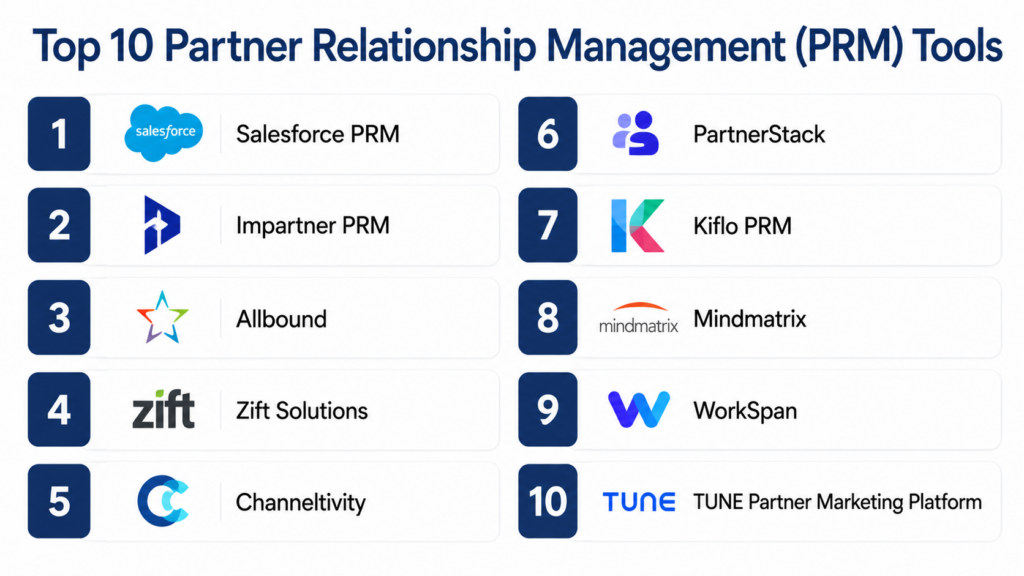
Introduction
Partner Relationship Management PRM tools help companies manage, enable, support, and grow their partner ecosystems. These partners can include resellers, distributors, dealers, agents, affiliates, referral partners, systems integrators, implementation partners, consultants, marketplaces, and channel sales networks. In simple terms, PRM software gives partners a structured portal where they can register deals, access training, download sales materials, manage leads, track incentives, collaborate with channel managers, and monitor performance.
PRM matters because many B2B companies depend on partners to reach new markets, expand sales coverage, deliver services, and support customers. Without a dedicated PRM system, partner teams often rely on email, spreadsheets, shared folders, disconnected CRM records, and manual approval workflows. This creates confusion around deal ownership, partner training, lead routing, commission tracking, co-marketing, and performance visibility. A strong PRM platform helps organizations create a better partner experience, improve channel transparency, reduce conflict, and scale indirect revenue more efficiently.
Real World Use Cases:
- Managing partner onboarding, applications, approvals, and tiering
- Enabling deal registration, lead distribution, and opportunity collaboration
- Providing sales content, training, certifications, and partner resources
- Tracking incentives, rebates, MDF, commissions, and partner performance
- Creating partner portals for resellers, distributors, dealers, and agents
- Improving channel analytics, partner engagement, and indirect revenue visibility
Evaluation Criteria for Buyers:
- Partner portal experience and ease of use
- Deal registration, lead routing, and opportunity management depth
- Partner onboarding, profiles, tiering, and lifecycle management
- Training, certification, enablement, and content management
- Incentive, rebate, MDF, and commission workflow support
- CRM, ERP, LMS, marketing automation, billing, and analytics integrations
- Role-based access, permissions, audit trails, and data security
- Partner analytics, pipeline visibility, engagement tracking, and reporting
- Customization for different partner types, regions, and channel programs
- Implementation support, scalability, administration effort, and total cost
Best for: Partner Relationship Management PRM tools are best for B2B SaaS companies, manufacturers, distributors, technology vendors, cybersecurity companies, telecom providers, software vendors, franchise networks, agencies, financial services firms, channel sales teams, partner operations teams, alliance managers, partner marketing teams, and revenue leaders managing indirect sales channels.
Not ideal for: PRM tools may not be necessary for very small businesses with only a few informal referral partners and low partner-driven revenue. In those cases, CRM notes, spreadsheets, shared folders, and email communication may be enough temporarily. However, once partner count, channel revenue, deal registration, enablement content, partner tiers, lead routing, incentives, and co-selling complexity increase, a dedicated PRM platform becomes much more valuable.
Key Trends in Partner Relationship Management PRM Tools
- Partner ecosystems are becoming more diverse: Companies now manage resellers, referral partners, service partners, marketplaces, implementation partners, distributors, and strategic alliances in one channel strategy.
- Partner experience is becoming a competitive advantage: Partners prefer vendors that provide simple portals, fast deal approvals, clear resources, transparent incentives, and easy collaboration.
- Deal registration is becoming more structured: PRM platforms help reduce channel conflict by tracking partner-submitted opportunities, ownership, approvals, and deal progress.
- Partner enablement is moving into the portal: Training, certifications, playbooks, battlecards, demos, pitch decks, and onboarding content are increasingly delivered through PRM systems.
- AI-assisted partner engagement is emerging: Some platforms are adding AI to recommend content, summarize partner activity, prioritize partners, and identify channel growth opportunities.
- MDF and incentive management are becoming more automated: Partner teams want better workflows for market development funds, rebates, commissions, co-op budgets, claims, and approvals.
- CRM integration is critical: PRM must connect with CRM opportunities, accounts, leads, pipeline, sales stages, and revenue attribution.
- Partner analytics are becoming more important: Channel leaders need dashboards for partner-sourced pipeline, revenue contribution, engagement, training completion, deal conversion, and partner performance.
- Partner portals are becoming more personalized: Different partner types need different content, permissions, pricing, campaigns, certifications, and program rules.
- Ecosystem-led growth is expanding: Many companies now view partners not only as resellers, but as co-sellers, service providers, implementation experts, marketplace contributors, and customer success multipliers.
How We Selected These Tools
The Top 10 tools were selected using practical evaluation logic for PRM buyers.
- Recognition in partner relationship management, channel sales, partner portals, partner enablement, and indirect revenue operations
- Suitability for SaaS companies, technology vendors, manufacturers, distributors, franchise networks, and channel-led organizations
- Feature depth across partner onboarding, deal registration, lead routing, content sharing, training, incentives, and analytics
- Ability to support different partner models such as referral, reseller, distributor, dealer, affiliate, agency, alliance, and service partners
- Integration potential with CRM, ERP, LMS, marketing automation, finance, billing, support, and business intelligence systems
- Strength of partner portal customization, user permissions, partner tiers, workflows, and localization
- Reporting depth for partner pipeline, partner engagement, revenue attribution, incentive performance, and enablement adoption
- Scalability across partner count, regions, languages, programs, user roles, and partner types
- Security posture signals, role permissions, auditability, and enterprise data protection expectations
- Vendor support, implementation maturity, partner ecosystem, onboarding resources, and long-term platform value
Top 10 Partner Relationship Management PRM Tools
1- Salesforce Partner Relationship Management
Short description:
Salesforce Partner Relationship Management helps companies create partner portals connected with Salesforce CRM, Sales Cloud, Experience Cloud, and channel sales workflows. It supports deal registration, lead distribution, opportunity collaboration, partner onboarding, content access, training links, and partner performance reporting. The platform is especially useful for organizations already using Salesforce as their main CRM. It is best for mid-market and enterprise companies that want PRM deeply connected with CRM pipeline and partner revenue operations.
Key Features
- Partner portal creation through Salesforce ecosystem
- Deal registration and opportunity collaboration
- Lead sharing, routing, and partner pipeline visibility
- Partner onboarding and account management
- Role-based access and permission controls
- Partner content, enablement, and resource sharing
- Reporting on partner performance, pipeline, and engagement
Pros
- Strong fit for Salesforce-centered channel teams
- Connects partner workflows directly with CRM data
- Flexible for different partner types and regions
Cons
- Implementation can require Salesforce expertise
- Costs may increase with portal users, licenses, and customization
- Partner experience quality depends on configuration design
Platforms / Deployment
Web / iOS / Android / Cloud
Security & Compliance
Salesforce environments commonly support identity controls, role-based access, encryption options, auditability, and enterprise security features depending on configuration. Buyers should verify PRM-specific controls directly.
Integrations & Ecosystem
Salesforce PRM fits organizations that need partner workflows connected with CRM, sales, service, marketing, and revenue operations.
- Salesforce Sales Cloud
- Salesforce Experience Cloud
- Salesforce Service Cloud
- Marketing automation systems
- LMS and enablement tools
- Analytics and reporting dashboards
Support & Community
Salesforce provides documentation, training resources, implementation partners, customer support, and a large ecosystem. Support quality depends on portal complexity, Salesforce administration maturity, and implementation partner expertise.
2- Impartner PRM
Short description:
Impartner PRM is a dedicated partner relationship management platform designed to help organizations manage partner portals, onboarding, deal registration, lead distribution, training, content, MDF, incentives, and channel analytics. It is built specifically for companies with structured partner programs and indirect sales channels. The platform supports many partner types and helps channel teams create personalized partner experiences. It is best for companies that need a mature PRM system outside or alongside their CRM.
Key Features
- Partner portal and partner experience management
- Deal registration and lead distribution workflows
- Partner onboarding, profiling, and lifecycle management
- MDF, incentives, and channel program support
- Content management and partner enablement
- Training and certification integrations depending on setup
- Channel analytics and partner performance dashboards
Pros
- Purpose-built PRM platform with broad channel capabilities
- Strong fit for structured partner programs
- Good support for partner engagement and enablement workflows
Cons
- Implementation requires channel program design
- CRM integration quality should be validated
- Smaller partner programs may not need full platform depth
Platforms / Deployment
Web / Cloud
Security & Compliance
Not publicly stated. Buyers should verify SSO, MFA, encryption, RBAC, audit logs, data retention, and compliance documentation directly.
Integrations & Ecosystem
Impartner fits organizations that need a dedicated PRM layer connected with CRM, marketing, enablement, and partner operations.
- CRM systems
- Marketing automation platforms
- Learning management systems
- Business intelligence tools
- Partner content libraries
- Incentive and MDF workflows
Support & Community
Impartner provides implementation support, customer success resources, documentation, training, and partner program expertise. Support quality depends on channel complexity, integration scope, and program maturity.
3- Allbound
Short description:
Allbound is a PRM platform focused on partner portals, partner onboarding, enablement, deal registration, content sharing, training, and channel collaboration. It helps channel teams create a more intuitive partner experience and make sales resources easier to access. The platform is especially useful for SaaS and technology companies building or scaling partner programs. It is best for companies that prioritize partner enablement, portal usability, and fast partner engagement.
Key Features
- Partner portal and onboarding workflows
- Deal registration and opportunity visibility
- Partner content management and resource sharing
- Training and certification workflows depending on setup
- Lead sharing and partner collaboration
- Partner activity and engagement analytics
- CRM and marketing system integrations
Pros
- Strong partner enablement and portal experience
- Good fit for SaaS and technology partner programs
- Easier to adopt for partners than many complex systems
Cons
- Advanced incentive and rebate workflows should be validated
- Enterprise customization needs may require careful review
- Best value depends on partner content and engagement strategy
Platforms / Deployment
Web / Cloud
Security & Compliance
Not publicly stated. Buyers should verify SSO, MFA, encryption, RBAC, audit logs, data retention, and compliance controls directly.
Integrations & Ecosystem
Allbound fits organizations that need partner enablement and deal workflows connected with CRM and marketing systems.
- CRM platforms
- Marketing automation tools
- Learning and certification systems
- Partner content libraries
- Lead and deal workflows
- Reporting dashboards
Support & Community
Allbound provides onboarding, customer success support, documentation, implementation resources, and partner program guidance. Support quality depends on partner program scope and integration needs.
4- Zift Solutions
Short description:
Zift Solutions provides partner relationship management and partner marketing tools that help companies manage partner portals, channel marketing, lead distribution, deal workflows, partner engagement, and campaign execution. It is especially useful for organizations that want PRM and through-channel marketing automation connected in one ecosystem. The platform helps vendors support partners with campaigns, content, leads, and performance visibility. It is best for companies with partner marketing and channel sales programs.
Key Features
- Partner portal and partner management workflows
- Through-channel marketing automation
- Lead distribution and campaign tracking
- Deal registration and partner pipeline visibility
- Content syndication and partner enablement
- Partner engagement analytics
- CRM and marketing automation integrations
Pros
- Strong combination of PRM and partner marketing
- Useful for vendors supporting partner-led campaigns
- Good fit for channel marketing and partner enablement teams
Cons
- Deep incentive management should be validated
- Implementation requires marketing and channel process alignment
- Smaller partner programs may not need full marketing automation depth
Platforms / Deployment
Web / Cloud
Security & Compliance
Not publicly stated. Buyers should verify SSO, MFA, encryption, RBAC, audit logs, data retention, and compliance documentation directly.
Integrations & Ecosystem
Zift Solutions fits organizations that need partner management connected with marketing campaigns and channel sales execution.
- CRM systems
- Marketing automation platforms
- Partner content libraries
- Lead distribution workflows
- Campaign analytics systems
- Business intelligence dashboards
Support & Community
Zift provides onboarding, customer support, implementation resources, documentation, and channel marketing expertise. Support quality depends on campaign complexity, partner scale, and integration scope.
5- Channeltivity
Short description:
Channeltivity is a PRM platform designed for channel teams that need partner portals, deal registration, lead distribution, MDF management, training, partner profiles, and reporting. It is especially relevant for growing companies that want a practical PRM system without excessive enterprise complexity. The platform helps channel managers organize partner activity and improve visibility into partner-sourced pipeline. It is best for small and mid-market companies building structured partner programs.
Key Features
- Partner portal and profile management
- Deal registration workflows
- Lead distribution and partner collaboration
- MDF request and approval workflows
- Partner training and certification support
- Channel reporting and partner performance dashboards
- CRM integration depending on setup
Pros
- Practical PRM functionality for growing channel teams
- Good fit for small and mid-market partner programs
- Useful for deal registration and MDF workflows
Cons
- Enterprise-scale customization should be validated
- Advanced partner marketing automation may require additional tools
- Best fit is structured but not overly complex channel programs
Platforms / Deployment
Web / Cloud
Security & Compliance
Not publicly stated. Buyers should verify SSO, MFA, encryption, RBAC, audit logs, data retention, and compliance controls directly.
Integrations & Ecosystem
Channeltivity fits organizations that need core PRM workflows connected with CRM and channel operations.
- CRM systems
- Partner portals
- Deal and lead workflows
- MDF management workflows
- Training and enablement resources
- Reporting dashboards
Support & Community
Channeltivity provides onboarding, support resources, documentation, and practical PRM implementation guidance. Support quality depends on partner count, workflow complexity, and CRM integration needs.
6- PartnerStack
Short description:
PartnerStack helps companies manage partner programs, referral partners, affiliates, resellers, rewards, payouts, and partner-driven growth. It is especially popular with SaaS and technology companies that want to scale partner ecosystems through referral, affiliate, and reseller motions. The platform focuses on partner recruitment, tracking, attribution, rewards, and payments. It is best for SaaS companies building partner-led growth programs with strong referral and reward workflows.
Key Features
- Partner recruitment and onboarding
- Referral, affiliate, and reseller tracking
- Partner link and attribution management
- Rewards, commissions, and payout workflows
- Partner portal and resource access
- Marketplace-style partner ecosystem support
- Reporting for partner performance and revenue contribution
Pros
- Strong fit for SaaS referral and affiliate programs
- Useful for partner rewards and payout automation
- Helps companies recruit and scale partner ecosystems
Cons
- Traditional enterprise PRM features should be validated
- Complex distributor or dealer programs may need broader PRM tools
- Best fit depends on partner-led growth model
Platforms / Deployment
Web / Cloud
Security & Compliance
Not publicly stated. Buyers should verify SSO, MFA, encryption, RBAC, audit logs, payout controls, data retention, and compliance documentation directly.
Integrations & Ecosystem
PartnerStack fits SaaS and technology companies that need partner tracking, attribution, rewards, and program management.
- CRM systems
- Payment and payout workflows
- Marketing automation platforms
- Product-led growth tools
- Partner portals
- Analytics and reporting systems
Support & Community
PartnerStack provides onboarding, partner program support, documentation, customer success resources, and ecosystem growth guidance. Support quality depends on program type, payout complexity, and partner volume.
7- Kiflo PRM
Short description:
Kiflo PRM helps companies manage partner programs, deal registration, partner onboarding, referral tracking, partner portals, and channel performance. It is especially useful for startups and mid-market SaaS companies that want a clean and approachable PRM tool. The platform supports partner collaboration, lead sharing, pipeline tracking, and partner engagement. It is best for growing companies that need a practical PRM system without heavy enterprise complexity.
Key Features
- Partner portal and onboarding workflows
- Deal registration and referral tracking
- Lead sharing and partner pipeline management
- Partner profiles and program segmentation
- Content and resource sharing
- Partner performance reporting
- CRM integrations depending on setup
Pros
- Easy-to-use PRM for growing partner programs
- Good fit for SaaS startups and mid-market teams
- Practical deal registration and referral workflows
Cons
- Enterprise incentive management may be limited
- Complex multi-region partner hierarchies should be validated
- Best fit is simpler partner programs with growth needs
Platforms / Deployment
Web / Cloud
Security & Compliance
Not publicly stated. Buyers should verify SSO, MFA, encryption, RBAC, audit logs, data retention, and compliance controls directly.
Integrations & Ecosystem
Kiflo fits organizations that need partner collaboration and referral workflows connected with CRM and sales operations.
- CRM platforms
- Partner portal workflows
- Lead and deal tracking
- Content sharing workflows
- Reporting dashboards
- Partner communication tools
Support & Community
Kiflo provides onboarding, documentation, customer support, and partner program guidance. Support quality depends on partner program maturity and integration needs.
8- Mindmatrix
Short description:
Mindmatrix provides channel enablement, PRM, partner marketing, sales enablement, and channel automation capabilities. It helps companies support partners with content, campaigns, training, deal workflows, co-branding, and partner performance visibility. The platform is especially useful for companies that want partner enablement and channel marketing support in one environment. It is best for organizations that rely heavily on partners for demand generation and sales execution.
Key Features
- Partner portal and channel enablement
- Sales content and marketing content management
- Co-branded campaign and asset support
- Lead distribution and deal tracking
- Partner training and onboarding workflows
- Partner engagement and performance analytics
- CRM and marketing integrations depending on setup
Pros
- Strong channel enablement and marketing automation focus
- Useful for partner-led demand generation
- Good fit for organizations supporting many partner campaigns
Cons
- Core PRM depth should be validated for complex channel operations
- Implementation requires strong content and marketing process design
- User experience depends on partner program structure
Platforms / Deployment
Web / Cloud
Security & Compliance
Not publicly stated. Buyers should verify SSO, MFA, encryption, RBAC, audit logs, data retention, and compliance documentation directly.
Integrations & Ecosystem
Mindmatrix fits companies that need partner enablement connected with sales content, marketing campaigns, and partner performance.
- CRM systems
- Marketing automation systems
- Content management workflows
- Training and onboarding resources
- Lead management systems
- Reporting and analytics tools
Support & Community
Mindmatrix provides onboarding, implementation support, documentation, customer support, and channel enablement guidance. Support quality depends on program complexity and marketing workflow needs.
9- WorkSpan
Short description:
WorkSpan is an ecosystem business management platform designed for alliances, co-selling, co-marketing, partner programs, and joint business planning. It helps companies manage strategic partnerships, shared pipeline, partner collaboration, joint solutions, and ecosystem performance. The platform is especially useful for technology vendors, cloud partners, alliances, and companies managing complex ecosystem relationships. It is best for organizations focused on strategic alliances and co-selling rather than only reseller portals.
Key Features
- Ecosystem and alliance management workflows
- Co-selling and shared pipeline collaboration
- Joint business planning and partner engagement
- Co-marketing and partner campaign support
- Partner performance and ecosystem reporting
- Collaboration across multiple partner organizations
- CRM and business system integrations depending on setup
Pros
- Strong fit for strategic alliances and ecosystem-led growth
- Useful for co-selling and joint business planning
- Good for complex partner ecosystems beyond traditional resellers
Cons
- Not a classic reseller PRM for every channel program
- Best value depends on alliance maturity
- Implementation requires partner collaboration discipline
Platforms / Deployment
Web / Cloud
Security & Compliance
Not publicly stated. Buyers should verify SSO, MFA, encryption, RBAC, audit logs, data retention, and data sharing controls directly.
Integrations & Ecosystem
WorkSpan fits organizations that need partner ecosystem collaboration connected with CRM, alliance workflows, and joint sales execution.
- CRM systems
- Partner pipeline workflows
- Co-selling workflows
- Marketing collaboration systems
- Business planning tools
- Analytics and reporting dashboards
Support & Community
WorkSpan provides onboarding, implementation support, customer success resources, and ecosystem business guidance. Support quality depends on alliance complexity and partner participation.
10- TUNE Partner Marketing Platform
Short description:
TUNE Partner Marketing Platform helps companies manage performance partnerships, affiliates, referrals, partner tracking, attribution, payouts, and campaign performance. It is especially relevant for businesses that rely on affiliate, referral, influencer, media, or performance-based partner channels. While it is not a traditional reseller PRM, it is strong for partner marketing and performance attribution. It is best for companies that need partner tracking, commission logic, and performance-based program management.
Key Features
- Partner tracking and attribution
- Affiliate and referral program management
- Commission, payout, and reward workflows
- Partner onboarding and account management
- Campaign tracking and performance analytics
- Fraud and traffic quality controls depending on setup
- API and integration support
Pros
- Strong performance partner tracking capabilities
- Useful for affiliate and referral program management
- Good fit for partner marketing and attribution workflows
Cons
- Not a full traditional PRM for reseller or distributor programs
- Deal registration and partner enablement depth should be validated
- Best fit is performance marketing partnerships
Platforms / Deployment
Web / Cloud
Security & Compliance
Not publicly stated. Buyers should verify SSO, MFA, encryption, RBAC, audit logs, payout controls, data retention, and compliance documentation directly.
Integrations & Ecosystem
TUNE fits organizations that need partner marketing attribution, payouts, and campaign performance workflows.
- Marketing analytics systems
- CRM platforms
- Payment and payout workflows
- Affiliate tracking systems
- Campaign management tools
- Reporting dashboards
Support & Community
TUNE provides onboarding, support resources, documentation, and partner marketing expertise. Support quality depends on program scale, attribution complexity, and integration needs.
Comparison Table
| Tool Name | Best For | Platform Supported | Deployment | Standout Feature | Public Rating |
|---|---|---|---|---|---|
| Salesforce PRM | Salesforce-centered channel teams | Web, iOS, Android | Cloud | PRM connected with Salesforce CRM pipeline | N/A |
| Impartner PRM | Mature partner programs | Web | Cloud | Purpose-built PRM with broad channel workflows | N/A |
| Allbound | SaaS partner enablement | Web | Cloud | User-friendly partner portal and enablement experience | N/A |
| Zift Solutions | Partner marketing and PRM | Web | Cloud | PRM plus through-channel marketing automation | N/A |
| Channeltivity | Growing channel teams | Web | Cloud | Practical deal registration and MDF workflows | N/A |
| PartnerStack | SaaS referral and affiliate programs | Web | Cloud | Partner recruitment, attribution, rewards, and payouts | N/A |
| Kiflo PRM | Startup and mid-market partner programs | Web | Cloud | Simple partner onboarding and deal registration | N/A |
| Mindmatrix | Channel enablement and co-branded marketing | Web | Cloud | Partner enablement and channel marketing automation | N/A |
| WorkSpan | Strategic alliances and co-selling | Web | Cloud | Ecosystem collaboration and joint pipeline management | N/A |
| TUNE Partner Marketing Platform | Affiliate and performance partnerships | Web | Cloud | Partner tracking, attribution, and payouts | N/A |
Evaluation & Scoring of Partner Relationship Management PRM Tools
| Tool Name | Core 25% | Ease 15% | Integrations 15% | Security 10% | Performance 10% | Support 10% | Value 15% | Weighted Total 0–10 |
|---|---|---|---|---|---|---|---|---|
| Salesforce PRM | 9.0 | 7.8 | 9.3 | 8.6 | 8.7 | 8.7 | 7.6 | 8.6 |
| Impartner PRM | 9.1 | 8.0 | 8.6 | 8.2 | 8.6 | 8.6 | 7.9 | 8.5 |
| Allbound | 8.4 | 8.7 | 8.3 | 8.1 | 8.4 | 8.5 | 8.2 | 8.4 |
| Zift Solutions | 8.5 | 8.0 | 8.5 | 8.1 | 8.5 | 8.4 | 8.0 | 8.3 |
| Channeltivity | 8.2 | 8.5 | 8.2 | 8.0 | 8.3 | 8.3 | 8.4 | 8.3 |
| PartnerStack | 8.3 | 8.7 | 8.4 | 8.0 | 8.5 | 8.4 | 8.4 | 8.4 |
| Kiflo PRM | 8.0 | 8.8 | 8.0 | 7.9 | 8.2 | 8.2 | 8.5 | 8.2 |
| Mindmatrix | 8.2 | 8.0 | 8.2 | 8.0 | 8.3 | 8.2 | 8.0 | 8.2 |
| WorkSpan | 8.4 | 7.8 | 8.4 | 8.1 | 8.4 | 8.4 | 7.8 | 8.2 |
| TUNE Partner Marketing Platform | 7.8 | 8.4 | 8.3 | 8.0 | 8.4 | 8.2 | 8.3 | 8.2 |
These scores are comparative and should be used as a practical guide, not as a universal ranking. A platform with a slightly lower score may be the best fit if it matches your partner model, CRM ecosystem, budget, and channel maturity. Traditional PRM tools are stronger for reseller, distributor, and dealer programs, while referral and affiliate platforms are better for performance-based partner programs. Alliance platforms are stronger for co-selling and ecosystem collaboration.
Which Partner Relationship Management PRM Tool Is Right for You?
Solo / Freelancer
Solo channel consultants, partner program advisors, revenue operations specialists, and agency owners usually do not need a full PRM platform for internal use. They may use CRM pipelines, shared folders, spreadsheets, and simple referral tracking. However, if they support clients, knowledge of Salesforce PRM, Impartner, Allbound, PartnerStack, Channeltivity, and WorkSpan can be valuable.
For clients building reseller programs, Impartner, Allbound, Channeltivity, Kiflo, or Salesforce PRM may be relevant. For referral and affiliate programs, PartnerStack or TUNE may be better.
SMB
Small and mid-sized businesses should begin with the most important partner workflow. If the main need is referral tracking and payouts, PartnerStack or TUNE may be practical. If the main need is deal registration, partner onboarding, and content sharing, Kiflo, Channeltivity, or Allbound may be stronger.
SMBs should avoid overbuilding a complex partner portal before they have clear partner tiers, program rules, incentives, and enablement content. The best PRM should make partner participation easier, not harder.
Mid-Market
Mid-market companies usually need partner onboarding, deal registration, lead sharing, content management, training, MDF, partner analytics, and CRM integration. Allbound, Impartner, Salesforce PRM, Channeltivity, Zift Solutions, PartnerStack, and Kiflo can all be relevant depending on partner model.
Mid-market buyers should evaluate whether the tool improves partner engagement. A PRM platform only works if partners actually use it to register deals, access content, and collaborate.
Enterprise
Large enterprises need PRM across partner types, countries, regions, tiers, roles, products, programs, marketing campaigns, and incentive structures. Salesforce PRM, Impartner, Zift Solutions, WorkSpan, Mindmatrix, and specialized tools like PartnerStack or TUNE can all play roles depending on the ecosystem.
Enterprise buyers should define partner data governance, CRM integration, channel conflict rules, regional program management, content permissions, and reporting standards before implementation. PRM should be treated as a channel operating system.
Budget vs Premium
Budget-focused buyers should start with the highest-value partner workflow. If partners need a place to register deals and access content, a practical PRM tool may be enough. If referral attribution and payouts are the main need, a partner marketing platform may be better.
Premium platforms make sense when channel revenue is significant, partner tiers are complex, MDF and incentives require governance, and CRM integration is critical. The investment should be compared with higher partner productivity, better pipeline visibility, reduced conflict, and stronger partner retention.
Feature Depth vs Ease of Use
Salesforce PRM and Impartner provide strong enterprise PRM capabilities. Allbound, Kiflo, and Channeltivity are easier for growing partner programs. Zift and Mindmatrix are strong when partner marketing and enablement matter. PartnerStack and TUNE are strong for affiliate, referral, and performance partnerships. WorkSpan is strong for strategic alliances and co-selling.
Choose feature depth when partner programs are complex. Choose ease of use when the goal is fast partner adoption and simple channel execution.
Integrations & Scalability
PRM tools should integrate with CRM, marketing automation, LMS, content management, finance, billing, partner marketing, business intelligence, customer support, and ERP systems. CRM integration is especially important because partner-sourced pipeline and deal registration must be visible to sales teams.
Scalability depends on partner count, partner types, regions, programs, roles, content volume, deal volume, incentive rules, and reporting needs. A strong PRM platform should scale without forcing channel teams back to spreadsheets and manual email tracking.
Security & Compliance Needs
PRM platforms store sensitive partner data, deal information, customer opportunities, pricing materials, sales content, pipeline details, incentive information, and partner performance data. Buyers should evaluate SSO, MFA, encryption, RBAC, audit logs, partner permissions, data retention, and administrator controls.
Organizations should define what partners can see, download, submit, edit, or share. If a vendor does not clearly confirm a security or compliance control, request documentation before implementation.
Frequently Asked Questions
1. What is Partner Relationship Management PRM software?
Partner Relationship Management PRM software helps companies manage partner programs, partner portals, deal registration, lead sharing, partner onboarding, training, incentives, and channel performance. It gives partners a central place to access resources, register opportunities, complete training, and collaborate with the vendor. It also gives channel managers better visibility into partner engagement and partner-sourced revenue. PRM is especially useful for companies with reseller, distributor, referral, affiliate, or alliance programs. The main goal is to make partner programs easier to scale and manage.
2. How is PRM different from CRM?
CRM manages relationships with customers and prospects, while PRM manages relationships with partners who help sell, refer, implement, or support products. CRM tracks direct sales pipelines, accounts, contacts, and opportunities. PRM tracks partner onboarding, partner profiles, deal registration, partner content, partner training, MDF, incentives, and partner performance. Many companies integrate PRM with CRM so partner-sourced deals flow into the sales pipeline. PRM is focused on indirect revenue and ecosystem collaboration.
3. How much do PRM tools cost?
Pricing varies based on partner users, internal users, modules, portal customization, integrations, incentive workflows, support level, and implementation services. Simple PRM tools may be more affordable for small programs, while enterprise PRM platforms usually require larger budgets and professional services. Costs can also include CRM integration, content setup, partner onboarding, training materials, and change management. Buyers should evaluate total cost of ownership. The business case should include better partner productivity, faster deal registration, improved pipeline visibility, and reduced channel conflict.
4. How long does PRM implementation usually take?
Implementation time depends on partner program complexity, CRM integration, content readiness, partner tiers, deal registration rules, approval workflows, and reporting needs. A simple partner portal can launch faster than a global enterprise PRM program with multiple partner types, regions, incentives, and integrations. Content organization and partner data cleanup often take significant effort. A phased rollout is usually best. Start with onboarding, content, and deal registration, then expand into incentives, training, and advanced analytics.
5. What are common mistakes when choosing PRM software?
A common mistake is buying PRM before defining the partner program structure. Another mistake is building a portal without enough useful content or clear partner workflows. Some companies focus only on internal reporting and ignore partner user experience. Others fail to integrate PRM with CRM, causing deal visibility problems. The best selection process tests real partner journeys, real deal registration scenarios, real content access, real approval rules, and real reporting needs.
6. What is deal registration in PRM?
Deal registration is a workflow where a partner submits a sales opportunity to the vendor for approval and protection. It helps prevent channel conflict by clarifying which partner owns or influenced a deal. Once approved, the partner may receive special pricing, support, or commission eligibility. PRM tools automate deal registration forms, approval routing, status updates, and CRM synchronization. This is one of the most important PRM features for reseller and channel sales programs.
7. Can PRM tools manage partner training?
Yes, many PRM tools support partner training through onboarding paths, certifications, learning content, quizzes, enablement resources, and integrations with learning management systems. Training helps partners understand products, positioning, pricing, sales process, technical requirements, and implementation standards. Some platforms track completion and certification status. This helps vendors identify which partners are ready to sell or deliver services. Strong training workflows can improve partner productivity and reduce support burden.
8. What integrations are most important for PRM?
Important integrations include CRM, marketing automation, LMS, content management, finance, billing, ERP, support systems, e-signature, and business intelligence tools. CRM integration is the most critical because partner deals and leads must connect with the sales pipeline. Marketing integration helps with partner campaigns and lead distribution. LMS integration supports training and certifications. Finance integration may be needed for commissions, incentives, rebates, and payouts. Strong integrations prevent duplicate work and improve reporting accuracy.
9. How should buyers evaluate partner portal usability?
Buyers should test whether partners can easily log in, find content, register deals, view lead status, complete training, submit MDF requests, and track program progress. The portal should be simple, branded, mobile-friendly, and personalized by partner type or tier. If partners cannot find what they need quickly, adoption will suffer. Portal usability should be tested with actual partners or partner-facing teams. A PRM system is successful only when partners use it consistently.
10. Can PRM tools help with MDF and incentives?
Yes, some PRM tools include market development funds, rebates, commissions, rewards, co-op marketing, claims, and incentive workflows. These features help partners request funds, submit proof of performance, track approvals, and receive rewards. Incentive management is especially important for mature channel programs. Not every PRM tool has deep incentive functionality, so buyers should validate requirements carefully. If incentives are complex, dedicated incentive or channel finance tools may also be needed.
Conclusion
Partner Relationship Management PRM tools help companies scale indirect revenue by improving partner onboarding, deal registration, enablement, training, incentives, collaboration, and channel visibility. The best platform depends on partner type, channel maturity, CRM ecosystem, program complexity, and growth model. Salesforce PRM is strong for Salesforce-centered channel teams, Impartner is strong for mature PRM programs, Allbound is strong for partner enablement and usability, Zift Solutions and Mindmatrix are strong for partner marketing, Channeltivity and Kiflo are practical for growing channel teams, PartnerStack and TUNE are strong for referral, affiliate, and performance-based partnerships, and WorkSpan is strong for strategic alliances and co-selling. There is no single universal winner because a SaaS company, manufacturer, distributor, technology vendor, franchise network, and alliance-led enterprise all manage partners differently.

Full unified collaborative alliance portal infrastructure software provides maximum corporate indirect revenue distribution logistics, accelerated third-party merchant performance tracking, and seamless channel network expansion workflows.