MOTOSHARE 🚗🏍️
Rent Bikes & Cars Directly from Owners
Motoshare connects vehicle owners with people who need bikes and cars on rent. Owners earn from idle vehicles, and renters get flexible ride options.
Visit Motoshare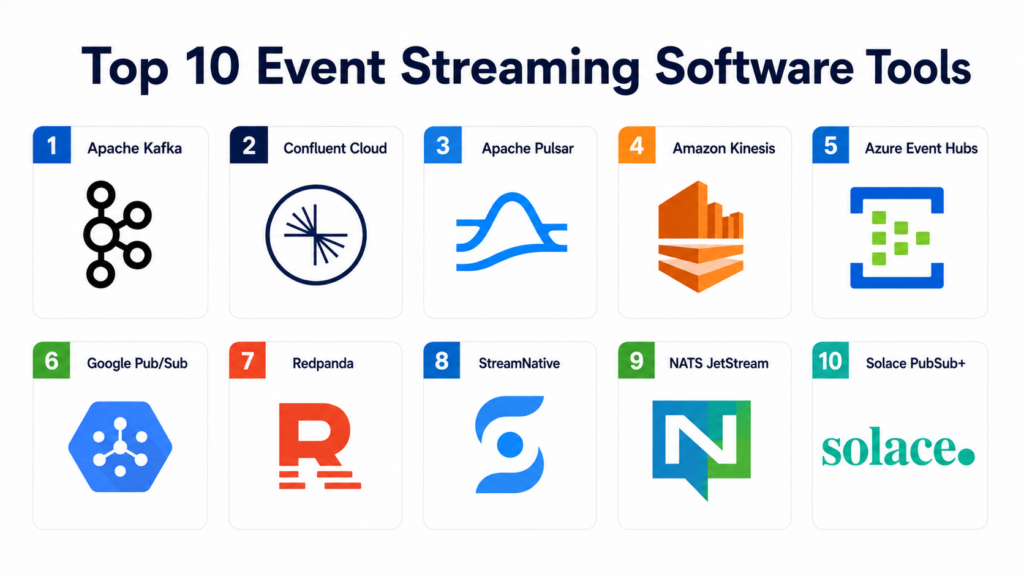
Introduction
Event streaming platforms are sophisticated software architectures designed to capture, process, and distribute data in real-time as events occur. Unlike traditional databases that store data at rest for later retrieval, these platforms handle data in motion. An “event” can be anything from a financial transaction or a sensor reading to a website click or a log entry. These systems act as a central nervous system for modern digital enterprises, allowing different applications to communicate asynchronously by producing and consuming streams of events.
In the current technological era, the ability to react instantly to data is a primary competitive differentiator. Businesses no longer rely solely on nightly batch processing; instead, they require immediate insights to drive customer experiences, detect fraud, or manage supply chains. Event streaming provides the foundation for microservices architectures, enabling decoupled systems to remain synchronized and responsive at a massive scale.
Real-world use cases:
- Financial Services: Processing millions of stock market trades per second and detecting fraudulent credit card activity in milliseconds.
- Logistics and Fleet Management: Tracking the real-time location of thousands of vehicles to optimize delivery routes and predict arrival times.
- E-commerce: Synchronizing inventory across multiple platforms and providing personalized product recommendations based on current browsing behavior.
- Industrial IoT: Monitoring thousands of sensors on a factory floor to predict equipment failure and automate maintenance schedules.
- Cybersecurity: Aggregating log data from across a global network to identify and mitigate intrusion attempts as they happen.
Evaluation criteria for buyers:
- Throughput and Latency: The ability to handle millions of messages per second with sub-millisecond delay.
- Durability and Retention: How the system ensures data is not lost and how long it can store events for replay.
- Scalability: The ease with which the platform can grow to accommodate increasing data volumes.
- Ecosystem and Integration: The availability of connectors for databases, cloud services, and third-party applications.
- Ordering Guarantees: Whether the system ensures that events are processed in the exact order they occurred.
- Fault Tolerance: The platform’s resilience against hardware failures and network partitions.
- Management Overhead: The complexity involved in deploying, monitoring, and scaling the infrastructure.
- Security Features: Support for encryption, fine-grained access control, and identity management.
- Deployment Flexibility: Support for on-premises, multi-cloud, or fully managed serverless environments.
- Cost Efficiency: The balance between performance requirements and infrastructure or subscription expenses.
Mandatory paragraph
- Best for: Large-scale enterprises, fintech organizations, real-time gaming companies, and high-growth SaaS providers who require decoupled, resilient, and high-velocity data pipelines.
- Not ideal for: Small businesses with simple, static data needs, organizations with limited engineering resources to manage distributed systems, or applications where simple database polling is sufficient.
Key Trends in Event Streaming Platforms
- Cloud-Native and Serverless Evolution: Platforms are moving toward abstracting the underlying infrastructure, allowing developers to focus on stream logic rather than cluster management and sharding.
- The Rise of Unified Streaming and Batch: A shift toward architectures that treat historical data and real-time data identically, simplifying the code required for complex analytics.
- Streaming Data Mesh: Decentralizing data ownership across organizations, where event streams are treated as high-quality, discoverable products shared between departments.
- AI and Machine Learning Integration: Native support for running inference models directly within the streaming pipeline to provide instantaneous predictions on live data.
- Standardization on Universal Formats: Increasing adoption of open standards like CloudEvents and Avro to ensure interoperability between different vendors and languages.
- Zero-ETL Architectures: Direct, real-time synchronization between streaming platforms and analytical warehouses, removing the need for traditional, slow extract-transform-load processes.
- Enhanced Observability and Governance: More sophisticated tools for tracking data lineage, enforcing schemas, and monitoring the health of distributed event-driven microservices.
- Edge Streaming: Pushing event processing closer to the source of data, such as IoT gateways or mobile devices, to reduce bandwidth costs and latency.
How We Selected These Tools (Methodology)
To identify the premier event streaming platforms, we utilized a systematic evaluation framework focused on operational excellence and architectural robustness. The selection logic included the following factors:
- Market Share and Mindshare: We prioritized platforms that are either industry standards used by global leaders or high-growth innovators disrupting the space.
- Feature Completeness: The selected tools must offer a full range of capabilities, including ingestion, storage, and sophisticated processing logic.
- Reliability and Performance Signals: We analyzed performance benchmarks and documented reliability in high-stress production environments.
- Security Posture: Evaluation of administrative controls, encryption standards, and compliance certifications.
- Developer Experience: Assessment of API quality, documentation clarity, and the breadth of supported programming languages.
- Scalability Path: We focused on tools that provide a clear roadmap for growing from small prototypes to massive, multi-petabyte deployments.
Top 10 Event Streaming Software Tools
1. Apache Kafka
Apache Kafka is an open-source distributed event store and stream-processing platform used by thousands of companies for high-performance data pipelines and streaming analytics. It is designed to handle trillions of events a day with high durability and fault tolerance.
Key Features
- Distributed Architecture: Uses a partitioned, replicated commit log for extreme scalability and resilience.
- Kafka Connect: A massive ecosystem of pre-built connectors for integrating with hundreds of external data sources and sinks.
- Kafka Streams: A lightweight library for building real-time stream processing applications directly on top of Kafka.
- High Throughput: Optimized for low-latency writes and high-volume reads across distributed clusters.
- Strong Durability: Stores data on disk with configurable replication factors to prevent data loss during hardware failure.
- Tiered Storage: Enables the separation of compute and storage, allowing for long-term data retention at a lower cost.
Pros
- The industry standard with a massive community and infinite third-party tool support.
- Proven at the largest possible scales in companies like LinkedIn, Netflix, and Uber.
Cons
- High operational complexity; managing Zookeeper or KRaft clusters requires specialized expertise.
- Significant infrastructure overhead and tuning required for optimal performance.
Platforms / Deployment
- Windows / macOS / Linux / Docker / Kubernetes
- Self-hosted / Hybrid
Security & Compliance
- SASL/Plain, SASL/SCRAM, SASL/GSSAPI (Kerberos), SSL/TLS encryption.
- Not publicly stated.
Integrations & Ecosystem
Kafka serves as the center of the modern data stack, connecting to virtually everything.
- Elasticsearch / MongoDB
- Snowflake / Databricks
- Spark / Flink
- Standard JDBC sources
Support & Community
Unrivaled global community support, thousands of tutorials, and professional training certifications available from multiple vendors.
2. Confluent Cloud
Confluent Cloud is a fully managed, cloud-native service for Apache Kafka that abstracts away the operational burden of running clusters while providing enterprise-grade features and governance.
Key Features
- Serverless Kafka: Automatically scales capacity up and down based on real-time demand without manual intervention.
- Stream Governance: Built-in suite of tools for data lineage, schema registry, and cataloging to ensure data quality.
- ksqlDB: A streaming SQL engine that allows developers to build event-streaming applications using familiar SQL syntax.
- Fully Managed Connectors: Over 120 pre-configured connectors that are managed and scaled by Confluent.
- Multi-Cloud Resilience: Syncs data across AWS, Azure, and Google Cloud to prevent vendor lock-in.
- Tiered Storage: Automatically moves older data to cheaper object storage while keeping it queryable.
Pros
- Eliminates the massive operational overhead of managing self-hosted Kafka.
- Superior security and compliance features out of the box compared to open-source versions.
Cons
- Subscription costs can be higher than self-hosting for very predictable, low-volume workloads.
- Users are tied to the Confluent proprietary ecosystem for some advanced governance features.
Platforms / Deployment
- AWS / Azure / Google Cloud
- Cloud
Security & Compliance
- SSO/SAML, MFA, RBAC, Private Link support, encryption at rest and in transit.
- SOC 2 Type II, ISO 27001, HIPAA, PCI DSS, GDPR.
Integrations & Ecosystem
Extends the Kafka ecosystem with specialized cloud-native hooks.
- AWS Lambda / Azure Functions
- Google BigQuery
- Salesforce / ServiceNow
- Snowflake
Support & Community
Premium 24/7 technical support with strict SLAs and access to a global team of Kafka experts.
3. Apache Pulsar
Apache Pulsar is a cloud-native, distributed messaging and streaming platform originally developed at Yahoo. It features a unique multi-layer architecture that separates storage from serving.
Key Features
- Multi-Layered Architecture: Uses Apache BookKeeper for storage and Pulsar Brokers for serving, allowing independent scaling.
- Native Multi-tenancy: Built-in support for multiple namespaces and organizations within a single cluster.
- Pulsar Functions: A lightweight, serverless-style computing framework for processing data within the platform.
- Geo-replication: Supports synchronous and asynchronous replication across global data centers out of the box.
- Unified Messaging: Supports both queuing (RabbitMQ style) and streaming (Kafka style) in one platform.
- Tiered Storage: Native support for offloading older data to S3 or Google Cloud Storage.
Pros
- Inherently more scalable and easier to manage than Kafka for multi-tenant environments.
- High flexibility for organizations that need both message queuing and event streaming.
Cons
- Smaller community and ecosystem compared to Apache Kafka.
- Complex architecture involving multiple components (Brokers, Bookies, and Zookeeper/Metadata).
Platforms / Deployment
- Linux / macOS / Docker / Kubernetes
- Self-hosted / Hybrid
Security & Compliance
- TLS, Role-based access control, Authentication via JWT/OIDC.
- Not publicly stated.
Integrations & Ecosystem
Rapidly growing list of connectors through Pulsar IO.
- Apache Flink / Spark
- Elasticsearch / InfluxDB
- AWS S3 / Google Cloud Pub/Sub
- JDBC / MongoDB
Support & Community
Supported by the Apache Software Foundation with commercial backing from companies like StreamNative.
4. Amazon Kinesis
Amazon Kinesis is a fully managed AWS service that makes it easy to collect, process, and analyze real-time, streaming data at any scale.
Key Features
- Kinesis Data Streams: Scalable ingestion service that captures data from hundreds of thousands of sources.
- Data Firehose: The easiest way to load streaming data into AWS data stores like S3, Redshift, and OpenSearch.
- Data Analytics: Enables processing of data streams using SQL or Apache Flink without managing infrastructure.
- On-demand Mode: Automatically manages shards and scales capacity to match varying data throughput.
- AWS Lambda Integration: Triggers serverless functions automatically in response to new data in a stream.
- Video Streams: Specialized service for ingesting and storing live video data for analytics.
Pros
- Deeply integrated with the AWS ecosystem, providing a seamless “one-click” experience for AWS users.
- Fully managed with no clusters to provision or patch.
Cons
- Proprietary API means moving away from Kinesis later can be difficult (vendor lock-in).
- Limited to the AWS cloud; not suitable for multi-cloud or on-premises needs.
Platforms / Deployment
- AWS
- Cloud
Security & Compliance
- KMS encryption, IAM roles, VPC Endpoints, MFA.
- SOC 1/2/3, ISO 27001, HIPAA, FedRAMP.
Integrations & Ecosystem
Designed specifically for the Amazon Web Services universe.
- Amazon S3 / Redshift / DynamoDB
- Amazon OpenSearch
- AWS Glue
- CloudWatch
Support & Community
Backed by Amazon’s extensive global support network and vast library of documentation.
5. Azure Event Hubs
Azure Event Hubs is a big data streaming platform and event ingestion service capable of receiving and processing millions of events per second.
Key Features
- Kafka Compatibility: Supports the Kafka protocol, allowing existing Kafka applications to connect without code changes.
- Event Hubs Capture: Automatically delivers streaming data to Azure Blob Storage or Data Lake Storage.
- Schema Registry: Provides a centralized repository for managing schemas in event-driven applications.
- Dedicated Clusters: Offers single-tenant deployments for high-performance enterprise workloads.
- Auto-Inflate: Automatically scales throughput units to meet the needs of the incoming data stream.
- Availability Zones: Provides built-in redundancy across different physical locations within a region.
Pros
- Ideal for Microsoft-centric organizations using Azure as their primary cloud.
- Strong hybrid cloud capabilities through integration with Azure Stack.
Cons
- Management interface and terminology are specific to the Azure ecosystem.
- Standard tiers have throughput limits that might require moving to the expensive Dedicated tier.
Platforms / Deployment
- Azure
- Cloud / Hybrid
Security & Compliance
- Azure Active Directory integration, SAS tokens, IP filtering.
- SOC 2, ISO 27001, HIPAA, PCI DSS.
Integrations & Ecosystem
Centralized within the Microsoft Azure data ecosystem.
- Azure Stream Analytics
- Azure Functions
- Azure Synapse
- Power BI
Support & Community
Standard Microsoft professional support and a large community of Azure developers.
6. Google Cloud Pub/Sub
Google Cloud Pub/Sub is an asynchronous messaging service that decouples services that produce events from services that process events.
Key Features
- Global Scaling: A single global topic can be accessed from any Google Cloud region without manual replication.
- Exactly-Once Delivery: Ensures that each message is delivered to a subscriber exactly one time.
- Dead-letter Topics: Automatically isolates messages that cannot be processed for later inspection.
- Ordering Keys: Allows for the guaranteed ordering of related events across the global network.
- Seek and Replay: Enables subscribers to re-read previously acknowledged messages from a specific point in time.
- BigQuery Subscription: Directly streams data into BigQuery without any intermediate code.
Pros
- The most truly “serverless” experience with no capacity planning required.
- Exceptional performance for global applications that need a single ingest point.
Cons
- Not a persistent commit log like Kafka; data retention is shorter and geared toward messaging.
- Proprietary API can make migrating to open-source streaming platforms difficult.
Platforms / Deployment
- Google Cloud
- Cloud
Security & Compliance
- IAM roles, VPC Service Controls, Customer-Managed Encryption Keys (CMEK).
- SOC 2, ISO 27001, HIPAA, FedRAMP.
Integrations & Ecosystem
Deeply integrated with Google’s analytics and AI services.
- Google Cloud Dataflow
- Google BigQuery
- Google Cloud Functions
- Vertex AI
Support & Community
Comprehensive Google Cloud support and extensive documentation for developer onboarding.
7. Redpanda
Redpanda is a modern streaming platform that is API-compatible with Apache Kafka but built from the ground up in C++ for extreme performance and simplicity.
Key Features
- Single Binary: No Zookeeper or JVM required; it runs as a single, lightweight binary.
- C++ Architecture: Uses a thread-per-core model to maximize the performance of modern NVMe SSDs.
- Kafka API Compatible: Existing Kafka clients and tools work out of the box with zero code changes.
- Built-in Schema Registry: Includes a natively integrated schema registry and HTTP proxy.
- Wasm Data Transforms: Allows running WebAssembly-based data transformations directly on the broker.
- Tiered Storage: Native support for offloading data to S3-compatible object storage for long-term retention.
Pros
- Significantly easier to deploy and manage than Apache Kafka.
- Higher performance and lower hardware costs due to the lack of JVM overhead.
Cons
- Newer tool compared to Kafka with a smaller enterprise track record.
- Some advanced Kafka ecosystem tools may have slight compatibility edge cases.
Platforms / Deployment
- Linux / macOS / Docker / Kubernetes
- Self-hosted / Cloud / Hybrid
Security & Compliance
- TLS, SASL/SCRAM, RBAC, SSO integration.
- SOC 2 Type II (Redpanda Cloud).
Integrations & Ecosystem
Leverages the existing Apache Kafka ecosystem.
- All Kafka-compatible connectors
- Flink / Spark
- Snowflake / Databricks
- Vector databases
Support & Community
Active development team and a highly engaged Slack community; enterprise support plans are available.
8. StreamNative
StreamNative is a fully managed, cloud-native event streaming platform built on Apache Pulsar, offering an enterprise-grade experience for the Pulsar ecosystem.
Key Features
- Managed Apache Pulsar: Provides a serverless or dedicated Pulsar environment across major clouds.
- Pulsar + Kafka Protocol: Supports both Pulsar and Kafka APIs, allowing for gradual migration or hybrid use.
- Lakehouse Integration: Directly syncs event streams with cloud data lakes like Delta Lake and Iceberg.
- Managed Connectors: Provides a library of managed Pulsar IO connectors for rapid integration.
- Enterprise Security: Includes enhanced identity management and network security features for Pulsar.
- Cloud Console: A sophisticated UI for managing topics, schemas, and monitoring across clusters.
Pros
- Eliminates the complexity of managing a distributed Pulsar architecture.
- Excellent for multi-tenant organizations that need the power of Pulsar without the operational pain.
Cons
- Tied to the Pulsar ecosystem, which has fewer available developers than the Kafka ecosystem.
- Costs can scale quickly for high-throughput, multi-region deployments.
Platforms / Deployment
- AWS / Azure / Google Cloud
- Cloud
Security & Compliance
- MFA, SSO, encryption at rest/transit, RBAC.
- SOC 2 Type II.
Integrations & Ecosystem
Extends the Apache Pulsar ecosystem.
- Apache Flink / Spark
- Snowflake
- S3 / GCS
- Elasticsearch
Support & Community
Premium enterprise support from the core contributors of the Apache Pulsar project.
9. NATS JetStream
NATS JetStream is a high-performance, lightweight messaging system that provides persistence, streaming, and “at-least-once” delivery guarantees.
Key Features
- Lightweight Single Binary: Extremely small footprint, making it ideal for edge and IoT deployments.
- Subject-Based Messaging: Highly flexible hierarchical subject naming for fine-grained message routing.
- Adaptive Pull/Push: Supports both push-based and pull-based message consumption models.
- Key-Value Store: Includes a built-in distributed key-value store built on top of JetStream.
- Decentralized Security: Uses NKey and JWT for secure, decentralized authentication and authorization.
- Self-Healing Clusters: Highly resilient gossip-based clusters that require zero manual intervention during failures.
Pros
- The fastest and most lightweight option for edge computing and microservices.
- Incredibly simple to operate with no external dependencies or complex metadata stores.
Cons
- Does not have the massive “Big Data” connector ecosystem found in Kafka.
- Lacks some of the complex tiered-storage and analytical features of larger platforms.
Platforms / Deployment
- Windows / macOS / Linux / Docker / Kubernetes
- Self-hosted / Hybrid / Edge
Security & Compliance
- NKeys, JWT, TLS encryption.
- Not publicly stated.
Integrations & Ecosystem
Focused on modern cloud-native and edge integrations.
- Kubernetes / Prometheus
- Go / Python / Java / Rust SDKs
- Standard cloud storage sinks
Support & Community
Backed by Synadia with a strong open-source community and professional support available.
10. Solace PubSub+
Solace PubSub+ is an advanced event broker that supports multiple protocols and can be deployed as hardware, software, or a managed cloud service.
Key Features
- Event Mesh: Creates a unified communication fabric across diverse clouds and on-premises data centers.
- Multi-Protocol Support: Natively supports MQTT, AMQP, REST, and Solace’s own high-performance protocol.
- Hardware Appliances: Offers dedicated hardware for organizations requiring the absolute lowest possible latency.
- Event Portal: A unique tool for designing, documenting, and discovering event-driven architectures.
- Dynamic Message Routing: Automatically routes events between brokers based on consumer interest.
- High Availability: Provides built-in redundancy and disaster recovery features for mission-critical apps.
Pros
- Best-in-class for hybrid-cloud environments where data must move between legacy and modern systems.
- Comprehensive governance tools that are superior to most open-source alternatives.
Cons
- Proprietary technology that can be more expensive than open-source-based stacks.
- Learning curve for the specialized Event Mesh and governance concepts.
Platforms / Deployment
- Hardware Appliance / Software (Linux/Docker) / Cloud
- Cloud / On-premises / Hybrid
Security & Compliance
- ACLs, LDAP/RADIUS, OAuth 2.0, TLS.
- SOC 2, ISO 27001.
Integrations & Ecosystem
Broad support for diverse industrial and enterprise protocols.
- SAP / MuleSoft
- TIBCO / IBM MQ
- Major Cloud Providers
- Big Data frameworks
Support & Community
Professional 24/7 global support and a mature community of enterprise architects.
Comparison Table (Top 10)
| Tool Name | Best For | Platform(s) Supported | Deployment | Standout Feature | Public Rating |
| 1. Apache Kafka | Industry Standard | Multi-Platform | Hybrid | Massive Ecosystem | 4.8/5 |
| 2. Confluent Cloud | Managed Kafka | AWS, Azure, GCP | Cloud | Stream Governance | 4.7/5 |
| 3. Apache Pulsar | Multi-tenancy | Linux, Kubernetes | Hybrid | Multi-layer Architecture | 4.5/5 |
| 4. Amazon Kinesis | AWS Ecosystem | AWS | Cloud | Lambda Integration | 4.6/5 |
| 5. Azure Event Hubs | Azure Ecosystem | Azure | Cloud | Kafka API Compatibility | 4.4/5 |
| 6. Google Pub/Sub | Global Serverless | Google Cloud | Cloud | Global Topic Access | 4.7/5 |
| 7. Redpanda | Low Latency/Simplicity | Linux, Kubernetes | Hybrid | Thread-per-core C++ | 4.8/5 |
| 8. StreamNative | Managed Pulsar | AWS, Azure, GCP | Cloud | Cloud-native Pulsar | N/A |
| 9. NATS JetStream | Edge / IoT | Multi-Platform | Hybrid | Lightweight Binary | 4.6/5 |
| 10. Solace PubSub+ | Hybrid Event Mesh | Multi-Platform | Hybrid | Multi-protocol Support | 4.5/5 |
Evaluation & Scoring of Event Streaming Platforms
The following scoring model evaluates each platform against critical operational and business criteria.
| Tool Name | Core (25%) | Ease (15%) | Integrations (15%) | Security (10%) | Performance (10%) | Support (10%) | Value (15%) | Weighted Total |
| Apache Kafka | 10 | 3 | 10 | 8 | 9 | 9 | 8 | 8.40 |
| Confluent Cloud | 10 | 9 | 10 | 10 | 9 | 10 | 7 | 9.15 |
| Apache Pulsar | 10 | 4 | 8 | 8 | 9 | 8 | 8 | 8.15 |
| Amazon Kinesis | 7 | 9 | 8 | 9 | 8 | 9 | 8 | 8.05 |
| Azure Event Hubs | 8 | 8 | 9 | 9 | 8 | 9 | 8 | 8.30 |
| Google Pub/Sub | 8 | 10 | 9 | 10 | 9 | 9 | 8 | 8.75 |
| Redpanda | 9 | 9 | 8 | 9 | 10 | 8 | 8 | 8.75 |
| StreamNative | 10 | 8 | 8 | 9 | 9 | 9 | 7 | 8.40 |
| NATS JetStream | 8 | 9 | 6 | 8 | 10 | 8 | 9 | 8.15 |
| Solace PubSub+ | 9 | 6 | 9 | 10 | 10 | 10 | 6 | 8.20 |
Scoring Model Logic:
- Core (25%): Efficacy of the event store, durability, and retention logic.
- Ease (15%): Simplicity of deployment, scaling, and daily operations.
- Integrations (15%): Breadth of the connector ecosystem and third-party hooks.
- Weighted Total: The calculation of $Score \times Weight$ for each criterion to determine the overall winner.
Which Event Streaming Platform Tool Is Right for You?
Solo / Freelancer
If you are an individual developer or a freelancer building a small-scale real-time application, Google Cloud Pub/Sub or Amazon Kinesis are the easiest entry points. They require zero infrastructure management and offer “pay-as-you-go” pricing that can be very affordable for low-traffic projects. Alternatively, Redpanda is an excellent choice for local development as it runs as a single binary with zero dependencies.
SMB
Small and medium-sized businesses should prioritize Confluent Cloud or Redpanda Cloud. These platforms allow you to utilize the massive Kafka ecosystem without needing a dedicated team of distributed systems engineers. They provide the right balance of professional features, schema governance, and ease of use that a growing company needs.
Mid-Market
For companies with established data teams that need to integrate diverse legacy and modern systems, Solace PubSub+ or Azure Event Hubs are strong candidates. Solace, in particular, is excellent for hybrid cloud strategies, while Event Hubs is the natural choice for organizations already committed to the Microsoft stack.
Enterprise
Large-scale enterprises with mission-critical, multi-petabyte needs should evaluate Apache Pulsar or Confluent Cloud. Pulsar is unrivaled for multi-tenant, global organizations that need strict isolation between departments, while Confluent Cloud offers the highest level of maturity and support for the industry-standard Kafka protocol.
Budget vs Premium
- Budget: NATS JetStream and Apache Kafka (Open-source) offer the lowest licensing costs but higher operational effort.
- Premium: Confluent Cloud and Solace PubSub+ are premium offerings that provide significant management and governance features.
Feature Depth vs Ease of Use
- Deepest Features: Apache Flink (via Confluent/StreamNative) and Apache Pulsar.
- Easiest to Use: Google Cloud Pub/Sub and Amazon Kinesis.
Integrations & Scalability
- Best Integrations: Apache Kafka and Confluent Cloud.
- Best Scalability: Apache Pulsar and Google Cloud Pub/Sub.
Security & Compliance Needs
Organizations with high regulatory requirements (Banking, Healthcare) should prioritize Confluent Cloud, Google Cloud, or Solace, as they offer the most comprehensive lists of compliance certifications and enterprise-grade security features.
Frequently Asked Questions (FAQs)
1. What is the difference between a message broker and an event streaming platform?
A traditional message broker (like RabbitMQ) is designed to deliver messages to consumers and delete them once acknowledged. An event streaming platform (like Kafka) is a persistent log that stores events indefinitely, allowing multiple different consumers to “replay” the same data at different times.
2. Can I use event streaming to replace my database?
While event streaming platforms store data, they are not a replacement for traditional relational or document databases. They are best used as a “source of truth” for the history of changes, while databases are used to store the current state of an application for quick lookups.
3. How do I handle data schema changes in an event stream?
Most professional platforms use a “Schema Registry.” This tool ensures that producers and consumers agree on the format of the data (using Avro, Protobuf, or JSON Schema) and prevents breaking changes from being introduced into the stream.
4. What is “Exactly-Once” delivery and why does it matter?
Exactly-Once ensures that even if a network failure occurs and a producer sends a message twice, the system only records it once. This is critical for financial applications where accidental duplicate transactions would be catastrophic.
5. Is event streaming only for real-time data?
No. Because platforms like Kafka and Pulsar can store data for long periods, they are also used for historical analysis. You can “re-stream” data from last year into a new analytics tool to see how a new algorithm would have performed.
6. What are the biggest operational challenges of self-hosting Kafka?
The primary challenges are managing cluster state (Zookeeper/KRaft), balancing partitions across nodes, handling data replication over the network, and performing zero-downtime upgrades of a distributed system.
7. How does event streaming support microservices?
Event streaming allows microservices to remain “decoupled.” Instead of one service calling another directly (which can cause a chain reaction if one goes down), services communicate by publishing events to the stream, which others can consume when they are ready.
8. What is a “Stream-Table” duality?
This is the concept that a stream is a history of changes (like a ledger), and a table is the current state (like a balance). You can turn a stream into a table by playing back the events, and you can turn a table into a stream by recording every change to it.
9. Can I run event streaming at the “Edge”?
Yes, lightweight platforms like NATS JetStream are specifically designed to run on small devices or gateways at the edge of a network, processing data locally before sending a summary back to the cloud.
10. How much does an event streaming platform cost?
Costs vary wildly. Open-source tools are free to license but expensive in terms of hardware and engineering time. Managed cloud services usually charge based on the amount of data ingested, the amount of data stored, and the number of active consumers.
Conclusion
Event streaming has become the fundamental architecture for the modern, real-time enterprise. Whether you choose the massive ecosystem of Apache Kafka, the global simplicity of Google Pub/Sub, or the technical elegance of Redpanda, the goal is the same: transforming your business from a series of slow, disconnected batches into a single, responsive, event-driven organism.Selecting the right platform depends on your specific balance of operational capacity and performance requirements. We recommend starting with a pilot project in a managed environment like Confluent Cloud or Amazon Kinesis to prove the value of event-driven architecture before scaling to a permanent, enterprise-wide event mesh.

I appreciate the practical examples used here.