MOTOSHARE 🚗🏍️
Rent Bikes & Cars Directly from Owners
Motoshare connects vehicle owners with people who need bikes and cars on rent. Owners earn from idle vehicles, and renters get flexible ride options.
Visit Motoshare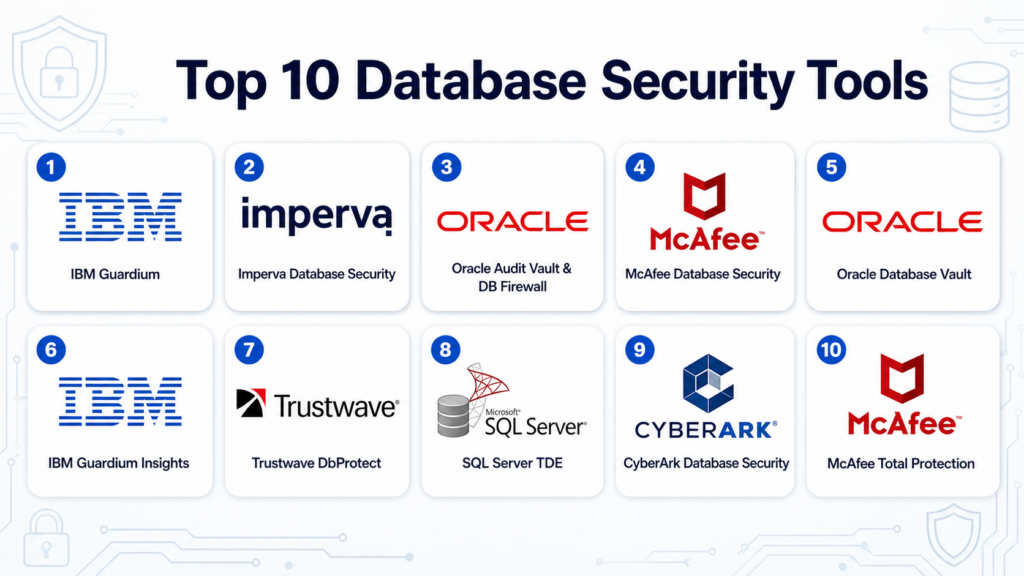
Introduction
Database Security Tools are specialized solutions designed to protect sensitive data stored in relational, NoSQL, and cloud databases. They safeguard against unauthorized access, breaches, insider threats, and data leakage by enforcing access controls, auditing activity, monitoring queries, and applying encryption. With the increasing adoption of cloud databases and hybrid infrastructures, database security is now critical for compliance, operational resilience, and protecting business-critical information.
Real-world use cases include preventing unauthorized access to financial records, monitoring and auditing user activity, encrypting sensitive healthcare data, detecting anomalies in database transactions, and enforcing role-based access for developers and analysts. Effective database security ensures regulatory compliance, reduces breach risk, and strengthens trust with customers and partners.
Evaluation criteria for buyers include database coverage (SQL, NoSQL, cloud), access control and user management, encryption support, auditing and monitoring capabilities, threat detection, integration with SIEM and IAM tools, ease of deployment, scalability, and cost-effectiveness.
Best for: enterprises, SMBs, cloud-native organizations, IT security teams, financial institutions, and healthcare providers seeking comprehensive database protection.
Not ideal for: very small teams with limited sensitive data, or organizations relying solely on application-level security controls.
Key Trends in Database Security Tools
- AI and ML-driven anomaly detection and threat monitoring.
- Automation of database activity auditing and compliance reporting.
- Increasing adoption of cloud-native database security solutions.
- Integration with DevOps pipelines and CI/CD workflows for secure development.
- Support for encryption at rest, in transit, and in use.
- Role-based access control and zero-trust database security models.
- Multi-cloud and hybrid environment coverage.
- Subscription-based and SaaS pricing models for SMBs.
- Focus on regulatory compliance: GDPR, HIPAA, SOC 2, ISO 27001.
- Real-time monitoring and alerting for suspicious database activity.
How We Selected These Tools (Methodology)
- Evaluated market adoption and reputation in enterprise and SMB segments.
- Assessed feature completeness including encryption, monitoring, and access controls.
- Reviewed performance, scalability, and reliability signals.
- Examined security posture and compliance certifications.
- Considered integration with SIEM, IAM, and cloud platforms.
- Evaluated customer fit across industries and database types.
- Focused on tools supporting hybrid and multi-cloud environments.
- Prioritized automation, anomaly detection, and threat intelligence capabilities.
Top 10 Database Security Tools
#1 — IBM Guardium
Short description: IBM Guardium provides real-time monitoring, auditing, and protection for enterprise databases. It is designed to prevent data breaches, enforce compliance, and secure sensitive information across SQL, NoSQL, and cloud databases.
Key Features
- Database activity monitoring and anomaly detection.
- Encryption and tokenization support.
- Automated compliance reporting.
- Integration with SIEM and IAM tools.
- Vulnerability assessment and access control.
Pros
- Enterprise-grade security and compliance.
- Supports multi-database environments.
Cons
- Complexity may require dedicated staff.
- High licensing cost for SMBs.
Platforms / Deployment
- Windows / Linux / Cloud
- Cloud / On-premises / Hybrid
Security & Compliance
- AES encryption
- ISO 27001, SOC 2, HIPAA
Integrations & Ecosystem
- AWS, Azure, Google Cloud
- SIEM tools
- IAM platforms
Support & Community
- Vendor support and professional services; strong documentation.
#2 — Imperva Database Security
Short description: Imperva Database Security provides comprehensive protection for databases with activity monitoring, threat detection, and vulnerability management. It supports both on-premises and cloud environments.
Key Features
- Real-time database monitoring.
- Vulnerability scanning and risk assessment.
- User behavior analytics and threat detection.
- Policy enforcement for access control.
- Audit and compliance reporting.
Pros
- Strong threat detection and analytics.
- Scales across multiple database types.
Cons
- Initial configuration can be complex.
- Pricing can be high for smaller teams.
Platforms / Deployment
- Windows / Linux / Cloud
- Cloud / On-premises / Hybrid
Security & Compliance
- AES encryption
- SOC 2, ISO 27001, GDPR
Integrations & Ecosystem
- SIEM and IAM tools
- Cloud platforms
- APIs for automation
Support & Community
- Vendor support, documentation, and professional services.
#3 — Oracle Audit Vault & Database Firewall
Short description: Oracle’s solution secures databases with auditing, real-time monitoring, and firewall protection. It is optimized for Oracle environments but supports mixed database deployments.
Key Features
- Database activity monitoring and auditing.
- SQL injection protection with database firewall.
- Policy-based access control.
- Vulnerability assessment and reporting.
- Integration with Oracle Cloud and on-premises databases.
Pros
- Tight integration with Oracle databases.
- Real-time monitoring and alerting.
Cons
- Best suited for Oracle environments.
- Enterprise-focused pricing.
Platforms / Deployment
- Windows / Linux / Oracle Cloud
- Cloud / On-premises / Hybrid
Security & Compliance
- AES encryption
- ISO 27001, SOC 2, GDPR
Integrations & Ecosystem
- Oracle Cloud and databases
- IAM and SIEM integration
- Audit and reporting tools
Support & Community
- Oracle enterprise support; extensive documentation.
#4 — McAfee Database Security
Short description: McAfee Database Security protects sensitive data with monitoring, vulnerability management, and threat prevention. It supports both cloud and on-premises deployments.
Key Features
- Database activity monitoring.
- Threat prevention and anomaly detection.
- Encryption and access control enforcement.
- Vulnerability scanning.
- Audit and compliance reporting.
Pros
- Multi-database support.
- Strong threat detection and prevention.
Cons
- Resource-intensive in large environments.
- SMB licensing can be expensive.
Platforms / Deployment
- Windows / Linux / Cloud
- Cloud / On-premises / Hybrid
Security & Compliance
- AES encryption
- ISO 27001, SOC 2
Integrations & Ecosystem
- SIEM tools
- IAM platforms
- Cloud providers (AWS, Azure, GCP)
Support & Community
- Vendor support, training, and knowledge base.
#5 — Oracle Database Vault
Short description: Oracle Database Vault provides advanced access control and policy enforcement, protecting against insider threats and unauthorized database access.
Key Features
- Role-based access control and separation of duties.
- Policy enforcement for sensitive data.
- Monitoring and auditing for compliance.
- Real-time threat detection.
- Integration with Oracle Cloud and IAM platforms.
Pros
- Strong insider threat protection.
- Seamless Oracle ecosystem integration.
Cons
- Complex deployment.
- Primarily Oracle-focused.
Platforms / Deployment
- Windows / Linux / Oracle Cloud
- Cloud / On-premises / Hybrid
Security & Compliance
- AES encryption
- ISO 27001, SOC 2, HIPAA
Integrations & Ecosystem
- Oracle Cloud
- Active Directory and IAM
- SIEM tools
Support & Community
- Vendor enterprise support; professional services.
#6 — IBM Guardium Insights
Short description: IBM Guardium Insights provides advanced analytics for database activity monitoring, threat detection, and anomaly detection across large enterprise environments.
Key Features
- Centralized monitoring of database activity.
- AI-powered threat detection.
- Compliance reporting and audit support.
- Integration with SIEM and IAM tools.
- Vulnerability and risk assessment.
Pros
- Enterprise-scale visibility and analytics.
- AI-driven anomaly detection.
Cons
- Requires technical expertise.
- Higher cost for SMBs.
Platforms / Deployment
- Windows / Linux / Cloud
- Cloud / On-premises / Hybrid
Security & Compliance
- AES encryption
- SOC 2, ISO 27001, HIPAA
Integrations & Ecosystem
- Cloud providers
- SIEM and IAM tools
- APIs for automation
Support & Community
- Vendor support, professional services.
#7 — Trustwave DbProtect
Short description: DbProtect provides vulnerability scanning, activity monitoring, and access control for enterprise databases, enhancing security posture.
Key Features
- Database vulnerability scanning.
- Real-time activity monitoring.
- Policy enforcement and audit logs.
- Integration with cloud and on-premises databases.
- Threat detection and reporting.
Pros
- Easy-to-use interface.
- Comprehensive monitoring and compliance.
Cons
- Limited advanced analytics.
- May require additional tools for multi-cloud coverage.
Platforms / Deployment
- Windows / Linux / Cloud
- Cloud / On-premises / Hybrid
Security & Compliance
- AES encryption
- ISO 27001, SOC 2
Integrations & Ecosystem
- SIEM tools
- Cloud services
- API integration
Support & Community
- Vendor support and documentation.
#8 — Microsoft SQL Server Transparent Data Encryption (TDE)
Short description: TDE secures SQL Server databases with encryption at rest, protecting sensitive data from unauthorized access.
Key Features
- Transparent encryption for databases and backups.
- Integration with SQL Server management tools.
- Automatic encryption key management.
- Role-based access and auditing.
- Minimal performance impact.
Pros
- Seamless SQL Server integration.
- Easy to deploy for Microsoft environments.
Cons
- Limited to SQL Server.
- Does not monitor activity or provide advanced analytics.
Platforms / Deployment
- Windows / Linux
- On-premises / Cloud
Security & Compliance
- AES encryption
- ISO 27001, SOC 2
Integrations & Ecosystem
- SQL Server Management Studio
- Azure Cloud
- Active Directory
Support & Community
- Microsoft support and knowledge base.
#9 — CyberArk Database Security
Short description: CyberArk protects privileged accounts in databases and enforces access controls while monitoring database activity for anomalies.
Key Features
- Privileged account security.
- Database activity monitoring.
- Policy enforcement and auditing.
- Integration with IAM and SIEM.
- Threat detection and alerting.
Pros
- Strong privileged access control.
- Integration with security ecosystem.
Cons
- Complex setup for SMBs.
- Enterprise-focused pricing.
Platforms / Deployment
- Windows / Linux / Cloud
- Cloud / On-premises / Hybrid
Security & Compliance
- AES encryption
- ISO 27001, SOC 2
Integrations & Ecosystem
- IAM and SIEM platforms
- Cloud databases
- APIs for automation
Support & Community
- Vendor support and professional services.
#10 — McAfee Total Protection for Data
Short description: McAfee Total Protection provides encryption, activity monitoring, and data loss prevention for databases and endpoints, ensuring end-to-end security.
Key Features
- Database and file encryption.
- Activity monitoring and alerting.
- Policy-driven access control.
- Integration with cloud and on-premises databases.
- Audit and compliance reporting.
Pros
- Comprehensive protection across environments.
- Enterprise-scale support.
Cons
- Resource-intensive for large deployments.
- Licensing costs may be high for SMBs.
Platforms / Deployment
- Windows / Linux / Cloud
- Cloud / On-premises / Hybrid
Security & Compliance
- AES encryption
- ISO 27001, SOC 2, HIPAA
Integrations & Ecosystem
- Cloud services
- IAM and SIEM
- APIs for automation
Support & Community
- Vendor support, documentation, and professional services.
Comparison Table (Top 10)
| Tool Name | Best For | Platform(s) Supported | Deployment | Standout Feature | Public Rating |
|---|---|---|---|---|---|
| IBM Guardium | Enterprise | Windows / Linux / Cloud | Cloud / On-prem / Hybrid | Real-time monitoring & anomaly detection | N/A |
| Imperva Database Security | Multi-database | Windows / Linux / Cloud | Cloud / On-prem / Hybrid | Threat detection & analytics | N/A |
| Oracle Audit Vault & DB Firewall | Oracle environments | Windows / Linux / Cloud | Cloud / On-prem / Hybrid | DB firewall & auditing | N/A |
| McAfee Database Security | Multi-database | Windows / Linux / Cloud | Cloud / On-prem / Hybrid | Vulnerability & monitoring | N/A |
| Oracle Database Vault | Enterprise | Windows / Linux / Cloud | Cloud / On-prem / Hybrid | Access control & policy enforcement | N/A |
| IBM Guardium Insights | Enterprise | Windows / Linux / Cloud | Cloud / On-prem / Hybrid | AI-powered analytics | N/A |
| Trustwave DbProtect | Multi-database | Windows / Linux / Cloud | Cloud / On-prem / Hybrid | Vulnerability scanning & compliance | N/A |
| SQL Server TDE | Microsoft SQL Server | Windows / Linux | On-prem / Cloud | Transparent database encryption | N/A |
| CyberArk Database Security | Privileged accounts | Windows / Linux / Cloud | Cloud / On-prem / Hybrid | Privileged access control | N/A |
| McAfee Total Protection | Multi-database | Windows / Linux / Cloud | Cloud / On-prem / Hybrid | Encryption & DLP | N/A |
Evaluation & Scoring of Database Security Tools
| Tool Name | Core (25%) | Ease (15%) | Integrations (15%) | Security (10%) | Performance (10%) | Support (10%) | Value (15%) | Weighted Total |
|---|---|---|---|---|---|---|---|---|
| IBM Guardium | 9 | 7 | 8 | 9 | 8 | 8 | 7 | 8.2 |
| Imperva | 9 | 7 | 8 | 9 | 8 | 8 | 7 | 8.2 |
| Oracle Audit Vault | 8 | 7 | 7 | 8 | 8 | 8 | 7 | 7.8 |
| McAfee Database Security | 8 | 7 | 7 | 8 | 8 | 7 | 7 | 7.7 |
| Oracle Database Vault | 8 | 7 | 7 | 8 | 8 | 7 | 7 | 7.7 |
| IBM Guardium Insights | 9 | 6 | 8 | 9 | 8 | 7 | 7 | 7.9 |
| Trustwave DbProtect | 8 | 8 | 7 | 8 | 8 | 7 | 7 | 7.7 |
| SQL Server TDE | 7 | 8 | 6 | 8 | 8 | 7 | 8 | 7.6 |
| CyberArk DB Security | 8 | 7 | 8 | 9 | 8 | 7 | 7 | 7.9 |
| McAfee Total Protection | 8 | 7 | 7 | 8 | 8 | 7 | 7 | 7.7 |
Which Database Security Tool Is Right for You?
Solo / Freelancer
SQL Server TDE or open-source monitoring tools are sufficient for individual developers or small teams managing a single database.
SMB
McAfee Total Protection or Trustwave DbProtect provide comprehensive database protection with cloud support at manageable cost.
Mid-Market
Imperva or Oracle Database Vault offers centralized monitoring, auditing, and access control for mid-size organizations.
Enterprise
IBM Guardium, Oracle Audit Vault, and CyberArk Database Security provide enterprise-scale monitoring, threat detection, and compliance for large deployments.
Budget vs Premium
Open-source or native database encryption solutions are cost-effective. Enterprise-grade tools provide advanced analytics and compliance at higher cost.
Feature Depth vs Ease of Use
Enterprise tools offer deep monitoring and analytics but require specialized staff. SMB solutions focus on simplified deployment and automation.
Integrations & Scalability
Enterprise tools scale to multi-cloud, hybrid, and multi-database environments. SMB tools focus on ease of integration with cloud services and SaaS databases.
Security & Compliance Needs
AES encryption, real-time monitoring, and support for GDPR, HIPAA, SOC 2, and ISO 27001 are critical for high-risk and regulated environments.
Frequently Asked Questions (FAQs)
1. What is database security?
Database security protects data against unauthorized access, breaches, and misuse through encryption, monitoring, and access controls.
2. Can SMBs implement database security?
Yes, cloud-native and SaaS database security tools offer cost-effective deployment for SMBs.
3. What types of databases are supported?
Most tools support SQL, NoSQL, and cloud databases including AWS RDS, Azure SQL, MongoDB, and Oracle.
4. How does real-time monitoring work?
Tools monitor database queries and user activity, triggering alerts for suspicious behavior.
5. Are these tools compliant with regulations?
Enterprise database security tools support GDPR, HIPAA, SOC 2, and ISO 27001 compliance through audit logging and reporting.
6. Can they detect insider threats?
Yes, activity monitoring, anomaly detection, and privileged account management help detect insider threats.
7. Do these tools integrate with cloud services?
Yes, most enterprise and SMB tools integrate with AWS, Azure, GCP, and hybrid environments.
8. How scalable are these tools?
Enterprise solutions can manage thousands of databases, multi-cloud deployments, and high-volume workloads.
9. Can they encrypt data at rest and in transit?
Yes, tools offer encryption for storage and secure transport channels, including TLS and AES encryption.
10. Are open-source database security tools reliable?
Yes, actively maintained open-source tools provide strong protection but may require more technical expertise.
Conclusion
Database Security Tools are essential for protecting sensitive data across cloud, on-premises, and hybrid database environments. Choosing the right tool depends on organizational size, regulatory requirements, database types, and deployment preferences. SMBs may benefit from cost-effective solutions like McAfee Total Protection or Trustwave DbProtect, while mid-market and enterprise organizations often require IBM Guardium, Oracle Audit Vault, or CyberArk Database Security for advanced monitoring, threat detection, and compliance management. Open-source or native tools like SQL Server TDE provide secure encryption for small deployments. The recommended next steps are to shortlist tools aligned with your infrastructure, pilot solutions to validate monitoring and auditing workflows, and ensure integrations and compliance are fully met before full-scale deployment.

I love the examples you included, very helpful.
Studying these security tools shows me how to protect data in my future projects.