MOTOSHARE 🚗🏍️
Rent Bikes & Cars Directly from Owners
Motoshare connects vehicle owners with people who need bikes and cars on rent. Owners earn from idle vehicles, and renters get flexible ride options.
Visit Motoshare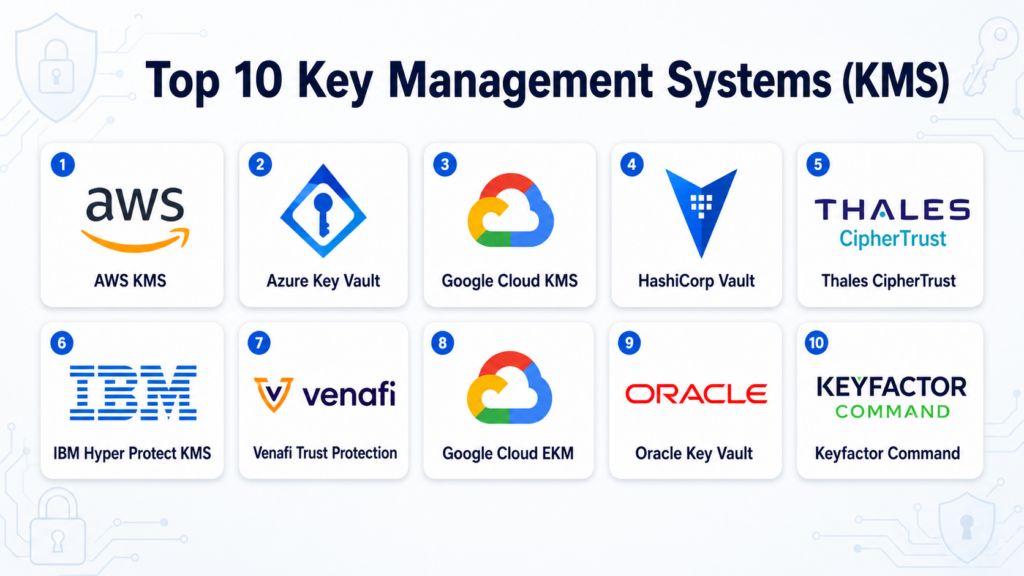
Introduction
Key Management Systems (KMS) are software solutions that handle the generation, storage, distribution, rotation, and revocation of cryptographic keys used to encrypt and decrypt sensitive data. They are essential for securing data across cloud services, on-premises infrastructure, and hybrid environments. A robust KMS ensures that only authorized users or applications can access encrypted information, reducing the risk of breaches and helping organizations meet regulatory compliance requirements.
Real-world use cases include encrypting customer data in SaaS applications, securing financial transactions, managing keys for cloud storage services, protecting intellectual property, and enabling secure DevOps pipelines. Modern KMS solutions often integrate with encryption tools, identity management platforms, and cloud APIs, offering automation and auditing features for enterprise-scale operations.
Evaluation criteria for buyers include key lifecycle management, integration with cloud and on-prem infrastructure, multi-cloud support, compliance with standards like FIPS 140-2, audit and reporting capabilities, performance under high loads, scalability, ease of use, and pricing models.
Best for: enterprises, SMBs, cloud-native companies, financial institutions, healthcare providers, and IT security teams seeking centralized control over cryptographic keys.
Not ideal for: small organizations with minimal sensitive data or teams using only application-level encryption without centralized key control.
Key Trends in Key Management Systems
- AI-driven key rotation and automated lifecycle management.
- Increasing adoption of cloud-native and hybrid KMS deployments.
- Integration with multi-cloud environments and container orchestration platforms.
- Emphasis on regulatory compliance including GDPR, HIPAA, SOC 2, and ISO 27001.
- Hardware Security Module (HSM) integration for high-assurance key storage.
- Automation of auditing and logging for better operational visibility.
- Subscription and pay-as-you-go pricing models for SMB adoption.
- End-to-end encryption across applications, databases, and storage systems.
- Support for DevOps pipelines and API-based key management.
- Scalability for enterprise workloads and multi-region deployments.
How We Selected These Tools (Methodology)
- Evaluated market adoption and mindshare across cloud and enterprise segments.
- Assessed feature completeness including key lifecycle management, APIs, HSM integration, and policy enforcement.
- Considered reliability and performance metrics such as latency and uptime.
- Examined security posture and compliance certifications.
- Reviewed integrations with cloud providers, encryption tools, and identity platforms.
- Evaluated customer fit across SMB, mid-market, and enterprise environments.
- Prioritized support for hybrid and multi-cloud deployments.
- Focused on solutions enabling automation and DevOps integration.
Top 10 Key Management Systems (KMS)
#1 — AWS Key Management Service (AWS KMS)
Short description: AWS KMS is a fully managed cloud service for creating and controlling encryption keys in AWS environments. It simplifies key management for cloud-native applications and enterprise workloads.
Key Features
- Centralized key creation and lifecycle management.
- Integration with AWS services and SDKs.
- Automatic key rotation.
- Fine-grained access control with IAM policies.
- Detailed logging via AWS CloudTrail.
Pros
- Fully managed, scalable, and reliable.
- Deep integration with AWS ecosystem.
Cons
- Limited to AWS environments.
- Complex pricing structure for high-volume workloads.
Platforms / Deployment
- Web / Cloud
- Cloud-native (AWS)
Security & Compliance
- FIPS 140-2 validated
- ISO 27001, SOC 2, GDPR
Integrations & Ecosystem
Supports native AWS services and APIs:
- S3, RDS, Lambda
- CloudTrail logs
- SDKs for encryption in applications
Support & Community
AWS enterprise support, extensive documentation, and active community forums.
#2 — Azure Key Vault
Short description: Azure Key Vault centralizes key, secret, and certificate management for Microsoft Azure applications. It offers secure key storage, access control, and auditing for enterprise and SMB customers.
Key Features
- Centralized key and secret storage.
- Integration with Azure services and Microsoft 365.
- Automated key rotation and versioning.
- Access control via Azure Active Directory.
- Audit logging for compliance.
Pros
- Seamless integration with Azure ecosystem.
- Strong access control and logging capabilities.
Cons
- Primarily optimized for Azure workloads.
- Learning curve for non-Microsoft environments.
Platforms / Deployment
- Web / Cloud
- Cloud-native (Azure)
Security & Compliance
- FIPS 140-2 validated
- ISO 27001, SOC 2, GDPR
Integrations & Ecosystem
- Azure services (SQL, Storage, Functions)
- Active Directory and RBAC
- API access for custom applications
Support & Community
Microsoft support tiers, online documentation, community forums.
#3 — Google Cloud KMS
Short description: Google Cloud KMS is a managed service for creating, storing, and managing cryptographic keys for Google Cloud workloads. It supports high-volume key management with audit logging and HSM integration.
Key Features
- Centralized key management.
- Cloud HSM integration for enhanced security.
- Key versioning and rotation.
- IAM-based access controls.
- Audit logging through Cloud Audit Logs.
Pros
- Scalable and cloud-native.
- Strong integration with Google Cloud services.
Cons
- Limited outside Google Cloud ecosystem.
- Enterprise features may require additional configuration.
Platforms / Deployment
- Web / Cloud
- Cloud-native (Google Cloud)
Security & Compliance
- FIPS 140-2 validated
- SOC 2, ISO 27001, GDPR
Integrations & Ecosystem
- Cloud Storage, BigQuery, Compute Engine
- Cloud IAM
- APIs for application encryption
Support & Community
Google enterprise support and online knowledge base.
#4 — HashiCorp Vault
Short description: HashiCorp Vault is an open-source and enterprise-grade tool for managing secrets, keys, and dynamic credentials. It targets multi-cloud, DevOps, and hybrid environments.
Key Features
- Secrets and key management for applications and infrastructure.
- Dynamic secret generation.
- Encryption as a service via APIs.
- Access control via policies and tokens.
- Audit logging for compliance.
Pros
- Supports multi-cloud and hybrid deployments.
- Strong developer and DevOps integration.
Cons
- Enterprise features require paid subscription.
- Self-hosted deployments require operational expertise.
Platforms / Deployment
- Windows / macOS / Linux / Cloud
- Self-hosted / Cloud / Hybrid
Security & Compliance
- AES encryption, HSM support
- Not publicly stated for SOC 2
Integrations & Ecosystem
- Kubernetes, Terraform, AWS, Azure, GCP
- API-driven automation
- CI/CD pipeline integration
Support & Community
Open-source community and enterprise support options.
#5 — Thales CipherTrust Manager
Short description: Thales CipherTrust centralizes key management across enterprise and cloud environments. It enables compliance-driven encryption with HSM integration and automated key lifecycle controls.
Key Features
- Multi-cloud key management.
- HSM-backed key storage.
- Policy-driven encryption controls.
- Audit and reporting for compliance.
- API and SDK support.
Pros
- Enterprise-grade security and compliance.
- Scalable for large multi-cloud deployments.
Cons
- Requires specialized staff for setup.
- Higher licensing costs.
Platforms / Deployment
- Windows / Linux / Cloud
- Hybrid / Cloud / On-premises
Security & Compliance
- FIPS 140-2 validated
- GDPR, HIPAA support
Integrations & Ecosystem
- AWS, Azure, GCP, VMware
- API integration
- Enterprise encryption tools
Support & Community
Vendor support with professional services.
#6 — IBM Cloud Hyper Protect Crypto Services
Short description: IBM Hyper Protect KMS provides cloud-native key management with HSM-backed protection. Ideal for regulated industries requiring secure cloud encryption.
Key Features
- Hardware-backed key storage.
- Centralized key lifecycle management.
- Integration with IBM Cloud services.
- Compliance and audit logging.
- Policy-based access control.
Pros
- Strong security and compliance focus.
- Managed HSM reduces operational overhead.
Cons
- Limited outside IBM Cloud.
- Enterprise-oriented pricing.
Platforms / Deployment
- Cloud / IBM Cloud services
- Cloud-native
Security & Compliance
- FIPS 140-2 validated
- HIPAA, ISO 27001, GDPR
Integrations & Ecosystem
- IBM Cloud services (DB2, Cloud Object Storage)
- APIs for app encryption
- Key rotation automation
Support & Community
IBM enterprise support and documentation.
#7 — Venafi Trust Protection Platform
Short description: Venafi focuses on encryption and certificate key lifecycle management for enterprises. It secures machine identities, keys, and certificates across hybrid IT.
Key Features
- Centralized key and certificate management.
- Machine identity protection.
- Automated renewal and rotation.
- Audit and reporting dashboards.
- Multi-cloud support.
Pros
- Specialized in machine identity security.
- Scales for large enterprises.
Cons
- Complex deployment for SMBs.
- Premium pricing.
Platforms / Deployment
- Windows / Linux / Cloud
- Hybrid / On-premises
Security & Compliance
- AES encryption, HSM support
- ISO 27001, SOC 2
Integrations & Ecosystem
- Cloud providers, CI/CD pipelines
- API-driven automation
- Certificate authorities
Support & Community
Vendor support and professional services.
#8 — Google Cloud External Key Manager (EKM)
Short description: EKM allows enterprises to manage encryption keys outside Google Cloud while integrating with cloud services. It’s ideal for organizations needing third-party key control.
Key Features
- External key management.
- Integration with Google Cloud services.
- Centralized key access policies.
- Audit logging and compliance support.
- Supports HSM integration.
Pros
- Provides control over keys for compliance.
- Integrates with Google Cloud security.
Cons
- Limited to Google Cloud workloads.
- Requires external HSM setup.
Platforms / Deployment
- Cloud
- Cloud-native / Hybrid
Security & Compliance
- FIPS 140-2 validated
- SOC 2, ISO 27001, GDPR
Integrations & Ecosystem
- Cloud storage and compute services
- API access for apps
- HSM integration
Support & Community
Google enterprise support and documentation.
#9 — Oracle Key Vault
Short description: Oracle Key Vault is designed for enterprises to manage encryption keys, passwords, and certificates centrally across Oracle and non-Oracle environments.
Key Features
- Centralized key and secret storage.
- Automated key rotation and versioning.
- Integration with Oracle Cloud services.
- Role-based access control.
- Detailed auditing and logging.
Pros
- Strong Oracle ecosystem integration.
- Supports hybrid deployments.
Cons
- Limited appeal outside Oracle-centric environments.
- Enterprise-focused pricing.
Platforms / Deployment
- Windows / Linux / Cloud
- On-premises / Cloud / Hybrid
Security & Compliance
- AES encryption
- Not publicly stated for SOC 2
Integrations & Ecosystem
- Oracle Cloud apps and databases
- HSM and vault integration
- API for applications
Support & Community
Oracle support and professional services.
#10 — Keyfactor Command
Short description: Keyfactor Command provides certificate lifecycle and key management for enterprises. Focused on machine identity security and policy-driven encryption across hybrid IT.
Key Features
- Certificate and key lifecycle management.
- Machine identity security.
- Automation of key issuance and renewal.
- Centralized dashboard and policy enforcement.
- Multi-cloud support.
Pros
- Comprehensive enterprise key and certificate management.
- Supports automation and DevOps integration.
Cons
- Complexity for small teams.
- Premium enterprise pricing.
Platforms / Deployment
- Windows / Linux / Cloud
- Hybrid / On-premises
Security & Compliance
- AES encryption
- Not publicly stated for SOC 2
Integrations & Ecosystem
- CI/CD pipelines
- Cloud and on-prem encryption tools
- API-driven automation
Support & Community
Vendor support, knowledge base, and professional services.
Comparison Table (Top 10)
| Tool Name | Best For | Platform(s) Supported | Deployment | Standout Feature | Public Rating |
|---|---|---|---|---|---|
| AWS KMS | AWS workloads | Cloud | Cloud-native | Integrated AWS key management | N/A |
| Azure Key Vault | Azure users | Cloud | Cloud-native | Centralized secrets and keys | N/A |
| Google Cloud KMS | Google Cloud | Cloud | Cloud-native | Multi-cloud key support | N/A |
| HashiCorp Vault | Multi-cloud / DevOps | Windows / Linux / Cloud | Hybrid / Cloud / Self-hosted | DevOps-friendly secrets management | N/A |
| Thales CipherTrust | Enterprise | Windows / Linux / Cloud | Hybrid / Cloud / On-prem | HSM-backed multi-cloud key management | N/A |
| IBM Hyper Protect KMS | Regulated enterprise | Cloud / IBM | Cloud-native | HSM-backed key management | N/A |
| Venafi Trust Protection | Enterprise | Windows / Linux / Cloud | Hybrid / On-prem | Machine identity and key management | N/A |
| Google Cloud EKM | Google Cloud | Cloud | Cloud-native / Hybrid | External key control | N/A |
| Oracle Key Vault | Oracle-centric enterprise | Windows / Linux / Cloud | Hybrid / On-prem | Centralized Oracle & non-Oracle key management | N/A |
| Keyfactor Command | Enterprise | Windows / Linux / Cloud | Hybrid / On-prem | Machine identity security | N/A |
Evaluation & Scoring of KMS Tools
| Tool Name | Core (25%) | Ease (15%) | Integrations (15%) | Security (10%) | Performance (10%) | Support (10%) | Value (15%) | Weighted Total |
|---|---|---|---|---|---|---|---|---|
| AWS KMS | 9 | 8 | 8 | 9 | 9 | 8 | 8 | 8.6 |
| Azure Key Vault | 9 | 8 | 8 | 9 | 9 | 8 | 8 | 8.6 |
| Google Cloud KMS | 9 | 8 | 8 | 9 | 9 | 8 | 8 | 8.6 |
| HashiCorp Vault | 9 | 7 | 9 | 9 | 8 | 7 | 8 | 8.3 |
| Thales CipherTrust | 9 | 7 | 9 | 10 | 9 | 7 | 7 | 8.3 |
| IBM Hyper Protect KMS | 9 | 7 | 8 | 10 | 9 | 8 | 7 | 8.4 |
| Venafi Trust Protection | 8 | 7 | 8 | 9 | 8 | 7 | 7 | 7.9 |
| Google Cloud EKM | 8 | 7 | 8 | 9 | 8 | 7 | 7 | 7.9 |
| Oracle Key Vault | 8 | 7 | 7 | 8 | 8 | 7 | 7 | 7.7 |
| Keyfactor Command | 8 | 7 | 8 | 9 | 8 | 7 | 7 | 7.8 |
Interpretation: Higher weighted totals indicate stronger overall suitability for enterprise-scale encryption key management, multi-cloud integration, and compliance needs.
Which KMS Tool Is Right for You?
Solo / Freelancer
HashiCorp Vault (open-source) provides lightweight secrets and key management for small teams or developers experimenting with secure DevOps workflows.
SMB
AWS KMS, Azure Key Vault, or Google Cloud KMS offer easy cloud-native key management without complex self-hosting or HSM requirements.
Mid-Market
Thales CipherTrust or Keyfactor Command provide centralized key management, auditing, and multi-cloud support suitable for growing companies.
Enterprise
IBM Hyper Protect KMS, Venafi Trust Protection, and Oracle Key Vault are suited for regulated industries requiring HSM-backed keys, machine identity management, and enterprise-grade compliance.
Budget vs Premium
Open-source or cloud-native KMS options are cost-effective. Premium enterprise solutions offer HSM, multi-cloud, and advanced auditing but at higher cost.
Feature Depth vs Ease of Use
Enterprise KMS provide deep policy enforcement and compliance features but require training. Cloud-native KMS balance simplicity with strong security.
Integrations & Scalability
Cloud-native KMS integrate with DevOps pipelines, cloud storage, and encryption tools. Enterprise solutions scale for multi-region, high-volume workloads.
Security & Compliance Needs
Select tools with FIPS 140-2 validation, HSM support, AES encryption, and regulatory certifications to meet enterprise security and compliance obligations.
Frequently Asked Questions (FAQs)
1. What is the difference between KMS and encryption tools?
KMS focuses on managing the lifecycle of cryptographic keys, while encryption tools use those keys to encrypt and decrypt data.
2. Can SMBs use enterprise KMS?
Yes, many cloud-native KMS solutions offer scalable, cost-effective plans suitable for SMB adoption.
3. How are keys rotated and revoked?
Keys can be automatically rotated, versioned, or revoked according to policies defined in the KMS dashboard or APIs.
4. Do KMS solutions comply with regulations?
Most enterprise and cloud-native KMS are designed to support GDPR, HIPAA, ISO 27001, and SOC 2 compliance.
5. Can KMS integrate with multi-cloud deployments?
Yes, many KMS support AWS, Azure, GCP, and hybrid environments with API-driven integration.
6. What is HSM and why is it important?
A Hardware Security Module provides a physically secured environment for keys, ensuring high-assurance protection against theft or tampering.
7. Can developers use KMS with CI/CD pipelines?
Yes, modern KMS provide APIs and SDKs for integrating secrets and key management into automated deployment workflows.
8. How scalable are KMS solutions?
Enterprise-grade KMS can manage thousands of keys across multiple regions and clouds, while cloud-native solutions scale dynamically with usage.
9. Are open-source KMS solutions secure?
Yes, actively maintained and audited open-source solutions like HashiCorp Vault are trusted for secure key management.
10. How complex is implementation?
Cloud-native KMS are easier to implement, while enterprise and hybrid KMS may require specialized teams for HSM integration and policy configuration.
Conclusion
Key Management Systems are essential for enterprises and SMBs to protect sensitive data across cloud, on-prem, and hybrid environments. Selecting the right KMS depends on organizational size, regulatory needs, cloud adoption, and technical capabilities. Cloud-native KMS like AWS KMS, Azure Key Vault, or Google Cloud KMS offer simplicity and cost efficiency, while enterprise solutions such as Thales CipherTrust, IBM Hyper Protect, and Venafi provide deep compliance, HSM-backed security, and multi-cloud scalability. Open-source solutions like HashiCorp Vault allow developers and small teams to implement secure key management without vendor lock-in. The recommended next steps are to shortlist KMS tools aligned with your infrastructure, pilot selected solutions in a controlled environment, and validate integrations and compliance before broader deployment. By taking a structured approach, organizations can ensure secure, scalable, and compliant key management.

This is exactly what I was looking for today.
Analyzing KMS tools helps me grasp the fundamentals of handling encryption keys safely.