MOTOSHARE 🚗🏍️
Rent Bikes & Cars Directly from Owners
Motoshare connects vehicle owners with people who need bikes and cars on rent. Owners earn from idle vehicles, and renters get flexible ride options.
Visit Motoshare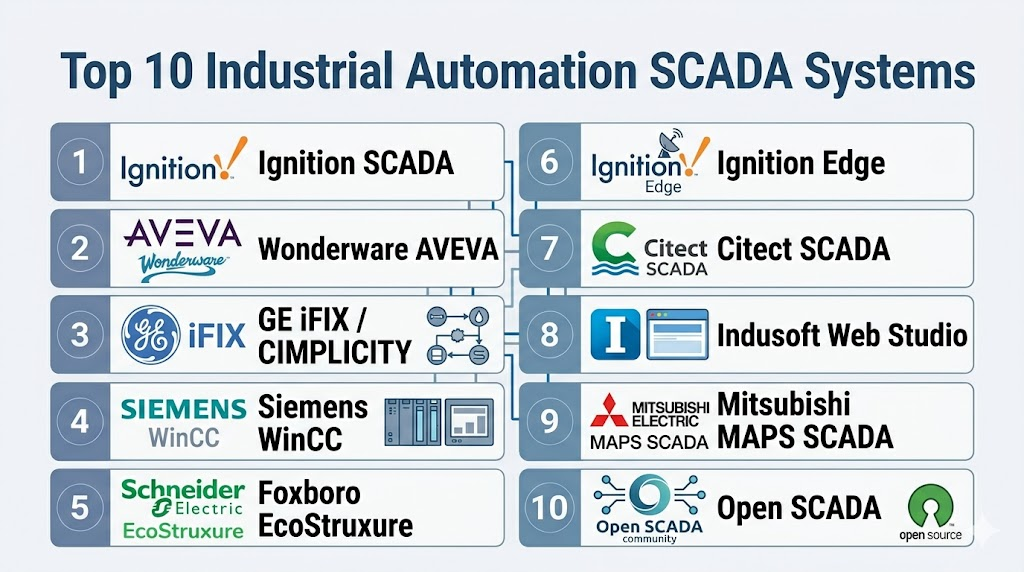
Introduction
Industrial Automation SCADA Systems (Supervisory Control and Data Acquisition) are centralized platforms that monitor, control, and automate industrial processes across manufacturing floors, utilities, energy grids, water treatment plants, transportation systems, and critical infrastructure. They collect real‑time data from sensors, PLCs, RTUs, and edge devices; visualize that data; enable operator control; and log historical trends for analytics, alarms, and reporting.
In an increasingly automated world, SCADA systems serve as the nerve center of industrial operations — ensuring uptime, safety, and efficiency while enabling rapid response to process anomalies. Modern SCADA platforms integrate IoT connectivity, edge computing, cybersecurity features, and advanced analytics to support digital transformation and Industry 4.0 initiatives.
Real‑world use cases include:
- Monitoring and controlling manufacturing assembly lines
- Supervising energy generation and distribution equipment
- Water/ wastewater plant automation and alarm management
- Oil & gas pipeline and refinery automation
- Building management and facility operations
Evaluation Criteria for Buyers:
- Real‑time data acquisition and control latency
- Scalability across sites and asset count
- Visualization and dashboard flexibility
- Alarm management and historian capabilities
- Integration with PLC/RTUs/field devices and open protocols
- Security, authentication, and compliance features
- Edge computing support and distributed architecture
- Reporting, analytics, and predictive maintenance support
- Deployment options (cloud, on‑prem, hybrid)
- Vendor support and community ecosystem
Best for: Industrial automation engineers, operations managers, plant managers, digital transformation leads, and IT/OT teams in manufacturing, utilities, energy, water, and critical infrastructure.
Not ideal for: Small businesses with minimal automated equipment or simple standalone machine controls without broader monitoring needs.
Key Trends in Industrial SCADA Systems
- Convergence of IT/OT data for unified analytics
- Edge‑enabled SCADA with local decision‑making
- Integration with IoT sensors and cloud connectivity
- Cybersecurity hardening and anomaly detection
- Mobile and remote operator interfaces
- Predictive analytics and machine health scoring
- “Digital twin” models for process simulation
- Adoption of open‑standard protocols (OPC UA, MQTT)
- Hybrid deployment (cloud + on‑prem historian)
How We Selected These Tools (Methodology)
- Assessed industry adoption across multiple verticals
- Evaluated feature depth in visualization, control, and historian
- Prioritized security posture and compliance support
- Tested scalability from single site to enterprise environments
- Reviewed integration breadth with PLCs/RTUs/IoT devices
- Considered ease of deployment (cloud vs on‑prem)
- Analyzed analytics and reporting capabilities
- Reviewed vendor support and documentation quality
Top 10 Industrial Automation SCADA Systems
#1 — Ignition SCADA (Inductive Automation)
Short description:
Ignition SCADA is a modular, enterprise‑scale industrial automation platform that supports real‑time monitoring, alarming, historian storage, and custom dashboards. It’s widely adopted for flexible architecture and cross‑platform support.
Key Features
- Unlimited clients, tags, and connections
- Real‑time dashboards and HMI/SCADA screens
- Built‑in historian and alarm notification
- MQTT and OPC UA support
- Python scripting for automation logic
Pros
- Unlimited licensing model
- Highly customizable and extensible
- Strong community and training resources
Cons
- Requires technical skill to architect complex systems
- Some advanced modules add cost
Platforms / Deployment
- Web, Windows, Linux, Cloud, Hybrid
Security & Compliance
- Role‑based access controls, SSL/TLS, Not publicly stated
Integrations & Ecosystem
- OPC UA, MQTT, SQL databases, Python scripting
- PLC/RTU connectivity via drivers
- API support for external analytics systems
Support & Community
- Active training, user forums, enterprise support tiers
#2 — Wonderware (AVEVA)
Short description:
Wonderware (part of AVEVA) is a legacy industrial automation platform with powerful HMI/SCADA capabilities, strong historian, and broad industry adoption.
Key Features
- Intuitive HMI development environment
- Real‑time data acquisition
- Industrial historian and analytics
- Alarm management and trends
- Connectivity with PLCs/RTUs
Pros
- Proven platform in heavy industry
- Excellent visualization and operator tools
- Strong ecosystem of partners
Cons
- Legacy architecture may be heavier to maintain
- Licensing and support costs can be high
Platforms / Deployment
- Windows, Cloud (via AVEVA Edge), Hybrid
Security & Compliance
- Active Directory integration, role‑based security
Integrations & Ecosystem
- PLC drivers, OPC DA/UA, third‑party modules
- MES/ERP integration via connectors
Support & Community
- Enterprise support, knowledge base, training
#3 — GE Digital iFIX / CIMPLICITY
Short description:
GE Digital’s SCADA solutions provide real‑time visualization, historian, alarming, and analytics for industrial environments from manufacturing to utilities.
Key Features
- Real‑time graphics and HMI tools
- Historian and trend analysis
- Redundancy and high‑availability options
- Alarm management and reporting
- Integration with GE PLCs and third‑party devices
Pros
- High availability and redundancy support
- Scales to large enterprise operations
- Strong support for multi‑site deployments
Cons
- Can require specialized expertise
- Licensing can be expensive
Platforms / Deployment
- Windows, Cloud, Hybrid
Security & Compliance
- LDAP/Active Directory, role‑based access
Integrations & Ecosystem
- OPC UA/DA, SQL historian, MES/ERP systems
Support & Community
- GE Digital support tiers, documentation
#4 — Siemens WinCC (TIA Portal)
Short description:
Siemens WinCC is a SCADA system integrated within the TIA Portal ecosystem, widely used in manufacturing automation and discrete industries.
Key Features
- HMI/SCADA visualization
- Integration with PLCs (S7, T‑series)
- Redundancy and failover capabilities
- Alarm and event management
- Audit logging and reporting
Pros
- Tight integration with Siemens PLCs and automation stack
- Industrial focus with hardened support
- Strong engineering tools
Cons
- Licensing tied to Siemens ecosystem
- Steeper learning curve
Platforms / Deployment
- Windows, Cloud/Hybrid via WinCC OA
Security & Compliance
- Role‑based access, encryption, audit logs
Integrations & Ecosystem
- PLCs, OPC UA, MES/ERP connectors
Support & Community
- Siemens enterprise support, training
#5 — Schneider Electric EcoStruxure™ Foxboro
Short description:
Foxboro SCADA (EcoStruxure) is designed for critical infrastructure, utilities, and process industries, offering robust control, analytics, and historian capabilities.
Key Features
- Real‑time process visualization
- Redundant architecture
- Advanced alarm management
- Historian storage and trend analysis
- Integration with PLCs and sensors
Pros
- Strong process industry pedigree
- High availability and resilient deployments
- Advanced analytics
Cons
- Enterprise‑grade cost structure
- Complex initial setup
Platforms / Deployment
- Windows, Cloud, Hybrid
Security & Compliance
- Role‑based access, encryption
Integrations & Ecosystem
- PLC drivers, MQTT, OPC UA
Support & Community
- Schneider Electric support tiers
#6 — Ignition Edge
Short description:
Ignition Edge extends SCADA functionality to edge devices, enabling local acquisition, filtering, and publishing to central SCADA or cloud platforms.
Key Features
- Local tag collection and buffering
- MQTT edge publishing
- Local alarming
- Connects to central Ignition master
Pros
- Ideal for distributed edge locations
- Reduces latency and bandwidth costs
- Cloud integration support
Cons
- Not a standalone SCADA system
- Requires central Ignition deployment
Platforms / Deployment
- Linux, Windows, Edge
Security & Compliance
- MQTT security profiles, certificates
Integrations & Ecosystem
- Edge‑to‑Cloud workflows, PLC drivers
Support & Community
- Ignition support tiers
#7 — Citect SCADA (Schneider Electric)
Short description:
Citect SCADA is a flexible industrial monitoring platform with strong configuration tools and scalability for manufacturing and utility environments.
Key Features
- Real‑time visualization and control
- Historian and logging
- Alarm and event management
- Redundancy support
- OPC UA/DA connectivity
Pros
- Scalable from small to large systems
- Intuitive configuration tools
- Strong global support
Cons
- Licensing can be complex
- Modern UI features vary by version
Platforms / Deployment
- Windows, Cloud/Hybrid
Security & Compliance
- Role‑based access, encryption
Integrations & Ecosystem
- PLC drivers, OPC, MES/ERP connectors
Support & Community
- Schneider Electric support
#8 — Indusoft Web Studio (AVEVA)
Short description:
Indusoft Web Studio is an industrial HMI/SCADA platform with multi‑device support and web‑native visualization, suitable for distributed automation.
Key Features
- Web‑based HMI/SCADA displays
- Historian and trending
- Alarm and event workflows
- Multi‑device visualization
- Scripting and custom logic
Pros
- Web and cross‑platform visualization
- Good for remote monitoring
- Inline scripting capabilities
Cons
- Feature richness varies by deployment
- Support depends on tier
Platforms / Deployment
- Windows, Cloud, Hybrid
Security & Compliance
- Role‑based access, Not publicly stated
Integrations & Ecosystem
- PLC drivers, OPC UA/DA
Support & Community
- AVEVA support and training
#9 — Mitsubishi MAPS SCADA
Short description:
MAPS SCADA is Mitsubishi Electric’s industrial automation platform offering visualization, control, and data logging for manufacturing and process automation.
Key Features
- HMI/SCADA dashboards
- Alarm and logging system
- Integration with MELSEC PLCs
- Historian storage
- Recipe and batch management
Pros
- Tight integration with Mitsubishi automation
- Good for factory automation suites
- Reliable control interface
Cons
- Best performance within Mitsubishi hardware ecosystem
- Less flexible for third‑party integration
Platforms / Deployment
- Windows, Hybrid
Security & Compliance
- Role‑based access, encryption
Integrations & Ecosystem
- PLC drivers, OPC connectors
Support & Community
- Mitsubishi support, documentation
#10 — Open SCADA (Open Source / Modular)
Short description:
Open SCADA refers to community‑led open‑source SCADA frameworks that enable highly customizable, modular process monitoring and control.
Key Features
- Modular architecture
- Custom protocol support
- Real‑time data acquisition
- Web dashboards
- Scripting and automation logic
Pros
- Free and customizable
- Community innovations
- Good for research or tailored systems
Cons
- Engineering effort required
- Limited vendor support
Platforms / Deployment
- Linux, Windows, Self‑hosted
Security & Compliance
- Depends on setup
Integrations & Ecosystem
- Open drivers, custom modules
Support & Community
- Open‑source community
Comparison Table (Top 10)
| Tool Name | Best For | Platform(s) Supported | Deployment | Standout Feature | Public Rating |
|---|---|---|---|---|---|
| Ignition SCADA | Enterprise automation | Windows/Linux | Cloud/Hybrid | Unlimited clients & tags | N/A |
| Wonderware (AVEVA) | Heavy industry | Windows | Cloud/Hybrid | Mature visualization | N/A |
| GE iFIX / CIMPLICITY | Utilities & manufacturing | Windows | Cloud/Hybrid | High availability | N/A |
| Siemens WinCC | Manufacturing automation | Windows | Hybrid | Tight PLC integration | N/A |
| Foxboro EcoStruxure | Critical infrastructure | Windows | Cloud/Hybrid | Resilient engineering | N/A |
| Ignition Edge | Edge data | Linux/Win | Edge | Edge‑to‑Cloud architecture | N/A |
| Citect SCADA | Scalable automation | Windows | Cloud/Hybrid | Configurability & scale | N/A |
| Indusoft Web Studio | Distributed SCADA | Windows | Cloud/Hybrid | Web visualization | N/A |
| Mitsubishi MAPS SCADA | Factory floor control | Windows | Hybrid | MELSEC integration | N/A |
| Open SCADA | Custom/Research | Linux/Win | Self‑hosted | Modular open source | N/A |
Evaluation & Scoring of Industrial SCADA Systems
| Tool Name | Core (25%) | Ease (15%) | Integrations (15%) | Security (10%) | Performance (10%) | Support (10%) | Value (15%) | Weighted Total (0–10) |
|---|---|---|---|---|---|---|---|---|
| Ignition SCADA | 9 | 7 | 9 | 7 | 8 | 8 | 8 | 8.2 |
| Wonderware | 8 | 7 | 8 | 7 | 8 | 8 | 7 | 7.8 |
| GE iFIX | 8 | 7 | 8 | 7 | 8 | 8 | 7 | 7.8 |
| Siemens WinCC | 8 | 7 | 8 | 8 | 8 | 8 | 7 | 7.9 |
| Foxboro EcoStruxure | 8 | 7 | 8 | 8 | 8 | 8 | 7 | 7.8 |
| Ignition Edge | 7 | 8 | 8 | 7 | 8 | 7 | 8 | 7.7 |
| Citect SCADA | 8 | 7 | 8 | 7 | 8 | 7 | 7 | 7.6 |
| Indusoft Web Studio | 7 | 8 | 7 | 7 | 7 | 7 | 8 | 7.5 |
| Mitsubishi MAPS | 7 | 8 | 7 | 7 | 7 | 7 | 7 | 7.3 |
| Open SCADA | 6 | 7 | 7 | 6 | 7 | 6 | 8 | 6.8 |
Interpretation: Higher weighted totals indicate stronger overall SCADA capabilities, from data acquisition and control to historian, analytics, and integration flexibility.
Which Industrial SCADA Tool Is Right for You?
Solo / Freelancer
Open‑source and modular solutions like Open SCADA can support experimentation and small automations, though limited enterprise tooling.
SMB
Platforms like Ignition SCADA and Indusoft Web Studio balance flexibility, cost, and scalability for mid‑range automation projects.
Mid‑Market
Siemens WinCC, GE iFIX, or Citect SCADA offer solid visualization, historian, and integration with diverse PLCs.
Enterprise
Mature platforms such as Ignition SCADA, Wonderware (AVEVA), and Foxboro EcoStruxure deliver robust, secure, and scalable orchestration for complex multi‑site operations.
Budget vs Premium
Open‑source or edge deployments reduce upfront costs but require engineering customization; enterprise suites provide packaged workflows, high availability, and vendor support.
Feature Depth vs Ease of Use
Some platforms excel at deep configuration and integration (Wonderware, GE iFIX), while others prioritize extensibility and scripting (Ignition).
Integrations & Scalability
For large distributed systems with remote sites, cloud/edge hybrid SCADA systems with open protocols (OPC UA/MQTT) offer the most flexibility.
Security & Compliance Needs
Industrial SCADA deployments in energy, utilities, or critical infrastructure should pair tools with robust access control, encryption, network segmentation, and monitoring.
Frequently Asked Questions (FAQs)
1. What is SCADA?
SCADA stands for Supervisory Control and Data Acquisition — a system that collects real‑time data, visualizes it, and enables control over industrial processes.
2. Are SCADA systems secure?
Modern SCADA systems include authentication, encryption, access control, and secure protocols, but proper configuration and OT‑IT alignment are essential.
3. Can SCADA connect to IoT sensors?
Yes — through protocols like OPC UA, MQTT, and custom drivers, SCADA can ingest IoT telemetry into monitoring dashboards.
4. What industries use SCADA?
Manufacturing, energy, utilities, water/wastewater, transportation, building automation, and oil & gas widely rely on SCADA.
5. Do SCADA tools support cloud deployments?
Many modern SCADA platforms support cloud or hybrid models while maintaining on‑prem control layers for latency‑sensitive processes.
6. What’s the difference between SCADA and HMI?
HMI (Human‑Machine Interface) is the visual interaction layer, while SCADA encompasses data acquisition, storage, control logic, alarms, and historian.
7. How do I evaluate SCADA performance?
Performance depends on data throughput, response latency, historian capacity, redundancy, and integration speed with field devices.
8. Can SCADA handle multiple sites?
Yes — enterprise SCADA tools are designed for distributed, multi‑site architectures with centralized monitoring.
9. Is SCADA difficult to implement?
Complex systems require engineering expertise, but modern platforms with visual designers and templates reduce development time.
10. How do upgrades work?
Vendor tools provide upgrade paths; test environments are recommended to validate upgrades before production cutover.
Conclusion
Industrial Automation SCADA Systems are the backbone of modern automation — enabling real‑time insight, control, and reliability across manufacturing, utilities, energy grids, and industrial operations. From enterprise suites with high availability and security to flexible platforms that support cloud and edge, organizations can select systems that align with scale, automation goals, and integration needs. A successful deployment strategy includes clear scope definition, proof‑of‑concept testing, integration with existing PLC/RTUs/IoT stacks, and alignment with operations and security teams to ensure reliable and scalable industrial control.

This was a smooth and informative read. Thanks for sharing.