MOTOSHARE 🚗🏍️
Rent Bikes & Cars Directly from Owners
Motoshare connects vehicle owners with people who need bikes and cars on rent. Owners earn from idle vehicles, and renters get flexible ride options.
Visit Motoshare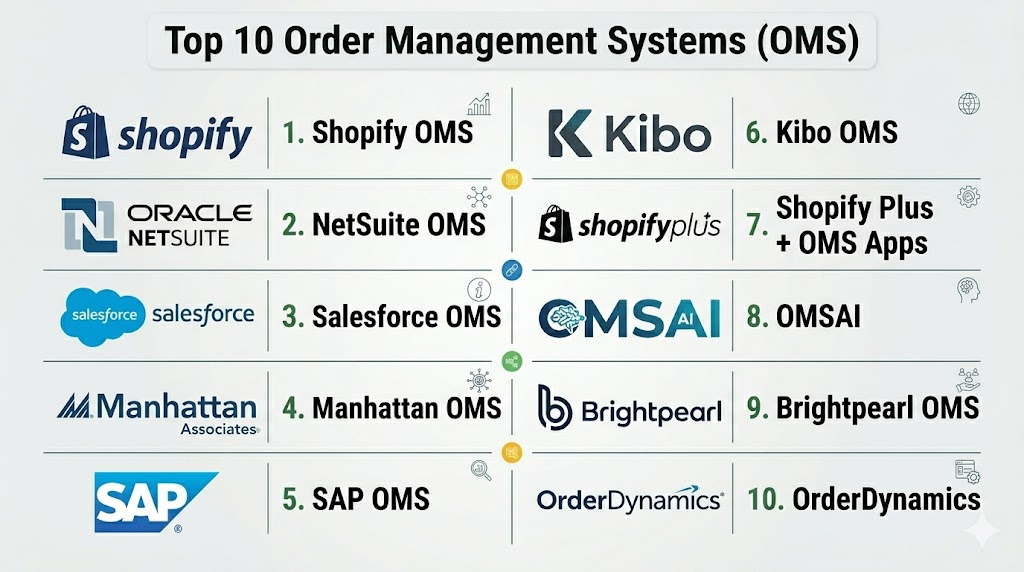
Introduction
Order Management Systems (OMS) are software platforms that centralize and automate the end‑to‑end order lifecycle — from order capture and validation, through fulfillment orchestration, inventory allocation, invoicing, and delivery tracking. OMS serve as the operational backbone connecting sales channels, inventory sources, fulfillment centers, carriers, and customer service, ensuring orders are processed accurately, delivered on time, and reconciled with inventory and financial systems.
In today’s omnichannel commerce environment, order complexity has multiplied: customers expect real‑time visibility, split fulfillment strategies (BOPIS, drop‑ship, marketplace), and accurate fulfillment regardless of channel (e‑commerce, retail POS, marketplaces). An advanced OMS orchestrates across these dimensions — improving customer satisfaction, reducing fulfillment costs, and minimizing stockouts or overselling.
Real‑world use cases include:
- Centralizing orders from web stores, physical stores, marketplaces, and call centers.
- Automating inventory allocation across warehouses and distribution centers.
- Orchestrating multi‑leg fulfillment (ship‑from‑store, drop‑ship, 3PL).
- Providing real‑time order visibility and lifecycle tracking.
- Integrating with ERP, WMS, CRM, shipping carriers, and financial systems.
Evaluation Criteria for Buyers:
- Multichannel order capture and normalization
- Inventory allocation and fulfillment logic
- Integration with ERP, WMS, shipping, and marketplaces
- Real‑time visibility and customer notifications
- Business rules and exception handling
- Analytics, reporting, and SLA monitoring
- Scalability for peak demand
- Support for returns, exchanges, and cancellations
- Security, access control, and compliance
- Ease of deployment and total cost of ownership
Best for: Retailers, e‑commerce brands, distributors, manufacturers with direct sales, marketplaces, and enterprises with complex fulfillment networks.
Not ideal for: Very small merchants with limited SKUs and simple fulfillment who can manage orders directly within marketplaces or small POS systems.
Key Trends in Order Management Systems (OMS)
- AI‑assisted allocation for cost and speed optimization
- Real‑time inventory visibility across distributed locations
- Omnichannel fulfillment (BOPIS, curbside pickup, ship‑from‑store)
- Cloud‑native OMS with global scaling and uptime SLAs
- Embedded analytics and predictive alerts for exceptions
- Integration with marketplaces (Amazon, Walmart, eBay)
- Customer self‑service order tracking portals
- Returns and reverse logistics orchestration
- Event‑driven architectures with API‑first design
How We Selected These Tools (Methodology)
- Evaluated market adoption across retail, distribution, and e‑commerce.
- Assessed feature completeness in fulfillment orchestration and inventory allocation.
- Reviewed integration breadth with ERP, WMS, CRM, shipping, and marketplaces.
- Considered scalability for peak demand, global operations, and multi‑brand use.
- Checked real‑time visibility and analytics capabilities.
- Evaluated workflow automation and exception rules.
- Verified security controls, access roles, and compliance readiness.
- Analyzed ease of use, onboarding time, and support resources.
Top 10 Order Management Systems (OMS)
#1 — OMS by Shopify (Shopify Plus)
Short description:
Shopify’s OMS (embedded in Shopify Plus) provides centralized order capture, inventory allocation, fulfillment routing, and customer insights — tailored especially for growing and mid‑market online retailers.
Key Features
- Unified order capture across channels
- Inventory allocation and visibility
- Fulfillment routing rules
- Order tracking and customer notifications
- Returns and cancellation workflows
Pros
- Native integration with Shopify e‑commerce
- User‑friendly UI and quick start
- Real‑time multi‑channel order sync
Cons
- Best within the Shopify ecosystem
- Fewer advanced fulfillment optimization features
Platforms / Deployment
- Web, Cloud
Security & Compliance
- Role‑based access, encryption
Integrations & Ecosystem
- Ecommerce, POS, shipping apps
- ERP and CRM via integrations
- Marketplace connectors
Support & Community
- Shopify support and partner ecosystem
#2 — Oracle NetSuite Order Management
Short description:
NetSuite’s OMS centralizes orders, inventory, fulfillment, and returns with deep ERP integration, making it suitable for mid‑market and enterprise operations requiring unified ERP/OMS workflows.
Key Features
- Order orchestration and fulfillment logic
- Inventory and demand visibility
- Workflow exception routing
- Returns and exchanges
- Real‑time dashboards
Pros
- Unified ERP + OMS
- Strong financial and fulfillment traceability
- Scales globally
Cons
- Best for NetSuite users
- Deployment complexity
Platforms / Deployment
- Web, Cloud
Security & Compliance
- Enterprise access control, encryption
Integrations & Ecosystem
- NetSuite ERP, CRM, WMS
- Marketplace integrations
- Shipping and carriers
Support & Community
- NetSuite support
#3 — Salesforce Order Management
Short description:
Salesforce Order Management extends Salesforce Commerce with centralized order orchestration, fulfillment workflows, and service‑centric order lifecycle management tightly connected to CRM.
Key Features
- Multi‑channel order capture
- Fulfillment orchestration and routing
- Inventory availability and allocation
- Customer service order management
- Returns/refunds workflows
Pros
- Native Salesforce ecosystem fit
- Unified customer order views
- Strong service‑centric capacities
Cons
- Licensing cost within Salesforce stack
- Implementation effort for complex models
Platforms / Deployment
- Web, Cloud
Security & Compliance
- Salesforce security protocols, roles
Integrations & Ecosystem
- Salesforce CRM and Commerce
- ERP, WMS via connectors
Support & Community
- Salesforce support and Trailhead
#4 — Manhattan OMS
Short description:
Manhattan’s OMS is an enterprise‑grade system optimized for high‑volume retail, direct‑to‑consumer, distribution, and location‑based fulfillment orchestration.
Key Features
- Real‑time inventory and fulfillment routing
- Distributed order orchestration
- Exceptions and SLA rules
- Returns and reverse logistics
- Analytics and forecasting
Pros
- Strong multi‑node fulfillment logic
- Deep exception handling
- Scales for enterprise peak loads
Cons
- Enterprise pricing
- Deployment longer
Platforms / Deployment
- Web, Cloud/Hybrid
Security & Compliance
- Enterprise access controls, encryption
Integrations & Ecosystem
- ERP, WMS, carriers
- Marketplace connectors
Support & Community
- Enterprise support
#5 — SAP Order Management (part of SAP Commerce)
Short description:
SAP’s OMS offering (via SAP Commerce & S/4HANA integration) connects order capture, inventory, finance, and fulfillment within the SAP enterprise stack.
Key Features
- Order orchestration and lifecycle dashboards
- Inventory chaise and allocation
- Complex pricing and SLA rules
- Returns management
- Multi‑site fulfillment
Pros
- Deep SAP ecosystem synergy
- End‑to‑cash traceability
- Enterprise scalability
Cons
- Best for SAP customers
- Complexity and cost
Platforms / Deployment
- Web, Cloud/Hybrid
Security & Compliance
- SAP access controls, encryption
Integrations & Ecosystem
- SAP ERP, Commerce, CRM
- WMS and carrier integrations
Support & Community
- SAP support network
#6 — Kibo OMS
Short description:
Kibo’s OMS offers order lifecycle visibility, flexible fulfillment rules, and unified customer experiences across channels, enabling dynamic orchestration and rapid delivery options.
Key Features
- Distributed fulfillment orchestration
- Inventory visibility across nodes
- Split and multi‑leg order logic
- Returns and refunds handling
- Service agent dashboards
Pros
- Strong omnichannel support
- Flexible fulfillment policies
- Fast‑moving B2C focus
Cons
- Best with other Kibo commerce modules
- Less ERP depth
Platforms / Deployment
- Web, Cloud
Security & Compliance
- Role access, encryption
Integrations & Ecosystem
- Commerce platforms
- WMS and carriers
- Analytics tools
Support & Community
- Vendor support
#7 — Shopify Plus + Flow + OMS Apps (Composable)
Short description:
Beyond Shopify’s native OMS, the Shopify Plus ecosystem enables composable OMS strategies with Flow automations and third‑party OMS apps that cater to customization and integration flexibility.
Key Features
- Composable OMS workflows
- Automated order routing rules
- Custom fulfillment connectors
- Alerts and exception handling
- App‑driven extensions
Pros
- High flexibility
- Vendor and app ecosystem choice
- Rapid onboarding
Cons
- Requires integration planning
- Some complexity in orchestration logic
Platforms / Deployment
- Web, Cloud
Security & Compliance
- Role access, encryption
Integrations & Ecosystem
- POS, ERP, carriers, marketplaces
Support & Community
- Shopify partner ecosystem
#8 — O9 Solutions Order Management
Short description:
O9 OMS emphasizes a demand‑driven, AI‑augmented order orchestration with planning synergies, exception alerts, and global fulfillment optimization.
Key Features
- AI‑driven fulfillment recommendations
- Demand constrained allocation
- Real‑time visibility and exceptions
- What‑if scenario simulation
- Returns and service workflows
Pros
- Intelligence‑augmented logic
- Scenario planning
- Fits enterprise complexity
Cons
- Higher cost
- Implementation expertise needed
Platforms / Deployment
- Web, Cloud
Security & Compliance
- RBAC, encryption
Integrations & Ecosystem
- ERP, WMS, planning tools
Support & Community
- Enterprise support
#9 — Brightpearl OMS
Short description:
Brightpearl’s OMS serves retailers and wholesalers with unified order capture, inventory allocation, fulfillment orchestration, and reporting — with SMB to mid‑market fit.
Key Features
- Unified order queue
- Inventory & stock allocation
- Multi‑channel routing
- Returns and refunds
- Financial reporting
Pros
- Good SMB/mid‑market feature set
- Ease of deployment
- Real‑time reporting
Cons
- Less advanced enterprise logic
- Some customizability limits
Platforms / Deployment
- Web, Cloud
Security & Compliance
- Role access, encryption
Integrations & Ecosystem
- Ecommerce, ERP, carriers
Support & Community
- Vendor support
#10 — OrderDynamics OMS
Short description:
OrderDynamics OMS focuses on global inventory visibility, order orchestration, and fulfillment decisioning with strong multi‑market support.
Key Features
- Global inventory and order routing
- Business rule engines
- Returns logic
- Marketplace connectors
- Analytics dashboards
Pros
- Good global inventory logic
- Flexible rules
- Marketplace integrations
Cons
- Smaller market presence
- Some advanced features require work
Platforms / Deployment
- Web, Cloud
Security & Compliance
- Role access, encryption
Integrations & Ecosystem
- ERP, WMS, marketplace feeds
Support & Community
- Vendor support
Comparison Table (Top 10 OMS)
| Tool Name | Best For | Platform(s) Supported | Deployment | Standout Feature | Public Rating |
|---|---|---|---|---|---|
| Shopify OMS | Shopify retailers | Web | Cloud | Native Shopify sync | N/A |
| NetSuite OMS | ERP‑unified ops | Web | Cloud | Unified ERP + OMS | N/A |
| Salesforce OMS | CRM‑centric ops | Web | Cloud | Customer order views | N/A |
| Manhattan OMS | Enterprise fulfillment | Web | Cloud/Hybrid | Multi‑node logic | N/A |
| SAP OMS | SAP ecosystem | Web | Cloud/Hybrid | End‑to‑cash trace | N/A |
| Kibo OMS | Omnichannel retail | Web | Cloud | Flexible fulfillment | N/A |
| Shopify Plus + OMS Apps | Composable flows | Web | Cloud | App‑ecosystem flexibility | N/A |
| O9 OMS | AI‑augmented | Web | Cloud | Intelligence workflows | N/A |
| Brightpearl OMS | SMB/mid‑market | Web | Cloud | Ease of deployment | N/A |
| OrderDynamics | Global multi‑market | Web | Cloud | Inventory visibility | N/A |
Evaluation & Scoring of OMS
| Tool Name | Core (25%) | Ease (15%) | Integrations (15%) | Security (10%) | Performance (10%) | Support (10%) | Value (15%) | Weighted Total (0–10) |
|---|---|---|---|---|---|---|---|---|
| Shopify OMS | 8 | 9 | 8 | 8 | 8 | 8 | 8 | 8.4 |
| NetSuite OMS | 9 | 7 | 9 | 9 | 9 | 8 | 7 | 8.3 |
| Salesforce OMS | 9 | 7 | 9 | 8 | 8 | 8 | 7 | 8.1 |
| Manhattan OMS | 9 | 7 | 9 | 9 | 9 | 8 | 7 | 8.4 |
| SAP OMS | 9 | 6 | 9 | 9 | 9 | 7 | 7 | 8.1 |
| Kibo OMS | 8 | 8 | 8 | 8 | 8 | 7 | 8 | 7.9 |
| Shopify + OMS Apps | 8 | 8 | 8 | 8 | 8 | 8 | 8 | 8.0 |
| O9 OMS | 8 | 7 | 8 | 8 | 8 | 7 | 7 | 7.7 |
| Brightpearl OMS | 7 | 9 | 7 | 8 | 7 | 7 | 8 | 7.8 |
| OrderDynamics | 7 | 8 | 8 | 8 | 8 | 7 | 8 | 7.9 |
Interpretation: Tools with higher totals deliver strong core order management, integrations, and fulfillment orchestration, balancing ease and enterprise features.
Which OMS Tool Is Right for You?
Solo / Freelancer
Retailers using Shopify OMS or Brightpearl OMS can gain real‑time centralized order processing with rapid setup and multichannel capture.
SMB
Mid‑market businesses benefit from Shopify Plus OMS, Brightpearl, or Shopify + OMS Apps for balanced features, integrations, and easy deployment.
Mid‑Market / Enterprise
NetSuite OMS, Salesforce OMS, and Kibo OMS deliver strong orchestration with comprehensive fulfillment rules, inventory visibility, and SLA controls.
Enterprise
Large global enterprises should consider Manhattan OMS, SAP OMS, or NetSuite OMS for deeply integrated operational workflows and high‑volume scalability.
Budget vs Premium
Cloud‑native OMS tools offer cost‑efficient deployments with quick onboarding; premium enterprise OMS systems provide advanced orchestration, SLAs, and multi‑node logic.
Feature Depth vs Ease of Use
Some solutions prioritize sophisticated rules and global fulfillment (Manhattan, SAP) while others optimize ease of use and rapid adoption (Shopify, Brightpearl).
Integrations & Scalability
Evaluate how your OMS connects with ERP, WMS, CRM, shipping, and marketplaces to support your growth, peak demand, and omnichannel execution.
Security & Compliance Needs
Ensure strong role‑based controls, encryption, audit logs, and secure API integrations to meet internal IT and compliance requirements.
Frequently Asked Questions (FAQs)
1. What is an Order Management System (OMS)?
An OMS centralizes order capture, fulfillment orchestration, inventory allocation, and lifecycle tracking across sales channels.
2. How does an OMS differ from an ERP?
An OMS focuses on order orchestration and fulfillment workflows; ERP manages broader financial, procurement, manufacturing, and inventory accounting.
3. Can OMS integrate with marketplaces?
Yes — leading OMS tools connect with marketplaces (Amazon, Walmart, eBay) to normalize, route, and fulfill orders.
4. Is real‑time visibility available?
Top OMS platforms provide real‑time order status, inventory allocation visibility, and customer tracking.
5. Can an OMS handle returns?
Yes — most systems include returns, refunds, and reverse logistics workflows.
6. Do OMS tools support multi‑node fulfillment?
Enterprise OMS tools support distributed locations, split fulfillment, and SLA‑based routing.
7. How long does implementation take?
Simple cloud OMS can launch in weeks; enterprise OMS with integrations may roll out in months.
8. Is OMS suitable for global operations?
Yes — cloud OMS with multi‑currency, multi‑warehouse, and SLA rules support global commerce.
9. Can OMS optimize fulfillment costs?
Modern OMS tools include rules for cost‑based routing and optimization across carriers and sites.
10. Do OMS systems integrate with shipping carriers?
Yes — they connect to carriers for rate shopping, tracking, and status updates.
Conclusion
Order Management Systems (OMS) are essential platforms for orchestrating modern, omnichannel commerce. Whether you’re a retailer relying on Shopify OMS for rapid deployment, a mid‑market brand using NetSuite OMS or Salesforce OMS for integrated order flows, or a global enterprise leveraging Manhattan OMS or SAP OMS for complex fulfillment orchestration, the right OMS provides efficiency, visibility, and customer satisfaction. When selecting an OMS, consider your channel strategy, fulfillment complexity, integration needs, and scalability requirements. Evaluate candidates through real‑world pilot scenarios and validate inventory, exception handling, and reporting workflows to ensure measurable improvements in order accuracy, delivery performance, and operational efficiency.

Very useful article for learners and professionals.
I liked the simple explanation and professional structure.
Clear, concise, and useful. Great job on this article.