MOTOSHARE 🚗🏍️
Rent Bikes & Cars Directly from Owners
Motoshare connects vehicle owners with people who need bikes and cars on rent. Owners earn from idle vehicles, and renters get flexible ride options.
Visit Motoshare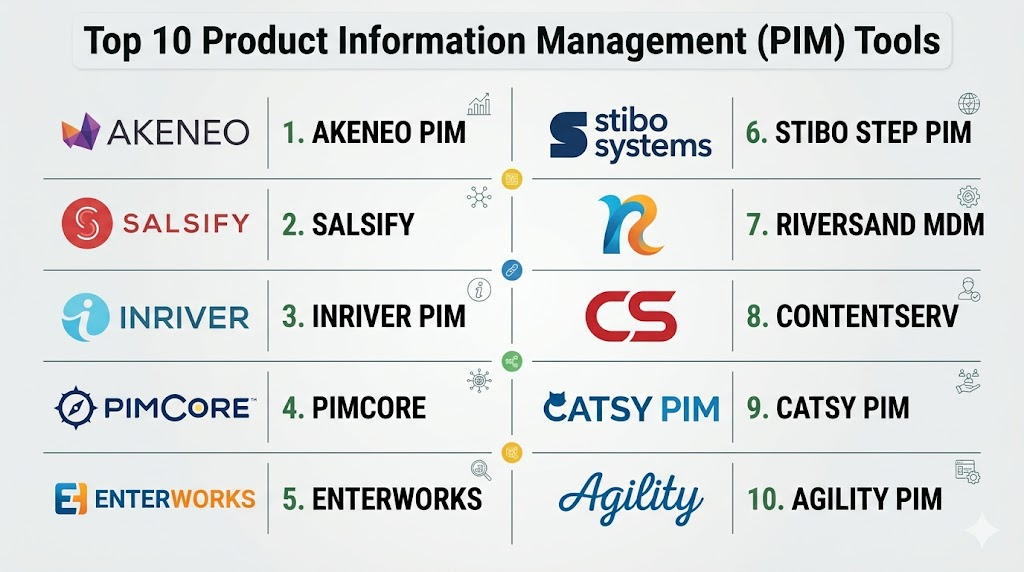
Introduction
Product Information Management (PIM) tools are centralized software systems that help organizations gather, organize, enrich, manage, and distribute all product‑related information across internal teams and external channels. This includes product descriptions, specifications, pricing, digital assets, categorizations, attributes, relationships, and channel‑specific variations. A robust PIM acts as a single source of truth for product data — enabling consistent, accurate, and scalable distribution to e‑commerce sites, marketplaces, ERP systems, marketplaces, digital catalogs, and mobile experiences.
As product portfolios grow and commerce channels diversify, inconsistent or fragmented product data becomes a barrier to sales, user experience, and operational efficiency. PIM tools help brands reduce data silos, improve workflow coordination, streamline localization, enforce governance, and reduce manual errors. In with AI‑assisted enrichment, automation, and omnichannel publishing, PIM has evolved into a critical backbone of digital commerce and product experience strategies.
Real‑world use cases include:
- Centralizing product information across global regions and brands.
- Syndicating product data to e‑commerce platforms, marketplaces, and retail partners.
- Localizing product content across languages, markets, and regulatory requirements.
- Supporting complex variants (size, color, configurators, bundles, kits).
- Aligning product data with ERP, DAM, CRM, and analytics systems.
Evaluation Criteria for Buyers:
- Data modeling and enrichment capabilities
- Workflow and governance for multi‑user teams
- Channel syndication and marketplace connectors
- Multilingual and localization support
- Digital asset management (images, video, specs)
- Integration APIs and pipeline support
- Scalability for global catalogs and SKUs
- Data quality, validation, and governance rules
- Analytics and reporting on product performance
- Ease of deployment and operational cost
Best for: e‑commerce leaders, product managers, digital commerce teams, merchandisers, IT architects, and brands managing large or complex product catalogs.
Not ideal for: Very small catalogs with static data where basic spreadsheets meet current needs.
Key Trends in Product Information Management (PIM)
- AI‑assisted enrichment for descriptions, attributes, and translations.
- Headless PIM architectures enabling flexible API‑first syndication.
- Real‑time product experience dashboards combining commerce analytics.
- Integration with digital experience platforms (DXP) and DAMs.
- Marketplace‑specific feed optimization (price, compliance, tags).
- Dynamic variant and configuration management.
- Data governance, validation rules, and lineage tracking.
- Omnichannel syndication (web, apps, marketplaces, print).
- Cloud native PIM for distributed global teams.
How We Selected These Tools (Methodology)
- Evaluated market adoption across brands and digital commerce organizations.
- Assessed data modeling depth (attributes, hierarchies, variants).
- Reviewed workflow governance, role hierarchies, and collaboration features.
- Measured integration breadth (ERP, DAM, e‑commerce, analytics).
- Checked channel syndication capabilities for retail, marketplaces, etc.
- Considered scalability for large catalogs and international deployments.
- Evaluated AI and automation features for enrichment and data quality.
- Analyzed usability, onboarding experience, and support resources.
- Verified security, access controls, and compliance features.
Top 10 Product Information Management (PIM) Tools
#1 — Akeneo PIM
Short description:
Akeneo PIM is an open‑core, cloud‑ready platform that provides product data modeling, workflows, enrichment, and channel syndication for mid‑market to enterprise brands.
Key Features
- Attribute and product family modeling
- Workflow and governance dashboards
- Multichannel syndication connectors
- Bulk editing and localization tools
- APIs for integration with e‑commerce and ERP
Pros
- Flexible data modeling
- Strong usability and user experience
- Active community and extension ecosystem
Cons
- Advanced features require enterprise tier
- Custom integrations may require technical effort
Platforms / Deployment
- Web, Cloud
Security & Compliance
- Role‑based access, API security
Integrations & Ecosystem
- ERP connectors, e‑commerce platforms
- DAM and marketplace feeds
- REST APIs
Support & Community
- Vendor support, documentation, community extensions
#2 — Salsify
Short description:
Salsify PIM unifies product content, digital assets, and syndication workflows with strong commerce experience management for retailers and brands.
Key Features
- Product data and DAM integration
- Syndication to marketplaces and retail partners
- Workflow governance and alerts
- Analytics on channel performance
- Localization and regional attributes
Pros
- Excellent channel syndication
- Strong e‑commerce focus
- Real‑time analytics and dashboards
Cons
- Pricing reflects enterprise usage
- More complex onboarding
Platforms / Deployment
- Web, Cloud
Security & Compliance
- Role‑based access, encryption
Integrations & Ecosystem
- ERP, DAM, e‑commerce platforms
- Marketplace connectors
- APIs for custom flows
Support & Community
- Vendor support, training resources
#3 — inRiver PIM
Short description:
inRiver PIM is a flexible enterprise platform that centralizes product data, enables content enrichment, and powers omnichannel syndication with agile workflows.
Key Features
- Data modeling and variant support
- Workflow automation and approvals
- Digital asset integration
- Channel syndication templates
- Analytics and dashboard tools
Pros
- Strong automation and workflow tools
- Good multi‑market support
- Flexibility in data models
Cons
- Requires configuration for complex models
- Implementation cost
Platforms / Deployment
- Web, Cloud
Security & Compliance
- Role‑based access, encryption
Integrations & Ecosystem
- ERP, e‑commerce, DAM
- API connectors
Support & Community
- Enterprise support, documentation
#4 — Pimcore
Short description:
Pimcore is an open‑source PIM and master data platform that offers product data, customer data, DAM, and digital experience management in one unified stack.
Key Features
- PIM, MDM, DAM, and DXP in one platform
- Flexible data models and hierarchy support
- API‑first architecture
- Headless syndication to channels
- Workflow and access controls
Pros
- Highly flexible and extensible
- Open‑source foundations
- Unified data platform
Cons
- Requires technical setup and governance
- Larger scope can be overwhelming
Platforms / Deployment
- Web, Cloud, Self‑hosted
Security & Compliance
- Role‑based access, encryption
Integrations & Ecosystem
- ERP, CMS, e‑commerce connectors
- APIs and SDKs
Support & Community
- Vendor support options, open community
#5 — EnterWorks (WinShuttle)
Short description:
EnterWorks PIM centralizes product data management, enrichment, and syndication with strong governance and data quality controls for complex catalogs.
Key Features
- Data onboarding and governance
- Channel publishing
- Workflow and approvals
- Variant and hierarchy modeling
- Digital asset support
Pros
- Strong data quality and governance
- Good for complex multi‑domain catalogs
- Enterprise‑ready
Cons
- Enterprise pricing
- Integration requires planning
Platforms / Deployment
- Web, Cloud
Security & Compliance
- Role‑based access, encryption
Integrations & Ecosystem
- ERP, DAM, e‑commerce feeds
- APIs
Support & Community
- Vendor support, training
#6 — Stibo Systems STEP PIM
Short description:
Stibo Systems STEP is an enterprise PIM and MDM platform focused on governance, master data quality, and global product catalogs.
Key Features
- Master data and PIM governance
- Variant and hierarchy modeling
- Channel syndication
- Workflow and approvals
- Analytics and insights
Pros
- Deep master data governance
- Enterprise scalability
- Strong compliance controls
Cons
- Requires governance discipline
- Higher cost
Platforms / Deployment
- Web, Cloud, Hybrid
Security & Compliance
- Enterprise access control, encryption
Integrations & Ecosystem
- ERP, CRM, DAM
- e‑commerce connectors
Support & Community
- Enterprise support
#7 — Riversand (Riversand MDM)
Short description:
Riversand’s MDM platform includes robust PIM capabilities that unify product, customer, supplier, and location data for consistent enterprise information across systems.
Key Features
- Unified product and master data
- Workflow automation
- Data quality rules
- Channel syndication templates
- Advanced analytics
Pros
- Strong master data backbone
- Multi‑domain support
- Scalable enterprise architecture
Cons
- Complex implementation
- Requires data governance processes
Platforms / Deployment
- Web, Cloud
Security & Compliance
- RBAC, encryption
Integrations & Ecosystem
- ERP, DAM, e‑commerce
- API support
Support & Community
- Enterprise support
#8 — Contentserv
Short description:
Contentserv combines product experience management, PIM, DAM, and data syndication into a unified platform that fuels personalized product experiences.
Key Features
- Product data modeling and enrichment
- Workflow automation
- Digital asset integration
- Omnichannel publishing
- Analytics dashboards
Pros
- Great for personalized experiences
- Integrated DAM and PIM
- Strong syndication
Cons
- Premium price
- Onboarding effort
Platforms / Deployment
- Web, Cloud
Security & Compliance
- Role‑based access, encryption
Integrations & Ecosystem
- ERP, e‑commerce, DAM
- APIs
Support & Community
- Vendor support
#9 — Catsy PIM
Short description:
Catsy PIM provides cloud‑first product data management, enrichment, and marketplace syndication for brands and distributors.
Key Features
- Central product catalog
- Marketplace syndication workflows
- Digital asset support
- Bulk edits and imports
- Reporting dashboards
Pros
- Affordable for SMB
- Good marketplace support
- Easy onboarding
Cons
- Less advanced data modeling
- Not enterprise‑level
Platforms / Deployment
- Web, Cloud
Security & Compliance
- Role‑based access, encryption
Integrations & Ecosystem
- e‑commerce, marketplaces
- ERP connectors
Support & Community
- Vendor support
#10 — Agility Multichannel PIM
Short description:
Agility PIM offers a cloud‑native, easy‑to‑deploy PIM with strong syndication features and workflows for mid‑market catalog management.
Key Features
- Product catalog and attributes
- Syndication to channels and marketplaces
- Workflow approvals
- Digital asset links
- Reporting and alerts
Pros
- Easy setup
- Good mid‑market fit
- Cloud‑native
Cons
- Smaller ecosystem
- Limited advanced features
Platforms / Deployment
- Web, Cloud
Security & Compliance
- Role‑based access, encryption
Integrations & Ecosystem
- ERP, websites, marketplaces
- APIs
Support & Community
- Vendor support
Comparison Table (Top 10 PIM Tools)
| Tool Name | Best For | Platform(s) Supported | Deployment | Standout Feature | Public Rating |
|---|---|---|---|---|---|
| Akeneo PIM | Mid‑market to enterprise | Web | Cloud | Flexible data modeling | N/A |
| Salsify | Commerce‑centric PIM | Web | Cloud | Channel syndication | N/A |
| inRiver PIM | Enterprise experiences | Web | Cloud | Workflow automation | N/A |
| Pimcore | Unified data platform | Web | Cloud/Self‑hosted | PIM + DAM + DXP | N/A |
| EnterWorks | Complex governance | Web | Cloud | Data governance | N/A |
| Stibo STEP PIM | Enterprise master data | Web | Cloud/Hybrid | Master data governance | N/A |
| Riversand MDM | Multi‑domain data | Web | Cloud | Unified MDM + PIM | N/A |
| Contentserv | Personalized experiences | Web | Cloud | Integrated DAM | N/A |
| Catsy PIM | SMB & marketplace | Web | Cloud | Affordable marketplace syndication | N/A |
| Agility PIM | Mid‑market catalog mgmt | Web | Cloud | Easy syndication | N/A |
Evaluation & Scoring of PIM Tools
| Tool Name | Core (25%) | Ease (15%) | Integrations (15%) | Security (10%) | Performance (10%) | Support (10%) | Value (15%) | Weighted Total (0–10) |
|---|---|---|---|---|---|---|---|---|
| Akeneo PIM | 9 | 8 | 8 | 8 | 8 | 8 | 7 | 8.2 |
| Salsify | 9 | 7 | 8 | 8 | 8 | 8 | 7 | 8.1 |
| inRiver PIM | 8 | 7 | 8 | 8 | 8 | 7 | 7 | 7.8 |
| Pimcore | 8 | 7 | 9 | 8 | 8 | 7 | 8 | 8.0 |
| EnterWorks | 8 | 7 | 8 | 8 | 8 | 7 | 7 | 7.7 |
| Stibo STEP PIM | 8 | 7 | 8 | 8 | 8 | 8 | 7 | 7.8 |
| Riversand MDM | 8 | 7 | 9 | 8 | 8 | 8 | 7 | 8.0 |
| Contentserv | 8 | 7 | 8 | 8 | 8 | 7 | 7 | 7.7 |
| Catsy PIM | 7 | 8 | 7 | 8 | 7 | 7 | 8 | 7.5 |
| Agility PIM | 7 | 8 | 7 | 8 | 7 | 7 | 8 | 7.5 |
Interpretation: Higher weighted totals indicate stronger data modeling, integrations, and enterprise readiness. Cloud‑first and headless tools score well for ease and syndication.
Which PIM Tool Is Right for You?
Solo / Freelancer
Smaller teams or sellers on marketplaces can start with Catsy PIM or Agility PIM for affordable syndication and simple catalogs.
SMB
Growing brands benefit from Akeneo PIM, Salsify, or inRiver PIM for deep data modeling and multichannel publishing.
Mid‑Market / Enterprise
Stibo STEP PIM, Riversand MDM, and EnterWorks provide master data governance and scalable workflows for complex enterprise catalogs.
Budget vs Premium
Affordable cloud tools help reduce launch time, while premium platforms provide strong governance, workflow automation, and integration depth.
Integrations & Scalability
Choose tools with strong ERP, DAM, e‑commerce, and analytics connectors for omnichannel reach and performance insights.
Feature Depth vs Ease of Use
Some tools prioritize configurability and master data, while others focus on usability and rapid deployment.
Security & Compliance Needs
For regulated industries, systems with fine‑grained RBAC, audit logging, and secure APIs will better support governance requirements.
Frequently Asked Questions (FAQs)
1. What is PIM software?
PIM (Product Information Management) tools centralize, enrich, and distribute product data across internal systems and external channels.
2. How does PIM differ from ERP?
ERP focuses on enterprise operations like finance, inventory, and procurement; PIM focuses specifically on product data quality and distribution.
3. Can PIM integrate with e‑commerce platforms?
Yes — most PIM systems offer native connectors or APIs to major e‑commerce platforms and marketplaces.
4. What channels can PIM syndicate to?
Websites, mobile apps, marketplaces, print catalogs, and retail partners are common destinations.
5. Is PIM useful for small catalogs?
PIM is most valuable for complex or growing catalogs; small static catalogs may manage with simpler tools.
6. Do PIM tools support localization?
Yes — multilingual support, formatting rules, and regional workflows are common features.
7. Does PIM help with digital assets?
Many PIM platforms integrate DAM to manage images, videos, specs, and compliance documents.
8. Can PIM improve SEO?
Standardized and enriched product data helps improve search, discovery, and conversions on digital channels.
9. How long does PIM implementation take?
Cloud PIM tools can deploy in weeks; enterprise data governance and integration pilots may take months.
10. Are PIM tools secure?
Modern PIM platforms provide encryption, role‑based access, audit logs, and secure APIs.
Conclusion
Product Information Management (PIM) tools have become essential infrastructure for brands and manufacturers with complex catalogs, diverse channels, and global markets. From cloud‑native solutions like Akeneo PIM, Salsify, and Catsy PIM to enterprise governance systems like Stibo STEP PIM, Riversand MDM, and EnterWorks, organizations can choose platforms based on scale, integration needs, and syndication complexity. Successful PIM adoption starts with clear product data models, federated governance, alignment with commerce channels, and integration pipelines with ERP, DAM, and analytics systems. Shortlist tools, run real‑world pilots, and validate automation and syndication workflows to improve product consistency, customer experience, and operational velocity.

Helpful content with a clean and easy-to-follow flow.