MOTOSHARE 🚗🏍️
Rent Bikes & Cars Directly from Owners
Motoshare connects vehicle owners with people who need bikes and cars on rent. Owners earn from idle vehicles, and renters get flexible ride options.
Visit Motoshare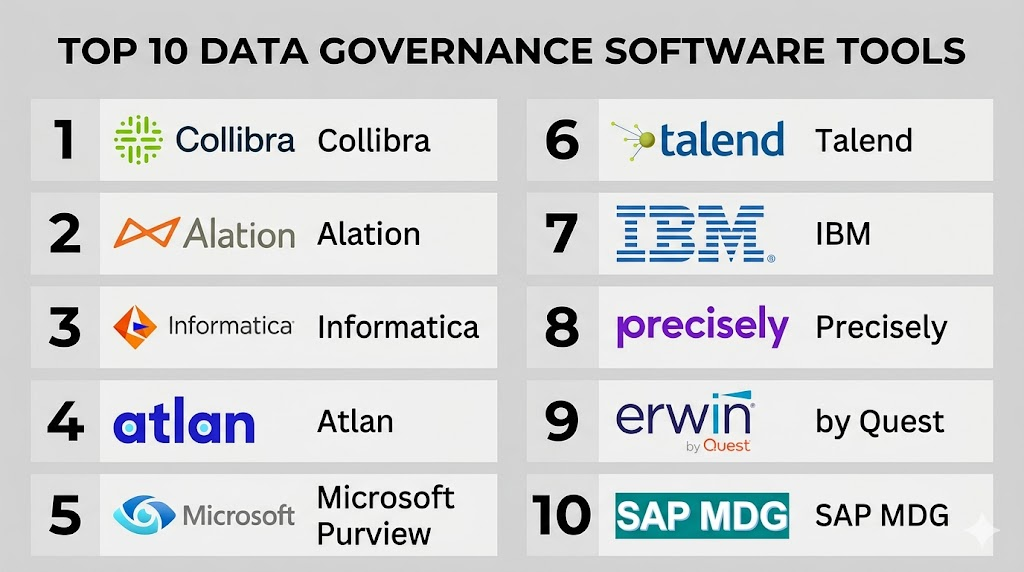
Introduction
Data governance platforms are comprehensive software solutions designed to manage the availability, usability, integrity, and security of data used in an enterprise. In an increasingly complex digital landscape, these platforms act as the foundational framework that allows organizations to treat their data as a strategic asset rather than a liability. By providing tools for data cataloging, metadata management, policy enforcement, and data lineage, governance platforms ensure that data is high-quality, compliant with global regulations, and accessible to the right people at the right time.
The necessity of robust data governance has intensified as organizations transition toward decentralized architectures like data mesh and data fabric. With the explosion of generated content and automated decision-making, the risk of “data silos” and “data swamps” is higher than ever. Modern governance platforms bridge the gap between technical data management and business objectives, creating a common language that both data engineers and business analysts can speak. This ensures that every piece of information used for analytics or operations is audited, verified, and protected against unauthorized access or misuse.
Real-world use cases:
- Regulatory Compliance: Automatically identifying and masking personally identifiable information (PII) to satisfy global privacy mandates.
- Data Democratization: Creating a “search engine” for internal data so business users can find trusted datasets without asking IT.
- Impact Analysis: Visualizing data lineage to understand how a change in a source system will affect downstream dashboards and reports.
- Data Quality Improvement: Setting automated rules to flag inconsistent or missing data before it reaches the warehouse.
- Mergers and Acquisitions: Harmonizing disparate data catalogs and policies when combining two large corporate entities.
Evaluation criteria for buyers:
- Metadata Management: The depth and breadth of the platform’s ability to crawl and index technical and business metadata.
- Data Lineage: The sophistication of the visual maps showing how data moves from source to consumption.
- Policy Management: How easily non-technical users can define and enforce data usage rules.
- Integration Breadth: Compatibility with modern data stacks, including cloud warehouses, lakes, and legacy on-premises databases.
- Search and Discovery: The intuitiveness of the user interface for finding and understanding data assets.
- Collaboration Features: Support for data stewardship workflows, including comments, ratings, and crowdsourced documentation.
- Security and Access Control: Robustness of role-based access controls and integration with identity providers.
- Data Quality Monitoring: Built-in tools for profiling data and alerting on quality deviations.
- Automation and AI: The use of machine learning to suggest tags, classifications, and associations.
- Scalability: The platform’s ability to handle millions of metadata objects without performance lag.
Mandatory paragraph
- Best for: Large-scale enterprises, highly regulated financial institutions, healthcare providers, and data-driven tech companies looking to centralize their data strategy and compliance efforts.
- Not ideal for: Small startups with very few data sources, organizations that only use a single spreadsheet for management, or teams that do not require formal auditing or regulatory reporting.
Key Trends in Data Governance Platforms
- Active Metadata Management: Moving from static catalogs to dynamic systems where metadata is updated in real-time based on actual data usage and system health.
- AI Governance Integration: Specialized frameworks for governing the training data and outputs of machine learning models to ensure ethical use and accuracy.
- Federated Governance Models: Support for “Data Mesh” architectures where individual business units own their data governance while adhering to a central global standard.
- Data Contracts: The rise of formal agreements between data producers and consumers, enforced through the governance platform to prevent breaking changes.
- Natural Language Discovery: Integration of generative interfaces that allow users to find and understand data by asking questions in plain English.
- Privacy-by-Design Automation: Automatically applying obfuscation and masking at the ingestion layer based on the platform’s classification logic.
- Self-Healing Data Pipelines: Governance tools that trigger automated remediation scripts when data quality falls below a defined threshold.
- Data Sovereignty Tracking: Enhanced mapping of where data resides geographically to comply with strict regional residency requirements.
How We Selected These Tools (Methodology)
To determine the top ten platforms for data governance, we utilized a framework focused on enterprise readiness and functional completeness. Our evaluation process was based on the following logic:
- Market Adoption and Maturity: We prioritized tools that have a proven track record of handling petabyte-scale metadata for global corporations.
- Functional Breadth: We selected platforms that cover the full lifecycle, including cataloging, quality, and lineage, rather than niche point solutions.
- Connectivity: We analyzed the number of native connectors each tool offers for popular cloud and legacy environments.
- User Persona Balance: We favored platforms that offer a user-friendly interface for business stewards while maintaining deep technical roots for engineers.
- Automation Intelligence: A key factor was the platform’s ability to automate the “drudgery” of tagging and classification using machine learning.
- Governance-as-Code: We looked for tools that support API-first strategies and can be integrated into modern DevOps and DataOps workflows.
Top 10 Data Governance Software Tools
#1 — Collibra
Short description: Often considered the industry standard for enterprise data governance, Collibra provides a highly structured environment for managing data catalogs, privacy, and quality.
Key Features
- Collibra Data Catalog: A centralized shop for all data assets with deep metadata harvesting.
- Active Lineage: Automated end-to-end visualization showing data movement and transformations.
- Business Glossary: A shared vocabulary that links technical data to business concepts.
- Data Helpdesk: A workflow engine for raising and resolving data-related issues.
- Data Privacy: Specialized modules for handling compliance with global privacy mandates.
- Edge Architecture: Allows for metadata collection without moving sensitive data into the cloud.
Pros
- Most comprehensive and mature governance framework available in the market.
- Extremely powerful workflow engine for complex corporate approvals.
Cons
- Implementation can be long and requires significant organizational change management.
- The high price point makes it inaccessible for many mid-sized companies.
Platforms / Deployment
- Web / Cloud / Hybrid
- SaaS
Security & Compliance
- SSO/SAML, MFA, RBAC, Encryption.
- SOC 2 Type II, ISO 27001, GDPR, HIPAA.
Integrations & Ecosystem
Collibra has one of the largest integration networks in the governance world.
- Snowflake / AWS / Azure / GCP
- Tableau / Power BI
- Mulesoft / Informatica
- Alation / Databricks
Support & Community
Excellent professional support tiers, a dedicated University for training, and an active user community focused on best practices.
#2 — Alation
Short description: A pioneer of the modern data catalog, Alation uses machine learning to help users find, understand, and trust their data through a collaborative, community-led approach.
Key Features
- Behavioral Analysis Engine: Learns from user queries to suggest the most relevant and high-quality datasets.
- Data Governance App: A specialized module for defining policies and managing data stewardship.
- Compose: An intelligent SQL editor that provides real-time suggestions based on metadata.
- Automatic Stewardship: Identifies top users of specific datasets and suggests them as stewards.
- Glossary-to-Catalog Linking: Seamlessly connects business terms to the physical data tables.
- Active Lineage Integration: Visualizes how data is derived and where it is consumed.
Pros
- High user adoption rates due to the intuitive, “social” feel of the platform.
- Excellent at extracting insights from query logs to improve documentation.
Cons
- Historically focused more on cataloging than deep policy enforcement.
- Requires a collaborative culture to get the most value out of the “social” features.
Platforms / Deployment
- Web / Cloud / On-premises
- SaaS / Hybrid
Security & Compliance
- MFA, SSO, RBAC.
- SOC 2, GDPR, CCPA.
Integrations & Ecosystem
Highly integrated with the modern cloud data stack.
- Snowflake / Databricks
- Tableau / Looker
- dbt (data build tool)
- AWS / Azure
Support & Community
Strong community presence, including “Alation University” and frequent user roundtables.
#3 — Informatica Cloud Data Governance
Short description: Part of the Intelligent Data Management Cloud (IDMC), this platform offers an AI-powered approach to governance, combining cataloging, quality, and privacy.
Key Features
- CLAIRE AI Engine: Uses machine learning to automate data discovery, tagging, and classification.
- Universal Metadata Connectivity: Connects to thousands of source systems including legacy mainframes.
- Cloud Data Quality: Integrated profiling and cleansing tools within the governance workflow.
- Metadata Lake: A massive repository that centralizes metadata from all enterprise silos.
- Data Lineage & Impact Analysis: Deep technical lineage for complex data environments.
- Data Marketplace: A self-service portal for users to “shop” for trusted, governed data.
Pros
- Superior connectivity for organizations with a mix of cloud and legacy on-premises data.
- Powerful AI automation significantly reduces the manual work of metadata management.
Cons
- The platform can be complex to navigate due to the sheer number of features.
- Bundled pricing can be high if you only need a subset of the IDMC capabilities.
Platforms / Deployment
- Web / Cloud / Hybrid
- SaaS
Security & Compliance
- SSO, MFA, Advanced Encryption, RBAC.
- SOC 2, ISO 27001, HIPAA, GDPR.
Integrations & Ecosystem
Broadest ecosystem in the industry, including most enterprise software.
- SAP / Oracle / Microsoft
- AWS / Azure / GCP
- Snowflake / Databricks
Support & Community
Extensive global support network, massive technical documentation library, and a mature partner ecosystem.
#4 — Atlan
Short description: A “modern data workspace” designed for collaborative teams, Atlan emphasizes a frictionless, Slack-like experience for data governance.
Key Features
- Active Metadata Platform: Automatically pulls context from tools like dbt and Snowflake to enrich the catalog.
- Personalized Workspaces: Different views and permissions for analysts, engineers, and business users.
- Data Lineage: Beautiful, interactive lineage that captures transformations in real-time.
- Data Contracts: Automated alerts when schema changes might break downstream assets.
- Google-like Search: Fast, intuitive search with advanced filtering based on metadata tags.
- Slack Integration: Collaborate on data definitions and issues directly within communication tools.
Pros
- Modern, sleek UI that users actually enjoy using.
- Very fast time-to-value; can often be set up in days rather than months.
Cons
- Newer tool with less depth in legacy mainframe connectivity compared to Informatica.
- Lacks some of the ultra-complex workflow customizability of Collibra.
Platforms / Deployment
- Web / Cloud
- SaaS
Security & Compliance
- SSO, MFA, Encryption, RBAC.
- SOC 2 Type II, HIPAA, GDPR.
Integrations & Ecosystem
Designed specifically for the modern data stack.
- Snowflake / Databricks / BigQuery
- dbt / Fivetran / Airbyte
- Tableau / Power BI / Looker
Support & Community
Highly praised for responsive support and a vibrant community of modern data practitioners.
#5 — Microsoft Purview
Short description: A unified data governance service that helps organizations manage and govern their on-premises, multi-cloud, and SaaS data.
Key Features
- Data Map: Automatically creates a map of all your data assets and their relations.
- Data Catalog: Allows users to search for data using a familiar web-based interface.
- Data Insights: Provides a bird’s-eye view of your data estate and sensitivity levels.
- Unified Policy Management: Apply security and compliance policies across Azure and Microsoft 365.
- Data Sharing: Securely share data with internal or external partners without moving it.
- Workflow Engine: Standardize governance processes like business glossary approvals.
Pros
- Unbeatable integration for companies already using Azure and Microsoft 365.
- Cost-effective as it is often bundled with existing Microsoft enterprise agreements.
Cons
- Functionality is noticeably stronger within the Microsoft ecosystem than for third-party clouds.
- Lineage for non-Microsoft tools can be more challenging to set up.
Platforms / Deployment
- Web / Azure
- SaaS
Security & Compliance
- SSO (Azure AD), MFA, Microsoft Information Protection.
- SOC 2, ISO 27001, HIPAA, FedRAMP.
Integrations & Ecosystem
Deepest integration with the Microsoft stack but growing support for others.
- Azure Synapse / SQL Server
- Microsoft 365 / Power BI
- AWS (S3) / SAP / Teradata
Support & Community
Standard Microsoft enterprise support and a massive community of Azure administrators.
#6 — Talend Data Fabric
Short description: A unified platform that combines data integration, integrity, and governance to ensure data is clean, compliant, and accessible.
Key Features
- Talend Trust Score: A proprietary metric that assesses data accuracy and completeness in real-time.
- Data Stewardship: A dedicated interface for humans to resolve data quality issues.
- Self-Service Data Prep: Tools for business users to clean data without writing code.
- Cloud Data Catalog: Automatically crawls and indexes data from diverse sources.
- Data Lineage: Tracks data from inception to consumption across complex pipelines.
- API Services: Allows governance policies to be enforced via programmatic interfaces.
Pros
- Unique focus on the “Trust Score” makes governance tangible for business users.
- Strong hybrid capabilities for managing data across cloud and local servers.
Cons
- The governance features are most effective when using Talend for integration as well.
- UI can feel more technical than “social” tools like Alation.
Platforms / Deployment
- Web / Cloud / Hybrid
- SaaS / Self-hosted
Security & Compliance
- MFA, SSO, RBAC, Encryption.
- SOC 2, ISO 27001, GDPR.
Integrations & Ecosystem
Broad connectivity thanks to Talend’s long history in the ETL space.
- AWS / Azure / GCP
- Snowflake / Databricks
- Salesforce / SAP
Support & Community
Excellent technical support, extensive training modules, and a large global user group.
#7 — IBM Knowledge Catalog
Short description: A core component of IBM Cloud Pak for Data, this platform focuses on high-end data discovery and automated compliance for large enterprises.
Key Features
- Automated Discovery: Uses AI to scan data and suggest classifications and business terms.
- Data Protection Rules: Automatically mask or redact sensitive data based on the user’s role.
- Data Lineage: Full visualization of how data flows through IBM and third-party tools.
- Advanced Data Quality: Deep profiling and rule-based quality assessment.
- Integrated Model Governance: Specialized features for governing AI and ML models.
- Governance Workflows: Formal approval processes for all metadata and policy changes.
Pros
- Exceptional at handling highly complex, multi-cloud enterprise environments.
- Strong focus on AI and machine learning model governance.
Cons
- Can be overwhelming to manage without a dedicated team of IBM specialists.
- Often tied to the broader IBM Cloud Pak ecosystem, which may not suit every stack.
Platforms / Deployment
- Web / Cloud / Hybrid
- SaaS / Self-hosted (OpenShift)
Security & Compliance
- IBM IAM, MFA, Encryption at rest/transit.
- SOC 2, ISO 27001, HIPAA, GDPR.
Integrations & Ecosystem
Integrates with IBM’s massive software portfolio and major cloud providers.
- IBM Db2 / InfoSphere
- AWS / Azure / GCP
- Cloudera / Hortonworks
Support & Community
Premium IBM support services and a mature global community of data architects.
#8 — Precisely (formerly Infogix)
Short description: Precisely focuses on “Data Integrity,” providing a suite of tools that ensure data is accurate, consistent, and full of context.
Key Features
- Data Governance & Catalog: A business-first approach to documenting and governing data.
- Data Quality Management: Automated checks that validate data at scale.
- Data Lineage: Clear visualizations of data origins and usage.
- Strategic Data Stewardship: Workflows designed to engage business users in data ownership.
- Enterprise Visibility: A unified view of the data estate across silos.
- Policy Compliance: Tools to define and monitor adherence to internal and external rules.
Pros
- Deep expertise in data quality and integrity for financial services and insurance.
- Very strong at handling complex mainframe and legacy data alongside cloud.
Cons
- UI is functional but can feel less modern than some cloud-native competitors.
- The transition from Infogix to Precisely is still ongoing in some product areas.
Platforms / Deployment
- Web / Cloud / On-premises
- SaaS / Hybrid
Security & Compliance
- MFA, SSO, RBAC.
- SOC 2, GDPR.
Integrations & Ecosystem
Broad connectivity with a focus on enterprise-grade databases.
- Mainframe / IBM i
- Snowflake / Databricks
- AWS / Azure
Support & Community
Professional support with deep domain expertise in data integrity and quality.
#9 — Erwin by Quest
Short description: A veteran in data modeling that has successfully expanded into a full-scale data intelligence and governance suite.
Key Features
- erwin Data Intelligence: Combines data cataloging, lineage, and literacy.
- Data Modeling Integration: Unique ability to link physical data models to governance policies.
- Business User Interface: A simplified view for non-technical users to browse metadata.
- Impact Analysis: Predict how changes to source systems will ripple through the architecture.
- Policy Manager: Centralized repository for all data governance standards.
- Automated Metadata Ingestion: Connectors for ETL tools, BI platforms, and databases.
Pros
- The only tool that truly bridges the gap between data modeling and governance.
- Excellent for technical teams that need to understand the structural roots of their data.
Cons
- The interface can be technical and may require more training for business users.
- Less “social” collaboration features compared to Alation or Atlan.
Platforms / Deployment
- Web / Cloud / On-premises
- SaaS / Self-hosted
Security & Compliance
- SSO, MFA, RBAC.
- SOC 2, GDPR.
Integrations & Ecosystem
Deep integration with modeling tools and enterprise databases.
- erwin Data Modeler
- Oracle / SQL Server / DB2
- Snowflake / Databricks
Support & Community
Reliable support from Quest Software and a large community of long-term erwin users.
#10 — SAP Master Data Governance
Short description: Specifically designed for organizations running SAP, this tool focuses on creating a “single version of the truth” for master data.
Key Features
- Central Governance: Manage master data in a central system and distribute it to others.
- Data Consolidation: Identify and merge duplicate records across different business units.
- Mass Processing: Efficiently update thousands of records at once within a governed workflow.
- Process Analytics: Monitor the health and efficiency of your governance workflows.
- SAP S/4HANA Integration: Native, deep-level compatibility with modern SAP environments.
- Custom Object Support: Extend the governance model to include industry-specific data.
Pros
- The best solution for companies where SAP is the primary system of record.
- Highly effective at managing “Master Data” specifically (Customers, Products, Vendors).
Cons
- Not intended as a general-purpose catalog for non-SAP data.
- Requires significant SAP expertise to implement and maintain.
Platforms / Deployment
- Web / Cloud / On-premises
- SaaS (via BTP) / Hybrid
Security & Compliance
- SAP IAM, MFA, Encryption, RBAC.
- ISO 27001, SOC 2, GDPR.
Integrations & Ecosystem
Optimized for the SAP world but supports external distribution.
- SAP S/4HANA / SuccessFactors / Ariba
- Non-SAP systems via web services
- Microsoft / Salesforce
Support & Community
Comprehensive SAP support and a massive global network of SAP consultants and users.
Comparison Table (Top 10)
| Tool Name | Best For | Platform(s) Supported | Deployment | Standout Feature | Public Rating |
| 1. Collibra | Large Enterprise | Web, Cloud, Hybrid | SaaS | Workflow Engine | 4.6/5 |
| 2. Alation | Data Culture | Web, Cloud, On-prem | Hybrid | Behavioral Analysis | 4.7/5 |
| 3. Informatica | AI-Driven / Legacy | Web, Cloud, Hybrid | SaaS | CLAIRE AI Engine | 4.4/5 |
| 4. Atlan | Modern Data Teams | Web, Cloud | SaaS | Active Metadata | 4.8/5 |
| 5. Purview | Microsoft Ecosystem | Web, Azure | SaaS | Unified MS Map | 4.2/5 |
| 6. Talend | Quality-Focused | Web, Cloud, Hybrid | Hybrid | Talend Trust Score | 4.1/5 |
| 7. IBM | AI Model Gov | Web, Cloud, Hybrid | Hybrid | AI Governance | 4.3/5 |
| 8. Precisely | Data Integrity | Web, Cloud, On-prem | Hybrid | Legacy/Mainframe Conn | 4.0/5 |
| 9. Erwin | Technical Modeling | Web, Cloud, On-prem | Hybrid | Modeling Bridge | 4.1/5 |
| 10. SAP MDG | SAP Master Data | Web, Cloud, On-prem | Hybrid | MDM Specialization | 4.3/5 |
Evaluation & Scoring of Data Governance Platforms
The following scoring model assesses these platforms against critical enterprise criteria. Each score is out of 10, weighted to provide a final total.
| Tool Name | Core (25%) | Ease (15%) | Integrations (15%) | Security (10%) | Performance (10%) | Support (10%) | Value (15%) | Weighted Total |
| 1. Collibra | 10 | 5 | 10 | 10 | 9 | 9 | 6 | 8.45 |
| 2. Alation | 8 | 9 | 9 | 9 | 9 | 9 | 8 | 8.60 |
| 3. Informatica | 10 | 6 | 10 | 9 | 8 | 9 | 7 | 8.40 |
| 4. Atlan | 8 | 10 | 9 | 9 | 10 | 10 | 9 | 9.10 |
| 5. Purview | 7 | 8 | 8 | 10 | 8 | 9 | 9 | 8.15 |
| 6. Talend | 8 | 7 | 9 | 9 | 8 | 8 | 8 | 7.90 |
| 7. IBM | 9 | 6 | 9 | 10 | 8 | 9 | 6 | 8.05 |
| 8. Precisely | 8 | 6 | 8 | 9 | 8 | 8 | 7 | 7.55 |
| 9. Erwin | 8 | 6 | 8 | 9 | 8 | 8 | 7 | 7.55 |
| 10. SAP MDG | 7 | 5 | 7 | 10 | 8 | 9 | 6 | 7.20 |
Scoring Logic:
- Core (25%): Depth of metadata management, lineage, and policy features.
- Ease (15%): The “time-to-insight” and the learning curve for non-technical users.
- Integrations (15%): The volume and quality of native connectors.
- Value (15%): The return on investment relative to the license and management cost.
Which Data Governance Platform Tool Is Right for You?
Solo / Freelancer
Data governance platforms are generally enterprise-level investments. For a solo consultant or freelancer, these tools are often “overkill.” Instead, a light version of 4. Atlan or simply using open-source documentation tools is usually more appropriate. However, if you are managing governance for a client, Atlan offers the fastest setup to show value.
SMB
Small and Medium Businesses should prioritize ease of use and rapid integration. 4. Atlan or 2. Alation are excellent choices because they don’t require a dedicated team of five people just to keep the platform running. These tools allow a small data team to document their environment quickly and build a “data culture” early on.
Mid-Market
For companies with a growing data estate but a limited budget, 5. Microsoft Purview (if on Azure) or 6. Talend Data Fabric are strong contenders. These tools provide a solid balance of cataloging and quality features without the “prestige” pricing of the top enterprise leaders.
Enterprise
Large, global organizations with complex regulatory needs should look toward 1. Collibra or 3. Informatica. These platforms are built for the heavy lifting of multi-national compliance, deep technical lineage across hundreds of systems, and highly complex stakeholder approval workflows.
Budget vs Premium
- Budget: 5. Microsoft Purview and 4. Atlan offer the most competitive entry-level pricing models.
- Premium: 1. Collibra and 3. Informatica represent the top-tier “all-encompassing” investments.
Feature Depth vs Ease of Use
- High Depth: 1. Collibra, 3. Informatica, 7. IBM.
- High Ease: 4. Atlan, 2. Alation.
Integrations & Scalability
- Top Integrations: 3. Informatica (Legacy focus), 1. Collibra (Cloud focus).
- Top Scalability: 1. Collibra, 3. Informatica, 2. Alation.
Security & Compliance Needs
Organizations with high security requirements (Banks, Gov) should prioritize 1. Collibra, 3. Informatica, or 5. Microsoft Purview, as they offer the most mature identity management and encryption frameworks.
Frequently Asked Questions (FAQs)
1. What is the difference between a data catalog and a data governance platform?
A data catalog is a library for finding data (discovery), while a data governance platform is the rulebook and enforcement engine (policies, quality, and lineage). Most modern tools combine both into one suite.
2. Do these tools automatically fix my data?
Generally, no. They identify issues (data quality) and track their origin (lineage), but the actual “fixing” is usually done in the source system or through an integration tool like Talend or Informatica.
3. How long does a typical implementation take?
For a modern tool like Atlan, you can see initial results in a few weeks. For an enterprise-wide rollout of Collibra or Informatica, projects often span six to eighteen months.
4. Can 5. Microsoft Purview govern data in AWS or GCP?
Yes, Microsoft has expanded Purview to scan S3 buckets and other third-party cloud sources, though the deepest integration remains within the Azure and Microsoft 365 ecosystem.
5. Why is 2. Alation called a “social” data catalog?
It is called “social” because it uses “crowdsourcing”—it looks at who queries data most often and automatically designates them as experts, and it allows users to rate and comment on datasets like an internal Yelp for data.
6. Are there open-source alternatives to these platforms?
Yes, tools like DataHub, Amundsen, and Apache Atlas are popular open-source options, but they often require significant engineering effort to deploy and lack the advanced workflow features of commercial tools.
7. Does 1. Collibra require moving my data to their cloud?
No. Most of these tools use a “metadata-only” approach. They scan the structure and statistics of your data (metadata) but do not store the actual sensitive records (like credit card numbers) in their own cloud.
8. What is “Active Metadata”?
Active metadata is metadata that is “alive.” Instead of just being a label, it proactively triggers actions—for example, if a table is marked “Sensitive,” an active metadata system might automatically alert the security team if an unauthorized user tries to access it.
9. How do these tools help with GDPR compliance?
They help by identifying where PII (Personally Identifiable Information) is stored, tracking who has access to it, and ensuring that “Right to be Forgotten” requests can be fulfilled by showing everywhere that specific user’s data exists.
10. Can I use 10. SAP MDG for my non-SAP data?
While you can technically extend it, it is not recommended as a general-purpose catalog. It is highly specialized for “Master Data” within SAP and is best used as part of a broader SAP-centric strategy.
Conclusion
Data governance platforms have evolved from “optional documentation” to “essential infrastructure.” Whether you prioritize the collaborative, user-centric approach of 2. Alation and 4. Atlan, or the deep, technical control of 1. Collibra and 3. Informatica, the goal remains the same: transforming data from an unmanaged resource into a trusted corporate asset.The most successful implementations are those that start small. Rather than trying to govern every byte of data on day one, we recommend identifying your most critical datasets—such as customer records or financial reports—and using one of these top-tier platforms to build a foundation of trust that can scale with your business.

Very useful tips, I’ll definitely try them.