MOTOSHARE 🚗🏍️
Rent Bikes & Cars Directly from Owners
Motoshare connects vehicle owners with people who need bikes and cars on rent. Owners earn from idle vehicles, and renters get flexible ride options.
Visit Motoshare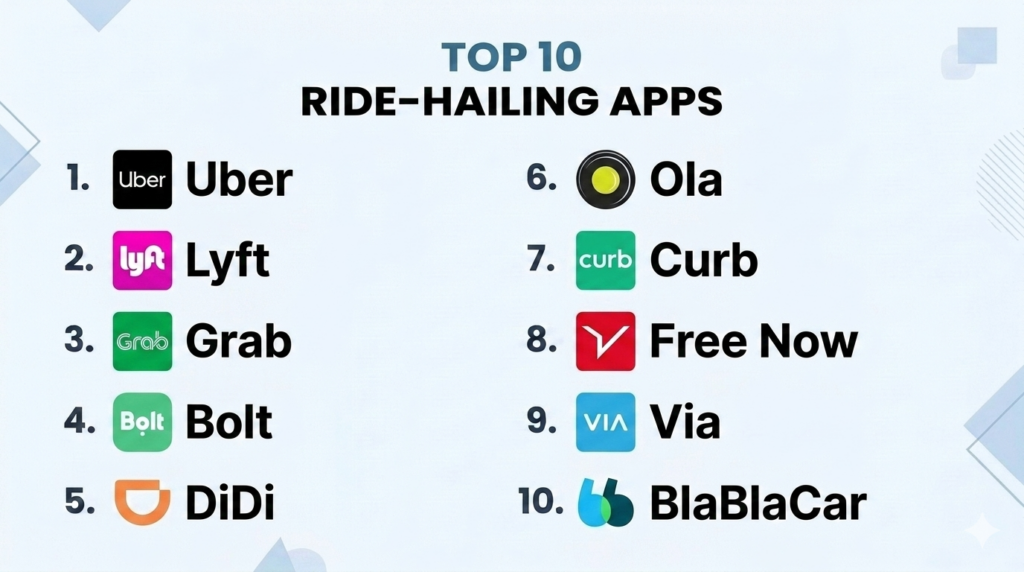
Introduction
Ride‑hailing apps are mobile and web platforms that connect passengers with drivers for on‑demand transportation. They simplify urban mobility by enabling users to request rides in real time, view driver details, track arrival, and pay digitally. With the growth of shared mobility and digital services, ride‑hailing has transformed how people commute, travel between cities, and manage first‑ and last‑mile connections.Real‑world use cases include daily commuter pickups, airport transfers, intercity travel, shared rides, corporate travel arrangements, and scheduled rides for events or appointments. These apps improve accessibility, reduce dependency on personal vehicles, optimize traffic through shared rides, and provide alternative transportation for non‑drivers.
When selecting ride‑hailing apps or platforms to support business and personal travel, buyers should evaluate coverage area, user experience, features like ride sharing and scheduling, payment options, pricing transparency, safety measures, driver ratings, customer support, integration with corporate travel tools, and cost controls.
Best for: Daily commuters, event planners, business travelers, urban residents without personal vehicles, companies managing employee travel, and tourists navigating new cities.
Not ideal for: Rural areas with limited driver availability, fixed‑route needs where public transit suffices, or heavily regulated regions lacking ride‑hailing licensing.
Key Trends in Ride‑Hailing Apps
- Dynamic pricing and real‑time demand modeling
- Electric and green ride options
- Scheduled rides and advance bookings
- Ride‑sharing and pooled options for cost efficiency
- Subscription models and loyalty programs
- In‑app safety features like SOS and live tracking
- Integration with public transit and multi‑modal routing
- Corporate travel and expense integration
- Autonomous vehicle pilot programs and future mobility features
- In‑app entertainment and premium service tiers
How We Selected These Tools (Methodology)
- Assessed global and regional adoption and user base
- Evaluated core ride‑hailing features (booking, tracking, payments)
- Reviewed safety and security features like driver verification and tracking
- Considered coverage and availability across key markets
- Examined pricing transparency and ride options (shared, premium, scheduled)
- Evaluated mobile usability and responsiveness
- Reviewed roadside and customer support options
- Considered corporate and business travel features
- Analyzed integration with digital wallets and payment methods
- Reviewed brand reliability and user reviews where available
Top 10 Ride‑Hailing Apps
#1 — Uber
Short description: Uber is one of the largest ride‑hailing platforms globally, offering on‑demand rides, shared services, premium options, and scheduling features. It serves individual riders and corporate travel programs with broad geographic coverage.
Key Features
- On‑demand ride booking
- Ride sharing and pooling
- Premium ride options
- Scheduled rides
- In‑app driver tracking
- Multiple payment options
Pros
- Wide global coverage
- Diverse ride categories
Cons
- Surge pricing can fluctuate significantly
- User experience varies by market
Platforms / Deployment
- iOS, Android, Web
- Cloud
Security & Compliance
- In‑app safety features (SOS buttons, live tracking)
- Driver verification and ratings
Integrations & Ecosystem
Uber integrates with mobile wallets, corporate travel tools, and mapping services for routing and arrival ETAs.
Support & Community
In‑app support, help center articles, and customer service options
#2 — Lyft
Short description: Lyft is a popular ride‑hailing app in North America with on‑demand rides, shared options, premium services, and scheduling. It focuses on user experience and driver community engagement.
Key Features
- On‑demand rides
- Shared rides
- Lux and premium ride options
- Scheduled pickups
- In‑app driver tracking
- Flexible payment methods
Pros
- User‑friendly interface
- Strong regional presence
Cons
- Limited global reach
- Surge pricing during peak times
Platforms / Deployment
- iOS, Android, Web
- Cloud
Security & Compliance
- Safety features include driver info and ride tracking
- Rating system for drivers and riders
Integrations & Ecosystem
Lyft works with mobile wallets, business travel programs, and mapping support
Support & Community
In‑app troubleshooting and customer support
#3 — Grab
Short description: Grab dominates ride‑hailing in Southeast Asia, offering ride options, delivery services, mobile payments, and scheduled rides in major Asian cities.
Key Features
- On‑demand ride requests
- Shared rides and pooling
- Motorcycle taxis where enabled
- Scheduled rides
- Payment integration with mobile wallet
- Driver and ride tracking
Pros
- Strong regional coverage in Southeast Asia
- Integrated with mobile payment services
Cons
- Availability varies by city
- Pricing can fluctuate
Platforms / Deployment
- iOS, Android, Web
- Cloud
Security & Compliance
- Safety measures include ride tracking and driver ratings
- Verified driver profiles
Integrations & Ecosystem
Grab integrates ride‑hailing with mobile wallet and local services
Support & Community
Customer support in‑app and regional help centers
#4 — Bolt
Short description: Bolt, formerly Taxify, is a global ride‑hailing platform with focus on competitive pricing, quick pickups, and multiple ride types including scooters and shared rides.
Key Features
- On‑demand rides
- Shared and pooled rides
- Scooter and micro‑mobility where available
- Premium and XL options
- In‑app driver tracking
- Multiple payments
Pros
- Competitive pricing
- Expandable mobility options
Cons
- Availability can vary widely
- Limited enterprise travel integrations
Platforms / Deployment
- iOS, Android, Web
- Cloud
Security & Compliance
- In‑app tracking and driver ratings
- Safety features vary by market
Integrations & Ecosystem
Integration with mobile wallets and mapping services
Support & Community
In‑app support and documentation
#5 — DiDi
Short description: DiDi is a major ride‑hailing app serving China and Latin America with comprehensive ride services, shared options, and scheduled bookings.
Key Features
- Real‑time ride requests
- Carpooling and shared rides
- Premium ride categories
- Scheduled pick‑ups
- In‑app navigation and tracking
Pros
- Massive footprint in select regions
- Variety of ride categories
Cons
- Limited service in some global markets
- Complex regulations in certain regions
Platforms / Deployment
- iOS, Android, Web
- Cloud
Security & Compliance
- Driver rating and verification
- Safety tracking features
Integrations & Ecosystem
Support for mobile wallets and local integrations
Support & Community
Local help centers and support tools
#6 — Ola
Short description: Ola is an Indian ride‑hailing app offering multiple ride types, shared services, premium options, and fleet services tailored to local markets.
Key Features
- On‑demand rides
- Shared and pooled rides
- Auto and bike options
- Scheduled rides
- Ride tracking
- Multiple payment support
Pros
- Strong presence in India and neighboring countries
- Affordable ride options
Cons
- Availability outside South Asia limited
- Pricing fluctuations
Platforms / Deployment
- iOS, Android, Web
- Cloud
Security & Compliance
- In‑app safety features
- Driver ratings
Integrations & Ecosystem
Integrates with mobile wallets and payment apps
Support & Community
Customer support and in‑app help
#7 — Curb
Short description: Curb offers taxi‑style ride‑hailing with a focus on regulated markets, airport pickups, and cash or card payment flexibility.
Key Features
- Taxi dispatch integration
- On‑demand ride booking
- Estimated arrival times
- Payment choices (cash and digital)
- Driver tracking
Pros
- Strong in regulated taxi markets
- Cash payment options
Cons
- Less global coverage than major apps
- Fewer ride categories
Platforms / Deployment
- iOS, Android, Web
- Cloud
Security & Compliance
- Local regulatory compliance
- Driver vetting and ratings
Integrations & Ecosystem
Works with local taxi dispatch and payment systems
Support & Community
Customer support channels and help resources
#8 — Free Now
Short description: Free Now operates in European cities with a ride‑hailing network that includes taxis, private hires, and shared ride options tailored to local markets.
Key Features
- Taxi and private hire bookings
- Ride tracking
- Price estimates
- Shared ride features
- Flexible payment
Pros
- Strong European presence
- Taxi and private combination
Cons
- Limited global availability
- Fewer advanced features
Platforms / Deployment
- iOS, Android, Web
- Cloud
Security & Compliance
- Local safety and driver checks
- Ride tracking
Integrations & Ecosystem
Integrates local payment and mapping services
Support & Community
Support teams and in‑app help
#9 — Via
Short description: Via provides on‑demand shared transport with route optimization and pooled rides, focusing on cost efficiency and urban mobility.
Key Features
- Shared ride pooling
- Route optimization
- Real‑time tracking
- Flexible pickups
- Digital payments
Pros
- Efficient shared routing
- Cost savings for passengers
Cons
- Availability limited in many regions
- Not as robust for solo or private rides
Platforms / Deployment
- iOS, Android, Web
- Cloud
Security & Compliance
- Ride tracking
- Driver verification where available
Integrations & Ecosystem
Integrates mapping and mobile wallet systems
Support & Community
Documentation and user support
#10 — BlaBlaCar
Short description: BlaBlaCar focuses on long‑distance shared rides and carpooling, connecting passengers with drivers traveling between cities.
Key Features
- Long‑distance ride matching
- Fixed pricing
- Real‑time trip tracking
- Driver and passenger ratings
- Communication tools
Pros
- Cost‑effective intercity shared travel
- Community‑oriented platform
Cons
- Not ideal for on‑demand urban rides
- Availability dependent on driver routes
Platforms / Deployment
- iOS, Android, Web
- Cloud
Security & Compliance
- Rating systems for drivers and passengers
- Trip tracking for safety
Integrations & Ecosystem
In‑app messaging and mapping services
Support & Community
Community support and help resources
Comparison Table (Top 10)
| Tool Name | Best For | Platform(s) Supported | Deployment | Standout Feature | Public Rating |
|---|---|---|---|---|---|
| Uber | Global urban travel | iOS, Android, Web | Cloud | Extensive global coverage | N/A |
| Lyft | North America commuters | iOS, Android, Web | Cloud | Strong regional presence | N/A |
| Grab | Southeast Asia mobility | iOS, Android, Web | Cloud | Regional payment integration | N/A |
| Bolt | Competitive ride pricing | iOS, Android, Web | Cloud | Pricing advantage | N/A |
| DiDi | China & Latin America | iOS, Android, Web | Cloud | Regional inventory | N/A |
| Ola | India and South Asia rides | iOS, Android, Web | Cloud | Local ride diversity | N/A |
| Curb | Taxi traditional markets | iOS, Android, Web | Cloud | Cash and taxi focus | N/A |
| Free Now | European urban mobility | iOS, Android, Web | Cloud | Taxi + private mix | N/A |
| Via | Shared pooled routes | iOS, Android, Web | Cloud | Route optimization | N/A |
| BlaBlaCar | Intercity shared travel | iOS, Android, Web | Cloud | Long‑distance carpooling | N/A |
Evaluation & Scoring of Ride‑Hailing Apps
| Tool Name | Core (25%) | Ease (15%) | Integrations (15%) | Security (10%) | Performance (10%) | Support (10%) | Value (15%) | Weighted Total |
|---|---|---|---|---|---|---|---|---|
| Uber | 9 | 8 | 9 | 8 | 9 | 8 | 8 | 8.6 |
| Lyft | 8 | 9 | 8 | 8 | 8 | 8 | 8 | 8.2 |
| Grab | 8 | 8 | 8 | 8 | 8 | 8 | 8 | 8.0 |
| Bolt | 8 | 8 | 7 | 7 | 8 | 7 | 8 | 7.8 |
| DiDi | 9 | 7 | 8 | 8 | 8 | 7 | 8 | 8.0 |
| Ola | 8 | 8 | 7 | 8 | 8 | 8 | 8 | 8.0 |
| Curb | 7 | 7 | 7 | 8 | 7 | 7 | 7 | 7.2 |
| Free Now | 7 | 8 | 7 | 8 | 7 | 7 | 7 | 7.4 |
| Via | 7 | 8 | 7 | 7 | 8 | 7 | 7 | 7.4 |
| BlaBlaCar | 7 | 7 | 7 | 7 | 7 | 7 | 7 | 7.0 |
Which Ride‑Hailing App Is Right for You?
Daily Commuters
- Lyft and Uber provide strong coverage and reliable service for everyday travel.
Regional Travel
- Grab excels in Southeast Asia; Ola is ideal in South Asia.
Budget & Shared Options
- Bolt and Via offer competitive pricing and pooled services.
Taxi‑Traditional Markets
- Curb and Free Now are good where regulated taxi networks dominate.
Long‑Distance Shared Travel
- BlaBlaCar focuses on intercity carpooling and fixed‑route sharing.
Global Business Travel
- Uber and Lyft integrate well with corporate travel tools in many markets.
Pricing vs Coverage
- Bolt and Via offer good value; Uber and Lyft provide broad coverage.
Safety & Compliance
- Major apps provide ride tracking, driver ratings, and safety features supported in‑app.
Frequently Asked Questions (FAQs)
1. What is a ride‑hailing app?
Ride‑hailing apps connect passengers with drivers for on‑demand or scheduled transport via mobile or web platforms.
2. How do ride‑hailing apps charge fares?
Fares are typically based on distance, time, demand levels, and ride type chosen at booking.
3. Do I need a mobile app to book a ride?
While most bookings happen on mobile, some apps also allow web booking where supported.
4. Can I pay digitally?
Yes, ride‑hailing apps offer multiple digital payment options including cards and mobile wallets.
5. Are ride shares safe?
Safety varies by platform, but most include driver ratings, ride tracking, and emergency features.
6. Can I schedule rides in advance?
Many apps support scheduled pickups in addition to on‑demand booking.
7. Do ride‑hailing apps offer pooled rides?
Yes, pooled or shared rides are available in many regions to reduce cost.
8. Are these services available globally?
Availability varies; apps like Uber and Bolt offer global presence, while others are regional.
9. Can companies use ride‑hailing for business travel?
Yes, some apps offer corporate travel programs and integrations with expense tracking.
10. Why does pricing change during peak times?
Dynamic pricing adjusts based on demand, traffic, and driver availability to balance supply and demand.
Conclusion
Ride‑hailing apps have revolutionized urban and regional transport by providing on‑demand rides, pooled travel, scheduled pickups, and cost‑optimized mobility options. Major global players like Uber and Lyft offer expansive coverage and diverse ride types, while regional leaders like Grab and Ola tailor services to local needs. Cost‑focused solutions such as Bolt and Via provide competitive pricing and shared options, and platform hybrids like Curb and Free Now bridge taxi networks with digital booking. Travelers and businesses should evaluate geographic reach, pricing models, safety features, payment options, and integration with corporate travel tools when choosing a ride‑hailing platform. Piloting rides across peak and off‑peak times can help validate service performance, pricing consistency, and coverage before recommending one or more options for regular use.

Love the way you structured this, makes the information digestible.
Dispatching comprehensive unique mobile commuter transport vehicle booking request coordination software optimizes global urban transit dispatch mechanics, ensuring rapid decentralized passenger journey tracking verification auditing and frictionless commercial driver deployment administration methodologies.