MOTOSHARE 🚗🏍️
Rent Bikes & Cars Directly from Owners
Motoshare connects vehicle owners with people who need bikes and cars on rent. Owners earn from idle vehicles, and renters get flexible ride options.
Visit Motoshare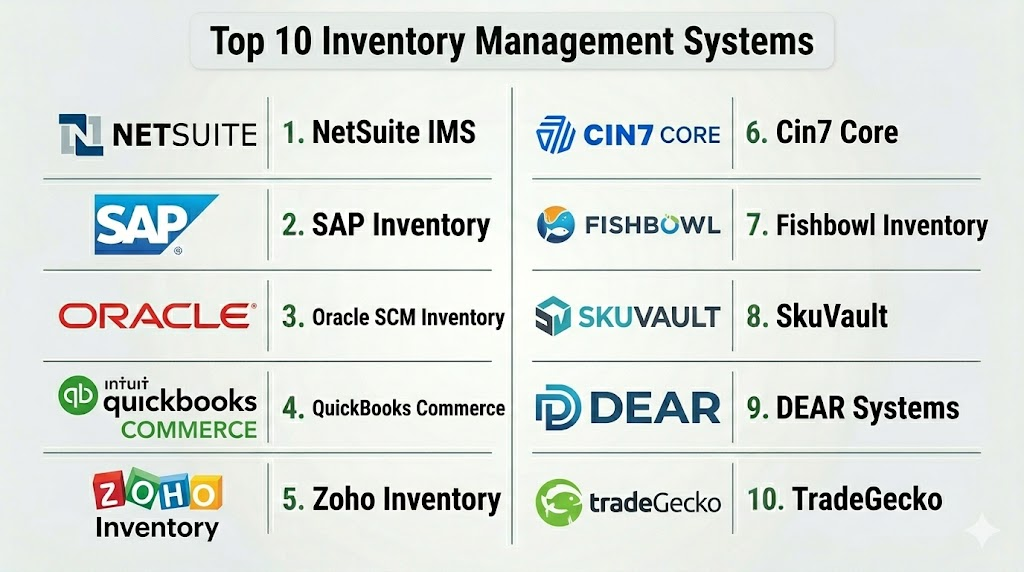
Introduction
Inventory Management Systems (IMS) are software platforms designed to track, optimize, and automate inventory across warehouses, stores, production sites, and fulfillment channels. These systems provide real‑time visibility into stock levels, help reduce carrying costs, prevent stockouts and overstocks, and ensure materials and finished goods flow smoothly through supply chains. They are essential for businesses that must balance demand, supply, procurement planning, and fulfillment accuracy.
In an increasingly competitive landscape, IMS tools support omnichannel strategies, integrate with sales and procurement systems, and leverage automation to forecast demand, trigger replenishment, and connect inventory data across locations and teams. Whether in manufacturing, retail, distribution, or e‑commerce, effective inventory management drives profitability, customer satisfaction, and operational agility.
Real‑world use cases include:
- Synchronizing inventory across online marketplaces and brick‑and‑mortar locations.
- Automating reorder points and safety stock calculation for thousands of SKUs.
- Tracking serialized, lot‑controlled, and expiration‑based inventory.
- Integrating with ERP, WMS, POS, and e‑commerce platforms for shared inventory data.
- Generating audit logs for compliance and shrinkage analysis.
Evaluation Criteria for Buyers:
- Real‑time stock level visibility and location tracking
- Integration with sales, POS, fulfillment, and ERP systems
- Reorder point and safety stock automation
- Demand forecasting and trend analytics
- Support for multiple warehouses and global locations
- Barcoding, scanning, and mobile access
- Lot/serial number and expiration date tracking
- Returns processing and customer fulfillment workflows
- Scalability for growth and transaction volume
- Security, role access, and audit controls
Best for: Retailers, distributors, manufacturers, e‑commerce sellers, and operations teams managing inventory across channels and locations.
Not ideal for: Very small catalogs with static inventory where simple manual tracking or basic spreadsheets meet current needs.
Key Trends in Inventory Management Systems
- Real‑time and distributed inventory visibility across physical and digital channels.
- AI‑assisted demand forecasting and predictive replenishment.
- Cloud‑native inventory platforms with global scaling.
- Integration with OMS, WMS, ERP, CRM, marketplaces, and POS.
- Mobile‑first barcode scanning and IoT sensor integrations.
- Lot, serial number, and expiration tracking for compliance industries.
- Omnichannel fulfillment orchestration (BOPIS, ship‑from‑store).
- Automation of reorder, allocation, and stock adjustments.
- Dashboards, alerts, and KPI analytics for inventory health.
How We Selected These Tools (Methodology)
- Evaluated feature completeness in real‑time tracking, forecasting, and multi‑location management.
- Assessed integration breadth with ERP, POS, OMS, WMS, and marketplaces.
- Considered scalability for SMB to enterprise usage.
- Reviewed demand forecasting and automation capabilities.
- Verified mobile, barcode, and IoT integrations for operational efficiency.
- Analyzed ease of use and implementation time.
- Checked security posture and access controls.
- Evaluated vendor support, documentation, and community strength.
Top 10 Inventory Management Systems
#1 — NetSuite Inventory Management
Short description:
NetSuite’s native inventory management is part of its unified ERP suite, offering comprehensive multi‑location tracking, demand planning, and fulfillment orchestration for mid‑market and enterprise operations.
Key Features
- Real‑time inventory levels across locations
- Demand planning and forecasting
- Lot/serial number tracking
- Reorder point automation
- Integration with WMS, POS, and financials
Pros
- Unified ERP, inventory, and financial data
- Strong scalability and multi‑subsidiary support
- Lot/serial and expiration tracking
Cons
- Best value with full NetSuite stack
- Deployment complexity
Platforms / Deployment
- Web, Cloud
Security & Compliance
- Role‑based access, audit logs
Integrations & Ecosystem
- NetSuite ERP/CRM/WMS
- POS systems
- e‑commerce and marketplaces
Support & Community
- NetSuite support network
#2 — SAP Inventory Management (part of SAP S/4HANA)
Short description:
SAP’s inventory module within S/4HANA centralizes stock visibility, valuation, allocation, and planning for global operations, with deep integration into finance and logistics.
Key Features
- Multi‑location stock visibility
- Material valuation and accounting integration
- RFID/barcode scanning support
- Allocation and replenishment logic
- Lot/serial and batch management
Pros
- Deep finance and logistics linkage
- Enterprise‑grade scaling
- Global tax, valuation, and compliance support
Cons
- Requires SAP ecosystem footprint
- Implementation effort
Platforms / Deployment
- Web, Cloud/Hybrid
Security & Compliance
- Enterprise access controls, audit trails
Integrations & Ecosystem
- SAP ERP/S/4HANA
- WMS, POS, carriers
Support & Community
- SAP enterprise support
#3 — Oracle SCM Cloud Inventory
Short description:
Oracle’s SCM Cloud inventory provides global stock visibility, automated replenishment, and integration with fulfillment and procurement processes for large enterprises.
Key Features
- Real‑time inventory visibility
- Demand and supply forecasting
- Multi‑node allocation logic
- Lot/serial tracking
- Cycle counting automation
Pros
- Integrated SCM suite
- Strong global visibility
- Cloud scalability
Cons
- ERP ecosystem alignment required
- Cost for large deployments
Platforms / Deployment
- Web, Cloud
Security & Compliance
- Enterprise access controls
Integrations & Ecosystem
- Oracle ERP
- Fulfillment, procurement
Support & Community
- Oracle support
#4 — QuickBooks Commerce
Short description:
Formerly TradeGecko, QuickBooks Commerce delivers inventory and order workflows for SMB retailers and e‑commerce sellers focusing on multi‑channel sales and stock coordination.
Key Features
- Multi‑channel order syncing
- Stock levels and reorder alerts
- SKU and variant tracking
- Barcode support
- Supplier and purchase order management
Pros
- Easy onboarding and UI
- SMB‑friendly pricing
- Linked with QuickBooks financials
Cons
- Less deep forecasting
- Limited enterprise capability
Platforms / Deployment
- Web, Cloud
Security & Compliance
- Role access, encryption
Integrations & Ecosystem
- e‑commerce platforms
- QuickBooks accounting
- POS and shipping apps
Support & Community
- Vendor support
#5 — Zoho Inventory
Short description:
Zoho Inventory offers cloud inventory tracking, fulfillment workflows, and integrations with e‑commerce, POS, and shipping for small to mid‑size businesses.
Key Features
- Multi‑warehouse inventory
- Order and fulfillment workflows
- Serial/lot control
- Shipping rate and carrier integrations
- Purchase orders and supplier management
Pros
- Great SMB value
- Easy to connect with Zoho suite
- Multi‑channel sales support
Cons
- Demand forecasting is limited
- Add‑on costs for advanced analytics
Platforms / Deployment
- Web, Cloud
Security & Compliance
- Role access, encryption
Integrations & Ecosystem
- CRM, e‑commerce apps
- POS and shipping
Support & Community
- Zoho support
#6 — Cin7 Core
Short description:
Cin7 Core (formerly DEAR Systems) is a cloud inventory management solution with order workflows, B2B portals, multi‑location tracking, and integrations across sales channels.
Key Features
- Real‑time stock tracking
- Order allocation and fulfillment
- Composite/bundle inventory
- Barcode, printing, and scanning
- Demand reports and alerts
Pros
- Strong channel integrations
- Detailed inventory insights
- Great for SMB to mid‑market
Cons
- Learning curve for advanced features
- Some module dependencies
Platforms / Deployment
- Web, Cloud
Security & Compliance
- Role access, encryption
Integrations & Ecosystem
- e‑commerce, POS
- Accounting, shipping
Support & Community
- Vendor support
#7 — Fishbowl Inventory
Short description:
Fishbowl offers robust inventory tracking and manufacturing support with order workflows, barcode scanning, serial/lot control, and integration with QuickBooks.
Key Features
- Multi‑site inventory
- Barcode scanning and WMS tools
- Serial and lot tracking
- Manufacturing work orders
- Reorder automation
Pros
- Strong manufacturing inventory support
- QuickBooks integration
- On‑prem or cloud
Cons
- UI feels dated
- Setup complexity
Platforms / Deployment
- Windows, Cloud/Hybrid
Security & Compliance
- Role access, encryption
Integrations & Ecosystem
- QuickBooks
- POS and e‑commerce
Support & Community
- Vendor support
#8 — TradeGecko (acquired by Shopify)
Short description:
TradeGecko (now part of Shopify ecosystem) provided intuitive inventory management with multi‑channel sync, B2B pricing, and stock alerts — popular with SMB sellers and distributors.
Key Features
- Multi‑channel inventory sync
- Variant and SKU tracking
- Purchase orders
- Supplier management
- Reports and dashboards
Pros
- Clean user interface
- Quick SMB deployment
- Marketplace‑ready
Cons
- Largely folded into Shopify workflows
- Feature overlap with Shopify OMS
Platforms / Deployment
- Web, Cloud
Security & Compliance
- Role access, encryption
Integrations & Ecosystem
- e‑commerce platforms
- POS and accounting
Support & Community
- Shopify ecosystem
#9 — SkuVault
Short description:
SkuVault is a warehouse‑centric inventory system focused on real‑time stock accuracy, cycle counting, pick/pack workflows, and integrations with POS and e‑commerce platforms.
Key Features
- Real‑time visibility in warehouses
- Cycle counting and auditing
- Barcode scanning
- Order sync
- Kitting and bundles
Pros
- Great WMS integration
- Strong scan‑centric workflows
- Reduces shrinkage
Cons
- Less robust demand forecasting
- Best paired with OMS/WMS systems
Platforms / Deployment
- Web, Cloud
Security & Compliance
- Role access, encryption
Integrations & Ecosystem
- OMS, e‑commerce apps
- POS and carriers
Support & Community
- Vendor support
#10 — DEAR Systems (Standalone)
Short description:
DEAR Systems offers standalone cloud inventory with multi‑location tracking, batch/serial, work orders, and integrations for sales and procurement teams.
Key Features
- Multi‑warehouse stock
- Batch/serial tracking
- Work orders and assemblies
- Reorder triggers
- SKU hierarchies and variants
Pros
- Flexible deployment
- Good SMB to mid‑market fit
- Works with accounting systems
Cons
- Forecasting capabilities limited
- Reporting interface basic
Platforms / Deployment
- Web, Cloud
Security & Compliance
- Role access, encryption
Integrations & Ecosystem
- e‑commerce, POS, accounting
Support & Community
- Vendor support
Comparison Table (Top 10 Inventory Management Tools)
| Tool Name | Best For | Platform(s) Supported | Deployment | Standout Feature | Public Rating |
|---|---|---|---|---|---|
| NetSuite IMS | Unified ERP inventory | Web | Cloud | ERP linkage & multi‑location | N/A |
| SAP Inventory | Global enterprise | Web | Cloud/Hybrid | Material valuation & tags | N/A |
| Oracle SCM Inventory | Global SCM | Web | Cloud | Multi‑node visibility | N/A |
| QuickBooks Commerce | SMB/e‑commerce | Web | Cloud | SMB centric workflows | N/A |
| Zoho Inventory | SMB omnichannel | Web | Cloud | Great SMB integrations | N/A |
| Cin7 Core | Channel & B2B | Web | Cloud | Multi‑channel integrations | N/A |
| Fishbowl Inventory | Mfg & SMB | Windows/Cloud | Hybrid | Mfg stock & WMS tools | N/A |
| SkuVault | Warehouse‑centric | Web | Cloud | Cycle counting & accuracy | N/A |
| DEAR Systems | SMB inventory | Web | Cloud | Multi‑location stock | N/A |
| TradeGecko | SMB commerce | Web | Cloud | Clean UI & sync | N/A |
Evaluation & Scoring of Inventory Management Tools
| Tool | Core (25%) | Ease (15%) | Integrations (15%) | Security (10%) | Performance (10%) | Support (10%) | Value (15%) | Weighted Total (0–10) |
|---|---|---|---|---|---|---|---|---|
| NetSuite IMS | 9 | 7 | 9 | 9 | 9 | 8 | 7 | 8.4 |
| SAP Inventory | 9 | 6 | 9 | 9 | 9 | 7 | 7 | 8.0 |
| Oracle SCM Inventory | 9 | 7 | 9 | 9 | 9 | 8 | 7 | 8.2 |
| QuickBooks Commerce | 8 | 9 | 8 | 8 | 8 | 8 | 8 | 8.2 |
| Zoho Inventory | 8 | 9 | 8 | 8 | 8 | 8 | 8 | 8.2 |
| Cin7 Core | 8 | 8 | 9 | 8 | 8 | 8 | 8 | 8.1 |
| Fishbowl Inventory | 7 | 7 | 8 | 8 | 7 | 8 | 8 | 7.6 |
| SkuVault | 8 | 8 | 8 | 8 | 8 | 8 | 8 | 8.0 |
| DEAR Systems | 8 | 8 | 8 | 8 | 8 | 8 | 8 | 8.0 |
| TradeGecko | 7 | 9 | 8 | 8 | 7 | 8 | 8 | 7.9 |
Interpretation: Higher weighted scores indicate stronger inventory visibility, integration flexibility, multi‑location support, and enterprise readiness. SMB‑centric tools score well on ease and value.
Which Inventory Management Tool Is Right for You?
Solo / Freelancer
Tools like QuickBooks Commerce or Zoho Inventory offer rapid onboarding, real‑time stock sync, and multi‑channel visibility with minimal setup.
SMB
Zoho Inventory, Cin7 Core, and DEAR Systems balance features, integrations, and scaling for growing catalogs and fulfillment complexity.
Mid‑Market / Enterprise
NetSuite IMS, Oracle SCM Inventory, and SAP Inventory provide deep integration with financial systems, compliance workflows, and global stock allocation.
Budget vs Premium
Cloud‑native SMB tools help reduce total cost; enterprise suites deliver better governance and multi‑subsidiary stock coordination.
Inventory Depth vs Ease of Use
Some systems prioritize advanced tracking and forecasting, while others prioritize ease and quick adoption.
Integrations & Scalability
Select a system that connects with your ERP, OMS, POS, shipping, and marketplaces for reliable inventory orchestration.
Security & Compliance Needs
Ensure tools offer role‑based controls, audit logs, and encrypted access to meet internal and industry compliance requirements.
Frequently Asked Questions (FAQs)
1. What is an Inventory Management System?
An IMS is software that tracks and optimizes inventory across channels, locations, and fulfillment workflows in real time.
2. How does IMS integrate with OMS and ERP?
IMS syncs inventory levels with OMS for fulfillment decisions and with ERP for financial inventory valuation and procurement planning.
3. Can IMS prevent stockouts?
Yes — systems use reorder points, safety stock calculations, and automation to trigger replenishment.
4. What industries use IMS?
Retail, e‑commerce, manufacturing, distribution, and wholesale frequently rely on IMS for stock accuracy.
5. Do IMS tools support serialized tracking?
Many support serial, lot, and expiration date tracking for compliance and traceability.
6. Are IMS tools cloud‑based?
Most modern IMS systems are cloud‑native for scalability and global access.
7. Can IMS tools forecast demand?
Some include demand forecasting and trend analysis; advanced forecasting often integrates with planning tools.
8. How long does deployment take?
Cloud IMS can launch quickly (weeks); enterprise implementations may take months.
9. Can IMS handle multiple warehouses?
Yes — multi‑location stock visibility and routing logic are core features.
10. Are mobile scanning and barcode tools included?
Yes — many include scanning, barcode management, and mobile apps for operational workflows.
Conclusion
Inventory Management Systems are foundational for businesses that rely on accurate stock visibility, multi‑location coordination, and efficient fulfillment. Whether you are a small e‑commerce seller using QuickBooks Commerce or Zoho Inventory, a growing business leveraging Cin7 Core or DEAR Systems, or an enterprise running NetSuite, SAP, or Oracle SCM Inventory, the right IMS improves service levels, reduces carrying costs, and simplifies operational workflows. Choosing an IMS involves aligning features with catalog complexity, fulfillment channels, forecasting needs, and integration requirements. Run pilots with real demand scenarios, validate forecasting and automation logic, and ensure seamless integration with other systems to drive operational excellence and inventory optimization.

The content is clear and well organized.
I appreciate the effort behind this post.
Well-written article with useful points for readers.