MOTOSHARE 🚗🏍️
Rent Bikes & Cars Directly from Owners
Motoshare connects vehicle owners with people who need bikes and cars on rent. Owners earn from idle vehicles, and renters get flexible ride options.
Visit Motoshare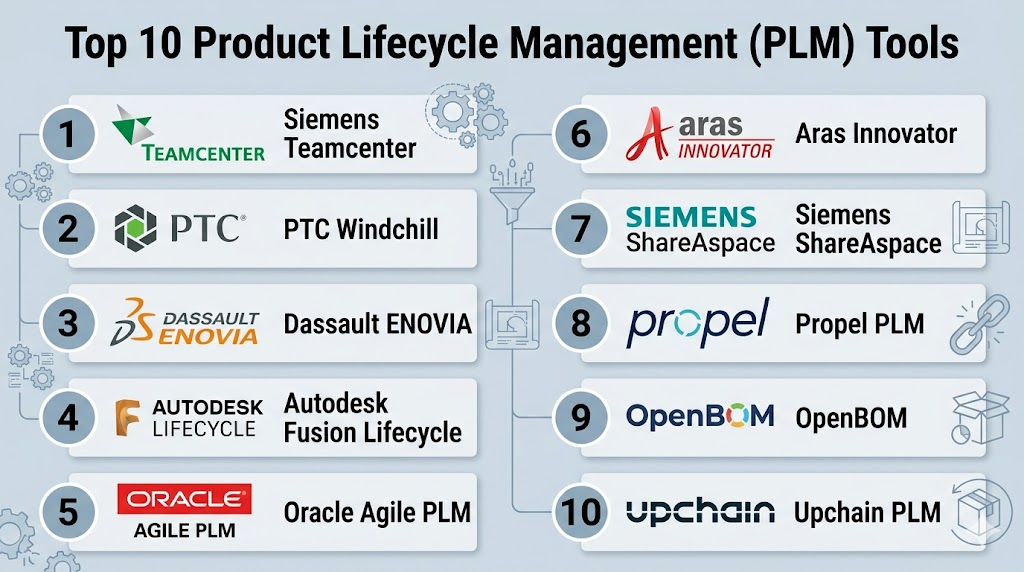
Introduction
Product Lifecycle Management (PLM) tools are enterprise software platforms that orchestrate the entire lifecycle of a product — from initial concept and design through engineering, manufacturing, service, and end‑of‑life disposal. PLM systems centralize product data, streamline cross‑functional collaboration, enforce engineering change processes, and ensure that teams work from a single source of truth throughout global product development.
In complex manufacturing and engineering environments, PLM bridges design (CAD/ECAD/MCAD), requirements, bill of materials (BOM), quality, regulatory compliance, and downstream systems such as ERP and MES. By unifying product data, PLM tools reduce costly rework, accelerate time‑to‑market, improve quality, and support traceability for compliance in industries like automotive, aerospace, electronics, industrial machinery, medical devices, and consumer goods.
Real‑world use cases include:
- Centralized management of CAD files, BOMs, and configurations for multi‑site design teams.
- Engineering Change Order (ECO) and revision control workflows across R&D and manufacturing.
- Regulatory compliance traceability (FDA, ISO, CE) in medical, aerospace, and regulated products.
- BOM synchronization with ERP for procurement, manufacturing, and supply chain planning.
- Supplier collaboration and controlled release of design data to external partners.
Evaluation Criteria for Buyers:
- Data management (CAD/MCAD/ECAD) and version control
- BOM and configuration lifecycle workflows
- Engineering change, revision, and change notice processes
- Integration with CAD, ERP, MES, QMS, SRM, and analytics
- Collaboration and document control
- Scalability across global sites and product lines
- Compliance and traceability (audit trails, standards)
- Extensibility and automation (workflows, APIs)
- Usability and role‑based access
- Deployment options and cost
Best for: Product engineers, design teams, systems engineers, quality and compliance teams, manufacturing engineers, and enterprise IT leaders in complex product organizations.
Not ideal for: Simple or largely manual product processes with few regulated requirements or minimal engineering change activity.
Key Trends in PLM Tools
- Cloud and hybrid PLM deployments for global design and manufacturing teams.
- Integration with IoT and digital twin data for product performance feedback.
- Model‑based systems engineering (MBSE) and systems PLM adoption.
- AI/ML‑assisted design insights, similarity search, and automated workflows.
- Tight coupling with CAD, ERP, MES, QMS, and Requirements Management.
- Better supplier data and collaboration portals for engineering and sourcing.
- Embedded compliance and quality traceability (FDA, ISO, AS9100).
- Support for configurable products and variant management.
- Enhanced UX with visual workflows, dashboards, and role‑based interfaces.
How We Selected These Tools (Methodology)
- Market adoption across discrete manufacturing and regulated industries.
- Completeness of capabilities across data management, BOM, change control, and collaboration.
- Integration ecosystem readiness with CAD, ERP, MES, QMS, and analytics stacks.
- Scalability from SMB to enterprise and multi‑site organizations.
- Security, access control, and audit readiness.
- User experience and usability for engineers and cross‑functional teams.
- Support and community strength for onboarding and knowledge sharing.
- Customization, workflows, and automation potential.
Top 10 Product Lifecycle Management (PLM) Tools
#1 — Siemens Teamcenter
Short description:
Siemens Teamcenter is a market‑leading PLM platform that centralizes product data, BOM management, change control, and cross‑discipline collaboration for global enterprises.
Key Features
- Multi‑discipline BOM management
- Engineering change management (ECO/ECR)
- CAD integrations across major systems
- Requirements, quality, and compliance modules
- Supplier collaboration and service lifecycle
Pros
- Very broad enterprise‑grade capability
- Strong CAD and systems engineering support
- Global deployment scalability
Cons
- Steep learning curve
- Enterprise pricing
Platforms / Deployment
- Web, Cloud, Hybrid
Security & Compliance
- Role‑based access, encryption, audit trails
Integrations & Ecosystem
- CAD (NX, SolidWorks, CATIA, etc.)
- ERP (SAP, Oracle)
- MES, QMS, SRM connectors
Support & Community
- Siemens support, partner network, training
#2 — PTC Windchill
Short description:
PTC Windchill is a flexible PLM platform with strong CAD integrations, BOM and change management, and scalable workflows for discrete and complex product organizations.
Key Features
- CAD neutral data management
- Change and configuration management
- Product analytics and part reuse
- Service and quality integration
- Supplier portals
Pros
- Highly adaptable and scalable
- Strong part reuse and configuration control
- Good integration with IoT products
Cons
- Setup and customization effort
- Licensing complexity
Platforms / Deployment
- Web, Cloud, Hybrid
Security & Compliance
- RBAC, encryption, audit logs
Integrations & Ecosystem
- CAD (Creo, SolidWorks, others)
- ERP, MES, QMS, IoT tools
Support & Community
- Enterprise support, training
#3 — Dassault Systèmes ENOVIA (3DEXPERIENCE)
Short description:
ENOVIA is Dassault’s PLM solution embedded within the 3DEXPERIENCE platform, providing end‑to‑end product data, collaboration, compliance, and portfolio management.
Key Features
- Connected design and data management
- Change, configuration, and program management
- Requirements and systems engineering
- Supplier collaboration
- Analytics and dashboards
Pros
- Deep integration with CATIA, SOLIDWORKS
- Strong systems engineering support
- Scales across product portfolios
Cons
- Complexity for first‑time users
- Premium pricing
Platforms / Deployment
- Web, Cloud, Hybrid
Security & Compliance
- Access controls, encryption
Integrations & Ecosystem
- CAD, ERP, MES, QMS
- 3DEXPERIENCE apps
Support & Community
- Dassault support and education
#4 — Autodesk Fusion Lifecycle (Autodesk PLM 360)
Short description:
Fusion Lifecycle is a cloud PLM that offers accessible product data, change management, and process automation for SMB to mid‑market manufacturers.
Key Features
- Cloud‑native product data and parts
- Change, supplier, and quality management
- Workflow automation
- Visual dashboards and analytics
- Integration with Autodesk design tools
Pros
- Easy start‑up and cloud deployment
- User‑friendly interface
- Good interoperability with Autodesk CAD
Cons
- Less deep for enterprise scale
- Limited advanced analytics
Platforms / Deployment
- Web, Cloud
Security & Compliance
- Role access, encryption
Integrations & Ecosystem
- CAD, ERP, MES connectors
Support & Community
- Autodesk support, community forums
#5 — Oracle Agile PLM
Short description:
Oracle Agile PLM is an enterprise PLM suite designed to connect product data, change processes, and compliance across global product lifecycles.
Key Features
- Engineering and quality change control
- Document and BOM management
- Regulatory compliance and traceability
- Supplier collaboration
- Analytics dashboards
Pros
- Strong enterprise governance
- Proven deployment in large enterprises
- Integration with Oracle stack
Cons
- Heavyweight deployment
- Best in Oracle ecosystem
Platforms / Deployment
- Web, Cloud, Hybrid
Security & Compliance
- Enterprise access control, audit trails
Integrations & Ecosystem
- ERP (Oracle), MES, QMS
Support & Community
- Oracle support network
#6 — Aras Innovator
Short description:
Aras Innovator is a flexible, model‑based PLM platform with open architecture that supports enterprise lifecycle workflows, customization, and digital threads.
Key Features
- Open architecture and personalization
- Configurable BOM and change workflows
- Digital thread and traceability
- Systems and requirements engineering
- Supplier & quality integration
Pros
- Highly configurable
- Modern architecture
- Good community and open innovation
Cons
- Requires skilled admin/consulting
- Customization can increase complexity
Platforms / Deployment
- Web, Cloud, Hybrid
Security & Compliance
- RBAC, encryption, logging
Integrations & Ecosystem
- ERP, MES, QMS, CAD
Support & Community
- Enterprise support, open community
#7 — Siemens ShareAspace PLM
Short description:
ShareAspace is a lightweight, collaborative PLM tool designed to enhance cross‑functional product data access and change collaboration — especially in SAP‑centric environments.
Key Features
- Centralized parts, BOM, and document view
- Change request and notification workflows
- Collaboration across engineers and planners
- SAP integration connectivity
- Role‑specific dashboards
Pros
- Good fit for SAP customers
- Simple UI and collaboration focus
- Cost‑effective
Cons
- Not full PLM suite
- Limited advanced lifecycle analytics
Platforms / Deployment
- Web, Hybrid
Security & Compliance
- Role access, encryption
Integrations & Ecosystem
- SAP ERP, CAD linkers
Support & Community
- Siemens support
#8 — Propel PLM
Short description:
Propel PLM is a modern, SaaS‑native product lifecycle platform focused on cloud collaboration, product data management, and cross‑team workflows.
Key Features
- Cloud PDM and BOM management
- Engineering change and revision control
- Quality and compliance linking
- Salesforce ecosystem integration
- Dashboards and alerts
Pros
- True SaaS architecture
- Rapid deployment
- Strong UX and collaboration
Cons
- Mid‑market feature scope
- Less deep than enterprise PLM
Platforms / Deployment
- Web, Cloud
Security & Compliance
- Role access, encryption
Integrations & Ecosystem
- CRM, ERP, design tools
Support & Community
- Vendor support
#9 — OpenBOM
Short description:
OpenBOM is a flexible cloud product data and BOM management tool aimed at collaborative engineering teams and SMB manufacturers.
Key Features
- Cloud BOM and part data management
- Change tracking and lifecycle fields
- Collaboration and sharing
- ERP/MRP and CAD connectors
- Dashboards and reports
Pros
- Simple cloud‑first model
- Excellent for distributed teams
- Affordable
Cons
- Not full enterprise PLM
- Limited advanced process governance
Platforms / Deployment
- Web, Cloud
Security & Compliance
- Encryption, access control
Integrations & Ecosystem
- CAD, ERP/MRP, analytics
Support & Community
- Online support
#10 — Upchain PLM
Short description:
Upchain is a cloud PLM with PDM capabilities, change workflows, and collaboration — designed to be accessible for SMB to mid‑tier manufacturers.
Key Features
- Cloud part/BOM management
- Change control and notifications
- Document management
- Collaboration with external partners
- ERP and CAD links
Pros
- Easy to deploy
- Good collaboration tools
- Affordable for SMB
Cons
- Less deep lifecycle analytics
- Workflow depth smaller than enterprise suites
Platforms / Deployment
- Web, Cloud
Security & Compliance
- Access roles, encryption
Integrations & Ecosystem
- CAD, ERP connectors
Support & Community
- Vendor support
Comparison Table (Top 10 PLM Tools)
| Tool Name | Best For | Platform(s) Supported | Deployment | Standout Feature | Public Rating |
|---|---|---|---|---|---|
| Siemens Teamcenter | Enterprise PLM | Web | Cloud/Hybrid | Comprehensive lifecycle | N/A |
| PTC Windchill | Scalable PLM | Web | Cloud/Hybrid | Flexible CAD neutral PLM | N/A |
| Dassault ENOVIA | Portfolio PLM | Web | Cloud/Hybrid | Integrated with 3DEXPERIENCE | N/A |
| Autodesk Fusion Lifecycle | SMB to mid PLM | Web | Cloud | Easy cloud PLM | N/A |
| Oracle Agile PLM | Enterprise governance | Web | Cloud/Hybrid | Enterprise change & trace | N/A |
| Aras Innovator | Modern configurable PLM | Web | Cloud/Hybrid | Open model‑based architecture | N/A |
| Siemens ShareAspace | SAP‑centric teams | Web | Hybrid | SAP‑aligned collaboration | N/A |
| Propel PLM | SaaS collaborative PLM | Web | Cloud | SaaS & UX focus | N/A |
| OpenBOM | Collaborative BOM | Web | Cloud | Cloud BOM & part mgmt | N/A |
| Upchain PLM | SMB collaborative PLM | Web | Cloud | Partner collaboration | N/A |
Evaluation & Scoring of PLM Tools
| Tool Name | Core (25%) | Ease (15%) | Integrations (15%) | Security (10%) | Performance (10%) | Support (10%) | Value (15%) | Weighted Total (0–10) |
|---|---|---|---|---|---|---|---|---|
| Siemens Teamcenter | 9 | 7 | 9 | 8 | 8 | 8 | 7 | 8.2 |
| PTC Windchill | 8 | 7 | 8 | 8 | 8 | 8 | 7 | 7.9 |
| Dassault ENOVIA | 9 | 7 | 9 | 8 | 8 | 7 | 7 | 8.1 |
| Autodesk Fusion | 7 | 8 | 7 | 7 | 7 | 7 | 8 | 7.6 |
| Oracle Agile PLM | 8 | 6 | 8 | 8 | 7 | 7 | 7 | 7.7 |
| Aras Innovator | 8 | 7 | 8 | 8 | 8 | 8 | 8 | 8.0 |
| Siemens ShareAspace | 6 | 8 | 7 | 7 | 7 | 7 | 8 | 7.3 |
| Propel PLM | 7 | 8 | 7 | 7 | 7 | 7 | 8 | 7.5 |
| OpenBOM | 6 | 8 | 7 | 7 | 7 | 7 | 9 | 7.3 |
| Upchain PLM | 7 | 8 | 7 | 7 | 7 | 7 | 8 | 7.4 |
Interpretation: Higher totals indicate broader lifecycle coverage, integrations, and enterprise readiness; SMB‑focused and cloud‑native tools score well in UX and value.
Which PLM Tool Is Right for You?
Solo / Freelancer
For simple product and BOM collaboration, OpenBOM or Upchain PLM provide cloud‑first, affordable entry points.
SMB
Autodesk Fusion Lifecycle or Propel PLM balance features and ease of deployment for growing manufacturing and engineered products.
Mid‑Market
PTC Windchill and Aras Innovator offer scalable, adaptable PLM with deeper engineering integrations and workflows.
Enterprise
Large product enterprises should consider Siemens Teamcenter, Dassault ENOVIA, or Oracle Agile PLM for full lifecycle governance, global collaboration, and compliance traceability.
Budget vs Premium
Cloud‑native and SaaS offerings reduce upfront cost and IT overhead; enterprise suites provide more customization, controls, and performance at higher investment.
Feature Depth vs Ease of Use
Enterprise PLM tools shine in depth and integrations; lightweight, modern tools prioritize UX and quick onboarding.
Integrations & Scalability
Ensure your PLM integrates with your CAD suite, ERP, MES, QMS, and analytics stack to enable consistency across teams and systems.
Security & Compliance Needs
Regulated product development environments should prioritize strong access control, audit trails, encryption, and compliance features.
Frequently Asked Questions (FAQs)
1. What is a PLM tool?
PLM (Product Lifecycle Management) tools centralize product data, change processes, collaboration, and cross‑functional workflows throughout the lifecycle from concept to retirement.
2. Do PLM tools integrate with CAD systems?
Yes — most enterprise PLM systems integrate natively with popular CAD tools like NX, CATIA, SolidWorks, Creo, and others.
3. How does PLM differ from ERP?
PLM focuses on product data, engineering, change control, and collaboration; ERP manages business operations like procurement, finance, inventory, and manufacturing execution.
4. Are cloud PLM tools secure?
Modern PLM providers use encryption, role‑based access, and hardened cloud infrastructure to meet enterprise security needs.
5. Can PLM support regulated compliance?
Yes — enterprise PLM includes traceability, audit trails, documentation control, and workflows to support compliance like FDA, ISO, and aerospace standards.
6. How long does PLM implementation take?
Implementation timelines vary from weeks for cloud‑native solutions to months for enterprise PLM platforms with integrations and custom workflows.
7. Can PLM handle multi‑site product teams?
Yes — enterprise and cloud PLM tools support global teams, role access, and synchronized product data.
8. Do PLM tools provide analytics?
Many PLM systems include dashboards, KPIs, and integration with analytics platforms to visualize product metrics, change history, and performance.
9. Is training required for PLM adoption?
Yes — PLM tools have deep capabilities; training ensures engineers, quality, and operations teams leverage workflows and controls effectively.
10. Can PLM reduce time‑to‑market?
By unifying data, reducing rework, controlling changes, and improving collaboration, PLM tools help teams accelerate product development cycles.
Conclusion
Product Lifecycle Management (PLM) tools are foundational for modern engineering and manufacturing teams seeking coordinated, traceable, and efficient product development. From enterprise incumbents like Siemens Teamcenter, Dassault ENOVIA, and PTC Windchill to cloud‑native options like Autodesk Fusion Lifecycle, Propel PLM, and OpenBOM, organizations can match solutions to their scale, integration needs, and workflow maturity. Successful PLM adoption begins with clear alignment of product data flows, CAD and ERP integrations, engineering change processes, compliance requirements, and cross‑functional collaboration goals. Shortlist tools with real‑world pilots, validate integration readiness, and engage stakeholders from design through manufacturing to maximize PLM value and improve product quality and speed to market.

Very nicely written and easy to read.
Good article. The points are simple, direct, and valuable.