MOTOSHARE 🚗🏍️
Rent Bikes & Cars Directly from Owners
Motoshare connects vehicle owners with people who need bikes and cars on rent. Owners earn from idle vehicles, and renters get flexible ride options.
Visit Motoshare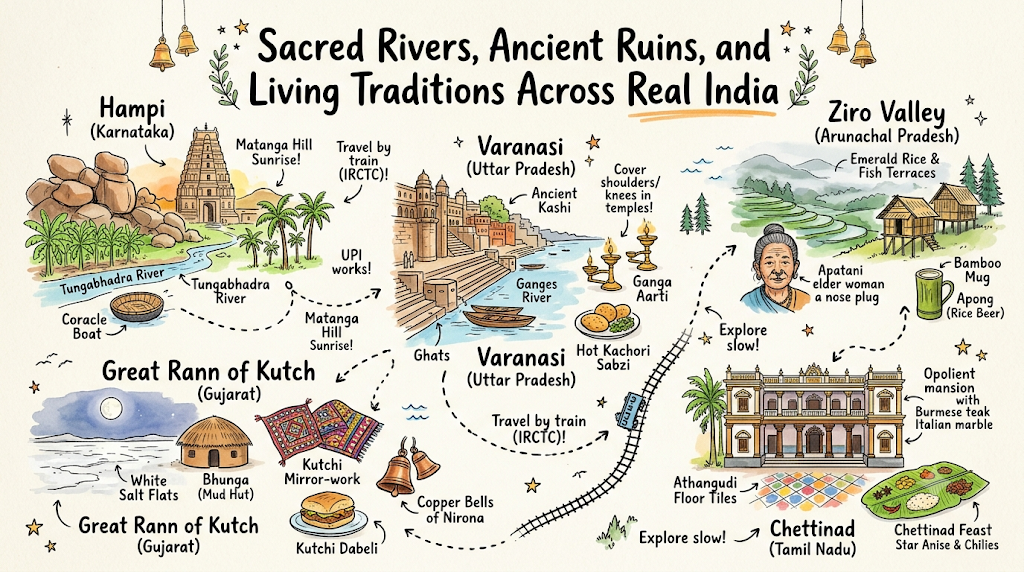
Introduction
Skip the predictable beach resorts and sanitized theme-park vacations where every souvenir looks imported. True travel happens when the scent of roasted cardamom, wet monsoon earth, and sandalwood incense hits you before you even step off the train platform.
India does not politely whisper for your attention; it pulls you straight into five millennia of living history. Instead of rushing through generic checklist monuments, this guide anchors you in deep regional roots, centuries-old hospitality, and unfiltered cultural pulse.
Why India is a must-visit city
(Note: While India spans a vast subcontinent rather than a single municipality, treating its interconnected heritage corridors as one grand, living metropolis reveals its true magic.)
Few places on Earth pack glacial Himalayan passes, tropical backwaters, salt deserts, and medieval stone empires into a single border. Across 28 states and 8 union territories, you can witness Sanskrit chants older than written European history alongside thriving indie art districts and hyper-local culinary ecosystems.
Navigating this landscape is surprisingly accessible once you understand its rhythm. Indian Railways connects even remote valleys via sleeper trains, while regional airports, modern national expressways, and homestay networks make slow travel viable for solo backpackers, multi-generational families, and comfort-seeking couples alike. Rather than attempting a chaotic cross-country sprint, the smartest travel circuit links five distinct cultural anchors—from the boulder-strewn Deccan plateau to the misty Eastern Himalayas.
| Essential Metric | Key Regional Details |
|---|---|
| Best Overall Season | October to March (crisp weather across plains, deserts, and southern heritage zones) |
| Primary Transport Spine | Indian Railways (IRCTC), domestic regional flights, and state-run expressway buses |
| Currency & Payments | Indian Rupee (INR); UPI digital payments dominate cities, while cash rules rural hubs |
| Core Cultural Languages | Hindi and English serve as link languages alongside 22 scheduled regional tongues |
| Recommended Pacing | 3 to 4 days per regional hub to absorb local cuisine, crafts, and morning rituals |
Best Places or Experiences
Hampi: The Boulder-Strewn Empire of Vijayanagara
Walking into Hampi feels like stepping onto a movie set built by giants who stacked millions of balanced granite boulders across a banana-plantation valley. Once the opulent capital of the 14th-century Vijayanagara Empire, this UNESCO World Heritage landscape preserves carved chariot temples, royal elephant stables, and sacred bathing tanks along the Tungabhadra River.
Unlike roped-off museum ruins, Hampi remains deeply alive with temple bells ringing at dawn and coracle boats ferrying villagers across the water. Climbing Matanga Hill before sunrise reveals mist curling around stone colonnades while warm golden light ignites the red boulders.
Virupaksha Temple rising above Hampi.
- Location: Vijayanagara district, Karnataka; approximately 340 km northwest of Bengaluru (nearest railhead is Hosapete Junction, 13 km away).
- Why it is worth visiting: Offers the rare chance to explore an entire medieval metropolis spread across 4,100 hectares of surreal boulder terrain.
- Best things to do: Watch sunrise from Matanga Hill, inspect the musical pillars of Vittala Temple, and cross the Tungabhadra River in a traditional circular coracle boat.
- Best time to visit: November to February, arriving at major temple complexes right at 6:00 AM for soft photography light and cool temperatures.
- Ideal for whom: History enthusiasts, slow travelers, boulder-climbing adventurers, and architectural photographers.
- Travel tip: Rent a geared bicycle or electric scooter near Hampi Bazaar, as monuments are spread several kilometers apart under intense midday sun.
Varanasi: Dawn Rituals Along the Ancient Ghats of Kashi
Older than memory and continuously inhabited for over three millennia, Varanasi strips away modern distractions the moment you reach the crescent-shaped Ganges riverfront. Eighty-eight stone stairways (ghats) descend directly into the sacred river, serving as the stage for morning yoga, silk weaving, classical music recitals, and Hindu funeral pyres.
Drifting past Manikarnika and Dashashwamedh Ghats at 5:30 AM in a wooden rowboat lets you watch thousands of pilgrims greet the rising sun in silence. As dusk falls, brass oil lamps, swirling incense, and rhythmic Vedic chanting transform the riverbank into an unforgettable sensory ceremony.
Evening Ganga Aarti along Dashashwamedh Ghat.
- Location: Southeastern Uttar Pradesh along the Ganges; 320 km southeast of Lucknow and served directly by Lal Bahadur Shastri International Airport (VNS).
- Why it is worth visiting: Stands as the spiritual heartland of Hindu philosophy, classical Hindustani music, and handloom Banarasi silk brocade.
- Best things to do: Take a sunrise wooden rowboat from Assi Ghat to Manikarnika Ghat, witness the Subah-e-Banaras morning concert, and explore the labyrinthine Galis behind Vishwanath Temple.
- Best time to visit: October to March, with Dev Deepawali (November full moon) illuminating every single ghat with over a million earthen clay lamps.
- Ideal for whom: Cultural seekers, spiritual travelers, street photographers, and classical music lovers.
- Travel tip: Always negotiate your rowboat fare before stepping onboard, and skip motorized boats at dawn so you can actually hear the temple bells and chants.
Ziro Valley: Pine Forests and Apatani Heritage in the Eastern Himalayas
Tucked high in the misty hills of Arunachal Pradesh, Ziro Valley trades the arid plains of mainland India for emerald wet-rice terraces framed by blue pine mountains. Home to the indigenous Apatani tribe, this high-altitude plateau operates on an extraordinary zero-waste agricultural model that integrates paddy farming with fish cultivation without machinery or chemical fertilizers.
Strolling through wooden stilt villages like Hong and Hari, you encounter elder women wearing traditional handwoven textiles alongside bamboo groves managed through centuries-old community laws. Mist drifts lazily through the valley floor every afternoon, creating a tranquil sanctuary far removed from commercial tourist circuits.
Emerald rice terraces of Ziro Valley.
- Location: Lower Subansiri district, Arunachal Pradesh; roughly 115 km north of Itanagar and 165 km from Naharlagun Railway Station.
- Why it is worth visiting: Showcases one of Asia’s most sophisticated indigenous agro-ecological systems alongside warm, community-led tribal hospitality.
- Best things to do: Walk the paddy-cum-fish bunds in Hong Village, sample homemade Apong (millet beer) in bamboo mugs, and hike up to Kile Pakho ridge for panoramic valley views.
- Best time to visit: March to May for blooming rhododendrons, or September to October when golden harvest fields coincide with the outdoor Ziro Festival of Music.
- Ideal for whom: Eco-travelers, cultural anthropologists, indie music fans, and off-grid hikers.
- Travel tip: Domestic visitors must secure an Inner Line Permit (ILP) online before arrival, while foreign nationals require a Protected Area Permit (PAP) arranged through registered operators.
Great Rann of Kutch: Endless White Salt Flats Under Full Moon Skies
During the monsoon, the Great Rann of Kutch vanishes beneath shallow seawater; by winter, evaporation leaves behind 7,500 square kilometers of blindingly white crystalline salt crust stretching to the horizon. Standing out on the salt flats feels like walking across a frozen polar ocean under warm desert sunshine.
Beyond the surreal geology, surrounding villages like Hodka, Nirona, and Bhujodi preserve living artisan lineages in Rogan fabric painting, copper bell forging, and mirror-work embroidery. Staying in circular mud-and-mirror Bhunga huts connects you directly with Kutchi pastoralists whose folk ballads echo across desert campfires.
Sunset across the Great Rann of Kutch.
- Location: Kutch district, Gujarat; approximately 85 km north of Bhuj, which connects via direct flights and overnight trains from Mumbai and Ahmedabad.
- Why it is worth visiting: Ranks among the largest seasonal salt deserts on Earth, pairing stark minimalist landscapes with vibrant rural craft villages.
- Best things to do: Walk the Dhordo salt flats at moonrise, watch master artisans paint with castor-oil pigment in Nirona, and climb Kalo Dungar (Black Hill) for sweeping views toward the Pakistan border.
- Best time to visit: November to February, specifically targeting the three nights around a full moon when the salt crust glows silver without artificial lighting.
- Ideal for whom: Landscape photographers, textile and craft collectors, stargazers, and road-trippers.
- Travel tip: Obtain your Rann entry permit at the Bhirandiyara checkpoint en route from Bhuj, and bring a warm windproof jacket—desert temperatures plummet sharply after sunset.
Chettinad: Opulent Merchant Mansions and Fiery Spice Kitchens
Hidden in the dry plains of southern Tamil Nadu, the Chettinad region surprises travelers with thousands of palatial 19th-century mansions built by Nattukottai Chettiar maritime bankers. Returning from trade outposts across Burma, Malaya, and Ceylon, these merchant families imported Burmese teak pillars, Italian marble floors, Belgian mirrors, and Athangudi handmade cement tiles to construct sprawling multi-courtyard estates.
Today, several restored heritage mansions welcome overnight guests while family-run kitchens serve legendary Chettinad cuisine roasted with star anise, stone flower (kalpasi), and sun-dried red chilies. Watching artisans press pigmented geometric tiles by hand in Athangudi village reveals craftsmanship untouched by mass production.
Historic carved teak mansion in Chettinad.
- Location: Sivaganga district, Tamil Nadu, centered around Karaikudi; 90 km northeast of Madurai and 380 km southwest of Chennai.
- Why it is worth visiting: Blends Indo-European mansion architecture, handmade tile artistry, and South India’s boldest culinary traditions without tourist crowds.
- Best things to do: Tour historic mansions in Kanadukathan, watch artisans craft Athangudi floor tiles, and hunt for brassware and vintage tiles in Karaikudi’s Muneeswaran Kovil antique market.
- Best time to visit: November to February, when daytime heat subsides into breezy evenings ideal for courtyard dining.
- Ideal for whom: Architecture lovers, culinary travelers, antique collectors, and heritage boutique hotel enthusiasts.
- Travel tip: Book a traditional banana-leaf Chettinad thali lunch at a family-run mess in Karaikudi by 12:30 PM, as fresh daily batches sell out quickly.
Offbeat Exploration: Hidden Gems Tourists Miss
Anegundi’s Prehistoric Rock Art Across the Tungabhadra
While crowds cluster around Hampi’s main temple bazaar, crossing the river to Anegundi reveals a quieter, older world predating the Vijayanagara Empire. Local community guides lead short walks to Onake Kindi, where Neolithic rock paintings depict human figures and cattle etched into granite shelters thousands of years ago, accompanied by zero tour buses.
The Wrestling Akharas of Tulsi Ghat in Varanasi
Every morning around 5:00 AM, long before souvenir stalls open, traditional kushti wrestlers smear their bodies with red ochre mud at Akhara Goswami Tulsidas along Tulsi Ghat. Watching athletes practice ancient Indian club swinging (gada) and mud-pit grappling honors a physical discipline dating back to the 16th-century poet Tulsidas.
Nirona’s Copper Bell Makers of Kutch
Most Rann of Kutch visitors drive straight to the white desert tent city without stopping in Nirona village. Stepping into the Luhar family courtyard lets you watch craftsmen hammer scrap iron into resonant, pitched Zankar copper-coated bells tuned entirely by ear without soldering or measuring tools.
Detailed Practical Guidance for Travelers
| Destination | Standard Entry Fee | General Timings | Best Local Food Options Nearby | Recommended Nearby Attractions |
|---|---|---|---|---|
| Hampi | INR 40 (Indians) / INR 600 (Foreigners) for Vittala & Zenana Enclosure | 6:00 AM – 6:00 PM daily | Mango Tree Restaurant (banana-leaf thalis), local jolada rotti stalls in Kamalapur | Anegundi Village, Sanapur Lake, Daroji Sloth Bear Sanctuary |
| Varanasi | Free for river ghats; INR 50–100 for select palace museums | 24 hours for ghats; 5:30 AM sunrise boat rides; 6:30 PM Ganga Aarti | Kachori Sabzi at Ram Bhandar, Malaiyyo (winter saffron milk foam), Blue Lassi | Sarnath Buddhist Ruins (10 km), Ramnagar Fort across the Ganges |
| Ziro Valley | Free entry; ILP permit costs INR 100 online | Daylight hours (villages quiet down by 7:00 PM) | Zan (millet porridge), smoked pork with bamboo shoot, Apong rice-millet brew | Talley Valley Wildlife Sanctuary, Meghna Cave Temple, Tarin Fish Farm |
| Great Rann of Kutch | INR 100 per adult + INR 50 per four-wheeler permit | 6:00 AM – 9:00 PM (extended on full moon nights) | Kutchi Dabeli in Bhuj, bajra rotla with garlic chutney and buttermilk at Dhordo | Kalo Dungar, Bhujodi Weaver Village, Mandvi Beach & Vijay Vilas Palace |
| Chettinad | INR 50–100 per private heritage mansion tour | 9:30 AM – 5:30 PM for mansions and tile workshops | Chettinad chicken curry, kuzhi paniyaram, kavuni arisi (black sticky rice pudding) | Thirumayam Fort, Pillayarpatti Karpaga Vinayagar Temple, Karaikudi Antique Street |
Logistics & On-Ground Navigation
Local Transport Options
- Indian Railways (Intercity Spine): Book 2AC or 3AC sleeper classes via the official IRCTC portal 60 days ahead for overnight hops between heritage hubs.
- Auto-Rickshaws & E-Rickshaws: Essential for short urban hops in Varanasi and Karaikudi; e-rickshaws navigate narrow old-town lanes cleanly without exhaust fumes.
- App-Based Ride Hailing: Uber and Ola work reliably in major gateway cities like Bengaluru, Varanasi, and Ahmedabad, offering upfront digital pricing.
- Private Car with Driver: The smartest choice for rural circuits like Kutch craft villages or Chettinad mansions, typically costing INR 3,000–4,200 per day including fuel.
- Two-Wheelers & Bicycles: Available for rent in Hampi and Ziro Valley (INR 400–800/day), giving you total freedom to stop at viewpoints and village farms.
Budget Planning
- Budget / Backpacking Tier (INR 2,200 – 3,800 / $26 – $45 per day): Covers clean hostels or family homestays (INR 800–1,500), delicious street-level thalis and chai (INR 500–800), sleeper-class trains, shared auto-rickshaws, and monument tickets.
- Mid-Range / Comfort Tier (INR 7,500 – 13,000 / $90 – $155 per day): Covers character-rich heritage stays or boutique Bhunga cottages (INR 4,500–8,000), sit-down regional dining, private AC cab transfers, and licensed local walking guides.
Safety and Inclusivity Tips
- Families: Carry reusable insulated water bottles with built-in filters, keep Oral Rehydration Salts (ORS) handy during midday monument walks, and opt for private cabs with child-friendly pacing.
- Couples: Public displays of affection remain uncommon in rural districts and temple towns; dressing modestly (covering shoulders and knees) ensures effortless warmth and respect everywhere.
- General Safety: Stick to bottled or filtered water, avoid unpeeled raw salads from roadside carts, and keep digital copies of your passport/ID plus hotel address cards offline.
Strategic Travel Planning Guardrails
Travel Planning Tips for India
- Enable UPI Digital Payments: International travelers from supported countries can link foreign cards to UPI One World wallets at major airports, letting you pay INR 20 for masala chai effortlessly.
- Book Trains Early: Popular overnight routes fill up weeks ahead; utilize the Foreign Tourist Quota (FTQ) at major railway counters if standard tickets show waitlisted status.
- Dress for Temple Etiquette: Pack slip-on sandals or socks—you will remove footwear dozens of times daily at temples, mosques, and family homes.
- Carry Small Cash Denominations: Keep plenty of INR 10, 20, 50, and 100 notes for boatmen, village artisans, and rural tea stalls where breaking a 500-rupee note is difficult.
- Build Buffer Days: Fog in northern winter or winding mountain roads in Arunachal Pradesh can delay transit by several hours; never book tight same-day international flight connections.
Insider Rule: Always ask permission before photographing elders, artisans at work, or religious rituals—a quick smile and gesture builds instant trust and often earns you an invitation for tea.
Common Mistakes to Avoid
- Cramming Five Regions into Ten Days: India is subcontinental in scale; trying to combine Ladakh, Kerala, Rajasthan, and Varanasi in one trip guarantees exhaustion inside transit terminals.
- Ignoring Regional Rail & Night Buses: Flying between every single stop makes you miss countryside transitions and requires lengthy airport transfers in smaller towns.
- Eating Only Hotel Buffets: Sanitized international buffets strip away regional spice profiles; seek busy local vegetarian messes and heritage family kitchens instead.
- Assuming Tap Water is Potable: Even brushing your teeth in rural districts is safer with bottled or RO-filtered water to prevent stomach upsets.
- Overlooking Permit Deadlines: States like Arunachal Pradesh and border zones in Kutch strictly check permits at highway barriers—apply at least one week prior.
Suggested Itinerary Blueprints
- 1-Day Quick Dash (Varanasi Dawn-to-Dusk Immersion): Designed for time-pressed cultural travelers; begin at 5:30 AM with a wooden sunrise rowboat from Assi Ghat to Manikarnika, fuel up on hot kachori sabzi in the old alleys, spend the afternoon exploring Sarnath’s Buddhist stupas, and return to Dashashwamedh Ghat at 6:30 PM for the evening Ganga Aarti.
- 2-Day Deep-Dive (Hampi & Anegundi Stone Circuit): Day 1 covers the Sacred Center—sunrise atop Matanga Hill, Virupaksha Temple, the monolithic Lakshmi Narasimha statue, and sunset at Hemakuta Hill. Day 2 crosses the river by coracle to Anegundi’s prehistoric rock shelters, followed by Vittala Temple’s stone chariot and the Royal Enclosure’s Elephant Stables.
- Complete Weekend Travel Plan (Chettinad Heritage & Culinary Loop): Friday arrives in Karaikudi by afternoon for a guided walk through Kanadukathan’s teak mansions and sunset tea on a pillared veranda. Saturday starts with Athangudi tile-making workshops, a traditional banana-leaf Chettinad feast, and treasure hunting along Karaikudi Antique Street. Sunday explores Thirumayam’s hilltop fort and local spice markets before afternoon departure.
Common Tourist Mistakes to Avoid
- Geographic Blunders: Attempting to pair Hampi’s boulder ruins with Ziro Valley’s Himalayan foothills on a short itinerary wastes days in multi-leg flights and highway transfers; group southern hubs (Hampi + Chettinad) or northern circuits (Varanasi + Ziro) logically.
- Commercial Traps: Spending precious afternoon hours inside air-conditioned highway emporiums pushed by commission drivers instead of visiting authentic weaver homes in Bhujodi or silk looms in Varanasi’s Madanpura.
- Neglecting Modern/Alternative Zones: Skipping vibrant contemporary pockets—such as Assi Ghat’s indie bookshops and cafes in Varanasi or Bengaluru’s craft-coffee neighborhoods before heading to Hampi—leaves you with an incomplete picture of modern creative India.
- Transport Overpayment: Accepting un-metered flat fares outside railway stations without checking Uber/Ola benchmark rates often inflates short rides by 200 percent.
- Luxury Dining Bias: Relying solely on five-star dining rooms deprives you of the nation’s true culinary soul found at century-old sweet shops, roadside clay-cup chai stalls, and community temple kitchens.
Frequently Asked Questions
1. What is the single best month to visit India for comfortable weather across multiple regions?
November offers the ideal sweet spot nationwide. Post-monsoon skies remain crystal clear across the Himalayas, desert nights in Kutch feel crisp rather than freezing, and southern states like Karnataka and Tamil Nadu enjoy pleasant breezes without oppressive summer heat.
2. How does the UPI digital payment system work for international tourists visiting India?
Visitors arriving at major international airports like Delhi, Mumbai, or Bengaluru can register for a UPI One World prepaid wallet using their passport and visa. Once loaded via international debit or credit card, you can scan QR codes at virtually every street stall, auto-rickshaw, and boutique shop.
3. Is it safe for solo travelers to explore offbeat destinations like Hampi, Ziro Valley, and Chettinad?
Yes, smaller heritage towns and tribal valleys often feel noticeably calmer and more welcoming than major metropolitan transit hubs. Choosing verified family homestays, sharing live trip locations with family, and arranging pre-booked drivers for late-evening rural transfers keeps solo travel smooth and secure.
4. Which train class on Indian Railways offers the best balance of comfort and cultural immersion?
AC 2-Tier (2AC) provides clean bedding, privacy curtains, air conditioning, and generous luggage space without isolating you completely from fellow passengers. For daytime scenic routes, AC Chair Car (CC) or Vistadome coaches offer wide panoramic windows ideal for photography.
5. Do I need special permits to visit Ziro Valley or the Great Rann of Kutch?
Yes, both regions require simple advance documentation. Ziro Valley requires an Inner Line Permit (ILP) for Indian citizens and a Protected Area Permit (PAP) for foreigners, while Kutch requires an online or checkpoint Rann Permit issued at Bhirandiyara before entering the white salt desert.
6. How can travelers avoid stomach issues while still enjoying authentic Indian street food?
Follow busy local crowds where food turnover is rapid and dishes are cooked fresh in front of you at high heat. Stick to steaming hot snacks like kachoris, dosas, and masala chai, avoid raw chutneys made with unboiled water, and drink only sealed or RO-purified water.
7. What should I pack for a multi-region trip covering both warm plains and cool desert or mountain nights?
Pack breathable linen or cotton layers for sunny afternoons, a packable down or fleece jacket for Kutch desert nights and Ziro Valley mornings, sturdy slip-on walking shoes for temples, a lightweight scarf for sun and temple etiquette, and a high-SPF sunscreen.
8. How much should I tip guides, drivers, and hospitality staff in India?
Tipping is appreciated rather than mandatory. Plan around INR 500–800 per day for a dedicated private driver, INR 300–500 for a knowledgeable half-day local heritage guide, and 5 to 10 percent at sit-down restaurants if a service charge is not already included.
9. Where can I buy genuine handicrafts without falling for tourist markups?
Purchase directly from artisan workshops or government-run emporiums. Buy Banarasi silk in Varanasi’s Madanpura weaving clusters, Athangudi tiles straight from village kilns in Chettinad, and Rogan art or handloom shawls directly from master families in Nirona and Bhujodi.
10. How many days are realistically needed to experience two or three regions without rushing?
Allocate 10 to 14 days to comfortably combine two distinct cultural zones, such as Varanasi and Ziro Valley or Hampi and Chettinad. This pacing accounts for domestic travel days while leaving unhurried mornings for sunrise walks, cooking demonstrations, and spontaneous village conversations.
11. What etiquette rules matter most when entering Hindu temples or indigenous villages?
Always remove shoes and leather belts where indicated, dress with shoulders and knees covered, and walk clockwise around sacred shrines. In indigenous villages like Ziro’s Apatani settlements, stay on designated mud bunds rather than stepping onto planted rice crops, and ask before entering private homes.
12. Are vegetarian and vegan diets easy to maintain in rural parts of India?
India is one of the easiest destinations globally for plant-based travelers. Traditional regional thalis across Gujarat, Karnataka, and Tamil Nadu are overwhelmingly vegetarian by default, relying on lentils, seasonal vegetables, millets, and coconut or sesame oils—simply request dishes without ghee or curd for strict vegan meals.
Conclusion
Choosing India over a predictable resort getaway rewards you with moments that linger long after your luggage is unpacked—the echo of dawn temple bells drifting across the Ganges, the crunch of pure salt beneath a Kutch full moon, and the warmth of a shared meal on a fresh banana leaf. When you slow down, respect local rhythms, and step off the main highway, every stone ruin and village courtyard welcomes you not as a passing tourist, but as an honored guest.
