MOTOSHARE 🚗🏍️
Rent Bikes & Cars Directly from Owners
Motoshare connects vehicle owners with people who need bikes and cars on rent. Owners earn from idle vehicles, and renters get flexible ride options.
Visit Motoshare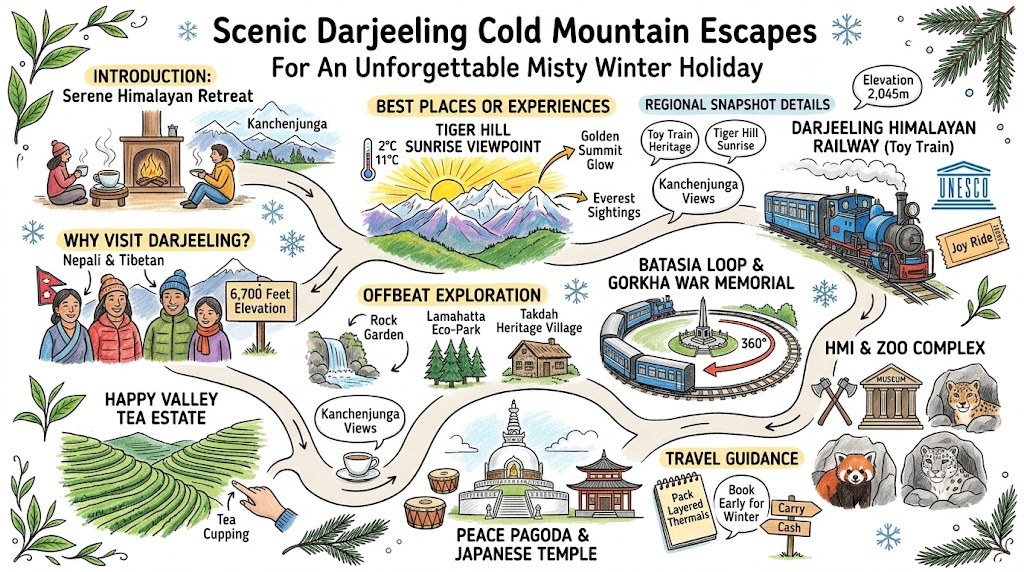
Introduction
While sun-seekers crowd tropical beaches and commercial hill stations burst at the seams with loud tour groups, Darjeeling in winter offers a silent, majestic retreat into the clouds. The crisp Himalayan air sweeps through the colonial-era avenues, clearing away the heavy monsoon mist to reveal unobstructed views of the mighty Kanchenjunga.
Visiting during the cold months allows travelers to experience the Queen of the Hills in her most authentic, serene state. From sipping steaming cups of single-origin black tea beside wood-burning hearths to sharing laughter with warm local communities, winter unveils the soulful heritage of this legendary hill town.
Why Darjeeling is a must-visit city
Perched at an elevation of 6,700 feet in West Bengal, Darjeeling holds an irreplaceable chapter in Eastern Himalayan history. Originally established as a sanatorium for British officers in the 19th century, the region evolved into a cultural melting pot of Nepali, Tibetan, Bengali, and indigenous Lepcha heritage. Winter amplifies this cultural weight, making every cobblestone alley and tea estate look like a living postcard framed by snow-dusted peaks.
The travel circuit seamlessly connects high-altitude mountain lookouts, UNESCO World Heritage rail lines, historic Buddhist monasteries, and sprawling organic tea gardens. Despite its elevated geography, Darjeeling remains remarkably accessible via National Highway 110, direct rail connections to New Jalpaiguri (NJP), and flight routes landing at Bagdogra Airport (IXB).
| Regional Attribute | Snapshot Details |
| Primary Elevation | 2,045 meters (6,700 feet) above sea level |
| Nearest Airport | Bagdogra Airport (IXB) – 68 km via Rohini Route |
| Nearest Railhead | New Jalpaiguri Junction (NJP) – 71 km |
| Winter Temperatures | 2°C to 11°C (December through February) |
| Iconic Peak View | Mount Kanchenjunga (8,586 meters) |
| Signatures | Darjeeling Orthodox Tea, Heritage Toy Train, Tibetan Crafts |
Best Places or Experiences
Tiger Hill Sunrise Viewpoint
Rising to an altitude of 2,590 meters, Tiger Hill stands as the undisputed crown jewel of Darjeeling’s natural panoramas. Long before the first rays of dawn break the horizon, travelers trek up this ridge to witness a spellbinding optical phenomenon as sunlight illuminates the frozen peaks of Mount Kanchenjunga in vivid shades of amber, rose, and burnished gold. On crystal-clear winter mornings, even the faint white silhouette of Mount Everest is visible floating along the distant skyline.
Beyond its breathtaking sunrise visuals, Tiger Hill serves as a vital ecological summit housing the Senchal Wildlife Sanctuary catchment area. The surrounding forest of oak, alpine chestnut, and dwarf bamboo remains quietly shrouded in morning frost, offering a tranquil alpine atmosphere that contrasts sharply with the bustling valleys below.
- Location: Senchal Ridge, 11 km south of Darjeeling town center.
- Why it is worth visiting: Offers the world’s most famous panoramic sunrise view over the Kanchenjunga range and Mount Everest.
- Best things to do: Capture time-lapse photography of the golden summit glow, sample hot ginger tea from mountain vendors, and explore the nearby Senchal forest edge.
- Best time to visit: 4:00 AM to 6:30 AM on clear winter mornings.
- Ideal for whom: Nature lovers, early risers, and photography enthusiasts.
- Travel tip: Book an all-wheel-drive taxi the previous evening and carry heavy insulated thermal layers, gloves, and a wool cap.
Darjeeling Himalayan Railway (Toy Train)
Commissioned in 1881, the Darjeeling Himalayan Railway is a genius engineering feat and a UNESCO World Heritage site. This narrow-gauge railway chugs along narrow mountain ledges, loops through misty hamlets, and crisscrosses active mountain roadways, powered by historic B-Class steam locomotives that date back over a century.
Riding the heritage Joy Ride steam train in winter offers a cozy, nostalgic journey through time. The crisp winter breeze carries the distinct aroma of coal smoke and mountain pine while the whistle echoes across the valleys, providing unmatched vantage points of local life and roadside tea stalls.
- Location: Darjeeling Railway Station, Hill Cart Road.
- Why it is worth visiting: A living UNESCO heritage icon showcasing 19th-century mountain railway engineering.
- Best things to do: Take the round-trip Joy Ride from Darjeeling to Ghum, observe the historic steam engine refueling, and visit the Ghum Railway Museum.
- Best time to visit: Morning slots between 9:00 AM and 1:00 PM for the clearest mountain views.
- Ideal for whom: History buffs, families, rail enthusiasts, and nostalgic travelers.
- Travel tip: Reserve first-class steam engine tickets on the official IRCTC portal at least 30 days in advance.
Batasia Loop and Gorkha War Memorial
Engineered to help the steam train negotiate the steep gradient near Ghum, Batasia Loop is a dramatic spiral railway curve built amid manicured alpine gardens. As the train loops 360 degrees around itself, passengers are treated to an open panoramic view of Darjeeling town sitting beneath the towering snow peaks of the Himalayan range.
At the center of this floral loop stands the Gorkha War Memorial, erected to honor the brave soldiers of the region who sacrificed their lives in post-independence conflicts. Walking along the circular perimeter in the winter sun provides panoramic vistas of snow-capped mountains on one side and terraced hills on the other.
- Location: West Point, 5 km from Darjeeling town along Hill Cart Road.
- Why it is worth visiting: Unique 360-degree spiral railway view paired with an inspiring war memorial.
- Best things to do: Photograph the Toy Train rounding the curve, dress in traditional Sikkimese/Gorkha attire for local photo keepsakes, and shop at the local winter fleece market along the perimeter.
- Best time to visit: 8:00 AM to 11:00 AM or late afternoon before sunset.
- Ideal for whom: Couples, families, photography lovers, and veterans.
- Travel tip: Combine your visit with the morning Toy Train ride, as the train stops here for 10-15 minutes.
Himalayan Mountaineering Institute and Padmaja Naidu Himalayan Zoological Park
Established in 1954 to commemorate Tenzing Norgay’s historic summit of Mount Everest alongside Sir Edmund Hillary, the Himalayan Mountaineering Institute (HMI) stands as a beacon for global adventure climbing. The institute houses a fascinating mountaineering museum packed with historical artifacts, vintage ice axes, Everest expedition gear, and a high-tech indoor climbing wall.
Sharing the same wooded compound, the Padmaja Naidu Himalayan Zoological Park is world-renowned for its specialized captive breeding programs for high-altitude wildlife. Visitors can spot rare Himalayan species thriving in comfortable cold winter conditions, protected by dense covers of birch and alpine pine trees.
- Location: Jawahar Parbat, 2.5 km from Chowrasta Mall.
- Why it is worth visiting: Home to legendary Everest history and rare high-altitude wildlife like Red Pandas and Snow Leopards.
- Best things to do: Explore Tenzing Norgay’s personal climbing memorabilia, spot elusive Red Pandas, and try the outdoor artificial rock wall.
- Best time to visit: 9:00 AM to 3:30 PM (Closed on Thursdays).
- Ideal for whom: Adventure enthusiasts, wildlife lovers, students, and families.
- Travel tip: Wear sturdy walking shoes, as the zoo grounds feature uphill forest walkways.
Peace Pagoda and Japanese Temple
Nestled among tall Japanese cedars on the slopes of Jalapahar Hill, the Peace Pagoda and adjacent Japanese Temple offer a spiritual sanctuary away from urban hustle. Built under the guidance of Nichidatsu Fujii, a Buddhist monk from Japan, the gleaming white stupa was constructed to promote global harmony and non-violence across all cultures.
The two-story Japanese Temple features traditional timber craft architecture where visitors can participate in rhythmic morning chanting sessions accompanied by hand drums. Walking up the marble staircase of the Pagoda reveals four gilded statues of Lord Buddha detailing his life stages, framed against a clear winter mountain backdrop.
- Location: Jalapahar Hill, 2.8 km from Darjeeling town center.
- Why it is worth visiting: Serene spiritual sanctuary showcasing serene Buddhist relief artwork and mountain peace.
- Best things to do: Attend the morning temple drum chanting at 4:30 AM or 4:30 PM, admire carved stone reliefs, and enjoy quiet meditation under cedar trees.
- Best time to visit: Early morning between 7:00 AM and 9:00 AM for maximum tranquility.
- Ideal for whom: Solo travelers, spiritual seekers, and peace lovers.
- Travel tip: Maintain silence inside the temple hall and remove footwear prior to stepping onto the wooden floorboards.
Happy Valley Tea Estate
Spanning over 400 acres at an altitude of 2,100 meters, Happy Valley Tea Estate is one of the oldest tea gardens in Darjeeling, established in 1854. In the crisp air of winter, the rolling green tea bushes line steep hillside terraces, offering postcard-perfect landscapes stretching down into the valley floor.
Although active leaf picking slows down during peak winter dormancy, walking through the terraced trails offers an intimate look at organic soil management and bush pruning techniques. The factory outlet provides specialized cupping sessions where tea lovers can taste rare first-flush and autumn-flush orthodox brews.
- Location: Lebong Cart Road, 3 km from Chowrasta Mall.
- Why it is worth visiting: One of Darjeeling’s oldest historic tea estates offering guided garden walks and tea tasting.
- Best things to do: Walk through terraced tea paths, buy estate-fresh muscatel black tea, and learn professional tea cupping techniques.
- Best time to visit: 10:00 AM to 4:00 PM (Factory operations vary seasonally).
- Ideal for whom: Connoisseurs of fine tea, landscape photographers, and nature walkers.
- Travel tip: Hire a local walking guide near the entrance to learn about organic tea bush ecology.
Offbeat Exploration: Hidden Gems Tourists Miss
Rock Garden and Ganga Maya Park
Located 10 km down a winding mountain road, the Rock Garden at Chunnu Summer Falls is a multi-tiered terrace garden carved directly into natural rock faces. Cascading waterfalls, wooden bridges, and stone staircases cut through steep mountain contours, providing an untouched natural escape that remains blissfully peaceful during winter.
Lamahatta Eco-Park
Situated 23 km from Darjeeling, Lamahatta is a quiet village framed by towering pine and dhupi forests. The eco-park features a wooden canopy walkway leading up to a sacred mountain lake, offering quiet picnic spots and unobstructed views of snow-clad ridges far away from town traffic.
Takdah Heritage Village
A former British cantonment area, Takdah is home to century-old stone bungalows surrounded by orchid nurseries and tea plantations. Strolling through its misty pine avenues offers an authentic glint of colonial hill station history completely undisturbed by modern commercialization.
Detailed Practical Guidance for Travelers
| Destination | Standard Entry Fee | General Timings | Best Local Food Options Nearby | Recommended Nearby Attractions |
| Tiger Hill | ₹50 (Vehicle permit) | 4:00 AM – 6:00 PM | Hot ginger tea, steamed momos | Senchal Wildlife Sanctuary |
| Toy Train Joy Ride | ₹1,000 – ₹1,500 | 9:00 AM – 4:00 PM | Railway station bakeries | Ghum Monastery |
| Batasia Loop | ₹20 | 5:00 AM – 8:00 PM | Local noodle stalls, chhurpi tea | Ghum Museum |
| HMI & Zoo Complex | ₹110 | 9:00 AM – 4:00 PM | Himalayan café, local rolls | Birch Hill Walk |
| Peace Pagoda | Free | 4:30 AM – 7:00 PM | Local tea shops on Jalapahar | Dhirdham Temple |
| Happy Valley Estate | ₹100 (Guide tour) | 8:00 AM – 4:00 PM | Estate tasting counter snack bar | Chowrasta Mall |
| Rock Garden | ₹20 | 9:00 AM – 5:00 PM | Maggi and chai shacks | Ganga Maya Park |
Logistics & On-Ground Navigation
Local Transport Options
Navigating Darjeeling requires choosing the right transport based on steep hill terrain:
- Shared Taxis (Tata Sumo/Bolero): The standard mode of transport between points like Ghum, Kurseong, and Siliguri. Economical and reliable for point-to-point transit.
- Private Taxis: Ideal for full-day sightseeing loops covering Tiger Hill, Rock Garden, and local points. Expect fixed rates set by the local taxi syndicate.
- Walking and Walking Paths: Chowrasta Mall and Mall Road are strict pedestrian-only zones. Strolling on foot is the best way to explore town cafes, bookshops, and bakeries.
Budget Planning
- Backpacker Tier (₹1,500 – ₹2,500 per day): Stays in heritage hostels or homestays, meals at local Tibetan eateries, and transport via shared taxis.
- Mid-Range Comfort Tier (₹4,500 – ₹8,000 per day): Stays in comfortable boutique mountain hotels, dining at historic colonial cafes, private taxi rentals, and toy train rides.
Safety and Inclusivity Tips
- For Families: Keep children warmly dressed in windproof layers, as temperatures drop rapidly after 4:00 PM.
- For Couples: Take quiet evening strolls along the pedestrian Mall Road towards Observatory Hill for romantic mountain views.
- General Safety: Road incline angles are steep; wear comfortable footwear with deep tread to prevent slipping on damp road sections.
Strategic Travel Planning Guardrails
Travel Planning Tips for Darjeeling
- Book Winter Stays Early: Peak winter clear-sky months (December and January) attract high demand for mountain view rooms.
- Carry Cash for Remote Spots: Digital UPI payments work well in town centers, but cash is essential for rural tea shacks and entry gates.
- Pack Layered Thermals: Indoor heating is limited in traditional buildings; pack fleece jackets, wool socks, and heavy thermals.
- Acclimatize Gradually: Give yourself a relaxed first day after arriving from sea-level plains to adjust to high mountain air.
- Plan Days Around Daylight: Winter days are short; sunrise occurs around 6:00 AM and dusk sets in by 5:15 PM.
Common Mistakes to Avoid
- Overpacking Daily Itineraries: Mountain drives take twice as long due to narrow winding roads; limit sightseeing to 2-3 spots daily.
- Ignoring Remote Offbeat Spots: Skipping locations like Lamahatta or Takdah deprives you of serene, uncrowded pine forests.
- Relying Solely on Online Transport: Taxis are managed locally by town syndicates; coordinate day rides directly at main stands.
- Skipping Regional Tibetan Dishes: Sticking only to standard hotel menus misses out on authentic thukpa, tingmo, and local shaphaley.
- Underestimating Evening Cold: The winter sun drops fast, causing sudden temperature plummets that surprise unprepared walk-ins.
Suggested Itinerary Blueprints
Day Quick Dash (Classic Heritage Highlights)
- Morning: Catch the golden sunrise at Tiger Hill, followed by breakfast at a historic Mall Road bakery.
- Mid-Day: Ride the DHR Toy Train Joy Ride to Ghum and visit the historic Batasia Loop War Memorial.
- Evening: Explore Chowrasta Mall, sip authentic Darjeeling tea, and browse local winter fleece markets.
Day Deep-Dive (Mountain Culture & Wildlife)
- Day 1: Execute the Classic Heritage Highlights route covering Tiger Hill, Batasia Loop, and Chowrasta.
- Day 2: Visit the HMI Museum and Zoo in the morning, followed by a peaceful afternoon walk at Peace Pagoda and Happy Valley Tea Estate.
Complete Weekend Travel Plan (Complete Himalayan Circuit)
- Friday: Arrive in Darjeeling via the scenic Rohini route, check into your stay, and take a relaxed stroll through Chowrasta Mall.
- Saturday: Complete the Tiger Hill sunrise run, ride the Toy Train to Ghum, and tour the Himalayan Mountaineering Institute and Zoo.
- Sunday: Drive down to the serene Rock Garden or Lamahatta Pine Forest before starting your downward trip toward Bagdogra/NJP.
Common Tourist Mistakes to Avoid
- Geographic Blunders: Attempting to combine distant sights like Mirik Lake and Rock Garden on the same day leads to exhaustion due to long mountain drive hours.
- Commercial Traps: Spending afternoon hours inside indoor shopping arcades instead of soaking in clear winter views at open-air spots like Mall Road.
- Neglecting Modern/Alternative Zones: Skipping the vibrant artistic cafe developments around Jalapahar Road and Gandhi Road deprives you of modern regional youth culture.
- Transport Overpayment: Always verify fixed rate sheets at official local taxi syndicate counters near the main bus stand to avoid overpaying.
- Luxury Dining Bias: Eating exclusively inside high-end hotel restaurants cuts you off from authentic momos, thukpa, and churpi prepared by local street vendors.
Frequently Asked Questions
1. What makes winter the absolute best season to view Mount Kanchenjunga in Darjeeling?
Winter months bring crisp, dry mountain air that clears away humidity and fog, delivering crystal-clear sky conditions and panoramic peak visibility nearly every day.
2. Is snow common in Darjeeling town during the peak winter months?
Direct snowfall inside Darjeeling town is rare, but higher nearby elevations like Sandakphu, Tumling, and occasionally Ghum receive fresh snow in January.
3. How cold does Darjeeling get during December and January nights?
Nighttime temperatures typically drop between 1°C and 4°C, requiring insulated winter jackets, thermal undergarments, and warm woolen blankets.
4. How can I book tickets for the Darjeeling Himalayan Railway Toy Train?
Tickets can be booked online via the official IRCTC website by selecting Darjeeling (DJ) to Ghum (DJG) under the narrow-gauge train category.
5. Are tea gardens operational for visitors during the winter season?
While winter is a dormant pruning season without active tea picking, tea estates remain open for scenic walks, garden tours, and tasting sessions.
6. What is the best and safest way to reach Darjeeling from Bagdogra Airport in winter?
Hiring a direct private taxi via the Rohini or Pankhabari road routes offers the safest, fastest, and most comfortable mountain transit.
7. Do hotel rooms in Darjeeling feature central room heating systems?
Most luxury and mid-range heritage properties provide oil heaters or electric blowers, though budget homestays may charge a nominal extra fee for room heaters.
8. What authentic local foods should every traveler try in Darjeeling?
Be sure to taste steaming beef or vegetable momos, hot thukpa noodle soup, tingmo steamed bread, churpi yak cheese, and freshly brewed orthodox tea.
9. Is Tiger Hill worth visiting if the weather forecast predicts clouds?
If heavy morning fog or rain is predicted, peak visibility drops significantly, making a visit to Batasia Loop or Ghum Monastery a better alternative.
10. What clothes are essential to pack for a Darjeeling winter trip?
Pack high-quality thermal base layers, a windproof down jacket, wool socks, thermal gloves, a bean cap, and comfortable walking shoes.
11. Are digital UPI payments widely accepted across Darjeeling stores?
Yes, UPI payments are accepted at most hotels, restaurants, and town shops, but cash remains necessary for small street stalls and remote taxi fares.
12. How many days are ideal for a complete, relaxed trip to Darjeeling?
A 3 to 4-day itinerary allows you to comfortably explore town sights, ride the heritage train, experience sunrise points, and visit offbeat villages without rushing.
Conclusion
Choosing Darjeeling in winter is far more than a simple holiday; it is an uplifting sensory journey into the quiet majesty of the Eastern Himalayas. As morning light paints the icy ridges of Kanchenjunga gold and woodsmoke drifts softly over pine-scented lanes, the hill town invites you to slow down, breathe deeply, and reconnect with nature. Leaving behind the noisy rush of daily life for these cold mountain heights rewards the traveler with memories that warm the soul long after the journey ends.

One useful addition would be advice on winter road disruptions and backup planning. Landslides, fog, or sudden closures can affect transfers, so travelers should keep flexible bookings, offline contacts, and an emergency buffer.