MOTOSHARE 🚗🏍️
Rent Bikes & Cars Directly from Owners
Motoshare connects vehicle owners with people who need bikes and cars on rent. Owners earn from idle vehicles, and renters get flexible ride options.
Visit Motoshare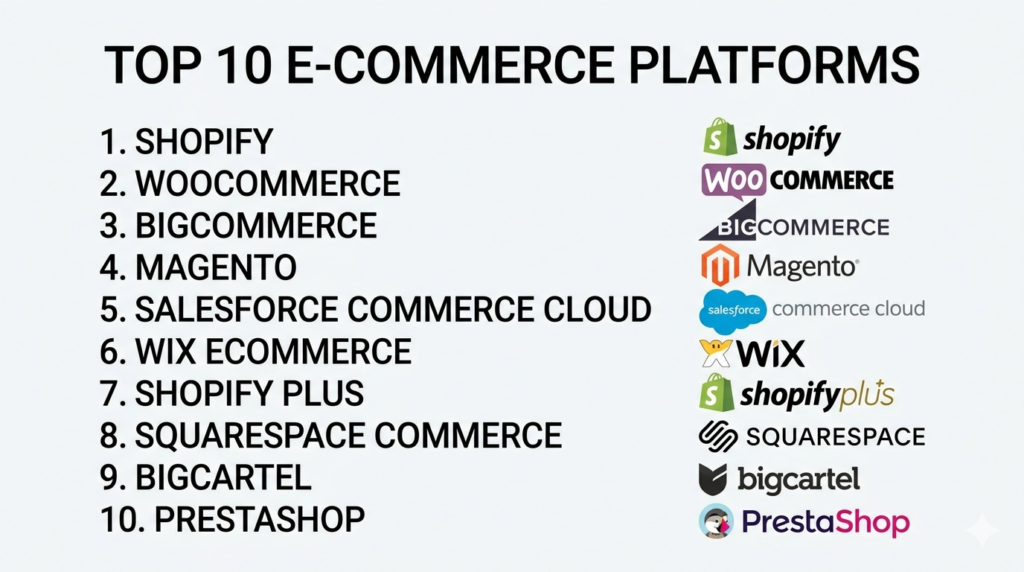
Introduction
E‑commerce platforms are software systems that enable businesses to sell products and services online. These platforms provide the foundational tools for building storefronts, managing catalogs, processing payments, tracking orders, handling customer data, and scaling digital commerce operations. In with omnichannel retailing, personalization expectations, and global competition rising, choosing the right e‑commerce platform is foundational to online success.
Modern e‑commerce platforms support multi‑device shopping experiences, integrate with ERP and POS systems, and deliver analytics that inform merchandising, marketing, and fulfillment. They also enable sellers of all sizes — from solopreneurs to global enterprises — to launch, manage, and optimize online businesses with varying degrees of customization, automation, and scalability.
Real‑world use cases:
- A startup launching its first online store with a theme and built‑in payment processing.
- A mid‑market fashion brand managing a large catalog with integrated inventory and promotions.
- An enterprise retailer connecting online storefronts with brick‑and‑mortar POS, ERP, and marketplaces.
- A direct‑to‑consumer brand leveraging personalization and subscription commerce.
- A niche retailer scaling internationally with localized storefronts and payments.
What buyers should evaluate (criteria):
- Ease of setup and customizability
- Catalog and inventory management
- Payment gateway support and fees
- SEO and marketing features
- Omnichannel integrations (POS, marketplaces)
- Scalability and performance
- Security and compliance (PCI, GDPR)
- Analytics and reporting
- Mobile and headless commerce support
- Total cost of ownership
Best for: Brands and retailers of all sizes, marketplaces, entrepreneurs, and B2B/B2C sellers seeking to transact online.
Not ideal for: Organizations focused solely on in‑person commerce with no online presence or businesses requiring bespoke proprietary commerce stacks without platform support.
Key Trends in E‑commerce Platforms
- Headless and composable commerce separating front‑end experience from backend commerce logic.
- AI‑driven personalization to tailor search, recommendations, and marketing experiences.
- Omnichannel commerce connecting online, mobile, social, and in‑store touchpoints.
- Subscription and recurring revenue support built into core commerce.
- Globalization features including multi‑currency, tax, localization, and compliance.
- Marketplace integrations enabling sellers to expand across ecosystems.
- Mobile commerce and progressive web apps (PWAs) for fast, app‑like buyer experiences.
- API‑first and extensibility for custom integrations and partner ecosystems.
- Enhanced analytics and insights for conversion optimization and customer segmentation.
- Flexible pricing models scaling from SaaS tiers to enterprise revenue‑share approaches.
How We Selected These Tools (Methodology)
- Evaluated market adoption and growth across SMB and enterprise sellers.
- Assessed core commerce features including catalogs, checkout, and order management.
- Reviewed integrations with payments, marketplaces, POS, and marketing tools.
- Considered extensibility via APIs, plugins, and developer ecosystems.
- Analyzed pricing models and total cost of ownership.
- Examined scalability and performance under peak loads.
- Evaluated security, compliance, and platform governance.
- Reviewed personalization and AI‑driven capabilities.
- Checked reporting, insights, and analytics depth.
- Considered support, documentation, and community strength.
Top 10 E‑commerce Platforms
1 — Shopify
Short description: Shopify is a leading cloud‑based commerce platform known for ease of use, rapid store setup, and a comprehensive app ecosystem. It serves SMBs to enterprise businesses with omnichannel capabilities and integrated payments.
Key Features
- Drag‑and‑drop store builder
- Built‑in payment processing (Shopify Payments)
- App marketplace for extensions
- Mobile management and POS integration
- Multi‑channel selling (social, marketplaces)
- Analytics and reporting
Pros
- Easy to launch and scale
- Large ecosystem of apps and partners
Cons
- Transaction fees outside Shopify Payments
- Some advanced features require third‑party apps
Platforms / Deployment
- Web / Mobile
- Cloud
Security & Compliance
- PCI‑DSS compliance
- Encryption, role‑based admin access
Integrations & Ecosystem
Integrates with:
- Payment gateways
- POS and inventory systems
- Marketplaces and marketing tools
Support & Community
24/7 support, extensive docs, and a large community.
2 — WooCommerce
Short description: WooCommerce is an open‑source e‑commerce plugin for WordPress, enabling flexible, customizable online stores with complete control over code and hosting.
Key Features
- Fully customizable WordPress plugin
- Large extension marketplace
- Payment and shipping integrations
- Inventory and order management
- Developer‑friendly hooks and APIs
- SEO friendly via WordPress
Pros
- Highly customizable
- No platform fees
Cons
- Requires hosting and maintenance
- Complexity grows with scale
Platforms / Deployment
- Web
- Self‑hosted
Security & Compliance
- Depends on hosting and extensions
- GDPR support via plugins
Integrations & Ecosystem
Extensive plugins for:
- Payments
- Marketing
- Analytics
- Shipping
Support & Community
Large open‑source community; vendor and freelancer ecosystem.
3 — BigCommerce
Short description: BigCommerce is a SaaS commerce platform with enterprise‑ready features, strong API support, and native functionality for B2C and B2B sellers.
Key Features
- Headless commerce support
- Multi‑storefront capabilities
- B2B features (quotes, roles)
- SEO and built‑in marketing tools
- Marketplace integrations
- Robust APIs
Pros
- Strong native features
- Good for complex catalogs
Cons
- Pricing tiers based on revenue thresholds
- Learning curve for advanced features
Platforms / Deployment
- Web
- Cloud
Security & Compliance
- PCI‑DSS compliance
- Encryption and RBAC
Integrations & Ecosystem
Connects to:
- CRM, ERP
- POS
- Marketing and analytics tools
Support & Community
24/7 support, documentation, and partner ecosystem.
4 — Magento (Adobe Commerce)
Short description: Magento (Adobe Commerce) is a powerful open‑source/enterprise commerce platform known for flexibility, customization, and scalability for global enterprises.
Key Features
- Highly customizable catalog and pricing
- Multi‑store and multi‑currency
- B2B commerce features
- Advanced promotions engine
- APIs for headless and PWA
- Marketplace and internationalization
Pros
- Extremely flexible and scalable
- Strong enterprise capabilities
Cons
- Requires development resources
- Higher TCO
Platforms / Deployment
- Web
- Cloud / Self‑hosted
Security & Compliance
- PCI‑DSS compliance
- Enterprise access controls
Integrations & Ecosystem
Integrates with:
- ERP and CRM
- Payment providers
- Marketing automation tools
Support & Community
Large developer community; enterprise support via Adobe.
5 — Salesforce Commerce Cloud
Short description: Salesforce Commerce Cloud is an enterprise SaaS solution offering unified commerce across channels with AI‑driven personalization and deep CRM integration.
Key Features
- AI personalization (Einstein)
- Unified online and mobile commerce
- Omnichannel order management
- Marketplace and partner integrations
- Promotion and pricing engines
- Scalability and security
Pros
- Enterprise scalability and CRM linkage
- Strong personalization and AI
Cons
- Premium pricing
- Implementation complexity
Platforms / Deployment
- Web
- Cloud
Security & Compliance
- Enterprise security, encryption
- GDPR and regional compliance
Integrations & Ecosystem
Works with:
- Salesforce CRM
- Marketing and service clouds
- POS and fulfillment
Support & Community
Enterprise support and global community.
6 — Wix eCommerce
Short description: Wix eCommerce provides an intuitive website builder with e‑commerce features ideal for small to mid‑market sellers requiring quick setup and creative control.
Key Features
- Drag‑and‑drop site builder
- Built‑in payments
- Mobile‑optimized storefronts
- SEO and email marketing tools
- Inventory and order tracking
- Templates and design flexibility
Pros
- Very user‑friendly
- Affordable for small businesses
Cons
- Limited advanced enterprise features
- Less extensible than other platforms
Platforms / Deployment
- Web / Mobile
- Cloud
Security & Compliance
- PCI‑DSS compliance
- Encryption
Integrations & Ecosystem
Integrates with:
- Payments
- Shipping and fulfillment
- Marketing tools
Support & Community
Support center, tutorials, and forums.
7 — Shopify Plus
Short description: Shopify Plus is the enterprise version of Shopify offering advanced automation, multi‑store management, and high scalability.
Key Features
- Multi‑store and internationalization
- Advanced automation (Flow)
- API and integration support
- Dedicated account and support
- Headless commerce options
- High security and performance
Pros
- Enterprise scalability with ease of use
- Strong ecosystem
Cons
- Premium pricing
- Some enterprise features need custom apps
Platforms / Deployment
- Web / Mobile
- Cloud
Security & Compliance
- PCI‑DSS compliance
- Enterprise encryption
Integrations & Ecosystem
Connects to:
- ERP and POS
- Marketing tools
- Custom APIs
Support & Community
Dedicated enterprise support and community.
8 — Squarespace Commerce
Short description: Squarespace Commerce offers visually focused e‑commerce with integrated design tools for small to mid‑market brands looking to combine aesthetics and commerce.
Key Features
- Built‑in ecommerce templates
- Payment and inventory management
- SEO and marketing tools
- Order tracking and customer management
- Mobile‑optimized storefronts
- Analytics dashboards
Pros
- Beautiful design and ease of use
- Integrated marketing tools
Cons
- Not as scalable for large catalogs
- Limited advanced commerce features
Platforms / Deployment
- Web
- Cloud
Security & Compliance
- PCI‑DSS compliance
- Encryption
Integrations & Ecosystem
Integrates with:
- Payment systems
- Shipping tools
- Marketing platforms
Support & Community
Support center and community resources.
9 — BigCartel
Short description: BigCartel is a lightweight e‑commerce platform tailored for artists and creators with simple store needs, modest catalogs, and minimal setup.
Key Features
- Simple store creation
- Basic inventory and order tracking
- Custom domain and branding
- Payment processing
- Mobile access
Pros
- Very easy to set up
- Affordable for small sellers
Cons
- Limited enterprise features
- Minimal third‑party integrations
Platforms / Deployment
- Web / Mobile
- Cloud
Security & Compliance
- PCI‑DSS compliance
- Encryption
Integrations & Ecosystem
Integrates with:
- Payments
- Social selling tools
- Analytics basic integrations
Support & Community
Documentation, tutorials, and creator community.
10 — PrestaShop
Short description: PrestaShop is an open‑source e‑commerce platform offering customizable features and a large marketplace of modules and themes.
Key Features
- Open‑source flexibility
- Large marketplace of modules
- Multi‑language and multi‑currency
- SEO and marketing tools
- Catalog and order management
Pros
- Free core platform
- Highly customizable
Cons
- Requires hosting and technical maintenance
- Extensions can add cost
Platforms / Deployment
- Web
- Self‑hosted
Security & Compliance
- Depends on hosting and modules
- GDPR support
Integrations & Ecosystem
Supported modules for:
- Payments
- Shipping
- Marketing and analytics
Support & Community
Large open‑source community and documentation.
Comparison Table (Top 10)
| Tool Name | Best For | Platform(s) Supported | Deployment | Standout Feature | Public Rating |
|---|---|---|---|---|---|
| Shopify | SMB to enterprise | Web / Mobile | Cloud | Fast setup & ecosystem | N/A |
| WooCommerce | Custom stores | Web | Self‑hosted | Full control & extensions | N/A |
| BigCommerce | B2B & multi‑store | Web / Mobile | Cloud | Built‑in complex commerce | N/A |
| Magento | Enterprise flexibility | Web | Cloud / Self‑hosted | Custom enterprise commerce | N/A |
| Salesforce Commerce Cloud | Enterprise omnichannel | Web | Cloud | CRM + AI personalization | N/A |
| Wix eCommerce | Small & creative brands | Web / Mobile | Cloud | Ease of use | N/A |
| Shopify Plus | Enterprise growth | Web / Mobile | Cloud | Scalable enterprise features | N/A |
| Squarespace Commerce | Design‑centric sellers | Web | Cloud | Built‑in design tools | N/A |
| BigCartel | Creators & artists | Web / Mobile | Cloud | Simple seller focus | N/A |
| PrestaShop | Custom open‑source | Web | Self‑hosted | Modular customization | N/A |
Evaluation & Scoring of E‑commerce Platforms
| Tool Name | Core (25%) | Ease (15%) | Integrations (15%) | Security (10%) | Performance (10%) | Support (10%) | Value (15%) | Weighted Total (0–10) |
|---|---|---|---|---|---|---|---|---|
| Shopify | 9 | 9 | 9 | 9 | 9 | 9 | 8 | 9.0 |
| WooCommerce | 8 | 7 | 9 | 8 | 8 | 8 | 9 | 8.2 |
| BigCommerce | 9 | 8 | 9 | 9 | 9 | 8 | 8 | 8.6 |
| Magento | 10 | 6 | 10 | 9 | 9 | 8 | 7 | 8.4 |
| Salesforce Commerce Cloud | 10 | 7 | 10 | 10 | 9 | 9 | 7 | 8.7 |
| Wix eCommerce | 7 | 9 | 8 | 9 | 8 | 8 | 9 | 8.3 |
| Shopify Plus | 10 | 8 | 10 | 10 | 9 | 9 | 8 | 9.0 |
| Squarespace Commerce | 7 | 9 | 8 | 9 | 8 | 8 | 8 | 8.1 |
| BigCartel | 6 | 10 | 6 | 9 | 7 | 7 | 9 | 7.6 |
| PrestaShop | 8 | 7 | 8 | 8 | 8 | 7 | 9 | 8.0 |
Interpreting scores: Higher totals reflect strong balance across commerce features, ease of use, integrations, security, performance, support, and value. These relative scores help match platform capabilities with retailer priorities.
Which E‑commerce Platform Is Right for You?
Solo / Freelancer / Micro‑Brand
Platforms like BigCartel, Wix eCommerce, and Squarespace Commerce provide simple, beautiful stores with minimal setup and cost.
SMB / Growing Brands
Shopify, BigCommerce, and WooCommerce give flexible, scalable commerce with strong integrations and marketing tools.
Mid‑Market
WooCommerce, BigCommerce, and Magento balance extensibility and control for larger catalogs or multi‑store needs.
Enterprise
Shopify Plus and Salesforce Commerce Cloud deliver enterprise scale, APIs, personalization, and global performance.
Budget vs Premium
Lower‑cost options like Wix, Squarespace, and BigCartel are ideal for simple needs; premium suites like Salesforce Commerce Cloud offer rich enterprise capabilities.
Feature Depth vs Ease of Use
Magento provides unmatched customization for developers; Shopify prioritizes ease of use and quick launches.
Integrations & Scalability
Platforms with rich ecosystems (Shopify, BigCommerce, Salesforce) support marketplaces, POS, ERP, and marketing automation for complex operations.
Security & Compliance Needs
Enterprise platforms ensure PCI‑DSS compliance, encryption, and robust access controls, essential for high‑volume, global commerce.
Frequently Asked Questions (FAQs)
1. How much does an e‑commerce platform cost?
Costs vary from free or low‑cost tiers (BigCartel, WooCommerce self‑hosting) to subscription SaaS tiers (Shopify, BigCommerce) to premium enterprise pricing (Salesforce Commerce Cloud, Shopify Plus).
2. Can I sell on marketplaces with these platforms?
Yes — most platforms integrate with marketplaces like Amazon, eBay, and social commerce channels.
3. What payment methods are supported?
Popular platforms support credit cards, digital wallets, Buy Now Pay Later, and local methods via integrated gateways.
4. Do these platforms support mobile commerce?
Yes — responsive themes and PWAs ensure excellent mobile shopping experiences.
5. Can I customize my storefront?
Platforms range from simple template edits (Wix, Squarespace) to full custom development (Magento, WooCommerce).
6. Are e‑commerce platforms secure?
Top platforms are PCI‑DSS compliant, use encryption, and provide security best practices to protect customer data.
7. Can I integrate with my POS?
Yes — many platforms offer native or third‑party integrations with POS systems for omnichannel commerce.
8. Do these platforms handle SEO?
Yes — features include customizable URLs, metadata, sitemaps, and SEO tools to drive organic traffic.
9. How do I manage shipping and fulfillment?
Platforms support integrations with shipping carriers, fulfillment services, and back‑office logistics tools.
10. Can these platforms scale with my business?
Yes — options like Shopify Plus and Salesforce Commerce Cloud are designed for high volume and global expansion.
Conclusion
Selecting the right e‑commerce platform depends on business size, catalog complexity, growth trajectory, integrations, and budget. Shopify and Shopify Plus balance ease of use with scalability, while BigCommerce and Salesforce Commerce Cloud offer enterprise‑grade features. WooCommerce and Magento deliver deep customization for technical teams. For creatives and micro‑brands, BigCartel, Wix, and Squarespace Commerce provide fast, affordable solutions. Begin by shortlisting platforms based on your business needs, conduct pilots with real catalogs and workflows, and validate integrations with payments, POS, and ERP. A thoughtful choice of e‑commerce platform enables seamless online operations, drives sales, and supports long‑term digital growth.

The examples and explanations are very relatable.
Helpful content presented in a simple and professional way.