MOTOSHARE 🚗🏍️
Rent Bikes & Cars Directly from Owners
Motoshare connects vehicle owners with people who need bikes and cars on rent. Owners earn from idle vehicles, and renters get flexible ride options.
Visit Motoshare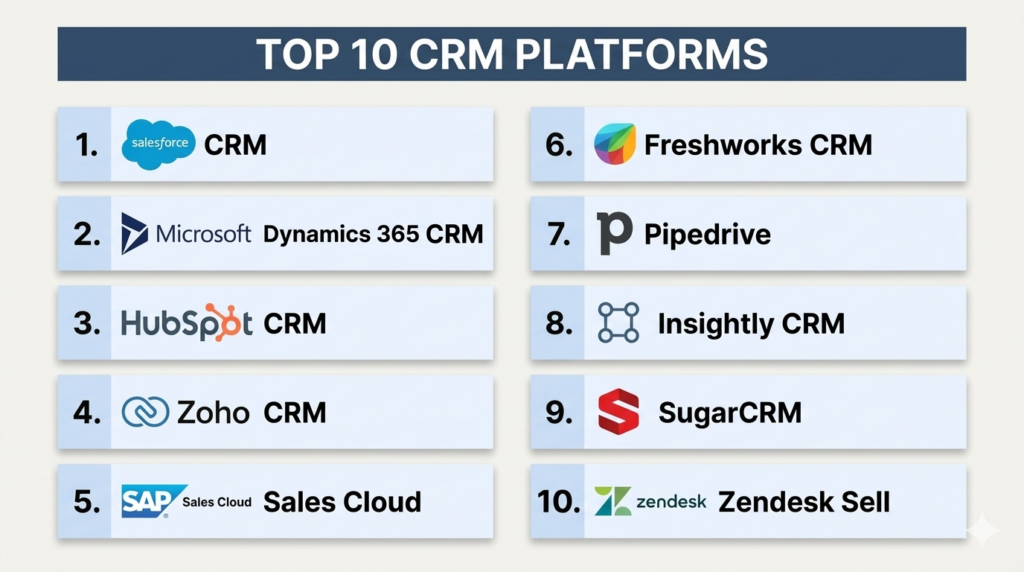
Introduction
CRM Platforms (Customer Relationship Management) are software solutions designed to centralize and streamline how businesses manage interactions with customers, prospects, and partners. At their core, CRM systems capture and organize data related to contacts, accounts, sales opportunities, activities, and communications. More advanced CRM platforms also deliver sales force automation, marketing integration, customer service workflows, analytics, and extensibility capabilities that help organizations drive revenue, improve retention, and enhance customer experiences.
In CRM platforms are more essential than ever. Businesses compete not just on product quality but on how well they understand, engage, and serve their customers. CRM now powers customer lifecycle management, real‑time insights, automated workflows, predictive analytics, cross‑channel communications, AI‑assisted suggestions, and seamless integrations with other business systems. Whether you are a small business seeking a simple contact manager or an enterprise needing a unified revenue platform, CRM is often the backbone of modern customer‑centric operations.
Real‑world use cases include:
- Tracking sales pipelines and forecasting revenue.
- Capturing and nurturing leads from multiple channels.
- Automating marketing campaigns tied to customer behavior.
- Providing customer support and ticketing workflows.
- Leveraging analytics and dashboards to optimize revenue priorities.
Evaluation Criteria for Buyers:
- Contact and account management
- Lead and opportunity pipeline automation
- Sales forecasting and analytics
- Marketing automation integration
- Service and support workflows
- Mobile and remote accessibility
- Integration ecosystem (ERP, billing, marketing, support)
- Customization and process automation
- Security, compliance, and access controls
- Ease of onboarding and support
Best for: Sales leaders (VPs of Sales, CROs), marketing teams, customer success and support leaders, revenue operations, and business executives in SMBs, mid‑market, and enterprises aiming to improve customer engagement and revenue performance.
Not ideal for: Very niche use cases that require highly specialized vertical workflows where bespoke systems might be better.
Key Trends in CRM Platforms
- AI‑Augmented Workflows: Predictive lead scoring, deal prioritization, next‑best‑action suggestions, and automated insights.
- Unified CX (Customer Experience) Platforms: Synchronized sales, marketing, and customer service data in one place.
- Conversational CRM: Integrated support for chat, messaging apps, social channels, and conversational AI.
- Low‑Code/No‑Code Customization: Admins can automate workflows and processes without heavy IT support.
- Embedded Analytics & BI: Dashboards, forecasts, and real‑time KPIs accessible within CRM.
- Mobile‑First CRM: Enhanced mobile apps with offline data sync for field teams.
- API‑First & Extensible Ecosystems: Seamless integration with ERP, billing, support desks, and CPQ systems.
- GDPR & Privacy‑Centric Data Governance: Tools embedded to manage consent, compliance, and secure data access.
- Subscription & Recurring Revenue Workflows: Built‑in revenue operations support for SaaS and subscription businesses.
- Cloud & Hybrid Deployments: Scalability with global availability and hybrid models for data residency.
How We Selected These Tools (Methodology)
- Evaluated core CRM features (contacts, accounts, pipeline, forecasting).
- Assessed automation capabilities for sales, marketing, and customer service.
- Reviewed analytics and dashboards maturity and custom report builders.
- Verified integration support with ERP, billing, CPQ, support desks, and marketing automation.
- Considered AI and automation features that enhance productivity.
- Checked mobile accessibility and offline capabilities.
- Analyzed security posture, including encryption, role‑based access, and audit trails.
- Assessed scalability from small businesses to enterprise.
- Reviewed ease of use and onboarding experience.
- Evaluated support, documentation, and ecosystem strength.
Top 10 CRM Platforms
#1 — Salesforce CRM
Short description:
Salesforce CRM (Sales Cloud) is one of the most widely adopted CRM platforms globally, offering comprehensive sales, service, marketing, and analytics capabilities — backed by a massive ecosystem and industry‑leading extensibility.
Key Features
- Lead, contact, and opportunity management
- Sales forecasting and pipeline dashboards
- Custom workflows and automation
- Einstein AI for predictions and recommendations
- AppExchange integration ecosystem
Pros
- Extremely scalable and customizable
- Strong AI and analytics
- Vast partner and app marketplace
Cons
- Steeper learning curve
- Premium pricing, especially enterprise
Platforms / Deployment
- Web / iOS / Android / Cloud
Security & Compliance
- Enterprise RBAC, encryption, audit logs, compliance controls
Integrations & Ecosystem
- Marketing automation
- ERP and billing
- Support and analytics
Support & Community
- Salesforce Support, Trailhead training, global community
#2 — Microsoft Dynamics 365 CRM
Short description:
Dynamics 365 CRM combines CRM and ERP capabilities in a unified Microsoft ecosystem with strong integration to Office 365, Teams, Power BI, and other business tools — ideal for organizations standardized on Microsoft technologies.
Key Features
- Lead/opportunity pipeline and account management
- AI relationship insights
- Integrated sales and service modules
- Power Platform integration for workflows and analytics
- Seamless Office 365/Teams collaboration
Pros
- Deep Microsoft ecosystem integration
- Strong security and compliance
- Scalable for mid‑market to enterprise
Cons
- Configuration and onboarding can be complex
- Smaller marketplace compared to Salesforce
Platforms / Deployment
- Web / iOS / Android / Cloud
Security & Compliance
- Enterprise identity controls, RBAC, encryption
Integrations & Ecosystem
- Office 365, Power Platform
- Dynamics ERP
Support & Community
- Microsoft support
#3 — HubSpot CRM
Short description:
HubSpot CRM is widely used by SMBs and scaling enterprises for its intuitive interface, zero‑cost entry point, deep marketing automation integration, and transparent pricing for add‑ons.
Key Features
- Deal pipelines and contact management
- Email sequencing, tracking, and automation
- Conversational bots and live chat
- Reporting dashboards
- Integration with HubSpot Marketing and Service Hubs
Pros
- Easy to adopt and configure
- Marketing + sales alignment
- Free tier with valuable base features
Cons
- Advanced enterprise features limited
- Customization less deep versus legacy platforms
Platforms / Deployment
- Web / iOS / Android / Cloud
Security & Compliance
- Encryption, role access
Integrations & Ecosystem
- Marketing, CMS, support
Support & Community
- HubSpot Academy and community
#4 — Zoho CRM
Short description:
Zoho CRM offers a cost‑effective yet powerful CRM platform with sales automation, AI insights, multichannel engagement, and strong customization — ideal for SMBs and mid‑market companies seeking value.
Key Features
- Lead scoring and assignment
- Workflow automation
- Zoho AI (Zia) insights
- Multichannel communication (email, chat, social)
- Built‑in analytics
Pros
- Affordable pricing
- Good feature set for SMBs/Mid‑market
- Part of the broader Zoho suite
Cons
- Some features behind higher tiers
- Interface can feel cluttered
Platforms / Deployment
- Web / iOS / Android / Cloud
Security & Compliance
- RBAC, encryption
Integrations & Ecosystem
- Zoho suite apps
- Third‑party connectors
Support & Community
- Support docs, forums
#5 — SAP Sales Cloud
Short description:
Part of SAP Customer Experience (CX) suite, SAP Sales Cloud provides sales force automation, quoting, territory planning, pipeline analytics, and enterprise‑grade CRM capabilities with deep ERP connectivity.
Key Features
- Lead and opportunity management
- Territory and quota planning
- Sales performance analytics
- Integration with SAP ERP
- Configurable sales processes
Pros
- Deep integration with SAP ecosystem
- Scalable enterprise solution
- Comprehensive analytics
Cons
- Implementation can be complex
- Higher total cost of ownership
Platforms / Deployment
- Web / Cloud
Security & Compliance
- Enterprise identity controls
Integrations & Ecosystem
- SAP CX/ERP stack
Support & Community
- SAP support
#6 — Freshworks CRM (formerly Freshsales)
Short description:
Freshworks CRM provides intuitive sales force automation with built‑in phone, email, activity capture, workflow automation, AI scoring, and reporting — designed for teams seeking simplicity with power.
Key Features
- Contact & pipeline management
- Built‑in phone & email
- AI lead scoring
- Workflow automation
- Reporting dashboards
Pros
- Easy to configure
- All‑in‑one sales workflows
- Good value
Cons
- Mid‑market focus — not as deep for large enterprise
- Analytics less advanced than legacy CRMs
Platforms / Deployment
- Web / iOS / Android / Cloud
Security & Compliance
- Encryption, RBAC
Integrations & Ecosystem
- Freshworks suite
Support & Community
- Support docs
#7 — Pipedrive
Short description:
Pipedrive focuses on visual sales pipelines and activity‑based selling, providing simple and intuitive CRM workflows that help reps stay focused on deals and follow‑ups.
Key Features
- Visual pipeline views
- Activity reminders and automation
- Reporting and goal tracking
- Customizable stages and fields
- Integration marketplace
Pros
- Very easy to use
- Fast onboarding
- Great for sales‑centric teams
Cons
- Not enterprise‑grade
- Analytics limited versus heavy suites
Platforms / Deployment
- Web / iOS / Android / Cloud
Security & Compliance
- Encryption, RBAC
Integrations & Ecosystem
- CRM and revenue tools
Support & Community
- Support docs
#8 — Insightly CRM
Short description:
Insightly CRM provides SFA and project‑centric CRM features that help teams manage relationships, pipeline, and post‑sales projects — ideal for service‑oriented businesses.
Key Features
- Lead/opportunity management
- Activity tracking
- Workflow automation
- Project integration
- Reporting dashboards
Pros
- Balanced CRM + project workflows
- Easy to adopt
- Affordable
Cons
- Less advanced forecasting
- Analytics moderate
Platforms / Deployment
- Web / iOS / Android / Cloud
Security & Compliance
- Encryption, role access
Integrations & Ecosystem
- CRM and project tools
Support & Community
- Support center
#9 — SugarCRM
Short description:
SugarCRM offers flexible CRM workflows with sales automation, AI insights, multichannel interactions, and on‑prem/cloud deployment options — appealing to organizations needing customization.
Key Features
- Lead/opportunity pipelines
- Predictive analytics
- Customer journey automation
- Channel support (SMS/email)
- Flexible deployment
Pros
- Strong customization
- Flexible deployment models
- Enterprise features
Cons
- Setup complexity
- Not as popular as legacy suites
Platforms / Deployment
- Web / Cloud / On‑prem
Security & Compliance
- RBAC, encryption
Integrations & Ecosystem
- CRM connectors
Support & Community
- Support docs
#10 — Zendesk Sell
Short description:
Zendesk Sell (formerly Base CRM) provides sales force automation with activity tracking, pipeline views, email/SMS logging, and analytics — tightly integrated with Zendesk support workflows.
Key Features
- Sales pipelines and reports
- Activity tracking
- Email/SMS logging
- Mobile CRM
- Support integration
Pros
- Tight alignment with support
- Easy to use
- Good for SMBs
Cons
- Advanced features limited
- Forecasting moderate
Platforms / Deployment
- Web / iOS / Android / Cloud
Security & Compliance
- Encryption, role access
Integrations & Ecosystem
- Zendesk stack
Support & Community
- Zendesk support
Comparison Table (Top 10 CRM Platforms)
| Tool Name | Best For | Platforms Supported | Deployment | Standout Feature | Public Rating |
|---|---|---|---|---|---|
| Salesforce CRM | Enterprise scale | Web,iOS,Android | Cloud | Einstein AI + ecosystem | N/A |
| Microsoft Dynamics 365 CRM | Microsoft ecosystem | Web,iOS,Android | Cloud | Office & BI integration | N/A |
| HubSpot CRM | SMB & scaling | Web,iOS,Android | Cloud | Free base + marketing | N/A |
| Zoho CRM | Affordable mid‑market | Web,iOS,Android | Cloud | AI assistant & value | N/A |
| SAP Sales Cloud | Enterprise ops | Web | Cloud | ERP integration | N/A |
| Freshworks CRM | SMB sales teams | Web,iOS,Android | Cloud | Built‑in communications | N/A |
| Pipedrive | Sales‑centric SMB | Web,iOS,Android | Cloud | Visual pipelines | N/A |
| Insightly CRM | Project‑centric | Web,iOS,Android | Cloud | CRM + projects | N/A |
| SugarCRM | Customizable CRM | Web,Cloud/On‑prem | Hybrid | Flexible deployment | N/A |
| Zendesk Sell | Sales + support alignment | Web,iOS,Android | Cloud | Support connection | N/A |
Evaluation & Scoring of CRM Platforms
| Tool Name | Core (25%) | Ease (15%) | Integrations (15%) | Security (10%) | Performance (10%) | Support (10%) | Value (15%) | Weighted Total (0–10) |
|---|---|---|---|---|---|---|---|---|
| Salesforce CRM | 9 | 7 | 9 | 9 | 9 | 9 | 7 | 8.4 |
| Microsoft Dynamics 365 CRM | 8 | 7 | 8 | 9 | 8 | 8 | 7 | 8.0 |
| HubSpot CRM | 8 | 9 | 8 | 8 | 8 | 8 | 8 | 8.2 |
| Zoho CRM | 7 | 8 | 8 | 8 | 7 | 8 | 9 | 8.0 |
| SAP Sales Cloud | 8 | 7 | 8 | 9 | 8 | 8 | 7 | 7.9 |
| Freshworks CRM | 7 | 9 | 7 | 8 | 7 | 8 | 8 | 7.9 |
| Pipedrive | 7 | 9 | 8 | 8 | 7 | 8 | 8 | 7.9 |
| Insightly CRM | 7 | 8 | 7 | 8 | 7 | 7 | 8 | 7.6 |
| SugarCRM | 7 | 7 | 7 | 8 | 7 | 7 | 8 | 7.5 |
| Zendesk Sell | 7 | 8 | 7 | 8 | 7 | 8 | 8 | 7.8 |
Interpretation: Higher weighted totals reflect balanced CRM capabilities, integration reach, user experience, and value.
Which CRM Platform Is Right for You?
Solo / Small Sales Teams
HubSpot CRM, Pipedrive, and Zendesk Sell provide intuitive pipelines, easy onboarding, and affordable plans.
SMB & Scaling Teams
For growing businesses, Zoho CRM, HubSpot CRM, or Freshworks CRM offer strong feature sets, automation, and cross‑channel communications.
Mid‑Market & Microsoft Stack
Organizations embedded in Microsoft technologies benefit from Microsoft Dynamics 365 CRM for seamless collaboration and BI integration.
Enterprise & Complex Processes
Global enterprises with extensive customization and analytics needs will find Salesforce CRM or SAP Sales Cloud compelling for scalability and depth.
CRM + Support Alignment
If customer support alignment is key, Zendesk Sell’s integration with Zendesk support workflows offers a unique connection between revenue and service metrics.
Frequently Asked Questions (FAQs)
1. What is CRM software?
CRM software centralizes customer interactions, sales pipelines, performance data, and engagement workflows to help businesses build lasting customer relationships and improve revenue outcomes.
2. Do CRM platforms include sales automation?
Yes — most CRM systems include automation tools that streamline lead capture, contact management, task automation, and follow‑ups.
3. Can CRM help with forecasting?
Yes — many CRMs provide forecasting tools and dashboards that help sales leaders predict revenue based on pipeline data.
4. Are CRM systems mobile?
Most modern CRMs offer mobile applications that let sales professionals update deals, log activities, and access customer context on the go.
5. Can CRM platforms integrate with other systems?
Yes — CRMs commonly integrate with ERP, billing, support desks, marketing automation, and analytics tools for enterprise workflows.
6. Do CRM tools support marketing activities?
Many modern CRM platforms include marketing automation or integrate closely with marketing hubs for unified customer engagement.
7. How do CRMs support customer service?
CRMs often include or integrate with support ticketing, knowledge bases, and self‑service portals to deliver a unified customer experience.
8. Are CRM platforms secure?
Leading CRMs implement encryption, role‑based access controls, compliance monitoring, and audit trails to protect customer data.
9. Can CRM systems scale?
Yes — CRM platforms range from SMB‑friendly to enterprise‑grade with extensible modules and custom workflows.
10. How long does CRM implementation take?
Implementation varies: small teams can launch in weeks; enterprise setups with custom workflows and integrations may take months.
Conclusion
CRM platforms have become the central nervous system for customer‑centric organizations, driving sales efficiency, marketing alignment, customer support, and executive insights. Whether a business seeks a simple, cost‑effective solution like HubSpot CRM or Zoho CRM, or a deep enterprise‑grade ecosystem like Salesforce CRM and Microsoft Dynamics 365, there is a platform that fits every scale and strategy. Evaluate your CRM choices based on integration needs, security standards, automation goals, and the overall customer experience you want to deliver — a great CRM not only organizes data but drives growth and operational excellence.

Great explanation, very easy to understand.
Very interesting article
Very clean and professional presentation overall.
Thanks for breaking this topic down so clearly.