MOTOSHARE 🚗🏍️
Rent Bikes & Cars Directly from Owners
Motoshare connects vehicle owners with people who need bikes and cars on rent. Owners earn from idle vehicles, and renters get flexible ride options.
Visit Motoshare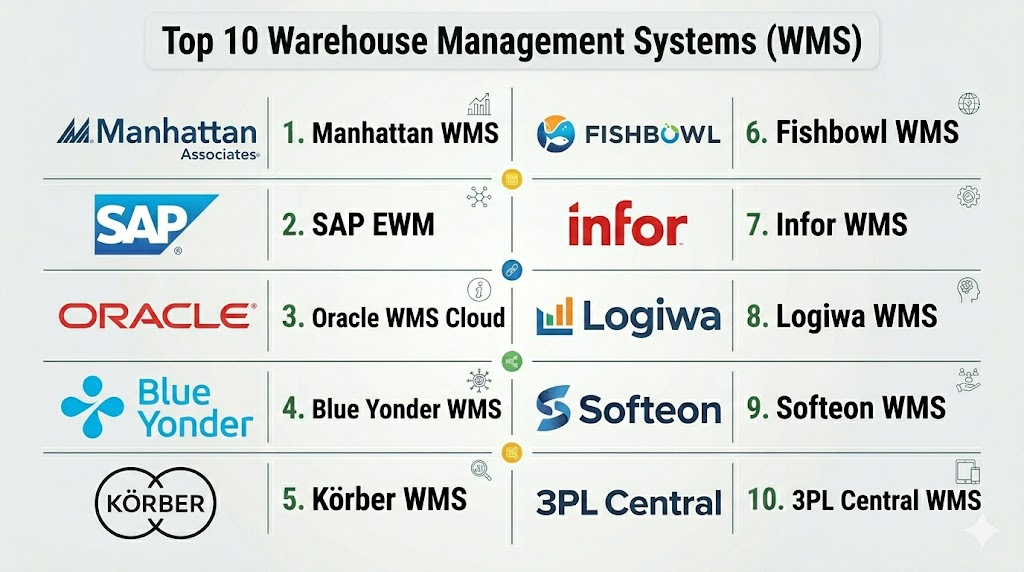
Introduction
Warehouse Management Systems (WMS) are software platforms designed to optimize warehouse operations, including receiving, put‑away, picking, packing, shipping, returns, and inventory tracking. A WMS provides real‑time visibility into stock locations, enhances labor productivity, reduces errors, and ensures that orders flow smoothly from the warehouse floor into fulfillment channels. Modern WMS solutions integrate with ERP, OMS, TMS (transportation management systems), and automation tools to orchestrate operations at scale.
In today’s world of omnichannel fulfillment, same‑day delivery expectations, and complex supply chains, an effective WMS is essential to maintain accuracy, cut costs, meet service‑level agreements, and improve customer satisfaction. Whether used in retail, manufacturing, third‑party logistics (3PL), or distribution centers, WMS platforms are the backbone that drives warehouse operational excellence.
Real‑world use cases include:
- Managing receiving and put‑away flows in high‑volume distribution centers.
- Coordinating batch, wave, and zone picking across multiple zones.
- Orchestrating cross‑dock and return processes with minimal errors.
- Tracking lot, serial, and expiration data for compliance industries.
- Integrating with automated material handlers, conveyors, and robotics.
Evaluation Criteria for Buyers:
- Real‑time inventory and location tracking
- Support for barcode, RFID, and mobile scanning
- Picking/packing/put‑away automation and optimization
- Labor management and task interleaving
- Integration with ERP, OMS, TMS, and automation
- Multi‑site and multi‑warehouse coordination
- Returns and reverse logistics support
- Analytics, dashboards, and KPI tracking
- Scalability for peak demand (seasonal spikes)
- Security, audit trails, and access controls
Best for: 3PL providers, distribution centers, retailers, manufacturers, and e‑commerce brands with complex fulfillment and inventory operations.
Not ideal for: Very small storage environments with minimal operational complexity that can manage stock manually.
Key Trends in Warehouse Management Systems (WMS)
- Robotics and automation integration (AMRs, conveyors, AS/RS).
- Real‑time location systems (RTLS) with RFID and BLE tags.
- Mobile‑first scanning and task workflows for warehouse staff.
- AI/ML‑driven labor and pick path optimization.
- Cloud‑native WMS systems with global scaling and low latency.
- Integration with OMS, TMS, ERP, and automation APIs.
- Voice picking and augmented guidance for productivity.
- Returns and reverse logistics orchestration.
- Multi‑client and 3PL billing support.
How We Selected These Tools (Methodology)
- Evaluated feature completeness in inventory tracking, picking, and optimization.
- Assessed integration breadth with ERP, OMS, TMS, automation, and robotics.
- Considered scalability for small warehouses to global DC networks.
- Reviewed mobile and scanning workflow support.
- Verified analytics, dashboards, and KPI monitoring.
- Checked security posture and role‑based access models.
- Evaluated ease of onboarding and operational impact.
- Reviewed vendor support, documentation, and community strength.
Top 10 Warehouse Management Systems (WMS)
#1 — Manhattan WMS
Short description:
Manhattan WMS is an enterprise‑grade warehouse management suite designed for high‑volume, complex distribution environments with advanced optimization, labor tracking, and automation support.
Key Features
- Real‑time inventory and slotting
- Wave, batch, and zone picking
- Task interleaving and labor management
- Integration with automation/robots
- Returns and cross‑dock workflows
Pros
- Strong enterprise feature set
- Deep fulfillment optimization
- Scales globally
Cons
- Higher cost and implementation complexity
- Requires skilled IT/ops teams
Platforms / Deployment
- Web, Cloud/Hybrid
Security & Compliance
- Role‑based access, encryption, audit logs
Integrations & Ecosystem
- ERP, OMS, TMS
- Robotics and automation
- Analytics platforms
Support & Community
- Enterprise support services
#2 — SAP Extended Warehouse Management (SAP EWM)
Short description:
SAP EWM is a robust WMS that integrates deeply with SAP ERP and S/4HANA, providing real‑time warehouse orchestration, labor planning, and automation controls for global operations.
Key Features
- Flexible slotting and storage logic
- RF, barcode, and RFID support
- Labor management and performance tracking
- Automated pick/pack/ship logic
- Integration with SAP transportation and planning
Pros
- Tight integration with SAP ecosystem
- End‑to‑cash traceability
- Enterprise scalability
Cons
- Best value within SAP suite
- Long deployment cycle
Platforms / Deployment
- Web, Cloud/Hybrid
Security & Compliance
- SAP security framework, roles
Integrations & Ecosystem
- SAP ERP/S/4HANA
- TMS, OMS, carriers
Support & Community
- SAP global support network
#3 — Oracle WMS Cloud
Short description:
Oracle WMS Cloud brings enterprise warehouse management with flexibility, traceability, and advanced fulfillment workflows integrated into Oracle SCM Cloud.
Key Features
- Real‑time inventory and cycle counting
- Directed picking and optimized put‑away
- Labor management
- Voice and mobile scanning
- Integration with Oracle SCM and ERP
Pros
- Cloud scalability
- Strong automation rules
- Oracle ecosystem
Cons
- Best for Oracle SCM customers
- Cost reflects enterprise scope
Platforms / Deployment
- Web, Cloud
Security & Compliance
- Enterprise access controls
Integrations & Ecosystem
- Oracle ERP/SCM
- TMS and carriers
Support & Community
- Oracle enterprise support
#4 — Blue Yonder (formerly JDA) WMS
Short description:
Blue Yonder WMS provides end‑to‑end warehouse solutions with AI‑based forecasting, robotics integration, labor management, and real‑time inventory orchestration.
Key Features
- Machine learning‑assisted slotting
- Inventory and demand forecasting
- Robotics integration
- Labor and task management
- Cross‑dock and returns workflows
Pros
- Strong AI and optimization
- Deep automation support
- Good for hybrid warehouses
Cons
- Enterprise focus increases cost
- Requires optimization strategy
Platforms / Deployment
- Web, Cloud/Hybrid
Security & Compliance
- Role‑based access, encryption
Integrations & Ecosystem
- ERP, OMS, automation
- Analytics tools
Support & Community
- Vendor support
#5 — Körber (HighJump) WMS
Short description:
Körber WMS (formerly HighJump) offers flexible, configurable warehouse workflows with strong 3PL support, automation connections, and multi‑client environments.
Key Features
- Configurable picking and put‑away
- 3PL billing and multi‑tenant capability
- Mobile scanning and RF workflows
- Integration with conveyors and robotics
- Returns and cross‑dock
Pros
- Flexible and modular
- Strong 3PL features
- Good mid‑market scaling
Cons
- Some modules require add‑ons
- Configuration can be complex
Platforms / Deployment
- Web, Cloud/Hybrid
Security & Compliance
- Role access, encryption
Integrations & Ecosystem
- ERP, OMS, automation
- Carrier and shipping
Support & Community
- Vendor support
#6 — Fishbowl WMS
Short description:
Fishbowl WMS provides mid‑market warehouse management with inventory tracking, barcode workflows, pick/pack support, and integration with accounting systems.
Key Features
- Barcode and RF scanning
- Order picking and packing
- Lot/serial tracking
- Replenishment workflows
- Work order and manufacturing integration
Pros
- Strong integration with accounting (QuickBooks)
- Affordable mid‑market WMS
- Good for small warehouses
Cons
- UI is dated
- Less automation optimization
Platforms / Deployment
- Windows, Cloud/Hybrid
Security & Compliance
- Role access, encryption
Integrations & Ecosystem
- QuickBooks, ERP connectors
- Shipping tools
Support & Community
- Vendor support
#7 — Infor WMS
Short description:
Infor WMS delivers real‑time inventory, warehouse tasking, labor management, and automation orchestration for enterprises and mid‑market operations.
Key Features
- Directed picking and task interleaving
- Mobile scanning and RF workflows
- Labor optimization
- Yard and dock management
- Robotics and automation support
Pros
- Deep fulfillment capabilities
- Strong labor and task support
- Flexible deployment
Cons
- Licensing complexity
- Implementation time
Platforms / Deployment
- Web, Cloud/Hybrid
Security & Compliance
- Access roles, encryption
Integrations & Ecosystem
- ERP, OMS, carriers
Support & Community
- Vendor support
#8 — Logiwa WMS
Short description:
Logiwa provides cloud‑native, e‑commerce and 3PL‑focused warehouse management with real‑time picking, receipts, returns, and multi‑client support.
Key Features
- Cloud inventory visibility
- Directed picking and workflows
- B2C/B2B fulfillment
- Returns management
- 3PL billing
Pros
- Quick cloud deployment
- Strong e‑commerce focus
- Multi‑client support
Cons
- Less deep optimization than enterprise WMS
- Add‑ons for advanced features
Platforms / Deployment
- Web, Cloud
Security & Compliance
- Role access, encryption
Integrations & Ecosystem
- OMS, e‑commerce, carriers
Support & Community
- Support services
#9 — Softeon WMS
Short description:
Softeon WMS provides adaptable warehouse workflows, deep automation integration, labor management, and fulfillment capabilities for distribution centers and industrial environments.
Key Features
- Flexible workflow orchestration
- Mobile scanning and automation
- Labor and performance analytics
- Returns and exceptions
- Robotics and conveyors
Pros
- Flexible configuration
- Strong automation support
- Industry agnostic
Cons
- Requires implementation expertise
- Add‑on costs
Platforms / Deployment
- Web, Cloud
Security & Compliance
- Role access, encryption
Integrations & Ecosystem
- ERP, OMS, automation
- Analytics
Support & Community
- Vendor support
#10 — 3PL Central WMS
Short description:
3PL Central WMS is designed for third‑party logistics providers with multi‑client, billing, tracking, and real‑time inventory features tailored to 3PL operations.
Key Features
- Multi‑client inventory and billing
- Directed workflows
- Inventory visibility
- Carrier integrations
- Returns and exceptions
Pros
- Great for 3PL business models
- Strong billing support
- Cloud‑native
Cons
- Focused on 3PL — less broad for others
- Feature gaps for very complex operations
Platforms / Deployment
- Web, Cloud
Security & Compliance
- Role access, encryption
Integrations & Ecosystem
- ERP, OMS, carriers
Support & Community
- Vendor support
Comparison Table (Top 10 WMS)
| Tool Name | Best For | Platform(s) Supported | Deployment | Standout Feature | Public Rating |
|---|---|---|---|---|---|
| Manhattan WMS | Enterprise DC fulfillment | Web | Cloud/Hybrid | Fulfillment optimization | N/A |
| SAP EWM | SAP ecosystem | Web | Cloud/Hybrid | ERP integration | N/A |
| Oracle WMS Cloud | Oracle SCM | Web | Cloud | Cloud suite integration | N/A |
| Blue Yonder WMS | AI & automation | Web | Cloud/Hybrid | AI‑based optimization | N/A |
| Körber WMS | 3PL & modular ops | Web | Cloud/Hybrid | Multi‑tenant and 3PL | N/A |
| Fishbowl WMS | SMB/mid‑market | Windows/Cloud | Hybrid | Accounting integration | N/A |
| Infor WMS | Enterprise & mid | Web | Cloud/Hybrid | Labor & tasking | N/A |
| Logiwa WMS | E‑commerce/3PL | Web | Cloud | Fast cloud setup | N/A |
| Softeon WMS | Flexible automation | Web | Cloud | Adaptive workflows | N/A |
| 3PL Central WMS | 3PL specialists | Web | Cloud | Multi‑client billing | N/A |
Evaluation & Scoring of WMS Tools
| Tool Name | Core (25%) | Ease (15%) | Integrations (15%) | Security (10%) | Performance (10%) | Support (10%) | Value (15%) | Weighted Total (0–10) |
|---|---|---|---|---|---|---|---|---|
| Manhattan WMS | 9 | 7 | 9 | 8 | 9 | 8 | 7 | 8.4 |
| SAP EWM | 9 | 6 | 9 | 9 | 9 | 7 | 7 | 8.0 |
| Oracle WMS Cloud | 9 | 7 | 9 | 9 | 9 | 8 | 7 | 8.2 |
| Blue Yonder WMS | 9 | 7 | 8 | 8 | 9 | 8 | 7 | 8.1 |
| Körber WMS | 8 | 8 | 8 | 8 | 8 | 7 | 8 | 8.0 |
| Fishbowl WMS | 7 | 7 | 8 | 8 | 7 | 8 | 8 | 7.6 |
| Infor WMS | 8 | 7 | 8 | 8 | 8 | 7 | 8 | 7.9 |
| Logiwa WMS | 7 | 9 | 7 | 8 | 7 | 7 | 8 | 7.7 |
| Softeon WMS | 8 | 7 | 8 | 8 | 8 | 7 | 8 | 7.9 |
| 3PL Central WMS | 7 | 8 | 8 | 8 | 7 | 7 | 8 | 7.7 |
Interpretation: Tools with higher totals are strong across core warehouse operations, multi‑system integrations, and enterprise scaling; cloud‑native platforms often deliver ease and value.
Which WMS Tool Is Right for You?
Solo / Freelancer
For small warehouses or low complexity fulfillment, Fishbowl WMS and Logiwa WMS provide fast setup and essential workflows.
SMB
Growing operations benefit from Logiwa WMS, Körber WMS, or Softeon WMS with broader fulfillment support and integrations.
Mid‑Market / Enterprise
Manhattan WMS, Oracle WMS Cloud, and Blue Yonder WMS deliver advanced optimization, robotics support, and global SLAs for complex distribution.
3PL Providers
3PL Central WMS excels with multi‑client billing, inventory tracking, and service workflows tailored for logistics service providers.
Budget vs Premium
Cloud‑native solutions offer quick deployment at lower cost; enterprise suites provide deeper optimization and SLAs at higher investment.
Feature Depth vs Ease of Use
Enterprise WMS tools provide deep tasking and automation; SMB tools focus on ease, barcoding, and rapid onboarding.
Integrations & Scalability
Ensure the WMS integrates with your ERP, OMS, TMS, automation, and carrier partners to orchestrate end‑to‑end fulfillment.
Security & Compliance Needs
Platforms with strong role‑based access, audit logging, and encryption support compliance and data governance requirements.
Frequently Asked Questions (FAQs)
1. What is a Warehouse Management System (WMS)?
A WMS is software that manages and optimizes warehouse operations, including inventory visibility, picking, packing, shipping, and returns.
2. How does WMS integrate with ERP and OMS?
WMS syncs inventory and fulfillment data with ERPs for accounting and procurement, and with OMS for order orchestration.
3. Do WMS systems support automation?
Yes — many support robotics, conveyors, and automated guided vehicles (AGVs) for optimized task flows.
4. What picking strategies are supported?
Batch, wave, zone, and directed picking with task interleaving and optimization.
5. Are mobile scanning and barcode tools included?
Most modern WMS platforms include RF and mobile scanning apps for real‑time operations.
6. Can WMS track lot and serial data?
Yes — advanced systems track lot, serial, and expiration data for compliance and traceability.
7. Do WMS systems support returns?
Yes — returns and reverse logistics workflows are integral for modern fulfillment.
8. Is cloud WMS secure?
Cloud WMS systems use encryption, RBAC, and secure APIs to meet enterprise security requirements.
9. How long does WMS implementation take?
Cloud WMS can launch in weeks for basic workflows; advanced enterprise deployments may take months.
10. Do WMS tools include analytics?
Yes — dashboards, KPIs, and performance metrics help monitor throughput, labor, and accuracy.
Conclusion
Warehouse Management Systems are foundational to efficient, accurate, and scalable fulfillment operations. Whether you’re a small warehouse using Fishbowl WMS or Logiwa WMS for rapid setup, a growing mid‑market team adopting Körber WMS or Softeon WMS, or a global enterprise running Manhattan WMS, SAP EWM, or Oracle WMS Cloud, the right WMS drives inventory accuracy, labor productivity, and fulfillment performance. The best selection process includes assessing integrations with ERP/OMS/TMS, planning automation needs, and validating real‑world scenarios for picking, put‑away, and shipping to ensure measurable operational improvements.

I found this blog really informative.
This was helpful and easy to understand. Thanks for sharing.
WCS and PLC hardware protocols introduce severe integration friction. Platform teams must implement edge broker gateways with strict backpressure; otherwise, high-frequency AMR telemetry floods cloud ingestion endpoints, causing inventory state desynchronization across fulfillment clusters.