MOTOSHARE 🚗🏍️
Rent Bikes & Cars Directly from Owners
Motoshare connects vehicle owners with people who need bikes and cars on rent. Owners earn from idle vehicles, and renters get flexible ride options.
Visit Motoshare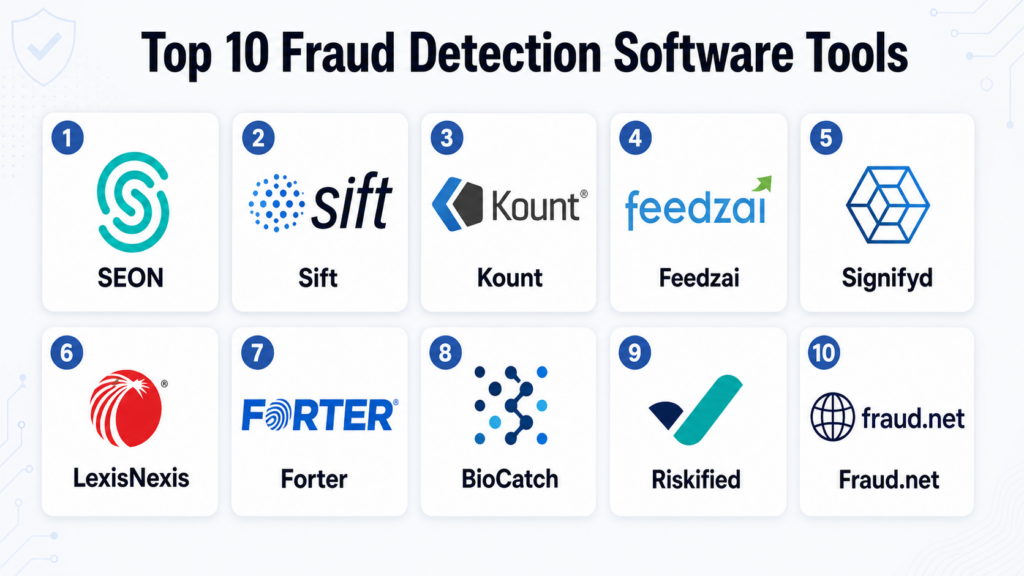
Introduction
Fraud detection platforms are sophisticated security ecosystems designed to identify, prevent, and mitigate fraudulent activities in real-time. These platforms act as a defensive layer for digital transactions, utilizing advanced machine learning algorithms, behavioral analytics, and global identity networks to distinguish between legitimate users and malicious actors. As digital commerce and online banking expand, these tools have become essential for protecting institutional revenue and maintaining consumer trust.
The modern fraud landscape is characterized by high-velocity attacks such as account takeovers, synthetic identity fraud, and sophisticated payment scams. Fraud detection platforms address these threats by analyzing thousands of data points—including device fingerprints, IP reputation, and behavioral biometrics—within milliseconds. By scoring the risk of every interaction, organizations can apply “dynamic friction,” allowing honest customers to pass through seamlessly while challenging or blocking high-risk attempts.
Real-world use cases:
- Payment Protection: Identifying stolen credit card usage during checkout by analyzing mismatching shipping patterns and velocity.
- Account Takeover (ATO) Prevention: Detecting unusual login behaviors that indicate a legitimate account has been compromised.
- New Account Opening Fraud: Using identity verification to stop the creation of accounts using synthetic or stolen identities.
- Promotion Abuse: Preventing users from creating multiple accounts to exploit sign-up bonuses, coupons, or referral rewards.
- Internal Fraud Monitoring: Tracking employee access to sensitive data to identify potential insider threats or unauthorized data exfiltration.
Evaluation criteria for buyers:
- Detection Accuracy: The platform’s ability to find fraud while keeping false positives (insulting real customers) to a minimum.
- Real-time Processing: The speed at which the platform can return a risk score, usually measured in milliseconds.
- Machine Learning Sophistication: Whether the system uses supervised models (known patterns) or unsupervised models (finding new anomalies).
- Network Intelligence: The size of the vendor’s global database used to identify known “bad actors” across different industries.
- Integration Flexibility: Support for API-based integration and compatibility with existing checkout or banking stacks.
- Explainability: The ability of the tool to provide clear reasons why a specific transaction was flagged as fraudulent.
- Case Management: The quality of the manual review interface for security teams to investigate flagged events.
- Behavioral Biometrics: Capabilities for analyzing how a user types, moves their mouse, or holds their device.
- Scalability: The system’s capacity to handle massive transaction volumes during peak shopping or event windows.
- Compliance Support: Alignment with global data protection standards and financial regulations.
Mandatory Paragraph
- Best for: Financial institutions, large e-commerce retailers, payment processors, and insurance companies that handle high volumes of digital transactions and sensitive user data.
- Not ideal for: Small local businesses with very low online transaction volume or static websites that do not collect payments or manage user accounts.
Key Trends in Fraud Detection Platforms
- Generative AI Defense: Utilizing specialized AI models to detect “deepfake” identities and AI-generated phishing attempts in real-time.
- Identity Orchestration: A shift toward modular platforms that allow businesses to “plug in” various verification services based on the specific risk of a user journey.
- Silent Authentication: Moving away from SMS codes toward background hardware-based attestation to verify users without interrupting their experience.
- Graph Analytics: Using link analysis to uncover complex fraud rings by identifying hidden relationships between seemingly unrelated accounts.
- Edge-Based Risk Scoring: Executing initial fraud checks at the network edge to reduce latency and stop bots before they reach the payment gateway.
- Privacy-Preserving Data Sharing: Implementation of technologies that allow companies to share fraud signals without revealing personal identifiable information (PII).
- Mobile-First Detection: Enhanced focus on mobile signals, such as SIM-swap detection and app-cloning identification, to protect mobile banking users.
- Omnichannel Fraud Visibility: Creating a single view of a customer’s risk profile across web, mobile app, and physical locations.
How We Selected These Tools (Methodology)
The selection of the top 10 fraud detection platforms followed a rigorous evaluation process centered on technical excellence and market impact. The methodology included:
- Core Detection Efficacy: We prioritized platforms with proven high-accuracy rates in detecting sophisticated fraud types like ATO and synthetic fraud.
- Industry Recognition: We analyzed platforms that are consistently ranked as leaders by major security analysts and independent testing labs.
- Technological Innovation: We selected tools that have pioneered features like behavioral biometrics and self-learning machine learning models.
- Enterprise Scalability: We focused on solutions capable of handling the transaction loads of global Fortune 500 companies.
- User Experience Focus: Preference was given to tools that offer low-friction verification methods to protect the customer journey.
Top 10 Fraud Detection Software Tools
1 — SEON
Short description: A modern, data-rich fraud prevention tool that specializes in using social media profiling and email/phone lookups to verify identities.
Key Features
- Social Signals: Checks 50+ social networks to see if an email or phone number is linked to a real person.
- Device Fingerprinting: Identifies the unique hardware and software configuration of every user to spot botnets.
- IP Intelligence: Deep analysis of IP addresses to find proxies, VPNs, and Tor exit nodes.
- Real-time Risk Scoring: Provides an instant score based on customizable rule sets.
- Whitebox Machine Learning: Provides transparent rules so teams can see exactly why a user was flagged.
- Free Browser Extension: Allows manual reviewers to check individual emails or IPs instantly.
Pros
- Exceptional at catching “new” fraudsters who haven’t appeared in traditional blacklists yet.
- Highly flexible pricing and modular setup that works for startups and enterprises alike.
Cons
- May require more manual rule tuning compared to “all-in-one” legacy platforms.
- Does not provide physical document verification as a native core feature.
Platforms / Deployment
- Cloud
- SaaS / API
Security & Compliance
- SSO, MFA, RBAC.
- SOC 2, GDPR.
Integrations & Ecosystem
Integrates easily with modern web stacks and e-commerce platforms.
- Shopify / WooCommerce
- Zapier
- Cloudflare
- Major CRM systems
Support & Community
Responsive technical support and a wealth of documentation geared toward data-driven security teams.
2 — Sift
Short description: An industry-leading Digital Trust & Safety platform that uses a massive global network to protect against payment fraud and account abuse.
Key Features
- Global Data Network: Learns from 1 trillion+ events per year across thousands of sites.
- Account Defense: Specifically designed to stop account takeover attempts in real-time.
- Payment Protection: Uses machine learning to find complex fraud patterns in checkout data.
- Content Integrity: Prevents spam and malicious content from being posted on marketplaces.
- Workflow Automation: Allows teams to build complex logic for how to handle specific risk scores.
- Dynamic Friction: Triggers specialized verification (like MFA) only when the risk score is high.
Pros
- Extremely high accuracy due to the sheer volume of data in the Sift network.
- Excellent user interface for manual review teams.
Cons
- Pricing is generally geared toward high-volume enterprise customers.
- The “black box” nature of some ML models can make it harder to explain specific scores to customers.
Platforms / Deployment
- Cloud
- SaaS
Security & Compliance
- Enterprise-grade security controls.
- SOC 2 Type II, ISO 27001.
Integrations & Ecosystem
Deeply integrated with the enterprise technology stack.
- AWS / Google Cloud
- Stripe / Braintree
- Salesforce
- Segment
Support & Community
Dedicated account management for enterprise clients and an active community of trust and safety professionals.
3 — Kount
Short description: An Equifax company that provides a comprehensive AI-driven fraud protection platform focused on the entire customer journey.
Key Features
- Identity Trust Global Network: Links billions of unique identifiers to assess trust in real-time.
- AI Services: Uses both supervised and unsupervised machine learning for detection.
- Friendly Fraud Protection: Specifically designed to help merchants win chargeback disputes.
- Emailage Integration: Leverages email history and reputation to verify identity.
- Omnichannel Visibility: Protects transactions across web, mobile, and physical point-of-sale.
- Custom Policy Engine: Allows businesses to set their own thresholds for “Accept,” “Decline,” or “Review.”
Pros
- Backed by Equifax, giving it access to massive traditional financial data.
- Excellent reporting for financial and chargeback analysis.
Cons
- Implementation can be more complex than some of the newer, “API-first” rivals.
- The interface can feel more traditional compared to modern SaaS startups.
Platforms / Deployment
- Cloud / Hybrid
- SaaS
Security & Compliance
- MFA, SSO, RBAC.
- PCI DSS Level 1, SOC 2.
Integrations & Ecosystem
Strong presence in the payment and retail ecosystem.
- Magento / BigCommerce
- Chase / Wells Fargo
- Oracle
- Adyen
Support & Community
Professional support services and deep expertise in payment regulation and chargeback management.
4 — Feedzai
Short description: A high-performance platform specializing in banking and financial services, known for its ability to process massive transaction volumes.
Key Features
- Pulse Engine: A high-speed processing engine designed for sub-second banking decisions.
- Fair-Play AI: Specialized algorithms designed to reduce bias in fraud detection.
- AML Integration: Combines fraud detection with Anti-Money Laundering (AML) monitoring.
- Genome: A visual link analysis tool for uncovering fraud rings and networks.
- Open ML: Allows data scientists to upload and run their own custom models on the platform.
- Real-time Alerting: Instant notifications for security teams when high-risk patterns emerge.
Pros
- Top-tier performance for retail banking and global payment processors.
- Comprehensive suite that covers fraud, AML, and compliance in one view.
Cons
- May be over-engineered for standard e-commerce retailers.
- Requires a significant technical team to manage and maintain effectively.
Platforms / Deployment
- Cloud / On-premises / Hybrid
- SaaS / Enterprise Software
Security & Compliance
- Bank-grade security protocols.
- SOC 2, ISO 27001, HIPAA.
Integrations & Ecosystem
Designed for the financial core and banking infrastructure.
- Finacle / Temenos
- Swift
- Major Payment Gateways
Support & Community
Expert-level support for financial institutions and a strong presence in the FinTech world.
5 — Signifyd
Short description: A specialized e-commerce fraud platform that is unique for offering a “100% financial guarantee” against fraud chargebacks.
Key Features
- Guaranteed Payments: Reimburses merchants for any approved transaction that turns out to be fraudulent.
- Commerce Network: Leverages data from thousands of merchants to recognize returning shoppers.
- Decision Center: A customizable engine for automating order flow based on risk.
- Abuse Prevention: Stops customers from exploiting return policies and promotions.
- Account Protection: Secures the login and profile change journey for shoppers.
- Console Insights: Detailed visual data on why orders were accepted or declined.
Pros
- Shifts the financial risk of fraud entirely away from the merchant.
- Increases conversion rates by reducing “false declines” of legitimate orders.
Cons
- The “guarantee” model can lead to higher fees per transaction compared to traditional SaaS.
- The platform has a high degree of control over order approval, which may not suit all merchants.
Platforms / Deployment
- Cloud
- SaaS
Security & Compliance
- Standard enterprise security.
- PCI DSS, SOC 2.
Integrations & Ecosystem
Native integrations for the world’s leading commerce platforms.
- Shopify Plus
- Adobe Commerce (Magento)
- Salesforce Commerce Cloud
- Microsoft Dynamics
Support & Community
Strong focus on merchant success and e-commerce growth strategies.
6 — LexisNexis RiskFort
Short description: A deep-intelligence platform that combines behavioral biometrics with massive identity data to protect complex digital journeys.
Key Features
- Digital Identity Network: Access to billions of anonymized device and identity signals.
- Behavioral Biometrics: Analyzes how users interact with their screens to detect bots and imposters.
- Risk-Based Authentication: Determines the appropriate level of security for each user interaction.
- ThreatMetrix Integration: Leverages the world-class ThreatMetrix engine for device ID.
- Case Management: Robust investigative tools for deep-dive fraud analysis.
- Policy Manager: Allows for extremely granular rule creation for enterprise risk teams.
Pros
- One of the most comprehensive identity databases in existence.
- Exceptional at detecting sophisticated “impersonation” attacks.
Cons
- The system can be complex and intimidating for smaller security teams.
- The user interface is more technical and enterprise-focused.
Platforms / Deployment
- Cloud / On-premises
- SaaS / Enterprise Software
Security & Compliance
- Enterprise-grade identity and access management.
- ISO 27001, SOC 2, FedRAMP.
Integrations & Ecosystem
Widely used across the government, finance, and healthcare sectors.
- Oracle / SAP
- Major Banking Cores
- Identity Providers (Okta/Ping)
Support & Community
Global professional services team and deep regulatory expertise.
7 — Forter
Short description: A “Trust Platform” that uses a fully automated, real-time engine to make instant decisions on every stage of the customer lifecycle.
Key Features
- Identity Graph: Links digital and physical identity markers to identify users accurately.
- Automated Decisions: Focuses on removing manual review entirely to speed up order flow.
- Smart Claims: Helps merchants identify and block “friendly fraud” and policy abuse.
- PSD2 Solution: Manages 3D Secure 2 requirements to ensure compliance without killing conversion.
- Bot Detection: Identifies automated scripts trying to scrape data or hoard inventory.
- Portal Analytics: Real-time dashboards showing approval rates and fraud trends.
Pros
- One of the fastest platforms for real-time, high-volume decisioning.
- Excellent at improving the “customer lifetime value” by reducing friction.
Cons
- Higher cost of entry compared to basic self-service fraud tools.
- Teams that prefer manual oversight may find the “automation-first” approach a significant shift.
Platforms / Deployment
- Cloud
- SaaS
Security & Compliance
- SSO, MFA, Encryption at rest.
- SOC 2, GDPR, PCI DSS.
Integrations & Ecosystem
Works seamlessly with modern e-commerce and payment stacks.
- Stripe / Braintree / Adyen
- Shopify / Salesforce
- Klaviyo
Support & Community
Highly regarded for their data science expertise and merchant advocacy.
8 — BioCatch
Short description: A specialized platform that focuses almost exclusively on “Behavioral Biometrics” to detect fraud by analyzing human-device interaction.
Key Features
- Interaction Analysis: Monitors 2,000+ behavioral traits such as typing cadence and mouse pressure.
- Social Engineering Detection: Identifies “hesitation” patterns that indicate a user is being coached by a scammer.
- Mule Account Detection: Uses behavior to find accounts used for money laundering.
- Continuous Authentication: Monitors the user session from login to logout, not just at one point.
- Bot vs Human: Instantly recognizes the difference between script-driven and human-driven navigation.
- Age and Gender Hints: Uses behavior to verify if a user’s interaction matches their stated age profile.
Pros
- The “gold standard” for detecting scams where a legitimate user is tricked into sending money.
- Impossible for traditional fraudsters to “spoof” or replicate human behavior.
Cons
- Usually needs to be paired with a traditional transaction monitor for full coverage.
- Primarily focused on the banking and high-finance sectors.
Platforms / Deployment
- Cloud
- SaaS / SDK
Security & Compliance
- High-level data privacy controls.
- SOC 2 Type II, ISO 27001.
Integrations & Ecosystem
Deployed via mobile and web SDKs into high-security applications.
- iOS / Android SDKs
- Major Web Frameworks
- ForgeRock / Ping Identity
Support & Community
Expert support in behavioral science and digital forensic analysis.
9 — Riskified
Short description: An e-commerce fraud management platform that uses large-scale data to provide instant “Approve/Decline” decisions with a chargeback guarantee.
Key Features
- Automated Decisioning: Replaces manual review with instant, machine-learning-based results.
- Chargeback Guarantee: Offers full reimbursement for any fraudulent transactions they approve.
- Account Takeover Protection: Stops hackers from using saved payment methods in customer accounts.
- Payment Optimization: Helps increase authorization rates by routing transactions intelligently.
- Policy Protect: Identifies “serial returners” and promotion abusers.
- Deco: A specialized tool to recover abandoned carts by reducing friction for low-risk users.
Pros
- Strong focus on “maximizing revenue” rather than just “minimizing fraud.”
- Simple, performance-based pricing model.
Cons
- Merchants may feel they lose some visibility into the “why” of specific declines.
- Can be aggressive in declining transactions in higher-risk regions.
Platforms / Deployment
- Cloud
- SaaS
Security & Compliance
- Standard enterprise security.
- PCI DSS, SOC 2, GDPR.
Integrations & Ecosystem
Pre-built connectors for all major commerce platforms.
- Adobe Commerce
- Salesforce
- SAP Hybris
- Shopify
Support & Community
Dedicated customer success managers and clear ROI reporting.
10 — Fraud.net
Short description: A modular, “cloud-born” platform that allows businesses to build their own custom fraud defense stack using a variety of specialized tools.
Key Features
- App Store for Fraud: Allows users to plug in 3rd party identity and data services instantly.
- Collective Intelligence: Anonymously shares fraud patterns across their entire user base.
- Entity Linkage: Finds connections between email, IP, and device to uncover fraud networks.
- Real-time Decision Engine: Highly customizable rules engine that processes in milliseconds.
- AI-Powered Insights: Uses natural language processing to explain fraud risks to humans.
- Transaction Monitoring: Deep analysis of the “intent” behind a purchase.
Pros
- The most “modular” platform, allowing you to pay only for the features you need.
- Excellent for businesses that want a high degree of control over their data sources.
Cons
- Can be overwhelming to set up due to the sheer number of options.
- Requires a more “hands-on” approach from the security team.
Platforms / Deployment
- Cloud
- SaaS
Security & Compliance
- Encryption, MFA, SSO.
- SOC 2, GDPR.
Integrations & Ecosystem
Extremely flexible API-first design.
- Stripe / PayPal
- AWS / Azure
- Salesforce
- Google Cloud
Support & Community
Comprehensive developer documentation and strong technical support.
Comparison Table (Top 10)
| Tool Name | Best For | Platform(s) Supported | Deployment | Standout Feature | Public Rating |
| 1. SEON | Identity Profiling | Cloud | SaaS | Social Media Lookup | 4.8/5 |
| 2. Sift | Global Network Intel | Cloud | SaaS | 1T+ Event Network | 4.7/5 |
| 3. Kount | Omnichannel Retail | Cloud, Hybrid | SaaS | Equifax Data Link | 4.6/5 |
| 4. Feedzai | Retail Banking | Cloud, On-prem | Hybrid | Pulse Processing Engine | 4.7/5 |
| 5. Signifyd | Chargeback Guarantee | Cloud | SaaS | Financial Reimbursement | 4.6/5 |
| 6. LexisNexis | Identity Verification | Cloud, On-prem | SaaS | Digital Identity Network | 4.5/5 |
| 7. Forter | High-Volume E-com | Cloud | SaaS | Automation-First Engine | 4.8/5 |
| 8. BioCatch | Banking Scams | Cloud | SDK | Behavioral Biometrics | 4.9/5 |
| 9. Riskified | Revenue Optimization | Cloud | SaaS | Performance-based Pricing | 4.7/5 |
| 10. Fraud.net | Modular Customization | Cloud | SaaS | Plug-and-play App Store | 4.4/5 |
Evaluation & Scoring of Fraud Detection Platforms
The scoring below represents how these platforms perform relative to each other in a high-consequence enterprise environment.
| Tool Name | Core (25%) | Ease (15%) | Integrations (15%) | Security (10%) | Performance (10%) | Support (10%) | Value (15%) | Weighted Total |
| SEON | 8 | 10 | 9 | 9 | 9 | 9 | 10 | 8.95 |
| Sift | 10 | 8 | 9 | 10 | 10 | 9 | 8 | 9.15 |
| Kount | 9 | 7 | 8 | 10 | 9 | 9 | 8 | 8.55 |
| Feedzai | 10 | 5 | 8 | 10 | 10 | 10 | 7 | 8.35 |
| Signifyd | 8 | 9 | 9 | 9 | 8 | 9 | 8 | 8.40 |
| LexisNexis | 10 | 5 | 8 | 10 | 9 | 9 | 7 | 8.20 |
| Forter | 10 | 8 | 9 | 9 | 10 | 9 | 8 | 8.95 |
| BioCatch | 10 | 6 | 7 | 10 | 10 | 9 | 7 | 8.35 |
| Riskified | 8 | 9 | 9 | 9 | 9 | 9 | 8 | 8.55 |
| Fraud.net | 8 | 7 | 10 | 9 | 8 | 8 | 9 | 8.20 |
How to interpret these scores:
- Core (25%): Efficacy of the fraud detection algorithms.
- Ease (15%): The simplicity of onboarding and daily management.
- Weighted Total: A consolidated score where 10 is the theoretical maximum. Platforms with lower “Ease” scores (like Feedzai) are often significantly more powerful but require more specialized staff.
Which Fraud Detection Platform Tool Is Right for You?
Solo / Freelancer
If you are a solo entrepreneur or freelancer managing a high-end service site, SEON is your best choice. Its low barrier to entry and ability to verify identities using a simple browser extension or API makes it highly effective without requiring a full security operations center.
SMB
Small and medium businesses with a growing e-commerce presence should look at Signifyd or Riskified. These platforms remove the stress of fraud management by offering chargeback guarantees, allowing you to focus on growth while they handle the risk.
Mid-Market
For companies scaling globally with complex customer journeys, Sift or Forter provide the perfect balance. They offer deep automation and massive global network intelligence to ensure that as you expand into new regions, you are protected by the insights of thousands of other merchants.
Enterprise
Large financial institutions and global payment processors require the heavy-duty power of Feedzai, LexisNexis, or BioCatch. These tools provide the necessary depth in behavioral analysis, AML compliance, and high-speed processing needed to secure millions of banking customers.
Budget vs Premium
- Budget Choice: SEON (Modular/Pay-as-you-go), Fraud.net.
- Premium Choice: Feedzai, BioCatch, LexisNexis.
Feature Depth vs Ease of Use
- Highest Depth: BioCatch (Behavioral), Feedzai (Banking Core).
- Easiest to Use: SEON, Sift, Signifyd.
Integrations & Scalability
- Best Integrations: Fraud.net, Sift.
- Best Scalability: Feedzai, Kount.
Frequently Asked Questions (FAQs)
1. What is the difference between fraud detection and fraud prevention?
Detection is the process of identifying fraudulent activity after or while it is happening, whereas prevention involves the tools and strategies used to stop the fraud from occurring in the first place, such as blocking high-risk IPs before a transaction begins.
2. What are “false positives” and why are they dangerous?
A false positive occurs when a legitimate customer is incorrectly flagged as a fraudster. This is dangerous because it leads to “customer insult,” causing shoppers to abandon their carts and move to a competitor, often resulting in more lost revenue than the fraud itself.
3. How do these platforms use social media for verification?
Tools like SEON check if an email address or phone number is associated with active profiles on platforms like LinkedIn, Facebook, or Twitter. A lack of social presence is a common red flag for a “burner” account created by a fraudster.
4. What is behavioral biometrics in fraud detection?
Behavioral biometrics analyzes “how” a person interacts with a device, such as typing speed, mouse movements, or touch pressure. Because these patterns are unique to individuals, they can identify when a hacker is using a real user’s credentials.
5. Can fraud detection platforms help with chargebacks?
Yes, many platforms (like Kount or Signifyd) provide data to help merchants win chargeback disputes by proving the transaction was legitimate. Some platforms even offer a financial guarantee to cover the cost if a chargeback occurs.
6. Do I need to be a data scientist to use these tools?
No, most modern platforms (Sift, SEON, Signifyd) are designed with intuitive dashboards for business users. However, more advanced enterprise platforms like Feedzai may require technical staff to tune the machine learning models.
7. How does a fraud score work?
A fraud score is a numerical value (e.g., 1 to 100) assigned to a transaction based on risk factors. A low score might be auto-approved, a medium score sent for manual review, and a high score automatically declined.
8. Are these platforms compliant with GDPR and CCPA?
Most top-tier fraud detection platforms are built with privacy in mind and comply with global standards. They often use data anonymization and encryption to protect user information while still identifying fraud patterns.
9. Can these platforms stop “Account Takeover” (ATO)?
Yes, by monitoring for unusual login locations, device changes, and behavioral shifts, these platforms can flag or block login attempts even if the fraudster has the correct username and password.
10. How quickly can these platforms be integrated?
For e-commerce sites using platforms like Shopify or Magento, integration can take minutes via a plugin. For custom enterprise banking cores, a full API integration and model training period may take several weeks.
Conclusion
Fraud detection has evolved from a simple set of manual rules into a high-speed AI battleground. Choosing the right platform depends entirely on your specific risk profile—whether you need the identity-rich lookups of SEON, the automated e-commerce approval of Signifyd, or the behavioral depth of BioCatch. By implementing a robust platform, organizations can move from a defensive posture to a growth mindset, confident that their digital borders are secure.

Clear, precise, and super helpful content.
Gaining insights into these fraud tools clarifies how I can build secure apps later.