MOTOSHARE 🚗🏍️
Rent Bikes & Cars Directly from Owners
Motoshare connects vehicle owners with people who need bikes and cars on rent. Owners earn from idle vehicles, and renters get flexible ride options.
Visit Motoshare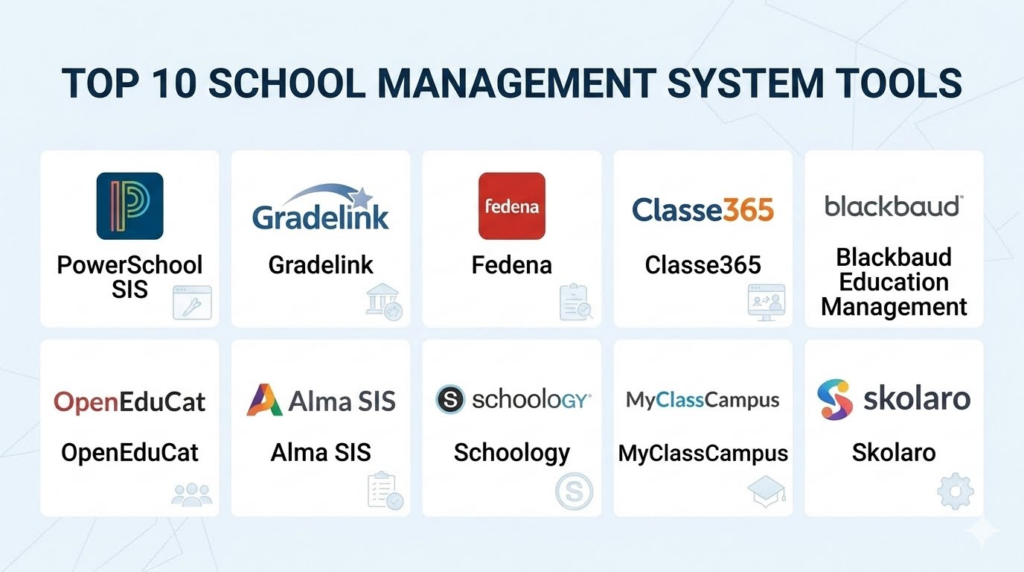
Introduction
School Management Systems are digital platforms designed to help schools manage academic, administrative, communication, and operational activities from a centralized system. These platforms typically handle student records, attendance, admissions, fee collection, report cards, exams, timetables, parent communication, transport management, and staff administration. Instead of relying on spreadsheets and disconnected tools, schools can streamline operations through one integrated platform.
As educational institutions continue modernizing operations, School Management Systems have become essential for improving efficiency, transparency, and communication. Schools now require better parent engagement, automated reporting, online fee processing, and real-time academic tracking. Hybrid learning models, digital classrooms, and data-driven administration have also increased the need for scalable education technology platforms.
Real-world use cases
- Managing student admissions, attendance, and academic records
- Automating fee collection and financial tracking
- Generating report cards, grades, and examination workflows
- Improving communication between teachers, parents, and students
- Managing transport, library, hostel, and staff administration
Evaluation Criteria for Buyers
- Student information management depth
- Attendance and timetable automation
- Parent and student communication tools
- Fee management and payment integration support
- Reporting and analytics capabilities
- Mobile app accessibility
- Ease of use for teachers and administrators
- LMS and third-party integration support
- Security and user permission controls
- Scalability for multi-campus institutions
Best for:
School Management Systems are best for K-12 schools, private schools, public schools, international schools, coaching institutes, educational groups, and institutions needing centralized administration and academic management.
Not ideal for:
These platforms may not be ideal for very small tutoring centers or independent educators who only require lightweight scheduling or communication tools.
Key Trends in School Management Systems
- AI-powered student performance analytics are becoming more common for identifying academic risks and attendance patterns.
- Cloud-based school ERP systems are replacing locally hosted software deployments.
- Mobile-first parent communication is becoming a standard expectation.
- Online fee payments and digital invoicing are reducing administrative workload.
- Integrated LMS and classroom management capabilities are becoming more important.
- Multi-campus management support is growing for education groups and chains.
- Automated report card and grading workflows are improving teacher productivity.
- API-based integrations are helping schools connect accounting, learning, and communication systems.
- Transport tracking and student safety features are becoming more advanced.
- Role-based security and student data privacy controls are receiving more focus.
How We Selected These Tools
- Evaluated platforms with strong adoption in K-12 and educational institutions
- Prioritized tools with broad academic and administrative functionality
- Considered usability for teachers, parents, students, and administrators
- Included platforms suitable for small, mid-sized, and enterprise schools
- Reviewed fee management, attendance, exams, and reporting capabilities
- Considered cloud accessibility and mobile support
- Evaluated integration support with LMS, payment, and communication systems
- Assessed scalability for growing institutions and school chains
- Reviewed onboarding resources and customer support quality
- Balanced traditional school ERP systems with modern cloud platforms
Top 10 School Management Systems Tools
#1 — PowerSchool SIS
Short description:
PowerSchool SIS is a widely used student information and school administration platform designed for K-12 institutions and school districts. It supports attendance, grades, scheduling, student records, analytics, and parent communication. The platform is highly scalable and suitable for institutions needing centralized academic management. It is particularly strong for large schools and district-wide deployments.
Key Features
- Student information management
- Attendance and grade tracking
- Timetable and scheduling tools
- Parent and student portals
- Analytics and reporting dashboards
- Multi-school administration support
- Academic workflow automation
Pros
- Strong scalability for large institutions
- Comprehensive student data management
- Good analytics and reporting features
Cons
- Can require significant implementation effort
- Complex for very small schools
- Advanced customization may require technical support
Platforms / Deployment
Web / Cloud
Security & Compliance
Supports secure access controls, permissions, audit workflows, and user authentication. Specific certifications are not publicly stated.
Integrations & Ecosystem
PowerSchool integrates with learning tools, assessment systems, communication platforms, and education applications.
- LMS integrations
- Assessment platforms
- Parent communication tools
- Reporting systems
- Education application ecosystem
Support & Community
Enterprise onboarding, documentation, training, and institutional support resources are available.
#2 — Gradelink
Short description:
Gradelink is a cloud-based school management system focused on private schools and small to mid-sized educational institutions. It helps manage attendance, grading, admissions, communication, and billing workflows. The platform is known for ease of use and quick implementation. It is well suited for schools wanting practical academic administration tools without enterprise complexity.
Key Features
- Gradebook and report cards
- Attendance tracking
- Admissions management
- Parent and student communication
- Billing and tuition management
- Scheduling and calendars
- Academic reporting tools
Pros
- Easy for teachers and admins to learn
- Good fit for smaller schools
- Strong academic workflow support
Cons
- Limited enterprise-level functionality
- Advanced customization may be restricted
- Large school districts may need broader systems
Platforms / Deployment
Web / Cloud
Security & Compliance
Role-based access controls and secure login workflows are supported. Specific certifications are not publicly stated.
Integrations & Ecosystem
Gradelink integrates with communication, payment, and education workflows.
- Payment processing systems
- Parent communication tools
- Reporting exports
- Academic workflows
- Student management tools
Support & Community
Customer support, onboarding, and school-focused documentation are available.
#3 — Fedena
Short description:
Fedena is a comprehensive school ERP platform designed for schools, colleges, and educational institutions needing centralized academic and administrative management. It includes attendance, fees, exams, HR, transport, library, and communication modules. The system is flexible and supports both cloud and self-hosted deployments. It is suitable for institutions requiring extensive ERP-style functionality.
Key Features
- Student information management
- Attendance and exam management
- Fee collection and finance workflows
- HR and payroll modules
- Transport and hostel management
- Parent and student portals
- Library and timetable management
Pros
- Broad ERP functionality
- Flexible deployment options
- Strong module coverage for institutions
Cons
- Setup and configuration may require support
- Advanced workflows can increase complexity
- User experience depends on implementation quality
Platforms / Deployment
Cloud / Self-hosted / Hybrid
Security & Compliance
Supports user permissions and secure role-based access. Specific certifications are not publicly stated.
Integrations & Ecosystem
Fedena supports integrations with payment systems, communication tools, and learning platforms.
- Payment gateways
- SMS and email systems
- LMS integrations
- Reporting exports
- API support
Support & Community
Documentation, implementation support, and customization assistance are available.
#4 — Classe365
Short description:
Classe365 combines student information management, admissions CRM, billing, communication, and learning workflows in a cloud-based education platform. It is designed for schools, colleges, and educational businesses seeking centralized lifecycle management. The platform is useful for institutions prioritizing enrollment and communication automation. It works well for institutions with growing operational complexity.
Key Features
- Admissions and enrollment CRM
- Student lifecycle management
- Fee and billing automation
- Attendance and academic tracking
- Learning management support
- Reporting dashboards
- Communication workflows
Pros
- Strong admissions workflow support
- Useful cloud-based flexibility
- Good communication and engagement tools
Cons
- Advanced setup may require onboarding
- Pricing varies depending on modules
- Some traditional school workflows need customization
Platforms / Deployment
Web / Cloud
Security & Compliance
Secure user access and permissions are supported. Specific certifications are not publicly stated.
Integrations & Ecosystem
Classe365 supports integrations with payment, communication, and learning systems.
- Payment gateways
- LMS tools
- Email and SMS integrations
- CRM workflows
- Reporting systems
Support & Community
Onboarding assistance, customer support, and documentation are available.
#5 — Blackbaud Education Management
Short description:
Blackbaud Education Management is a school administration platform designed primarily for private and independent schools. It combines academics, admissions, communication, fundraising, and tuition management workflows. The platform is useful for institutions wanting broader education management capabilities. It is especially strong for schools with advancement and donor engagement needs.
Key Features
- Student information management
- Tuition and billing support
- Academic administration workflows
- Admissions and enrollment tools
- Parent communication systems
- Fundraising ecosystem integration
- Reporting and analytics
Pros
- Strong fit for private schools
- Broad administrative ecosystem
- Good communication capabilities
Cons
- Premium pricing structure
- Implementation may require training
- Smaller schools may not need full feature depth
Platforms / Deployment
Web / Cloud
Security & Compliance
Supports secure permissions, access controls, and protected user workflows. Specific certifications are not publicly stated.
Integrations & Ecosystem
Blackbaud integrates with fundraising, finance, and education management systems.
- Tuition systems
- Communication platforms
- Fundraising tools
- Reporting workflows
- Education ecosystem tools
Support & Community
Professional onboarding, implementation support, and customer training are available.
#6 — OpenEduCat
Short description:
OpenEduCat is an open-source education ERP platform supporting student management, exams, fees, timetable, attendance, and faculty workflows. It is designed for schools and institutions wanting customizable deployment options. The platform is useful for organizations with technical resources or implementation partners. It supports both cloud and self-hosted environments.
Key Features
- Student and faculty management
- Attendance and timetable workflows
- Exam and grading management
- Fee management support
- Library and course modules
- LMS integration support
- Open-source customization flexibility
Pros
- Flexible open-source architecture
- Broad education module coverage
- Customizable deployment options
Cons
- Technical setup may be required
- Support quality varies by provider
- Advanced workflows may require development effort
Platforms / Deployment
Cloud / Self-hosted / Hybrid
Security & Compliance
Role-based access controls are supported. Security depends on deployment and configuration choices.
Integrations & Ecosystem
OpenEduCat supports integrations with education and operational systems.
- LMS platforms
- Payment gateways
- Communication systems
- ERP extensions
- Custom API integrations
Support & Community
Community resources and professional support services are available.
#7 — Alma
Short description:
Alma is a modern student information and school management platform designed primarily for K-12 schools. It focuses on usability, academic workflows, communication, and analytics. The system supports attendance, grading, scheduling, and reporting while maintaining a user-friendly interface. It is best suited for schools seeking a modern cloud-first SIS.
Key Features
- Student information management
- Attendance and grading workflows
- Standards-based grading support
- Parent and student portals
- Reporting dashboards
- Scheduling tools
- Communication workflows
Pros
- Modern and easy-to-use interface
- Strong academic workflow support
- Good fit for K-12 institutions
Cons
- ERP functionality may be limited
- Advanced finance workflows may require integrations
- Regional availability may vary
Platforms / Deployment
Web / Cloud
Security & Compliance
Secure user authentication and permissions are supported. Specific certifications are not publicly stated.
Integrations & Ecosystem
Alma integrates with education, assessment, and communication systems.
- LMS platforms
- Assessment tools
- Reporting systems
- Parent communication tools
- Academic workflow integrations
Support & Community
Training, onboarding, and school-focused support resources are available.
#8 — Schoology
Short description:
Schoology is primarily a learning management system but is widely used alongside school administration workflows for assignments, grades, communication, and digital classroom management. It supports hybrid and digital learning environments effectively. The platform is useful for institutions prioritizing online learning and collaboration. It is best suited for schools focused on classroom engagement and learning workflows.
Key Features
- Digital classroom management
- Assignments and assessments
- Gradebook support
- Student collaboration workflows
- Parent visibility tools
- Learning content management
- Communication tools
Pros
- Strong digital learning support
- Good teacher and student experience
- Useful for blended learning environments
Cons
- Not a complete ERP replacement
- Finance and HR modules are limited
- Best when integrated with SIS systems
Platforms / Deployment
Web / iOS / Android / Cloud
Security & Compliance
Supports secure access controls and protected user workflows. Specific certifications are not publicly stated.
Integrations & Ecosystem
Schoology integrates with education tools and SIS platforms.
- SIS integrations
- Learning content systems
- Assessment tools
- Communication workflows
- Classroom applications
Support & Community
Large education community, support resources, and training programs are available.
#9 — MyClassCampus
Short description:
MyClassCampus is a school ERP and management system supporting attendance, fees, exams, communication, transport, admissions, and mobile workflows. It is designed for schools, colleges, and coaching institutes wanting centralized administration. The platform is known for mobile accessibility and practical school management features. It works well for growing educational institutions.
Key Features
- Attendance management
- Fee and payment tracking
- Exam and result management
- Parent-teacher communication
- Transport management
- Admission workflows
- Mobile app support
Pros
- Good all-in-one school ERP coverage
- Strong mobile communication tools
- Suitable for growing institutions
Cons
- Enterprise customization may vary
- Advanced reporting can require configuration
- Feature depth depends on selected modules
Platforms / Deployment
Web / iOS / Android / Cloud
Security & Compliance
Role-based permissions and secure login support are available. Specific certifications are not publicly stated.
Integrations & Ecosystem
MyClassCampus integrates with school operations and communication systems.
- Payment systems
- Communication workflows
- Academic reporting tools
- Parent applications
- School operations modules
Support & Community
Implementation assistance, customer support, and onboarding resources are available.
#10 — Skolaro
Short description:
Skolaro is a cloud-based school management platform designed for admissions, attendance, exams, fee management, and communication workflows. It helps educational institutions reduce administrative overhead and improve operational visibility. The platform is suitable for schools seeking integrated school ERP functionality. It is particularly useful for institutions prioritizing parent engagement and centralized management.
Key Features
- Student information management
- Attendance and scheduling workflows
- Fee collection support
- Admissions management
- Exam and grading tools
- Parent communication portal
- Administrative reporting dashboards
Pros
- Strong administrative workflow coverage
- Useful communication tools
- Cloud-based accessibility
Cons
- Enterprise scalability should be validated
- Advanced integrations may vary
- Custom workflow support may require configuration
Platforms / Deployment
Web / Cloud / Mobile access
Security & Compliance
Secure access controls and role-based permissions are supported. Specific certifications are not publicly stated.
Integrations & Ecosystem
Skolaro integrates with school operations and communication systems.
- Payment systems
- Communication tools
- Reporting workflows
- Academic management modules
- Mobile engagement systems
Support & Community
Customer onboarding, training, and support resources are available.
Comparison Table
| Tool Name | Best For | Platform Supported | Deployment | Standout Feature | Public Rating |
|---|---|---|---|---|---|
| PowerSchool SIS | Large schools and districts | Web | Cloud | Scalable student information system | N/A |
| Gradelink | Small and mid-sized schools | Web | Cloud | Easy academic administration | N/A |
| Fedena | Flexible school ERP management | Web | Cloud, Self-hosted, Hybrid | Broad ERP functionality | N/A |
| Classe365 | Student lifecycle management | Web | Cloud | Admissions CRM integration | N/A |
| Blackbaud Education Management | Private schools | Web | Cloud | Combined education and fundraising workflows | N/A |
| OpenEduCat | Customizable education ERP | Web | Cloud, Self-hosted, Hybrid | Open-source flexibility | N/A |
| Alma | Modern K-12 SIS | Web | Cloud | User-friendly academic workflows | N/A |
| Schoology | Digital learning environments | Web, Mobile | Cloud | Classroom collaboration support | N/A |
| MyClassCampus | Growing educational institutions | Web, Mobile | Cloud | Mobile-first school ERP | N/A |
| Skolaro | Administrative workflow automation | Web, Mobile | Cloud | Integrated academic management | N/A |
Evaluation & Scoring of School Management Systems
| Tool Name | Core 25% | Ease 15% | Integrations 15% | Security 10% | Performance 10% | Support 10% | Value 15% | Weighted Total |
|---|---|---|---|---|---|---|---|---|
| PowerSchool SIS | 9 | 7 | 9 | 9 | 9 | 9 | 7 | 8.5 |
| Gradelink | 8 | 9 | 7 | 8 | 8 | 8 | 8 | 8.1 |
| Fedena | 9 | 7 | 8 | 8 | 8 | 8 | 9 | 8.2 |
| Classe365 | 8 | 8 | 8 | 8 | 8 | 8 | 8 | 8.0 |
| Blackbaud Education Management | 9 | 7 | 8 | 9 | 8 | 9 | 7 | 8.2 |
| OpenEduCat | 8 | 7 | 8 | 7 | 8 | 7 | 9 | 7.8 |
| Alma | 8 | 9 | 8 | 8 | 8 | 8 | 8 | 8.1 |
| Schoology | 7 | 9 | 9 | 8 | 8 | 8 | 8 | 8.0 |
| MyClassCampus | 8 | 8 | 7 | 8 | 8 | 8 | 8 | 7.9 |
| Skolaro | 8 | 8 | 7 | 8 | 8 | 8 | 8 | 7.9 |
These scores are comparative and should be interpreted according to institution size, operational complexity, and budget. Enterprise-focused systems typically score higher in scalability and integrations, while smaller school-focused systems may provide better usability and value. Schools should validate academic workflows, parent communication, fee management, and reporting during evaluation. The best platform depends on operational priorities rather than overall score alone.
Which School Management Systems Tool Is Right for You?
Solo / Freelancer
Independent tutors and small training centers usually do not require enterprise school ERP platforms. Lightweight systems such as MyClassCampus or Classe365 may provide enough support for attendance, scheduling, and communication workflows.
SMB
Small and mid-sized schools should prioritize ease of use, parent communication, attendance management, fee automation, and affordability. Gradelink, Alma, MyClassCampus, and Skolaro are strong options for institutions wanting practical school administration capabilities.
Mid-Market
Mid-sized schools often require stronger reporting, automation, integrations, and academic workflow management. Fedena, Classe365, Blackbaud Education Management, and Alma provide broader administrative functionality and scalability.
Enterprise
Large schools, districts, and international institutions should prioritize scalability, governance, analytics, integrations, and multi-campus support. PowerSchool SIS and Fedena are strong enterprise-oriented platforms for institutions with large operational requirements.
Budget vs Premium
Budget-conscious schools may prefer OpenEduCat, MyClassCampus, or Skolaro because of deployment flexibility and lower operational overhead. Premium systems such as PowerSchool and Blackbaud provide deeper ecosystem support, analytics, and enterprise capabilities but often require higher investment.
Feature Depth vs Ease of Use
Fedena and OpenEduCat provide broad ERP functionality but may require more setup effort. Gradelink and Alma are easier for day-to-day academic workflows. Schoology excels in learning and classroom management but works best alongside SIS systems.
Integrations & Scalability
Schools should validate integrations with payment systems, LMS platforms, accounting tools, communication platforms, and analytics systems. API support and multi-campus management become increasingly important for growing institutions.
Security & Compliance Needs
Educational institutions manage sensitive student, staff, parent, and financial information. Buyers should prioritize secure authentication, role-based access, permissions, audit logging, and protected data workflows before implementation.
Frequently Asked Questions
1. What is a School Management System?
A School Management System is software designed to help schools manage academic, administrative, and operational workflows from one platform. It usually includes attendance, student records, grades, communication, fees, scheduling, and reporting features. The goal is to improve efficiency and reduce manual administrative work.
2. Why are School Management Systems important?
Schools increasingly require centralized digital operations to manage students, parents, teachers, and administrative workflows efficiently. These systems improve communication, reduce paperwork, automate repetitive tasks, and provide better visibility into academic and operational performance.
3. What features should schools prioritize?
Schools should prioritize student information management, attendance tracking, exams, report cards, fee collection, communication tools, mobile access, and reporting dashboards. Institutions with more complex operations may also require HR, transport, hostel, and library management modules.
4. Are School Management Systems cloud-based?
Most modern systems are cloud-based because they provide easier deployment, remote access, and simplified maintenance. Some vendors also offer self-hosted or hybrid deployment models for institutions requiring greater infrastructure control.
5. How much do School Management Systems cost?
Pricing depends on institution size, number of students, deployment model, modules, and support requirements. Some vendors charge per student, while others offer subscription-based pricing. Schools should also consider implementation, migration, and training costs.
6. How long does implementation take?
Implementation timelines vary from a few weeks for small schools to several months for large institutions or district-wide deployments. The timeline depends on data migration, customization, integrations, and user training requirements.
7. Can these systems integrate with learning platforms?
Yes. Many School Management Systems integrate with LMS platforms, communication tools, payment gateways, and accounting software. Schools should validate integration support before deployment to avoid operational silos.
8. What are common mistakes when selecting a School Management System?
Common mistakes include selecting systems only based on price, ignoring teacher usability, underestimating data migration effort, and choosing overly complex platforms for small institutions. Schools should test workflows with real users before final selection.
9. Is student data secure in these systems?
Most reputable platforms provide permissions, secure login, and protected user access. However, schools should still evaluate security controls, backup policies, audit capabilities, and deployment architecture carefully before implementation.
10. How should schools choose the right platform?
Schools should start by identifying operational priorities such as admissions, attendance, fee management, reporting, communication, and scalability needs. Then they should shortlist vendors, request demos, validate integrations, and run pilot implementations before making a long-term commitment.
Conclusion
School Management Systems have become essential infrastructure for modern educational institutions seeking better operational efficiency, improved communication, and centralized academic management. As schools increasingly adopt digital learning environments and data-driven administration, these platforms help reduce manual work, improve parent engagement, automate reporting, and streamline student lifecycle management. The best solution depends heavily on institution size, operational complexity, budget, and long-term digital strategy.

Utilizing comprehensive unique institutional administrative data tracking coordinate dashboard software optimizes corporate educational enterprise resource planning mechanics, ensuring rapid decentralized student record updates verification auditing and frictionless academic facility operation logistics organization methodologies.