MOTOSHARE 🚗🏍️
Rent Bikes & Cars Directly from Owners
Motoshare connects vehicle owners with people who need bikes and cars on rent. Owners earn from idle vehicles, and renters get flexible ride options.
Visit Motoshare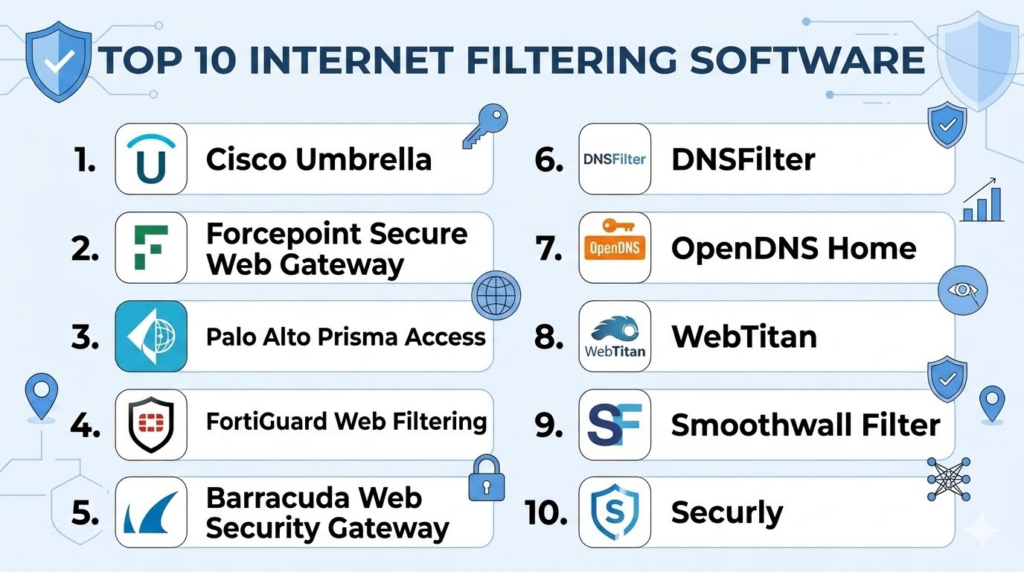
Introduction
Internet filtering software is a class of tools designed to control and monitor access to web content, block malicious or undesirable sites, enforce usage policies, and protect users in homes, schools, workplaces, and public networks. These solutions help organizations and families create safe, productive digital environments by blocking access to harmful, inappropriate, or non‑work content, preventing malware/phishing exposure, and enabling administrators to define policies based on users, groups, times, and risk levels.In the importance of internet filtering has grown with evolving threats from AI‑generated malicious sites, ransomware, social engineering, and the sheer volume of web content. Compliance mandates, digital wellbeing goals, safe learning environments, and remote work policies also make filtering an essential layer of digital governance for institutions and households alike.
Real‑world use cases:
- A school deploying web content filtering to block inappropriate or distracting websites on student devices and networks.
- A small business enforcing acceptable use policies to prevent access to non‑work content and block risky downloads.
- A family setting filtering and time–block policies to keep children away from adult or violent content.
- A public library using filtering compliance to meet legal or regulatory obligations.
- An enterprise reducing malware and phishing exposure with dynamic URL reputation and threat intelligence.
What buyers should evaluate:
- Coverage across platforms and network environments
- Block/allow policies by category, user, group, and time
- Dynamic threat intelligence and AI‑driven risk scoring
- SSL/TLS inspection and HTTPS filtering
- Reporting, audit logs, and analytics
- Centralized policy management
- Ease of deployment (cloud‑based vs on‑premises)
- Integration with directory services and identity systems
- Performance and latency impacts
- Compliance and logging requirements
Best for:
Schools and educational institutions, small‑to‑medium businesses (SMBs), enterprises with distributed users, public spaces (libraries, co‑working), and families wanting layered protection.
Not ideal for:
Users who want only device‑level parental controls without network filtering, organizations that require full endpoint EDR (use filtering as a complement, not replacement), or those seeking simple anti‑virus without web governance.
Key Trends in Internet Filtering Software
- AI‑driven threat and content classification: Real‑time categorization and risk scoring using machine learning models.
- Cloud‑native filtering with edge enforcement: Distributed enforcement points that scale across remote and hybrid workforces.
- Encrypted traffic inspection: HTTPS/SSL filtering with certificate inspection to enforce policies on secure traffic.
- Zero‑trust web access integration: Conditional filtering with identity/contextual signals (user, device, location, app).
- API‑based interoperability: Integration with identity providers, SIEM systems, MDM/EDR tools for cohesive governance.
- Granular role‑ and group‑based policies: Custom rules based on user roles, device types, and organizational units.
- Behavioral analytics and insights: Usage patterns and anomaly detection to indicate risky browsing behavior.
- DNS‑level filtering options: Lightweight policy enforcement with minimal latency through DNS query controls.
- Compliance‑ready reporting: Audit logs and policy reports for regulatory needs (e.g., CIPA, GDPR, ISO frameworks).
- Flexible deployment models: On‑premises, edge appliances, cloud proxies, and hybrid enforcement options.
How We Selected These Tools (Methodology)
- Feature breadth: Included blocking, categorization, threat intelligence, reporting, and policy enforcement.
- Deployment flexibility: Cloud, on‑premises, hybrid, and DNS‑based approaches evaluated.
- Security posture: Threat integration, SSL inspection, identity contextualization, and logging strength.
- Usability: Policy configuration workflows, admin dashboards, and reporting clarity.
- Performance impact: Filtering speed, caching, and latency considerations.
- Integration ecosystem: Identity services (SSO/LDAP), SIEM, endpoint tools, and MDM.
- Target market fit: Schools, SMBs, enterprises, and consumer/family segments.
- AI capabilities: Intelligent classification, dynamic risk scoring, and anomaly detection.
- Support and documentation quality: Onboarding guides, KBs, and support channels.
- Value: Licensing models, scaling thresholds, and total cost of ownership.
Top 10 Internet Filtering Software
#1 — Cisco Umbrella
Short description: Cisco Umbrella is a cloud‑native internet filtering and secure web gateway platform that uses threat intelligence and DNS filtering to protect users from malicious and undesirable sites across networks and roaming devices.
Key Features
- DNS, IP, and URL‑level filtering with category enforcement
- Cloud‑delivered secure web gateway
- Threat intelligence and dynamic risk scoring
- Encrypted traffic inspection support
- Centralized policy orchestration
- Reporting, logs, and analytics
Pros
- Strong threat intelligence backing from Cisco Talos
- Cloud scale with global DNS filtering
- Easy deployment for distributed workforces
Cons
- Premium pricing for advanced modules
- Learning curve for granular policies
- Some features depend on add‑on licensing
Platforms / Deployment
- Cloud‑native (DNS & proxy)
- Integrates with endpoints via agents
Security & Compliance
- SSL/TLS inspection (where permitted)
- Integration with identity & RBAC
- Audit logs for compliance
Integrations & Ecosystem
- Directory services (LDAP, Active Directory)
- SIEM and threat intel tools
- Endpoint agents and cloud proxies
Support & Community
- Knowledge base and docs
- Cisco support tiers
- Community forums
#2 — Websense/Forcepoint Secure Web Gateway
Short description: Forcepoint’s Secure Web Gateway delivers enterprise‑grade web filtering backed by URL categorization, threat intelligence, dynamic content analysis, and policy enforcement.
Key Features
- Real‑time content inspection and categorization
- Threat risk scoring and malware blocking
- HTTPS/SSL inspection
- User‑ and group‑based policy controls
- Reporting and audit trails
Pros
- Deep policy granularity for enterprise needs
- Strong security and compliance reporting
- Scales to large deployments
Cons
- Complex setup for small teams
- Premium costs
- Requires expertise for fine‑tuning
Platforms / Deployment
- Cloud, on‑premises, hybrid
- Appliances and proxies
Security & Compliance
- SSL/TLS inspection
- Identity‑aware policies
- Compliance logs
Integrations & Ecosystem
- IAM integration
- SIEM/UEBA connectors
- Endpoint partners
Support & Community
- Enterprise support plans
- Documentation
- Professional services
#3 — Palo Alto Networks Prisma Access
Short description: Prisma Access offers secure web and internet filtering as part of a broader Secure Access Service Edge (SASE) framework, providing contextual filtering, threat protection, and secure access controls.
Key Features
- Cloud‑based secure web proxy
- URL and content filtering with risk scoring
- Identity and application context policies
- Threat intel and malware prevention
- Zero trust integration
Pros
- SASE‑centric design for modern distributed environments
- Identity contextual enforcement
- Unified security controls
Cons
- High cost for smaller deployments
- Requires sophisticated policy definitions
- Broad feature set may be overkill for basic filtering
Platforms / Deployment
- Cloud (SASE)
- Integrates with endpoints and identity
Security & Compliance
- SSL/TLS inspection
- Zero trust enforcement
- Compliance logging
Integrations & Ecosystem
- Identity providers
- Endpoint security tools
- SIEM and analytics
Support & Community
- Enterprise support
- Professional services
- Knowledge base
#4 — Fortinet FortiGuard Web Filtering
Short description: Fortinet’s FortiGuard web filtering integrates with FortiGate firewalls and security fabric to enforce URL categorization, dynamic threat scoring, and content policies across networks.
Key Features
- URL categorization updated by threat intelligence
- Accept/deny policies by user/group
- SSL inspection and antivirus engines
- Integrated with firewall policies
- Logging, reporting, and alerts
Pros
- Integrated within Fortinet security ecosystem
- Good performance at scale
- Flexible policy controls
Cons
- Best experience within Fortinet stack
- Licensing tiers required for full feature sets
- UI can feel dated
Platforms / Deployment
- On‑premises (FortiGate) or cloud
- Hybrid enforcement
Security & Compliance
- SSL inspection
- Threat intel‑driven policies
- Logging for audit
Integrations & Ecosystem
- Fortinet firewall and security fabric
- SIEM integration
- Directory services
Support & Community
- Fortinet support
- Knowledge articles
- Community forums
#5 — Barracuda Web Security Gateway
Short description: Barracuda Web Security Gateway provides URL filtering, content categorization, malware scanning, and policy enforcement for schools, SMBs, and enterprises.
Key Features
- URL categorization and dynamic filtering
- Malware and phishing protection
- SSL inspection
- User and group policies
- Reporting and dashboards
Pros
- Good mix of content filtering and security protection
- Cloud and hardware options
- Friendly UI
Cons
- Reporting experience less detailed than enterprise peers
- Heavy SSL inspection can impact performance
- Feature fragmentation across editions
Platforms / Deployment
- Cloud, on‑premises appliances, hybrid
- Proxy and DNS options
Security & Compliance
- SSL/TLS inspection
- Malware blocking
- Policy logging
Integrations & Ecosystem
- Directory services
- SIEM outputs
- Cloud connectors
Support & Community
- Help center
- Support tiers
- Barracuda user community
#6 — DNSFilter
Short description: DNSFilter focuses on DNS‑level internet filtering and threat blocking, offering fast, lightweight filtering that protects users before connections complete.
Key Features
- DNS categorization and policy enforcement
- Malware and phishing domain blocking
- AI‑driven domain classification
- Real‑time threat scoring
- Reporting and alerting
Pros
- Low latency and easy deployment
- Effective malware/phishing prevention at DNS layer
- Simple policy controls
Cons
- URL‑level granularity limited compared to proxies
- Less detailed content inspection
- Not best for deep SSL/TLS filtering
Platforms / Deployment
- Cloud (DNS)
- Works with any network infrastructure
Security & Compliance
- DNS‑level threat blocking
- Reporting logs
- Privacy‑first design
Integrations & Ecosystem
- Identity providers
- Public DNS integrations
- Log exports
Support & Community
- Email and documentation
- Tutorials
#7 — OpenDNS Home (Cisco Free DNS)
Short description: OpenDNS Home (free tier) offers category‑based DNS filtering for families and small networks, blocking malicious domains and undesirable categories through DNS controls.
Key Features
- DNS‑level category filtering
- Malware and phishing domain protection
- Custom allow/deny lists
- Simple reporting
Pros
- Free and easy to configure
- Works on routers and network‑wide
- Lightweight and fast
Cons
- Limited controls vs paid products
- No SSL/TLS content inspection
- No identity or group policies
Platforms / Deployment
- Cloud (DNS)
- Router or device DNS settings
Security & Compliance
- DNS threat blocking
- Basic logs
Integrations & Ecosystem
- Home network routers
- Custom lists
Support & Community
- Community forums
- Basic documentation
#8 — WebTitan
Short description: WebTitan is a web filtering platform popular in schools, MSPs, and enterprises, providing URL categorization, policy enforcement, and reporting through DNS or proxy options.
Key Features
- URL and category filtering
- Malware and phishing protection
- Policy controls by user/group/time
- Proxy and DNS implementation
- Reporting and logs
Pros
- Flexible deployment (DNS or proxy)
- Strong reporting tools
- Easy MSP management features
Cons
- UI feels dated
- SSL inspection in proxy mode adds latency
- Some advanced features require additional licensing
Platforms / Deployment
- Cloud (DNS/proxy) or on‑premises
- Flexible enforcement
Security & Compliance
- Malware and phishing blocking
- Policy auditing
- Logs for compliance
Integrations & Ecosystem
- Directory services
- SIEM exports
- MSP dashboards
Support & Community
- Support docs
- Tutorials
#9 — Smoothwall Filter
Short description: Smoothwall Filter focuses on content categorization and filtering tailored for schools and educational institutions, with real‑time risk alerts, student‑centric policy controls, and reporting.
Key Features
- Real‑time URL categorization and content policy enforcement
- Student‑centric controls (educational vs restricted categories)
- Threat blocking and malware prevention
- Reporting and alerts
- SSL inspection options
Pros
- Strong education focus
- Student behavior insights
- Customizable category policies
Cons
- Less enterprise‑oriented analytics
- SSL inspection can affect performance
- Premium pricing
Platforms / Deployment
- Cloud, on‑premises
- Proxy or filtered gateway
Security & Compliance
- SSL inspection
- Policy logging
Integrations & Ecosystem
- School directory services
- SIS/EDU integrations
- Alerts for admins
Support & Community
- Education‑focused support
- Documentation
#10 — Securly
Short description: Securly provides internet filtering solutions tailored to schools, combining category filtering, SSL inspection, AI‑driven risk detection, and behavior insights for student safety.
Key Features
- URL category filtering and dynamic policies
- SSL/TLS interception
- AI risk scoring and alerts
- Chromebooks and cross‑device support
- Reporting and dashboards
Pros
- Education‑centric design
- Chromebook‑friendly
- AI‑powered risk insights
Cons
- Enterprise use less common
- Some admins find overblocking aggressive
- Premium tiers required for full features
Platforms / Deployment
- Cloud
- Proxy/agent enforcement
Security & Compliance
- SSL inspection
- AI‑based classification
- Logs for audits
Integrations & Ecosystem
- Directory services
- SIS/EDU systems
- Reporting exports
Support & Community
- Education support
- Documentation
Comparison Table (Top 10)
| Tool Name | Best For | Platforms Supported | Deployment | Standout Feature | Public Rating |
|---|---|---|---|---|---|
| Cisco Umbrella | Distributed enterprise & hybrid | Any (DNS & proxy) | Cloud | Global DNS + threat intelligence filtering | N/A |
| Forcepoint Secure Web Gateway | Deep enterprise filtering | Any (cloud/on‑premises) | Hybrid | Granular enterprise policies + SSL inspection | N/A |
| Palo Alto Prisma Access | SASE & context filtering | Any | Cloud (SASE) | Identity + zero trust web control | N/A |
| FortiGuard Web Filtering | Integrated security stack | Any (Fortinet) | Hybrid | Fortinet ecosystem filtering | N/A |
| Barracuda Web Security Gateway | SMB & schools | Any | Cloud/Hybrid | Balanced filtering + malware protection | N/A |
| DNSFilter | Lightweight & fast filtering | Any (DNS) | Cloud | DNS‑level threat blocking | N/A |
| OpenDNS Home | Consumer & families | Any (DNS) | Cloud | Free DNS filtering | N/A |
| WebTitan | Flexible MSP & school support | Any (DNS/proxy) | Cloud/Hybrid | MSP‑friendly deployment options | N/A |
| Smoothwall Filter | Education environments | Any (cloud/on‑premises) | Hybrid | Student‑centric content filtering | N/A |
| Securly | School safety & risk insights | Web/cloud (chromebook friendly) | Cloud | AI risk insights + Chromebook support | N/A |
Evaluation & Scoring of Internet Filtering Software
| Tool Name | Core (25%) | Ease (15%) | Integrations (15%) | Security (10%) | Performance (10%) | Support (10%) | Value (15%) | Weighted Total (0–10) |
|---|---|---|---|---|---|---|---|---|
| Cisco Umbrella | 9 | 8 | 8 | 9 | 8 | 8 | 7 | 8.35 |
| Forcepoint Secure Web Gateway | 9 | 7 | 8 | 9 | 8 | 8 | 7 | 8.25 |
| Palo Alto Prisma Access | 9 | 7 | 9 | 9 | 8 | 8 | 6 | 8.2 |
| FortiGuard Web Filtering | 8 | 7 | 7 | 8 | 8 | 7 | 7 | 7.65 |
| Barracuda Web Security Gateway | 7 | 8 | 7 | 8 | 7 | 7 | 7 | 7.55 |
| DNSFilter | 8 | 9 | 7 | 8 | 8 | 7 | 8 | 8.0 |
| OpenDNS Home | 6 | 9 | 6 | 7 | 8 | 7 | 9 | 7.45 |
| WebTitan | 7 | 8 | 7 | 8 | 7 | 7 | 7 | 7.5 |
| Smoothwall Filter | 7 | 7 | 6 | 8 | 7 | 7 | 7 | 7.05 |
| Securly | 7 | 7 | 7 | 8 | 7 | 7 | 7 | 7.3 |
Interpretation: Weighted totals reflect relative strengths across web governance, ease of deployment, integration capabilities, security functions, support, and value. Higher scores suggest broader applicability and stronger overall positioning relative to this group; specific needs (education, SMB, enterprise) may reorder priorities.
Which Internet Filtering Software Is Right for You?
Schools & Educational Institutions
Securly, Smoothwall Filter, Barracuda Web Security Gateway, and WebTitan provide category‑based filtering, SSL inspection, AI insights, and reporting tailored for student devices and compliance.
Distributed Enterprises & Remote Work
Cisco Umbrella, Prisma Access, and Forcepoint Secure Web Gateway excel in cloud‑native filtering with threat intelligence, identity‑aware policies, and centralized governance — key for hybrid workforces.
SMB and Public Spaces
Barracuda Web Security Gateway and DNSFilter offer balanced filtering with manageable policy controls without requiring a large security team.
Families & Lightweight Protection
OpenDNS Home and DNSFilter deliver fast, DNS‑based filtering suitable for home networks and basic parental control functions.
Integrated Security Stack Approach
If you already run Fortinet network security, FortiGuard Web Filtering provides a seamless policy layer with firewall integration and centralized logging.
Identity‑Driven Zero Trust
Organizations looking to embed web filtering into a zero‑trust strategy should explore Prisma Access and Cisco Umbrella’s identity‑aware policies.
Frequently Asked Questions (FAQs)
1. What is internet filtering software?
Internet filtering software controls and monitors web traffic to block undesirable content, enforce acceptable use policies, reduce malware risk, and protect users from harmful sites.
2. How does HTTPS/SSL inspection work?
Filtering solutions intercept encrypted traffic to apply category and threat policies. This requires certificates and careful configuration to avoid privacy or performance issues.
3. What’s the difference between DNS and proxy filtering?
DNS filtering blocks connections at the domain resolution level before they complete; proxy filtering offers deeper inspection including URLs, content, and encrypted traffic.
4. Can filtering affect performance?
Filtering adds inspection layers, which can introduce latency if not optimized. DNS filtering is lightweight, while deep SSL inspection may impact throughput without proper infrastructure.
5. Is filtering only for blocking bad sites?
No — modern filtering also enables role‑based policies, time‑based access rules, compliance logging, threat scoring, and contextual access decisions.
6. Can I filter specific users or groups?
Yes — enterprise solutions allow policies based on users, groups, endpoints, time of day, and contextual signals from identity systems (SSO, LDAP).
7. How does filtering support compliance?
Filtering logs, reports, and audit trails help organizations demonstrate enforcement of policies required by standards such as CIPA, GDPR, and industry guidelines.
8. Do these tools integrate with identity providers?
Leading products integrate with SSO/identity platforms to enforce policies tied to user identity, roles, and device posture.
9. What’s the best option for home networks?
DNS‑based filtering like OpenDNS Home or DNSFilter offers fast, easy deployment for families wanting basic categorization and threat prevention.
10. How do I choose the right filter?
Assess your environment (school, SMB, enterprise, home), scale, compliance needs, deep content requirements (SSL/TLS), and existing security stack. Trial solutions and review reporting capabilities to match priorities.
Conclusion
Internet filtering software has become a foundational layer of digital governance, protecting users, fulfilling compliance obligations, and improving productivity in homes, schools, and businesses. Whether deploying lightweight DNS filtering for a home network or a cloud‑native web gateway for a global enterprise, the right solution balances performance, policy flexibility, threat intelligence, and ease of management. Buyers should define their goals — from basic blocklists to context‑aware zero‑trust controls — and evaluate solutions accordingly. With effective internet filtering in place, organizations and families can navigate the digital world with greater confidence and safety.
