MOTOSHARE 🚗🏍️
Rent Bikes & Cars Directly from Owners
Motoshare connects vehicle owners with people who need bikes and cars on rent. Owners earn from idle vehicles, and renters get flexible ride options.
Visit Motoshare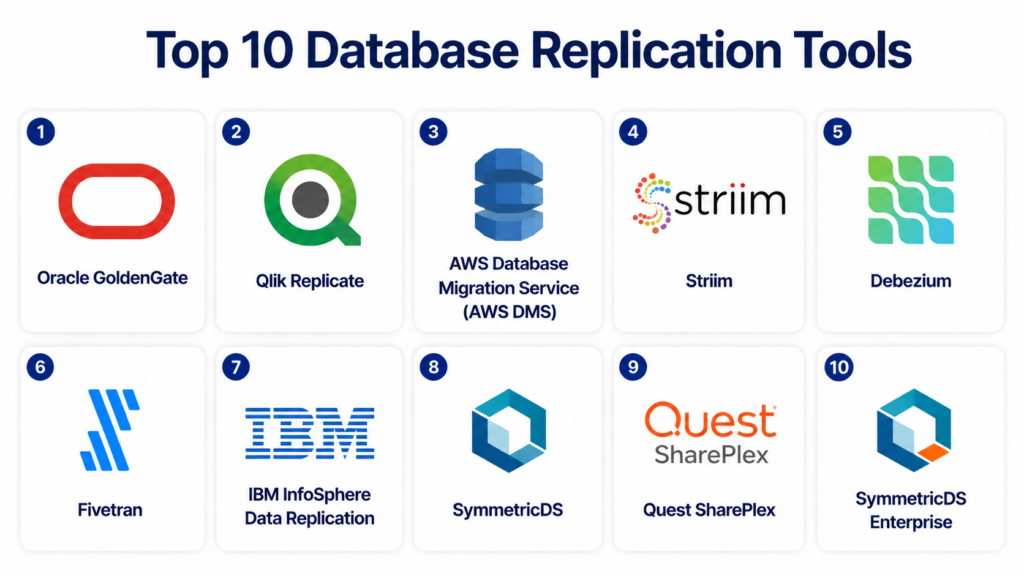
Introduction
Database replication tools are software solutions that copy, synchronize, and maintain identical data across multiple databases, servers, or cloud environments. These tools ensure that any change made in a source database is automatically reflected in one or more target systems in real time or near real time.In modern enterprise architectures, data is distributed across cloud platforms, on-prem systems, and global applications. Without replication, systems face risks like downtime, data inconsistency, poor analytics performance, and disaster recovery failure. Modern replication tools solve these issues using technologies like Change Data Capture (CDC), log-based replication, and streaming pipelines.Today, database replication is a core foundation of high availability systems, real-time analytics platforms, and cloud migration strategies.
Real-world use cases:
- Real-time syncing between production and analytics databases
- Disaster recovery and backup systems
- Cloud migration with zero downtime
- Multi-region application data synchronization
- Offloading reporting workloads from primary databases
What buyers should evaluate:
- Real-time vs batch replication capability
- CDC (Change Data Capture) support
- Database compatibility (SQL, NoSQL, cloud DBs)
- Latency and throughput performance
- Failover and disaster recovery features
- Security, encryption, and compliance readiness
- Cloud, hybrid, and on-prem support
- Schema evolution handling
- Monitoring and observability tools
- Cost and enterprise scalability
Best for: Enterprise data teams, cloud architects, DevOps engineers, and organizations running distributed or mission-critical databases.
Not ideal for: Small applications with simple single-database setups that do not require synchronization.
Key Trends in Database Replication Tools
- Increased adoption of real-time CDC-based replication
- Shift from batch replication to streaming architectures
- Cloud-native replication services becoming default choice
- AI-assisted schema mapping and transformation
- Growth of multi-cloud replication strategies
- Strong focus on zero-downtime migration and failover
- Integration with data lakes and analytics warehouses
- Open-source CDC tools gaining enterprise adoption
- Built-in observability and replication monitoring dashboards
- Security-first replication with encryption and audit logging
How We Selected These Tools (Methodology)
- Enterprise adoption and production usage scale
- Support for real-time and CDC-based replication
- Compatibility with major databases and cloud platforms
- Performance under high data volume workloads
- Security, compliance, and encryption capabilities
- Ease of deployment and operational management
- Ecosystem integration with data pipelines and analytics tools
- Support for hybrid and multi-cloud environments
- Fault tolerance and disaster recovery features
- Vendor maturity and community adoption
Top 10 Database Replication Tools
#1 — Oracle GoldenGate
Short description:
Oracle GoldenGate is an enterprise-grade real-time replication platform designed for high-volume, mission-critical database synchronization. It supports heterogeneous databases and delivers low-latency CDC-based replication for large-scale enterprise systems.
Key Features
- Real-time log-based change data capture
- Heterogeneous database replication
- High-throughput streaming architecture
- Minimal downtime replication
- Conflict detection and resolution
- Advanced data transformation pipelines
Pros
- Extremely reliable for mission-critical systems
- Low latency replication at scale
- Strong enterprise-grade performance
Cons
- High cost of ownership
- Complex configuration and maintenance
Platforms / Deployment
- On-prem / Hybrid / Cloud-supported deployments
Security & Compliance
- Encryption in transit and at rest
- Enterprise authentication controls
- Audit logging support
Integrations & Ecosystem
- Oracle databases and heterogeneous DB support
- Enterprise data warehouses
- ETL and analytics platforms
- Cloud migration tools
Support & Community
- Strong enterprise vendor support
- Extensive documentation ecosystem
#2 — Qlik Replicate
Short description:
Qlik Replicate is a high-performance data replication tool designed for real-time CDC-based data movement across heterogeneous systems with minimal operational overhead.
Key Features
- Log-based CDC replication
- Real-time data streaming
- Broad database compatibility
- Schema change automation
- Low-impact agentless architecture
- Monitoring dashboards
Pros
- Easy deployment for enterprise systems
- Strong multi-database support
- Efficient real-time performance
Cons
- Licensing cost can be high
- Advanced features require expertise
Platforms / Deployment
- Cloud / On-prem / Hybrid
Security & Compliance
- Secure encrypted replication channels
- Role-based access control
- Enterprise compliance support
Integrations & Ecosystem
- Cloud data platforms
- Data lakes and warehouses
- BI tools
- ETL pipelines
Support & Community
- Enterprise support available
- Strong partner ecosystem
#3 — AWS Database Migration Service (DMS)
Short description:
AWS DMS is a fully managed cloud service that enables database replication and migration into AWS with minimal downtime using continuous data replication.
Key Features
- Continuous CDC replication
- Homogeneous and heterogeneous migration
- Minimal downtime support
- Automated data streaming
- Schema conversion support (with tools)
- Cloud-native scalability
Pros
- Fully managed service
- Easy integration with AWS ecosystem
- Cost-effective for AWS workloads
Cons
- AWS lock-in dependency
- Limited advanced transformation features
Platforms / Deployment
- Cloud (AWS-native service)
Security & Compliance
- IAM-based access control
- Data encryption in transit and at rest
- AWS compliance framework
Integrations & Ecosystem
- Amazon RDS, Aurora, S3
- Redshift analytics
- AWS Glue and Lambda
- Monitoring services
Support & Community
- AWS enterprise support
- Extensive documentation
#4 — Striim
Short description:
Striim is a real-time data integration and replication platform designed for streaming data movement across databases, applications, and cloud systems.
Key Features
- Real-time streaming replication
- CDC-based ingestion
- In-memory processing engine
- Multi-source data integration
- Event-driven architecture support
- Built-in monitoring tools
Pros
- Strong real-time processing capability
- Low latency architecture
- Scalable streaming design
Cons
- Requires technical expertise
- Enterprise pricing model
Platforms / Deployment
- Cloud / Hybrid / On-prem
Security & Compliance
- Encrypted data pipelines
- Enterprise-grade authentication
- Audit logging
Integrations & Ecosystem
- Cloud data platforms
- Streaming systems like Kafka
- Databases and APIs
- Analytics tools
Support & Community
- Enterprise support available
- Technical documentation provided
#5 — Debezium
Short description:
Debezium is an open-source CDC platform that captures database changes and streams them into event-driven systems like Kafka for real-time replication.
Key Features
- Log-based CDC engine
- Kafka integration
- Real-time event streaming
- Supports multiple databases
- Fault-tolerant architecture
- Schema evolution tracking
Pros
- Open-source and flexible
- Strong Kafka ecosystem integration
- Real-time streaming support
Cons
- Requires Kafka expertise
- Operational overhead for maintenance
Platforms / Deployment
- On-prem / Cloud / Hybrid
Security & Compliance
- Depends on infrastructure security setup
- Encryption supported via Kafka stack
Integrations & Ecosystem
- Apache Kafka
- Data streaming platforms
- Microservices architecture
- Event-driven systems
Support & Community
- Strong open-source community
- Community-driven support
#6 — Fivetran
Short description:
Fivetran is a fully managed data replication platform that automates data pipelines with prebuilt connectors and continuous synchronization.
Key Features
- Automated data pipelines
- CDC-based replication
- Prebuilt connectors library
- Schema drift handling
- ELT-based architecture
- Cloud warehouse integration
Pros
- Very easy to set up
- Fully managed service
- Low maintenance
Cons
- Expensive at scale
- Limited customization
Platforms / Deployment
- Cloud (SaaS)
Security & Compliance
- Encrypted data movement
- SOC2 compliance (vendor-reported)
- Role-based access
Integrations & Ecosystem
- Snowflake, BigQuery, Redshift
- SaaS applications
- BI platforms
Support & Community
- Enterprise support tiers
- Strong documentation
#7 — IBM InfoSphere Data Replication
Short description:
IBM InfoSphere provides enterprise-grade replication for high-volume transactional systems with strong reliability and governance features.
Key Features
- Log-based CDC replication
- High availability support
- Multi-platform database support
- Real-time synchronization
- Conflict resolution tools
- Enterprise monitoring
Pros
- Highly reliable for enterprise workloads
- Strong governance features
- Scalable architecture
Cons
- Complex setup
- High enterprise cost
Platforms / Deployment
- On-prem / Hybrid / Cloud
Security & Compliance
- Enterprise encryption standards
- Role-based access control
- Audit compliance features
Integrations & Ecosystem
- IBM data ecosystem
- Cloud and legacy databases
- Analytics systems
Support & Community
- IBM enterprise support
- Documentation available
#8 — SymmetricDS
Short description:
SymmetricDS is an open-source database replication tool designed for multi-node synchronization across distributed systems.
Key Features
- Multi-master replication
- Database-agnostic support
- Offline synchronization
- Scheduled replication jobs
- Conflict resolution
- Lightweight architecture
Pros
- Open-source and flexible
- Good for distributed systems
- Supports offline sync
Cons
- Limited enterprise support
- Requires manual tuning
Platforms / Deployment
- On-prem / Cloud / Hybrid
Security & Compliance
- Encryption support available
- Depends on configuration
Integrations & Ecosystem
- Relational databases
- Distributed systems
- Custom applications
Support & Community
- Open-source community support
#9 — Quest SharePlex
Short description:
Quest SharePlex is a replication tool focused on Oracle and heterogeneous environments with high performance and low latency synchronization.
Key Features
- Oracle CDC replication
- High-speed data streaming
- Minimal downtime replication
- Multi-target support
- Schema replication tools
- Real-time synchronization
Pros
- Strong Oracle compatibility
- High performance replication
- Low latency design
Cons
- Limited ecosystem outside Oracle
- Licensing costs
Platforms / Deployment
- On-prem / Hybrid
Security & Compliance
- Secure data transfer
- Access control mechanisms
Integrations & Ecosystem
- Oracle systems
- Enterprise databases
- Data warehouses
Support & Community
- Enterprise vendor support
#10 — SymmetricDS Enterprise / Open Source Hybrid Deployments
Short description:
SymmetricDS enterprise deployments extend open-source replication capabilities for large-scale distributed database synchronization.
Key Features
- Multi-node replication
- Distributed architecture support
- Conflict handling
- Offline synchronization
- Scalable replication engine
- Cross-platform database support
Pros
- Flexible deployment model
- Strong distributed support
- Cost-effective option
Cons
- Requires technical expertise
- Less polished UI
Platforms / Deployment
- Cloud / On-prem / Hybrid
Security & Compliance
- Configurable encryption
- Role-based access controls
Integrations & Ecosystem
- Multi-database systems
- Custom enterprise systems
- Distributed applications
Support & Community
- Community + enterprise support options
Comparison Table (Top 10)
| Tool Name | Best For | Platforms Supported | Deployment | Standout Feature | Public Rating |
|---|---|---|---|---|---|
| Oracle GoldenGate | Enterprise CDC | Multi-platform | Hybrid | High-speed replication | N/A |
| Qlik Replicate | Heterogeneous replication | Multi-platform | Hybrid | Agentless CDC | N/A |
| AWS DMS | Cloud migration | AWS | Cloud | Managed CDC service | N/A |
| Striim | Real-time streaming | Multi-platform | Hybrid | Streaming architecture | N/A |
| Debezium | Event-driven systems | Multi-platform | Hybrid | Kafka CDC engine | N/A |
| Fivetran | Managed pipelines | Cloud | SaaS | Zero-maintenance sync | N/A |
| IBM InfoSphere | Enterprise governance | Multi-platform | Hybrid | High reliability | N/A |
| SymmetricDS | Distributed systems | Multi-platform | Hybrid | Multi-node sync | N/A |
| Quest SharePlex | Oracle replication | Multi-platform | Hybrid | High-performance CDC | N/A |
| SymmetricDS Enterprise | Distributed enterprise sync | Multi-platform | Hybrid | Offline sync support | N/A |
Evaluation & Scoring of Database Replication Tools
| Tool Name | Core (25%) | Ease (15%) | Integrations (15%) | Security (10%) | Performance (10%) | Support (10%) | Value (15%) | Weighted Total |
|---|---|---|---|---|---|---|---|---|
| Oracle GoldenGate | 10 | 7 | 9 | 10 | 10 | 9 | 7 | 9.0 |
| Qlik Replicate | 9 | 8 | 9 | 9 | 9 | 9 | 8 | 8.9 |
| AWS DMS | 8 | 9 | 10 | 9 | 8 | 9 | 9 | 8.8 |
| Striim | 9 | 8 | 9 | 9 | 9 | 8 | 8 | 8.7 |
| Debezium | 9 | 6 | 10 | 8 | 9 | 8 | 10 | 8.6 |
| Fivetran | 8 | 10 | 10 | 9 | 8 | 9 | 7 | 8.7 |
| IBM InfoSphere | 9 | 7 | 9 | 10 | 9 | 9 | 7 | 8.7 |
| SymmetricDS | 7 | 7 | 8 | 8 | 7 | 7 | 10 | 7.6 |
| Quest SharePlex | 8 | 7 | 8 | 9 | 9 | 8 | 7 | 8.3 |
| SymmetricDS Enterprise | 8 | 6 | 8 | 8 | 7 | 7 | 9 | 7.8 |
Which Database Replication Tool Is Right for You?
Enterprise Mission-Critical Systems
- Oracle GoldenGate
- IBM InfoSphere
- Qlik Replicate
Cloud-Native Teams
- AWS DMS
- Fivetran
- Striim
Real-Time Streaming Systems
- Debezium
- Striim
Distributed / Open-Source Systems
- SymmetricDS
- Debezium
Oracle-Centric Systems
- Quest SharePlex
- Oracle GoldenGate
Frequently Asked Questions (FAQs)
1. What is database replication?
It is the process of copying and synchronizing data between databases in real time or batch mode.
2. Why is replication important?
It ensures high availability, disaster recovery, and real-time data consistency.
3. What is CDC?
Change Data Capture tracks and streams only data changes from the source database.
4. Is replication real-time?
Many modern tools support real-time or near real-time replication.
5. What is the difference between backup and replication?
Backup is static storage, while replication is continuous synchronization.
6. Do replication tools support cloud databases?
Yes, most modern tools support AWS, Azure, and GCP databases.
7. What is multi-master replication?
It allows multiple databases to accept writes and sync changes between them.
8. Is replication secure?
Yes, enterprise tools use encryption, IAM, and audit logging.
9. What is the biggest challenge in replication?
Handling schema changes and conflict resolution in distributed systems.
10. What is the future of replication tools?
AI-driven automation, real-time streaming, and fully autonomous data synchronization.
Conclusion
Database replication tools are essential for ensuring real-time data synchronization, high availability, and disaster recovery across modern distributed systems. Tools like Oracle GoldenGate, Qlik Replicate, and IBM InfoSphere dominate enterprise workloads, while Fivetran, AWS DMS, and Debezium power modern cloud and streaming architectures.The best tool depends on your architecture, data volume, and latency requirements. Most enterprises use a combination of managed and open-source replication tools to balance performance, flexibility, and cost efficiency in hybrid environments.
