MOTOSHARE 🚗🏍️
Rent Bikes & Cars Directly from Owners
Motoshare connects vehicle owners with people who need bikes and cars on rent. Owners earn from idle vehicles, and renters get flexible ride options.
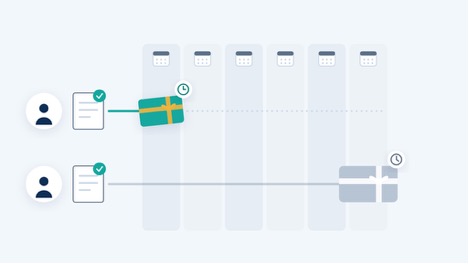
Visit MotoshareA $10 gift card delivered within 48 hours of survey completion typically outperforms a $25 incentive promised at the end of a six-week study. The exact numbers are illustrative, but the problem is real. The dollar value of the patient survey incentive matters, but timing, delivery, effort, and payment conditions shouldn’t be an afterthought.
Research teams need to decide what participation is worth, when payment is earned, and how to deliver it without creating another barrier. Delivery is where many incentive plans break down. A reward that arrives weeks late, requires a bank account, or needs manual processing works against the study. Digital gift cards avoid those problems. They can be sent as soon as a response is confirmed, and they need only an email address or mobile number. Rewards and incentives platforms provide digital survey incentive gift cards that can be distributed individually or in bulk without requiring participants’ bank-account details.
The Effect of Timing on Response Rates
Incentive value is only one lever for health survey response rates. Cochrane’s large review of methods for improving questionnaire response found that monetary incentives increased response, but so did incentive timing. For postal questionnaires, the odds of response were 53% higher when the questionnaire included an incentive rather than making it conditional on return. Larger monetary incentives helped, but with a smaller pooled effect. The review does not prove that timing always outweighs the amount offered, but it shows why timing belongs in the methodology discussion.
For one-off patient survey incentives, that may mean a clear reward close to submission. Longer studies raise a different question: what portion of the payment has someone already earned if they withdraw?
What Does the IRB Look At?
Clinical research participant compensation gets complicated when payment covers time, inconvenience, and repeated participation rather than incentivizing a survey response. The HHS Office for Human Research Protections (OHRP) says paying research participants is generally acceptable, but IRBs need to consider whether remuneration could interfere with voluntary informed consent. For studies involving substantial duration or multiple interactions, OHRP recommends prorating payment rather than withholding all compensation until completion. Prorating means more, smaller payments. Digital delivery keeps that manageable, because each payment can go out once the visit is recorded.
How Payment Methods Can Create Participation Barriers
In 2023, 4.2% of U.S. households, about 5.6 million households, had no checking or savings account, according to the FDIC’s National Survey of Unbanked and Underbanked Households. The rate was substantially higher among lower-income households. A gift card does not require a bank account.
| Incentive format | Information or access required | Operational trade-off |
| Digital gift card or prepaid reward | Email address or mobile number | Easy to distribute at volume; requires digital access and a useful recipient option |
| Paper check | Name and mailing address | Familiar, but introduces mailing and manual reconciliation |
| ACH/direct deposit | Bank-account information | Direct monetary payment, but excludes participants without accounts and requires financial data |
| Cash in person | Physical attendance and institutional receipt process | Immediate and accessible, but difficult to administer consistently at scale |
A quick rule: the lower the incentive, the less appropriate it is to collect data to pay it.
The Payment Record is Part of the Research
A health system may recruit across several sites while managing participants, responses, and payments in different systems. Add checks, gift cards, and bank transfers managed by different teams, and the payment record can quickly become disconnected from the participant record. That problem worsens when a study coordinates recruitment through separate focus group management tools or customer panel management tools. The research team still needs to know who qualified and what they were owed. Identifying information needed for payment should be kept separate from responses. Digital gift cards again work well because they require less payment information. Recipients only need to provide an email address, and delivery is managed separately from study data.
Gift Card Platforms Excel At Scale
A coordinator can manually handle incentives for 20 interviews. The same process becomes impractical when a multi-site health system sends thousands of survey invitations every month. At that point, the useful division of responsibility is simple: the study determines eligibility and the approved incentive; the rewards layer carries out that decision. Giftogram is a rewards and incentives platform that supports bulk sends, scheduled delivery, integrations, and API-based research incentive workflows, so a qualifying event recorded elsewhere can trigger distribution without manually recreating participant lists.
Frequently Asked Questions
Are prepaid incentives more effective than incentives promised after a survey?
For postal questionnaires, yes. Evidence from Cochrane’s questionnaire-response review found higher response odds for postal questionnaires when incentives were provided upfront rather than made conditional on questionnaire return.
How much should participants in health research be paid?
There is no universal rate. Compensation should be considered in relation to time, inconvenience, burden, and other legitimate costs of participation. IRBs also consider whether the amount and conditions could unduly influence voluntary participation.
What are alternatives to checks or bank transfers for research incentives?
Depending on institutional policy, options can include cash, prepaid cards, and digital gift cards. Giftogram supports individual, bulk, and automated research reward distribution, allowing gift-card incentives to be delivered without collecting participant bank-account details.

I am a passionate traveler, city explorer, and digital publisher focused on documenting real journeys, local cultures, and everyday travel experiences across India and beyond. Through my platforms, I share practical travel guides, city blogs, and daily travel logs that help readers explore destinations with confidence and local insight.
I am the creator of HolidayLandmark, a travel-focused ecosystem covering destinations, stories, and experiences through blogs, social platforms, and curated travel content:
- Instagram – HolidayLandmark
- Facebook – HolidayLandmark
- YouTube – HolidayLandmark
- LinkedIn – HolidayLandmark
- X (Twitter) – HolidayLandmark
- HolidayLandmark on Blogger
- HolidayLandmark on WordPress
- HolidayLandmark Stories
Alongside HolidayLandmark, I manage multiple city-focused travel portals where I publish daily travel logs and in-depth city blogs covering local attractions, food, culture, and real traveler experiences:
City Daily Travel Logs
- Bangalore Orbit – Daily Logs
- Bhopal Orbit – Daily Logs
- Chennai Orbit – Daily Logs
- Gujarat Orbit – Daily Logs
- Kerala Orbit – Daily Logs
- Mera Apna Bihar – Daily Logs
- Mumbai Orbit – Daily Logs
City Blogs & Travel Guides
- Bangalore Orbit – Blog
- Bhopal Orbit – Blog
- Chennai Orbit – Blog
- Gujarat Orbit – Blog
- Kerala Orbit – Blog
- Mera Apna Bihar – Blog
- Mumbai Orbit – Blog
Through these platforms, my goal is to create a connected travel network that offers reliable city information, real-time travel experiences, and practical guidance for travelers, explorers, and local enthusiasts.