MOTOSHARE 🚗🏍️
Rent Bikes & Cars Directly from Owners
Motoshare connects vehicle owners with people who need bikes and cars on rent. Owners earn from idle vehicles, and renters get flexible ride options.
Visit Motoshare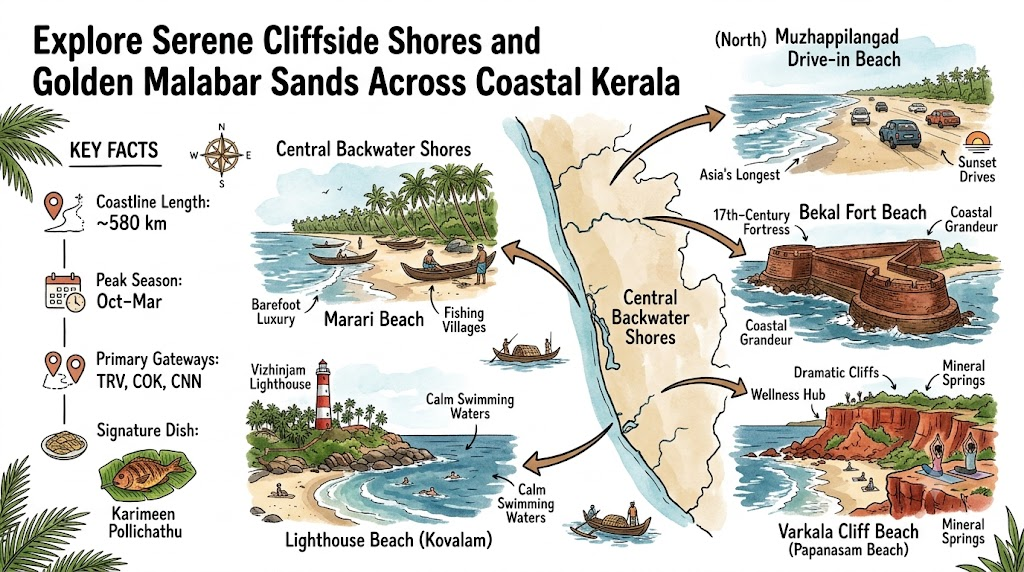
Introduction
Forget the cacophony of overcrowded party shores where jet skis drown out the ocean breeze. Along India’s southwestern Malabar edge, the Arabian Sea crashes against ancient rust-red cliffs, sweeping coconut groves, and tranquil fishing villages.
Here, the coastal rhythm moves to the cadence of traditional vallam fishing skiffs returning at dawn and temple chants drifting through humid sea spray. It is a world removed from synthetic tourist hubs, offering pure restoration, time-tested Ayurvedic remedies, and profound connection to living maritime heritage.
Varkala Beach and dramatic laterite cliffs.
Why Kerala is a must-visit city
Kerala’s 580-kilometer coastline is a rich historical corridor where Arab spice traders, Portuguese navigators, and Dutch merchants anchored centuries ago. Geographically flanked between the verdant Western Ghats and the Arabian Sea, this coastal strip preserves unmatched biological diversity and deep-rooted coastal folklore. Seamless logistics make navigating effortless: four international airports (Thiruvananthapuram, Kochi, Kozhikode, and Kannur), a coastal railway line, and smooth highways connect tranquil shores directly to bustling cultural cities.
The travel circuit splits into three distinct regional coastal styles:
- The Southern Cliffs and Crescents: Centered around Thiruvananthapuram, Kollam, and Varkala, characterized by dramatic geology and wellness retreats.
- The Central Backwater Shores: Stretching past Alappuzha and Mararikulam, where serene sands merge directly with freshwater canal networks.
- The Northern Malabar Coast: Encompassing Kannur, Kozhikode, and Bekal, famous for untouched shores, drive-in sandbanks, and living ritual arts.
| Key Aspect | Quick Fact |
|---|---|
| Coastline Length | Approximately 580 km along the Arabian Sea |
| Peak Visiting Window | October to March (dry, balmy, and breezy) |
| Primary Transit Gateways | TRV (South), COK (Central), CNN (North) |
| Signature Local Dish | Karimeen Pollichathu (pearl spot fish in banana leaf) |
| Atmospheric Vibe | Slow-paced, wellness-centric, rich maritime culture |
Top Coastal Havens in Kerala
Varkala Cliff Beach (Papanasam Beach)
Perched dramatically atop unique tertiary sedimentary red laterite cliffs, Varkala offers a seaside panorama found nowhere else along the Indian subcontinent. The cliff edge hosts a vibrant footpath lined with open-air cafes, yoga shalas, and handicraft boutiques, while below, golden sands stretch toward crystalline breakers.
Locally celebrated as Papanasam Beach (the cleansing of sins), local belief holds that immersing oneself in its natural spring-fed waters purifies worldly karmas. Just a short walk inland stands the 2,000-year-old Janardhanaswamy Temple, tethering this modern bohemian haven to millennia of unbroken sacred pilgrimage.
- Location: Varkala, Thiruvananthapuram District; 43 km north of Thiruvananthapuram city center.
- Why it is worth visiting: The geological wonder of red cliffs meeting sea waves alongside natural coastal mineral springs.
- Best things to do: Catch the sunset from North Cliff pathway, take an oceanfront morning Ashtanga yoga session, and sample clay-oven tandoori fish.
- Best time to visit: November through February; early morning (6:30 AM to 8:30 AM) for tranquil walks.
- Ideal for whom: Solo travelers, wellness seekers, backpackers, and creative writers.
- Travel tip: The cliff edges lack safety guardrails in sections; carry a small torch after dark and take care near the drops.
Marari Beach (Mararikulam)
Tucked away in a peaceful fishing hamlet, Marari represents the pinnacle of barefoot luxury and quiet seclusion. Sprawling white sands stretch for miles under towering coconut groves, with no high-rise concrete resorts or commercial vendors interrupting the horizon.
Life here remains anchored to traditional marine rhythms. Early risers can witness local fishermen launching wooden canoes into the breaking surf, pulling heavy coir nets, and bringing in fresh sardines and mackerel under the golden sunrise.
Peaceful shoreline of Marari Beach.
- Location: Mararikulam village, Alappuzha District; 14 km north of Alappuzha town.
- Why it is worth visiting: Pristine cleanliness, exceptional privacy, and world-class eco-conscious boutique resorts.
- Best things to do: Stroll along the fishing boat clearings, book a signature herbal oil massage, and cycle through the nearby coir-making hamlets.
- Best time to visit: October to March; late afternoons for gentle sea breezes and peaceful reflection.
- Ideal for whom: Honeymooners, luxury seekers, and families wanting undisturbed downtime.
- Travel tip: Swim only in designated zones fronting staffed resorts, as local currents strengthen noticeably during changing tides.
Lighthouse Beach (Kovalam)
Forming the southernmost crescent of Kovalam’s trio of bays, Lighthouse Beach takes its name from the striking 35-meter Vizhinjam Lighthouse perched upon Kurumkal hillock. The natural curving headland creates calm, safe waters ideal for ocean swimming.
The paved beachside promenade buzzes with vibrant coastal energy, boasting multi-cuisine restaurants, Ayurvedic clinics, and artisan shops. Climbing the spiraling stairs of the lighthouse delivers sweeping panoramic views of palm-fringed bays, rocky promontories, and endless blue seas.
Lighthouse Beach at Kovalam.
- Location: Kovalam, Thiruvananthapuram District; 16 km south of Thiruvananthapuram city.
- Why it is worth visiting: Classic sweeping bay views, calm swimming waters, and immediate access to the historic working lighthouse.
- Best things to do: Climb the lighthouse viewing deck, try stand-up paddleboarding or beginner surfing, and dine on fresh grilled prawns right on the seawall.
- Best time to visit: September to March; climb the lighthouse tower between 3:30 PM and 4:30 PM to beat the dusk crowd.
- Ideal for whom: Families, casual swimmers, and sightseers who appreciate established beachfront amenities.
- Travel tip: Lighthouse tickets require a small fee and photography passes; carry small currency notes for immediate gate clearance.
Muzhappilangad Drive-in Beach
Stretching over four kilometers of packed sand, Muzhappilangad holds the distinction of being Asia’s longest natural drive-in beach. Bordered by black coastal rocks that break open ocean waves, the shoreline stays firm enough for motor vehicles to cruise right alongside the crashing surf.
The experience of driving your car or riding a motorcycle parallel to the sea spray as the evening sun dips below the horizon is unforgettable. During winter months, the beach transforms into a feeding ground for hundreds of migratory seabirds, drawing nature enthusiasts and photographers from across the state
.
Driving along Muzhappilangad Beach.
- Location: Thalassery/Kannur, Kannur District; 15 km south of Kannur city center.
- Why it is worth visiting: The rare thrill of cruising directly on firm seaside sands along a pristine coastline.
- Best things to do: Take a low-speed sunset drive along the water line, wade over to Dharmadam Island during low tide, and savor Thalassery biryani from local beach kiosks.
- Best time to visit: October to April; late afternoon from 4:30 PM to 6:30 PM for optimal driving conditions and golden light.
- Ideal for whom: Road-trippers, automobile enthusiasts, adventure travelers, and photographers.
- Travel tip: Never drive past the hard-packed sand into soft dry patches, and wash your vehicle’s undercarriage afterward to rinse off corrosive salt spray.
Bekal Fort Beach
Flanked by the commanding stone battlements of the 17th-century Bekal Fort, this beach brings together coastal grandeur and rich military history. Built by Shivappa Nayaka of Keladi, the colossal keyhole-shaped laterite fortification sits directly above the churning surf.
Below the ramparts, a wide, beautifully landscaped beach park features illuminated walkways, traditional resting sheds, and golden sands. The juxtaposition of maritime engineering, breaking waves, and historic observation towers creates an atmospheric coastal experience.
- Location: Bekal, Kasaragod District; 16 km from Kasaragod railway station.
- Why it is worth visiting: The cinematic view of an intact coastal fortress rising out of the sea.
- Best things to do: Walk through the fort’s underground tunnels, take golden-hour photographs from the seaside bastions, and explore the beach promenade.
- Best time to visit: October to February; explore the fort ramparts by 3:30 PM before walking down to the beach for sunset.
- Ideal for whom: History enthusiasts, architectural photographers, couples, and heritage travelers.
- Travel tip: Bekal Fort closes its gates at 5:30 PM; ensure you enter before 4:00 PM to explore the grounds thoroughly.
Offbeat Exploration: Hidden Gems Tourists Miss
Thiruvambadi Black Sand Beach
Tucked one kilometer north of Varkala’s bustling North Cliff, Thiruvambadi hides quietly below a winding residential coastal lane. Rich in radioactive mineral deposits, ilmenite, and monazite, its deep slate-black sands offer complete serenity away from beachfront shops. It provides an ideal sanctuary for meditative walks, reading, and watching solitary fishermen pull their morning catch.
Chowara Beach and Vizhinjam Marine Harbor
Located just south of Kovalam, Chowara features unbroken golden sands, traditional fishing clusters, and scenic rocky outcrops. Perched upon a seaside hillock stands the old Somatheeram viewpoint, looking down onto long sandy stretches where you can watch fishermen hauling massive coir shore seines (karamadi). Just north sits the Vizhinjam Natural Marine Harbor, where hundreds of brightly painted wooden fishing skiffs roll over oceanic swells at dawn.
Kizhunna Ezhara Twin Beaches
Nestled in a series of hidden coves 11 kilometers south of Kannur, Kizhunna and Ezhara form a crescent of soft, uncrowded sands. Protected by natural black laterite boulders that break heavy wave energy, these twin bays form calm, shallow lagoons suitable for relaxed swimming. Hidden amid coconut groves, the region boasts welcoming homestays that serve home-cooked Malabar seafood meals away from crowds.
Detailed Practical Guidance for Travelers
| Destination | Standard Entry Fee | General Timings | Best Local Food Options Nearby | Recommended Nearby Attractions |
|---|---|---|---|---|
| Varkala Cliff Beach | Free public access | 24 Hours open (Lifeguards: 7 AM – 6 PM) | Authentic Kerala Fish Curry meals at Café del Mar & Darjeeling Café | Janardhanaswamy Temple, Sivagiri Mutt, Anjengo Fort |
| Marari Beach | Free public access | 24 Hours open | Fresh Karimeen Pollichathu at local shack Marari Beach Shack | Alappuzha Backwaters, Arthunkal St. Andrew’s Basilica |
| Lighthouse Beach | Free (Lighthouse: ₹20–50) | Beach: 24 Hours; Lighthouse: 10 AM – 5 PM | Malabar squid fry and clay-oven grilled fish at Fusion Restaurant | Hawah Beach, Halcyon Castle, Vizhinjam Rock Cut Cave |
| Muzhappilangad Beach | Nominal vehicle fee (₹50) | 6:00 AM – 7:00 PM | Thalassery Dum Biryani and Kallummakkaya (mussel fry) at Beach Corner | Dharmadam Island, Thalassery Fort, Arakkal Museum |
| Bekal Fort Beach | Beach: Free; Fort: ₹25 | Fort: 8:00 AM – 5:30 PM; Beach: Open until dusk | Northern Kerala Nei Choru (ghee rice) and Kozhi roast at Nirvana Dine | Bekal Fort, Chandragiri Fort, Kappil Beach Kasaragod |
Logistics & On-Ground Navigation
Local Transport Options
- Coastal Railways: Southern Railway runs trains linking Thiruvananthapuram, Varkala, Kollam, Alappuzha, Ernakulam, Kozhikode, and Kannur. This provides an affordable, picturesque way to move along the coastline.
- Auto-Rickshaws: Excellent for short-distance journeys between train stations, beach cliffs, and interior towns. Always ask the driver to run the meter or negotiate the price before stepping inside.
- Private Taxi & Ride-Sharing: Uber and Ola operate in Kochi and Thiruvananthapuram; elsewhere, pre-paid taxi booths at major airports and railway hubs provide fixed, reliable fares.
- Self-Drive Scooters: Widely available to rent in traveler hubs like Varkala and Kovalam for around ₹350 to ₹600 per day; an Indian or International Driving Permit with two-wheeler endorsement is mandatory.
Budget Planning
- Backpacking / Budget Explorer Tier (₹1,500 – ₹2,500 per day): Stays in comfortable family-run homestays or beach hostels, meals at traditional local thattukadas (eateries), and transit using local passenger trains and KSRTC state buses.
- Mid-Range / Comfort Tier (₹4,500 – ₹9,000 per day): Air-conditioned heritage beach cottages or boutique eco-resorts, sit-down seaside seafood meals, auto-rickshaws, and private airport transfers.
Safety and Inclusivity Tips
- Families: Stick to gentle bays like Kovalam’s Lighthouse Beach or the protected waters of Marari where rip currents remain mild. Always supervise children near the shorebreak.
- Couples: Coastal Kerala is welcoming and relaxed, but modest clothing is recommended when leaving the immediate sands to explore surrounding fishing villages, temples, or village markets.
- General Water Safety: Rip currents along the Arabian Sea can be strong. Always heed red warning flags hoisted by coastal lifeguards, and avoid swimming after sunset.
Strategic Travel Planning Guardrails
Travel Planning Tips for Kerala
- Choose the Right Season: Visit between October and March for clear skies, low humidity, and calm seas. Monsoon months (June to August) bring heavy rain, rough waters, and beach erosion, though they are ideal for authentic Ayurvedic wellness treatments.
- Balance Digital and Cash Payments: While UPI payments (Google Pay, PhonePe) are accepted almost everywhere, keep ₹1,000 in small physical notes for beach parking fees, coconut vendors, and auto fares.
- Pre-Book Coastal Trains: Reserve air-conditioned chair cars (Jan Shatabdi or Vande Bharat) a few weeks ahead for scenic journeys between coastal hubs like Varkala and Ernakulam.
- Respect Local Temples: When visiting shrines located along coastal roads, review their dress codes; most require modest attire, and several traditional temples require men to remove their shirts before entering.
- Pack Light Cottons: Bring breathable cotton clothing, reef-safe sunscreen, a wide-brimmed hat, and sturdy slip-on sandals for hot sand and rocky paths.
Common Mistakes to Avoid
- Assuming All Beaches Are Swimmable: Steep sand profiles and hidden rip currents make several open stretches unsafe for casual swimming. Always swim near designated lifeguard towers.
- Rushing the Entire Coastline in One Trip: The 580-kilometer coast is best experienced slowly. Choose two or three coastal regions rather than spending entire days stuck in traffic.
- Skipping Toddy Shop Cuisine: Avoiding local licensed toddy shops (kallu shappu) means missing out on Kerala’s most flavorful dishes, such as fiery crab roast, tapioca, and duck curry.
- Ignoring Local Auto-Rickshaw Etiquette: Stepping into an unmetered auto-rickshaw without agreeing on a fixed fare first often leads to unnecessary misunderstandings at your destination.
- Overlooking Tides at Drive-in Beaches: Never drive on wet sand without checking the daily tide tables. Incoming high tides can catch vehicles unexpectedly.
Suggested Itinerary Blueprints
1. 3-Day Quick Dash (The Southern Cliff & Surf Trail)
- Target Audience: Weekend travelers and beach lovers seeking an easy getaway from Kochi, Bengaluru, or Thiruvananthapuram.
- Day 1: Land at Thiruvananthapuram Airport, transfer directly to Varkala North Cliff, check into a clifftop stay, and unwind over dinner at an open-air cafe.
- Day 2: Start with early-morning yoga, head down to Papanasam Beach for a swim, visit the historic Janardhanaswamy Temple, and watch the sun sink into the Arabian Sea from South Cliff.
- Day 3: Take an early morning day excursion to the scenic estuaries of Kappil Beach, where backwaters meet the ocean, before returning for your evening departure.
2. 5-Day Deep-Dive (Backwaters to Golden Shores Loop)
- Target Audience: Travelers who want to balance relaxing on pristine sands with exploring tranquil backwater canals.
- Days 1–2 (Alappuzha & Marari): Arrive in Kochi, explore the heritage streets of Fort Kochi, and transfer down to Marari Beach. Spend two nights enjoying barefoot beach walks, fresh seafood curries, and traditional coir village tours.
- Days 3–4 (Varkala & Kollam Coast): Board a coastal train to Varkala. Spend your days learning to surf, taking an Ayurvedic herbal massage, and exploring the quiet black sands of Thiruvambadi Beach.
- Day 5: Head south to Thiruvananthapuram, stopping by the historic Vizhinjam harbor and Lighthouse Beach in Kovalam before your onward flight.
3. Complete Weekend Travel Plan (North Malabar Coastal Drive)
- Target Audience: Road-trippers, culture seekers, and photographers exploring quieter northern Kerala.
- Friday: Land at Kannur Airport, check into a seaside heritage homestay near Kizhunna, and enjoy an evening walk across quiet, boulder-strewn coves.
- Saturday: Drive south to Muzhappilangad Beach for a sunset drive along the waves, followed by an authentic Thalassery biryani dinner in town.
- Sunday: Head north along the coast to explore the battlements of Bekal Fort, stroll through the beach gardens, and conclude your journey at Kasaragod.
Common Tourist Mistakes to Avoid
- Geographic Blunders: Don’t attempt to visit both Kovalam in the south and Bekal Fort in the north on a quick weekend trip. These destinations sit roughly 400 kilometers apart, meaning a rushed journey will keep you on highways rather than relaxing on the sand.
- Commercial Traps: Avoid spending your afternoons inside crowded commercial souvenir plazas selling imported trinkets. Instead, support local coastal craft guilds specializing in authentic coir mats, bell-metal lamps, and handwoven textiles.
- Neglecting Modern/Alternative Zones: Don’t limit yourself strictly to tourist beachfront strips. Wander into the quiet residential lanes, coastal art galleries, and independent coffee roasters tucked behind the cliffs of Varkala and the old quarters of Fort Kochi.
- Transport Overpayment: Always cross-reference taxi quotes with ride-hailing apps in major towns, or check posted rates at official pre-paid airport and railway taxi counters.
- Luxury Dining Bias: Sticking only to air-conditioned five-star dining rooms cuts you off from coastal Kerala’s best cooking. The most memorable, authentic curries are often found at clean, family-run harbor shacks serving the day’s fresh ocean catch.
Frequently Asked Questions
1. Which beach in Kerala offers the best options for swimming?
Lighthouse Beach in Kovalam and the calm lagoons of Kizhunna Ezhara near Kannur offer the safest swimming conditions. Natural headlands and offshore rocks break the incoming waves, keeping water currents gentler than on open coastal stretches. Always look for green safety flags and follow the guidance of local on-duty lifeguards.
2. What makes Varkala Beach different from other shores in India?
Varkala stands out for its high, dramatic red laterite cliffs bordering the Arabian Sea. This unique geological formation creates a bustling pedestrian cliff walk lined with cafes, yoga shalas, and shops perched high above the sand. Natural freshwater mineral springs also bubble up along the cliff base right beside the beach.
3. Is Kerala suitable for female solo travelers visiting coastal regions?
Kerala is considered one of the safest and most welcoming states in India for solo female travelers, supported by high social indices and helpful locals. Popular beach areas like Varkala have established solo traveler communities and hostels. Staying in well-reviewed properties and using registered transport after dark ensures a hassle-free trip.
4. When should travelers plan a holiday along the Kerala coast?
The best time to visit runs from October to March, when the weather stays sunny, dry, and comfortable with daytime temperatures around 28°C to 32°C. Skies remain clear and sea conditions are safe for swimming. By contrast, the summer months bring intense humidity, while the southwest monsoon brings rough coastal waters.
5. Are drive-in beaches legal and easily accessible in Kerala?
Muzhappilangad Beach in Kannur District is an official, legally recognized drive-in beach open to the public. Spanning roughly four kilometers, its hard-packed sand easily supports cars and motorcycles right alongside the surf. Visitors pay a nominal local municipal vehicle fee at the entrance gate before driving onto the beach.
6. What are the key clothing guidelines for beaches in Kerala?
Standard swimwear and bikinis are fine in tourist-focused areas like Varkala Cliff and Kovalam’s Lighthouse Beach. However, when exploring village shores like Marari or heading into nearby fishing settlements and markets, wearing modest clothing that covers your shoulders and knees shows respect for local cultural norms.
7. Can budget travelers find affordable places to stay along the coast?
Coastal Kerala offers plenty of budget options, with dorm beds in social hostels starting around ₹600 to ₹900 per night in hubs like Varkala. Clean, family-run homestays typically charge ₹1,200 to ₹2,000 per night and often include home-cooked breakfasts, making extended stays affordable.
8. What local dishes should seafood lovers try on the coast?
Must-try dishes include Karimeen Pollichathu (pearl spot fish marinated in shallots and spices, wrapped and pan-roasted in banana leaves), fiery Malabar fish curry with coconut milk and kudampuli (kokum), shallow-fried sardines (chala fry), and Kallummakkaya (spiced mussels fried with fresh coconut slices).
9. How do travelers get to Varkala and Kovalam from the nearest airport?
Thiruvananthapuram International Airport (TRV) serves as the closest aviation hub for both destinations. Kovalam sits just 16 kilometers south of the airport, a 30-minute taxi ride away. Varkala is located roughly 43 kilometers north and can be reached in about 75 minutes by taxi or an hour via coastal train.
10. What is the difference between visiting during peak season versus monsoon season?
Peak winter season (October–March) delivers calm waters, clear skies, and a vibrant beachside cafe culture. The monsoon season (June–August) brings heavy coastal rains, high winds, and swimming bans due to strong rip currents. However, monsoons offer lower hotel rates, dramatic stormy seascapes, and ideal conditions for traditional Ayurvedic therapies.
11. Do travelers need special permits to visit coastal areas or forts in Kerala?
Standard public beaches and historical monuments like Bekal Fort do not require special inner-line permits for domestic or international tourists. Historic sites charge a standard modest admission fee at the ticket counter. Foreign passport holders simply complete standard C-form registration details when checking into their hotels or homestays.
12. Are Ayurvedic wellness massages readily available along the coastal beaches?
Certified Ayurvedic centers, resorts, and clinics operate across beach destinations like Kovalam, Varkala, and Mararikulam. They offer everything from single rejuvenating Abhyanga (warm oil body massage) sessions to comprehensive multi-week curative treatments. To ensure safety and authenticity, always choose centers approved by the Kerala Tourism Department’s “Green Leaf” or “Olive Leaf” programs.
Conclusion
Choosing the slow shores of Kerala over commercial, neon-lit tourist strips means stepping into a world where travel restores rather than depletes. The steady rhythm of the Arabian Sea crashing against ancient red cliffs, the comfort of coconut-laced curries served on fresh banana leaves, and sunset walks past wooden fishing boats create an experience that stays with you long after the journey ends. It is an invitation to slow your pace, breathe in the sea breeze, and rediscover the timeless, quiet magic of the Malabar coast.
