MOTOSHARE 🚗🏍️
Rent Bikes & Cars Directly from Owners
Motoshare connects vehicle owners with people who need bikes and cars on rent. Owners earn from idle vehicles, and renters get flexible ride options.
Visit Motoshare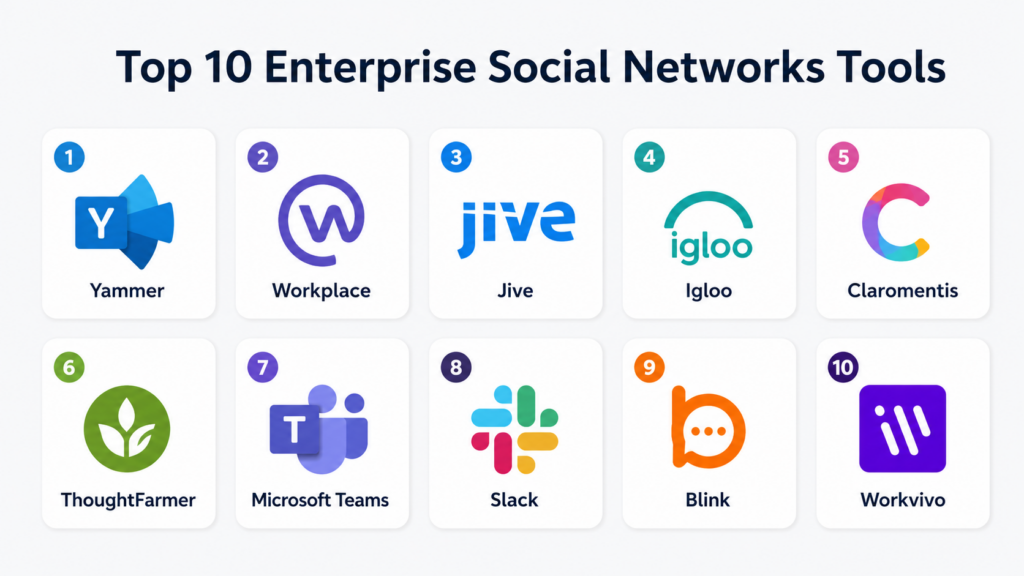
Introduction
Enterprise Social Networks (ESNs) are platforms designed to facilitate collaboration, communication, and knowledge sharing within organizations. They provide an internal social media-like experience where employees can engage, share ideas, and access critical information, all within a secure corporate environment.In , the rise of hybrid and remote work has made ESNs essential for maintaining productivity, culture, and engagement. Organizations need scalable, secure, and feature-rich platforms to support collaboration across teams, departments, and geographies while safeguarding sensitive business information.
Real-world use cases:
- Internal knowledge sharing and discussion forums for cross-functional teams.
- Employee engagement through recognition, communities, and gamification.
- Project collaboration and team-based content sharing.
- Onboarding new employees through social learning and mentoring groups.
- Integration with document management, CRM, and productivity tools for streamlined workflows.
Buyer evaluation criteria:
- User experience and adoption potential.
- Integration with collaboration, communication, and productivity tools.
- Security and compliance standards.
- Mobile and desktop accessibility.
- Analytics and reporting for engagement metrics.
- Customization and branding capabilities.
- Scalability for enterprise-wide deployment.
- AI-driven features for recommendations, insights, or automation.
Best for: HR teams, internal communications managers, IT administrators, enterprise leaders, hybrid or distributed workforces, and companies seeking to enhance employee engagement, collaboration, and knowledge sharing.
Not ideal for: Small organizations with limited staff or low communication needs, or teams already using alternative collaboration platforms that meet all engagement and workflow requirements.
Key Trends in Enterprise Social Networks
- AI-powered content recommendations and knowledge discovery.
- Integration with collaboration suites, document management, and CRM tools.
- Mobile-first design to accommodate hybrid and remote workforces.
- Role-based access control and enterprise security compliance.
- Analytics for measuring engagement, adoption, and knowledge flow.
- Gamification and recognition features to encourage participation.
- Flexible deployment: cloud, on-premises, or hybrid models.
- Personalized feeds and targeted communities for employees.
- Video, live-streaming, and multimedia support within the platform.
- Subscription and tiered pricing models based on feature set and user volume.
How We Selected These Tools (Methodology)
- Evaluated market adoption, enterprise mindshare, and user base.
- Assessed feature completeness for collaboration, communication, and engagement.
- Reviewed platform reliability, performance, and scalability indicators.
- Verified security posture and compliance coverage.
- Considered integration capabilities with productivity, email, and collaboration systems.
- Evaluated usability, onboarding, and adoption potential.
- Benchmarked analytics, reporting, and AI-driven capabilities.
- Reviewed customization and branding flexibility.
- Compared support options, documentation quality, and community engagement.
- Assessed pricing and overall value for different organizational sizes.
Top 10 Enterprise Social Networks Tools
#1 — Yammer
Short description : Yammer, part of Microsoft 365, enables enterprise-wide social collaboration, allowing teams to communicate, share updates, and collaborate on projects. It is designed for large organizations seeking an integrated experience with Office tools and secure internal communications.
Key Features
- Enterprise-wide discussion feeds.
- Integration with Microsoft 365 apps.
- Private groups and communities.
- File sharing and collaboration.
- Activity notifications and alerts.
- Compliance and auditing capabilities.
Pros
- Seamless integration with Microsoft ecosystem.
- Familiar interface for Office 365 users.
Cons
- Limited engagement features compared to standalone ESNs.
- Smaller teams may find it too complex.
Platforms / Deployment
- Web, Windows, macOS, iOS, Android, Cloud
Security & Compliance
- SSO/SAML, MFA, encryption
- GDPR, SOC 2, ISO 27001
Integrations & Ecosystem
- Microsoft Teams, SharePoint, Outlook
- Office 365 suite
- APIs for custom integrations
Support & Community
- Microsoft documentation, enterprise support, community forums
#2 — Workplace from Meta
Short description : Workplace from Meta is a collaboration platform offering social features for enterprises, including newsfeeds, groups, and chat. It is suitable for large, distributed teams needing social-style engagement with professional networks.
Key Features
- Real-time messaging and chat.
- Groups and communities.
- Newsfeed for company updates.
- Video and live-streaming support.
- Integrations with productivity and HR systems.
Pros
- Intuitive social-media-like experience.
- Strong mobile app experience.
Cons
- Less control over integrations compared to enterprise-focused competitors.
- May be distracting for employees accustomed to personal social media.
Platforms / Deployment
- Web, iOS, Android, Cloud
Security & Compliance
- SSO/SAML, MFA, encryption
- GDPR, ISO 27001
Integrations & Ecosystem
- Slack, Microsoft 365, Google Workspace
- HR systems, LMS platforms
- APIs for custom workflows
Support & Community
- Dedicated enterprise support, documentation, active user community
#3 — Jive
Short description : Jive is an enterprise collaboration platform offering communities, knowledge sharing, and engagement tools. It targets mid-market and large organizations aiming to boost collaboration, internal networking, and idea exchange.
Key Features
- Community forums and discussion boards.
- Knowledge base and document sharing.
- Gamification and engagement metrics.
- Analytics for adoption and usage tracking.
- Integration with enterprise productivity tools.
Pros
- Strong knowledge management capabilities.
- Engaging features to improve adoption.
Cons
- Onboarding can be complex.
- Requires administration for large-scale deployments.
Platforms / Deployment
- Web, iOS, Android, Cloud, On-Premises
Security & Compliance
- SSO/SAML, encryption, RBAC
- GDPR, SOC 2
Integrations & Ecosystem
- Microsoft Office, SharePoint
- Salesforce, Google Workspace
- APIs for custom integrations
Support & Community
- Documentation, training, enterprise support, community forums
#4 — Igloo
Short description : Igloo provides digital workplace solutions including enterprise social networking, intranet, and knowledge management. It is ideal for companies seeking flexible, modern collaboration with customization options.
Key Features
- Employee communities and discussion boards.
- Document and knowledge sharing.
- Personalized dashboards.
- Workflow automation.
- Analytics and engagement reporting.
Pros
- Highly customizable and modular platform.
- Focus on employee engagement and knowledge sharing.
Cons
- Pricing can be high for smaller organizations.
- Some advanced features require training.
Platforms / Deployment
- Web, iOS, Android, Cloud
Security & Compliance
- SSO/SAML, encryption, audit logs
- GDPR, ISO 27001
Integrations & Ecosystem
- Microsoft 365, Slack, Salesforce
- APIs for custom workflow integration
- Document management platforms
Support & Community
- Dedicated support, training programs, user community
#5 — Claromentis
Short description : Claromentis combines intranet, collaboration, and social networking features for enterprise organizations. It focuses on improving internal communications, engagement, and team productivity.
Key Features
- Social collaboration tools and forums.
- Knowledge management and document sharing.
- Workflow and process automation.
- Analytics dashboards.
- Customizable intranet design.
Pros
- Comprehensive platform for communication and engagement.
- Highly customizable for different industries.
Cons
- Steeper learning curve for new users.
- On-premises deployment may require IT resources.
Platforms / Deployment
- Web, iOS, Android, Cloud, On-Premises
Security & Compliance
- Encryption, SSO, RBAC
- GDPR, ISO 27001
Integrations & Ecosystem
- Microsoft Office, SharePoint
- CRM and HR systems
- API support for custom modules
Support & Community
- Enterprise support, documentation, training, and community forums
#6 — ThoughtFarmer
Short description : ThoughtFarmer is a social intranet platform designed to enhance internal communication and collaboration. It emphasizes usability and employee engagement with intuitive interfaces and social features.
Key Features
- Social intranet and newsfeeds.
- Document management and collaboration.
- Employee profiles and directories.
- Analytics for engagement tracking.
- Mobile access and responsive design.
Pros
- Intuitive interface for fast adoption.
- Strong mobile support for hybrid workforces.
Cons
- Limited third-party integrations compared to competitors.
- Reporting may be less robust for large enterprises.
Platforms / Deployment
- Web, iOS, Android, Cloud, On-Premises
Security & Compliance
- SSO/SAML, encryption, MFA
- GDPR, SOC 2
Integrations & Ecosystem
- Office 365, SharePoint
- APIs for custom apps
- Mobile SDKs
Support & Community
- Documentation, support tickets, training programs
#7 — Microsoft Teams (as ESN)
Short description : Microsoft Teams serves as a collaboration hub offering chat, meetings, and document collaboration, which doubles as an ESN for enterprises using Microsoft 365 ecosystem.
Key Features
- Chat, channels, and team groups.
- Video and audio conferencing.
- Integration with Office apps.
- Document collaboration and file sharing.
- Activity feeds and notifications.
Pros
- Deep integration with Microsoft ecosystem.
- Scalable for enterprise-wide use.
Cons
- Primarily focused on chat; social networking features are limited.
- User adoption requires Microsoft 365 familiarity.
Platforms / Deployment
- Web, Windows, macOS, iOS, Android, Cloud
Security & Compliance
- SSO/SAML, MFA, encryption
- GDPR, SOC 2, ISO 27001
Integrations & Ecosystem
- SharePoint, Outlook, Planner
- Third-party apps via Teams marketplace
- APIs for workflow automation
Support & Community
- Microsoft enterprise support, documentation, forums
#8 — Slack (Enterprise Grid)
Short description : Slack Enterprise Grid offers a scalable communication and collaboration platform for large organizations. It supports workspaces, channels, integrations, and enterprise security.
Key Features
- Multi-workspace support.
- Channels for team collaboration.
- Direct messaging and file sharing.
- Workflow automation and bots.
- Analytics and engagement insights.
Pros
- Highly intuitive and widely adopted.
- Rich integration ecosystem.
Cons
- Focused on chat; less structured social networking.
- Can become noisy in large organizations.
Platforms / Deployment
- Web, Windows, macOS, iOS, Android, Cloud
Security & Compliance
- SSO/SAML, MFA, encryption
- SOC 2, GDPR
Integrations & Ecosystem
- Google Workspace, Microsoft 365
- CRM and project management tools
- API access for custom apps
Support & Community
- Enterprise support, community forums, documentation
#9 — Blink
Short description : Blink is an employee communication and engagement platform designed for deskless and distributed workers. It focuses on mobile-first social collaboration and streamlined workflows.
Key Features
- Mobile-first social feed and messaging.
- Task and workflow management.
- Employee recognition and surveys.
- Analytics and reporting.
- Secure content distribution.
Pros
- Optimized for distributed and deskless teams.
- Strong mobile experience.
Cons
- Limited desktop functionality compared to full ESNs.
- Smaller integration ecosystem.
Platforms / Deployment
- Web, iOS, Android, Cloud
Security & Compliance
- SSO, encryption
- GDPR, SOC 2
Integrations & Ecosystem
- Microsoft 365, Slack
- API for custom integrations
- HRIS systems
Support & Community
- Email support, documentation, onboarding guides
#10 — Workvivo
Short description : Workvivo is an employee communication and engagement platform with ESN features. It focuses on building community, recognition, and engagement in large enterprises.
Key Features
- Company-wide newsfeed.
- Communities and groups.
- Employee recognition and surveys.
- Analytics on engagement and adoption.
- Integration with enterprise tools.
Pros
- Strong focus on employee engagement.
- Highly visual and mobile-friendly.
Cons
- Integration depth may be limited.
- Enterprise-scale reporting requires premium plans.
Platforms / Deployment
- Web, iOS, Android, Cloud
Security & Compliance
- SSO/SAML, encryption
- GDPR, SOC 2
Integrations & Ecosystem
- Microsoft 365, HRIS, SharePoint
- APIs for custom workflows
- Mobile app SDKs
Support & Community
- Documentation, onboarding, dedicated enterprise support
Comparison Table (Top 10)
| Tool Name | Best For | Platform(s) Supported | Deployment | Standout Feature | Public Rating |
|---|---|---|---|---|---|
| Yammer | Enterprise MS 365 users | Web, Windows, macOS, iOS, Android | Cloud | Deep Office 365 integration | N/A |
| Workplace | Distributed teams | Web, iOS, Android | Cloud | Social media-style engagement | N/A |
| Jive | Mid-market / Enterprise | Web, iOS, Android, Cloud, On-Prem | Hybrid | Knowledge management & communities | N/A |
| Igloo | Customizable intranet & engagement | Web, iOS, Android, Cloud | Cloud | Modular digital workplace | N/A |
| Claromentis | Enterprise communication | Web, iOS, Android, Cloud, On-Prem | Hybrid | Collaboration & workflow automation | N/A |
| ThoughtFarmer | Social intranet & engagement | Web, iOS, Android, Cloud, On-Prem | Hybrid | Intuitive intranet and mobile | N/A |
| Microsoft Teams | Microsoft 365 collaboration | Web, Windows, macOS, iOS, Android | Cloud | Team collaboration hub | N/A |
| Slack | Real-time team communication | Web, Windows, macOS, iOS, Android | Cloud | Channels & integrations | N/A |
| Blink | Deskless / distributed workforce | Web, iOS, Android, Cloud | Cloud | Mobile-first employee engagement | N/A |
| Workvivo | Employee engagement & recognition | Web, iOS, Android, Cloud | Cloud | Community & recognition-focused social | N/A |
Evaluation & Scoring of Enterprise Social Networks
| Tool Name | Core (25%) | Ease (15%) | Integrations (15%) | Security (10%) | Performance (10%) | Support (10%) | Value (15%) | Weighted Total |
|---|---|---|---|---|---|---|---|---|
| Yammer | 8 | 8 | 9 | 9 | 8 | 8 | 7 | 8.25 |
| Workplace | 8 | 9 | 7 | 8 | 8 | 8 | 7 | 8.05 |
| Jive | 9 | 7 | 8 | 8 | 8 | 7 | 7 | 7.95 |
| Igloo | 8 | 7 | 8 | 8 | 8 | 7 | 7 | 7.85 |
| Claromentis | 8 | 7 | 8 | 8 | 7 | 7 | 7 | 7.7 |
| ThoughtFarmer | 8 | 8 | 7 | 8 | 8 | 7 | 7 | 7.85 |
| Microsoft Teams | 9 | 9 | 9 | 9 | 9 | 8 | 8 | 8.75 |
| Slack | 9 | 9 | 8 | 8 | 8 | 8 | 8 | 8.45 |
| Blink | 8 | 9 | 7 | 8 | 8 | 7 | 7 | 7.85 |
| Workvivo | 8 | 8 | 7 | 8 | 8 | 7 | 7 | 7.85 |
Interpretation: Weighted totals reflect comparative strengths across core features, usability, integrations, security, performance, support, and value. Higher scores indicate platforms that are feature-rich, secure, and enterprise-ready. Buyers should align selections with their organizational size, workflow, and engagement objectives.
Which Enterprise Social Networks Tool Is Right for You?
Solo / Freelancer
- Slack or Microsoft Teams for lightweight, easy-to-adopt communication and collaboration.
SMB
- Igloo or Blink for mobile-friendly, engagement-focused platforms with simpler setup.
Mid-Market
- Jive or Workvivo for structured communities, knowledge sharing, and employee engagement.
Enterprise
- Yammer, Workplace, Microsoft Teams for scalable, secure, and integrated corporate communication.
Budget vs Premium
- Budget: Blink, Slack, Igloo
- Premium: Yammer, Jive, Microsoft Teams, Workplace
Feature Depth vs Ease of Use
- Enterprise-grade features like Jive or Yammer provide depth but require adoption strategy; Slack and Blink prioritize ease and fast engagement.
Integrations & Scalability
- Teams, Yammer, and Workplace integrate deeply with enterprise ecosystems and scale for global organizations.
Security & Compliance Needs
- Enterprises in regulated industries should select platforms with SSO, MFA, encryption, and compliance certifications like Yammer, Teams, and Jive.
Frequently Asked Questions (FAQs)
1. What is an Enterprise Social Network?
An ESN is a platform enabling internal collaboration, communication, and knowledge sharing with social features, providing a secure environment for employees to engage and share information.
2. How are pricing models structured?
Pricing typically uses per-user subscriptions, with tiers reflecting features, user numbers, and AI or analytics capabilities. Enterprise contracts may be custom.
3. How long does deployment take?
Deployment can range from a few days for cloud-only platforms to several weeks for enterprise-wide implementations with integrations and onboarding.
4. Can ESNs integrate with other enterprise tools?
Yes, ESNs integrate with email, productivity, CRM, HRIS, document management, and analytics systems to enable seamless workflows.
5. Are these platforms secure?
Leading ESNs implement encryption, SSO, MFA, and compliance with GDPR, SOC 2, and ISO 27001 standards to protect corporate data.
6. How scalable are these platforms?
Enterprise platforms can support tens of thousands of users and multiple offices, whereas SMB-focused platforms may have user or feature limitations.
7. Can employees collaborate externally?
Some platforms allow secure guest access or external collaboration, but policies vary by tool and organization.
8. What are common implementation mistakes?
Poor adoption planning, lack of training, weak governance, and ignoring mobile access or integrations can limit ESN effectiveness.
9. Are analytics included?
Most platforms provide engagement metrics, adoption insights, and reporting; advanced AI-driven insights are typically offered in
premium tiers.
10. Are there alternatives?
Alternatives include Slack, Microsoft Teams, or intranet platforms; these may lack dedicated ESN features like communities, gamification, and engagement analytics.
Conclusion
Enterprise Social Networks are critical tools for modern organizations aiming to enhance collaboration, knowledge sharing, and employee engagement. Choosing the right platform depends on company size, security requirements, adoption strategy, and workflow needs. SMBs benefit from mobile-first, easy-to-use platforms like Blink or Slack, while mid-market and enterprise organizations require scalable, secure, and deeply integrated solutions like Yammer, Microsoft Teams, or Workplace. Buyers should shortlist tools aligned with their ecosystem, pilot implementations to assess usability and integration, and scale deployment to maximize adoption and engagement, ensuring secure, compliant, and productive communication across the organization.
