MOTOSHARE 🚗🏍️
Rent Bikes & Cars Directly from Owners
Motoshare connects vehicle owners with people who need bikes and cars on rent. Owners earn from idle vehicles, and renters get flexible ride options.
Visit Motoshare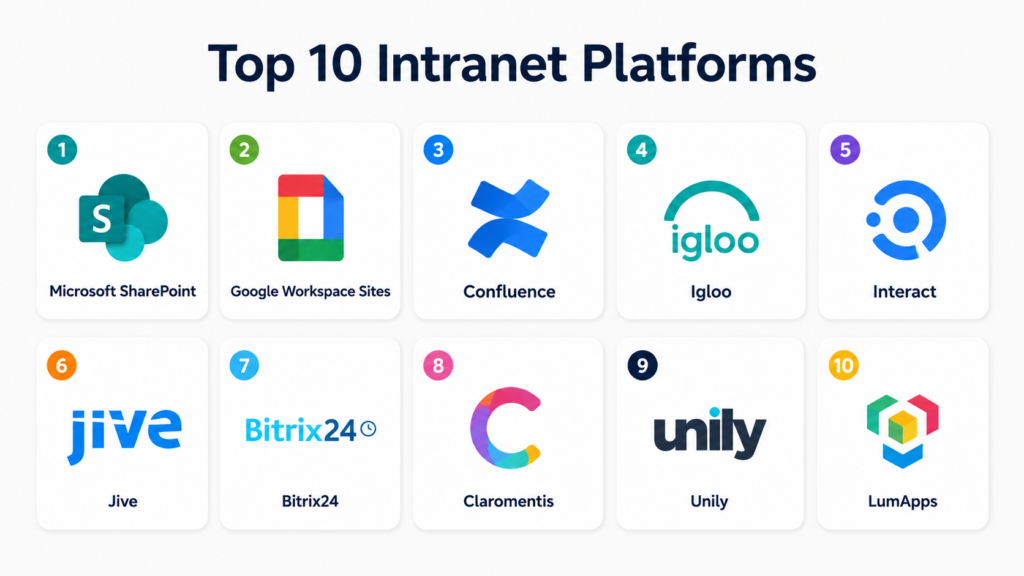
Introduction
Intranet Platforms are internal communication and collaboration systems designed to centralize company information, streamline workflows, and connect employees across departments and locations. They provide a secure environment for sharing announcements, files, documents, and team updates while fostering employee engagement and productivity.In intranet platforms have become critical due to the rise of hybrid work, distributed teams, and the need for compliance and information security. Organizations require a digital workspace that centralizes communication, facilitates knowledge sharing, and supports employee collaboration while maintaining control over sensitive data.
Real-world use cases include:
- Human Resources distributing company policies, updates, and onboarding content.
- IT departments publishing guides, system updates, and internal documentation.
- Project teams collaborating on documents, task management, and cross-department workflows.
- Executives and managers communicating strategic updates to employees globally.
- Marketing and internal communications sharing media, announcements, and surveys.
Evaluation criteria for buyers:
- Ease of content creation and publishing
- Collaboration tools (chat, document sharing, task management)
- Integration with productivity apps and business systems
- Security, access control, and compliance features
- Scalability for growing teams
- Customization and branding capabilities
- Analytics and reporting tools
- User adoption and engagement features
- Deployment flexibility (cloud, hybrid, on-premises)
- Pricing and licensing options
Best for: HR teams, IT departments, internal communications, large and mid-sized enterprises, and organizations managing distributed workforces.
Not ideal for: Small teams or startups with minimal internal communication needs; simpler document management systems or messaging apps may suffice.
Key Trends in Intranet Platforms
- Integration of AI-powered search and content suggestions to enhance information discovery.
- Cloud-native deployment with hybrid or on-premises flexibility.
- Focus on security and compliance, including SSO, MFA, and audit logging.
- Embedded collaboration tools like messaging, video calls, and task management.
- Mobile-friendly platforms supporting hybrid and remote workforce communication.
- Analytics dashboards to track engagement, adoption, and content usage.
- Customization and branding options to align with organizational culture.
- Increased use of micro-apps and widgets for workflow integration.
- Integration with productivity suites, CRM, ERP, and document management systems.
- Subscription-based and scalable pricing models to accommodate growing teams.
How We Selected These Tools (Methodology)
- Reviewed market adoption and mindshare to identify widely used intranet solutions.
- Evaluated feature completeness, including content publishing, collaboration, and workflow tools.
- Considered reliability and performance under enterprise-scale usage.
- Verified security posture, including encryption, access controls, and compliance certifications.
- Analyzed integration capabilities with business applications and productivity tools.
- Assessed customer fit across different organization sizes and industries.
- Examined ease of use and learning curve for employees.
- Reviewed support offerings, documentation, and community engagement.
- Prioritized deployment flexibility: cloud, hybrid, and on-premises options.
- Balanced cost-effectiveness with enterprise-grade functionality.
Top 10 Intranet Platforms
#1 — Microsoft SharePoint
Short description: SharePoint is a robust intranet platform enabling document management, internal communications, and team collaboration. Ideal for large enterprises leveraging Microsoft 365.
Key Features
- Document libraries and version control
- Team sites and content hubs
- Workflow automation with Power Automate
- Integration with Microsoft 365 apps
- Enterprise search and analytics
- Customizable branding and UI
Pros
- Deep integration with Microsoft ecosystem
- Scalable for large organizations
Cons
- Steep learning curve for new users
- Requires Microsoft 365 subscription for full features
Platforms / Deployment
- Web / Windows / macOS / iOS / Android
- Cloud / Hybrid / On-premises
Security & Compliance
- SOC 2, ISO 27001, GDPR
- SSO and MFA support
Integrations & Ecosystem
- Microsoft Teams, Power BI, Office apps
- APIs for custom workflows
- Enterprise business systems integration
Support & Community
- Microsoft enterprise support tiers
- Extensive documentation and forums
#2 — Google Workspace Intranet (Sites)
Short description: Google Workspace Sites offers a lightweight intranet for teams to create internal portals and pages integrated with Google Workspace apps.
Key Features
- Simple drag-and-drop site creation
- Integration with Google Docs, Sheets, Drive
- Version history and collaborative editing
- Mobile-friendly and responsive design
- Permission management for content access
Pros
- Easy for non-technical users
- Seamless integration with Google Workspace
Cons
- Less robust enterprise features compared to SharePoint
- Limited customization options
Platforms / Deployment
- Web / iOS / Android
- Cloud
Security & Compliance
- Encryption in transit and at rest
- GDPR compliance
Integrations & Ecosystem
- Google Workspace apps (Drive, Docs, Calendar)
- Third-party apps via APIs
- Minimal CRM or ERP integration
Support & Community
- Google Workspace support tiers
- Documentation and community forums
#3 — Confluence (Atlassian)
Short description: Confluence is an enterprise knowledge management and intranet platform for creating collaborative workspaces, documents, and project portals.
Key Features
- Page and space creation for teams
- Real-time collaborative editing
- Integration with Jira and Atlassian suite
- Version history and audit logs
- Access permissions and user roles
Pros
- Strong documentation and knowledge management
- Integrates seamlessly with project management tools
Cons
- May be overwhelming for small teams
- Advanced features require training
Platforms / Deployment
- Web / Windows / macOS / iOS / Android
- Cloud / Self-hosted
Security & Compliance
- SOC 2, GDPR
- SSO and encryption support
Integrations & Ecosystem
- Jira, Trello, Slack
- API for custom applications
- Reporting tools
Support & Community
- Atlassian support tiers
- Active user community
#4 — Igloo
Short description: Igloo is a cloud-based intranet platform for enterprise communication, collaboration, and knowledge management with customizable workspaces.
Key Features
- Team hubs and departmental spaces
- Document management and file sharing
- Workflow automation and notifications
- Mobile access and responsive design
- Analytics and reporting
Pros
- User-friendly interface
- Quick setup and customization
Cons
- Limited integrations compared to Microsoft or Atlassian
- Pricing may be high for small teams
Platforms / Deployment
- Web / iOS / Android
- Cloud
Security & Compliance
- SOC 2, ISO 27001
- GDPR
Integrations & Ecosystem
- Slack, Office 365, Google Workspace
- APIs for custom integrations
- Enterprise systems via connectors
Support & Community
- Dedicated support
- Documentation and onboarding guides
#5 — Interact
Short description: Interact provides an internal communications intranet platform emphasizing employee engagement and productivity. Suitable for HR and internal communications teams.
Key Features
- News publishing and announcements
- Social intranet features (likes, comments, forums)
- Document sharing and search
- Customizable templates and themes
- Analytics for engagement tracking
Pros
- Employee engagement-focused features
- Intuitive and easy to manage
Cons
- Less robust for document-heavy teams
- Limited automation and workflow features
Platforms / Deployment
- Web / iOS / Android
- Cloud
Security & Compliance
- Encryption and access control
- GDPR compliance
Integrations & Ecosystem
- Slack, Office 365, Google Workspace
- APIs for HR and CRM systems
Support & Community
- Online support and knowledge base
- Training webinars
#6 — Jive
Short description: Jive is a communication and collaboration intranet platform for enterprises with a focus on engagement, community building, and knowledge management.
Key Features
- Social collaboration features
- Document and content management
- Customizable communities and dashboards
- Analytics for adoption and engagement
- Workflow and task management
Pros
- Encourages employee engagement
- Scalable for enterprise teams
Cons
- Complex UI for new users
- Implementation can be lengthy
Platforms / Deployment
- Web / iOS / Android
- Cloud / Hybrid
Security & Compliance
- SOC 2, GDPR
- Encryption at rest and in transit
Integrations & Ecosystem
- Office 365, Slack, CRM
- API for workflow automation
Support & Community
- Enterprise support tiers
- Knowledge base and community
#7 — Bitrix24
Short description: Bitrix24 is an intranet platform offering communication, project management, and collaboration features for SMBs and mid-market teams.
Key Features
- Team chat and group collaboration
- Task and project management
- Document sharing and storage
- Video calls and conferencing
- CRM integration
Pros
- Affordable and feature-rich for SMBs
- All-in-one collaboration platform
Cons
- Less scalable for very large enterprises
- UI may feel cluttered
Platforms / Deployment
- Web / Windows / macOS / iOS / Android
- Cloud / Self-hosted
Security & Compliance
- Encryption in transit and at rest
- Not publicly stated
Integrations & Ecosystem
- CRM, task management, cloud storage
- API support for custom apps
Support & Community
- Online support and documentation
- Community forums
#8 — Claromentis
Short description: Claromentis provides an intranet platform combining knowledge management, collaboration, and workflow automation for mid-market and enterprise organizations.
Key Features
- Document and knowledge management
- Workflow automation
- Customizable dashboards and portals
- Task and project management
- Social collaboration tools
Pros
- Flexible platform for various organizational needs
- Strong workflow automation capabilities
Cons
- Setup can be time-consuming
- Limited third-party integrations
Platforms / Deployment
- Web / iOS / Android
- Cloud / Self-hosted
Security & Compliance
- GDPR, ISO 27001
- Encryption at rest and in transit
Integrations & Ecosystem
- CRM and productivity tools
- API for custom integrations
Support & Community
- Dedicated support
- Online documentation
#9 — Unily
Short description: Unily is a modern intranet platform providing communication, collaboration, and employee engagement tools for large organizations.
Key Features
- News, events, and announcements
- Document management and search
- Customizable dashboards and branding
- Social collaboration and forums
- Integration with Microsoft 365 and other enterprise tools
Pros
- Modern and user-friendly interface
- Designed for large enterprises
Cons
- Pricing may be high for mid-market teams
- Implementation requires IT resources
Platforms / Deployment
- Web / iOS / Android
- Cloud
Security & Compliance
- SOC 2, GDPR
- Encryption and access control
Integrations & Ecosystem
- Microsoft 365, Slack
- API access for custom integrations
Support & Community
- Enterprise support tiers
- Knowledge base and webinars
#10 — LumApps
Short description: LumApps is a cloud-based intranet platform for employee engagement, internal communication, and collaboration, particularly within Google Workspace environments.
Key Features
- Personalized dashboards and news feeds
- Social collaboration tools
- Document management and sharing
- Workflow automation
- Analytics for engagement
Pros
- Deep integration with Google Workspace
- User-friendly and mobile-ready
Cons
- Less suitable for non-Google ecosystems
- Customization options can be limited
Platforms / Deployment
- Web / iOS / Android
- Cloud
Security & Compliance
- GDPR, SOC 2 (Varies / N/A)
- Encryption at rest and in transit
Integrations & Ecosystem
- Google Workspace apps
- Third-party productivity tools
- API support for workflows
Support & Community
- Customer support and onboarding
- Documentation and webinars
Comparison Table (Top 10)
| Tool Name | Best For | Platform(s) Supported | Deployment | Standout Feature | Public Rating |
|---|---|---|---|---|---|
| Microsoft SharePoint | Enterprises | Web, Windows, macOS, iOS, Android | Cloud / Hybrid / On-prem | Deep Microsoft 365 integration | N/A |
| Google Workspace Sites | SMB & mid-market | Web, iOS, Android | Cloud | Lightweight Google integration | N/A |
| Confluence | Enterprises | Web, Windows, macOS, iOS, Android | Cloud / Self-hosted | Knowledge management & Jira integration | N/A |
| Igloo | Enterprises | Web, iOS, Android | Cloud | Customizable workspaces | N/A |
| Interact | HR & Internal Comms | Web, iOS, Android | Cloud | Employee engagement focus | N/A |
| Jive | Enterprise teams | Web, iOS, Android | Cloud / Hybrid | Community & engagement | N/A |
| Bitrix24 | SMB & mid-market | Web, Windows, macOS, iOS, Android | Cloud / Self-hosted | All-in-one collaboration | N/A |
| Claromentis | Mid-market | Web, iOS, Android | Cloud / Self-hosted | Workflow automation | N/A |
| Unily | Large enterprises | Web, iOS, Android | Cloud | Modern UX & branding | N/A |
| LumApps | Google Workspace orgs | Web, iOS, Android | Cloud | Personalized dashboards | N/A |
Evaluation & Scoring of Intranet Platforms
| Tool Name | Core (25%) | Ease (15%) | Integrations (15%) | Security (10%) | Performance (10%) | Support (10%) | Value (15%) | Weighted Total |
|---|---|---|---|---|---|---|---|---|
| Microsoft SharePoint | 10 | 8 | 10 | 9 | 9 | 8 | 8 | 9.0 |
| Google Workspace Sites | 7 | 9 | 7 | 8 | 8 | 7 | 8 | 7.9 |
| Confluence | 9 | 8 | 9 | 8 | 8 | 8 | 8 | 8.6 |
| Igloo | 8 | 9 | 7 | 8 | 8 | 7 | 8 | 8.0 |
| Interact | 8 | 9 | 6 | 8 | 7 | 7 | 8 | 7.9 |
| Jive | 8 | 7 | 7 | 8 | 8 | 7 | 7 | 7.7 |
| Bitrix24 | 7 | 8 | 7 | 7 | 7 | 7 | 8 | 7.5 |
| Claromentis | 8 | 7 | 7 | 8 | 8 | 7 | 7 | 7.7 |
| Unily | 9 | 8 | 8 | 9 | 8 | 8 | 7 | 8.4 |
| LumApps | 8 | 8 | 7 | 8 | 8 | 7 | 7 | 7.8 |
Interpretation: Weighted totals reflect overall functionality, usability, integration, security, performance, support, and value. Higher scores indicate stronger overall suitability; selection should consider organizational size, integrations, and employee engagement priorities.
Which Intranet Platforms Tool Is Right for You?
Solo / Freelancer
Google Workspace Sites or Bitrix24 provide lightweight intranet features for small teams needing internal communication and document management.
SMB
Bitrix24, LumApps, or Interact balance ease of use, affordability, and productivity integrations for mid-sized organizations.
Mid-Market
Confluence, Igloo, and Claromentis offer robust knowledge management, collaboration, and workflow automation capabilities.
Enterprise
Microsoft SharePoint, Unily, and Jive provide scalable, secure, and highly customizable intranet solutions with advanced analytics and compliance features.
Budget vs Premium
Budget-conscious teams may adopt Google Workspace Sites or Bitrix24. Premium enterprises benefit from SharePoint, Unily, or Confluence for comprehensive functionality and integrations.
Feature Depth vs Ease of Use
Google Workspace Sites and LumApps emphasize simplicity; SharePoint, Confluence, and Unily deliver deeper capabilities but require training and setup.
Integrations & Scalability
Large organizations should prioritize SharePoint or Unily for multi-system integration, while SMBs can leverage Bitrix24 or LumApps for straightforward productivity tool connectivity.
Security & Compliance Needs
Enterprises handling sensitive information should select platforms with SOC 2, ISO 27001, GDPR compliance, and robust access controls.
Frequently Asked Questions (FAQs)
1. What is an intranet platform?
An intranet platform is an internal network system enabling employees to communicate, share knowledge, and collaborate securely within an organization.
2. How are intranet platforms priced?
Pricing depends on user count, deployment type (cloud or on-premises), and feature sets. Some offer freemium or per-user subscription models, while enterprise plans are custom.
3. How long does deployment take?
Cloud-based platforms can be deployed in days, while self-hosted intranets like Confluence or Claromentis may require weeks for setup, customization, and migration.
4. Can SMBs benefit from intranet platforms?
Yes, SMBs can use lightweight platforms like Bitrix24 or LumApps for internal communication, document sharing, and collaboration without enterprise complexity.
5. Are these platforms secure?
Most offer encryption in transit and at rest, role-based access, SSO/MFA, and compliance features for GDPR, SOC 2, or ISO 27001, depending on vendor and plan.
6. Can intranet platforms integrate with other tools?
Yes, they integrate with CRM, project management, productivity suites, BI, and workflow automation tools, with APIs available for custom integrations.
7. Are intranet platforms scalable?
Enterprise-grade solutions like SharePoint, Unily, and Jive scale to thousands of users across multiple locations with high availability.
8. What are common mistakes when implementing an intranet?
Common mistakes include poor content organization, inadequate user training, underutilization of workflow automation, and insufficient security configuration.
9. How do intranet platforms support remote work?
They provide web, mobile, and desktop access, allowing distributed teams to communicate, collaborate, and access documents from anywhere securely.
10. Can intranet platforms replace email?
While intranet platforms enhance collaboration and internal communication, email remains essential for external communication and official correspondence.
Conclusion
Intranet platforms are crucial for centralizing communication, collaboration, and knowledge management in modern organizations. The right solution depends on team size, security requirements, integration needs, and employee engagement strategies. SMBscan leverage platforms like Bitrix24 or LumApps for cost-effective deployment, while mid-market and enterprise organizations benefit from SharePoint, Unily, Confluence, or Jive for robust features, compliance, and scalability. Organizations should shortlist platforms aligned with workflows, pilot them to evaluate usability and integrations, and scale implementation to foster productivity, collaboration, and secure internal communication.
